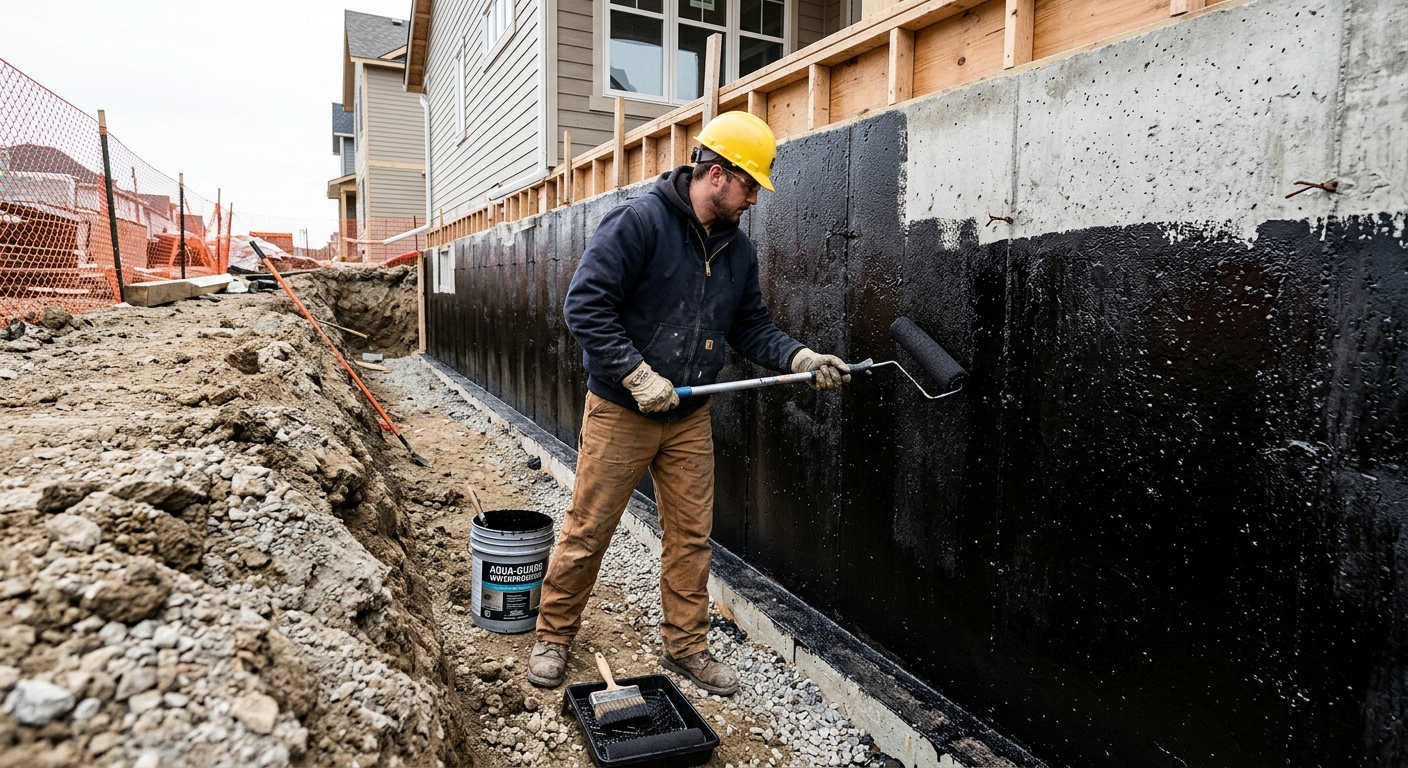
Basement waterproofing options and costs in Capitol Hill
In Capitol Hill, British Columbia, the “right” basement waterproofing plan usually depends on whether water is entering from the outside (hydrostatic pressure pushing through the wall/footing zone) or whether it’s showing up only after it has already penetrated. Local homeowners often start with interior solutions, but Lower Mainland–Southwest conditions—especially persistent saturation from intense rainfall and high groundwater pressure—mean that exterior systems are frequently the most durable fix when the original perimeter drainage has failed.
Capitol Hill’s demand is shaped by its housing mix: with a population of 6,330 (Statistics Canada, 2021 Census), the neighbourhood sees many small-lot, older-home retrofits where original tar-and-paper era waterproofing and older weeping tile are now commonly at end-of-life. In older properties, original drainage piping can be undersized or clogged, so water builds up along basement walls and concrete slabs, then finds pathways through cracks and wall joints.
Contractors in the Capitol Hill area are also dealing with access constraints (tight setbacks, decks/landscaping, and sometimes rocky sections), which can raise excavation time and mechanical breaking requirements. That’s why full-perimeter exterior excavations sit at the higher end of local pricing—while targeted interior retrofits are often more accessible when you’re managing leaks quickly.
Below is a practical comparison of the most common approaches, with typical cost ranges used by waterproofing crews in the Lower Mainland–Southwest market. Choose the method that matches the water-source problem, not just the visible damage.
| Method |
What It Addresses |
Disruption Level |
Durability |
Price Range |
| Exterior excavation + new membrane + drainage tile |
Water at/behind foundation walls and footing zone (source control) |
High (yard/landscape disruption, excavation) |
High (long-term hydrostatic management) |
$15,000–$30,000 |
| Interior perimeter drain channel + sump pit |
Water that enters inside; reduces seepage by capturing it |
Medium (interior demo at perimeter, no full excavation) |
Medium to high (depends on wall/pressure conditions) |
$8,000–$18,000 |
| Foundation crack injection (epoxy or polyurethane) |
Stops cracks and directs leakage routes |
Low to medium (surface prep; minor patching) |
Medium to high (best when paired with drainage) |
$500–$2,000 |
| Sump pump installation (primary + battery backup) |
Maintains drainage performance during heavy inflow/power events |
Low to medium (mechanical work and pit) |
High when backed up and sized correctly |
$1,000–$5,000 |
| Window well drain installation |
Controls pooling at egress wells and localized seepage |
Low to medium (excavation around wells) |
Medium (site-specific) |
$2,000–$6,000 |
| Lot re-grading / downspout extension |
Redirects roof/ground water away from foundation perimeter |
Low (minor landscaping and civil adjustments) |
Low to medium (effective if drainage is the main issue) |
$1,500–$5,000 |
Prices are estimates only and vary by project scope, site access and material selection.
What affects the price of waterproofing in Capitol Hill
Homeowners in the Lower Mainland–Southwest can see waterproofing quotes for the “same” basement issue vary by roughly 30–50% because the drivers aren’t just material costs—they’re excavation difficulty, the site’s hydrostatic pressure conditions, and how much of the drainage system is actually failing. In tight urban lots near Capitol Hill, access constraints (driveways, walkways, decks, retaining edges) can add labour and disposal costs. Contractors also adjust scopes based on whether the water problem is truly outside-in or whether interior capture will be enough.
Three factors separate regional costs from a national average: soil type, water table, and freeze-thaw. Clay-heavy soils (more common in parts of Ontario and the Prairies) expand during freeze-thaw and can worsen lateral pressure in a different way; in coastal BC, the primary cost driver is typically high groundwater and prolonged saturation that maintains pressure against basement walls and slabs. When the water table is high, your sump pump runs more often, the drainage layer has to perform reliably, and contractors may need larger or more redundant components. Frequent wet winters and freeze-thaw cycles also widen existing cracks and joints, accelerating seepage and speeding up the “need window” for repairs.
Two practical Capitol Hill examples: (1) a home with failing original weeping tile and a clogged discharge route often pushes the job toward exterior excavation ranges (commonly $15,000–$30,000) even if you start by thinking “interior only”; and (2) a property with localized pooling near window wells may be handled with downspout extensions and targeted well drainage, sometimes closer to the lower interior-side range (often $8,000–$18,000 only when a perimeter system and sump are needed).
In older housing stock, original perimeter systems may be fully failed, and that can turn a “small leak” into a comprehensive interior retrofit—or a full exterior rework if you want source control. Even with the same foundation, the required scope can shift by thousands because drainage performance is what stops recurring moisture.
| Price Factor |
Why It Matters |
Cost Impact |
| Interior vs. exterior approach — interior is less disruptive but addresses symptoms |
Interior manages water after it enters; exterior reduces hydrostatic pressure at the source |
Interior often lands in the lower band; exterior can add major excavation/disposal labour |
| Foundation type — poured concrete vs. block vs. stone vs. ICF |
Crack behaviour and sealing method differ by material; block often needs complementary drainage |
Block and stone may require more interior drainage work; ICF may still need pressure management |
| Soil type — clay expands more than sand, adding pressure |
Freeze-thaw can increase pressure through seasonal movement |
Clay-like expansion increases crack activity and may justify broader crack + drainage scope |
| Crack type and length — hairline vs. structural horizontal cracks |
Structural/horizontal cracks may indicate movement and require engineering review |
Structural repair adds assessment and possible underpinning complexity |
| Sump pump backup system — battery or water-powered backup needed |
Power reliability matters during wet seasons and storms |
Backup increases equipment and install time but reduces failure risk |
| Access — landscaping, decks, or driveways must be removed for exterior |
Tight lots raise excavation time and restoration effort |
Exterior jobs increase more in urban settings due to mechanical breaking and reinstatement |
| Weeping tile age — original tile (60+ years) may be completely failed |
Old tile clogs or collapses, so water routes differently and faster |
Complete failure often escalates scope from localized repair to full replacement |
| Mould or efflorescence remediation required before sealing |
Moisture must be controlled first; finishes may need cleaning and surface stabilization |
Remediation adds labour and can delay membrane/seal work until surfaces are dry |
Permits & regulations in British Columbia
In British Columbia, foundation excavation, structural crack repair, and changes to lot drainage typically require a building permit. If your sump pump installation involves routing discharge to a municipal system (storm or sanitary), municipal approval is commonly required. Because drainage connections can have site and flow implications, it’s best to confirm discharge direction before equipment is purchased or trenches are opened.
For structural crack repair—particularly horizontal cracks in block walls or major step cracks—many homeowners need a structural engineer’s assessment to determine whether underpinning or other structural work is required. A good contractor will plan for that possibility and provide engineering support where it’s needed for the scope and permit.
Step-by-step, here’s how a homeowner in Capitol Hill can verify a contractor’s British Columbia readiness: (1) check the contractor’s licensing/registration details through the appropriate BC online registry or verification channel used for their trade; (2) request a current certificate of insurance showing liability coverage—confirm the expiry date and that the address/jobsite is covered; (3) ask for WSIB/WCB clearance information (or equivalent proof of coverage) and verify it matches the company name; (4) for structural work, ask whether they carry engineering support and whether they will submit permit documentation; and (5) confirm in writing what’s included (permits pulled by the contractor vs. homeowner-provided permitting, if applicable).
Interior vs exterior waterproofing — what does Capitol Hill need?
The fundamental difference is source control versus water management. Exterior waterproofing—full excavation around the foundation, new membrane, drainage tile, and backfill—targets the point where water enters and reduces hydrostatic pressure against walls and slabs. It costs more and requires landscape disruption, but in Lower Mainland–Southwest conditions it’s usually the most permanent solution when perimeter drainage has failed. Interior waterproofing—perimeter drain channel, sump pit, and a sump pump—captures water once it appears inside. That approach can be less invasive and sometimes makes sense when excavation access is limited, but it does not eliminate outside hydrostatic pressure.
In Capitol Hill, Lower Mainland–Southwest rainfall saturates backfill quickly when exterior drainage is compromised, and freeze-thaw cycles can widen joints and cracks. That’s why foundation type matters. Poured concrete walls generally respond well to crack injection paired with drainage (sealing the pathways and keeping water from re-pressurizing the wall area). Block foundations often have more complex water pathways, so interior drainage is frequently a practical complement even when sealing cracks is done.
Sump pump backup matters here because spring wet periods can create longer inflow times; adding a battery backup (or an approved alternative) can be the difference between a dry basement and a severe backup after a power interruption.
For example, if an interior perimeter retrofit plus sump lands around $8,000–$18,000, but inspection shows the exterior drainage tile is collapsed and water is actively charging the wall, budgeting toward an exterior system in the $15,000–$30,000 range is often justified to stop recurring moisture rather than repeatedly managing symptoms.
| Method |
Best For |
Addresses Source? |
Disruption |
Lifespan |
Price Band |
| Full exterior excavation + membrane |
Widespread seepage, failed perimeter drainage, high groundwater pressure |
Yes |
High |
Long-term |
$15,000–$30,000 |
| Interior French drain + sump system |
Interior moisture after entry; limited exterior access; ongoing seepage capture |
No (manages after entry) |
Medium |
Medium to long-term |
$8,000–$18,000 |
| Crack injection — epoxy (structural) |
Non-moving, structurally appropriate cracks in poured concrete |
Partially (seals pathways; drainage still recommended) |
Low to medium |
Medium to long-term |
$500–$2,000 |
| Crack injection — polyurethane (active leak) |
Active seepage through cracks and moving moisture routes |
Partially (stops leaks; drainage still recommended) |
Low to medium |
Medium |
$800–$2,500 |
| Interior drain channel only (no sump) |
Light seepage where water can drain by gravity to a suitable outlet |
No |
Medium |
Short to medium |
$3,500–$8,000 |
| Re-grading + downspout extensions |
Surface runoff and roof drainage issues; early-stage moisture |
Sometimes (indirectly) |
Low |
Low to medium |
$1,500–$5,000 |
How to choose a waterproofing contractor in Capitol Hill
Start with credentials, then move to scope and proof. In British Columbia, ask for the contractor’s licence/registration details for their trade area, a current certificate of liability insurance, and WSIB/WCB clearance information. How to check: (1) request an up-to-date certificate of insurance and confirm the coverage is active and names the correct legal entity; (2) verify WSIB/WCB clearance by checking the clearance document date and company name—don’t rely on verbal assurances; (3) confirm engineering support is available for structural crack work; and (4) ask who will pull permits (and what permits are required for your scope).
Next, get 2–3 itemised written quotes with a labour + materials breakdown, not just a lump sum. A proper quote should spell out excavation limits, drainage tile specification, membrane type, how disposal and backfill are handled, and what interior demo/repair is included. Confirm inclusions and exclusions: Is disposal included? Are permit fees included? Will landscaping/restore be included to a defined standard?
Warranty matters. Ask for a workmanship warranty length and whether the product/manufacturer warranty is separate, what it covers, and whether it’s transferable if you sell the home. For payment scheduling, avoid paying more than 10–15% upfront; use a holdback until completion and sign-off. Finally, insist on a written timeline with a start date and completion estimate.
- Verify licensing/registration and match it to the company on the invoice and insurance certificate.
- Request liability insurance and confirm it’s current (expiry date) and covers residential construction work.
- Obtain WSIB/WCB clearance documentation and ensure the company name matches.
- For structural cracks, confirm whether they coordinate a structural engineer assessment when required.
- Ask for a written site-access plan (how decks/driveways/landscaping will be protected and restored).
- Demand an itemised quote: membrane, drainage tile, geotextile, sump components, pumps, piping, and sealants.
- Clarify exclusions (e.g., removal of mature landscaping, permits, structural engineering fees, interior finishing).
- Confirm disposal and tipping fees are included if excavation is part of the scope.
- Ask how they verify drainage discharge route and whether municipal approval is needed.
- Require details of the sump pump spec (primary + backup) and check-valves/alarm plan.
- Get warranty terms in writing: workmanship duration, product warranties, and transferability.
- Use a payment schedule with a holdback until the system passes final inspection and cleanup is complete.
Red flags in Capitol Hill: vague scopes that don’t specify drainage tile/membrane components; quotes that skip sump sizing or backup when groundwater is clearly an issue; contractors who refuse to provide insurance/WSIB/WCB proof; “guaranteed dry basement” promises without moisture testing or an assessment of exterior drainage; and trying to start work without confirming permit/approval needs for drainage connections.
Frequently asked questions — waterproofing in Capitol Hill
How long does basement waterproofing take in Capitol Hill?
Most Capitol Hill basement waterproofing projects take anywhere from a few days to a few weeks depending on whether you’re doing exterior excavation or interior work. Interior perimeter drain channel and sump installs can often be staged relatively quickly because you’re working at the basement perimeter, but drying time and interior finish make timelines longer. Full exterior excavations take longer because they involve excavation, membrane application, drainage tile replacement, backfill, and yard restoration—often complicated by tight access on urban lots. Scheduling in the Lower Mainland–Southwest also matters: heavy rain can slow exterior work, especially when backfill and compaction timing are critical. For context, a scoped interior retrofit commonly aligns with the mid-range budget tier of $8,000–$18,000, while exterior source-control projects often align with $15,000–$30,000.
What is a weeping tile and does my Capitol Hill home have one?
A weeping tile is an old term for a perimeter drainage system—typically a sloped drain pipe wrapped in drainage material—that collects groundwater along the foundation and directs it to a sump or discharge point. Many older Capitol Hill homes built before modern waterproofing practices used weeping tile with varying performance; over time it can clog, collapse, or discharge incorrectly, which is why basement seepage can reappear even if the concrete looks intact. You can look for telltales like an accessible sump pit (if it was upgraded), older exterior cleanouts, or evidence of previous excavation near the foundation. If you’re unsure, a contractor’s inspection can often confirm by tracing discharge routes and examining basement perimeter conditions. If your original tile is 60+ years old, it may be completely failed, and that can push you from interior symptom control toward source-control exterior work.
Can I waterproof my basement in winter in Capitol Hill?
Yes, you can often waterproof in winter in Capitol Hill, but the method and scope affect feasibility. Interior waterproofing is usually more practical during cold periods because much of the work stays indoors—installing perimeter drains, sump pits, and pump systems can proceed while exterior excavation is limited by frozen soil. Exterior work is more challenging when excavation areas are frozen or when heavy rainfall creates saturated conditions that affect drainage layer installation and compaction. Lower Mainland–Southwest weather is wet and mild overall, yet freeze-thaw cycles still widen cracks and joints, so it’s common to see symptoms intensify during winter and spring. Contractors may still prepare and seal crack pathways (for example, crack injection within the $500–$2,000 band depending on crack length and product), but for full excavation membrane work, crews will schedule around ground conditions for best performance.
What is the difference between waterproofing and damp-proofing?
Waterproofing is designed to resist active water pressure and manage hydrostatic forces that occur when groundwater levels rise or prolonged rainfall saturates soil near the foundation. Damp-proofing is typically a surface-level treatment meant to reduce moisture migration through minor dampness, but it doesn’t reliably handle sustained pressure. In British Columbia—especially in the Lower Mainland–Southwest—homes can face persistent saturation, so dampness can turn into seepage when cracks widen from freeze-thaw cycles. That’s why true exterior waterproofing systems usually include drainage tile and a membrane approach built for water management, not just cosmetic sealing. Interior systems like perimeter drains and sump pumps are also “waterproofing” in the functional sense because they actively capture and remove water after entry. If you’re seeing recurring seepage, you generally need a strategy that addresses the drainage pathway, not just a light damp-proof coating.
Will basement waterproofing affect my property value in Capitol Hill?
Basement waterproofing can help property value because it reduces the risk of recurring moisture, protects finishes, and improves usable space. In Capitol Hill, where heavy rain and high groundwater pressure can keep basement areas under stress during wet seasons, a documented waterproofing system (with receipts, warranty details, and clear scope) often reassures buyers and inspectors. However, the value impact depends on the cause of the problem and whether the repair is source-control or symptom management. A full exterior solution tends to be more convincing when perimeter drainage has failed, but interior retrofits with a properly sized sump and backup can also be strongly beneficial. If you’re comparing options, keep the budget in mind: many interior projects sit around $8,000–$18,000, while exterior source control is often $15,000–$30,000. The “best” investment is the one that matches the water entry mechanism, since buyers pay for predictable dryness—not just short-term patching.
What drainage issues are most common in Capitol Hill homes?
The most common issues in Capitol Hill relate to how water is managed around the foundation during prolonged rainfall: failed or undersized perimeter drain systems (weeping tile), clogged discharge routes, and inadequate downspout control leading to saturated backfill. Many older homes also show localized problem zones such as window wells that collect water, and basement wall seepage at cracks and joints that widened through freeze-thaw cycles. In tight lots, access constraints can also mean earlier drainage attempts weren’t fully comprehensive, leaving parts of the perimeter uncontrolled. Another frequent factor is that hydrostatic pressure can keep building up against basement walls when exterior drainage is no longer performing, so interior retrofits may run more often and require correctly sized sump equipment. If you notice damp walls near the floor line, recurring interior wet spots after storms, or sulphur-like odours/mould growth, it usually points to a drainage pathway problem that needs inspection—not just surface sealant.