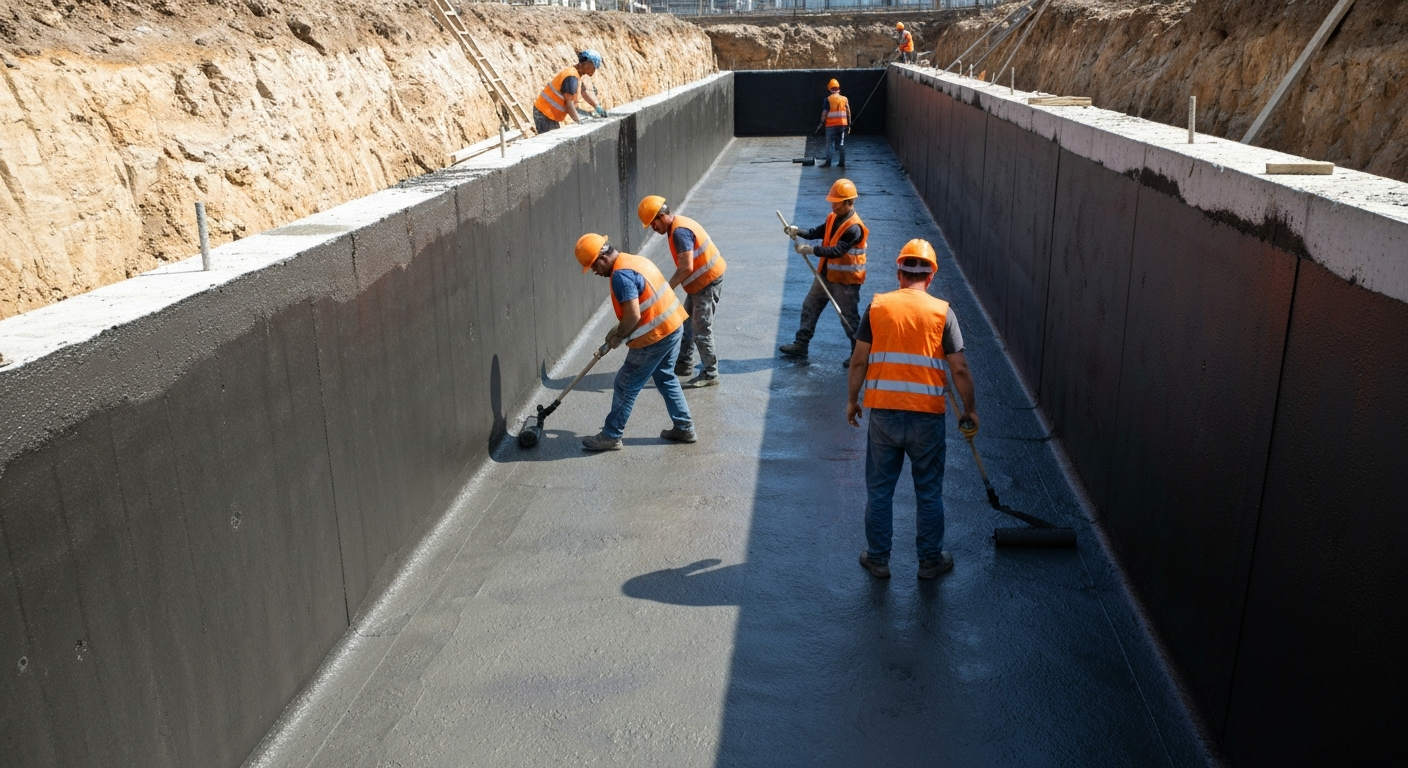
Basement waterproofing options and costs in Parksville
Parksville homeowners typically spend the most on waterproofing when water is getting around the foundation rather than just through a single interior leak point. With a population of 13,642 (Statistics Canada, 2021 Census) and 4,935 homeowner households (Statistics Canada, 2021 Census), there’s steady demand here—especially as many basements were finished and serviced over decades as older homes changed hands. In Parksville, 29.5% of dwellings were built before 1981 (Statistics Canada, 2021 Census), and that matters because original tar-and-paper systems and early weeping tile setups are more likely to be failed, corroded, or simply overwhelmed during long wet stretches.
On Vancouver Island and the Coast, heavy rainfall and high site water conditions are the key drivers of cost. The practical result is that exterior excavation often runs higher than interior work because contractors must deal with excavation, membrane installation, perimeter drainage, and backfill—plus landscape reinstatement. It’s also why neighbourhoods with older streets and lots close to the sidewalk, such as East Parksville, often see faster scheduling for exterior and drainage-related projects when weeping tile failures show up as recurring dampness.
Below is a realistic comparison of common approaches, what each one targets, how disruptive it usually is, and what homeowners in Parksville typically budget. Use it to sanity-check quotes before you compare contractor scopes.
| Method |
What It Addresses |
Disruption Level |
Durability |
Price Range |
| Exterior excavation + new membrane + drainage tile |
Hydrostatic pressure management by stopping water at the wall and collecting it at the perimeter |
High (excavation, membrane work, re-landscaping) |
Long-term, typically 15–25+ years depending on site drainage |
$7,000–$18,000 |
| Interior perimeter drain channel + sump pit |
Water after it enters: captures seepage and prevents puddling/damp walls |
Medium (partial interior disruption; minimal exterior landscaping) |
Good service life with correct pump sizing; often 10–20+ years |
$3,000–$10,000 |
| Foundation crack injection (epoxy or polyurethane) |
Crack as a leak path: seals through-wall movement (epoxy) or targets active leaks (polyurethane) |
Low to Medium (drilling/patching inside; minimal demolition) |
Variable: typically 5–15+ years based on crack type and movement |
$250–$800 |
| Sump pump installation (primary + battery backup) |
Relief pumping so interior drainage systems can function during high water events |
Medium (pit/sump work; electrical integration) |
Long-term if maintained; backups reduce risk of failure |
$800–$2,500 |
| Window well drain installation |
Surface water and groundwater entering via window wells |
Low to Medium (excavation around wells; interior patching) |
Good when paired with grading and downspout management |
$750–$2,200 |
| Lot re-grading / downspout extension |
Reduces how much water reaches the foundation perimeter |
Low to Medium (landscaping adjustments) |
Moderate (can degrade if grading settles) |
$900–$3,000 |
Prices are estimates only and vary by project scope, site access and material selection.
What affects the price of waterproofing in Parksville
In Parksville, two contractors can quote the “same” waterproofing problem and still land 30–50% apart because Vancouver Island and the Coast projects are highly sensitive to site water movement and access. Even within BC, the same method can vary widely based on soil, water table behaviour, and how much excavation is required to reach the foundation perimeter. Put simply: on a wet coastal lot, the labour you can’t see—excavation, membrane prep, drainage installation, and disposal—pushes the total up quickly.
The three biggest drivers that separate local costs from the national average are soil type, water table, and freeze-thaw. Clay-heavy soils (more common inland in parts of BC and in many legacy lots) can hold water and increase lateral pressure on foundation walls, especially when freeze-thaw cycles trap moisture. In Parksville’s coastal climate, rainfall saturates backfill quickly when original drainage fails, which means higher pump run times if you go with an interior system. If the foundation is older—remember 29.5% of homes were built before 1981 (Statistics Canada, 2021 Census)—weeping tile failures and seepage paths through poured concrete or block walls are more frequent, which can make interior-only fixes less durable.
Concrete examples from Parksville: (1) a home with clogged weeping tile and standing water during storms often needs exterior excavation that can move you toward the $7,000–$18,000 exterior range; (2) a finished basement with only light dampness near one corner might fit the $3,000–$10,000 interior perimeter drain approach plus targeted crack work; and (3) if a structural horizontal crack is active, injection alone may not stop recurrence without addressing drainage pressure behind the wall.
| Price Factor |
Why It Matters |
Cost Impact |
| Interior vs. exterior approach — interior is less disruptive but addresses symptoms |
Interior systems manage water after entry; exterior aims to stop the source and reduce hydrostatic pressure |
Interior can be ~lower cost upfront, while exterior can increase total due to excavation and membrane work |
| Foundation type — poured concrete vs. block vs. stone vs. ICF |
Block and older masonry walls often leak differently; poured walls may respond better to sealing where movement is limited |
Block/stone often increases prep and may favour interior drainage complements |
| Soil type — clay expands more than sand, adding pressure |
Clay holds moisture and can exert more lateral pressure during wet seasons and freeze-thaw transitions |
Clay-heavy sites can increase scope and require stronger drainage/pumping design |
| Crack type and length — hairline vs. structural horizontal cracks |
Hairline cracks can be easier to seal; structural cracks indicate movement and may require broader remediation |
Active or structural cracks can add engineering and expanded repair steps |
| Sump pump backup system — battery or water-powered backup needed |
Backup reduces risk during power interruptions during high-water periods |
Typically adds cost, but often considered when basement flooding risk is high |
| Access — landscaping, decks, or driveways must be removed for exterior |
Exterior excavation requires safe access to the foundation perimeter |
Removal and reinstatement can move the project toward the top end of the exterior range |
| Weeping tile age — original tile (60+ years) may be completely failed |
Failed tile increases water load against the foundation, changing drainage requirements |
If completely failed, interior-only work may not be sufficient |
| Mould or efflorescence remediation required before sealing |
Sealers and membranes perform better on clean, properly prepared substrates |
Added cleaning/repairs can increase labour time before waterproofing can proceed |
Permits & regulations in British Columbia
In British Columbia, foundation excavation, structural crack repair, and changes to lot drainage typically require a building permit. If your contractor is planning to connect a sump pump discharge to a municipal system (storm or sanitary where applicable), municipal approval is commonly required. For structural crack repair—especially horizontal cracks in block walls or major step cracks—an assessment by a structural engineer is often required to determine whether underpinning or other structural work is necessary.
What usually does not require a permit depends on scope, but smaller, non-structural waterproofing activities such as sealing an isolated non-structural crack, installing a small window well drain, or adding downspout extensions to redirect surface water are frequently treated as work that may proceed without a permit. That said, the moment the work changes drainage patterns at the lot line or impacts the foundation structurally, expect the permit conversation to come up.
To verify a contractor in Parksville, start with their licensing and registration information through BC’s online resources, then request a certificate of liability insurance and proof of WSIB/WCB coverage. For structural jobs, ask whether they carry engineering support in-house or coordinate with an engineer, and get a written clearance/confirmation letter where applicable. A reputable contractor should provide these documents before you sign, not after.
Interior vs exterior waterproofing — what does Parksville need?
Exterior waterproofing is the “source control” option: it involves full excavation to the foundation perimeter, then a new membrane and new drainage tile, followed by proper backfill and reinstatement. Because it reduces the amount of water that builds hydrostatic pressure against the wall, it usually delivers the most permanent outcome—but it costs more and requires landscape disruption. Interior waterproofing focuses on what happens after water enters. A perimeter drain channel, sump pit and pump system can keep basements dry and protect finishes, but it doesn’t stop pressure from pushing on the foundation wall in wet weather.
In Parksville’s coastal conditions—where rainfall saturates backfill quickly and foundation seepage can intensify after storms—soil and water behaviour are decisive. Poured concrete walls often respond well when the primary issue is a definable crack or leak path, and crack injection can be an effective component of an interior or exterior approach. Block foundations frequently benefit from interior drainage as a practical complement because moisture can migrate through joints and irregularities; in those cases, even well-sealed cracks may not address the full seepage route.
Sump pump backup is worth discussing in BC because spring flooding and wet stretches can coincide with power interruptions. If the interior drainage system depends on a pump and the pump fails during peak water, you risk losing the benefit of the drainage channel.
A concrete example: if your exterior perimeter drainage is failing and water is actively loading the foundation, exterior work can sit in the $7,000–$18,000 band. But if the problem is limited seepage with manageable access inside—plus targeted crack repair—you might be able to land closer to the $3,000–$10,000 interior range, especially when there’s no need for full excavation.
| Method |
Best For |
Addresses Source? |
Disruption |
Lifespan |
Price Band |
| Full exterior excavation + membrane |
Recurring leaks, high water pressure, failing exterior drainage, wet coastal lots |
Yes (best source control) |
High |
15–25+ years (site-dependent) |
$7,000–$18,000 |
| Interior French drain + sump system |
Damp basement, seepage after storms, when exterior access is difficult |
Partial (manages water after entry) |
Medium |
10–20+ years with correct maintenance |
$3,000–$10,000 |
| Crack injection — epoxy (structural) |
Non-moving cracks where you need a structural seal approach |
Partial (targets a leak path) |
Low to Medium |
5–15+ years (depends on movement) |
$250–$800 |
| Crack injection — polyurethane (active leak) |
Active water seepage through cracks |
Partial (targets active leak path) |
Low to Medium |
5–12+ years (depends on ongoing pressure) |
$250–$800 |
| Interior drain channel only (no sump) |
Light moisture with reliable gravity discharge and no high water pressure events |
No (only manages some seepage) |
Medium |
5–12 years (often less reliable during heavy storms) |
$2,500–$7,000 |
| Re-grading + downspout extensions |
Surface water issues and overflow at foundation perimeter |
No (reduces water reaching foundation) |
Low to Medium |
3–10+ years (can settle; needs upkeep) |
$900–$3,000 |
How to choose a waterproofing contractor in Parksville
Start by confirming your contractor can legally and safely perform waterproofing work in British Columbia. Ask for their BC licence/registration information and a certificate of liability insurance, and verify they carry WSIB/WCB coverage (so you’re not exposed if a worker is injured on site). In practice, you should see these documents before the quote is finalized.
Next, get 2–3 itemised written quotes that separate labour and materials. You want line items for excavation (if exterior), membrane/drainage components, disposal, pump/sump materials (if included), electrical tie-in, crack injection materials, and prep work like cleaning and drying. Make sure the scope states whether a permit is included or if it’s your responsibility, and whether debris/disposal is included—those details routinely affect final cost.
Warranty matters in BC because wet seasons can reveal issues after storms. Confirm the workmanship warranty length, whether there’s a manufacturer product warranty, and whether any warranties are transferable to a new homeowner. Review the payment schedule too: never pay more than 10–15% upfront, and hold back a portion until the job is complete and you’ve received documentation.
Finally, get a clear timeline with a start date and completion estimate in writing. Waterproofing often depends on weather and site drying time, so reputable firms will explain the lead times and the conditions needed to proceed.
- Ask for itemised quotes (labour vs materials), not a single lump sum number.
- Confirm whether exterior excavation includes backfill compaction and drainage rock specification.
- Verify if downspout extensions and grading changes are included or excluded.
- Ask what’s included in disposal and whether they haul away excess soil/mud.
- Check if the scope includes crack prep (cleaning, routing if required) before injection.
- Confirm pump model, discharge piping route, and whether a check valve is included.
- For backups, ask specifically about battery backup type and expected run time.
- Require a written workmanship warranty and note whether it’s voided by maintenance gaps.
- Request manufacturer warranty documentation for membranes, drainage systems, and pumps.
- Review payment terms: max 10–15% upfront; hold back until completion and walkthrough.
- Ask for a permit plan in writing if the job changes lot drainage or involves excavation.
- Get start date, weather contingencies, and completion estimate in the contract.
Red flags in Parksville: (1) a contractor who won’t put the scope in writing or refuses to itemise labour and materials; (2) quotes that ignore access and excavation/disposal or don’t mention re-landscaping; (3) no proof of liability insurance or WSIB/WCB coverage; (4) claiming “one-size-fits-all” waterproofing with no inspection of drainage and crack type; and (5) offering a cheap exterior price without discussing proper drainage tile, membrane transitions, and discharge details.
Frequently asked questions — waterproofing in Parksville
What causes foundation cracks in Parksville?
In Parksville and across coastal British Columbia, cracks are commonly tied to water pressure and soil behaviour. After heavy rainfall, water can saturate around the foundation; when drainage is poor, hydrostatic pressure increases against poured concrete or block walls. As seasons shift, freeze-thaw transitions can worsen problems by expanding moisture in small voids, which may widen hairline cracks over time. Older housing stock is also a factor—29.5% of homes were built before 1981 (Statistics Canada, 2021 Census), and older waterproofing and weeping tile setups can fail, allowing movement and seepage to start again. Settlement can contribute too, but if you’re seeing dampness near the crack, assume water entry and pressure are part of the cause.
How do I compare waterproofing quotes?
When comparing Parksville waterproofing quotes, don’t start with the total price—start with scope. Ask each contractor to itemise labour and materials and clearly state what problem they’re solving (source control versus interior water management). Compare whether they’ll do exterior excavation and drainage tile versus an interior perimeter drain and sump. If crack injection is included, confirm whether the crack is treated with epoxy (more structural sealing) or polyurethane (for active leaks). Also check what’s excluded: permit pull, disposal, electrical tie-ins, and landscaping reinstatement. A quote around the exterior range (roughly $7,000–$18,000) should include the excavation and membrane work that justify it.
How long does basement waterproofing take in Parksville?
Typical timelines in Parksville vary by method and access, mainly because exterior work depends on excavation access and dry workable conditions. Interior drain and sump systems can often be scheduled faster since they focus on the basement perimeter and a pump pit; however, drying time and curing times still matter for any crack injection and sealants. Exterior waterproofing commonly takes longer because excavation, membrane installation, perimeter drainage, and backfill all require careful sequencing, plus reinstatement after waterproofing. Weather can also affect when exterior work can start—heavy coastal rainfall can slow progress if the excavation zone can’t be kept stable or dry. Ask your contractor for a start date, completion estimate, and weather contingency plan in writing.
What is a weeping tile and does my Parksville home have one?
A weeping tile (often called perimeter drain tile) is the underground drainage line installed around the foundation to collect and redirect groundwater away from the basement. In many older Parksville homes—especially those built when drainage practices were common but materials aged quickly—it may exist but could be corroded, cracked, clogged, or disconnected. Since 29.5% of dwellings were built before 1981 (Statistics Canada, 2021 Census), original tile failures are not unusual. The only reliable way to confirm is through an inspection: contractors may use test pits, probe inspection openings, or observe existing discharge routes. If you’re getting recurring dampness after storms, a failed or absent weeping tile is frequently part of the story.
Can I waterproof my basement in winter in Parksville?
In Parksville, winter waterproofing is possible, but it can be more limited depending on the scope and whether excavation is involved. Coastal BC winters still bring heavy rain, and that can complicate exterior excavation due to saturated soil and unstable backfill, even when temperatures aren’t extreme. Interior work (like installing an interior perimeter drain channel or sump system) is often more feasible than full exterior excavation because you’re working inside, controlling surfaces and keeping the process moving. Crack injection and sealing also require the wall surface to be properly prepared and able to accept the product; moisture management and curing conditions still matter. If you want the lowest disruption, interior solutions may be scheduled in winter, while exterior work is planned for a more manageable window.
What is the difference between waterproofing and damp-proofing?
In practical terms, waterproofing is designed to stop or manage water entry during higher water events, while damp-proofing is meant to reduce moisture problems but isn’t intended to handle significant hydrostatic pressure. In Parksville, because water movement around foundations is a main cost driver on Vancouver Island and the Coast, “damp-proof” approaches often aren’t enough when seepage becomes recurring after storms. For example, a proper interior perimeter drain and sump system is waterproofing-style management because it captures seepage and pumps it away—similar exterior systems do the same at the source via membrane and perimeter drainage. Homeowners also need to remember that cracks can become leak paths under pressure; targeted crack injection might be part of waterproofing, whereas damp-proofing alone may not address the pressure that keeps re-wetting the basement. If your quote is only for damp-proofing, ask how they’ll handle active leaks.