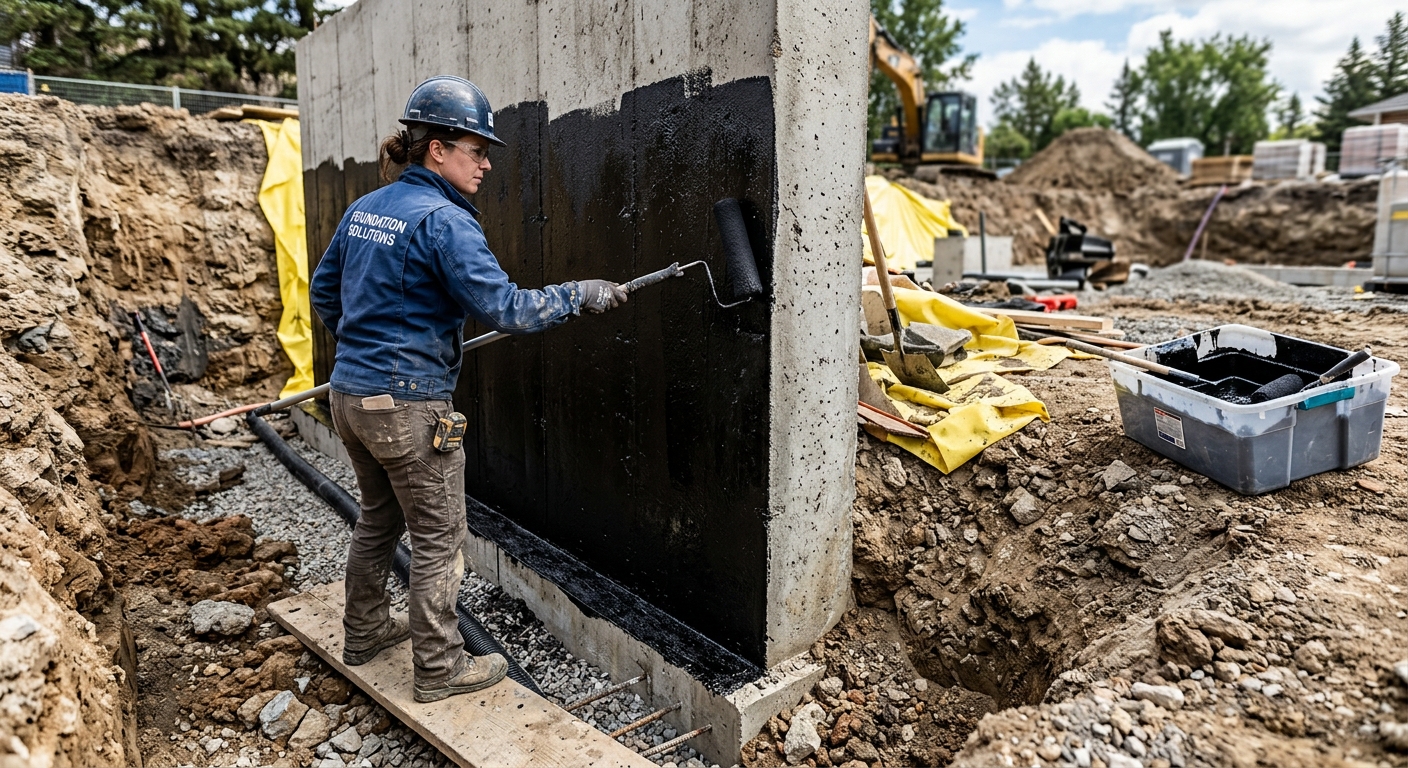
Basement waterproofing options and costs in Squamish
Squamish homeowners typically face basement seepage from a mix of persistent coastal moisture, drainage issues, and foundation aging. In Squamish’s housing profile, 33.8% of homes were built before 1981, and older original waterproofing systems (often tar-and-paper approaches) plus aged weeping tile can leave foundations more vulnerable as drainage capacity declines. With 23,819 residents and 6,435 homeowner households (Statistics Canada, 2021 Census), demand is steady because basements are common and many properties have mature landscaping and established driveways that must be worked around.
In the Lower Mainland–Southwest, waterproofing costs are shaped by hydrostatic pressure from high groundwater tables and intense, prolonged rainfall. Even when cracks are small, that constant pressure pushes water through joints and aged perimeter drains. Add frequent freeze-thaw cycles in a mild coastal climate and you get accelerated widening of existing joints, meaning a “patch” often underperforms unless the water path is addressed. Labour is also higher than many parts of Canada due to excavation constraints on tight lots and rocky sections that require mechanical breaking during digs.
In areas like Britannia Beach / B.C. coastal-adjacent properties and along hillside lots near the Sea-to-Sky corridor, contractors often see more exterior work because backfill saturation is slow to drain. That’s why many quotes start with an exterior excavation assessment, then recommend either full perimeter work or a targeted interior drainage retrofit based on how the current weeping tile and wall condition test out. Use the options below to compare typical approaches and budgets before you request itemised pricing.
| Method |
What It Addresses |
Disruption Level |
Durability |
Price Range |
| Exterior excavation + new membrane + drainage tile |
Hydrostatic pressure management, perimeter seepage, failed weeping tile and wall membrane |
High (excavation, landscaping removal, backfill) |
High (source control) |
$15,000–$30,000 |
| Interior perimeter drain channel + sump pit |
Water entry after it seeps in; reduces hydrostatic pressure inside the basement |
Medium (floor/edge work, minimal exterior disturbance) |
Medium to high (depends on wall condition and pump capacity) |
$8,000–$18,000 |
| Foundation crack injection (epoxy or polyurethane) |
Cracks that act as water pathways; seals or stops active leaks depending on product |
Low to medium (patching and surface prep) |
Medium to high (best when crack movement is addressed) |
$500–$2,000 |
| Sump pump installation (primary + battery backup) |
Improves discharge during high groundwater periods; reduces basement flooding risk during outages |
Low to medium (pit, discharge line, electrical tie-in) |
High (with correct backup and discharge design) |
$1,000–$5,000 |
| Window well drain installation |
Bulk water intrusion and pooling around egress/wells |
Low to medium |
Medium (often complements perimeter systems) |
$1,500–$4,500 |
| Lot re-grading / downspout extension |
Reduces surface runoff to foundation; helps the drainage system work |
Low to medium (minor landscape/groundwork) |
Low to medium (only part of a full solution if groundwater is the main cause) |
$1,200–$6,000 |
Prices are estimates only and vary by project scope, site access and material selection.
What affects the price of waterproofing in Squamish
In Squamish and across British Columbia, the same “basement waterproofing” label can produce quotes that differ by roughly 30% to 50%—sometimes more—because the real variable isn’t the word “waterproofing,” it’s what’s driving the water and how fully the solution controls it. A contractor installing an interior perimeter drain may stop nuisance seepage, while another scope replaces undersized or failed perimeter drainage and reinstalls exterior membrane, which is source control. In tight Lower Mainland–Southwest lots, excavation and disposal can also add cost quickly.
Three key drivers separate regional costs from the national average: soil conditions, water table behaviour, and freeze-thaw. In the Lower Mainland–Southwest, high groundwater and prolonged rainfall raise hydrostatic pressure and sump run times, so sump sizing, discharge routing, and backup power planning become central. Freeze-thaw widens joints and cracks even in newer assemblies, so prep and crack evaluation affect labour hours. Meanwhile, local soils often don’t behave like the clay-heavy, highly expansive soils seen elsewhere in Canada; instead, the issue is persistent saturation and drainage challenges rather than dramatic seasonal expansion.
Concrete examples in Squamish: (1) a hillside lot with poor downspout discharge can send roof runoff toward the foundation, inflating required grading and downspout works—often adding several thousand dollars. (2) A 1980s-built block foundation with original weeping tile can require interior drainage plus sump upgrades, pushing work toward the $8,000–$18,000 interior range. (3) If inspection shows failed perimeter systems and the wall needs exterior membrane reinstatement, budgets typically shift toward $15,000–$30,000 exterior excavation in order to manage water before it enters. With 33.8% of homes built before 1981 (Statistics Canada, 2021 Census), that “aging drain + aging waterproofing” scenario is common.
| Price Factor |
Why It Matters |
Cost Impact |
| Interior vs. exterior approach — interior is less disruptive but addresses symptoms |
Exterior targets the source; interior relies on collecting water after it enters |
Interior often saves on demo/excavation, but may cost more long-term if the exterior cause remains |
| Foundation type — poured concrete vs. block vs. stone vs. ICF |
Different wall finishes, crack behaviours, and sealing methods |
Poured concrete crack injection can be straightforward; block often needs interior drainage reinforcement |
| Soil type — clay expands more than sand, adding pressure |
Expansive soils intensify lateral pressure during seasonal changes |
More pressure can increase repair scope and drainage capacity requirements |
| Crack type and length — hairline vs. structural horizontal cracks |
Structural cracks may indicate movement; active leaks require the right injection system |
Structural or long cracks can add engineering time and extended labour |
| Sump pump backup system — battery or water-powered backup needed |
Ensures performance during spring storms and power interruptions |
Backup adds equipment and electrical/plumbing work; typically a meaningful cost adder |
| Access — landscaping, decks, or driveways must be removed for exterior |
Excavation in tight yards increases demo and restoration labour |
Can push a “manageable” job into the upper end of the exterior band |
| Weeping tile age — original tile (60+ years) may be completely failed |
Failed tile increases hydrostatic pressure and forces more aggressive interventions |
Often drives upgrade from spot fixes to full perimeter systems |
| Mould or efflorescence remediation required before sealing |
Moisture damage must be treated before sealing and finishing |
Adds remediation labour, drying time, and specialty materials |
Permits & regulations in British Columbia
In British Columbia, foundation excavation, structural crack repair, and changes to how lot drainage directs runoff typically require a building permit, because the work can affect structural safety and site drainage performance. If a sump pump discharge connects to a municipal storm or sanitary system, municipal approval is usually required before tying in. For structural crack repair—especially horizontal cracks in block walls or major step cracks—an assessment by a structural engineer is often needed to determine whether underpinning, wall stabilization, or other structural work is required before sealing.
Before hiring, confirm your contractor has engineering support where structural repairs are involved, along with appropriate liability insurance and WSIB/WCB coverage. In practice, most credible Squamish waterproofing contractors provide: (1) product/manufacturer details for membranes, drains, and injection materials; (2) jobsite procedures for drainage control; and (3) proof of insurance and worker coverage.
How to verify step-by-step in Squamish: start by checking the contractor’s active business listing and credentials through the relevant online registry for trades/contractors. Next, ask for a Certificate of Insurance and review it for general liability (and any additional coverages tied to excavation), including effective dates and the named insured. Then request evidence of WSIB/WCB coverage or a clearance letter where applicable, and make sure it matches the contractor name. Finally, if the scope includes structural elements, ask for proof that an engineer is engaged and that the engineering report will be submitted to support the permit.
Interior vs exterior waterproofing — what does Squamish need?
The key difference between exterior and interior waterproofing is where you address the water. Exterior waterproofing involves full excavation, new foundation membrane, new drainage tile, and properly designed backfill—so it manages water before it enters the basement. That’s the “source control” approach, but it costs more and requires significant landscaping disruption and restoration. Interior waterproofing (a perimeter drain channel, sump pit, and sump pump) manages water after it has already seeped in; it can be less invasive, but it doesn’t relieve hydrostatic pressure on the wall surface in the same way exterior systems do.
Squamish’s Lower Mainland–Southwest conditions—high groundwater behaviour, prolonged rainfall, and wet mild winters—often make interior systems perform best as a complement to any exterior drainage deficiencies. For poured concrete walls, crack injection can be effective because the wall can seal more reliably when cracks are properly assessed and sealed with the correct product. For block foundations, interior drainage frequently becomes the practical solution, especially if exterior access is limited by decks, driveways, or established gardens.
Sump pump backup is also a real consideration in British Columbia. During spring flooding periods, power interruptions can happen, and a basement that’s already experiencing high groundwater needs dependable discharge even when the grid is unstable. In many Squamish basements, a primary pump alone may reduce incidents, but backup better protects your recovery time and reduces cleanup risk.
A typical dollar example: if an interior perimeter drain plus sump is quoted around $8,000–$18,000, and inspection suggests the exterior perimeter drainage has failed (with weeping tile collapse or missing membrane), spending closer to $15,000–$30,000 on exterior excavation can be justified because you stop the seepage pathway rather than repeatedly dealing with collected water. If, however, leaks are localized to a few crack locations and the exterior drainage is functioning, interior work can be the smarter value.
| Method |
Best For |
Addresses Source? |
Disruption |
Lifespan |
Price Band |
| Full exterior excavation + membrane |
Repeated seepage, failed perimeter drainage, source-control needs with accessible exterior perimeter |
Yes |
High |
Long (often decades with correct detailing) |
$15,000–$30,000 |
| Interior French drain + sump system |
Limited exterior access, active interior moisture, high groundwater management after seepage |
No (manages after entry) |
Medium |
Medium to long (depends on sump sizing and maintenance) |
$8,000–$18,000 |
| Crack injection — epoxy (structural) |
Non-moving cracks in poured concrete or cracks that are assessed as stable |
Partial (seals entry points) |
Low |
Medium to long if crack movement is not ongoing |
$500–$2,000 |
| Crack injection — polyurethane (active leak) |
Active leaks or water-driven cracks where flexibility is required |
Partial (seals entry points) |
Low |
Medium (requires correct product choice and surface prep) |
$1,000–$3,500 |
| Interior drain channel only (no sump) |
Mild dampness, lower water volumes, cases where a pump isn’t needed immediately |
No |
Medium to low |
Shorter to medium (risk increases if water table rises) |
$6,000–$12,000 |
| Re-grading + downspout extensions |
Roof runoff and surface drainage issues contributing to moisture near walls |
Indirect (reduces surface water load) |
Low to medium |
Medium (best as part of a full drainage plan) |
$1,200–$6,000 |
How to choose a waterproofing contractor in Squamish
Choosing the right waterproofing contractor in Squamish starts with verifying the three things homeowners should never skip: proper licensing/credentials, liability insurance, and WSIB/WCB coverage. In British Columbia, ask for proof of coverage before work begins. For insurance, request a current Certificate of Insurance (COI) showing general liability and any relevant endorsements for excavation-related work; review effective dates and that the insured entity matches the company quoting your job. For WSIB/WCB, request a clearance letter or coverage evidence (and confirm it covers the crew who will be on site).
Next, get 2–3 itemised written quotes. You want labour and materials broken out (excavation hours, membrane components, drain pipe, sump basin, electrical/discharge materials, disposal and restoration), not a single lump-sum number. Scrutinize what’s excluded: permit pulling, disposal of excavated soil, concrete saw cutting, restoration of landscaping, and any wait time for engineering review. Clarify whether the contractor includes temporary drainage control during excavation and what drying time expectations are.
Warranty matters too. Ask for the length and exact scope of workmanship warranty (commonly multiple years for installation practices) and a separate product/manufacturer warranty for membranes, drains, and pumps. Confirm whether warranties are transferable if you sell your home. On payment schedule, avoid paying more than about 10–15% upfront; hold back a portion until the final walkthrough, discharge testing (and battery backup test if included) is complete.
Finally, get a written timeline: start date, stages (inspection → excavation → installation → backfill → restoration), and an estimated completion window—so weather delays in Squamish’s wet season can be planned rather than used as a reason for loose timelines.
- Verify the contractor’s BC credentials/registration status before signing anything.
- Request a current COI and check it names the correct legal business.
- Confirm WSIB/WCB coverage or clearance letter for the people performing the work.
- Ask whether permits are required for your scope and whether the contractor pulls them.
- Get 2–3 itemised quotes with labour + materials breakdown (not just lump sum).
- Require a detailed scope: what drain system, what membrane, what injection product.
- Confirm disposal is included for excavated material and demo waste.
- Ask how they address mould/efflorescence before sealing or finishing.
- Clarify pump specs: discharge line routing, float settings, and alarm plan.
- If you’re near the upper budget range, ensure backup power is included and tested.
- Check warranty terms: workmanship duration, product warranty length, and transferability.
- Set a payment schedule with a small deposit and a completion holdback.
Red flags to watch for in Squamish: (1) contractors who won’t provide COI and WSIB/WCB proof before scheduling; (2) quotes that promise “total waterproofing” without identifying the likely water source (weeping tile vs cracks vs runoff); (3) no mention of sump testing, discharge sizing, or backup when groundwater is high; (4) vague scope language like “seal and patch” with no membrane/drain/injection specifics; and (5) refusal to document warranty coverage or to put start dates and completion estimates in writing.
Frequently asked questions — waterproofing in Squamish
How do I choose a waterproofing contractor in Squamish?
Start by comparing itemised scopes from at least two contractors and verify their paperwork in British Columbia. Ask for a Certificate of Insurance (liability) and proof of WSIB/WCB coverage/clearance for the workers who will be on your property. Then check that the quote matches the problem you’re seeing: ongoing seepage usually calls for drainage and sometimes exterior membrane, while isolated cracks may be treated with crack injection. In Squamish’s Lower Mainland–Southwest wet season, demand is often higher near the Sea-to-Sky corridor, so look for crews that can explain how they’ll manage excavation and drying time. Finally, make sure the warranty is in writing for both workmanship and the products used, and confirm whether it’s transferable if you sell.
What is a battery backup sump pump and do I need one in Squamish?
A battery backup sump pump is a secondary power system that keeps your sump operating during electrical outages. In Squamish and across coastal BC, spring storms and heavy rainfall can strain local power and extend outage windows, which matters because high groundwater can rise quickly. If your basement history includes heavy seepage during storms or you’ve had sump trips before, backup can reduce flood risk and cleanup costs. Typical projects that include a primary pump plus backup fall roughly within the $1,000–$5,000 range depending on pump type, wiring, and discharge complexity. You may also pair backup with an interior perimeter drain approach so water is reliably collected while you wait for power restoration.
How much does basement waterproofing cost in Squamish?
Basement waterproofing in Squamish often lands in different bands depending on whether you’re stopping water at the source or collecting it after it enters. Interior perimeter drainage plus a sump system commonly sits around $8,000–$18,000 in the Lower Mainland–Southwest, especially where access is tight and excavation is mostly within the basement. If inspection shows failed exterior drainage and the solution requires full excavation, new membrane, and new perimeter drainage tile, exterior projects often fall around $15,000–$30,000. For smaller, localized work, foundation crack repair (including injection) is often in the $500–$2,000 range, though active leaks or multiple locations can push higher. Remember: 33.8% of Squamish homes were built before 1981 (Statistics Canada, 2021 Census), and older weeping tile failures frequently drive scope up.
Interior vs exterior waterproofing — which is better?
Exterior waterproofing is usually “better” for source control because it addresses hydrostatic pressure outside the foundation using excavation, membrane, and perimeter drainage. However, it’s more disruptive and can be costly where driveways, decks, and established landscaping limit access. Interior waterproofing is often the better value when exterior excavation is impractical, when leaks are localized, or when a practical drain pathway can be created inside. In Squamish’s wet, mild winters and frequent freeze-thaw cycles, interior systems can perform well—especially with a correctly sized sump and backup—yet they still manage water after entry rather than preventing it. As a rule of thumb, poured concrete walls may seal effectively with injection (when cracks are stable), while block foundations frequently benefit from interior drainage as a complement.
Why is my basement leaking in Squamish?
Basement leaks in Squamish are commonly caused by a combination of high groundwater pressure, persistent rainfall saturating backfill, and drainage system aging. Even if your home is newer, freeze-thaw cycles can widen joints and cracks, creating new pathways for water. In older homes—33.8% built before 1981 (Statistics Canada, 2021 Census)—original perimeter drains may be undersized, clogged, or completely failed, which pushes water against basement walls and slabs. Another frequent cause is roof runoff and downspouts discharging toward the foundation, which increases the water load near the perimeter. Finally, mould or efflorescence can indicate long-running moisture that isn’t solved by cosmetic sealants alone. A proper inspection with drainage evaluation is the quickest way to identify the actual water source.
How do I know if a foundation crack is serious?
Not every crack is urgent, but the risk is higher when cracks appear connected to water entry or when they show signs of movement. In British Columbia, a crack that remains active during wet seasons, shows seepage trails, or widens after freeze-thaw cycles is more likely to be a water pathway requiring appropriate injection (epoxy for stable cracks or polyurethane for active leaks). Serious indicators include horizontal cracks in block walls, pronounced step cracking, cracks paired with bowing, or cracking that worsens after heavy rain. You should also consider severity if you see accompanying interior moisture, efflorescence, or mould. A contractor should document crack locations and lengths and recommend whether engineering assessment is needed—especially for structural-type cracks—before sealing.