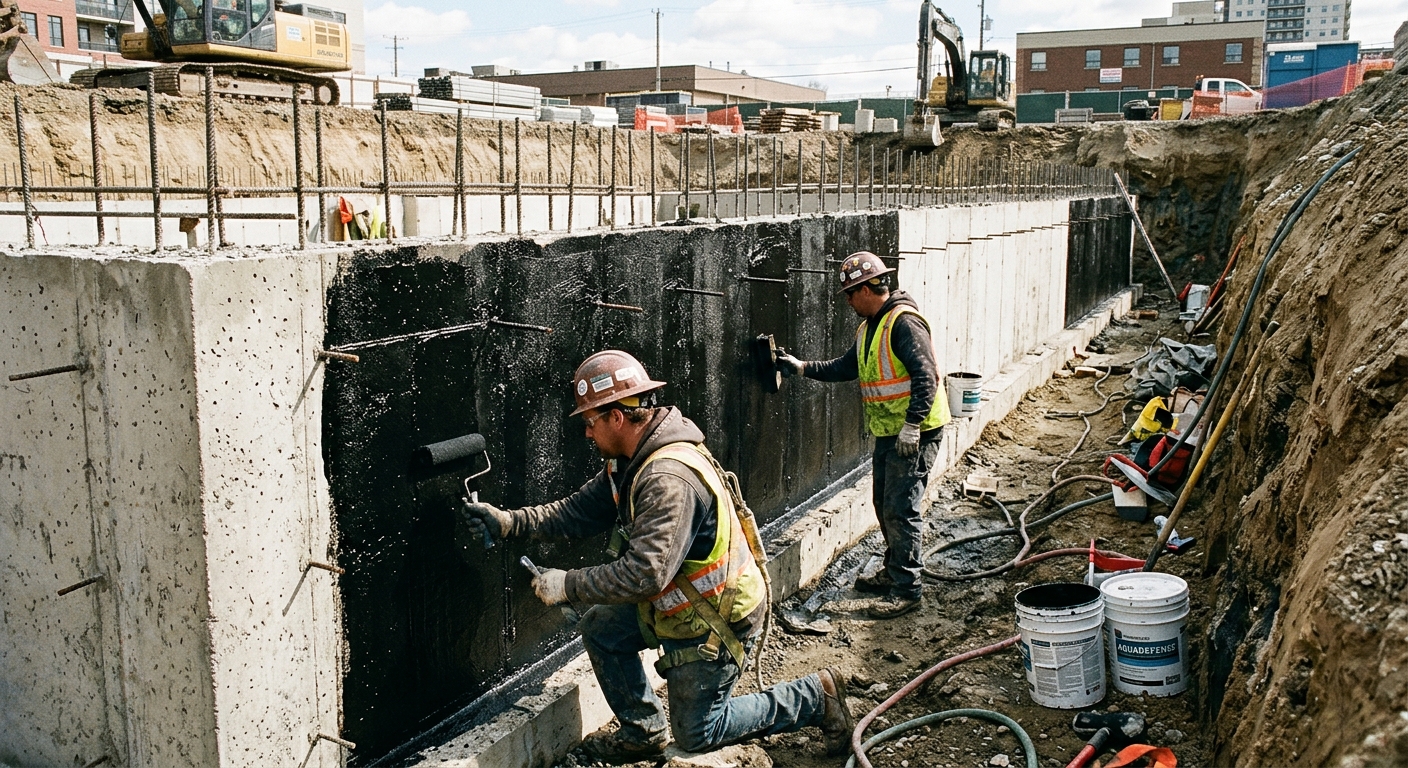
Basement waterproofing options and costs in Mt Pleasant
Basement waterproofing in Mt Pleasant usually comes down to choosing the right “source control” method, because the Lower Mainland–Southwest climate keeps soils saturated and maintains hydrostatic pressure against foundation walls and slabs. With a population of 32,955 (Statistics Canada, 2021 Census), the area has steady demand, especially in older neighbourhoods where perimeter drain systems have aged out. In Mt Pleasant, homes built before original tar-and-paper waterproofing practices were upgraded are far more likely to have failing weeping tile or weak exterior drainage details, which is where many interior moisture complaints begin.
Lower Mainland–Southwest pricing is shaped by high groundwater and prolonged rainfall—contractors often have to excavate in wetter backfill, manage higher sump run times, and deal with freeze-thaw that widens existing cracks and joints. Labour rates and access constraints on tight lots can also push excavation and mechanical breaking costs toward the upper end of the range. In and around the Waverley / Upper Lands neighbourhood area, where older basements and retrofit pressure are common, you’ll typically see faster turnarounds for both interior retrofits and perimeter drain replacements.
The table below compares the most common options you’ll see in Mt Pleasant, including typical disruption and realistic price bands. Use it to align the scope between quotes before you move on to the factors that drive those numbers.
| Method |
What It Addresses |
Disruption Level |
Durability |
Price Range |
| Exterior excavation + new membrane + drainage tile |
Source of water entry by rebuilding the perimeter drainage system and waterproofing layer |
High (landscaping/driveway disruption, excavation) |
Long-term (often 20+ years with proper backfill/drainage) |
$15,000–$30,000 |
| Interior perimeter drain channel + sump pit |
Manages water after entry (intercepts seepage into basement) |
Medium (floor/finish removals around perimeter) |
Strong (typically 15–25 years when sump and discharge are maintained) |
$8,000–$18,000 |
| Foundation crack injection (epoxy or polyurethane) |
Seals cracks and joints; polyurethane is used for active seepage |
Low to Medium (localized drilling/mess control) |
Moderate to Long-term (depends on crack type and cause) |
$500–$2,000 |
| Sump pump installation (primary + battery backup) |
Relieves hydrostatic pressure by pumping collected groundwater |
Low to Medium (cutting for sump pit, routing discharge) |
High (backups improve reliability during outages) |
$1,000–$5,000 |
| Window well drain installation |
Stops water pooling around egress windows and directs it away from the wall |
Low (localized excavation and minor landscaping) |
Medium to High (depends on grading and downspout control) |
$1,000–$4,500 |
| Lot re-grading / downspout extension |
Reduces surface water infiltration by improving slope and directing roof runoff |
Low to Medium (topsoil/grass/stone adjustments) |
Moderate (must be maintained) |
$800–$3,500 |
Prices are estimates only and vary by project scope, site access and material selection.
What affects the price of waterproofing in Mt Pleasant
In the Lower Mainland–Southwest, two quotes for what looks like the “same” basement issue can differ by 30–50% because the underlying water pathway is rarely identical. Waterproofing isn’t only about sealing a visible crack; it’s about whether the contractor is addressing source water entry (usually exterior work) or managing water after it has already entered (usually interior drains and sump pumping). Across British Columbia, costs are also influenced by how often crews must excavate in saturated soils, how frequently they encounter failing perimeter drain systems, and how tight access routes affect excavation and disposal.
Three local conditions separate this region from the national average: soil behaviour, water table height, and freeze-thaw. First, clay-heavy soils (more common elsewhere in Canada than around the Lower Mainland) can expand and worsen wall cracking during freeze-thaw, but in BC the more common cost driver is persistent saturation and hydrostatic pressure—soil stays wet longer, so drainage systems work harder. Second, high water tables increase sump run times and can raise the required discharge and backup scope. Third, even with milder winters, frequent freeze-thaw widens existing joints and cracks, accelerating deterioration and making “partial” repairs less effective.
Two concrete Mt Pleasant examples: if your exterior weeping tile is original (often 60+ years old in older homes) and is completely failed, interior-only work may end up repeatedly dealing with seepage and rising sump cycling. Conversely, if leaks are limited to window wells and surface runoff control is poor, re-grading and downspout extensions can keep you closer to the lower end of typical moisture control costs—often far below full exterior excavation. Where the foundation type and crack pattern match a clear cause, crack injection may keep you near the $500–$2,000 band; where full excavation is needed, exterior waterproofing commonly sits in the $15,000–$30,000 range.
| Price Factor |
Why It Matters |
Cost Impact |
| Interior vs. exterior approach |
Interior drains reduce disruption but don’t remove hydrostatic pressure against the wall surface |
Interior typically lower; exterior can cost substantially more (often moving projects into the higher band) |
| Foundation type |
Poured concrete, block, stone, and ICF differ in crack behaviour and sealing method compatibility |
Block and older materials often need more detailed drainage coordination |
| Soil type |
Clay expands more than sand and can increase lateral pressure during freeze-thaw |
Higher pressure periods can increase the risk of repeated cracking if drainage is inadequate |
| Crack type and length |
Hairline cracks may be less severe; structural horizontal cracks can indicate movement and require deeper assessment |
Structural cracks raise engineering and/or repair scope; hairline cracks can stay near basic injection pricing |
| Sump pump backup system |
Backup prevents failure during outages when spring flooding and wet cycles peak |
Can move a pump install toward the upper part of the $1,000–$5,000 band |
| Access |
Decks, driveways, and landscaping may need removal for exterior excavation and safe spoil handling |
Often increases labour and disposal; tight-lot work can push costs upward |
| Weeping tile age |
Original perimeter drain systems may be fully blocked or collapsed |
Often determines whether interior-only fixes will be temporary |
| Mould or efflorescence remediation required before sealing |
Sealers and membranes won’t adhere reliably over active moisture, salt deposits, or contaminated surfaces |
Additional labour and materials can add meaningful cost before waterproofing begins |
Permits & regulations in British Columbia
In British Columbia, some waterproofing-related work does require a permit, particularly when you’re changing the building’s structure or the way site drainage functions. Foundation excavation near a footing, structural crack repair for conditions that may affect stability, and changes to lot drainage often trigger permit requirements. If your sump pump discharge is connected to storm or sanitary systems, you typically need municipal approval for that connection and adherence to local servicing rules.
For structural crack repair—especially horizontal cracks in block walls or major step cracks—a structural engineer’s assessment is commonly required to determine whether underpinning or additional structural measures are needed before sealing. When contractors propose “injection only” on potentially structural damage, it’s a red flag unless they’ve documented how they determined stability.
Step-by-step, homeowners in Mt Pleasant can verify a contractor in BC:
- Ask for the contractor’s business information and confirm whether their scope aligns with the appropriate provincial registration for their trades/activities.
- Request a certificate of liability insurance and verify it’s current and specific to the work.
- Confirm WSIB/WCB coverage documentation (or appropriate clearance letters) for workers on-site.
- If structural repair is proposed, ask for engineer support (letter/report) and who supplies it.
- Get the permit process clearly explained: whether the contractor pulls permits, what’s included, and timelines.
When in doubt, ask the contractor to show proof before signing—don’t wait for the day excavation begins.
Interior vs exterior waterproofing — what does Mt Pleasant need?
The fundamental difference is what each approach does about the source of water entry. Exterior waterproofing—full excavation, new membrane, new drainage tile, and proper backfill—targets the problem at the perimeter so water has a controlled path away from the foundation. It costs more and requires landscape disruption, but it’s the most permanent way to reduce hydrostatic pressure at the wall and slab.
Interior waterproofing—perimeter drain channel, sump pit, and sump pump—captures water after it enters the basement. It’s less invasive, often cheaper, and a practical solution when excavation access is limited or when exterior work isn’t feasible. However, it doesn’t stop hydrostatic pressure from acting on the wall itself, so it works best when paired with crack sealing and reliable pumping.
In Mt Pleasant and the Lower Mainland–Southwest, persistent rainfall and higher groundwater mean sump systems often run more frequently. That’s why a backup system becomes more than a “nice to have” during spring storms and outages. Poured concrete walls often respond well when the main issue is localized cracking—crack injection can help, provided the cause is drainage related. Block foundations are common in older homes and typically benefit from interior drainage as a complement, especially when exterior weeping tile has failed or is undersized.
Here’s where cost differences can be justified. If you have active seepage and failed original drainage along multiple exterior walls, exterior waterproofing in the $15,000–$30,000 range can prevent repeated interior interventions. But if leaks are concentrated near window wells or a single perimeter section, an interior plan and sump package in the $8,000–$18,000 band may solve it without full landscaping teardown—especially on tight lots.
| Method |
Best For |
Addresses Source? |
Disruption |
Lifespan |
Price Band |
| Full exterior excavation + membrane |
Widespread seepage, failed weeping tile, or persistent hydrostatic pressure |
Yes (rebuilds perimeter barrier and drainage path) |
High (excavation and landscaping restoration) |
20+ years with proper installation and grading |
$15,000–$30,000 |
| Interior French drain + sump system |
Interior moisture, damp floors, and seepage when exterior access is limited |
No (manages water after entry) |
Medium (floor perimeter removal) |
15–25 years with routine maintenance |
$8,000–$18,000 |
| Crack injection — epoxy (structural) |
Non-leaking, stable cracks where sealing improves watertightness |
Partially (seals pathway in stable cracks) |
Low (localized drilling) |
Moderate to long-term if crack movement is stopped |
$500–$2,000 |
| Crack injection — polyurethane (active leak) |
Active seepage or weeping cracks that need flexible sealing |
Partially (responds to water movement at the crack) |
Low to Medium |
Moderate (long-term success depends on drainage control) |
$500–$2,000 |
| Interior drain channel only (no sump) |
Light moisture control in isolated areas where water can be reliably collected/discharged |
No (intercepts water but relies on gravity/flow design) |
Medium to Low |
Variable (depends on discharge method and site grading) |
$6,000–$12,000 |
| Re-grading + downspout extensions |
Surface runoff issues causing occasional dampness near perimeter |
Yes (reduces water coming to the foundation) |
Low to Medium (yard works) |
Moderate (can degrade if landscaping changes) |
$800–$3,500 |
How to choose a waterproofing contractor in Mt Pleasant
Choosing the right waterproofing contractor in Mt Pleasant starts with verifying the basics in British Columbia and then aligning scope and expectations. Confirm liability insurance first—request a certificate of insurance showing coverage and effective dates, and make sure the policy covers the type of work being performed. Next, verify WSIB/WCB coverage: ask for current documentation or clearance letters for the workers who will be on-site. If structural repairs are proposed, ask whether they have engineering support lined up, not just a “we’ll fix it” promise.
Then get 2–3 itemised written quotes. You want labour and materials broken down (for example: excavation/haulage, membrane/drain tile, sump pit components, pump and check valve parts, discharge pipe, disposal, and any restoration). A lump sum quote without exclusions is hard to compare and often leads to change orders. Read the scope carefully for what’s excluded: permit pulling, disposal/haul away, concrete cutting limits, basement finish restoration, and whether there’s mould/efflorescence remediation before sealing.
Warranty matters, too. Ask for the workmanship warranty length and whether it’s tied to the specific installation. Also request the manufacturer’s product warranty details and whether it’s transferable to you as the homeowner. Finally, payment schedule: never pay more than 10–15% upfront, and hold back a portion until the job is complete and tested.
Get a start date and completion estimate in writing, and require a practical plan for wet weather conditions, especially during BC’s heavier spring runoff periods.
- Ask for proof of liability insurance with matching dates to your work schedule.
- Verify WSIB/WCB clearance or coverage for all workers expected on-site.
- Request a detailed scope that includes permits: pulled by the contractor or by you.
- Confirm excavation limits, spoil disposal, and whether haulage is included.
- Check who supplies and installs sump pump check valves, alarm, and discharge piping.
- Confirm sump backup type (battery vs other approved backup) if flooding risk is high.
- Require crack repair documentation: crack mapping, crack type, and injection product choice (epoxy vs polyurethane).
- Ask how they handle efflorescence or active mould before sealing.
- Ensure the quote lists restoration items (topsoil/seed/stone) and what’s excluded.
- Get a warranty in writing that covers both workmanship and product terms.
- Verify payment milestones are tied to completed, verifiable steps.
- Ask how they test and verify drainage performance after installation (e.g., water test where feasible).
Concrete red flags in Mt Pleasant include: promises to “guarantee a dry basement” without diagnosing the water pathway, refusing to provide proof of insurance/WSIB/WCB coverage, quoting exterior work without addressing tight access and spoil disposal, offering crack injection for horizontal structural cracks without engineering assessment, and providing a non-itemised price that shifts material choices after excavation starts.
Frequently asked questions — waterproofing in Mt Pleasant
How long does basement waterproofing take in Mt Pleasant?
In Mt Pleasant, typical basement waterproofing timelines depend on whether you’re doing exterior excavation or an interior retrofit. An interior perimeter drain and sump installation often takes about 3–7 working days once materials are on-site, followed by drying/finish planning. Exterior waterproofing is commonly longer—often 1–3 weeks—because excavation, membrane work, drainage tile installation, and curing/backfill all need weather-safe sequencing in Lower Mainland conditions.
Wet soil and persistent rainfall can slow excavation days, even when crews are ready. If you’re also dealing with crack injection and remediation (mould/efflorescence), plan more time for surface prep and proper conditions before sealing. Sump pump additions are usually faster, especially when the pit already exists; a sump pump can fall within the $1,000–$5,000 band and often installs quickly. Always confirm your contractor’s start date and completion estimate in writing.
What is a weeping tile and does my Mt Pleasant home have one?
A weeping tile (often called perimeter drain tile) is the drainage layer installed around or near the foundation that collects groundwater and channels it to a sump or discharge point. In older Mt Pleasant homes, the original weeping tile may still exist, but it’s frequently blocked by sediment, collapsed, or disconnected over time—especially when discharge paths and downspouts weren’t maintained.
Whether your home has one isn’t always visible from the basement alone. Signs include older sump pits, a history of basement dampness that seems worse in heavy rain, and sometimes a “drainage smell” near the perimeter after wet weather. The Lower Mainland–Southwest market often sees failing original tile in homes with recurring seepage, which can raise the scope from simpler interior fixes into higher-range projects. If you’re planning waterproofing and suspect the tile is failing, ask your contractor to inspect discharge points and propose a solution aligned with the water pathway.
Can I waterproof my basement in winter in Mt Pleasant?
Yes, in many cases you can waterproof in winter in Mt Pleasant, but the approach matters. Interior work is usually more feasible than full exterior excavation when the ground is frozen, because excavation and membrane installation require safe conditions, proper backfill placement, and controlled curing. In cold snaps, frozen soils can limit trenching and make excavation riskier.
That said, crack injection and interior sump retrofits can often be completed with suitable site conditions—contractors use scheduling and equipment to manage dust and temperature-sensitive steps. Your contractor may still recommend delaying exterior membrane and drainage tile replacement if the soil can’t be excavated to required depth or backfill can’t be compacted correctly. If you’re comparing options, interior waterproofing commonly sits in the $8,000–$18,000 range, while exterior work often lands in $15,000–$30,000. A good contractor will explain which parts of the scope can proceed immediately and which should wait.
What is the difference between waterproofing and damp-proofing?
In everyday use, people mix these terms, but they describe different levels of protection. Damp-proofing is generally intended to manage “basic dampness” by resisting minor moisture through the foundation. Waterproofing is designed to address higher water pressure and seepage pathways—especially when hydrostatic pressure and high groundwater keep water against walls and slabs for long periods, which is common in the Lower Mainland–Southwest.
In British Columbia, prolonged rainfall and higher groundwater tables mean damp basements can quickly become active seepage. If you only apply damp-proofing-style measures (or seal a symptom) without proper drainage—like a sump with discharge control or an exterior drainage tile system—the moisture can return, particularly during spring melt and wet cycles.
When selecting a contractor in Mt Pleasant, ask them to describe the water pathway and whether the plan is source control (typically exterior) or water management after entry (typically interior drains and sump pumping). That distinction is what usually explains why prices vary even when the problem “looks similar.”
Will basement waterproofing affect my property value in Mt Pleasant?
Basement waterproofing can positively affect property value because it reduces risk and improves livability. Buyers in Mt Pleasant often treat active seepage, efflorescence, or recurring sump cycling as a cost uncertainty, so a documented, properly installed waterproofing system can strengthen confidence—especially when you can show the scope, materials used, and warranty details.
However, value impact depends on whether the root cause is addressed. Exterior source control (new membrane and drainage tile) tends to be more persuasive for buyers when there’s widespread seepage, while interior systems can still add value if they reliably manage water and the foundation doesn’t show structural movement issues. If crack repairs are involved, stable crack sealing supported by a clear diagnosis is important.
In practice, homeowners often end up spending anywhere from the $8,000–$18,000 interior band to the $15,000–$30,000 exterior band. The best resale benefit comes when the work includes proper drainage, not just cosmetic sealing.
What drainage issues are most common in Mt Pleasant homes?
The most common drainage problems in Mt Pleasant are perimeter drainage failures and surface water mismanagement. Many older basements experience moisture because original weeping tile has failed (blocked, disconnected, or collapsed) and the discharge path can’t handle sustained rainfall. Another frequent issue is inadequate lot grading: downspouts that dump too close to the foundation, negative slope toward the basement, and landscaping changes that divert runoff toward the walls.
Because Lower Mainland–Southwest conditions maintain saturation, interior signs often worsen during prolonged rain and spring melt. You’ll also see freeze-thaw effects that widen joints and allow water to enter at cracks. In homes where window wells are improperly drained, localized pooling around egress windows can create damp floors and mould growth.
If you’re diagnosing your situation, look for patterns: which wall gets wet first, whether it corresponds to downspout locations, and whether the sump runs often. Those clues help contractors recommend the right option—interior drainage, exterior source control, or a focused fix like re-grading and extensions.