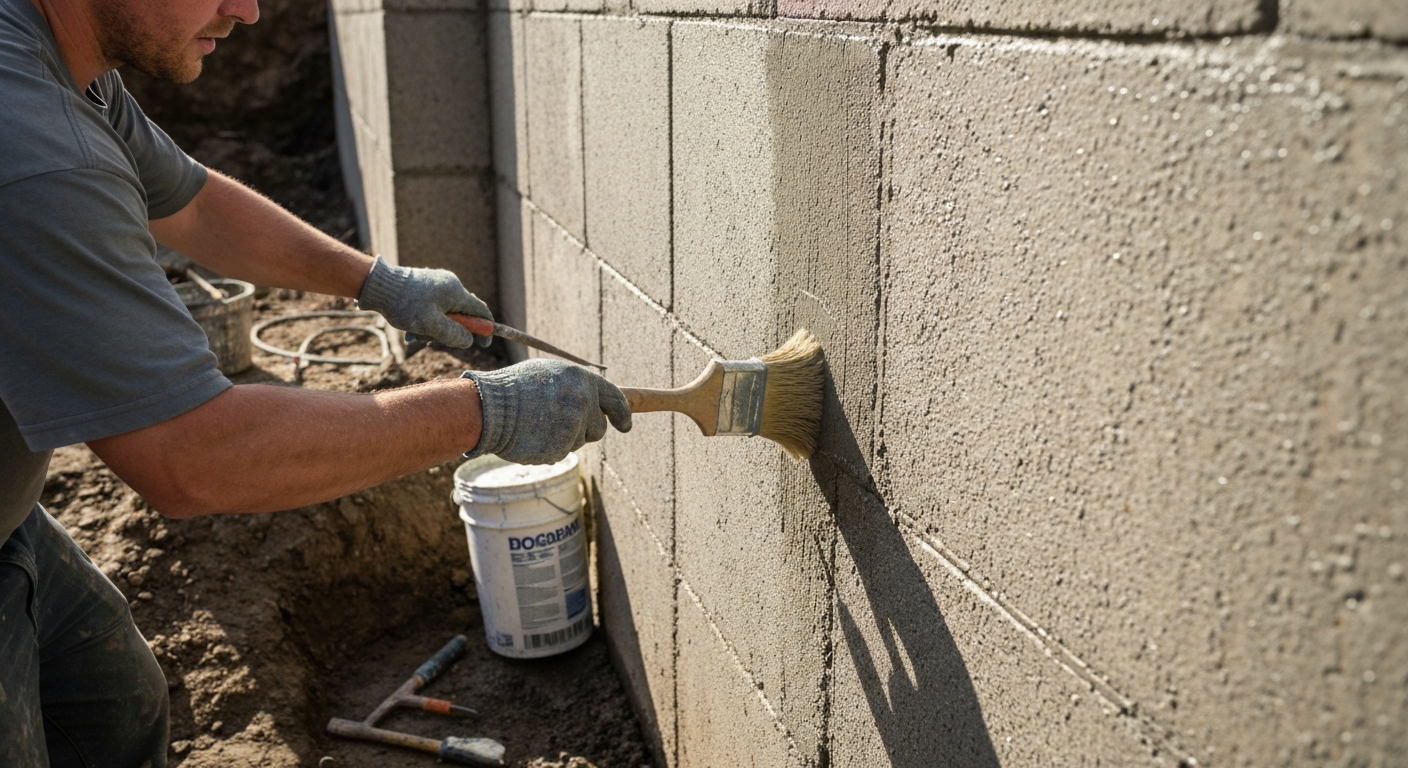
Basement waterproofing options and costs in Revelstoke
Revelstoke homeowners usually start waterproofing conversations when spring melt, heavy rain, or recurring dampness around slab edges and foundation cracks becomes impossible to ignore. In a town where 66.4% of homes were built before 1981, many foundations still have aging, undersized, or failed original waterproofing systems—think deteriorated weeping tile, compromised tar-based membranes, and older exterior grading that no longer sheds water effectively. With 74.9% of households owning their homes (Statistics Canada, 2021 Census), there’s a strong “fix it once” mindset, which is good for planning long-term drainage improvements.
In the Thompson–Okanagan, site conditions drive costs more than most homeowners expect. Glacial and alluvial soils can swing between free-draining sand/silt and tighter clay pockets that hold water longer and increase lateral pressure on foundation walls. Add freeze–thaw cycles that widen existing joints, and the same leak can become a bigger problem over a few seasons—especially where exterior drains are clogged or missing. Contractor availability and excavation difficulty also vary; on steeper or tighter lots near downtown and older neighbourhoods, excavation can be more complex and concrete/asphalt removal becomes a major cost multiplier.
Homes along or near the older, denser corridors—where landscaping, driveways, and existing drainage routes make exterior work disruptive—often see higher exterior project pricing. For many of these properties, the best quote is the one that matches the water entry point and the soil’s ability to drain. The comparison below will help you sort options before you request itemised pricing.
| Method |
What It Addresses |
Disruption Level |
Durability |
Price Range |
| Exterior excavation + new membrane + drainage tile |
Stops water entry at the foundation, adds drainage path, corrects hydrostatic pressure |
High (excavation, wall exposure, backfill, reinstatement) |
Long-term, typically best for persistent seepage |
$18,000–$40,000 |
| Interior perimeter drain channel + sump pit |
Intercepts water after it enters; reduces hydrostatic pressure indoors |
Medium (floor/feature openings, interior work) |
Long-term when paired with reliable sump + discharge |
$9,000–$22,000 |
| Foundation crack injection (epoxy or polyurethane) |
Seals cracks; epoxy for non-moving/stable cracks, polyurethane for active leakage |
Low to medium (surface prep, crack drilling/ports) |
Good to long-term depending on crack type |
$800–$3,500 |
| Sump pump installation (primary + battery backup) |
Moves collected water to the exterior during high seepage; backup protects during outages |
Low to medium (mechanical install, piping, pit) |
Good (depends on discharge routing and maintenance) |
$2,500–$5,500 |
| Window well drain installation |
Prevents water pooling and seepage at basement window areas |
Low to medium (window well access) |
Moderate to long-term (drain maintenance matters) |
$1,200–$3,200 |
| Lot re-grading / downspout extension |
Reduces surface runoff toward the foundation; improves roof-water discharge |
Low to medium (landscape/soil movement) |
Moderate (effectiveness depends on drainage path staying clear) |
$2,000–$6,000 |
Prices are estimates only and vary by project scope, site access and material selection.
What affects the price of waterproofing in Revelstoke
In the Thompson–Okanagan, it’s common to see the “same” basement leak priced 30–50% differently across British Columbia. Two homes can both have damp corners, but one sits on sand/gravelly soil that drains quickly while the other has clay pockets that hold water against the wall. That difference changes how much excavation, drainage design, and mechanical capacity (often the sump and discharge strategy) are required. Older housing stock also matters: with 66.4% of Revelstoke homes built before 1981, we see higher rates of failing weeping tile and exterior drainage that no longer performs as intended.
Three drivers typically separate regional costs from the national average. First is soil type: clay expands with freeze–thaw and can exert lateral pressure that worsens cracks over time, which can push repairs from “sealing” into “drainage + crack correction.” Second is water table and seepage persistence: when high-water-table pockets exist, sump pumps run longer and discharge needs careful routing. Third is freeze–thaw: it widens joints and accelerates failure where membranes or drains are compromised.
In Revelstoke specifically, I often see costs rise when exterior drainage is clogged with silt or when soils are mixed (glacial/alluvial) and there’s localized clay near the foundation. Costs can drop where roof drainage is easily rerouted and where access allows a clean exterior excavation and proper backfill. On many properties, exterior waterproofing sits in the $18,000–$40,000 range, while interior perimeter drainage commonly lands in the $9,000–$22,000 range—however, the “cheaper” interior option can end up more expensive if the root cause is failing exterior drainage that still overwhelms the system.
| Price Factor |
Why It Matters |
Cost Impact |
| Interior vs. exterior approach — interior is less disruptive but addresses symptoms |
Interior manages water after entry; exterior targets water entry and pressure |
Interior often $9,000–$22,000; exterior typically $18,000–$40,000 |
| Foundation type — poured concrete vs. block vs. stone vs. ICF |
Wall construction affects crack behaviour and sealing strategy |
Poured concrete crack injection may be simpler; block often needs a more robust interior plan |
| Soil type — clay expands more than sand, adding pressure |
Clay-heavy soils hold water and exert lateral pressure during freeze–thaw |
Higher drainage scope, more excavation complexity, bigger design allowance |
| Crack type and length — hairline vs. structural horizontal cracks |
Active or structural movement can require different treatments |
Hairline repairs lower cost; structural concerns can push higher labour/engineering time |
| Sump pump backup system — battery or water-powered backup needed |
Protects during spring outages when seepage peaks |
Can add roughly $1,000–$3,000 depending on system choice and controls |
| Access — landscaping, decks, or driveways must be removed for exterior |
Excavation logistics and reinstatement can dominate labour |
Access limits increase shoring, disposal, and restoration costs |
| Weeping tile age — original tile (60+ years) may be completely failed |
Old tile often blocks with silt or collapses, reducing drainage effectiveness |
May require replacement/upsizing or a full drainage re-design |
| Mould or efflorescence remediation required before sealing |
Sealers won’t perform well on contaminated or damp surfaces |
Adds prep, drying time, and sometimes controlled cleanup |
Permits & regulations in British Columbia
In British Columbia, the need for permits depends on what work you’re doing and how it affects structure and drainage. In most cases, foundation excavation, structural crack repair, and changes to lot drainage typically require a building permit because the work can affect structural performance and how stormwater moves. If you install or alter systems that connect to municipal services, such as where sump discharge is routed to the storm or sanitary sewer, you generally need municipal approval prior to installation.
For structural crack repair—particularly horizontal cracks in block walls or major step cracks that may indicate more than simple seepage—an assessment from a structural engineer is often required to confirm whether underpinning or other structural measures are needed. This is where many homeowners get caught: a waterproofing crew can seal cracks, but if the crack reflects structural movement, the “seal-only” approach may not last.
Step-by-step, here’s how a Revelstoke homeowner can verify contractor compliance in British Columbia:
- Ask for the contractor’s applicable licence/registration details (and confirm they match the trade scope on your quote).
- Request a current certificate of insurance showing liability coverage.
- Confirm WSIB/WCB coverage status and that it covers the crews on your site.
- For structural repairs, ask whether they include engineering support (or subcontract an engineer) before pricing underpinning or advanced repairs.
- Verify who pulls permits and whether the permit fees are included or excluded in the written scope.
- Get the clearance paperwork/permit numbers (if applicable) tied to your address before work begins.
Interior vs exterior waterproofing — what does Revelstoke need?
The fundamental difference is how each option deals with the source of moisture. Exterior waterproofing involves full excavation to expose the foundation, then applying membrane and new drainage tile, followed by backfill and landscape reinstatement. It’s the closest thing to “permanent source control” because it reduces water entry at the wall and relieves hydrostatic pressure outside. The trade-off is cost and disruption: expect excavations, concrete/asphalt removal where applicable, and landscaping restoration.
Interior waterproofing—perimeter drain channels, a sump pit, and a sump pump—does something different: it manages water after it enters. It reduces indoor water and keeps floors/walls drier, but it doesn’t stop water pressure acting on the wall itself. In Revelstoke, this matters because freeze–thaw can widen joints; if the exterior drainage path is failing, interior systems can become overloaded during heavy spring events unless they’re properly sized and have reliable discharge routing.
In our Thompson–Okanagan market, poured concrete walls often respond well to crack injection combined with an interior intercept strategy when needed; epoxy injection is typically appropriate for stable, non-moving cracks, while polyurethane is used where there’s an active seep. Block foundations more often need a practical complement—interior drainage to manage water that works its way through or around masonry joints.
Here’s a realistic example: if your leak is concentrated along a single crack line and you have limited access for excavation, crack injection plus interior drain work can be a cost-effective move within the $800–$3,500 crack repair band and the $9,000–$22,000 interior range. But if inspection shows widespread failed weeping tile and water is tracking along multiple wall segments, an exterior approach is often justified within the $18,000–$40,000 band because it targets the root drainage failure.
| Method |
Best For |
Addresses Source? |
Disruption |
Lifespan |
Price Band |
| Full exterior excavation + membrane |
Persistent seepage where exterior drainage has failed or water is entering widely |
Yes |
High |
Long-term |
$18,000–$40,000 |
| Interior French drain + sump system |
Homes where excavation is difficult, or you need a reliable interior interceptor |
No (manages after entry) |
Medium |
Long-term with proper pump/discharge |
$9,000–$22,000 |
| Crack injection — epoxy (structural) |
Stable cracks in poured concrete/block without active flowing seepage |
Partial (seals the pathway) |
Low to medium |
Good to long-term if crack movement is controlled |
$1,000–$3,500 |
| Crack injection — polyurethane (active leak) |
Active leaks where water is currently moving through cracks |
Partial (stops active flow) |
Low to medium |
Good (best paired with drainage management) |
$1,200–$3,800 |
| Interior drain channel only (no sump) |
Light seepage with gravity drainage to a safe discharge point |
No (manages after entry) |
Medium to low |
Moderate (depends on discharge conditions) |
$6,000–$14,000 |
| Re-grading + downspout extensions |
Surface water is the trigger; roof runoff is contributing to wall wetting |
Yes (reduces surface entry) |
Low to medium |
Moderate |
$2,000–$6,000 |
How to choose a waterproofing contractor in Revelstoke
Choosing the right waterproofing contractor in Revelstoke is mostly about proof: proof they can design for your site conditions, and proof they’re insured and accountable. Start with British Columbia compliance. Ask for their liability insurance certificate (for your protection on site), and confirm WSIB/WCB coverage status for workers. Then verify the contractor’s licence/registration aligns with the scope they’re quoting, not just the marketing name.
Next, get 2–3 itemised written quotes. You want a labour + materials breakdown that makes it clear what’s included: excavation extent, membrane type, drainage tile size, filter fabric, disposal, backfill material, and whether sump pump discharge routing is included. Avoid a lump sum where key details are missing, because waterproofing performance can hinge on those “small” items.
Read the scope like it’s a warranty document. Is permit pulling included? Is demolition/disposal included (concrete removal, asphalt saw-cutting, hauling)? Who reinstates landscaping and when? Ask about warranties: confirm the workmanship warranty length and whether it’s backed by the company (not only the product), and whether the warranty is transferable if you sell. For payment schedule, never pay more than 10–15% upfront, and use a holdback until the job is complete and tested/dried. Get the timeline in writing, including start date and completion estimate.
- Written site assessment notes (what wall segments, crack locations, and moisture patterns were observed).
- Clear explanation of whether the plan is exterior source control or interior interception.
- Details on drainage: tile size, slope, filter fabric, and where discharge goes.
- Crack treatment specified (epoxy vs polyurethane) with the reason based on active seepage.
- Permit responsibility stated in the contract (who pulls it and who pays fees).
- Disposal included or excluded (especially concrete/asphalt removal).
- Reinstatement scope listed (topsoil, seeding/sod, deck/driveway patching).
- Confirm sump pump discharge method and backup strategy (battery vs other backup).
- Workmanship warranty duration and what triggers a claim.
- Materials/manufacturer warranty details (what the manufacturer covers vs installer covers).
- Payment schedule with milestone-based payments and a holdback until commissioning.
- Start date, duration, and weather planning (drying time expectations in BC conditions).
Red flags I see in Revelstoke include: quoting exterior waterproofing without confirming whether weeping tile is functional or replaced; offering “epoxy for everything” even when there’s active seepage; skipping sump pump discharge design and relying on a vague “pump it out” description; and requesting large upfront payments (beyond 10–15%) without a signed contract and milestone schedule.
Frequently asked questions — waterproofing in Revelstoke
Do I need a permit for foundation work in British Columbia?
In British Columbia, permit needs are tied to the type of foundation and drainage work. Foundation excavation, structural crack repair, and changes to lot drainage typically require a building permit, because they can affect structural performance and stormwater movement. If your sump pump discharge connects to storm or sanitary sewer infrastructure, municipal approval is usually required before installation. In Revelstoke, don’t assume “small crack sealing” avoids permitting—if the crack is potentially structural (for example, major horizontal cracking in block walls), an engineer assessment may be required before any repair plan is final. A reputable contractor will state clearly in the contract who pulls permits, what is included, and provide the permit/clearance details relevant to your address.
How long does waterproofing last?
Basement waterproofing longevity depends on whether you addressed the source (exterior water entry) or only managed symptoms (interior interception). Exterior waterproofing systems—when properly designed for local soil and drainage and installed with correct membranes and drainage tile—are typically the longest-lasting approach. Interior drainage and sump systems can also last many years, but performance depends heavily on sump reliability, discharge routing, and how much water the site produces during spring melt. Crack injection can last a long time for stable cracks, but active leak conditions may require polyurethane and drainage support. In Revelstoke, freeze–thaw and clay pockets can shorten intervals if the water source isn’t corrected. As a practical reference point, an exterior project in the $18,000–$40,000 band often performs better long-term when the weeping tile and grading are truly fixed, compared with recurring interior-only fixes.
Can I waterproof my basement from the inside only?
Yes, interior waterproofing is possible in Revelstoke, and it’s commonly chosen when exterior excavation is difficult due to access constraints or when a homeowner wants lower disruption. Interior perimeter drainage (a French drain channel) with a sump pit and pump can keep floors and walls drier by intercepting water after it enters. However, interior work does not stop hydrostatic pressure from acting on the foundation wall, so if exterior drainage has failed and the wall is being actively loaded, interior systems may be overwhelmed during heavy spring rain or snowmelt. In many homes built before 1981, failed exterior weeping tile and grading can be the real trigger, even if the problem appears “inside.” A good approach is crack injection for the leak pathway plus interior drainage if needed. If you’re comparing prices, interior work commonly falls in the $9,000–$22,000 range, but it may not be the best value if the root drainage failure isn’t corrected.
What causes foundation cracks in Revelstoke?
In Revelstoke and the Thompson–Okanagan, foundation cracks are usually driven by soil movement and water effects rather than a single “bad install.” Freeze–thaw cycles expand and contract moisture in the soil, which can widen joints and existing minor cracks over time. Mixed glacial/alluvial soils can also include localized clay pockets that retain water longer and exert more lateral pressure against foundation walls. Another common driver—especially in older housing stock—is drainage failure: clogged or failed weeping tile and poor surface grading allow water to sit against the foundation, increasing seepage pathways and pressure. Poorly maintained downspouts and landscaping that directs runoff toward the foundation can accelerate crack activity. If you have a horizontal crack, ongoing step cracking, or cracking that expands seasonally, it may be more than simple seepage and may require an engineer assessment before sealing.
How do I compare waterproofing quotes?
When comparing waterproofing quotes in Revelstoke, don’t compare only the total price—compare what each contractor is actually fixing. Ask for itemised written quotes with a clear scope: excavation extent (if exterior), membrane and drainage tile specs, sump pump model and discharge route, filter fabric and backfill plan, and whether disposal and reinstatement are included. Confirm how they’ll handle crack type: epoxy for stable, non-moving cracks versus polyurethane for active leaks. A quote that doesn’t explain these details is risky, even if it’s within the same budget band. Also check the permit responsibility and warranty terms. Finally, look at realism: an exterior excavation scope commonly sits in the $18,000–$40,000 range, while interior waterproofing often lands in the $9,000–$22,000 range. If one quote is dramatically lower, it may be omitting drainage pathways or backup systems that matter in BC spring conditions.
How long does basement waterproofing take in Revelstoke?
Typical timelines depend on whether you’re doing exterior excavation or interior work. Exterior projects often take longer because of excavation, membrane and drainage installation, backfill, and then reinstatement (including site restoration and drying time). In Revelstoke, schedule can also shift around rain events and freeze conditions, especially when work must be completed before surfaces freeze. Interior perimeter drains and sump installations are usually faster because demolition and reinstatement are more localized, and you’re not excavating the entire perimeter. Crack injection projects can be quicker—often a shorter on-site duration—though you still need surface preparation and correct diagnosis of active vs stable cracking. For most homeowners, plan for several days to a few weeks depending on scope, access, and whether concrete/asphalt removal and reinstatement are included in the quote (and whether permits are required).