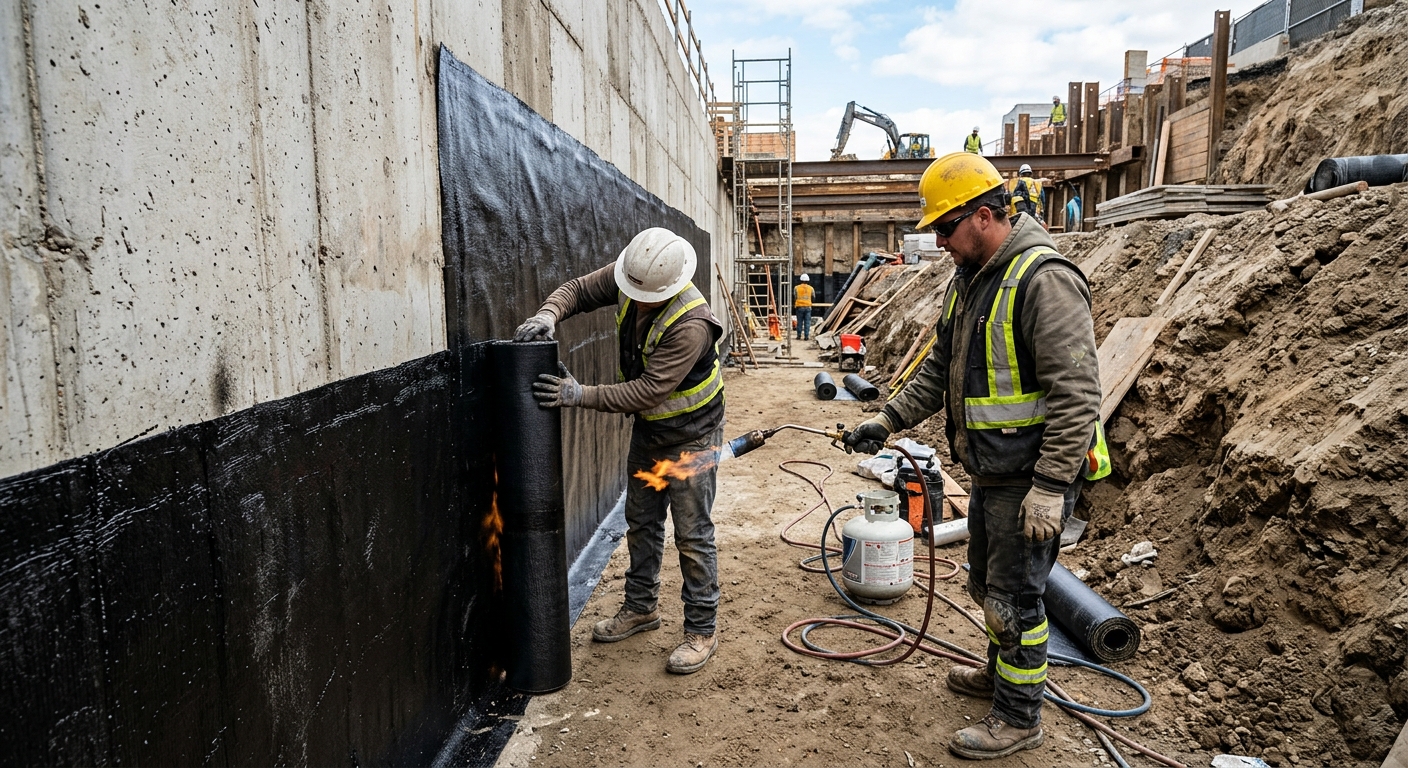
Basement waterproofing options and costs in Lincoln Park
Lincoln Park homeowners typically face basement moisture from either failing exterior drainage or interior water migration, and the best fix depends on where the water is coming from and how long it has been building up. With Lincoln Park’s population at 4,040 (Statistics Canada, 2021 Census), the market is smaller than Vancouver and Burnaby, so qualified crews can book out faster during peak excavation season. In many Lower Mainland–Southwest neighbourhoods, demand is especially high around older pockets where original perimeter drainage may have been undersized or never updated—over time, persistent saturation plus frequent wet winters increase seepage risk even when walls look “mostly dry.”
In the Lower Mainland–Southwest, soil conditions and water table levels are the primary cost drivers. Coastal BC’s intense, prolonged rainfall keeps hydrostatic pressure on basement walls and slabs, so contractors often need both drainage improvements and careful crack detailing. Wet, mild winters also mean freeze-thaw cycles widen existing joints, which can increase the scope of repairs (for example, more than one crack or more wall preparation). Labour rates are elevated, and access constraints on tight lots in areas like the newer infill pockets near Lincoln Park’s busier residential corridors can increase excavation time, equipment requirements, and disposal costs.
Below are the most common waterproofing and drainage approaches homeowners consider in Lincoln Park, with realistic ranges to help you compare quotes before you tour sites and confirm drainage measurements.
| Method |
What It Addresses |
Disruption Level |
Durability |
Price Range |
| Exterior excavation + new membrane + drainage tile |
Source water entry through perimeter; replaces failing weeping tile; reduces hydrostatic pressure |
High (excavation, landscaping restoration, possible mechanical breaking) |
Long-term with proper backfill, membrane, and drainage discharge |
$15,000–$30,000 |
| Interior perimeter drain channel + sump pit |
Water after it enters; captures seepage along wall/footing |
Medium (interior slab/finish impacts; avoids full yard excavation) |
Very good when paired with reliable sump discharge and maintenance |
$8,000–$18,000 |
| Foundation crack injection (epoxy or polyurethane) |
Cracks/leak paths in poured concrete or block; polyurethane suits active seepage |
Low to Medium (surface prep; limited patching) |
Strong for stable, properly cleaned/prepared cracks; depends on active water conditions |
$500–$2,000 |
| Sump pump installation (primary + battery backup) |
Controls basement water when drainage/sump capacity is exceeded during heavy rain |
Low (majority is interior work; minimal demolition) |
High reliability with discharge routing and backup power |
$1,000–$5,000 |
| Window well drain installation |
Bulk water and seepage around egress/window areas; prevents pooling |
Medium (window well area excavation/repair) |
Good when combined with grading and proper weep/drain discharge |
$1,500–$4,500 |
| Lot re-grading / downspout extension |
Moves roof runoff away; reduces saturation near foundation perimeter |
Low to Medium (depends on landscaping) |
Moderate (best as a first line of defence; not a replacement for failed systems) |
$2,000–$8,000 |
Prices are estimates only and vary by project scope, site access and material selection.
What affects the price of waterproofing in Lincoln Park
In Lincoln Park and across the Lower Mainland–Southwest, it’s common to see waterproofing quotes for “the same basement issue” differ by 30–50%—and it isn’t just because contractors have different pricing. The biggest reason is that the same symptom (damp carpet, efflorescence, a damp corner) can come from very different water pathways. In this region, soil saturation and groundwater-driven hydrostatic pressure are more persistent than in many other parts of Canada, so the scope changes once a contractor measures water table behaviour, evaluates the original weeping tile, and confirms crack condition.
Three drivers separate Lower Mainland–Southwest costs from national averages: soil conditions, water table levels, and freeze-thaw. Unlike clay-heavy soils in parts of Ontario and the Prairies that expand aggressively during freeze-thaw, Lower Mainland problems are more often about prolonged saturation that keeps constant pressure against foundation walls and slabs. High groundwater tables increase sump pump run times and add labour for discharge routing and backup options. Heavy coastal rainfall saturates backfill quickly when original drainage fails, which can require full-perimeter exterior work (higher end of the market) rather than a smaller “patch.” Older housing stock in Lincoln Park-style neighbourhoods also increases the frequency of failing weeping tile—sometimes the original systems are completely failed even when the basement looks “fine” between storms.
Concrete examples from typical Lincoln Park projects: exterior excavation can cost toward the higher end (for example, interior work might land near $8,000–$18,000 while full perimeter excavation is often $15,000–$30,000) if access forces mechanical breaking around driveway edges. Crack injection might stay closer to the lower band when a contractor confirms a limited crack with minimal active seepage, but active leakage or multiple related joints can push the scope higher because surface prep and repeated injection steps are required.
| Price Factor |
Why It Matters |
Cost Impact |
| Interior vs. exterior approach — interior is less disruptive but addresses symptoms |
Exterior targets the water entry point; interior manages water after it enters |
Interior often cheaper (lower disruption), exterior typically costs more due to excavation and restoration |
| Foundation type — poured concrete vs. block vs. stone vs. ICF |
Repair method and sealing reliability vary by wall system and crack behaviour |
Poured concrete cracks may respond well to injection; block can require complementary interior drainage |
| Soil type — clay expands more than sand, adding pressure |
Soil behaviour affects how much lateral and persistent pressure is applied |
Clays and poorly draining backfills generally increase risk and scope |
| Crack type and length — hairline vs. structural horizontal cracks |
Structural movement can require more than injection |
Structural cracks typically raise cost due to engineering assessment and possible underpinning |
| Sump pump backup system — battery or water-powered backup needed |
Backup reduces risk during heavy rain and power interruptions |
Adds cost but can be critical for British Columbia basements |
| Access — landscaping, decks, or driveways must be removed for exterior |
More removal/disposal increases labour and schedule risk |
Can push projects toward the higher exterior band |
| Weeping tile age — original tile (60+ years) may be completely failed |
Old tile can collapse or clog, allowing saturated backfill to press inward |
Often converts a “small” interior job into a full exterior scope |
| Mould or efflorescence remediation required before sealing |
Sealers and membranes won’t perform well on contaminated or unstable surfaces |
Pre-treatment and drying time add labour and may require additional containment |
Permits & regulations in British Columbia
In British Columbia, foundation excavation, structural crack repair, and changes to lot drainage typically require a building permit. If a project involves altering the foundation system (for example, significant crack repair that is treated as structural, or work that changes load paths), expect permit requirements. Sump pump installations that connect to the storm or sanitary sewer also generally need municipal approval, because discharge location and drainage impacts must be reviewed. For structural crack repair—especially horizontal cracks in block walls, major step cracking, or any sign of movement—homeowners are often advised to have a structural engineer assess the condition first to determine whether underpinning or other structural work is required.
When hiring in Lincoln Park, verify your contractor can properly support the permit and engineering pieces. Step-by-step, do this before work starts:
- Ask for the contractor’s British Columbia licence number (and the trade category that fits the scope).
- Request a certificate of insurance and confirm liability coverage is current (and names you as appropriate if they subcontract).
- Confirm WSIB/WCB coverage (or the applicable coverage documentation they carry) and that it’s not expired.
- For structural concerns, ask whether they provide/coordinate engineering support and how they document the assessment.
- Ask the contractor who pulls the permit and what drawings or reports are required (you shouldn’t be left guessing).
- Check online registry results for licence validity, then cross-check the certificate expiry dates you receive by email.
- Request a clearance letter or confirmation document if your contractor provides it as part of pre-job admin.
Works that commonly do not need a permit may include minor window well drainage adjustments when they do not alter foundation structure or connect new discharge to regulated services—however, the minute you’re changing drainage pathways near the foundation, connecting to municipal services, or doing structural crack repairs, treat it as permit-requiring until the contractor confirms in writing.
Interior vs exterior waterproofing — what does Lincoln Park need?
Exterior waterproofing and interior waterproofing solve different problems. Exterior work—full excavation, new membrane, new drainage tile, and backfill—addresses the source by reducing water entry and hydrostatic pressure against the foundation wall. The trade-off is cost and disruption: excavation on tight Lincoln Park lots, equipment access, and restoration can significantly increase labour. Interior waterproofing—perimeter drain channel, sump pit, and sump pump—manages water after it enters. It can be less invasive, but it doesn’t stop hydrostatic pressure from acting on the wall; it controls the water you can see (and the water you don’t, behind walls and under slabs).
Given Lower Mainland–Southwest climate and typical foundation performance, exterior solutions are usually the best fit when you have persistent perimeter seepage, failing or unknown weeping tile, or signs that water is constantly pressing in during prolonged rain. Poured concrete walls often respond well to crack injection when the crack is stable and properly prepared, but interior drainage is still commonly recommended if groundwater is high and the home’s original perimeter system is aging. Block foundations frequently benefit from an interior perimeter drain as a practical complement because block joints can hold moisture paths and hairline seepage.
In British Columbia, sump backup matters because heavy spring rain can coincide with localized outages. A primary sump plus battery backup can protect against short-duration failures that otherwise trigger basement flooding. For example, if you’re choosing between an interior perimeter drain/sump package near $8,000–$18,000 versus exterior excavation that often falls in $15,000–$30,000, the extra exterior cost can be justified when inspection shows the perimeter system is failed and water is entering along the full perimeter—not just a single corner.
| Method |
Best For |
Addresses Source? |
Disruption |
Lifespan |
Price Band |
| Full exterior excavation + membrane |
Ongoing perimeter seepage, failed/unknown weeping tile, constant wetting during storms |
Yes |
High |
Long-term when drainage discharge and backfill are engineered correctly |
$15,000–$30,000 |
| Interior French drain + sump system |
Damp floors, interior seepage, homes where excavation access is limited |
No (manages water after it enters) |
Medium |
Very good with proper pump sizing, discharge routing, and backup |
$8,000–$18,000 |
| Crack injection — epoxy (structural) |
Stable, non-leaking cracks in poured concrete where movement isn’t active |
Partial (seals crack path) |
Low |
Good for stable cracks; performance depends on prep and correct crack type |
$700–$2,000 |
| Crack injection — polyurethane (active leak) |
Active seepage through hairline or flowing cracks |
Partial (seals active leak path) |
Low to Medium |
Good when conditions are properly cleaned and the right product is chosen |
$500–$2,000 |
| Interior drain channel only (no sump) |
Minor seepage where water volume is low and evacuation method is reliable |
No |
Medium to Low |
Moderate; less resilient during heavy rain if there’s no pump capacity |
$6,000–$12,000 |
| Re-grading + downspout extensions |
Roof runoff pushing toward foundation, surface wetness after storms |
No (reduces load on drainage/perimeter) |
Low to Medium |
Moderate; best as a supplement when drainage systems are healthy |
$2,000–$8,000 |
How to choose a waterproofing contractor in Lincoln Park
Choosing the right waterproofing contractor in Lincoln Park starts with verifying credentials and then matching the scope to your specific water pathway. In British Columbia, confirm the contractor’s licence for the trade scope they’re performing, and verify they carry active liability insurance and WSIB/WCB coverage (ask for current documents and check the expiry dates). If they’re quoting structural crack repairs, ask how they obtain engineering support and document the assessment.
Next, request 2–3 itemised written quotes—labour and materials broken down by tasks (excavation hours, membrane materials, drain tile and sock, disposal, sump and discharge components). Avoid lump sums that don’t explain what’s included. Read the scope line-by-line: are permits included, is spoil/disposal included, what site restoration is promised, and who addresses unforeseen conditions (like rocky subsoil requiring mechanical breaking)?
Warranty matters. Ask for a clear workmanship warranty length, what it covers (labour only vs labour + parts), whether product/manufacturer warranties apply, and whether those warranties transfer if you sell the home. Payment schedules should protect you: never pay more than 10–15% upfront, and hold back a portion until the job is complete and documented.
Finally, request a written timeline with a start date and completion estimate. In Lower Mainland–Southwest waterproofing, weather can affect excavation and membrane drying, so schedule sequencing and access prep should be planned early.
- Ask for their British Columbia licence number and confirm it online.
- Verify liability insurance certificate is current and in your requested name/structure.
- Confirm WSIB/WCB coverage documentation before the first day on-site.
- Require an itemised quote (not a single lump sum) with line items for drainage discharge, membrane, and restoration.
- Clarify whether permits are included and who pulls them for Lincoln Park/B.C.
- Confirm spoil removal/disposal is included (and where it’s hauled).
- Check how they handle unexpected obstacles (rocky sections, buried utilities, or failed tile depths).
- Ask for moisture mapping: where they expect the water to enter and how they confirm it.
- Get a written warranty for workmanship plus product warranty details (transferability matters).
- Use a payment schedule with 10–15% maximum upfront and holdback at completion.
- Request photos/documentation during key stages (excavation, membrane install, drain tie-in, pump test).
- Confirm the sump system plan includes backup strategy (battery or water-powered) for B.C. risk.
Red flags in Lincoln Park include: contractors who won’t document where water enters, quotes that skip disposal/restoration details, refusing to provide insurance/coverage documentation, promising “one-size-fits-all” crack injection without assessing active seepage, and starting work without clarifying permit responsibility for foundation or drainage changes.
Frequently asked questions — waterproofing in Lincoln Park
How much does foundation crack repair cost in Lincoln Park?
In Lincoln Park, foundation crack repair is usually priced based on crack type, length, and whether the crack is actively leaking. For small, stable cracks in poured concrete, homeowners often see injection scopes in the range of $500–$2,000 when the work is limited to surface prep, cleaning, and injection for a manageable number of crack runs. If the crack is actively seeping and requires a product strategy suited to active water (often polyurethane), the scope can still fall in that band but may include more prep steps and additional injection points. In the Lower Mainland–Southwest, persistent wet winters and freeze-thaw can widen joints over time, so contractors should verify whether the crack is static or movement-related before you commit.
Do I need a sump pump in Lincoln Park?
You might, but you shouldn’t choose a sump pump solely because “everyone has one.” In Lincoln Park and the Lower Mainland–Southwest, high groundwater behaviour during prolonged rain often means a sump can be the most reliable way to keep an interior drainage system functioning during peak saturation. If you’re already getting water in the basement floor or perimeter corners, interior perimeter drains commonly tie into a sump pit. Many homeowners also upgrade to a backup system because spring rain events can coincide with short power interruptions in British Columbia. As a budget reference, sump pump installations (including a primary pump plus battery backup) are commonly in the $1,000–$5,000 range, depending on pump size, discharge path, and backup approach.
How does Lincoln Park's soil affect my foundation?
Lincoln Park’s foundation performance is strongly influenced by persistent saturation and drainage challenges more than extreme soil expansion. In the Lower Mainland–Southwest, prolonged rainfall keeps backfill and adjacent soil wet, which sustains hydrostatic pressure against basement walls and slabs—especially when original weeping tile is undersized, clogged, or failed. Freeze-thaw cycles during mild winters can also widen existing cracks and joints, giving water more pathways to enter. Soil properties matter too: poorly draining mixes or clay-rich pockets can hold moisture longer, increasing seepage risk. If your basement shows recurring dampness after storms or you see efflorescence at joints, that often points to soil/water behaviour and an aging drainage system rather than a one-time plumbing leak.
Do I need a permit for foundation work in British Columbia?
In British Columbia, many foundation and drainage-related activities require a building permit, particularly when work involves foundation excavation, structural crack repair, or changes to lot drainage that affect how water flows around the home. If your sump pump discharge involves connecting to storm or sanitary services, municipal approval is typically required. For structural crack repairs—especially horizontal cracks in block walls or major step cracking—an engineering assessment is often required to determine whether underpinning or additional structural work is needed. For homeowners in Lincoln Park, verify your contractor can provide the licence details, liability insurance, and WSIB/WCB coverage, and confirm in writing who will pull the permit for the specific scope (don’t rely on verbal confirmation).
How long does waterproofing last?
Durability depends on the system you install and how well it matches the water source. Exterior waterproofing systems (membrane + drainage tile + properly engineered backfill and discharge) are designed for long-term performance, especially when the perimeter drainage is functioning reliably during prolonged wet seasons typical of the Lower Mainland–Southwest. Interior systems (perimeter drain + sump) can also perform for many years, but their effectiveness depends on pump capacity, discharge routing, and backup power during heavy rain or short outages. Crack injection can last a long time when the crack is stable and correctly prepped, but freeze-thaw and continued hydrostatic pressure can shorten performance if the underlying water source isn’t addressed. A good contractor will explain expected lifespan by component and include a workmanship warranty and product warranty details.
Can I waterproof my basement from the inside only?
Yes, you can often improve a basement from the inside, and it can be the right choice when access is limited or when you’re targeting interior seepage rather than fully replacing perimeter drainage. In Lincoln Park and across British Columbia’s wet winters, an interior perimeter drain channel with a sump system can capture seepage and keep floors drier. Typical interior waterproofing / weeping tile scopes are commonly around $8,000–$18,000, depending on how much slab/finish needs to be opened and whether you add a backup pump. However, interior-only work doesn’t stop hydrostatic pressure from acting on walls. If you have frequent wetting along the full perimeter, failed/unknown weeping tile, or clear signs water is entering at grade-level perimeter areas, an exterior approach may ultimately be the more complete fix.