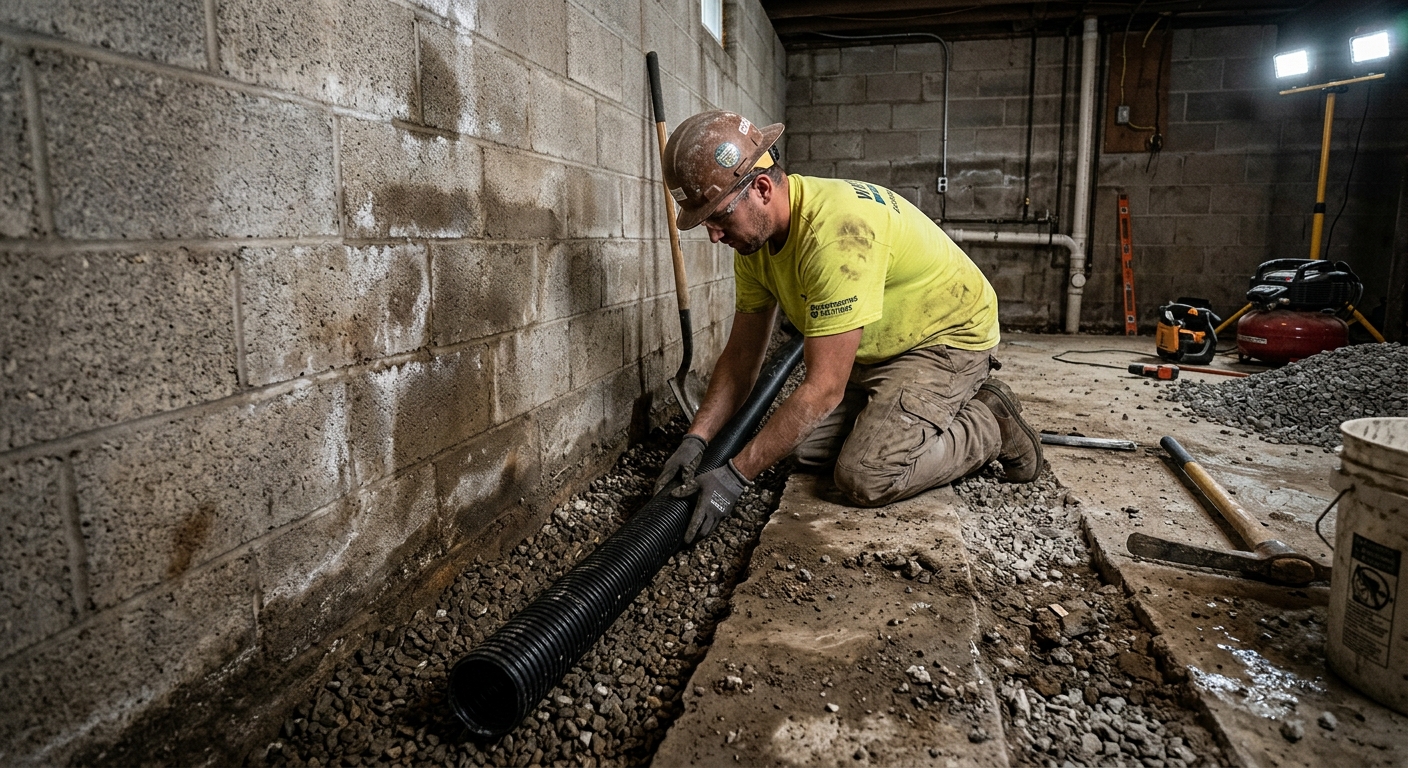
Basement waterproofing options and costs in Vancouver
In Vancouver, basement waterproofing usually comes down to how much water pressure is building up behind your foundation and how far the original drainage system has failed. With 43.0% of homes built before 1981, many basements are dealing with aging tar-and-paper era systems, deteriorated or collapsed weeping tile, and cracks that have widened from wet winters and repeated freeze-thaw. Lower Mainland–Southwest conditions add a different type of pressure on foundations than “expand/contract” soils: we often see persistently high groundwater and long, saturated periods that keep hydrostatic pressure present, not just seasonal. That means contractors are frequently busiest in areas with older, densely built residential streets where access is tight and crews must carefully excavate around patios, sidewalks, and mature landscaping.
This is especially common in neighbourhoods like East Vancouver (and also parts of Mount Pleasant) where many homes have older foundations, mature lots, and interior moisture complaints show up after prolonged rain. If your basement is damp year-round, you’re often looking at exterior excavation to rebuild drainage and relief paths—or an interior retrofit if excavation is limited by tight urban access or landscaping.
Below are the most common options homeowners choose in Vancouver, along with realistic cost ranges based on typical Lower Mainland–Southwest scope. Use this table to compare the “fix the source” approach versus “manage water after it enters,” then we can narrow the right fit once we understand your foundation type, crack pattern, and drainage performance.
| Method |
What It Addresses |
Disruption Level |
Durability |
Price Range |
| Exterior excavation + new membrane + drainage tile |
Primary water entry; rebuilds drainage path, reduces hydrostatic pressure |
High (excavation, backfill, landscaping restoration) |
High (long-term system when installed to grade and protected) |
$15,000–$30,000 |
| Interior perimeter drain channel + sump pit |
Water that enters through joints/cracks; collects and pumps it away |
Medium (interior cutting, disposal, finish repairs) |
Medium to High (depends on wall condition and pump reliability) |
$8,000–$18,000 |
| Foundation crack injection (epoxy or polyurethane) |
Seals cracks to stop seepage; may stabilize when appropriate |
Low to Medium (drilling/patching; interior access often) |
Medium (polyurethane for active leaks; epoxy for non-moving cracks) |
$500–$2,000 |
| Sump pump installation (primary + battery backup) |
Prevents flooding during peak wet periods and brief outages |
Medium (pits, discharge line, electrical tie-in) |
Medium to High (improved safety with backup) |
$1,000–$5,000 |
| Window well drain installation |
Manages surface water around egress/window wells before it migrates inside |
Low to Medium (yard excavation at localized areas) |
Medium (best when grading and weeping paths are correct) |
$3,000–$6,500 |
| Lot re-grading / downspout extension |
Reduces water directing toward foundation; improves discharge away from house |
Low (light excavation, grading, extension work) |
Low to Medium (works best when used with failing drains) |
$2,000–$8,000 |
Prices are estimates only and vary by project scope, site access and material selection.
What affects the price of waterproofing in Vancouver
In the Lower Mainland–Southwest, two homeowners can receive very different quotes for what sounds like the same waterproofing job, and it’s not unusual to see swings in the 30–50% range depending on access, how much drainage replacement is required, and whether the plan targets the water entry point or only manages it indoors. Vancouver’s pricing is also influenced by labour rates, tight urban lots, and occasional rocky or mechanically difficult excavation sections. When the work expands from localized repairs to a full perimeter system, the difference is usually stark.
The biggest cost drivers that separate regional pricing from the wider Canadian average are soil type, water table level, and freeze-thaw. Clay-heavy soils in other parts of Canada can expand more aggressively during freeze-thaw and widen foundation movement, while Lower Mainland costs are more often driven by persistent saturation that keeps hydrostatic pressure against walls and slabs. Here, high groundwater table behaviour and intense rainfall saturate backfill quickly when original drainage fails, which increases pump runtime and seepage risk. Older housing stock (43.0% built before 1981) is also a marker for more frequent weeping tile failure and older concrete/block basements needing more remedial interior drainage before any membrane or crack sealing can hold.
Concrete examples: a 20–30 foot perimeter excavation under a narrow Vancouver side yard often costs more due to limited staging, walkway removal, and careful backfill control. Conversely, a basement moisture complaint limited to a couple of wall areas may be addressed with interior perimeter drain and sump within the $8,000–$18,000 band, rather than moving to exterior excavation near the $15,000–$30,000 band. For crack work alone, pricing may fall closer to $500–$2,000 when the issue is non-moving and localized—while active seepage typically pushes you toward a more comprehensive drainage plan.
| Price Factor |
Why It Matters |
Cost Impact |
| Interior vs. exterior approach — interior is less disruptive but addresses symptoms |
Exterior rebuilds the water path; interior controls water after entry |
Can shift totals by ~30–50% depending on access and site drainage |
| Foundation type — poured concrete vs. block vs. stone vs. ICF |
Different wall systems respond differently to sealing and drainage details |
Poured concrete often suits targeted injection; block/older walls may require more interior work |
| Soil type — clay expands more than sand, adding pressure |
Expansive soils worsen crack cycling; saturated soils in BC keep pressure present |
Higher movement risk can require additional stabilization and longer prep |
| Crack type and length — hairline vs. structural horizontal cracks |
Structural cracks may indicate movement and need engineering/structural measures |
May move from injection scope toward engineer-led underpinning costs |
| Sump pump backup system — battery or water-powered backup needed |
Reduces basement flooding risk during outages during wet spring periods |
Typically adds meaningful cost but protects against the “pump failure” scenario |
| Access — landscaping, decks, or driveways must be removed for exterior |
Urban access determines how much labour and restoration is required |
Exterior work can rise quickly when removals and re-stoning are extensive |
| Weeping tile age — original tile (60+ years) may be completely failed |
Older systems often collapse or clog, causing persistent interior moisture |
Can add excavation length and drainage replacement |
| Mould or efflorescence remediation required before sealing |
Surface conditions affect adhesion and long-term sealing performance |
Adds inspection, cleaning, drying time, and sometimes specialized materials |
Permits & regulations in British Columbia
In British Columbia, foundation excavation, structural crack repair, and changes to lot drainage commonly require a building permit. Many homeowners also end up needing municipal approval when a sump pump discharge is planned to connect to storm or sanitary sewer systems. If you’re seeing horizontal cracking in block walls, significant step cracking, or signs of movement, a structural engineer’s assessment is often required to determine whether underpinning or other structural remediation is needed before any waterproofing is sealed over.
What typically DOES require a permit in Vancouver/BC includes: exterior excavation around the foundation to install or replace drainage systems; any structural crack work tied to potential movement; and changes to drainage routes that affect how water leaves your property. What typically does NOT require a permit is localized interior sealing of small, non-moving cracks when no structural change is proposed, or cosmetic finish repairs after waterproofing—however, your contractor should confirm based on your specific scope.
How to verify contractor compliance (BC best practice): first, confirm the contractor’s licence/registration status through the appropriate online provincial registry for contractors doing building work. Next, ask for a certificate of liability insurance showing they’re covered for the type of work being done. Finally, request proof of WSIB/WCB coverage (or a valid clearance letter). For structural-related scopes, verify they have engineering support in their process—so you know who is responsible for the assessment and documentation.
Interior vs exterior waterproofing — what does Vancouver need?
In Vancouver, the core difference is simple: exterior waterproofing aims to stop water at its source, while interior waterproofing manages it after it enters. Exterior systems involve full excavation to rebuild the membrane and install new drainage tile around the foundation, then re-fill and restore landscaping. That method permanently addresses the water entry mechanism, but it’s more expensive and disruptive because it’s a full perimeter dig in many cases.
Interior systems—like perimeter drain channels, sump pits, and sump pumps—collect seepage and relieve water pressure inside. This is generally less invasive than digging the entire exterior perimeter, which is why many homeowners start there when access is tight. However, interior work doesn’t “fix” the hydrostatic pressure against the foundation wall itself; it only reduces the risk of water accumulating by pumping it away. In Vancouver’s Lower Mainland–Southwest climate, with frequent wet spells and freeze-thaw cracking, that interior approach still needs to be engineered carefully so the drain path and sump capacity match peak rainfall conditions.
Foundation type matters here. Poured concrete walls often respond well to properly selected crack injection as part of a broader drainage plan, because sealing can be effective where the wall is stable. Block foundations, particularly older ones, commonly benefit from interior drainage as a practical complement—block can have more pathways through voids and mortar joints, and exterior access may be limited by the yard layout. For active seepage, polyurethane injection may be used, but it’s not a substitute for drainage if the water pressure never decreases.
As a dollar example: if your issue is localized and you’re not fighting full perimeter saturation, interior perimeter drainage and a sump system may fit within the $8,000–$18,000 band. If your weeping tile is failed around most of the house and water is present behind multiple wall segments, the exterior excavation approach at $15,000–$30,000 can be justified because it rebuilds the drainage path rather than repeatedly managing the symptoms.
| Method |
Best For |
Addresses Source? |
Disruption |
Lifespan |
Price Band |
| Full exterior excavation + membrane |
Whole-house moisture, failed exterior drainage, persistent hydrostatic pressure |
Yes |
High |
Long-term (when membrane and drainage are installed to correct grade) |
$15,000–$30,000 |
| Interior French drain + sump system |
Basements with damp corners/walls where exterior excavation is limited |
No (relieves after entry) |
Medium |
Medium to long-term with right sump sizing and backup |
$8,000–$18,000 |
| Crack injection — epoxy (structural) |
Non-moving, dry-to-damp hairline cracks in stable poured concrete/block |
Partially (seals crack pathway) |
Low to Medium |
Medium (depends on crack activity and wall stability) |
$500–$2,000 |
| Crack injection — polyurethane (active leak) |
Active seepage or cracks where water pressure is present |
Partially (seals seepage pathway) |
Low to Medium |
Medium (best paired with drainage so pressure doesn’t keep forcing leaks) |
$900–$2,500 |
| Interior drain channel only (no sump) |
Minor water entry where a pump isn’t required by volume |
No |
Lower to Medium |
Shorter in heavy rains if water backs up |
$3,500–$10,000 |
| Re-grading + downspout extensions |
Surface water shedding issues, gutters/downspouts directing toward foundation |
No (prevention) |
Low |
Low to medium (great when combined with drainage corrections) |
$2,000–$8,000 |
How to choose a waterproofing contractor in Vancouver
Choosing the right waterproofing contractor in Vancouver starts with verification. In British Columbia, ask for proof that the contractor is properly licensed/registered for the type of building work they will perform. Request a certificate of liability insurance showing coverage for the work scope and the project address (or location) where it will occur. Then confirm WSIB/WCB coverage: look for a current clearance letter or coverage documentation that matches your contractor entity name. If they’re unwilling or can’t provide documents promptly, that’s a major warning sign in a market where excavation and foundation work can carry real risk.
Next, get 2–3 itemised, written quotes—not just a lump sum. You want labour and materials broken out (membrane/drain components, excavation/disposal, pumps, backup systems, and patch/finish restoration). Scope language matters: confirm what’s excluded (tree/root removal, rock excavation allowances, permit pulling, engineer requirements, landscape restoration level, and any concrete cutting limits). Warranty terms should be explicit: workmanship warranty length, the specific product/manufacturer warranty, and whether any warranties are transferable if you sell the home.
For payment, never pay more than 10–15% upfront. Use a holdback until the work is complete and verified. Finally, request a written start date and an estimated completion timeline that includes drying/curing periods—vital in Vancouver’s wet seasons.
- Verify their BC licence/registration for the exact work they’re proposing.
- Confirm liability insurance is current and includes your project address.
- Check WSIB/WCB clearance or coverage documentation for the contractor entity.
- Request itemised quotes (labour, materials, disposal, and restoration scope separated).
- Ask whether they will pull permits if required and whether that cost is included.
- Confirm discharge plan for sump pump (where it drains and whether approvals are needed).
- Ask how they assess water source (probe points, drain tile condition, moisture patterns).
- Insist on pump specs that match the expected peak wet conditions (and backup system if appropriate).
- Check what they do with mould/efflorescence before applying sealants or membranes.
- Clarify warranty length for workmanship and the scope of what’s covered/excluded.
- Set payment milestones with no more than 10–15% upfront and a holdback until completion.
- Get an inspection/walkthrough step and final verification details in writing.
Red flags we see in Vancouver: contractors who quote without inspecting drainage patterns or foundation crack type; “one-size-fits-all” proposals that skip sump capacity and discharge planning; vague warranty wording (no workmanship term or unclear product coverage); pressuring you for large upfront payments; and leaving out excavation/disposal/restoration details, then billing change orders once the dig starts.
Frequently asked questions — waterproofing in Vancouver
How do I know if a foundation crack is serious?
In Vancouver and the Lower Mainland–Southwest, seriousness is often about crack behaviour plus water evidence. A non-moving hairline crack that stays dry after heavy rain is usually less urgent. But cracks that show moisture staining, dampness, efflorescence, or active seepage during prolonged rainfall are typically more serious because they act as water pathways under hydrostatic pressure. Pay attention to horizontal cracks in block walls, widening step cracks, or cracks that appear/displace after wet spells—those patterns can indicate movement or structural concerns, especially in older homes built before 1981 (Statistics Canada, 2021 Census). If you suspect movement, request an engineered assessment before sealing over cracks.
How much does foundation crack repair cost in Vancouver?
For Vancouver basements, crack repair cost depends on length, depth, whether the crack is active, and whether you’re also correcting the water source. For localized, non-moving cracks, epoxy injection often lands around the $500–$2,000 range for typical small scopes. If the crack is actively leaking and needs polyurethane injection, pricing can be higher, and many homeowners end up pairing injection with interior drainage so water pressure doesn’t simply reopen the route. In wet seasons around the Lower Mainland, contractors may also include surface preparation and moisture remediation, which affects final cost. A detailed, itemised quote is the best way to compare apples-to-apples.
Do I need a sump pump in Vancouver?
A sump pump is often recommended when your basement water is recurring, when you see water collecting in lower points, or when interior drains need active pumping to keep the area dry. In Vancouver’s climate, prolonged rainfall can keep groundwater pressure present, so passive drainage alone may not be sufficient. If you already have a weeping tile or sump that’s undersized, upgrading may be necessary—especially for basements with frequent wetting after major storms. Many homeowners also choose battery backup (or a secondary backup) because BC power interruptions, while not constant, can happen around extreme weather and spring wet periods. If your issue is minor and localized, you may not need a sump, but if there’s frequent water, adding one is often money well spent. Typical sump installation (including backup where selected) falls in the $1,000–$5,000 band.
How does Vancouver's soil affect my foundation?
Vancouver’s “soil problem” is frequently less about dramatic seasonal expansion (as seen in some clay-heavy regions elsewhere) and more about persistent saturation. In the Lower Mainland–Southwest, backfill can stay waterlogged when original drainage fails, which keeps hydrostatic pressure against basement walls and can drive seepage through joints and cracks. Freeze-thaw still plays a role: trapped moisture in cracks expands and can widen openings over time. In many older Vancouver homes—43.0% built before 1981—original drainage (weeping tile) may be clogged, collapsed, or undersized, which makes the soil behave like a continuous water reservoir during long rainy stretches. The practical effect is that waterproofing often needs an engineered drainage pathway rather than only surface sealing.
Do I need a permit for foundation work in British Columbia?
In British Columbia, many foundation-related scopes require permits—especially when you’re excavating around the foundation, changing lot drainage, or doing structural crack repair. If your plan involves connecting a sump pump discharge to storm or sanitary systems, municipal approval is commonly required. For cracks that may indicate movement (for example, major horizontal cracks in block walls), a structural engineer’s assessment may be required before any remedial work proceeds. For smaller, non-moving, non-structural crack sealing, permits may not be required, but you should confirm based on your exact scope. When you request quotes in Vancouver, ask whether the contractor pulls required permits and what’s included—permit support is part of doing it properly, not an optional add-on.
How long does waterproofing last?
“How long it lasts” depends on whether the system targets the water source or only manages water after entry. Exterior waterproofing that rebuilds drainage and membrane continuity is typically the longest-lasting approach because it reduces hydrostatic pressure at the foundation. Interior waterproofing can perform very well, but it relies on ongoing pump operation, correct drain slopes, and battery/backup reliability where needed; if power or pump maintenance fails, water can return quickly. Crack injection can last for years when cracks are stable and properly matched to the correct material (epoxy for non-moving cracks; polyurethane for active seepage), but if the underlying water pressure continues, repairs may not hold. Homeowners often choose comprehensive upgrades when older drainage is failing—an issue common in Vancouver’s pre-1981 housing stock (Statistics Canada, 2021 Census). If you’re budgeting, consider long-term value over repeated “patch and pray.”