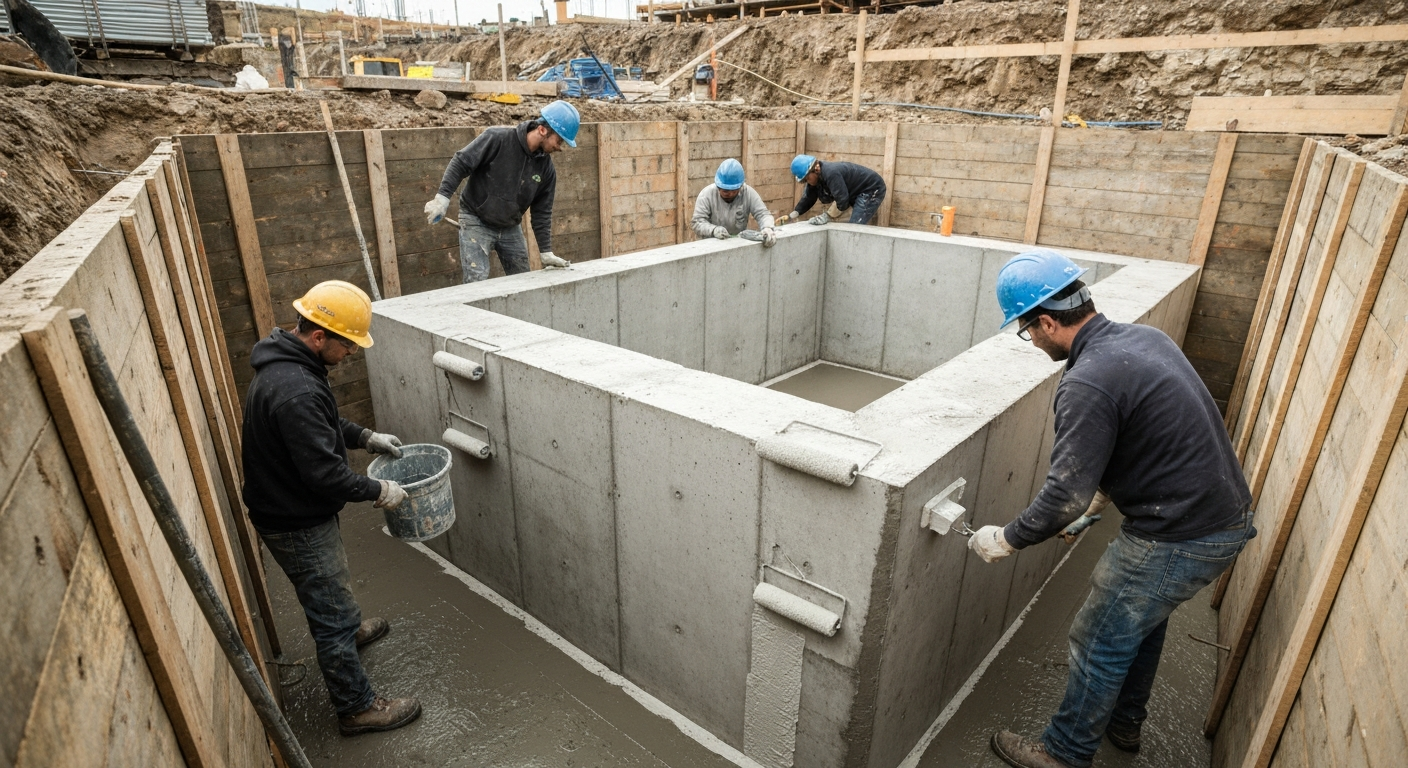
Basement waterproofing options and costs in Rossland
Rossland homeowners typically see basement leaks come in cycles—after snowmelt, in shoulder-season rain, and during freeze–thaw when older mortar joints and concrete joints widen. With 68.1% of Rossland homes built before 1981, you’re more likely to run into legacy waterproofing systems (often undersized or failed weeping tile) and aging poured-concrete or block basements that no longer manage hydrostatic pressure. That’s important because in the Kootenay region, soil conditions and groundwater can vary dramatically from one slope to the next: well-draining gravel on hillside lots can reduce pressure, while moisture-holding silts and clays in lower pockets can build pressure faster against foundation walls. Those differences directly drive scope, excavation depth, drainage design, and labour time.
In practical terms, pricing can also be influenced by when and where the work is needed. In Rossland’s lower-elevation areas and along streets with mature landscaping—where access is tighter and backfill replacement must be carefully managed—exterior excavation and drainage work tends to be in higher demand. Interior drainage is often selected when the exterior approach is constrained by decks, drives, or mature plantings. Either way, the goal is the same: stop water entry and prevent recurring seepage into your foundation system.
Below are the most common options we see in Rossland, what they address, and the typical cost ranges that match Kootenay site conditions and local contractor availability. Use the table as a baseline, then we’ll refine scope after an on-site inspection and moisture mapping.
| Method |
What It Addresses |
Disruption Level |
Durability |
Price Range |
| Exterior excavation + new membrane + drainage tile |
Primary water entry control; hydrostatic pressure management with perimeter drainage |
High (excavate around foundation; landscape rework) |
High (when drainage is correctly designed and sloped to daylight/sump) |
$18,000–$35,000 |
| Interior perimeter drain channel + sump pit |
Water after it enters the basement; reduces seepage and sump cycling |
Medium (floor cut near walls; minor demo) |
Medium to high (depends on wall condition and crack/water source control) |
$9,000–$20,000 |
| Foundation crack injection (epoxy or polyurethane) |
Crack pathway sealing; structural stabilization or active leak control |
Low to medium (surface prep; controlled injection ports) |
Medium (epoxy is for non-moving cracks; polyurethane for active leakage) |
$800–$2,500 |
| Sump pump installation (primary + battery backup) |
Moves collected groundwater; protects against outages during spring melt events |
Low to medium (pit excavation; electrical work) |
High (when paired with proper intake/drainage and backup) |
$2,500–$5,500 |
| Window well drain installation |
Direct water management at window exposures; reduces seepage at lower façade |
Low to medium (excavation at limited area) |
Medium to high (depends on grading and extension of downspouts/feeds) |
$1,500–$4,000 |
| Lot re-grading / downspout extension |
Improves surface water routing away from foundation; reduces water load |
Low (light excavation/landscape changes) |
Low to medium (good when leaks are surface-driven; limited for deep hydrostatic pressure) |
$2,000–$6,500 |
Prices are estimates only and vary by project scope, site access and material selection.
What affects the price of waterproofing in Rossland
In Rossland and across the Kootenays, two contractors can quote the “same” basement issue and still land 30–50% apart once they assess site water behaviour, foundation condition, and what it takes to do the work right. The most common reason is that Kootenay projects are often driven by soil type, water table behaviour, and freeze–thaw—three variables that can push cost away from a national average estimate. In clay-heavy soils (more common in some inland valley pockets), freeze–thaw can expand and exert lateral pressure on foundation walls, worsening existing cracks over time; that means you may need both crack treatment and drainage improvements to fully address the pathway. When water tables are higher after snowmelt, sump requirements increase: more run time, larger discharge capacity, and sometimes backup pumping or additional intake lines. In regions with heavy, saturated backfill after intense rainfall, the foundation sees water loads quickly—so excavation and drainage design details (filters, pipe size, slope, and discharge route) become a major part of the labour and material cost.
Two concrete Rossland examples we see often: (1) a split-entry home with long run seepage along the wall—if the original perimeter drain is undersized or blocked, an interior perimeter drain alone may still work, but it typically means added floor cutting and an upgraded sump system; that can move you toward the $9,000–$20,000 interior band. (2) an older basement with recurring water at multiple elevations—if the source is clearly exterior hydrostatic pressure, a properly detailed exterior dig is justified and commonly lands in the $18,000–$35,000 range because excavation, drainage tile, and membrane are all part of the source control.
Finally, Rossland’s housing age matters: with 68.1% of homes built before 1981, failing legacy waterproofing components and corroded or collapsed weeping tile are a frequent cost driver. If interior surfaces also show mould or mineral salts (efflorescence), additional remediation steps before sealing can add time and materials.
| Price Factor |
Why It Matters |
Cost Impact |
| Interior vs. exterior approach — interior is less disruptive but addresses symptoms |
Interior tackles what collects; exterior controls what enters and reduces hydrostatic pressure |
Exterior can add major excavation and reinstatement costs; interior often cheaper initially |
| Foundation type — poured concrete vs. block vs. stone vs. ICF |
Different wall materials crack differently and accept repairs differently |
Block and older stone can require more drainage integration and crack treatment allowances |
| Soil type — clay expands more than sand, adding pressure |
Moisture retention + freeze–thaw increase lateral pressure on walls |
Clay-heavy sites can push you toward full drainage solutions rather than patch-only work |
| Crack type and length — hairline vs. structural horizontal cracks |
Active leaks and structural cracks need different repair systems and sometimes engineer review |
Structural or moving cracks can require higher-end injection and potential additional stabilization steps |
| Sump pump backup system — battery or water-powered backup needed |
Basement flooding risk rises during power interruptions in spring/snowmelt periods |
Backup increases equipment and wiring/electrical labour; often adds several thousand dollars |
| Access — landscaping, decks, or driveways must be removed for exterior |
Restricted access increases excavation complexity and reinstatement scope |
Removal and reconstruction can move exterior projects toward the higher end of the price band |
| Weeping tile age — original tile (60+ years) may be completely failed |
Legacy drainage may be collapsed, disconnected, or buried without adequate slope |
If failed, replacement can require full perimeter drainage redesign, not just minor repairs |
| Mould or efflorescence remediation required before sealing |
Seal systems only perform well when surface contamination is properly treated |
Remediation extends schedule and adds materials; skipping it increases failure risk |
Permits & regulations in British Columbia
In British Columbia, foundation excavation, structural crack repair, and changes to lot drainage typically require a building permit because they can affect building performance and drainage flow paths. If your project involves structural crack repairs—such as horizontal cracks in block walls or indications of structural movement—an assessment by a structural engineer is often required to confirm whether underpinning or other structural measures are needed.
Also note: sump pump installation that connects to storm or sanitary sewer systems generally needs municipal approval. If the discharge is routed by way of a permitted drain connection or tie-in, plan on additional steps beyond the waterproofing work itself. For most straight “in-basin” sump installations that discharge to an approved daylight location, requirements still vary by outlet routing and local conditions, so it’s best to confirm discharge intent during the quote.
To verify a contractor before signing, follow a simple Rossland homeowner checklist. Step 1: confirm the contractor’s BC licence on the provincial registry (use their company legal name and address). Step 2: request a certificate of insurance showing liability coverage that matches the project scope (and ensure the contractor name matches the quote). Step 3: ask for clearance/coverage documentation for workers under WSIB/WCB (or confirmation of coverage where applicable). Step 4: for structural crack repairs, ask who provides the engineering support—engineer letter, assessment report, or engineer stamp where required. Step 5: keep everything in writing as part of your quote package.
Interior vs exterior waterproofing — what does Rossland need?
The fundamental difference is how each approach deals with water. Exterior waterproofing—full excavation around the foundation, new membrane, new perimeter drainage tile, and properly engineered backfill—targets the source of water entry. It permanently reduces hydrostatic pressure at the wall, which is why it’s the most reliable long-term solution when exterior drainage is the root cause. The tradeoff is cost and disruption: you’re removing landscaping and working around footing lines and grading, then restoring the lot.
Interior waterproofing—like an interior French drain channel, sump pit, and a sump pump—manages water after it enters the basement. It’s less invasive and can be a smart choice when excavation is impractical, or when the primary goal is to stop active seepage while you address exterior surface water (downspouts, grading) separately. However, interior systems don’t eliminate hydrostatic pressure against the wall itself; that’s why the quality of crack injection and the way the intake drains are installed matters. In Rossland, where freeze–thaw can widen older cracks, poured concrete walls often respond well to well-executed crack injection (particularly when cracks are non-moving), while block foundations frequently benefit from interior drainage as a practical complement because seams and block-related pathways can persist.
Consider backup pumping. In British Columbia, power outages can happen during spring events; adding a battery backup to your sump pump can prevent flood scenarios when the main pump is off. For a dollar example: if a full exterior solution would likely be $18,000–$35,000, an interior drain + sump often lands in the $9,000–$20,000 range, and the interior approach can be justified when access is tight or the exterior scope would require removing major landscaping. But if water is visibly tracking through multiple wall elevations with clear exterior pooling, exterior excavation is usually the only option that provides source-level control and reduces repeat failures.
| Method |
Best For |
Addresses Source? |
Disruption |
Lifespan |
Price Band |
| Full exterior excavation + membrane |
Recurring leaks with clear hydrostatic pressure and failing exterior drainage |
Yes (best) |
High |
High (when discharge and grading are correct) |
$18,000–$35,000 |
| Interior French drain + sump system |
Basement seepage where exterior excavation is constrained or as part of a phased plan |
Not directly (after-entry control) |
Medium |
Medium to high |
$9,000–$20,000 |
| Crack injection — epoxy (structural) |
Non-moving cracks where you need strength and sealing of stable joints |
Yes (for that pathway) |
Low to medium |
Medium to high |
$800–$2,500 |
| Crack injection — polyurethane (active leak) |
Active seepage cracks that flex with freeze–thaw |
Yes (for that pathway) |
Low to medium |
Medium to high (best when paired with drainage) |
$900–$2,800 |
| Interior drain channel only (no sump) |
Light seepage that doesn’t require continuous pumping |
Not directly |
Medium to low |
Lower if water volumes are higher |
$6,000–$12,500 |
| Re-grading + downspout extensions |
Surface-water driven issues and splashback near foundation |
Partial (reduces inflow load) |
Low |
Low to medium |
$2,000–$6,500 |
How to choose a waterproofing contractor in Rossland
For waterproofing in Rossland, the contractor you choose matters as much as the product. Start by verifying British Columbia licensing: use the provincial online registry to confirm the company is listed under the correct legal name, with matching service address and current status. Next, request a certificate of liability insurance and review the coverage limits—your goal is to ensure the contractor can cover job-site incidents, especially where excavation and coring are involved. Finally, verify WSIB/WCB coverage: ask for clearance documentation or the applicable coverage proof for their workers, not just a general statement. If they can’t provide these documents quickly, treat it as a red flag.
Then get 2–3 itemised written quotes. Avoid one-number estimates. A good quote breaks down labour and materials (excavation, drain tile, membrane system, sump pit, pump model, discharge route, disposal, and reinstatement). Pay special attention to what’s excluded: does the scope include permit pulling, engineering support for structural crack work, and disposal of excavated material? If mould remediation is required, confirm whether it’s included before any sealing system is applied.
For warranty, ask for two layers: workmanship warranty length and product/manufacturer warranty details. Confirm whether the warranty is transferable if you sell the home, and whether it includes proper maintenance requirements. On payment schedule, never pay more than 10–15% upfront; hold back a final portion until the job is complete, cleaned up, and tested. Finally, ask for a start date and completion estimate in writing so winter scheduling or delivery issues don’t turn into surprise extensions.
- Verify BC licence in the online registry using the contractor’s legal company name
- Request a current certificate of liability insurance (and confirm matching company name on the quote)
- Confirm WSIB/WCB coverage with clearance/proof documents
- Get 2–3 itemised quotes (labour + materials breakdown, not a lump sum)
- Ask for a written scope that clearly states what is included and excluded
- Confirm permit pull responsibility and whether permits are included in the quote
- Clarify disposal: excavated soil and debris—what’s hauled away and what’s backfilled
- Ask which drainage tile specs, membrane system, and filter fabric are being installed
- For sums, ask for pump model, float settings, and whether backup is included
- Confirm discharge route (daylight vs approved tie-in) and how backup prevents overflow
- Request warranty terms in writing: workmanship length, product warranty, transferability
- Set payment milestones tied to inspection checkpoints and completion, not just start dates
Red flags we see with bad waterproofing contractors in Rossland: (1) vague scopes like “we’ll waterproof the basement” with no drainage design or crack method specified; (2) no documented insurance/coverage when requested; (3) insisting on an interior-only fix when water entry appears clearly exterior and multi-elevation; (4) skipping surface prep or remediation when efflorescence/mould is present; and (5) requiring large upfront payments (more than 10–15%) without a written schedule and holdback plan.
Frequently asked questions — waterproofing in Rossland
What is a weeping tile and does my Rossland home have one?
A weeping tile (often called perimeter drain tile) is a perforated drain line installed around the outside perimeter of your foundation, usually wrapped in filter material, and connected to a sump or an outlet where groundwater can be carried away. In Rossland and other Kootenay towns, many older homes—especially those built before 1981 (68.1% locally, per Statistics Canada, 2021 Census)—may have original drainage tile, but it’s frequently undersized, disconnected, collapsed, or buried too high after landscaping changes. You can’t always confirm it from inside alone: a contractor typically inspects the basement perimeter, looks for cleanout points, checks discharge/sump history, and may use probing or camera inspection from accessible openings. If you have a sump already, there’s a good chance you had drainage tile at some point, but not every sump system is fed by intact exterior tile.
Can I waterproof my basement in winter in Rossland?
Yes, many waterproofing projects can be done in winter in Rossland, but the right scope matters. Exterior excavation is usually limited when ground is frozen solid, and backfilling/membrane detailing can be harder if the soil can’t be properly graded or compacted. Interior work—like perimeter drain channel installation, sump pit work, and crack injection—often goes ahead because it relies less on excavating the full perimeter. However, you’ll still need a clean, dry work surface for crack injection systems and for any coatings/sealants. If you’re quoting in the winter, ask the contractor how they’ll manage moisture (dehumidification, temporary drying) and what performance checks they’ll do before closing up. For context, interior waterproofing and weeping tile-related interior drainage typically falls in the $9,000–$20,000 band, while exterior source control is more often closer to the $18,000–$35,000 range when conditions allow.
What is the difference between waterproofing and damp-proofing?
In everyday language, people use the terms interchangeably, but technically they’re different. Damp-proofing is generally intended to reduce minor moisture penetration and is often a lower-performance approach—think about basic coatings or materials designed for dampness rather than active groundwater pressure. Waterproofing is designed to stop or manage water entry under hydrostatic pressure (and to route that water safely away). In the Kootenays, where freeze–thaw and seasonal snowmelt can increase hydrostatic pressure, damp-proofing alone often isn’t enough when a basement sees recurring seepage. That’s especially true for older foundations where legacy drainage may fail. A practical way to tell: waterproofing scope should include a drainage plan (perimeter tile and/or interior drain with sump), appropriate membranes/coatings, and crack treatment that matches whether cracks are moving or actively leaking. If the quote only mentions a surface coating with no drainage component, it may be more damp-proofing than full waterproofing.
Will basement waterproofing affect my property value in Rossland?
Usually, yes—basement waterproofing can improve property value because it reduces uncertainty and protects the home from recurring damage. In Rossland’s older housing stock (68.1% built before 1981, Statistics Canada, 2021 Census), buyers often worry about chronic seepage, sump reliability, and moisture odours or mildew. A documented waterproofing plan, including what was repaired (drains, sump, crack injection) and what warranty was provided, helps buyers assess risk. That said, value depends on the quality of the work and the clarity of the scope: exterior source-control solutions generally have more long-term confidence when the leak is driven by groundwater and freeze–thaw pressure, while interior-only systems can still be valuable if they’re paired with correct drainage and backup pumping where needed. If you’re comparing options, you’ll often be deciding between an exterior project closer to $18,000–$35,000 and interior drainage closer to $9,000–$20,000. The right choice depends on where the water is actually entering and how your foundation responds.
What drainage issues are most common in Rossland homes?
The most common drainage issues in Rossland are perimeter drainage failures and surface-water misrouting. Many older homes rely on original weeping tile that can be partially blocked or collapsed, so water builds up against the foundation during snowmelt and rainy shoulder seasons. Freeze–thaw then widens existing cracks and mortar joints, creating new seepage pathways. On sloped lots, we also see downspouts that discharge too close to the foundation or soil settling that reduces the slope away from the basement. In lower pockets near rivers, lakes, or alluvial areas, moisture-holding soils can increase how quickly water loads up against basement walls. Another recurring issue is sump pump cycling problems—either because intake drains aren’t properly connected or because backup is missing. When homeowners report “it only leaks during heavy melt,” that pattern often points to groundwater pressure combined with drainage that can’t keep up.
How do I choose a waterproofing contractor in Rossland?
Start with verification, then with scope clarity. In British Columbia, confirm the contractor’s BC licence using the provincial online registry. Ask for a certificate of liability insurance and proof of WSIB/WCB coverage (or clearance documentation) before work begins. Next, request 2–3 itemised quotes so you can compare labour and materials—not just a single total. A strong Rossland quote should explain the drainage plan (exterior or interior), the crack repair method (epoxy for non-moving vs polyurethane for active leakage), how discharge is routed, and whether disposal and reinstatement are included. Pay attention to the warranty: workmanship terms, manufacturer/product warranty, and whether the warranty is transferable. Finally, payment should be staged—avoid large upfront deposits beyond about 10–15% and hold back until completion. If you’re quoted only for a coating without a drainage plan, or the price seems too low for the stated approach (for example, trying to match an exterior budget in the $18,000–$35,000 range to an interior-only budget), pause and ask detailed questions.