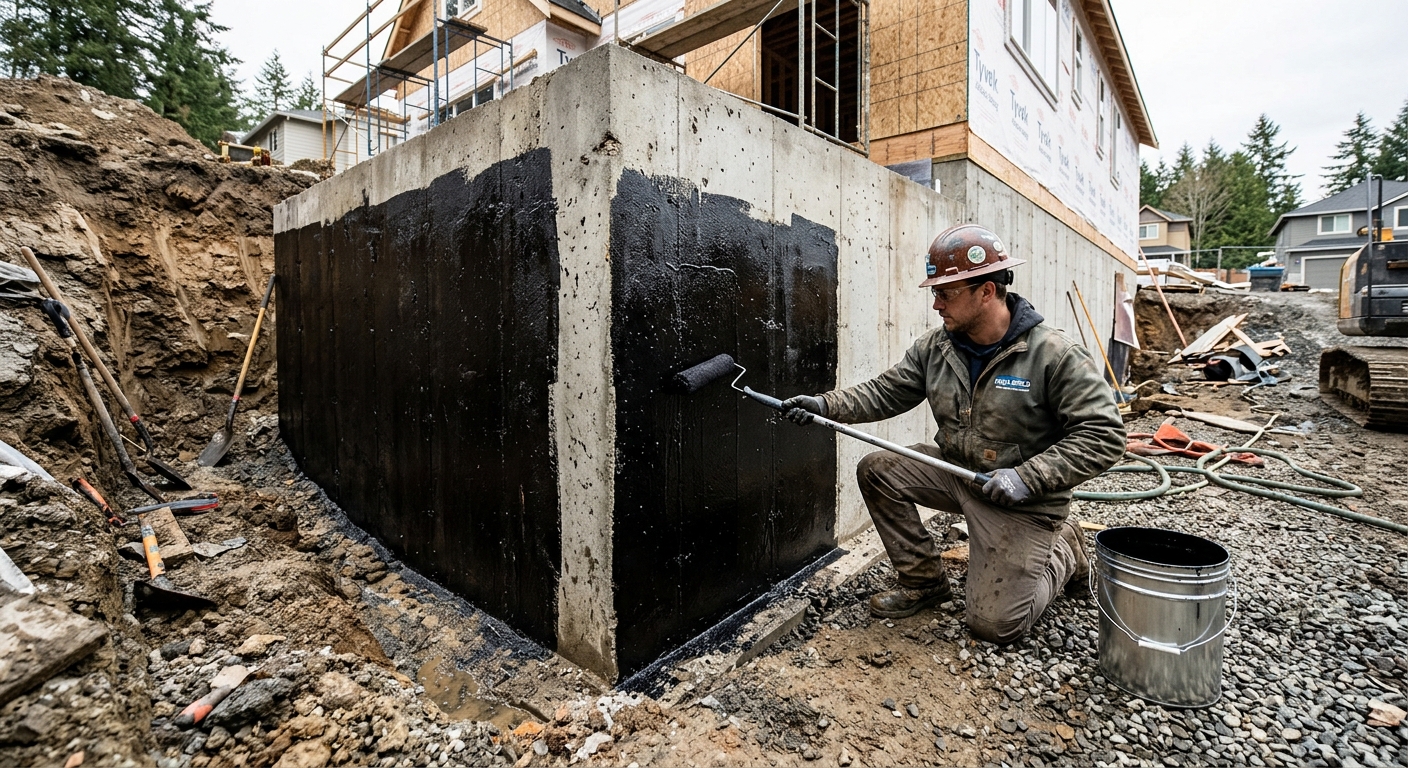
Basement waterproofing options and costs in Harrison Hot Springs
Harrison Hot Springs has a distinct waterproofing challenge: persistent moisture and frequent wet winters, where water pressure and drainage failures can keep basement walls and slabs damp even after “small fixes.” In this community of about 1,905 people, there are roughly 720 homeowner households, and a larger share of homes are older—about 18.1% were built before 1981. Those earlier foundations are more likely to have underperforming original waterproofing and older weeping-tile arrangements, which raises the likelihood of interior seepage or recurring dampness after heavy rain.
In the Lower Mainland–Southwest, soil conditions and water table levels tend to be the biggest cost drivers. Contractors often deal with consistently saturated backfill, hydrostatic pressure against basement walls, and wet-season drainage constraints, so exterior excavation jobs typically require higher labour and more careful staging. Freeze-thaw in British Columbia can also widen existing cracks and joints, accelerating water entry. In Harrison Hot Springs, waterproofing demand is especially noticeable around the lake-adjacent properties and the denser residential stretches where access constraints make full excavation more disruptive and more time-consuming.
Below are common options and what homeowners usually spend when evaluating realistic scope in Harrison Hot Springs. Use this table to compare approaches before you request itemised quotes.
| Method |
What It Addresses |
Disruption Level |
Durability |
Price Range |
| Exterior excavation + new membrane + drainage tile |
Stops water entry at source by rebuilding exterior drainage and waterproofing |
High (landscape removal, excavation along perimeter) |
Long-term (often the most complete solution when done to spec) |
$15,000–$30,000 |
| Interior perimeter drain channel + sump pit |
Manages water after entry; reduces seepage and keeps floor dry |
Medium (cutting/finishing interior perimeter) |
Very good when paired with good exterior grading/downspouts |
$8,000–$18,000 |
| Foundation crack injection (epoxy or polyurethane) |
Seals or stabilizes specific cracks and reduces active leakage |
Low to Medium (surface prep, patching) |
Good, depending on crack type and cause |
$500–$2,000 |
| Sump pump installation (primary + battery backup) |
Controls water level; reduces flooding risk during heavy rain or outages |
Low to Medium (pit + discharge routing) |
High when backup power is included |
$1,000–$5,000 |
| Window well drain installation |
Prevents water pooling at egress windows and reduces corner dampness |
Low (targeted excavation at window well) |
Good for localized entry points |
$1,200–$4,000 |
| Lot re-grading / downspout extension |
Moves roof and surface water away from the foundation |
Low to Medium (minor excavation/landscape work) |
Moderate (best as part of a complete plan) |
$2,500–$7,500 |
Prices are estimates only and vary by project scope, site access and material selection.
What affects the price of waterproofing in Harrison Hot Springs
In Harrison Hot Springs and the broader Lower Mainland–Southwest, two quotes that sound similar can diverge by 30–50% because the real scope often changes once the contractor confirms water pathways, soil saturation, foundation condition and access limits. In British Columbia, the separation from the national average is largely driven by three repeat offenders: soil/water behaviour, freeze-thaw, and hydrostatic pressure. Even when homes are relatively modern, persistent saturation can keep seepage active. By contrast, some inland regions have more seasonal “dry periods” where repairs appear to hold until the next cycle.
First, soil type affects how quickly backfill drains and how much lateral pressure builds. Clay-heavy soils tend to hold water longer; during freeze-thaw they can exert extra pressure on foundation walls and worsen cracking over time. Second, in the Lower Mainland–Southwest, higher water tables raise sump pump run times and increase the need for properly sized drainage and discharge planning. Third, wet coastal winters in British Columbia saturate backfill quickly when original drainage fails, and freeze-thaw can widen hairline cracks at joints and openings, increasing labour for prep and sealing.
For local examples: a poured-concrete foundation with stable, mostly vertical shrinkage cracks often responds better to crack injection, which can land in the $500–$2,000 band for targeted repairs. Meanwhile, a failed exterior weeping-tile perimeter (commonly requiring full membrane and drainage replacement) can push projects into the $15,000–$30,000 exterior range because of excavation, mechanical breaking in rocky sections, and landscape restoration on tight lots—particularly common near lake-adjacent properties.
| Price Factor |
Why It Matters |
Cost Impact |
| Interior vs. exterior approach — interior is less disruptive but addresses symptoms |
Interior systems manage water after it enters; exterior stops water at the source |
Often shifts costs between mid-range interior work and higher exterior excavation |
| Foundation type — poured concrete vs. block vs. stone vs. ICF |
Different substrates take sealants differently and may require different prep and detailing |
Poured concrete may reduce risk of re-leak when cracks are injected correctly |
| Soil type — clay expands more than sand, adding pressure |
Hydrostatic pressure and lateral stress increase movement at joints and cracks |
Can increase labour for crack mapping, drainage design, and reinforcement |
| Crack type and length — hairline vs. structural horizontal cracks |
Horizontal/structural movement may require engineering and more than injection |
May add engineer review and underpinning contingencies |
| Sump pump backup system — battery or water-powered backup needed |
BC power reliability during heavy spring rain matters to prevent backup-lift failure |
Raises equipment cost but reduces flooding risk significantly |
| Access — landscaping, decks, or driveways must be removed for exterior |
Tight lots increase labour and add restoration work |
Can increase exterior scope and timeline, pushing you toward higher bands |
| Weeping tile age — original tile (60+ years) may be completely failed |
Old systems may be clogged, broken, or bypassing |
Often turns “repair” into full replacement exterior work |
| Mould or efflorescence remediation required before sealing |
Moisture-related biological growth must be cleaned to ensure proper adhesion and indoor air safety |
Adds prep time, consumables, and sometimes containment procedures |
Permits & regulations in British Columbia
In British Columbia, waterproofing-related work may require permits depending on what you’re changing and whether the job affects structural elements or lot drainage. Foundation excavation, structural crack repair, and changes to how water moves around the property typically require a building permit. If your sump pump discharge connects to a storm or sanitary sewer, you generally need municipal approval before running new connections. For structural crack repair—particularly horizontal cracks in block walls or major step cracks—an assessment by a structural engineer is commonly required to determine whether underpinning or other structural remediation is needed before sealing.
To verify contractor readiness in Harrison Hot Springs, take this step-by-step approach:
- Ask for the contractor’s BC licence details (and confirm they’re in good standing online).
- Request a current Certificate of Insurance showing general liability and an appropriate liability limit for your project.
- Confirm WSIB/WCB coverage (where applicable to the contractor’s trade and workers) and get documentation in writing.
- If structural work is proposed, ask whether they provide engineering support or coordinate the engineer’s scope.
- Ask who pulls the permit and what the contractor includes (permit fees vs. service, inspection scheduling, and what happens if revisions are required).
- Keep copies: licence info, insurance certificate, and the clearance/coverage confirmation for your file.
This verification step matters because exterior waterproofing and structural crack work often intersects with permitting, drainage compliance, and liability risk.
Interior vs exterior waterproofing — what does Harrison Hot Springs need?
The fundamental difference is source control vs. water management. Exterior waterproofing—full excavation, new membrane, new drainage tile, and backfill—addresses where water is entering by rebuilding the perimeter system. It’s the more permanent approach, but it costs significantly more and disrupts landscaping, walkways, and driveways. Interior waterproofing—typically a perimeter drain channel and sump pit (with a sump pump)—collects water after it enters the basement. It’s less invasive, usually faster to access, and can be very effective in Harrison Hot Springs where saturated conditions can keep the interior damp even when the exterior is partially functional.
In the Lower Mainland–Southwest, high groundwater and frequent prolonged rainfall mean interior systems often need to be designed for run-time reality and sometimes require backup power. For poured concrete walls, crack injection can be a strong supporting step because injection seals and stabilizes specific pathways; for block foundations, interior drainage is often a practical complement because block joints and voids can act like “water channels” under hydrostatic pressure.
Here’s a practical dollar example: if you have active seepage along a known crack and a failing perimeter drainage pattern, paying for an interior drainage setup in the $8,000–$18,000 range can be justified when access is tight and you need a dry basement quickly. But if the original weeping tile is completely failed and the site can accommodate excavation, shifting to the $15,000–$30,000 exterior range can be justified because it reduces the chance of recurring interior dampness after heavy rain—especially important in older housing stock (about 18.1% built before 1981) where original perimeter drainage performance may already be limited.
| Method |
Best For |
Addresses Source? |
Disruption |
Lifespan |
Price Band |
| Full exterior excavation + membrane |
Failed exterior drainage/membrane; recurring seepage during heavy rain |
Yes |
High |
Long-term when installed to spec |
$15,000–$30,000 |
| Interior French drain + sump system |
High interior seepage; exterior work isn’t feasible or is too disruptive |
No (manages after entry) |
Medium |
Very good with proper pump sizing and discharge |
$8,000–$18,000 |
| Crack injection — epoxy (structural) |
Stable cracks without active flow; structural bonding benefit |
Partial (seals pathway, assumes crack is stable) |
Low to Medium |
Good for non-moving cracks |
$500–$1,500 |
| Crack injection — polyurethane (active leak) |
Active seepage; cracks with ongoing water movement |
Partial (seals active pathway) |
Low to Medium |
Good when paired with drainage control |
$900–$2,000 |
| Interior drain channel only (no sump) |
Light seepage or short-duration wetting where pump isn’t required |
No (collects water but relies on drainage method) |
Medium |
Moderate (depends on water level control) |
$6,000–$12,000 |
| Re-grading + downspout extensions |
Surface water problems; roof runoff directed toward foundation |
Yes (for surface/roof water routes) |
Low to Medium |
Moderate; best as a supporting measure |
$2,500–$7,500 |
How to choose a waterproofing contractor in Harrison Hot Springs
Choosing the right waterproofing contractor in Harrison Hot Springs is mostly about verifying capability and aligning scope to your actual water problem. Start by confirming British Columbia licensing where applicable, then verify liability insurance and WSIB/WCB coverage. You should be able to check the contractor’s licence online, review a current Certificate of Insurance, and obtain written confirmation of coverage for workers. If a quote involves structural crack repair or anything that could affect foundation stability, confirm they have engineering support available and can coordinate assessment as required.
Next, request 2–3 itemised written quotes. The best quotes separate labour and materials (for example, drainage tile, membrane, pump components, pipe routing, and interior finishes), rather than giving a single lump-sum number. Carefully review exclusions: Is permit pulling included? Is excavation disposal included? Are repairs to landscaping reinstatement or interior flooring included? Ask how they handle matching finishes where interior work cuts into drywall, slab edge finishes, or flooring transitions.
Warranty matters too. Look for a workmanship warranty length, clarify manufacturer warranty on specific products, and ask whether the warranty transfers to you if you sell the home. Payment scheduling should be conservative: never pay more than 10–15% upfront, and hold back a portion until the job is fully complete and cleaned up. Finally, insist on a start date and completion estimate in writing so you’re not left waiting through Harrison Hot Springs’s wet seasons.
- Ask for licence/registration verification details before signing anything.
- Request current Certificate of Insurance (liability) with the project address listed or clearly applicable.
- Confirm WSIB/WCB coverage documentation for workers.
- Require a site assessment: crack mapping, moisture observations, and discharge plan discussion.
- Get 2–3 itemised quotes (labour + materials) with unit costs where possible.
- Confirm what’s included in excavation and disposal for exterior work.
- Ask who pulls the permit and whether inspections are included or the homeowner must arrange them.
- Require pump details (model, capacity, discharge line size, and backup type if offered).
- Confirm discharge location and compliance with local approval requirements.
- Ask for product cut sheets and installation method specs (membrane type, drainage board, geotextile).
- Look for a written waterproofing warranty and product warranties (including transferability).
- Clarify payment milestones and keep a holdback until punch list completion.
Red flags in Harrison Hot Springs include: contractors who “guarantee dryness” without mapping the water entry routes; quotes that exclude drainage discharge details and pump sizing; vague scopes with no material names or installation methods; refusal to provide insurance/coverage documentation; and starting work without clarifying whether permits are required for excavation, structural crack repair, or lot drainage changes.
Frequently asked questions — waterproofing in Harrison Hot Springs
How much does basement waterproofing cost in Harrison Hot Springs?
In Harrison Hot Springs, costs depend mainly on whether you address the water at the exterior perimeter or manage it from inside. Exterior waterproofing that includes excavation, membrane, and new drainage tile commonly falls in the $15,000–$30,000 range, especially when access is tight or rocky sections require mechanical breaking. If you choose interior perimeter drainage (French drain/channel + sump pit), homeowners often budget $8,000–$18,000. Smaller targeted work—like crack injection—can be far lower, typically around $500–$2,000 depending on crack type and length. Because the Lower Mainland–Southwest has persistent wet conditions and higher groundwater pressure during rainy stretches, quotes can vary significantly when contractors find the original drainage system has failed.
Interior vs exterior waterproofing — which is better?
“Better” depends on what’s causing the water problem. Exterior waterproofing is usually the most complete solution because it rebuilds drainage and waterproofing before water reaches the basement. That’s why it’s often selected when perimeter weeping tile has failed or when seepage reoccurs after heavy rain. Interior waterproofing is often better when excavation isn’t feasible or you need a less disruptive approach; it collects and controls water after it enters, commonly with an interior drain channel and sump system. In Harrison Hot Springs, many older homes (about 18.1% built before 1981) have drainage performance issues, so exterior work may be justified if you want long-term source control. If your foundation is poured concrete with stable cracks, crack injection plus a sump can be a practical pairing. For block walls, interior drainage is frequently a practical complement.
Why is my basement leaking in Harrison Hot Springs?
Leaking is usually a combination of water entry routes and a foundation system that can’t control hydrostatic pressure. In the Lower Mainland–Southwest, prolonged rainfall and higher water table behaviour keep soils saturated, so water can press against basement walls and floor edges longer than homeowners expect. Older drainage components—like original weeping tile—may be undersized, clogged, broken, or bypassing, which increases seepage risk. Freeze-thaw can also widen joints and cracks, creating new pathways. Common Harrison Hot Springs scenarios include roof downspouts discharging near the foundation, deteriorated perimeter drainage at the back of the property, and damp corners around window wells. If you’re seeing recurring dampness after storms, the cause is often exterior drainage plus pressure—meaning you may need more than a small sealant patch.
How do I know if a foundation crack is serious?
A foundation crack is more concerning when it shows signs of movement or unusual patterns. Serious indicators include horizontal cracks in block walls, step cracking that propagates, widening that changes over time, or cracks that are accompanied by active seepage during wet periods. Hairline shrinkage cracks can be less urgent, especially in poured concrete, but they still need evaluation in Harrison Hot Springs because saturated conditions and freeze-thaw can turn small pathways into active leaks. Efflorescence (white mineral deposits) and moisture staining usually mean water is migrating through or near the crack. If the crack has wetness on one side only, that can point to an exterior drainage issue. For potential structural movement, British Columbia practice commonly involves a structural engineer assessment before sealing and any structural remediation.
How much does foundation crack repair cost in Harrison Hot Springs?
Foundation crack repair cost in Harrison Hot Springs usually depends on crack type (hairline vs. active leak), length, and whether injection is all that’s needed. Targeted crack injection commonly falls in the $500–$2,000 band for many residential repairs, with higher-end pricing when there are multiple injection ports, longer cracks, or active leakage that needs polyurethane rather than epoxy. If there are signs of structural movement—like major step cracks or horizontal block-wall cracks—expect that you may need an engineer assessment before proceeding, which can increase the overall budget. Also, if the contractor must remediate heavy mould or efflorescence before injection, that prep step can add cost. Quotes are typically most accurate after the contractor confirms whether the crack is stable and where the water is coming from.
Do I need a sump pump in Harrison Hot Springs?
You may need a sump pump when interior drainage can’t control water level by gravity alone, or when the basement collects water after prolonged wet periods. In Harrison Hot Springs and across coastal British Columbia, persistent rainfall and higher groundwater behaviour can push water into basements longer than one dry spell can “clear it out.” A sump pump also becomes especially important if you’re installing an interior perimeter drain system, because the drain channel needs a reliable collection and removal method. Because spring flooding and heavy rain periods can coincide with power interruptions, it’s common to consider a backup system (battery or alternative backup) to reduce flooding risk. In many projects, sump systems sit in the $1,000–$5,000 range depending on pump capacity, discharge routing, and whether backup power is included. Your contractor should recommend based on observed water levels and discharge plan—not guesswork.