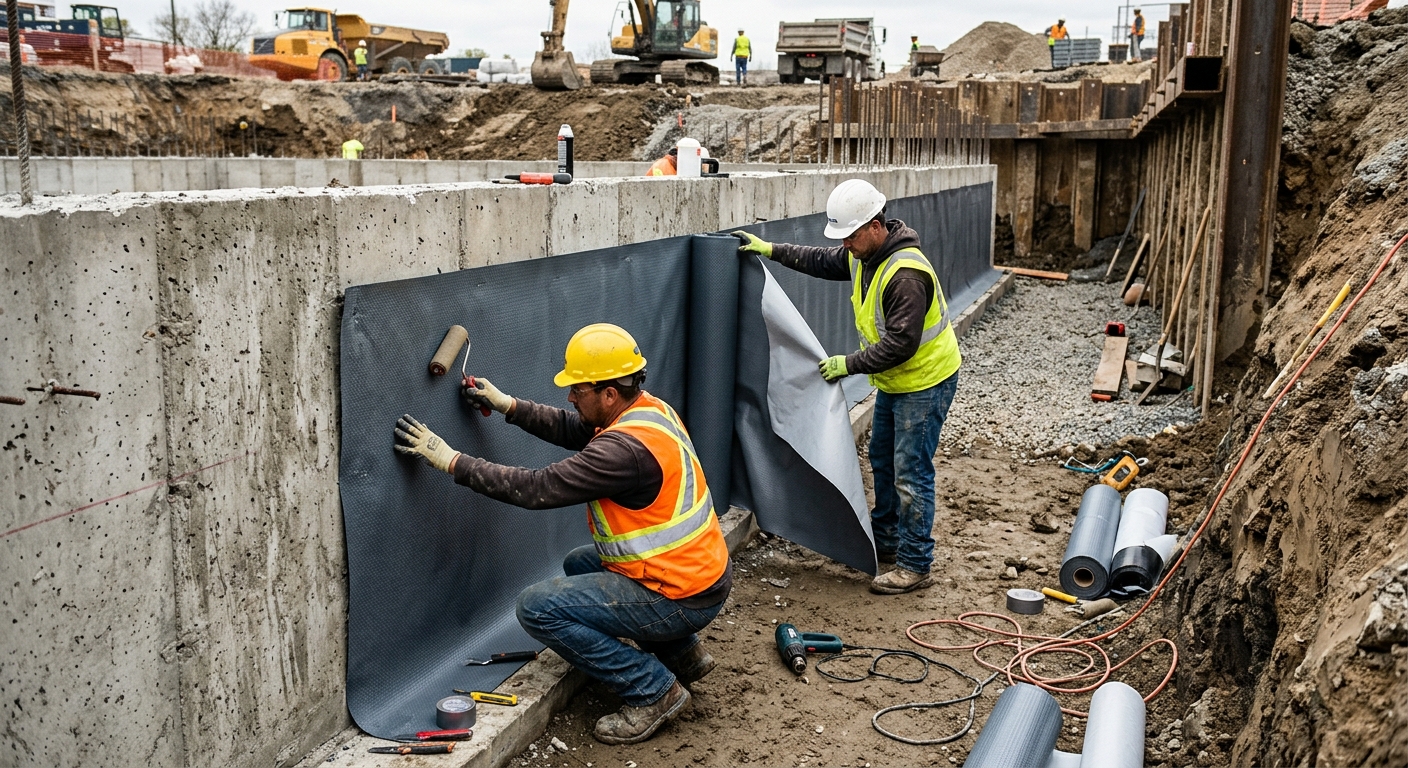
Basement waterproofing options and costs in New Horizons
Basement waterproofing in New Horizons, British Columbia is most often driven by persistent groundwater pressure and drainage shortcomings rather than dramatic soil “heave” alone. With a total population of 8,495 (Statistics Canada, 2021 Census), the town experiences a steady mix of older homes and ongoing renovations, and that matters because failing original systems are common: in Lower Mainland–Southwest, many basements rely on aging perimeter drains and historic membrane approaches that deteriorate over decades. In practice, older properties in the New Horizons area—especially around established residential pockets near the community’s older streets and utility corridors—tend to see more frequent weeping tile replacements, sump upgrades, and interior retrofits.
Lower Mainland–Southwest pricing is shaped by high groundwater and intense, prolonged rainfall that keeps backfill saturated and maintains hydrostatic pressure against basement walls and slabs. Mild winters still bring freeze-thaw conditions, which widen existing cracks and joints, so solutions often need both sealing and drainage. Access constraints on tighter lots and labour demand from recurring foundation work also push costs higher than many homeowners expect.
Here are the typical waterproofing options contractors quote in New Horizons, with realistic cost ranges you can use to compare bids. Once you’ve identified whether the water is entering through the exterior perimeter, through cracks, or mainly via poor drainage, the best fit usually becomes obvious from the disruption level and lifespan.
| Method |
What It Addresses |
Disruption Level |
Durability |
Price Range |
| Exterior excavation + new membrane + drainage tile |
Exterior water entry along foundation perimeter; replaces failing drainage paths |
High (excavation, landscaping restoration) |
Long-term when drainage is properly designed and backfilled |
$15,000 – $30,000 |
| Interior perimeter drain channel + sump pit |
Water that has entered or bypassed exterior drainage; reduces hydrostatic accumulation inside |
Medium (interior cutting and cleanup) |
Very solid for persistent seepage when the sump is sized correctly |
$8,000 – $18,000 |
| Foundation crack injection (epoxy or polyurethane) |
Cracks in poured concrete or block that allow seepage; epoxy for non-moving structural gaps, polyurethane for active leaks |
Low to medium (surface prep and controlled injection) |
Good to long-lasting when the crack movement and water path are correctly identified |
$500 – $2,000 |
| Sump pump installation (primary + battery backup) |
Controls groundwater intrusion by pumping collected water; battery backup protects during outages |
Low to medium (pit/coring and discharge routing) |
High reliability when discharge and check valves are detailed |
$1,000 – $5,000 |
| Window well drain installation |
Localized seepage from around window wells and downspout/grade water bypass |
Medium (excavation at specific openings) |
Good when paired with proper weeping/grade management |
$1,500 – $4,500 |
| Lot re-grading / downspout extension |
Moves roof and surface water away from foundation; reduces saturation near walls |
Low to medium (groundwork and minor landscaping) |
Moderate (helps long-term, but may not fix failed weeping tile) |
$1,000 – $4,000 |
Prices are estimates only and vary by project scope, site access and material selection.
What affects the price of waterproofing in New Horizons
In New Horizons and across the Lower Mainland–Southwest region, it’s common to see waterproofing quotes for “the same” problem vary by 30–50%. The reason is that waterproofing is rarely just one component—it’s a system. Contractors can propose different combinations of exterior excavation, interior drains, crack repair, and sump redundancy based on what they find during inspection and test cuts. In British Columbia, local costs can run higher than the national average because labour rates, access constraints, and persistent groundwater require more excavation work or more robust interior drainage.
The three biggest region-specific drivers are soil type, water table, and freeze-thaw. First, while clay-rich expansive soils can cause major seasonal swelling elsewhere in Canada, Lower Mainland soils typically create problems through persistent saturation and drainage challenges; the result is continuous hydrostatic pressure. Second, high groundwater tables in Lower Mainland–Southwest raise sump pump run times and often require larger or better-designed interior drainage. Third, wet, mild winters plus freeze-thaw cycles widen existing cracks and joints, letting water penetrate faster and accelerating deterioration—so sealing alone is usually not enough if drainage fails.
In New Horizons, you’ll often see exterior work priced near the $15,000 – $30,000 band when excavation hits harder ground sections or when decks and driveways must be removed for access. If the issue is mainly interior seepage or a failing perimeter drain, interior retrofits can land in the $8,000 – $18,000 range, especially when a sump and perimeter channel are required. For example, a basement with active seepage through multiple joints usually triggers both drainage and crack work; whereas a single localized leak at a window well may be addressed with a smaller drainage scope plus re-grading.
| Price Factor |
Why It Matters |
Cost Impact |
| Interior vs. exterior approach — interior is less disruptive but addresses symptoms |
Interior drains manage water after entry; exterior addresses the entry point |
Exterior typically costs more due to excavation, disposal, and reinstatement |
| Foundation type — poured concrete vs. block vs. stone vs. ICF |
Crack patterns and sealing methods differ by wall system |
Block and older wall assemblies often require more complementary drainage work |
| Soil type — clay expands more than sand, adding pressure |
Soil movements and saturation can change how leaks behave over time |
Clay-prone conditions can increase crack movement and repair frequency |
| Crack type and length — hairline vs. structural horizontal cracks |
Structural cracks may indicate movement and need engineering direction |
Structural crack repair can raise scope beyond injection alone |
| Sump pump backup system — battery or water-powered backup needed |
Backup reduces risk during spring rain events and outages |
Backup adds cost but can be critical for low-lying basements |
| Access — landscaping, decks, or driveways must be removed for exterior |
Tight lots increase labour and restoration |
Access constraints commonly push projects toward the top of the range |
| Weeping tile age — original tile (60+ years) may be completely failed |
Failing tile can divert water into walls and floor edges |
When tile is collapsed, interior-only solutions often underperform |
| Mould or efflorescence remediation required before sealing |
Moisture contamination must be treated before applying membranes or sealants |
Remediation adds time and material cost, but improves long-term success |
Permits & regulations in British Columbia
In British Columbia, foundation excavation, structural crack repair, and changes to lot drainage typically require a building permit. If a project includes installing or modifying a sump pump discharge connection to a storm or sanitary sewer, municipal approval is often required as well. For structural crack repair—especially horizontal cracks in block walls, major step cracks, or any signs of wall movement—an assessment by a structural engineer is frequently needed to determine whether underpinning or other structural work is required. When you’re planning waterproofing in New Horizons, make sure your contractor is upfront about which parts of the job are permit-ready and which parts typically do not trigger permitting (such as non-structural sealing of minor, stable hairline cracks when there is no sign of movement).
To verify a contractor in British Columbia step-by-step, start by checking their licensing information through the appropriate online registry for their trade category. Next, request a certificate of insurance (liability) and confirm the coverage dates match your scheduled work window. Then obtain proof of WSIB/WCB coverage (or an equivalent clearance letter where applicable) and make sure the name on the certificate matches the legal company on the contract. For structural repairs, ask whether they coordinate engineering sign-off, and keep a copy of all documentation in your project file before work begins.
Interior vs exterior waterproofing — what does New Horizons need?
Exterior waterproofing in New Horizons—full excavation, new membrane, new drainage tile, and engineered backfill—best addresses the source of water entry. It’s the most permanent fix because it intercepts water before it reaches the foundation wall and slab edges. The trade-off is cost and disruption: excavation is labour-intensive, and landscaping restoration can be significant. Interior waterproofing (perimeter drain channel, sump pit, and sump pump) is less invasive and often costs less, but it manages water after it enters. In other words, it reduces the consequences of seepage; it doesn’t eliminate hydrostatic pressure against the wall itself.
Given Lower Mainland–Southwest conditions—high groundwater and persistent saturation—basements with multiple seepage points or known failing perimeter drainage often justify exterior work. If you have poured concrete walls with relatively stable cracks, crack injection can be a strong complement, especially when paired with drainage that prevents re-wetting. For block foundations, water often finds many pathways through mortar joints and uneven surfaces; interior drainage is commonly a practical complement to any sealing, particularly when access makes full exterior excavation challenging.
Sump pump backup systems matter here because spring flooding can coincide with power interruptions. A primary pump plus battery backup helps keep the basement dry when rainfall spikes and the grid is strained.
To put pricing into context: if you’re choosing between interior drainage at roughly $8,000 – $18,000 and full exterior excavation near $15,000 – $30,000, the difference is usually justified when (1) your original weeping tile is failing, (2) leaks are widespread along the perimeter, or (3) the site can’t be reliably solved with re-grading and spot repairs.
| Method |
Best For |
Addresses Source? |
Disruption |
Lifespan |
Price Band |
| Full exterior excavation + membrane |
Widespread perimeter seepage, failed exterior drainage, consistently wet soils |
Yes |
High |
Long |
$15,000 – $30,000 |
| Interior French drain + sump system |
Interior wetness, failing weeping tile suspected/confirmed, limited exterior access |
No (controls after entry) |
Medium |
Long with proper sump sizing and discharge |
$8,000 – $18,000 |
| Crack injection — epoxy (structural) |
Stable, non-moving cracks in poured concrete where water entry is limited and predictable |
Partially (seals the crack) |
Low to medium |
Good when movement is confirmed as minimal |
$500 – $2,000 |
| Crack injection — polyurethane (active leak) |
Active seepage through cracks where material must flex with moisture and minor movement |
Partially (seals and manages flow) |
Low to medium |
Good for active leaks when paired with drainage |
$800 – $2,500 |
| Interior drain channel only (no sump) |
Light seepage that can discharge by gravity and where sump installation is not feasible |
No |
Low to medium |
Moderate (depends on discharge reliability) |
$6,000 – $12,000 |
| Re-grading + downspout extensions |
Surface water runoff near the foundation, seasonal pooling, minor dampness with no active seepage |
Helps reduce source exposure |
Low to medium |
Moderate (needs maintained grading) |
$1,000 – $4,000 |
How to choose a waterproofing contractor in New Horizons
Choosing the right waterproofing contractor in New Horizons starts with verification. In British Columbia, ask for their current licence/registration for the work they perform, then request a certificate of insurance showing liability coverage and confirm the company name matches the contract. Also ask for proof of WSIB/WCB coverage (or the appropriate clearance documentation) so you’re protected if a worker is injured during excavation or cutting.
Next, get 2–3 itemised written quotes. You want labour and materials broken out clearly—excavation and backfill, membrane components, drainage tile, sump pit and pump model, discharge piping, and disposal/restoration—not just one lump-sum. Read exclusions line-by-line: disposal included or not, permit pull included or not, whether restoration is to “like kind” or includes specific finishes, and whether test cuts or exploratory coring are priced. Ask about warranty details: a workmanship warranty term (often measured in years), plus manufacturer warranties for membranes and sealants. Confirm whether the warranty is transferable to a new owner.
For payment, avoid large deposits: never pay more than about 10–15% upfront, and hold back a portion until the waterproofing is complete, cleaned up, and tested. Finally, insist on a start date and completion estimate in writing so you can plan around rain windows and basement use.
- Confirm the contractor’s British Columbia registration/licence for the specific scope (excavation, drainage, sealing, and any permitted structural crack work).
- Request certificate of liability insurance and verify coverage limits and dates.
- Provide WSIB/WCB clearance documentation before work begins.
- Ask for 2–3 itemised quotes with labour/material breakdown and line-item quantities.
- Verify whether permit pull is included and who prepares drawings if required.
- Confirm disposal is included for soil and debris removed during excavation/coring.
- Ask how they assess water entry (inspection, test holes/cuts, crack mapping, drainage checks).
- Match crack injection type to crack behaviour (epoxy for stable cracks; polyurethane for active leaks).
- Ensure discharge routing is detailed (distance to daylight, connection method, and check valves).
- Require sump pump specs (basin size, primary capacity, alarms, and backup type if offered).
- Get warranty terms in writing: workmanship length, product warranty coverage, and transferability.
- Set a clear payment schedule with a small upfront deposit and holdback until completion.
Red flags in New Horizons include: vague scopes without drawings or photos of the leak source, quoting “guaranteed dry basement” without discussing drainage design, refusing to provide insurance/WSIB/WCB proof, offering only one approach (e.g., interior only) despite widespread perimeter issues, and pushing large upfront payments or leaving restoration/exclusions undefined.
Frequently asked questions — waterproofing in New Horizons
Can I waterproof my basement in winter in New Horizons?
Yes, basement waterproofing can often be done in winter in New Horizons, British Columbia, but the feasibility depends on weather and site conditions. Exterior excavation and membrane work can be delayed when ground is frozen or saturated, and access can be more difficult during heavy rain and cold snaps. Interior work—like perimeter drain channels, sump pits, and many crack injection applications—can typically proceed with fewer weather dependencies, because the main tasks are indoors or involve controlled coring. If you’re budgeting, remember that interior waterproofing often falls around $8,000 – $18,000, while full exterior excavation is commonly higher in the $15,000 – $30,000 range due to excavation and reinstatement.
What is the difference between waterproofing and damp-proofing?
In New Horizons, waterproofing is about stopping or managing liquid water movement into the basement in a way that accounts for hydrostatic pressure and active moisture paths—typically through drainage systems (weeping tile replacement or interior French drains), sealed cracks, and often a sump pump to control collected water. Damp-proofing usually refers to managing surface moisture or minor seepage through coatings or membranes without fully addressing water pressure and drainage. Because Lower Mainland–Southwest can maintain constant saturation during prolonged rainfall, damp-proofing alone often underperforms when the source is groundwater pressure or a failing perimeter drain. For many basements, especially older ones where original tile systems can be decades old, a true waterproofing plan that includes drainage—either exterior or interior—is what protects finishes during the wet season.
Will basement waterproofing affect my property value in New Horizons?
It can, particularly because buyers in British Columbia increasingly ask for evidence that moisture issues were addressed with a proper drainage and sealing system—not just cosmetic repairs. In New Horizons, where the population is 8,495 (Statistics Canada, 2021 Census), you’ll typically see fewer houses on the market at any given time, so well-documented waterproofing can make your home more “insurable” and easier to finance after inspection. That said, the value bump depends on the scope: exterior waterproofing with full drainage replacement can be a stronger selling point than interior-only measures when leaks were widespread. Interior drainage with a sump system can still be very effective, but you’ll want clear documentation, photos, and warranty details so future buyers understand what was done.
What drainage issues are most common in New Horizons homes?
The most common issues in New Horizons and the broader Lower Mainland–Southwest are perimeter drainage failures and trapped groundwater against basement walls and slab edges. Homeowners frequently report musty odours, damp corners, or recurring seepage after extended rainfall—signs consistent with hydrostatic pressure and undersized or failing drainage (including aging weeping tile). Freeze-thaw cycles can also widen existing joints and cracks, creating new paths for water. Many homes with older foundation assemblies experience seepage through multiple points rather than a single isolated crack, which is why comprehensive approaches (interior drainage and sump, or exterior drainage replacement) are often recommended. When neighbourhood lots have tight landscaping or limited access, contractors may lean toward interior systems that protect the finished basement with less disruption.
How do I choose a waterproofing contractor in New Horizons?
Start by verifying credentials in British Columbia: request proof of liability insurance, confirm WSIB/WCB coverage, and ensure the contractor’s registration/licence matches the work scope. Then get 2–3 itemised quotes so you can compare labour and materials rather than relying on lump sums. A good New Horizons contractor will map the moisture source (and explain why), describe whether permit pull is included, and detail disposal and restoration responsibilities. Ask about warranty: workmanship warranty length and manufacturer product warranties for membrane/sealants. Finally, keep payment conservative—generally 10–15% upfront maximum—and insist on a written start/completion timeline. If a contractor avoids documentation or can’t explain their drainage design, that’s a major warning sign.
What is a battery backup sump pump and do I need one in New Horizons?
A battery backup sump pump is an additional power system that keeps the pump running when the grid loses power—commonly during intense weather events or neighbourhood outages in British Columbia’s wet seasons. In New Horizons, it’s worth considering when you have a history of water rising quickly, when the basement is finished (higher replacement cost if flooding occurs), or when the sump discharge path is critical. If your contractor recommends interior drainage near the $8,000 – $18,000 band, asking whether backup is included can meaningfully reduce risk. Backup isn’t mandatory for every basement, but in Lower Mainland–Southwest conditions with persistent rainfall and spring flooding patterns, it’s often a “small extra” relative to the cost of cleanup and repairs if the primary pump can’t run.