Basement waterproofing options and costs in Prince George
In Prince George, basement waterproofing typically comes down to three choices: fix the source on the exterior, manage water after it enters with an interior system, or address a specific failure like foundation cracking or window-well seepage. This matters locally because Prince George has a lot of established housing stock—61.7% of homes were built before 1981—so many properties are dealing with worn-out original membranes and weeping tile that no longer handle spring melt and sustained shoulder-season wet periods. With 68.2% of households owning their homes, repairs are often planned as part of longer-term maintenance rather than short-term patchwork (Statistics Canada, 2021 Census).
Cariboo-area pricing is also shaped by site conditions. Quotes can swing quickly when excavation depth is limited, when access is tight near driveways or landscaping, or when contractors need to re-establish proper drainage away from the foundation. Freeze-thaw cycling in Northern B.C. can turn hairline cracks into repeating seepage paths, while soil that holds moisture (including heavier clay mixes found on some lots) can increase lateral pressure against basement walls. In older neighbourhoods such as College Heights, interior repairs and targeted drainage upgrades are especially in demand as homeowners respond to recurring dampness, efflorescence, and wet corners before finishing basements.
Below is a practical comparison of common approaches and what homeowners usually budget for in Prince George before a site visit confirms access, excavation needs, and drainage upgrades.
| Method |
What It Addresses |
Disruption Level |
Durability |
Price Range |
| Exterior excavation + new membrane + drainage tile |
Primary water entry by restoring the foundation waterproofing system and directing water to a drainage route |
High (excavation, regrading, landscaping repair) |
High (best long-term source control when installed to spec) |
$7,000–$18,000 |
| Interior perimeter drain channel + sump pit |
Water that has already entered; collects seepage and pumps it away |
Medium (limited demolition along basement perimeter) |
Medium to high (depends on pump reliability and drainage design) |
$3,000–$12,000 |
| Foundation crack injection (epoxy or polyurethane) |
Seepage or crack movement through the wall; used with complementary drainage practices |
Low to medium (minor surface prep) |
Medium (epoxy for static cracks; polyurethane for active leaks) |
$500–$1,500 |
| Sump pump installation (primary + battery backup) |
Reduces basement water risk during outages and heavy spring surges |
Low to medium (pit + discharge plumbing installation) |
Medium to high (greatly improved resilience with backup) |
$800–$2,500 |
| Window well drain installation |
Surface water infiltration at egress/window areas |
Low to medium (targeted exterior excavation or localized interior work) |
Medium (best when paired with proper downspout/grade control) |
$1,000–$4,000 |
| Lot re-grading / downspout extension |
Improves surface-water management to reduce seepage load on the foundation |
Low (no foundation excavation) |
Low to medium (helps most when drainage is already close to adequate) |
$700–$2,800 |
Prices are estimates only and vary by project scope, site access and material selection.
What affects the price of waterproofing in Prince George
In Prince George, two homeowners can receive very different quotes for what looks like the “same” waterproofing job—often 30–50% apart—because the real work is driven by site conditions, not just the method name. The Cariboo region can be higher than some national averages when excavation is deeper, access is constrained, or drainage upgrades are required to solve the root cause. Conversely, some projects land near the lower end when the foundation perimeter is easy to excavate and the drainage path is clear.
Three local drivers that separate Prince George pricing from a national baseline are soil type, water table, and freeze-thaw. Clay-heavy or moisture-retaining soils (found on certain lots) can hold water against the foundation longer and exert higher lateral pressure—cracks widen faster under repeated freeze-thaw. When groundwater is closer to the foundation, interior sump systems run more frequently and discharge solutions become more important, which pushes interior waterproofing toward the upper half of its band (for example, many Prince George sump-and-drain installs fall in the $3,000–$12,000 range). In heavier shoulder-season wet conditions, contractors sometimes have to remove additional backfill and re-establish proper drainage, pulling projects toward $7,000–$18,000 when exterior excavation is the only reliable source-control option.
Concrete examples homeowners notice during quoting: (1) lots with established landscaping or fences often require more mobilization time for exterior work, and (2) older properties built before 1981 are more likely to have failed weeping tile and older membranes, meaning the scope may include drainage reconstruction rather than “patching.” With many homes experiencing recurring efflorescence and corner seepage, interior-only approaches can be appropriate as a stopgap, but if the water load is high, exterior source control typically becomes more cost-effective over time.
| Price Factor |
Why It Matters |
Cost Impact |
| Interior vs. exterior approach — interior is less disruptive but addresses symptoms |
Interior systems manage incoming water; exterior addresses water before it enters the foundation |
Interior can be significantly lower, while exterior often adds excavation and backfill costs |
| Foundation type — poured concrete vs. block vs. stone vs. ICF |
Different wall types respond differently to crack repair and waterproofing products |
Block and stone frequently need more targeted drainage/cavity detailing |
| Soil type — clay expands more than sand, adding pressure |
Moisture-retaining soils increase hydrostatic pressure and repeat seepage paths |
More drainage upgrades and more robust sealing details may be required |
| Crack type and length — hairline vs. structural horizontal cracks |
Active/structural cracks can require engineering and a different repair strategy |
Structural assessment can raise costs versus cosmetic or static crack work |
| Sump pump backup system — battery or water-powered backup needed |
Reduces risk during outages when power is lost during heavy periods |
Backup adds to equipment and install labour, but improves resilience |
| Access — landscaping, decks, or driveways must be removed for exterior |
Time and restoration increase excavation complexity |
May increase exterior project cost materially due to demo and reinstatement |
| Weeping tile age — original tile (60+ years) may be completely failed |
Outdated drainage systems can be blocked or nonfunctional |
Often requires full replacement or tie-ins, adding labour and materials |
| Mould or efflorescence remediation required before sealing |
Sealers won’t perform reliably over contaminated surfaces |
Additional prep time and cleaning can raise the total project budget |
Permits & regulations in British Columbia
In British Columbia, many homeowners assume a basement waterproofing job is “just construction,” but several categories commonly trigger permitting or approvals—especially when drainage routes and structural repairs are involved. Foundation excavation, structural crack repair, and changes to lot drainage (for example, altering how and where water is directed) typically require a building permit. If the work involves a sump pump discharge connection to municipal storm or sanitary systems, municipal approval is usually required.
For structural crack repair—particularly horizontal cracks in block walls, step cracking, or any indication the wall is not behaving as a stable plane—an assessment by a qualified structural engineer is often required. The goal is to determine whether underpinning, wall stabilization, or additional structural work is needed before sealing or drainage modifications are carried out.
How to verify a contractor in Prince George step by step: (1) confirm their BC licence status using the applicable online government licence registry for trades; (2) request a current certificate of insurance that names the homeowner (or provides proof of liability coverage) and verify expiry dates; and (3) ask for proof of WSIB/WCB coverage (or an active exemption, if applicable). For structural repairs, confirm they have engineering support in their proposal and that they’ll provide documentation—don’t rely on verbal assurances.
If you want, I can also provide a short “document checklist” you can paste into your quote request email.
Interior vs exterior waterproofing — what does Prince George need?
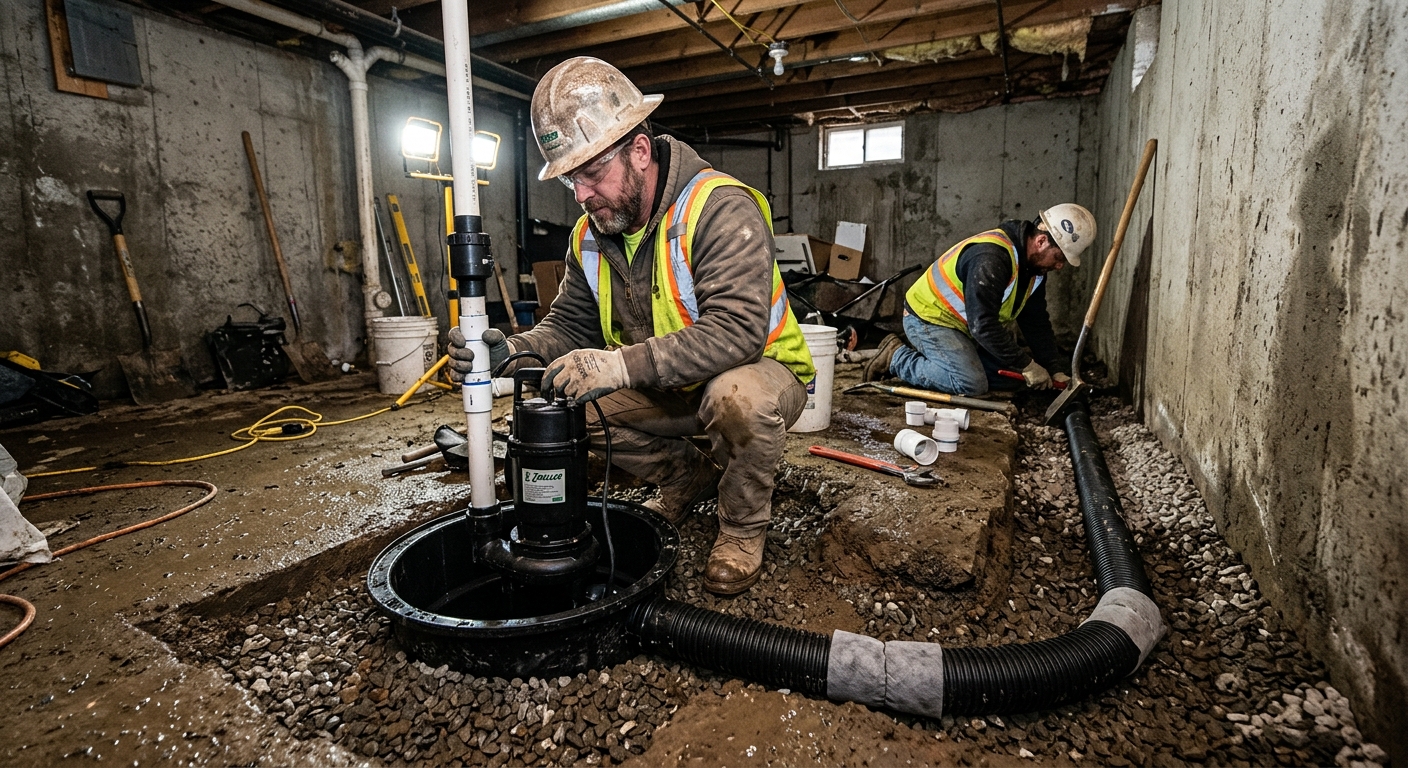
The fundamental difference is that exterior waterproofing addresses the source of water entry: it typically requires full or partial excavation to expose the foundation wall, install a proper membrane system, add or replace drainage tile, then backfill and restore grades. That’s why it costs more and disrupts landscaping. Interior waterproofing, by contrast, manages water after it enters—most often with a perimeter drain channel, sump pit, and sump pump. It can be far less invasive and is often chosen when homeowners want to stop active seepage quickly or when exterior access is difficult.
In Prince George, these choices are influenced by Northern B.C. freeze-thaw cycles and by the realities of older neighbourhood housing. For many poured concrete walls, crack injection can be an effective complement when cracks are stable and the leak paths are clear. For block foundations and older wall systems, interior drainage is often a practical complement because small voids, joint pathways, or historic drainage failures can overwhelm a “seal-only” approach. If you’re relying on a sump, consider a backup system: during spring flooding and stormy shoulder-season weather, short power interruptions can happen, and a backup pump can prevent a cycle of “wet basement → dry out → wet again.”
A typical decision point: if you’re seeing recurring wet corners after heavy snowmelt and your lot grading and downspouts aren’t enough, interior perimeter drainage might bring you into the $3,000–$12,000 band. If inspections show widespread membrane and drainage failure on the exterior, and excavation is feasible, homeowners often move toward $7,000–$18,000 because source control reduces the long-term risk of repeated repairs.
| Method |
Best For |
Addresses Source? |
Disruption |
Lifespan |
Price Band |
| Full exterior excavation + membrane |
High water load, repeated seepage, failed drainage systems, and long-term risk reduction |
Yes (primary water entry prevention) |
High |
High (often the most durable solution when properly detailed) |
$7,000–$18,000 |
| Interior French drain + sump system |
Interior moisture control when exterior access is limited, or as a staged solution |
No (manages water after entry) |
Medium |
Medium to high with good pump and discharge design |
$3,000–$12,000 |
| Crack injection — epoxy (structural) |
Static, non-moving cracks where the main issue is water path through a stable fracture |
Yes for the crack pathway (when cracks are stable and prepped correctly) |
Low to medium |
Medium to high (depends on crack movement status) |
$500–$1,500 |
| Crack injection — polyurethane (active leak) |
Active seepage where water pressure is entering through the crack |
Yes for active crack pathways (often paired with drainage/pump) |
Low to medium |
Medium (performance depends on continued water management) |
$700–$1,800 |
| Interior drain channel only (no sump) |
Limited seepage where water can be safely managed without active pumping |
No (still manages after entry) |
Medium |
Low to medium (more vulnerable if water volume increases) |
$2,500–$7,500 |
| Re-grading + downspout extensions |
Surface-water issues that are driving runoff toward the foundation |
Partial (reduces incoming water load) |
Low |
Low to medium (best when combined with proper drainage details) |
$700–$2,800 |
How to choose a waterproofing contractor in Prince George
Choosing the right waterproofing contractor in Prince George is mostly about verifying competence and avoiding scope surprises. Start with licensing and coverage: ask for proof of the contractor’s BC licence for the relevant work, a certificate of liability insurance, and documentation for WSIB/WCB coverage (or the applicable exemption). Then check the contractor’s standing through the online licence registry—don’t rely only on the company’s website claims.
Next, get 2–3 itemised written quotes that break down labour and materials (membrane, drainage tile, pipe, pumps, crack injection products) rather than a single “lump sum.” Make sure the quote clearly states what’s included and what’s not: disposal fees, permit pull responsibility, any engineering involvement for structural crack repair, and whether restoration of landscaping is part of the price. A good waterproofing proposal should also identify the assumed drainage discharge method.
Warranty matters. Look for a workmanship warranty (commonly several years) and confirm whether it’s transferable if you sell. Also check product/manufacturer warranties for the membrane or injection materials. Payment schedules should stay conservative: avoid paying more than 10–15% upfront, and request a holdback until substantial completion. Finally, insist on a written start date and estimated completion timeline.
- Request written scope with measurements: linear feet of wall/drain and number of injection ports
- Ask where excavation will occur and what landscaping/paths are included or excluded
- Confirm disposal is included (spoils/backfill disposal and debris removal)
- Verify permit and municipal approval responsibilities in writing
- Require pump specs: primary basin size, discharge line size, check valves, and backup type if offered
- Ask how they test for active seepage before selecting epoxy vs polyurethane injection
- Confirm engineering support is included for horizontal/structural crack patterns
- Check that they address mould/efflorescence remediation before sealing or injection
- Get warranty terms in plain language: workmanship duration, exclusions, and claim process
- Require proof of liability insurance and WSIB/WCB coverage before work begins
- Ensure discharge routing avoids reintroducing water to the foundation perimeter
- Use a staged payment schedule with a holdback until final cleanup and testing
Red flags in Prince George: a quote that avoids discussing drainage discharge routing; a refusal to put permit responsibility in writing; promises of “one-size-fits-all” injection regardless of crack type; no documented warranty or vague “materials only” coverage; and pressure to pay most of the balance upfront without a written schedule.
Frequently asked questions — waterproofing in Prince George
Can I waterproof my basement in winter in Prince George?
Yes, in Prince George you can often waterproof basements in winter, but the best solution depends on what kind of work you’re doing. Interior waterproofing—like perimeter drain installation, sump pit work, and crack injection—can usually be scheduled even when the ground is frozen, because the foundation wall and interior prep can be accessed. Exterior excavation is different: frozen soil can increase labour time and make excavation and backfilling slower or more difficult, which is why many contractors reserve exterior source-control projects for milder periods when drainage tile and membrane can be installed and backfilled properly.
If you’re in a “stop the leaks now” situation, interior drainage and a sump pump often fit budgets in the $3,000–$12,000 band, while exterior source control typically falls in the $7,000–$18,000 range once site conditions allow proper work.
What is the difference between waterproofing and damp-proofing?
In British Columbia, “damp-proofing” usually refers to controlling small amounts of moisture or preventing minor seepage, often with lighter-duty coatings or partial measures. True waterproofing is designed to resist water pressure and recurring wet conditions—especially when hydrostatic pressure develops due to saturated soils or failed drainage systems. For many Prince George homes built before 1981, original materials and weeping tile may no longer perform, so damp-proofing alone can fail to stop recurring wet corners and efflorescence.
Good waterproofing plans connect the right method to the right water problem: exterior membrane plus drainage tile for source control, or interior drainage plus a properly sized sump (with backup if needed) for water management. If a crack is active, injection must match the crack behaviour; otherwise you can spend money and still see water return after freeze-thaw.
Will basement waterproofing affect my property value in Prince George?
Often, yes—especially when the waterproofing addresses a documented problem like recurring water entry, mould risk, or visible foundation seepage. While no one can guarantee resale pricing, completed waterproofing with transferable workmanship documentation and a clear description of the drainage fix usually helps buyers feel the home has a lower risk of ongoing basement repairs. In Prince George, where a large share of housing stock is older (61.7% built before 1981), buyers commonly look for evidence that weeping tile, membranes, and drainage have been upgraded or that active leak paths have been repaired.
Practically, exterior source-control work (often in the $7,000–$18,000 range) can provide stronger reassurance than symptom management alone, but interior solutions can also be compelling when explained well—particularly if you include sump pump testing, discharge routing details, and warranties.
What drainage issues are most common in Prince George homes?
The most common issues tend to be a combination of surface-water runoff and foundation perimeter drainage failures. In older Prince George neighbourhoods, homeowners frequently see wet corners, damp floors near perimeter walls, and efflorescence—signals that water is entering through cracks, mortar lines (in some wall types), or degraded pathways. Weeping tile that has failed or become clogged is another frequent driver, which increases the chance that spring melt and sustained wet periods create hydrostatic pressure against basement walls.
Freeze-thaw cycling can worsen existing cracks, turning small leaks into recurring seepage. Lot grading and downspouts also matter: if water drains toward the foundation instead of away, it can overwhelm drainage systems. Depending on the cause, fixes range from lot re-grading and downspout extensions to interior perimeter drains and sump systems (often $3,000–$12,000), and in higher-risk cases, exterior excavation and membrane restoration ($7,000–$18,000).
How do I choose a waterproofing contractor in Prince George?
Start by verifying coverage and legitimacy: confirm the contractor’s British Columbia licence for the relevant work, ask for a current certificate of liability insurance, and provide proof of WSIB/WCB coverage (or the appropriate exemption). You can then cross-check licence status through the online registry and ensure certificates aren’t expired. Next, get 2–3 itemised written quotes that separate labour from materials and clearly state what’s included—permit pull, excavation/disposal, and restoration.
Read the scope carefully for exclusions like “no regrading” or “no discharge tie-in.” Ask about engineering support if the crack pattern suggests structural movement. Finally, confirm warranty terms and a sensible payment schedule (keep upfront payments around 10–15%). A contractor who won’t document these items is a risk.
What is a battery backup sump pump and do I need one in Prince George?
A battery backup sump pump is a secondary pump powered by a battery system that takes over if the main pump loses electricity. In Prince George, it can be a smart safeguard because spring flooding and storm periods increase the chance of both high water and temporary power interruptions. The backup can help prevent a cycle of “basement floods when power drops,” especially if water is rising faster than a homeowner can respond.
You might not need it for every low-seepage scenario, but it’s often recommended when a sump is essential to the waterproofing strategy or when the basement history shows recurring wet events during heavy periods. In pricing terms, a sump pump installation (including primary plus battery backup) commonly lands in the $800–$2,500 range, depending on system specs and discharge routing.