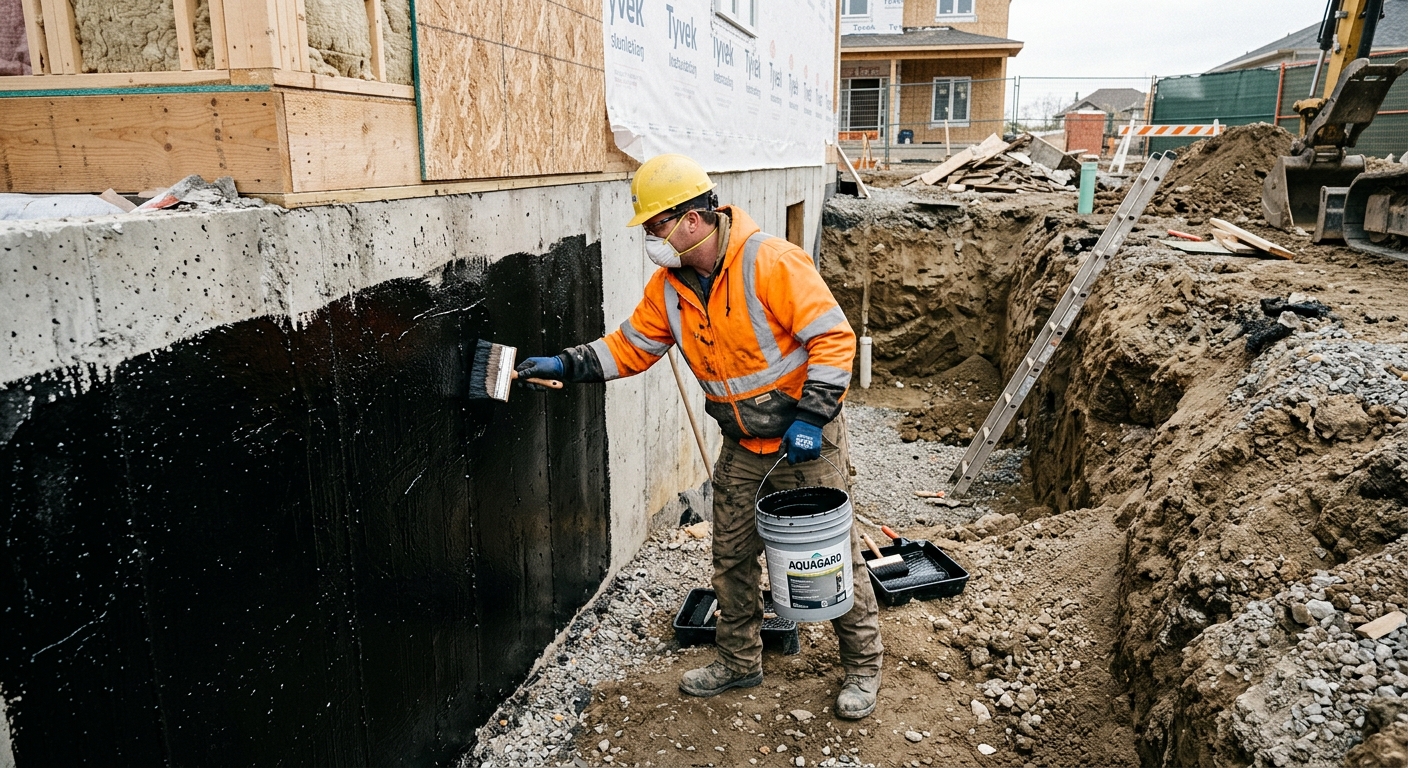
Basement waterproofing options and costs in Gold River
Basement waterproofing in Gold River usually comes down to one question: where is the water entering, and can you stop it at the source or only manage it after it shows up? In Gold River, a large share of homes are older—77.0% were built before 1981—so it’s common to find tired original systems (weeping tile and early membranes) that no longer drain as intended. Add the fact that there are 515 homeowner households in town, and you’ll see why waterproofing is especially in demand in the core residential areas where yards are tighter and excavation access is more labour-intensive.
On Vancouver Island and the Coast, pricing is shaped by water movement around the foundation more than the “basement itself.” Heavy rainfall can saturate backfill quickly, and higher local groundwater means interior drainage systems may have to work longer and harder after storms. That’s why exterior excavation projects often land higher than interior-only fixes: membranes, perimeter drainage, and regrading involve more labour and disposal, especially with older homes. Conversely, interior repairs can be a good fit when the exterior has limited access or when you’re targeting an active leak path like a crack.
In practice, many Gold River homeowners start with an inspection and moisture mapping, then choose from exterior excavation, interior perimeter drainage, crack injection, sump upgrades, or drainage improvements around windows and downspouts. The table below summarizes the most common methods and realistic cost bands to help you compare quotes apples-to-apples.
| Method |
What It Addresses |
Disruption Level |
Durability |
Price Range |
| Exterior excavation + new membrane + drainage tile |
Primary water entry from outside walls; restores perimeter drainage |
High (excavation, landscaping disruption) |
Long-term (source-control) |
$7,000–$18,000 |
| Interior perimeter drain channel + sump pit |
Intercepts seepage after it enters; reduces hydrostatic pressure |
Medium (interior access, cutting at perimeter) |
Good (system-dependent) |
$3,000–$10,000 |
| Foundation crack injection (epoxy or polyurethane) |
Seals crack leak paths; restores watertightness |
Low (often localized drilling) |
Medium to long-term (depends on crack type) |
$250–$800 |
| Sump pump installation (primary + battery backup) |
Moves water away during heavy seepage; protects during outages |
Medium (pit/lines; minor interior work) |
Good (pump quality + discharge routing) |
$800–$2,500 |
| Window well drain installation |
Redirects water pooling near below-grade window wells |
Low to medium (localized excavation) |
Good (if connected to proper drainage) |
$1,000–$3,500 |
| Lot re-grading / downspout extension |
Improves surface drainage so water doesn’t reach the foundation |
Low to medium (yard work) |
Moderate (depends on soil settling and maintenance) |
$1,000–$6,000 |
Prices are estimates only and vary by project scope, site access and material selection.
What affects the price of waterproofing in Gold River
In Gold River and across Vancouver Island and the Coast, two contractors can quote the “same” waterproofing problem and still end up 30% to 50% apart—mainly because the water source and site constraints aren’t the same. A lot of that variance comes from how each contractor plans around water movement around the foundation: excavation access, drain routing, membrane details, and whether they’re solving the cause (exterior water pressure) or only treating symptoms (interior seepage).
Three drivers separate this region’s costs from the national average. First, soil type: clay-heavy soils hold water and can exert lateral pressure; during cold snaps, that trapped moisture can expand (freeze-thaw), worsening cracks and increasing seepage demand. Second, water table: higher groundwater in coastal areas raises sump pump run times and increases the amount of drainage work required to keep walls dry. Third, freeze-thaw and moisture cycling: coastal BC can be wet more often than it’s frigid, but trapped moisture still expands and contracts, especially when water gets into small voids at foundation-wall interfaces.
In older housing stock—remember, 77.0% of Gold River homes were built before 1981—failing weeping tile and aging membranes are frequent triggers. For example, a localized crack-only injection can start near the $250–$800 band, but if the crack is feeding from a saturated exterior perimeter, you may quickly need interior perimeter drainage in the $3,000–$10,000 range or exterior excavation in the $7,000–$18,000 range.
Two common Gold River examples that push cost up are: (1) tight side-yard access where excavation is slower and disposal is more labour-intensive, and (2) repeated interior dampness after heavy storms, suggesting the exterior drainage has failed and water pressure is building against the wall. Conversely, costs can come down when the issue is confined to a single window well or downspout runoff pathway, which may be addressed with targeted exterior grading and extensions rather than full perimeter work.
| Price Factor |
Why It Matters |
Cost Impact |
| Interior vs. exterior approach |
Interior typically intercepts seepage; exterior targets the source |
Exterior can add major labour for excavation and membrane work |
| Foundation type |
Poured concrete, block, stone, and ICF respond differently to water pressure and repair methods |
Block/stone often needs more drainage detail; ICF may need different detailing |
| Soil type |
Clay holds more water, increasing hydrostatic pressure during wet periods |
Clay sites often raise material and labour for drainage and sealing |
| Crack type and length |
Hairline cracks may be sealable; structural or horizontal cracks can indicate movement |
Structural risks can require engineered assessment and more work |
| Sump pump backup system |
Battery or water-powered backup reduces risk during outages and heavy spring rain |
Backup adds cost, but lowers likelihood of recurrence after power loss |
| Access |
Landscaping, decks, fences, and driveways affect excavation time and disposal |
Poor access can push labour and staging costs up quickly |
| Weeping tile age |
Original tiles from decades ago may be crushed or disconnected |
Failing tile often shifts scope from “minor fixes” to full perimeter drainage |
| Mould or efflorescence remediation required |
Sealing over active contamination without remediation can lead to odour and failure |
Additional prep and cleaning add time and consumables |
Permits & regulations in British Columbia
In British Columbia, foundation excavation, structural crack repair, and changes to lot drainage typically require a building permit, especially when work impacts structural elements or modifies how stormwater is managed. Sump pump installations are often straightforward, but connecting discharge to municipal storm or sanitary services generally needs municipal approval and may require permit documentation. For structural crack repair—particularly horizontal cracks in block walls, major step cracking, or signs of movement—an assessment by a structural engineer is often required to determine whether underpinning or other structural work is needed.
Step-by-step, homeowners in Gold River can verify a contractor before signing:
- Confirm the contractor’s business registration and licence information through the appropriate online directory for their trade category (use the contractor’s legal name, not just a trade name).
- Request a current certificate of liability insurance and check the coverage limits and effective dates. Your contractor should list your address as a project site where applicable.
- Ask for proof of WSIB/WCB coverage (or equivalent coverage documentation). The certificate should be current and match the contractor’s legal entity.
- For structural work, ask whether they have engineering support (engineer referral or in-house engineering capability) and who is responsible for drawings/stamps if required.
- Verify permit handling: ask who pulls the permit, what’s included, and how long the permit process adds to the schedule.
- Get everything in writing: scope, exclusions, disposal, and whether permits are included or billed separately.
As a rule of thumb, if the quote involves excavation to the footing, modifying drainage paths around the foundation, or treating cracks that may be structural, plan for permitting and documentation—not just “a quick seal.”
Interior vs exterior waterproofing — what does Gold River need?
The fundamental difference is source control versus water management. Exterior waterproofing—full excavation, new membrane, new perimeter drainage tile, and proper backfill—addresses the source of water entry by keeping hydrostatic pressure from building against foundation walls. It costs more because it involves excavation and perimeter detailing, but it’s usually the best long-term solution when exterior drainage has failed. Interior waterproofing (perimeter drain channel, sump pit, sump pump) is less invasive and often faster to complete, but it doesn’t stop water from reaching the wall; it intercepts it after it enters and reduces the worst effects by collecting and pumping it away.
For Gold River, approach selection is closely tied to typical site conditions on Vancouver Island and the Coast: wet backfill saturation after storms, higher groundwater for parts of the coastline, and frequent seepage where original perimeter drainage has aged out. Poured concrete walls often respond well to targeted crack injection when the crack is the clear leak path, but if you’re seeing recurring dampness across multiple areas, interior perimeter drainage is commonly the practical complement. Block foundations, on the other hand, can be more sensitive to the details at the wall joints and interfaces, so interior systems like perimeter drains plus a sump often play a bigger role when exterior access is limited.
Sump pump backup is a real concern in BC: during spring flooding and rain-heavy periods, power interruptions can happen, and a backup system (commonly battery backup) reduces the chance of an overflow event. If you’re already running interior drainage, budgeting for backup can be the difference between a controlled dry basement and a recurrence after an outage.
To illustrate the trade-off: if you only have one leaking crack and no evidence of widespread exterior seepage, crack injection may be the most cost-effective option (often in the $250–$800 band). But if inspection shows the perimeter is saturated and water is tracking around the footing, a full exterior project in the $7,000–$18,000 range can be justified because it removes the ongoing pressure source. In many Gold River homes, a balanced strategy—targeted exterior improvements plus interior drainage—keeps costs contained while solving the problem properly.
| Method |
Best For |
Addresses Source? |
Disruption |
Lifespan |
Price Band |
| Full exterior excavation + membrane |
Widespread seepage, failed perimeter drainage, repeated wet seasons |
Yes (primary source control) |
High (yard disruption) |
Long-term |
$7,000–$18,000 |
| Interior French drain + sump system |
Interior water management when exterior access is limited or as a complement |
No (manages after entry) |
Medium |
Good (depends on pump and discharge) |
$3,000–$10,000 |
| Crack injection — epoxy (structural) |
Non-moving or properly stabilized cracks, often in poured concrete |
Partially (seals the crack leak path) |
Low |
Medium to long-term |
$500–$1,800 |
| Crack injection — polyurethane (active leak) |
Active seepage where water is moving through the crack |
Partially (stops flow through the crack) |
Low to medium |
Medium |
$400–$1,500 |
| Interior drain channel only (no sump) |
Minor dampness, slow seepage, dry conditions most of the year |
No |
Low to medium |
Moderate |
$1,500–$5,000 |
| Re-grading + downspout extensions |
Surface runoff problems and overflow from downspouts |
Yes (indirectly by keeping water away) |
Low to medium |
Moderate (maintenance dependent) |
$1,000–$6,000 |
How to choose a waterproofing contractor in Gold River
Choosing the right waterproofing contractor in Gold River is mostly about verification and clarity. In British Columbia, start by confirming licensing/trade eligibility for the type of work quoted, then ask for liability insurance and WSIB/WCB coverage. How to check each: request the certificate of insurance (make sure it’s current and ties to the contractor’s legal name), and request proof of WSIB/WCB coverage showing the same legal entity. If the scope includes structural crack work or any engineered solution, ask whether engineering support is included or subcontracted and who bears responsibility for the engineering sign-off.
Next, get 2 to 3 itemised written quotes, not a single lump sum. A solid quote breaks out labour and materials line-by-line (excavation, membrane, drainage tile, sump pit, pumps, discharge lines, and disposal). Read what’s excluded: for example, is permit pulling included, is contaminated material handling included, and are landscaping restoration or backfill compaction included? Also ask about warranty details—workmanship warranty length, product/manufacturer warranty terms, and whether warranties are transferable if you sell the home. For payment schedule, don’t pay more than 10% to 15% upfront; hold back the final portion until the job is complete and you’ve confirmed performance (including proper drainage flow and pump testing).
Finally, demand a written start date and realistic completion estimate, with weather contingencies spelled out. Waterproofing depends on proper surface prep and curing times, and contractors who can’t discuss scheduling details often miss steps that cause early failures.
- Confirm they provide a detailed written scope (not “seal and hope”).
- Ask which method they recommend based on inspection findings, not assumptions.
- Verify liability insurance is current and active.
- Verify WSIB/WCB coverage (proof provided, matching contractor name).
- Request itemised labour/materials breakdown (membranes, drains, pumps, fittings).
- Ask whether permits are included and who pulls them.
- Confirm disposal and haul-away are included for exterior excavation.
- Ensure discharge routing is explained (where sump water goes).
- Ask about pump testing and alarm/backup capability (if applicable).
- Confirm warranty terms in writing, including what qualifies as workmanship vs product.
- Check payment schedule: limit upfront and hold back until walkthrough completion.
- Get start/completion dates in writing, including weather delay handling.
Red flags in Gold River include: contractors who won’t explain the water-entry source, quotes that omit drainage tile and rely on sealants alone, skipping surface prep and crack preparation steps, warranties that only cover “materials” but not labour, and refusing to provide proof of liability insurance and WSIB/WCB before starting.
Frequently asked questions — waterproofing in Gold River
Interior vs exterior waterproofing — which is better?
In Gold River and much of the Vancouver Island and Coast area, exterior waterproofing is usually “better” for long-term performance when exterior drainage has failed or when you have recurring wet seasons. It’s source control: excavation, new membrane, and new drainage tile keep water from building hydrostatic pressure against the wall. Interior systems are often the better choice when access is limited, costs need to stay closer to budget, or you’re dealing with an isolated leak path. For example, crack injection may fall around $250–$800 when the leak is localized, but a full exterior excavation can reach $7,000–$18,000 when the perimeter needs rebuilding. Many homeowners land on a hybrid plan depending on what the inspection shows.
Why is my basement leaking in Gold River?
Basement leaks in Gold River are commonly driven by water movement around the foundation—especially after heavy rain when backfill becomes saturated. In older homes (77.0% built before 1981), original perimeter drainage and membranes may be worn out, and failing weeping tile can cause water to collect against the foundation wall. Another frequent trigger is a crack that becomes a leak path when pressure increases; even small hairline cracks can move moisture when hydrostatic pressure builds. If you notice dampness after storms but not in dry stretches, that’s another sign drainage is the issue. The province’s wet coastal conditions also mean moisture can linger, so you may need interior interception even if the outside is improved.
How do I know if a foundation crack is serious?
A crack can be a serious concern when it shows signs of movement or when it’s associated with active water entry. In block and poured concrete foundations, horizontal or widening cracks, step cracking that’s progressing, and cracks with seepage (drips, damp streaks, or visible mineral deposits/efflorescence) are higher risk. If water is actively coming through, it may warrant injection (often polyurethane for active leaks) and a review of drainage and hydrostatic pressure—because sealing alone may not be enough if the exterior perimeter is saturated. In some cases, structural assessment is needed, particularly for horizontal cracking or suspected movement. A contractor should document crack type, length, location, and whether it coincides with heavy rainfall periods.
How much does foundation crack repair cost in Gold River?
Foundation crack repair in Gold River varies by crack type, number of injection ports, and whether you’re treating a single active leak or multiple runs. For many typical localized repairs, homeowners often see pricing in the $250–$800 range for straightforward injection work, but more complicated jobs can run higher once access, surface prep, and additional crack sections are included. If the crack is structural, longer, or you need engineered guidance, the scope can expand beyond “just injection.” Also consider whether interior or exterior drainage must be corrected first; otherwise, the crack may keep getting pressured during wet periods.
Do I need a sump pump in Gold River?
A sump pump is often recommended when you have sustained seepage, persistent water after storms, or when interior drainage systems are designed to collect water from below-grade. On Vancouver Island and the Coast, higher groundwater and heavy rainfall can lead to longer pump run times, so a properly sized sump and discharge routing matter. If you already have a perimeter drain channel that’s not keeping up, adding a sump can convert a “damp basement” situation into a controlled one. Many homeowners also choose a backup system to protect during power outages—especially relevant in spring flooding conditions. For budgeting, sump pump installations commonly fall around $800–$2,500, depending on primary pump type and whether backup is included.
How does Gold River's soil affect my foundation?
Soil affects waterproofing because it controls how quickly water soaks in, how long it holds moisture, and how much pressure it can create against foundation walls. Coastal sites on Vancouver Island can see backfill stay saturated longer after storms. Where soils hold water (often more clay-like conditions), moisture can increase hydrostatic pressure and worsen seepage through cracks over time. Freeze-thaw can compound the problem when trapped moisture expands during colder periods, potentially widening cracks and making leaks recur after freeze events. In practical terms, a contractor should evaluate grading and drainage, confirm whether perimeter weeping tile has failed, and determine whether interior interception alone is enough or if exterior membrane and drainage tile restoration is needed.