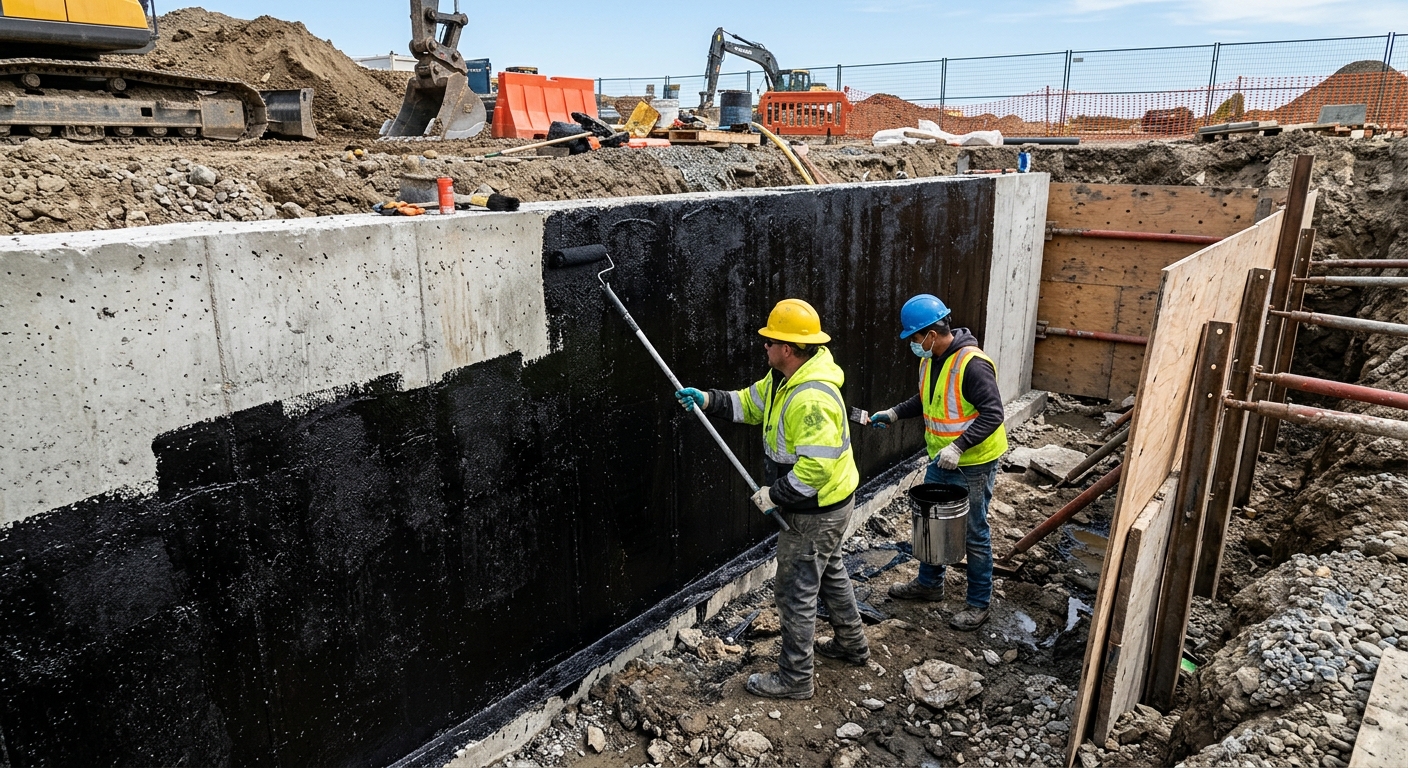
Basement waterproofing options and costs in Summerland
Summerland homeowners often discover waterproofing issues after a wet winter or a fast spring melt, when water finds the weak spots in older foundations. With about 50.7% of homes in the area built before 1981 (Statistics Canada, 2021 Census), many properties still have aging drainage systems and older waterproofing details that were not designed for today’s long, wet shoulder seasons and rapid freeze-thaw. That matters because the Thompson–Okanagan’s semi-arid valleys can swing from dry spells to intense rain events, and the backfill around foundations can saturate quickly once drainage is compromised.
In local terms, costs are strongly driven by site conditions. Glacial and alluvial deposits in the region mean you can find pockets of dense silt or clay near otherwise sand-and-gravel soils, so seepage may show up on one side of the foundation more than the other. When those soils hold water longer, lateral pressure can worsen cracks over a few seasons—especially in poured concrete and block walls with cold joints. Contractor demand also concentrates where older housing stock clusters; in Summerland, we see frequent requests in areas close to the lake edge and older neighbourhood pockets where lots are tighter and exterior access is harder.
Because these differences can change the amount of excavation, drainage replacement, and remediation needed, it’s best to compare options side-by-side. Use the table below as a realistic starting point for budgeting in Summerland before your site inspection confirms the scope.
| Method |
What It Addresses |
Disruption Level |
Durability |
Price Range |
| Exterior excavation + new membrane + drainage tile |
Hydrostatic pressure at the source; replaces failing weeping tile/drainage around the foundation |
High (excavation, landscaping removal/rebuild) |
High (engineered system with membrane + proper drainage) |
$18,000–$40,000 |
| Interior perimeter drain channel + sump pit |
Water that has already entered; reduces seepage along slab edges/cold joints |
Medium (interior work, limited excavation outside) |
Medium to high (depends on wall condition and drainage upkeep) |
$9,000–$22,000 |
| Foundation crack injection (epoxy or polyurethane) |
Cracks that allow water paths; epoxy for structural/crack stabilization, polyurethane for active seepage |
Low (drilling/patching inside) |
Medium (best paired with drainage improvements) |
$800–$3,500 |
| Sump pump installation (primary + battery backup) |
Discharges collected groundwater; reduces hydrostatic pooling and interior flooding |
Low to medium (floor/cement cuts, electrical work) |
High (when sized correctly and maintained) |
$2,500–$5,500 |
| Window well drain installation |
Surface water and seepage into basement windows; prevents pooled water near openings |
Medium (excavation around window wells) |
Medium to high (depends on grading and downspout control) |
$1,500–$4,000 |
| Lot re-grading / downspout extension |
Moves roof runoff away; improves drainage away from the foundation |
Low to medium (groundwork, minor concrete/asphalt patching) |
Medium (must stay maintained) |
$2,000–$6,000 |
Prices are estimates only and vary by project scope, site access and material selection.
What affects the price of waterproofing in Summerland
In Summerland and across the Thompson–Okanagan, the same “waterproofing job” can land 30–50% apart once you price excavation conditions, drainage failures, and the length of problem areas. That spread exists even before you factor in British Columbia labour rates and the availability of specialized drainage crews during busy spring and early fall windows. Nationally, you might see lower averages in areas with easier access and soils that drain freely, but here site conditions often dominate the quote.
Three regional drivers separate Thompson–Okanagan costs from a typical national average: soil type, water table pockets, and freeze-thaw. Clay-heavy soils can hold water and expand during freeze-thaw, increasing lateral pressure on foundation walls and turning minor dampness into recurring leaks. In higher seepage pockets near waterways and lake-influenced areas around Summerland’s region, sump systems may run more frequently, raising both pump sizing requirements and the need for backup power. In older housing stock—many homes built before 1981 (Statistics Canada, 2021 Census)—weeping tile and exterior drainage details are often decades old, so replacing or tying into that system becomes more involved.
Concrete examples we see locally: (1) a poured concrete wall with narrow hairline cracks may only need crack injection, but if the weeping tile is clogged the cracking returns—so exterior drainage improvements add cost; (2) a backfill that’s silt/clay-mixed may require more extensive trenching and a longer drainage run; (3) tight side yards and landscaping near the foundation can raise excavation labour even when the foundation is “small.” Where exterior work is feasible, homeowners sometimes accept the higher exterior band—often $18,000–$40,000—because it can eliminate recurring seepage. When interior-only measures fit the situation, interior scope commonly lands closer to $9,000–$22,000.
| Price Factor |
Why It Matters |
Cost Impact |
| Interior vs. exterior approach — interior is less disruptive but addresses symptoms |
Interior systems manage water after entry; exterior targets the source |
Interior typically costs less upfront; exterior adds excavation and reinstatement |
| Foundation type — poured concrete vs. block vs. stone vs. ICF |
Different crack patterns and moisture behaviour influence the fix |
Poured concrete often responds well to injection plus drainage; block can require more interior drainage |
| Soil type — clay expands more than sand, adding pressure |
Higher freeze-thaw pressure worsens leaks over time |
Clay pockets can increase prep, drainage length, and membrane detailing |
| Crack type and length — hairline vs. structural horizontal cracks |
Structural cracks may indicate movement and need engineered review |
Structural repairs can expand scope beyond injection |
| Sump pump backup system — battery or water-powered backup needed |
Power interruptions during storm seasons can cause flooding |
Backup adds cost but reduces risk of basement damage |
| Access — landscaping, decks, or driveways must be removed for exterior |
Excavation footprint determines labour and reinstatement |
Tighter lots or hardscape removal can push projects toward the top of exterior ranges |
| Weeping tile age — original tile (60+ years) may be completely failed |
Old tile may be broken, crushed, or clogged |
Failed tile typically requires replacement and more trenching |
| Mould or efflorescence remediation required before sealing |
Moisture must be cleaned and stabilized before waterproofing products bond |
Remediation can add days for drying and cleaning materials |
Permits & regulations in British Columbia
In British Columbia, foundation excavation, structural crack repair, and changes to lot drainage typically require a building permit. If the work involves significant drainage alterations (for example, re-routing or connecting discharge routes) or any foundation-related structural intervention, you should assume permits are likely required and confirm with the local building authority before work starts.
Sump pump installations can also trigger municipal approval. In practice, homeowners need to verify whether any intended discharge connection is acceptable—particularly if you’re planning to tie into storm or sanitary systems or modify how water leaves the site. For structural crack repair, especially horizontal cracks in block walls or step cracks that suggest movement, an assessment by a structural engineer is often required to determine whether underpinning or other structural measures are necessary before waterproofing proceeds.
How to verify a contractor in Summerland: (1) confirm they carry appropriate liability insurance and provide a Certificate of Insurance on request; (2) ask whether they are registered for required workplace coverage (WSIB/WCB) and request proof; (3) if the project includes structural repair scope, confirm they have engineering support access or will work with an engineer as required; and (4) verify their licence/credentials through the appropriate online registry and ensure the scope matches the trades they claim.
Finally, don’t rely on verbal assurance—request documents and clearance letters in writing before signing.
Interior vs exterior waterproofing — what does Summerland need?
The fundamental difference is source control versus consequence control. Exterior waterproofing (full excavation, new membrane, new drainage tile, and backfill) targets the water entry point and reduces hydrostatic pressure at the wall. It is more expensive and more disruptive because landscaping, and sometimes concrete or asphalt, must be removed and reinstated. Interior waterproofing (perimeter drain channel, sump pit, sump pump) captures and manages water after it enters. It’s less invasive, but it doesn’t stop pressure acting on the wall itself.
For Summerland’s Thompson–Okanagan freeze-thaw cycles and localized soil variations, this matters. If the foundation is showing repeating seepage along cold joints or slab edges and the weeping tile is older or failing, interior-only systems can reduce wet floors while the underlying pressure continues to stress cracks. Poured concrete walls often seal better with crack injection when the crack is stable, especially when paired with improved drainage so injected materials aren’t continually washed out. Block foundations can behave differently: their mortar joints and voids sometimes require a practical complement—typically interior drainage—so water doesn’t accumulate behind or within the wall assembly.
In British Columbia, sump pump backup is also a sensible risk management step for spring flooding periods when power reliability can be challenged by severe weather. Many homeowners choose either battery backup or another protected backup approach so the basement doesn’t become a “storage space” when the pump can’t discharge.
Here’s a typical budgeting logic: if you price exterior excavation in the $18,000–$40,000 band but you’re only curing a small, isolated damp patch with stable cracks, you may not need full excavation. If instead you have long-running seepage and confirmed drainage failure, the additional cost can be justified because it’s the only approach that meaningfully reduces water pressure at the source, not just the symptoms.
| Method |
Best For |
Addresses Source? |
Disruption |
Lifespan |
Price Band |
| Full exterior excavation + membrane |
Widespread seepage, failing weeping tile, multiple wet spots along a perimeter |
Yes (targets the entry point and hydrostatic pressure) |
High |
Long (when drainage and backfill are properly detailed) |
$18,000–$40,000 |
| Interior French drain + sump system |
Interior water control where exterior access is limited or soil conditions make excavation risky |
No (controls water after entry) |
Medium |
Medium to long (pump reliability is key) |
$9,000–$22,000 |
| Crack injection — epoxy (structural) |
Stable, non-moving cracks in poured concrete where water entry is limited |
Partial (seals cracks, but doesn’t replace drainage) |
Low |
Medium to long (best with drainage improvements) |
$800–$3,500 |
| Crack injection — polyurethane (active leak) |
Active seepage through cracks where water pressure is present |
Partial (seals active pathways; still relies on pressure management) |
Low |
Medium (often improves results when paired with drainage) |
$1,200–$4,000 |
| Interior drain channel only (no sump) |
Light dampness where gravity drainage to a safe location is reliable |
No (routes water after entry) |
Medium to low |
Short to medium (depends on site discharge conditions) |
$6,500–$14,000 |
| Re-grading + downspout extensions |
Water that’s clearly driven by roof runoff and surface drainage near the foundation |
Indirect (reduces water near foundation) |
Low to medium |
Medium (requires periodic maintenance) |
$2,000–$6,000 |
How to choose a waterproofing contractor in Summerland
Start by verifying British Columbia compliance the way a contractor should verify you: in writing. Ask for their licence credentials (as applicable to their trade), then request a Certificate of Insurance for liability coverage and proof of workplace coverage (WSIB/WCB). In British Columbia, many disputes happen when scope assumptions aren’t clear—so your best protection is paper.
Next, get 2–3 itemised written quotes with a labour + materials breakdown. You want line items for excavation, membrane/drainage tile, disposal, and restoration (and not just “waterproofing labour”). Confirm whether the quote includes permit pull support (if required), disposal of removed materials, and how reinstatement will be handled if concrete, asphalt, or landscaping is disturbed.
Warranty matters for waterproofing because products and workmanship should both be covered. Ask for the workmanship warranty length (and what failures trigger a claim), the manufacturer warranty terms for membranes/drainage products, and whether the warranty is transferable if you sell the home. For payment, don’t exceed 10–15% upfront, and use a holdback until the job is complete and walk-through items are addressed. Also request a written timeline with start date and completion estimate.
- Provide a site visit plan: how they diagnose (dye, water tests, drain probing) before pricing.
- State what’s included in excavation and reinstatement (soil, sod, rock, concrete/asphalt patches).
- Confirm whether they replace weeping tile or tie into existing drainage.
- Ask how they handle clay/silt pockets and backfill compaction (method + requirements).
- Require a clear disposal plan for excavated material.
- Get pump sizing details if a sump is included (not just a “standard pump”).
- Ask whether they recommend backup power and what type is offered.
- Check that they include drain rock, filter fabric, and correct fall to discharge.
- Review crack injection details: crack prep, number of ports, and material type (epoxy vs polyurethane).
- Verify the warranty: workmanship duration, conditions, and claim process.
- Ensure the quote includes protection of existing electrical/mechanical services.
- Confirm permits and inspections: who pulls them and when.
Red flags in Summerland: (1) quotes that ignore soil/water findings and jump straight to a generic membrane; (2) “guaranteed” results without showing how they manage hydrostatic pressure; (3) no Certificate of Insurance or unclear WSIB/WCB status; (4) vague scope exclusions (disposal, landscaping reinstatement, or permit support not addressed); and (5) asking for large upfront payments before any measurable prep work starts.
Frequently asked questions — waterproofing in Summerland
How do I know if a foundation crack is serious?
In Summerland and across the Thompson–Okanagan, the key question is whether the crack is just allowing water entry or whether there’s movement. Serious indicators include horizontal cracks, step cracking in block, widening changes over time, and cracks that coincide with dampness after spring melt or heavy rain. If you see efflorescence (white mineral staining) or recurring seepage stains along the same line, it’s often a water pathway—not just surface shrinkage. Hairline cracks that remain stable and stay dry may be less urgent. For stable cracks, injection can be an effective repair; for movement-prone cracks, you should request a structural assessment before sealing.
How much does foundation crack repair cost in Summerland?
In Summerland, foundation crack repair cost typically depends on crack type, length, and whether the leak is active at the time of repair. For many straightforward repairs, homeowners budget in the $800–$3,500 range, especially for stable hairline cracks where injection material volume and port drilling are limited. If the crack is actively leaking and requires polyurethane to stop seepage, pricing can trend higher because prep and application are more involved (and results depend heavily on managing pressure and water pathways). Also note that if exterior drainage or weeping tile is failing, crack repairs alone may not be sufficient, so your total project may move into the interior or exterior waterproofing ranges.
Do I need a sump pump in Summerland?
You may need a sump pump if groundwater collects at the basement floor or if you’re managing seepage along perimeter areas where gravity drainage isn’t reliable. In the Thompson–Okanagan, localized water pockets can increase pump runtime during spring melt and intense storms, especially where older weeping tile has clogged. If your basement has recurring pooling, damp carpet that returns after storms, or a perimeter drain that can’t discharge by gravity, a sump is often the practical solution. Many homeowners also choose a backup system because severe weather can contribute to power interruptions during wet-season flooding. A sump pump installation commonly falls around $2,500–$5,500 depending on type, controls, and backup approach.
How does Summerland's soil affect my foundation?
Summerland’s soils come from glacial and alluvial deposits, and that mix can vary block-to-block: you can find sand and gravelly zones that drain faster, alongside localized clay pockets or dense silts that hold water longer. Clay-heavy areas expand more during freeze-thaw and can increase lateral pressure against foundation walls, which may worsen existing cracks over a few seasons. Where drainage fails, water can also linger around the foundation instead of moving away, raising seepage risk. In homes with older drainage—common in housing stock built before 1981 (Statistics Canada, 2021 Census)—that lingering moisture can show up as seepage along cold joints or slab edges. Site-specific probing and a drainage assessment are what determine which risk factor is driving your issue.
Do I need a permit for foundation work in British Columbia?
In British Columbia, many homeowners need permits for foundation-related work, particularly when excavation is involved, drainage routing changes, or structural repairs are undertaken. Foundation excavation and structural crack repairs typically require permits, and changing lot drainage arrangements often triggers the need for approvals. Sump pump installations may also require municipal approval if discharge is connected to storm or sanitary systems or if you alter how water leaves the property. For horizontal cracks or major step cracks, an engineer’s assessment is often needed to determine whether underpinning or structural solutions are required before waterproofing. The safest approach: confirm permit requirements during the quote stage and ensure your contractor clarifies who pulls permits and what inspections are expected.
How long does waterproofing last?
When designed correctly for the site, waterproofing can last for many years, but the timeframe depends on whether you control water at the source or only manage it after entry. Exterior waterproofing (membrane + properly installed drainage tile) is generally the longest-lasting approach because it reduces hydrostatic pressure where water enters. Interior systems can last a long time too, but performance depends on pump reliability, discharge routes, and keeping drains clear. Crack injection repairs can also last for years, especially for stable cracks, but if the underlying drainage problem remains, new seepage paths can develop. In practical terms, homeowners should plan for maintenance: test sump operation, keep downspouts draining away from the foundation, and address clogs early. If you’re budgeting, remember the repair path you choose affects long-term risk—exterior projects often sit in the $18,000–$40,000 band, while interior waterproofing commonly ranges around $9,000–$22,000.