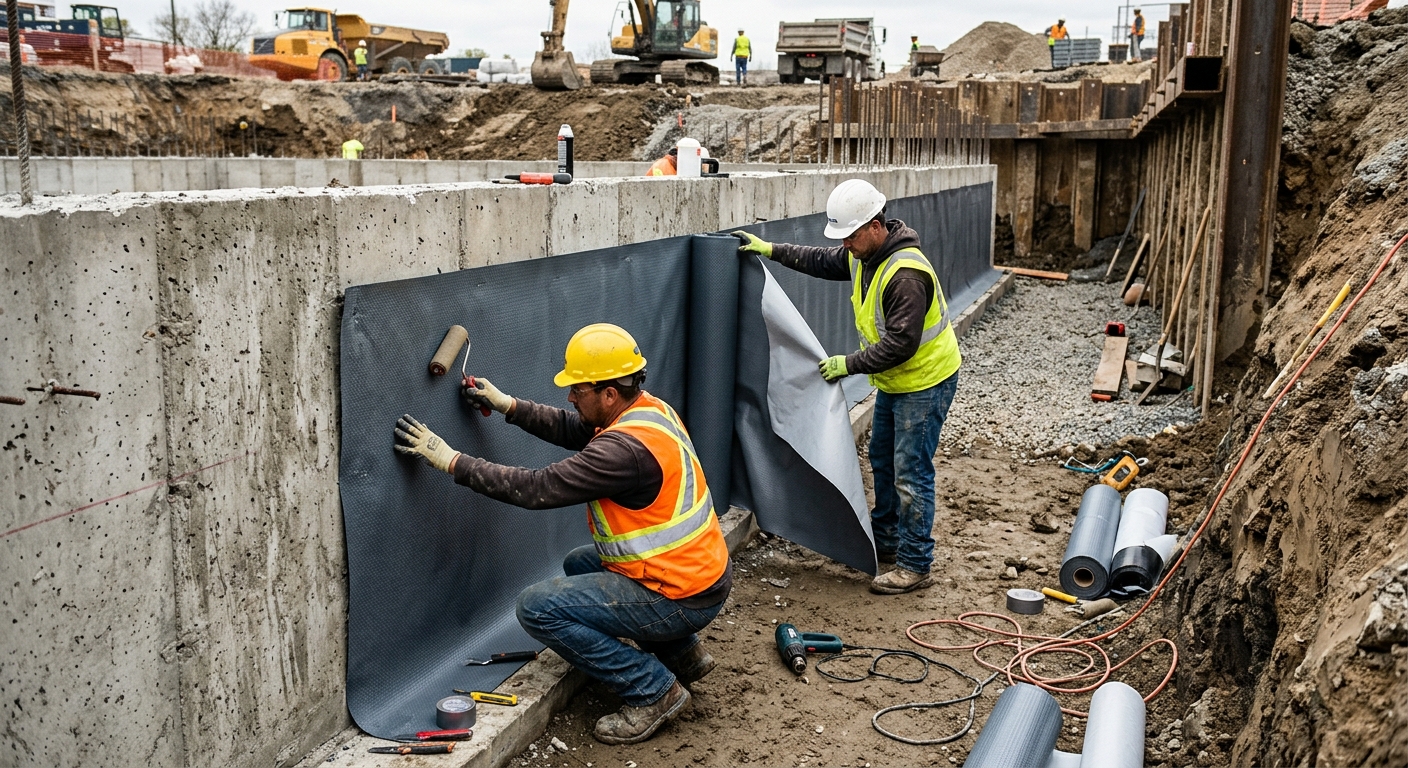
Basement waterproofing options and costs in Abbotsford
Abbotsford homeowners usually start by asking the same question: “What will actually stop the water?” The answer depends on how the Lower Mainland–Southwest keeps hydrostatic pressure against basement walls and slabs—through persistently high groundwater, heavy rain events, and wet, mild winters that don’t dry soils out the way colder regions do. In Abbotsford, where 29.0% of homes were built before 1981 (Statistics Canada, 2021 Census), many basements are dealing with older original systems that were never designed for today’s drainage realities. That means failing perimeter weeping tile, deteriorated downspout routing, and crack paths that allow water to enter and then migrate indoors.
On top of that, access can raise costs in practical ways. Excavation is frequently complicated by tight lots, fences, mature landscaping, and driveways; rocky sections may require mechanical breaking before full-depth digging. Meanwhile, interior-only work can be faster to schedule, but it doesn’t relieve the outside water pressure that causes repeated seepage during prolonged rainfall. If your neighbourhood has older homes—particularly around East Abbotsford and the Central Abbotsford area where basements and mature lots are common—contractors often see higher demand for both perimeter drainage and interior retrofits.
Below are common waterproofing approaches and what they typically address, so you can compare quotes side-by-side before you pay for diagnostics or engineering. Use the disruption and lifespan notes to match the method to your foundation condition and your tolerance for excavation.
| Method |
What It Addresses |
Disruption Level |
Durability |
Price Range |
| Exterior excavation + new membrane + drainage tile |
Source control: hydrostatic pressure relief, new weeping tile drainage, water shedding |
High (yard excavation, landscaping restoration) |
High (typically multi-decade when installed correctly) |
$15,000–$30,000 |
| Interior perimeter drain channel + sump pit |
Secondary control: captures seepage after it enters and routes it to sump |
Medium (partial interior wall/floor work) |
High (best with sealed exterior leaks and quality backfill) |
$8,000–$18,000 |
| Foundation crack injection (epoxy or polyurethane) |
Crack sealing: epoxy for structural/low-flow cracks; polyurethane for active leaks |
Low to Medium (minor surface prep; usually no excavation) |
Medium to High (depends on crack type and movement) |
$500–$2,000 |
| Sump pump installation (primary + battery backup) |
Reliable discharge during power interruptions; reduces basement flooding risk |
Low to Medium (pit/coring; some interior sealing) |
Medium to High (depends on pump selection and discharge routing) |
$1,000–$5,000 |
| Window well drain installation |
Stops localized seepage near window wells and directs water away |
Low to Medium (excavation around wells) |
Medium (needs cleanout access) |
$1,200–$3,500 |
| Lot re-grading / downspout extension |
Reduces surface water intrusion and redirects roof drainage |
Low to Medium (soil work; downspout changes) |
Medium (can be undermined by settling if drainage isn’t maintained) |
$2,000–$8,000 |
Prices are estimates only and vary by project scope, site access and material selection.
What affects the price of waterproofing in Abbotsford
In Abbotsford and across the Lower Mainland–Southwest, two homeowners can receive quotes that differ by 30–50% for what sounds like the “same” basement waterproofing job. The variation usually comes down to how contractors respond to the three cost drivers that separate regional pricing from a national average: soil/water behaviour, freeze-thaw effects, and the condition of older drainage systems. For example, regions with clay-heavy, expansive soils may see foundation movement-driven crack widening during freeze-thaw, but in Lower Mainland–Southwest the more frequent problem is persistent saturation that keeps backfill soils wet. That sustained moisture raises discharge demand on sumps and increases seepage through joints and cracks.
In coastal BC, heavy rainfall can saturate backfill quickly when original drainage fails, so interior systems must capture more water than they do in drier climates. Add wet, mild winters with frequent freeze-thaw cycles, and existing cracks and weep holes stay “open longer,” which accelerates deterioration and can raise material and labour time for surface prep and sealing. Homes built before 1981 (29.0% of housing stock in Abbotsford) also show higher frequencies of failing weeping tile and older poured-concrete or block foundation conditions that require more preparatory work before any membrane or coating is applied.
Here are concrete examples that commonly shift cost in Abbotsford. (1) If your perimeter weeping tile is fully collapsed, exterior excavation projects are more involved and often land closer to $15,000–$30,000. (2) If the basement has active leaks along a structural horizontal crack, polyurethane injection and targeted sealing often move a foundation crack repair scope into the higher end of $500–$2,000, and may also require an interior drain channel to manage residual seepage. (3) Conversely, if downspouts are routed away and the leak is only tied to window wells, you may be able to address it with smaller repairs rather than full-perimeter exterior work—especially when surface drainage is clearly the trigger.
| Price Factor |
Why It Matters |
Cost Impact |
| Interior vs. exterior approach — interior is less disruptive but addresses symptoms |
Interior drains capture water after entry; exterior controls water pressure at the source |
Exterior typically costs more; interior can be a lower upfront option but may not stop ongoing pressure |
| Foundation type — poured concrete vs. block vs. stone vs. ICF |
Different walls crack, seep, and accept repairs differently |
Poured concrete often responds well to injection; block/stone may need more interior drainage and sealing work |
| Soil type — clay expands more than sand, adding pressure |
Soils influence lateral pressure, backfill wetting, and drainage recovery time |
Heavier/retentive soils can increase excavation/restoration effort and extend drying/verification steps |
| Crack type and length — hairline vs. structural horizontal cracks |
Active leaks and structural cracks require different sealing materials and possibly engineering review |
Active leak injection (often polyurethane) and longer crack routes increase labour and materials |
| Sump pump backup system — battery or water-powered backup needed |
BC power disruptions during heavy spring rain can lead to rapid flooding |
Adding backup increases scope and parts; it can be the difference between “wet” and “dry” during outages |
| Access — landscaping, decks, or driveways must be removed for exterior |
Excavation depth and equipment access determine how much has to be removed and restored |
Decks, retaining walls, and driveways can add days of labour and restoration costs |
| Weeping tile age — original tile (60+ years) may be completely failed |
Old tile can be disconnected, collapsed, or biologically clogged |
Replacement becomes more extensive, pushing projects toward the higher end of exterior price bands |
| Mould or efflorescence remediation required before sealing |
Water-related contamination can prevent proper adhesion and requires cleaning |
Pre-treatment time and consumables increase cost and delay coatings/sealers until surfaces are prepared |
Permits & regulations in British Columbia
In British Columbia, foundation excavation, structural crack repair, and changes to lot drainage typically require a building permit. If the work involves structural-level crack repairs—such as horizontal cracks in block walls or other signs of possible movement—an engineer’s assessment is often required to determine whether underpinning or additional structural measures are necessary. Also, if a sump pump installation connects to the storm or sanitary sewer, municipal approval is commonly required; you shouldn’t assume it’s “just a discharge line.”
What DOES commonly require a permit/approval in practice: full exterior excavation for perimeter drainage and membrane systems, repairs that could affect structural integrity, and altering drainage routes (for example, changing downspout discharge patterns that impact neighbouring services or surface flow). What typically does NOT require a permit (as standalone work) is cosmetic interior sealing after moisture is controlled, minor window well drainage improvements, and surface-level re-grading limited to directing water away from the foundation—though you still need to confirm with the contractor and local permitting office if your scope changes discharge points.
Step-by-step, homeowners in Abbotsford can verify a contractor properly: (1) Ask for a written quote that states permit responsibility, (2) check the contractor’s licensing in BC through the appropriate online registry listings for their trade, (3) request a certificate of insurance for liability coverage (and confirm the effective dates), and (4) confirm WSIB/WCB clearance or coverage documentation in writing. For structural crack work, ask whether they include engineering support or coordinate directly with an engineer, and get proof before work begins.
Interior vs exterior waterproofing — what does Abbotsford need?
In Abbotsford, the core difference between exterior and interior waterproofing is whether you remove the source of water entry or manage water after it enters. Exterior waterproofing—full excavation, new membrane, new drainage tile, and backfill—targets the problem at the perimeter. Done correctly, it reduces hydrostatic pressure against basement walls, which is why it’s the most “permanent” solution. The tradeoff is cost and disruption: excavating around a home in the Lower Mainland–Southwest often means landscaping restoration, careful handling of tight access, and sometimes mechanical breaking through rocky sections.
Interior waterproofing—perimeter drain channel, sump pit, and sump pump—does not stop water pressure at the foundation wall. Instead, it captures seepage inside and discharges it reliably, which can be the right choice when your foundation type, site access, or budget make exterior excavation impractical. In Abbotsford, poured concrete foundations often respond well to crack injection (especially when the crack is not actively shifting), while block foundations frequently benefit from interior drainage as a practical complement because water can track through mortar joints and irregularities.
Battery backup sump pumps matter in British Columbia because spring storms can create power interruptions during heavy rain. If the water table stays high, a primary pump alone can’t protect you long enough to prevent damage during an outage—backup is what buys time for safe discharge until power returns.
To see where the price difference makes sense: if your condition is clearly perimeter water entry (failed weeping tile and active wall seepage), exterior systems at $15,000–$30,000 may prevent repeated interior rework, whereas an interior approach at $8,000–$18,000 may still be vulnerable to ongoing pressure unless the exterior leakage is also addressed. If the issue is isolated, interior-only can be justified; if the perimeter drainage is compromised, source control is usually the better long-term value.
| Method |
Best For |
Addresses Source? |
Disruption |
Lifespan |
Price Band |
| Full exterior excavation + membrane |
Widespread seepage, failed perimeter drainage, high groundwater pressure |
Yes (source control at the perimeter) |
High (excavation + landscaping restoration) |
Long-term when drainage and membrane are installed correctly |
$15,000–$30,000 |
| Interior French drain + sump system |
Intermittent leakage, limited access to exterior, capturing seepage after entry |
No (secondary control) |
Medium (floor/wall work around perimeter) |
Long-term with proper pump sizing and discharge routing |
$8,000–$18,000 |
| Crack injection — epoxy (structural) |
Hairline or stabilized cracks needing structural sealing |
Partially (seals pathways if movement is minimal) |
Low to Medium |
Good when crack movement is not ongoing |
$500–$2,000 |
| Crack injection — polyurethane (active leak) |
Active seepage where water is still moving through the crack |
Partially (stops flow, reduces continued entry) |
Low to Medium |
Good when paired with drainage control for residual moisture |
$700–$2,500 |
| Interior drain channel only (no sump) |
Lower-volume moisture, future monitoring, older systems with reliable discharge |
No |
Medium |
Varies—depends on whether water can be gravity-managed |
$5,000–$12,000 |
| Re-grading + downspout extensions |
Surface water runoff issues, no active wall seepage, localized wet areas |
Indirect (reduces water reaching foundation) |
Low to Medium |
Medium (relies on slope maintenance over time) |
$2,000–$8,000 |
How to choose a waterproofing contractor in Abbotsford
Choosing the right waterproofing contractor in Abbotsford comes down to verification, clarity, and accountability. First, confirm British Columbia licensing for the trade performing the work (don’t rely on a business registration alone). Next, ask for a certificate of insurance showing liability coverage and ensure the policy dates cover your start-to-completion window. Then request proof of WSIB/WCB coverage and clearance—have them provide documentation rather than verbal assurances. If the quote includes structural crack repair or anything that might need engineering input, ask whether they carry engineering support or coordinate it directly; for structural work, you should not be the one chasing answers after the fact.
Get 2–3 written, itemised quotes (labour + materials breakdown), not lump sums. A good scope lists: what gets removed, what gets replaced, how discharge is handled, how cracks are prepped, disposal included or not, and whether permits are included. Watch the exclusions: if mould remediation, pump backup, or electrical discharge details are missing from the scope, you may pay later with “change orders.”
Warranty is critical. Ask for the workmanship warranty length (and what triggers warranty service), product/manufacturer warranty coverage, and whether the warranty transfers to future owners. For payment, avoid paying more than 10–15% upfront; hold back a portion until the job is complete and inspected. Finally, get the timeline and start date in writing, including estimated completion—waterproofing trades can be affected by excavation scheduling, curing times, and material availability during busy Lower Mainland seasons.
- Ask for proof of British Columbia trade licensing relevant to the scope.
- Request liability insurance certificate and verify it matches your project address.
- Confirm WSIB/WCB coverage in writing (not just a promise).
- Get a line-by-line quote: labour, materials, disposal, and restoration.
- Ensure the quote states whether permits are pulled and who pays.
- Clarify discharge routing for sump pumps (and whether a connection needs approval).
- Confirm whether battery backup is included if your plan includes a sump pump.
- Ask how they verify failure points (hose testing, moisture mapping, drain scope where applicable).
- Request warranty details for workmanship and products, including transferability.
- Check if they include surface prep and remediation for mould/efflorescence before sealing.
- Make sure site access is assessed (decks, fences, driveways) before pricing exterior excavation.
- Require a written schedule with curing/inspection steps for membranes and crack injection.
Red flags in Abbotsford include: contractors who quote exterior waterproofing without discussing water table/sump discharge strategy, vague scopes that don’t mention disposal and restoration, “guarantees” that don’t specify what’s covered or for how long, offers to skip engineering review for suspected structural cracks, and pressure to take payment beyond 10–15% before any permits or materials are confirmed.
Frequently asked questions — waterproofing in Abbotsford
How do I choose a waterproofing contractor in Abbotsford?
Start by verifying British Columbia trade licensing for the type of work being quoted, then confirm liability insurance and WSIB/WCB coverage with documents—not just a statement. In Abbotsford, the scope should be itemised (labour + materials) and should explain what is included for disposal, permit pulls, and restoring landscaping after exterior excavation. Ask how they diagnose the water entry path (for example, whether they confirm active leakage before recommending crack injection). Also look for a clear plan for discharge and pump operation if you’re installing a sump—especially since the Lower Mainland–Southwest can keep backfill soils saturated for long periods. Finally, compare warranties: the quote should spell out workmanship coverage and product warranty details. If a contractor is pushing “one-size-fits-all” pricing, that’s often a sign the scope is incomplete.
What is a battery backup sump pump and do I need one in Abbotsford?
A battery backup sump pump is a secondary pump system that automatically takes over when the primary pump loses power. In British Columbia, spring rain and heavy weather can cause outages, and high groundwater tables can overwhelm a basement quickly if discharge stops. In Abbotsford, where persistent saturation is common during wet seasons, backup isn’t just a convenience—it’s often the difference between minor seepage and active flooding. It’s especially important if your basement has a history of water during storms or if your interior waterproofing relies on the sump to manage ongoing seepage. If your quote includes a sump installation, ask whether it includes battery backup and what capacity it provides. Typical sump pump installations (including primary + battery backup) often fall in the $1,000–$5,000 range depending on complexity and discharge routing.
How much does basement waterproofing cost in Abbotsford?
Basement waterproofing costs in Abbotsford commonly vary based on whether you control water at the source (exterior) or manage it after it enters (interior). Exterior excavation + membrane systems are usually the higher-cost option because of yard access, excavation depth, and restoration, landing around $15,000–$30,000. Interior perimeter drainage and sump-related retrofits are often lower upfront—frequently $8,000–$18,000—but they work as secondary control and depend on reliable pump operation. Smaller scopes like foundation crack repair can start much lower, typically $500–$2,000 depending on the crack type and length. If you tell a contractor only “my basement leaks,” expect wider quote ranges; if you provide details like where water appears (wall vs. floor vs. window well) and whether it happens during heavy rain, you’ll get more accurate pricing.
Interior vs exterior waterproofing — which is better?
Neither is “better” in every case—what matters is whether the method addresses the source of water entry. Exterior waterproofing (full excavation + membrane + drainage tile) is best when you have perimeter water pressure from outside soils. It typically provides the strongest source control but involves major disruption and restoration in a tight Lower Mainland lot. Interior waterproofing (perimeter drain channel and sump) is often better when exterior access is limited, when you’re dealing with localized seepage, or when budget requires a less invasive approach. In Abbotsford, poured concrete basements often respond well to crack injection when cracks are stable, while block foundations often need interior drainage as a practical complement. If the leak is clearly driven by failed weeping tile and sustained seepage, exterior work that falls in the $15,000–$30,000 band can prevent recurring issues that might otherwise push you toward repeated interior solutions.
Why is my basement leaking in Abbotsford?
In Abbotsford and the Lower Mainland–Southwest, basement leaks are commonly caused by groundwater saturation, drainage failure, and cracks that become active during wet cycles. When perimeter weeping tile or downspout routing is failing, water can build up outside the foundation and enter through mortar joints, construction joints, or hairline cracks that expand slightly during freeze-thaw. In older homes—29.0% built before 1981 (Statistics Canada, 2021 Census)—original waterproofing materials and drainage systems are more likely to be at end-of-life, so seepage paths are easier for water to follow. Interior-only fixes may temporarily reduce the wetness, but if the outside source remains, leaks often return after prolonged rainfall. If you notice leaks near window wells, it may also point to localized drainage and grading issues. The best next step is a contractor assessment focused on where the water is entering first, not just where it pools inside.
How do I know if a foundation crack is serious?
Crack severity is about both location and behaviour. In Abbotsford, a hairline crack that appears dry and stays unchanged may be less urgent than a crack that shows active seepage, dampness, or water staining during storms. Pay extra attention to structural horizontal cracks in block walls, step cracking that appears to grow, and cracks that widen seasonally or show signs of mortar displacement. If water is flowing through the crack, polyurethane crack injection is often used, and the leak pathway needs to be managed alongside drainage (sometimes including a sump). Structural or potentially movement-related cracks often require an engineer’s assessment in British Columbia before you commit to a repair plan. A typical foundation crack repair quote commonly falls in the $500–$2,000 range, but your final recommendation depends on whether the crack is stable or actively moving. If you’re unsure, ask the contractor to evaluate the crack type and provide a clear repair rationale.