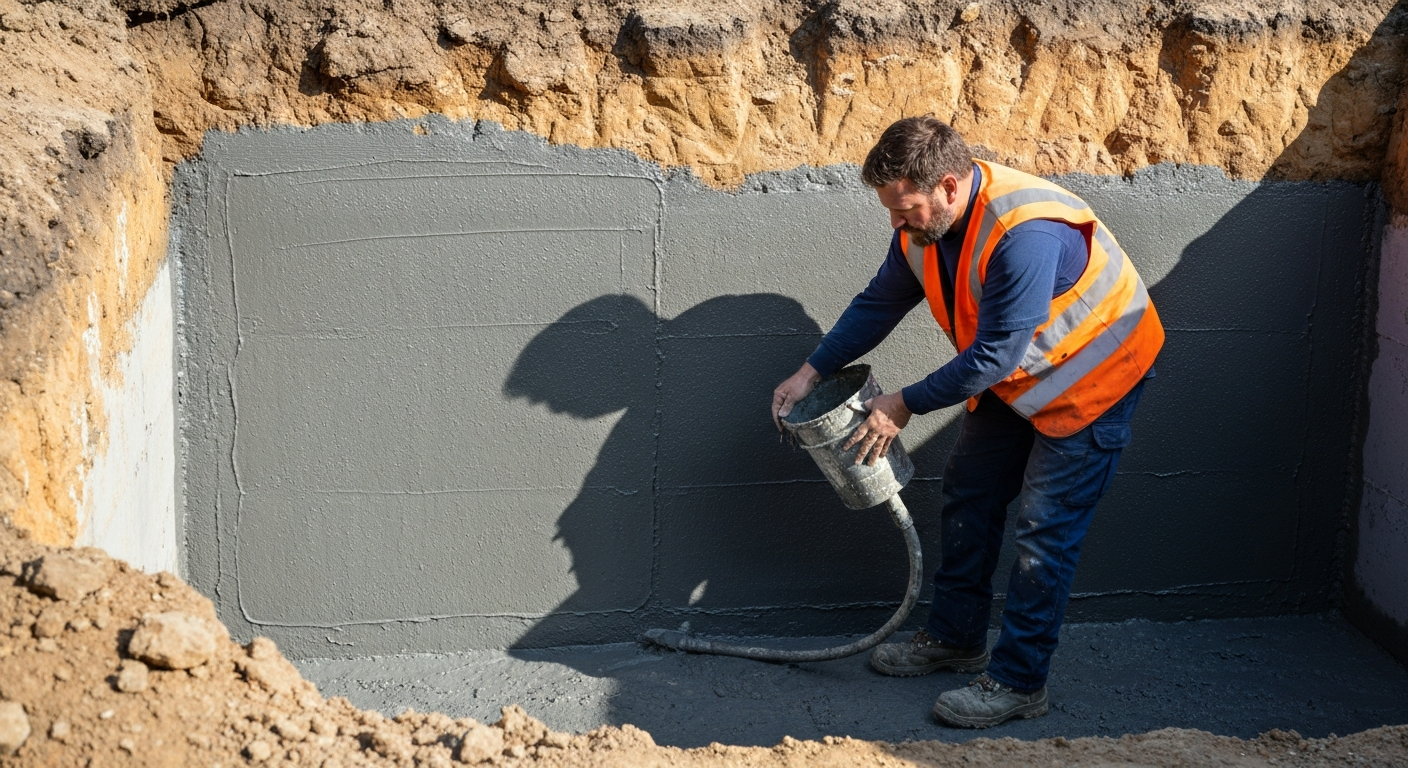
Basement waterproofing options and costs in Terrace
Terrace homeowners typically choose between exterior and interior waterproofing based on where the water is coming from and how much excavation the site will realistically allow. With 58.1% of homes in Terrace built before 1981, many basements still rely on older damp-proofing systems and weeping tile that are undersized, cracked, or simply gone—so repairs often start with drainage restoration rather than “sealing and hoping.” In a community of 12,017 people with 3,415 homeowner households (70.1% own), there’s steady demand for contractors who understand wet coastal conditions and can manage messy excavation, disposal of saturated spoil, and short winter access windows.
In the North Coast economic region, the waterproofing cost difference comes from hydrostatic pressure and persistent moisture. Frequent storm events and rapid backfill saturation can load perimeter drains and membranes quickly, while freeze–thaw cycles in northern BC widen existing joints and accelerate breakdown of older concrete and block foundation elements. That’s why contractors in Terrace often design a layered system: perimeter drainage plus reliable pumping, and in many older neighbourhoods (including older pockets near downtown Terrace), targeted interior measures as redundancy when exterior access is limited.
Below is a practical comparison of common options and their typical budget range for a Terrace home. Your final scope may include prep work such as efflorescence removal or foundation crack monitoring, but the options below reflect how most crews structure the job.
| Method |
What It Addresses |
Disruption Level |
Durability |
Price Range |
| Exterior excavation + new membrane + drainage tile |
Water entry at foundation wall; restores perimeter drainage and membrane protection |
High (yard excavation, deck/landscaping impacts) |
High (source control) |
$9,000–$22,000 |
| Interior perimeter drain channel + sump pit |
Collects seepage after it enters; reduces basement humidity and efflorescence |
Medium (floor/wall cutting along perimeter) |
Medium–High (depends on wall condition and pump reliability) |
$5,000–$15,000 |
| Foundation crack injection (epoxy or polyurethane) |
Seals cracks; polyurethane for active seepage, epoxy for non-moving cracks |
Low–Medium (access ports/patching) |
Medium–High (when paired with correct drainage) |
$600–$1,800 |
| Sump pump installation (primary + battery backup) |
Reliable pumping during storms/outages; reduces hydrostatic buildup in interior |
Low–Medium |
High (when backup is included) |
$900–$2,500 |
| Window well drain installation |
Stops water pooling around window wells; improves local drainage paths |
Low–Medium |
Medium (localized solution) |
$1,000–$3,000 |
| Lot re-grading / downspout extension |
Redirects roof water away from foundation; reduces future loading on drains |
Low–Medium |
Medium (works best with functional perimeter drainage) |
$600–$2,200 |
Prices are estimates only and vary by project scope, site access and material selection.
What affects the price of waterproofing in Terrace
In Terrace and across British Columbia, two quotes for what sounds like the “same waterproofing job” can differ by 30–50% because the real scope is rarely identical. A contractor’s plan is shaped by soil saturation, water table behaviour, foundation type, and how much excavation is feasible without damaging decks, drives, or mature landscaping. In drier parts of Canada, crews can sometimes get away with simpler drainage, but in the North Coast region you’re typically designing for constant moisture and seasonal high water. That’s why costs here often start at the lower end of the bands for interior drainage work, then climb quickly when exterior access and disposal requirements increase.
The three drivers that most separate North Coast costs from a national average are soil type, water table, and freeze–thaw. Clay-heavy soils in other provinces can expand during freeze–thaw and exert lateral pressure on walls; in Terrace, saturated mixed soils and hillside runoff can still raise hydrostatic pressure, but the practical effect is that perimeter drains and membranes must remain functional and correctly sized. When the local water table is seasonally high, your sump may run more often, making backup power a “must-have” rather than an upsell. And in older housing stock—remember, 58.1% of homes in Terrace were built before 1981—original weeping tile and damp-proofing are frequently failed, so prep and restoration costs rise before waterproofing materials even go in.
Concrete examples: (1) A perimeter drain replacement with multiple tie-ins can push interior work toward the upper end of the $5,000–$15,000 band when floors must be cut in sections to reach the entire run. (2) If exterior excavation is required under a driveway and deep to the footing, exterior projects often land within the $9,000–$22,000 range. (3) If you only do crack repair without restoring drainage, you may still see interior humidity—meaning you pay once now and again later.
| Price Factor |
Why It Matters |
Cost Impact |
| Interior vs. exterior approach — interior is less disruptive but addresses symptoms |
Exterior typically corrects source water entry; interior manages water after entry |
Interior is usually lower cost; exterior can add significant excavation/disposal |
| Foundation type — poured concrete vs. block vs. stone vs. ICF |
Different wall materials react differently to moisture and crack patterns |
Block and older mixed foundations often need more detailed drainage/crack strategy |
| Soil type — clay expands more than sand, adding pressure |
Expansion and settlement can stress joints and seals |
Clay/saturated soils increase required drainage redundancy and detailing |
| Crack type and length — hairline vs. structural horizontal cracks |
Active or structural cracks may indicate movement and need engineering review |
More extensive crack mapping and repairs increase labour and materials |
| Sump pump backup system — battery or water-powered backup needed |
Storm-related power interruptions can coincide with spring/summer flooding |
Backup raises the sump package cost within the $900–$2,500 band |
| Access — landscaping, decks, or driveways must be removed for exterior |
Removal/restoration affects time, labour, and disposal volumes |
Exterior jobs rise quickly when excavation is constrained by built features |
| Weeping tile age — original tile (60+ years) may be completely failed |
Collapsed tile forces full replacement vs. localized repairs |
Full perimeter replacement can push you toward the higher end of interior/exterior ranges |
| Mould or efflorescence remediation required before sealing |
Sealers and membranes need clean, stable surfaces to bond |
Additional remediation and drying time adds cost and can extend schedule |
Permits & regulations in British Columbia
In British Columbia, foundation excavation, structural crack repair, and changes to lot drainage typically require a building permit. In Terrace, that usually means you should expect permit planning when the scope involves opening the exterior perimeter to the footing, replacing or redirecting drainage discharge, or performing any work that could be considered structural (for example, addressing major horizontal cracks, significant step cracking in block walls, or anything that affects load-bearing components).
Sump pump installations can also trigger municipal approval depending on how the pumped discharge is handled. If a sump discharges to a storm or sanitary system, you should plan for permitting/approval rather than assuming “it’s just a pipe.” For structural crack repair—especially horizontal cracks in block walls or cracks that indicate potential movement—a structural engineer’s assessment is often required to determine whether underpinning or other structural work is needed.
To verify a contractor’s compliance in Terrace, ask for three items and check them directly:
- BC licence/registration: confirm their contractor status using the online provincial licensing/registry tools.
- Certificate of insurance: request current liability insurance and ensure the project address or client is covered.
- WSIB/WCB clearance: ask for current clearance documentation showing coverage for workers.
For structural scopes, also confirm they have engineering support or a process for obtaining engineer sign-off before work begins.
Interior vs exterior waterproofing — what does Terrace need?
The fundamental difference is straightforward: exterior waterproofing stops water at the source by fully excavating, applying membrane protection, installing (or rebuilding) drainage tile, and then backfilling. Interior waterproofing—typically a perimeter drain channel, a sump pit, and sump pump(s)—manages water after it enters the basement. In Terrace’s North Coast environment, where saturation can be quick after heavy rainfall and where freeze–thaw cycles widen joints, interior systems often need to be engineered for redundancy, not just a single pump and a single discharge line.
Which approach is right for your home depends on your foundation type and how much you can realistically excavate. Poured concrete walls generally respond well to crack injection when paired with functional drainage, because the wall is more uniform and cracks can be sealed effectively once water is controlled. Block foundations often benefit from interior perimeter drainage as a practical complement because moisture can travel through voids and mortar joints; sealing without drainage can trap moisture behind the wall. If your existing weeping tile is failed or missing, exterior work can be the most durable option because it restores the pathway water should take.
Here’s a realistic budgeting example: if a Terrace homeowner needs full exterior excavation, membrane, and new drainage, you’re commonly in the $9,000–$22,000 band once excavation depth, access constraints, and spoil disposal are included. If access prevents exterior work—driveways, decks, or unstable slopes—interior perimeter drainage plus a sump package often lands in the $5,000–$15,000 range and can still protect your basement when paired with a properly sized sump pump (ideally with backup).
Given British Columbia’s outage exposure during spring flooding, backup pumping can be a smart justification for spending a bit more within the $900–$2,500 sump band so one power hiccup doesn’t turn a “small seep” into a flooded basement.
| Method |
Best For |
Addresses Source? |
Disruption |
Lifespan |
Price Band |
| Full exterior excavation + membrane |
Frequent seepage where exterior access is practical; older homes with failing drainage |
Yes (best chance to stop water entry) |
High |
Long-term (when drains remain unblocked) |
$9,000–$22,000 |
| Interior French drain + sump system |
Interior leaks and high humidity when exterior excavation is limited |
No (manages water after entry) |
Medium |
Good (depends on pump redundancy) |
$5,000–$15,000 |
| Crack injection — epoxy (structural) |
Non-moving hairline/non-active cracks in poured concrete |
Partially (seals crack pathway but still needs drainage) |
Low–Medium |
Medium–Long |
$600–$1,800 |
| Crack injection — polyurethane (active leak) |
Active seepage where water is present at the crack |
Partially (focuses on stopping flow through the crack) |
Low–Medium |
Medium–Long (when paired with water management) |
$800–$2,200 |
| Interior drain channel only (no sump) |
Low-water-entry basements where you can’t install a sump |
No |
Medium–Low |
Limited (risk rises during heavy storms) |
$3,500–$9,000 |
| Re-grading + downspout extensions |
Surface water management; homes where leaks correlate with roof runoff |
Indirectly (reduces water load) |
Low–Medium |
Medium (only works if drains aren’t failed) |
$600–$2,200 |
How to choose a waterproofing contractor in Terrace
Choosing the right waterproofing contractor in Terrace starts with verifying BC compliance and practical jobsite capability. First, confirm their credentials: in British Columbia, ask for proof of their licence/registration status, their current liability insurance certificate, and WSIB/WCB clearance for their workers. You can validate licensing through provincial online registry tools, and you should always request certificates that show your address/client details or coverage for the work scope.
Next, don’t accept “lump sum” promises. Ask for 2–3 itemised, written quotes with a labour and materials breakdown: excavation scope (if exterior), membrane and drain components, pipe routing, sump selection, disposal of wet spoil, and finishing/restoration. Make sure exclusions are clearly listed—examples include whether demolition is included, whether mould/efflorescence remediation is included, and whether permit pull (when required) is part of the price. In Terrace, disposal of saturated backfill can be a real line-item, not an invisible cost.
Warranty matters: request the workmanship warranty length in writing, the product/manufacturer warranty terms (and whether they’re transferable to future owners), and what triggers warranty service. For payment scheduling, avoid large upfront deposits—keep initial payments around 10–15% and use holdback until the work is complete and clean. Get a written start date and completion estimate that accounts for drying time and weather interruptions typical in the North Coast.
- Verify BC licence/registration using the provincial registry (don’t rely only on a brochure).
- Confirm liability insurance and that it covers your address and scope.
- Request WSIB/WCB clearance documentation (current date).
- Ask for an itemised quote: excavation, drainage tile components, pumps, labour, and disposal.
- Clarify what’s included in floor cutting and patching for interior work.
- Confirm whether efflorescence/mould remediation and drying time are included before sealing.
- Ask how they size the sump and whether they include backup (battery or water-powered).
- Request a detailed plan for discharge routing (and whether approvals/permits are included).
- Get the warranty in writing: workmanship term, product term, and transferability.
- Use a payment schedule that limits upfront to 10–15% and holds back until completion.
- Require a written project timeline including weather/drying contingencies.
- Ensure the crew documents pre- and post-work conditions (photos, measurements, drain runs).
Red flags to watch for in Terrace: they refuse to put scope and exclusions in writing; they quote the same price for both exterior and interior without assessing drainage failure points; they dismiss sump pump backup as unnecessary despite spring storms; they won’t provide insurance/WSIB/WCB clearance or won’t discuss permit needs; or they promise “guaranteed waterproofing” without addressing failed drainage and freeze–thaw conditions.
Frequently asked questions — waterproofing in Terrace
Do I need a sump pump in Terrace?
Many Terrace homes benefit from a sump pump when there’s recurring seepage, high basement humidity, or evidence of active water during storms. In the North Coast, heavy rainfall and seasonally high moisture can overwhelm perimeter drainage if the original weeping tile is collapsed or undersized. If you’re already doing interior waterproofing, adding a sump pump is often the difference between a dry wall and a wet basin—especially where hydrostatic pressure builds quickly after downpours. Budget accordingly: sump pump installation typically falls around $900–$2,500, and a backup system is commonly recommended because power interruptions can occur during severe weather in BC. A proper site inspection should confirm water paths, discharge routing, and whether backup is required for your risk level.
How does Terrace's soil affect my foundation?
Terrace soils are often saturated enough that moisture behaviour matters as much as “clay vs. sand.” While some provinces see aggressive lateral wall pressure from expansive clay, North Coast conditions more frequently involve saturated mixed soils, hillside runoff, and backfill that stays wet for long periods. That moisture loads perimeter drains and can push water toward the basement during rain events. Freeze–thaw cycles then widen existing cracks and joints in older foundations (58.1% of Terrace homes were built before 1981), increasing seepage pathways. If your weeping tile is older or failed, interior systems (perimeter drains and a sump) can be essential. If exterior access is workable, exterior membrane and drainage restoration is generally more durable for controlling moisture at the source.
Do I need a permit for foundation work in British Columbia?
In British Columbia, many foundation-related waterproofing activities require permits—especially foundation excavation, structural crack repair, and changes to lot drainage. Sump pump installations may also require municipal approval depending on where the pumped discharge goes (storm or sanitary systems). For structural crack repairs (for example, major horizontal cracks in block walls or step cracking that may indicate movement), an engineer’s assessment is often needed to confirm whether underpinning or structural work is required. To avoid surprises in Terrace, ask your contractor whether the permit is required for your exact scope and who will pull it. Confirm the contractor can provide documentation of BC compliance and, where applicable, engineering support. If you’re given a waterproofing plan that ignores permits, that’s a serious warning sign in BC.
How long does waterproofing last?
When done correctly and matched to the failure point, waterproofing can last many years, but lifespan depends on drainage performance, freeze–thaw exposure, and how well the system remains maintained. Exterior waterproofing (excavation, membrane, and new drainage tile) is typically the most durable because it addresses water entry; interior systems manage water after entry and rely heavily on reliable pumping. In Terrace’s wet coastal conditions, even high-quality products can underperform if discharge lines clog or backup power isn’t available during storms. Crack injection is also long-lasting only when the underlying water pathway is controlled. For homeowners budgeting, it’s helpful to think in terms of investment bands: exterior projects often fall within $9,000–$22,000 and interior perimeter work within $5,000–$15,000, reflecting the durability differences between source control and symptom management.
Can I waterproof my basement from the inside only?
Yes—many Terrace basements can be improved from the inside only, particularly where exterior excavation isn’t practical due to landscaping, driveways, or site constraints. Interior solutions typically include a perimeter drain channel, a sump pit, and a sump pump to collect seepage and reduce basement humidity. This is often the most realistic approach for older homes in the Terrace area where access limits exterior work. However, interior waterproofing does not stop hydrostatic pressure from acting on the wall itself; it manages water after it enters. That’s why pairing interior drainage with proper crack treatment (when appropriate) and sometimes backup pumping is important. If your leak is driven by failed exterior drainage or obvious water entry at the exterior wall, an exterior approach is usually longer-term. A good contractor will assess where water is coming from before recommending an inside-only plan.
What causes foundation cracks in Terrace?
In Terrace, foundation cracks can be caused by moisture-related movement, freeze–thaw stress, and aging of older construction details. Repeated wetting and drying from coastal rainfall and saturated backfill can weaken mortar joints in block foundations and stress poured concrete cracks over time. Freeze–thaw cycles widen existing cracks and joints, letting water travel deeper and increasing damage during subsequent storms. Soil saturation can also lead to uneven settlement—particularly if drainage is poor or the original weeping tile has failed. If you’re seeing horizontal cracks in block walls or step cracks, treat them seriously: they may require an engineer assessment before sealing or injection. Many repairs start with restoring drainage pathways first, then addressing crack pathways through injection where suitable.