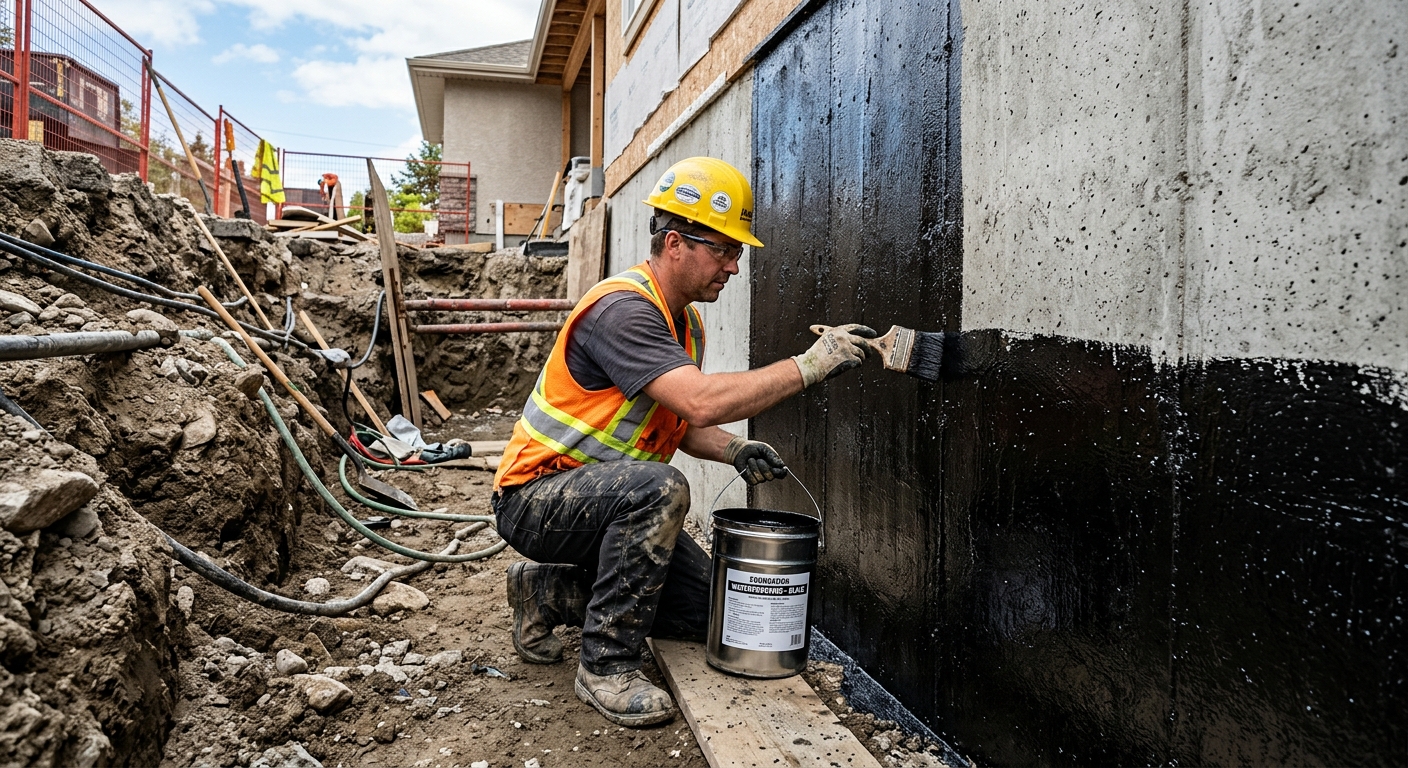
Basement waterproofing options and costs in Burns Lake
Basements in Burns Lake are shaped by local soil conditions and a water table that tends to stay elevated through spring melt. With 61.6% of homes built before 1981, many properties still rely on older dampproofing and dated weeping tile concepts that often fail under repeated freeze-thaw cycles—especially where cracks have quietly widened over the years. The Nechako region also sees a lot of seasonal moisture movement in valley-bottom areas, so water that would normally drain away can instead press against basement walls and slabs, driving seepage that shows up as staining, damp drywall, and sump pump over-cycling.
In practical terms, your cost in Burns Lake depends on whether the contractor can address the source (exterior drainage and membrane) or whether the plan is primarily a backup system (interior perimeter drain plus sump). Pricing also varies because crews may need longer excavation time, additional disposal, or more time to manage saturated backfill and winter-access constraints between deliveries—factors that are common on older lots around downtown Burns Lake and the lake-adjacent areas where grading is tricky.
If your goal is a “dry basement” outcome, the right option usually starts with diagnosing the leak pathway (soil moisture vs. active crack seepage vs. failed tile). Use the comparison table below to align methods to what you’re actually fixing, then you can request an itemised quote that matches your home’s foundation type and current water behaviour.
| Method |
What It Addresses |
Disruption Level |
Durability |
Price Range |
| Exterior excavation + new membrane + drainage tile |
Primary water entry by managing groundwater outside the foundation |
High (excavate around perimeter) |
High (designed as long-term source control) |
$9,500–$24,500 |
| Interior perimeter drain channel + sump pit |
Intercepts water after it enters; reduces wall staining and floor dampness |
Medium (interior demo near perimeter) |
High (works best with proper discharge and sump sizing) |
$6,500–$16,500 |
| Foundation crack injection (epoxy or polyurethane) |
Stops active seepage through cracks; reinforces where appropriate |
Low to Medium (patching required) |
Medium to High (depends on crack type and prep) |
$750–$2,400 |
| Sump pump installation (primary + battery backup) |
Controls groundwater by pumping to approved discharge |
Low to Medium |
Medium to High (backup reduces outage risk) |
$1,500–$3,300 |
| Window well drain installation |
Directs water away from below-grade window areas |
Low to Medium |
Medium to High (if drainage is sized correctly) |
$2,000–$5,500 |
| Lot re-grading / downspout extension |
Stops roof and surface water from flowing toward the foundation |
Low |
Medium (often a necessary add-on) |
$1,000–$4,500 |
Prices are estimates only and vary by project scope, site access and material selection.
What affects the price of waterproofing in Burns Lake
In Burns Lake, it’s not unusual to see waterproofing quotes for the same basement condition vary by 30% to 50% across the Nechako region and broader British Columbia. The reason is straightforward: two contractors can both be “waterproofing a basement,” yet one quote may only treat symptoms (interior drainage and a sump) while the other actually addresses the source (exterior excavation, membrane, and new drainage tile). Labour and equipment time also swing based on access, how saturated the excavated backfill is, and whether the foundation needs crack repair before the waterproofing system can be sealed.
The three drivers that most separate Nechako costs from a national average are soil type, water table, and freeze-thaw cycles. Clay-heavy, moisture-retentive soils common in valley-bottom settings can hold water against foundation walls longer, increasing hydrostatic pressure and sump demand. When winter freeze-thaw repeatedly expands existing cracks in concrete and block, minor defects become active leak points—so you may see added costs for crack injection or interior drainage upgrades. Finally, a higher local water table means more pump run time and better discharge planning; a sump system that would be “adequate” in drier conditions becomes under-sized here.
Concrete examples from Burns Lake: (1) a home with failed weeping tile at the perimeter typically needs either exterior drainage replacement or an interior drain channel plus sump; that’s why interior-only scopes often land in the $6,000–$18,000 band, while source-control exterior work can push toward the $9,000–$25,000 range. (2) foundations built before 1981 are more likely to have older dampproofing and undersized/failed drainage routes, which can increase concrete demo and disposal time—and that added prep is often where the biggest quote gap comes from. (3) if mould or significant efflorescence is present, remediation needs to happen before sealing, otherwise the system can’t perform as intended.
| Price Factor |
Why It Matters |
Cost Impact |
| Interior vs. exterior approach — interior is less disruptive but addresses symptoms |
Exterior source control is more labour-intensive; interior is faster but manages water after entry |
Interior may be ~30% to 45% less than excavation; can be closer if exterior access is easy |
| Foundation type — poured concrete vs. block vs. stone vs. ICF |
Crack behaviour and sealing methods differ by material and age |
Block and older stone often require more prep and interior drainage complement |
| Soil type — clay expands more than sand, adding pressure |
Retentive soils keep pressure on walls and increase seepage duration |
Can add pump capacity, additional interception piping, or exterior drainage replacement |
| Crack type and length — hairline vs. structural horizontal cracks |
Structural cracks may require engineering review and additional structural work |
Injection scope can increase from “spot” repairs to full perimeter treatment with monitoring |
| Sump pump backup system — battery or water-powered backup needed |
Prevents failure during spring outages or high-melt periods |
Typically adds a moderate cost but reduces the highest-risk downtime scenario |
| Access — landscaping, decks, or driveways must be removed for exterior |
Removal and reinstatement change labour and schedule |
Access problems can swing exterior pricing by thousands |
| Weeping tile age — original tile (60+ years) may be completely failed |
Collapsed or clogged tile can redirect water toward the foundation |
May force full exterior replacement or a comprehensive interior drain system |
| Mould or efflorescence remediation required before sealing |
Contaminants and salt residues must be cleaned so membranes and coatings adhere |
Adds time and materials; may require drying period before sealing |
Permits & regulations in British Columbia
In British Columbia, foundation excavation, structural crack repair, and changes to lot drainage typically require a building permit. If you’re planning to address active seepage through structural elements—especially horizontal cracks in block walls or cracks that may suggest movement—an engineer’s assessment is often needed before the repair method is final. For sump pump installations that connect to the storm system or sanitary sewer, municipal approval may be required; the goal is to ensure discharge is permitted and doesn’t create drainage problems for neighbouring properties.
What often does require a permit (depending on scope): exterior excavation around the foundation perimeter; repair work that affects structural integrity; and work that changes how roof runoff or surface water is managed so it doesn’t flow toward the foundation. What typically does not require a permit: minor interior patching after an approved waterproofing system is installed; cosmetic repairs after sealing; and routine surface re-grading that doesn’t alter drainage in a way that triggers municipal review (but always confirm with your contractor and local process).
To verify a contractor in Burns Lake, start online: (1) check the applicable business and licensing information available through provincial and trade directories; (2) ask for an up-to-date certificate of insurance (general liability) and confirm coverage amounts align with the project scale; (3) request evidence of WSIB/WCB coverage for workers—your quote should reference it clearly. For structural repairs, ask whether they have engineering support and whether they can provide an engineer involvement letter or stamped design when required.
Interior vs exterior waterproofing — what does Burns Lake need?
The fundamental difference is source control versus water management. Exterior waterproofing—full excavation, new membrane, new drainage tile, then backfill—aims to stop groundwater before it reaches the foundation wall. It’s the most permanent approach, but it’s significantly more disruptive because it removes landscaping, requires careful excavation in saturated ground, and often involves reinstatement of gardens, walkways, or patios. Interior waterproofing—perimeter drain channel, sump pit, and sump pump—intercepts water after it enters and evacuates it, which is less invasive but does not reduce hydrostatic pressure against the wall itself.
In Burns Lake and the Nechako market, where many homes were built before 1981 and foundation performance was never designed for today’s moisture cycles, exterior source control often makes the biggest difference when the perimeter weeping tile is failing and the water table stays high during snowmelt. Poured concrete walls generally respond well to a combination of crack injection (to seal pathways) and a properly detailed interior drainage system when needed. Block foundations can have more complex leak paths and mortar void behaviour, so interior drainage is often a practical complement even if some exterior work is done.
Given British Columbia conditions, sump pump backup matters in spring flooding periods and during power interruptions. A battery backup or water-powered backup can be the difference between a dry foundation and a short-term failure that allows seepage to travel into floor assemblies.
For example, if you choose exterior excavation and drainage replacement, you might be in the $9,000–$25,000 exterior band. If the issue is primarily interior dampness with localized seepage, an interior perimeter drain and sump system can fit the $6,000–$18,000 band—sometimes the cost is justified because you avoid excavation. But if your exterior drainage is completely failed and soils stay saturated against the wall, interior-only work can cost you again later through repeated maintenance and ongoing hydrostatic pressure.
| Method |
Best For |
Addresses Source? |
Disruption |
Lifespan |
Price Band |
| Full exterior excavation + membrane |
Active groundwater issues and failed perimeter drainage |
Yes |
High |
High (source control) |
$9,500–$25,000 |
| Interior French drain + sump system |
Chronic seepage, staining, or damp slab floors where excavation is limited |
No (manages after entry) |
Medium |
High (with proper pump and discharge) |
$6,500–$18,000 |
| Crack injection — epoxy (structural) |
Stable cracks where leakage is minimal or stopped and reinforcement is needed |
Partially (seals crack pathway) |
Low to Medium |
Medium to High |
$600–$2,000 |
| Crack injection — polyurethane (active leak) |
Active seepage through cracks in poured concrete or block |
Partially (stops pathway) |
Low to Medium |
Medium to High (depends on correct product choice and prep) |
$750–$2,500 |
| Interior drain channel only (no sump) |
Minor seepage with reliable gravity drainage; limited water volume |
No (manages after entry) |
Medium |
Medium |
$4,500–$10,500 |
| Re-grading + downspout extensions |
Surface water issues and roof runoff directing toward foundation |
Yes (for surface/roof sources) |
Low |
Medium (as part of a system) |
$1,000–$4,500 |
How to choose a waterproofing contractor in Burns Lake
Choosing the right waterproofing contractor in Burns Lake is less about marketing and more about verification and clarity. Start with British Columbia licensing (where applicable to the contractor’s scope), then confirm insurance. Ask for a current certificate of general liability and make sure it covers waterproofing/excavation activities. For workers, request proof of WSIB/WCB coverage—this matters because it affects your risk as the homeowner if something goes wrong on site.
Next, get 2–3 itemised written quotes. You want labour and material breakdowns, not a single lump sum. The scope should specify what’s included (for example: excavation depth and perimeter length, membrane type, drainage tile size, discharge route, and whether disposal and site clean-up are included). Confirm whether the contractor will pull permits if required, and whether engineering review is included when structural crack concerns arise.
Warranty should be explicit: workmanship warranty length, what it covers (including labour to remedy failures), and product manufacturer warranty details. If the manufacturer warranty is involved, ask whether it is transferable to future owners. Payment should be controlled: never pay more than 10% to 15% upfront, and hold back a portion until the job is complete and tested. Get the timeline in writing with a start date and an estimated completion date, and ask how delays are managed—weather and saturated soils can affect sequencing in spring.
- Ask how they diagnose the leak pathway (water table vs. crack seepage vs. failed tile), not just “seal the walls.”
- Require a site plan showing where drainage tile and discharge will run.
- Confirm disposal is included (excavated material in wet conditions can increase handling time).
- Check for permit responsibility in the contract scope.
- Get a written warranty that names the covered items and the remedy process.
- Ensure backup pump options are addressed if you’re in a spring-heavy seepage pattern.
- Ask for proof of WSIB/WCB and general liability before the first payment.
- Make sure crack injection product type is matched to the crack behaviour (structural vs active leak).
- Request a moisture-drying plan if interior sealing depends on dry conditions.
- Confirm how they protect landscaping during exterior work and what reinstatement includes.
- Verify pump sizing (and discharge location) rather than guessing based on square footage alone.
- Use a progress payment schedule with a holdback until final clean-up and commissioning.
In Burns Lake, common red flags include: quotes that don’t describe where drainage/discharge will go, promises of “guaranteed dry” basements without leak-path testing, vague warranty language (no defined remedy), missing insurance/WSIB documentation, and contracts that treat permits and engineering as “not needed” even when structural cracks or drainage changes are proposed.
Frequently asked questions — waterproofing in Burns Lake
How do I compare waterproofing quotes?
Start by comparing apples to apples: ask each contractor to write an itemised scope that lists exactly what they’ll install (membrane type, drainage tile routing and size, sump basin and pump model, discharge method) and what’s excluded. In Burns Lake and the Nechako region, quote gaps often come from whether they address source control (exterior drainage and membrane) or only manage water after entry (interior drains and sump). If one quote is in the $9,000–$25,000 exterior band and another is in the $6,000–$18,000 interior band, verify the diagnosis behind those numbers—don’t just compare totals. Also confirm whether mould/efflorescence remediation is included before sealing, whether permits are handled where required, and whether a backup system is offered for spring melt and outage risk. (Statistics Canada, 2021 Census)
How long does basement waterproofing take in Burns Lake?
Typical timelines depend on whether you’re doing interior-only work or full exterior excavation. Interior perimeter drains and sump systems often take from several days to about one to two weeks depending on how much interior perimeter demo is needed and whether drying time is required before sealing. Exterior excavation can take longer because contractors must excavate the full perimeter, manage saturated backfill, install drainage and membrane, then allow proper backfill compaction and reinstatement. In Burns Lake, spring conditions can slow progress if the site stays wet—so you may see schedule adjustments even when the crew is ready. Your contract should include a start date, completion estimate, and a weather/soil contingency plan. A good contractor will also coordinate pump commissioning and test the system during startup rather than leaving it “assumed to work.”
What is a weeping tile and does my Burns Lake home have one?
Weeping tile is the older-style perimeter drainage system installed behind basement walls to collect groundwater and direct it to a discharge point, reducing hydrostatic pressure. Many older homes in Burns Lake—especially those built before 1981 (61.6% of local homes, per Statistics Canada, 2021 Census)—may have original tile that has become clogged, collapsed, or undersized over decades. Some homes may have remnants of it; others may have been modified, or the system may have failed and been replaced informally. You can’t always confirm it visually without excavation or investigative probing. A contractor should be able to explain how they’ll assess the drainage condition (inspection openings, dye testing, camera inspection where feasible) and how the waterproofing plan changes if the tile is non-functional.
Can I waterproof my basement in winter in Burns Lake?
Yes, but it depends on the method and site conditions. Interior waterproofing can sometimes proceed in winter because it doesn’t require full exterior excavation, and many contractors can work around foundation areas using dry-zone practices and proper protection. However, exterior excavation is much harder when soil is frozen—digging and backfilling for membrane systems can become slower, and saturated/melt conditions can change discharge performance. In Burns Lake, freeze-thaw activity can also affect crack openings, so crack injection and sealing need the right timing and surface prep to ensure products bond correctly. If you’re planning exterior work, ask the contractor how they handle freeze conditions and whether they schedule around melt periods. A good quote will explain the “minimum conditions” required for product application and curing.
What is the difference between waterproofing and damp-proofing?
Waterproofing is designed to resist active water entry and relieve hydrostatic pressure, typically using systems like exterior membrane and drainage tile or interior drains paired with a properly sized sump pump. Damp-proofing usually aims to limit moisture penetration and is often associated with older coatings or limited barriers that may not hold under sustained groundwater pressure. In the Nechako region, freeze-thaw and a higher seasonal water table can turn small defects into active leaks, which is when damp-proofing can fall short—especially in older homes. If you’re seeing staining, musty odours, or sump pump cycling, that usually points beyond damp-proofing performance. When you receive a quote, ask which standard the plan targets: managing surface water only, stopping seepage pathways, or controlling groundwater pressure with a complete drainage system.
Will basement waterproofing affect my property value in Burns Lake?
Often, yes—especially when it converts an ongoing moisture problem into a documented, professionally installed system with a transferable workmanship warranty. In Burns Lake, where many homes are older (and a majority of households are owner-occupied), buyers typically view evidence of chronic seepage, efflorescence, or frequent sump cycling as a risk factor and a potential cost liability. A properly detailed waterproofing project can reduce that perceived risk because it addresses the leak pathway and provides serviceability (pump access, discharge routing, and an inspection trail). However, value impact depends on the quality of the scope and how well it matches the cause—interior-only solutions may be sufficient for some cases, while others need exterior source control. For budgeting, homeowners often compare interior band work (commonly $6,000–$18,000) against exterior source control (often $9,000–$25,000) to balance immediate relief and long-term peace of mind. (Statistics Canada, 2021 Census)