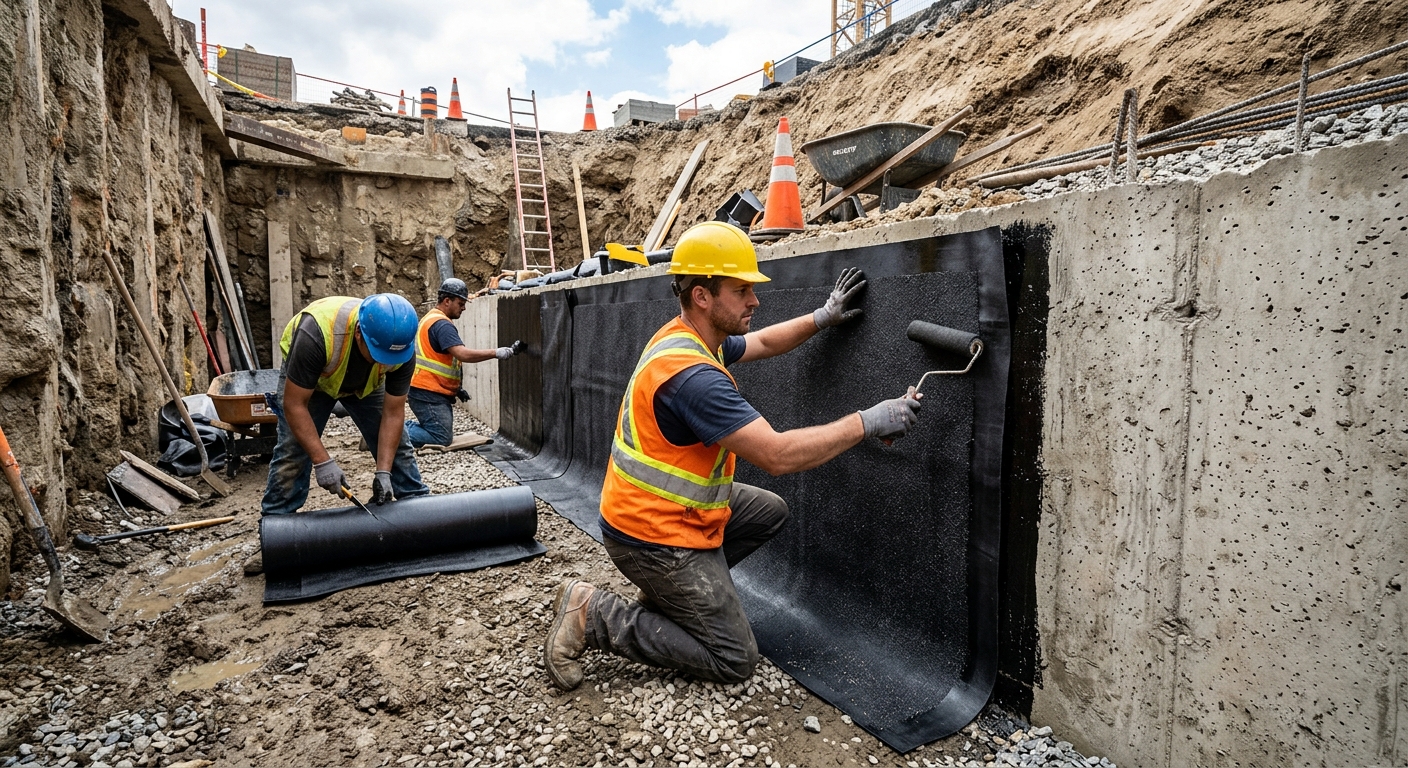
Basement waterproofing options and costs in Ryder Lake
Ryder Lake, British Columbia sits in the Lower Mainland–Southwest climate band where groundwater and persistent saturation drive most basement moisture problems. With a local population of 1,290 (Statistics Canada, 2021 Census), the market is smaller than Metro Vancouver, so contractor availability can tighten during the busiest spring and summer months. That matters because waterproofing jobs often overlap with landscaping seasons, and timing can affect scheduling, excavation access, and haul-away logistics.
In Ryder Lake, many foundations experience issues long after the original system was installed—older homes are especially likely to have tired or failed exterior drainage (often the original weeping tile or sub-drainage) and hairline cracking that gradually widens with freeze-thaw. Even in newer builds, Lower Mainland–Southwest soil conditions can keep backfill saturated longer when drainage fails, increasing hydrostatic pressure against basement walls and slabs. Meanwhile, wet, mild winters combined with frequent freeze-thaw cycles widen joints and cracks, so the same crack may worsen year to year if the water source isn’t managed.
Contractors also price differently based on access around the home. Tight lots, older perimeter landscaping, and rocky sections that require mechanical breaking during excavation can push excavation costs toward the higher end (for example, exterior waterproofing (excavation) is commonly in the $15,000–$30,000 tier). In Ryder Lake, work is often in demand near the lakeside residential stretches where drainage grading and downspouts must be corrected to protect exposed foundation runs.
Below is a practical comparison of the most common waterproofing approaches and what homeowners typically pay before selecting a scope.
| Method |
What It Addresses |
Disruption Level |
Durability |
Price Range |
| Exterior excavation + new membrane + drainage tile |
Primary water entry by removing pressure at the foundation perimeter |
High (excavation, landscape disruption, regrading) |
High (long-term source control) |
$15,000–$30,000 |
| Interior perimeter drain channel + sump pit |
Collects seepage after it enters and directs it to a sump |
Medium (interior slab/wall work; less yard removal) |
Medium to high (depends on sealing details) |
$8,000–$18,000 |
| Foundation crack injection (epoxy or polyurethane) |
Stabilizes or stops crack pathways in poured concrete or block mortar joints |
Low to medium (drilling, surface prep, limited repairs) |
Medium (epoxy structural, polyurethane active-leak oriented) |
$500–$2,000 |
| Sump pump installation (primary + battery backup) |
Moves collected water out reliably during high groundwater and outages |
Low to medium (pit excavation; electrical upgrades) |
Medium to high with backup |
$1,000–$5,000 |
| Window well drain installation |
Controls surface water at window wells to reduce seepage risk |
Low to medium (excavation at wells) |
Medium (works best paired with surface drainage) |
$1,500–$4,500 |
| Lot re-grading / downspout extension |
Prevents roof runoff and surface water from reaching foundation walls |
Low to medium (minor excavation, grading, landscaping changes) |
Medium (maintenance-critical) |
$2,000–$6,000 |
Prices are estimates only and vary by project scope, site access and material selection.
What affects the price of waterproofing in Ryder Lake
In Lower Mainland–Southwest, it’s normal to see quotes for the “same” basement problem vary by 30–50% across British Columbia because the biggest variables aren’t visible on a first inspection. Two contractors may both mention “waterproofing,” but one might be solving water entry at the source (exterior excavation and drainage) while another is only managing symptoms (interior drainage and sump pumping). Scope differences—whether the perimeter drainage is replaced, whether crack injection is included, and whether discharge routing and grading are corrected—often explain the spread.
Three drivers separate Lower Mainland–Southwest costs from the national average: soil/water table behaviour, freeze-thaw exposure, and drainage failures. Clay-heavy soils common in other parts of Canada can expand during freeze-thaw and push laterally on foundations; in Ryder Lake, the bigger cost driver is that groundwater and prolonged saturation keep pressure against basement walls and slabs once the drainage path is compromised. When high groundwater is present, sump equipment runs more often, so contractors build in robust piping, proper discharge, and sometimes backup systems. Heavy coastal BC rainfall also saturates backfill quickly, so if original drainage fails, water finds new paths through joints and cracks.
For example, a poured concrete wall with hairline cracks may be addressed with targeted crack injection (often grouped within the $500–$2,000 crack repair range when the scope is limited). But if the same basement shows recurring seepage after storms, a full interior perimeter drain and sump system can move into the $8,000–$18,000 band. Exterior excavation—commonly $15,000–$30,000 in this area—becomes justified when interior work alone can’t control hydrostatic pressure because the exterior drainage system is undersized, missing, or failed.
| Price Factor |
Why It Matters |
Cost Impact |
| Interior vs. exterior approach — interior is less disruptive but addresses symptoms |
Exterior controls source water; interior manages collected seepage after it enters |
Interior typically 30–60% lower than full exterior in many cases |
| Foundation type — poured concrete vs. block vs. stone vs. ICF |
Different wall materials need different crack sealing and drainage strategies |
Block and stone often require more interior drainage detailing |
| Soil type — clay expands more than sand, adding pressure |
Seasonal volume and pressure can worsen cracking and seepage pathways |
Clayier conditions can increase repair quantities and durability requirements |
| Crack type and length — hairline vs. structural horizontal cracks |
Structural movement may require engineering and additional work beyond injection |
Structural cracks can push scope into engineered repairs and higher labour hours |
| Sump pump backup system — battery or water-powered backup needed |
Power reliability and high groundwater periods make backup valuable in BC |
Backup adds material + electrical/integration labour |
| Access — landscaping, decks, or driveways must be removed for exterior |
Excavation production drops when crews must demo and reinstate features |
Reduced access commonly increases excavation time and disposal costs |
| Weeping tile age — original tile (60+ years) may be completely failed |
Failed perimeter drainage forces higher water volumes into foundation |
Replacement often brings projects closer to exterior waterproofing pricing |
| Mould or efflorescence remediation required before sealing |
Sealers and membranes don’t bond well to contaminated or wet surfaces |
Moisture cleanup and prep can add days and specialty materials |
Permits & regulations in British Columbia
In British Columbia, foundation excavation, structural crack repair, and changes to lot drainage typically require a building permit depending on the scope and impact on the property. Sump pump installations that connect to the storm or sanitary sewer normally need municipal approval, so you should confirm discharge routing before the contractor finalizes the plan. For structural crack repair—especially horizontal cracks in block walls or major step cracks—an assessment by a structural engineer is often needed to determine whether underpinning, tie-ins, or other structural work is required before any sealing or membrane is applied.
As a homeowner in Ryder Lake, the simplest step-by-step verification is to check three things before signing: (1) the contractor’s provincial licensing/registrations where applicable, (2) liability insurance, and (3) WSIB/WCB coverage. Start by asking the contractor for their certificate of insurance and clearance information, then confirm the policy details match the company named on the quote. If the contractor provides engineering support for structural repairs, ask for the engineer’s letter or scope statement tied to your foundation condition.
What usually does require a permit: exterior excavation that alters drainage around a foundation, structural repairs that could affect load-bearing elements, and substantial changes to how roof and surface water are directed away from the foundation. What typically does not: minor interior crack sealing of non-structural hairlines on a small localized area (still confirm with the contractor and city process), routine inspection work, and standalone sump pump service work that doesn’t change discharge or foundation conditions.
Interior vs exterior waterproofing — what does Ryder Lake need?
The fundamental difference is that exterior waterproofing permanently reduces water at the source, while interior waterproofing manages water after it reaches the basement. Exterior systems usually involve full or partial excavation, new membrane, replacement drainage tile, and properly designed backfill and regrading. That approach can be more expensive and disruptive because it requires yard removal and access along the foundation. Interior systems—such as a perimeter drain channel, sump pit, and sump pump—create a controlled pathway to collect seepage. They’re less invasive, but they don’t stop hydrostatic pressure from pushing against the wall itself.
In Ryder Lake and the Lower Mainland–Southwest market, exterior work is often the better long-term answer when homeowners see seepage after heavy rain, when the perimeter drainage is failed, or when the foundation shows multiple active water paths. Poured concrete walls generally seal better with appropriate crack injection and exterior source control. Block foundations frequently need interior drainage as a practical complement because water can travel through mortar joints and block interfaces; in those cases, an interior French drain plus a properly sized sump helps reduce recurring moisture and efflorescence.
Sump pump backup matters in British Columbia because wet seasons can coincide with higher outage risk during storms and spring flooding. A battery backup can keep the system running long enough to prevent a basement from filling if power drops, and that can protect flooring, drywall, and stored belongings.
To put the price difference in perspective: if you’re comparing full exterior excavation (commonly $15,000–$30,000) to an interior perimeter drain and sump system (often $8,000–$18,000), the higher cost is usually justified when repeated exterior saturation overwhelms interior capacity, or when original weeping tile is absent or failing. If seepage is mild and localized, interior work may be the more cost-effective first step—especially when access constraints make excavation difficult.
| Method |
Best For |
Addresses Source? |
Disruption |
Lifespan |
Price Band |
| Full exterior excavation + membrane |
Frequent seepage after storms, failed perimeter drainage, high hydrostatic pressure |
Yes |
High |
Long (source control rebuild) |
$15,000–$30,000 |
| Interior French drain + sump system |
Moisture entry already happening, practical option when exterior access is limited |
No (manages after entry) |
Medium |
Medium to long with quality plumbing and pump selection |
$8,000–$18,000 |
| Crack injection — epoxy (structural) |
Hairline/non-moving cracks in poured concrete where the pathway is stable |
Partial (seals crack pathway) |
Low to medium |
Medium (depends on ongoing water pressure) |
$500–$2,000 |
| Crack injection — polyurethane (active leak) |
Cracks with active seepage in block or concrete when water is currently travelling |
Partial (seals active path) |
Low to medium |
Medium to long when paired with drainage control |
$800–$2,500 |
| Interior drain channel only (no sump) |
Very small seepage volumes, when floor/slab design allows gravity discharge |
No |
Medium (intrusive but less equipment) |
Short to medium (depends on discharge reliability) |
$6,000–$12,000 |
| Re-grading + downspout extensions |
Surface water issues, yard slope problems, roof runoff routing into foundation |
Yes for surface water paths |
Low to medium |
Medium (needs maintenance) |
$2,000–$6,000 |
How to choose a waterproofing contractor in Ryder Lake
Choosing the right contractor in Ryder Lake starts with verifying three coverage items and confirming the scope is truly comparable across bids. In British Columbia, ask for the contractor’s current business details, their liability insurance certificate (so your property is protected during excavation and interior work), and their WSIB/WCB clearance or equivalent coverage evidence for workers. Then confirm the certificate’s named insured and policy dates match the company you’re hiring. Don’t accept “we’re covered” as a statement—request documentation before work begins.
Next, get 2–3 itemised written quotes rather than a lump sum. You want labour and materials broken out by component: excavation/disposal, membrane and drain tile, sump pit and plumbing, pump model and backup, crack injection materials, and interior finishing. Ask whether permits are included and who pulls them, whether disposal of excavated soil and old materials is covered, and how discharge will be handled on your lot.
Warranty matters both for workmanship and product. Verify workmanship warranty length, whether product warranties are manufacturer-backed, and whether any warranties are transferable if you sell the home. Payment schedules should protect you: never pay more than 10–15% upfront, and hold back funds until key milestones are complete (for example, after waterproofing materials are installed and inspected, and again after final cleanup).
Finally, timeline: require a documented start date and completion estimate. Waterproofing schedules in Lower Mainland–Southwest often shift due to excavation conditions, inspection lead times, and drying/curing windows.
- Ask for the exact waterproofing system specification (membrane type, drain tile, filter fabric, and backfill plan).
- Confirm whether they replace failed weeping tile versus tying into an unknown, aging line.
- Request disposal details: is excavated soil haul-away included?
- Get written scope exclusions (e.g., landscaping reinstatement, deck/driveway repairs).
- Verify sump pump model, check valve type, discharge line size, and where the discharge runs.
- Confirm backup plan (battery vs water-powered) and what triggers it.
- Ask who handles permits and inspections, and whether inspection fees are included.
- Require proof of liability insurance and WSIB/WCB clearance before any excavation starts.
- Check that structural crack work includes an engineer’s assessment when required.
- Clarify curing/drying timelines and how they protect finished surfaces during wet weather.
- Ensure the quote includes reinstatement expectations (grading, topsoil, and downspout rework).
- Confirm warranty coverage details in writing, including transferable terms.
Red flags we see in Ryder Lake include: bids that don’t describe how water will be directed away (only “we’ll seal cracks”), quotes that lump exterior and interior work without explaining which is source control versus symptom control, missing or expired insurance/coverage documents, refusal to itemize or to provide pump model details, and warranties that cover materials but not workmanship (or that use vague language like “limited warranty.”
Frequently asked questions — waterproofing in Ryder Lake
What causes foundation cracks in Ryder Lake?
In Ryder Lake and across British Columbia’s Lower Mainland–Southwest, foundation cracks are often driven by recurring moisture and wet-season pressure, not just “house settling.” When drainage paths fail, groundwater can stay in contact with basement walls and slabs longer, increasing hydrostatic pressure that pushes on joints and hairline cracks. Freeze-thaw cycles then widen existing micro-cracks each winter, especially where mortar joints are present in block foundations. Soil behaviour in the region can also contribute through saturation and drainage challenges—water-laden soils shift and can increase lateral stress over time. If you also see efflorescence or damp corners after heavy rain, that’s a strong sign the crack is acting as an active pathway, not just cosmetic settling.
How do I compare waterproofing quotes?
Start by comparing scope, not just the final number. Ask each contractor to itemize labour and materials and to explain whether their plan is source control (typically exterior excavation with new membrane and drainage tile) or symptom management (interior perimeter drain channel and sump). For example, an exterior approach often lands in the $15,000–$30,000 tier, while a typical interior perimeter drain/sump project is often in the $8,000–$18,000 band. If one quote is much lower, it may be omitting discharge routing, backup power planning, disposal, permit handling, or the replacement of failed perimeter drainage. Also confirm what’s excluded: demolition limits, landscaping reinstatement, and whether they’ll remediate mould/efflorescence before sealing.
How long does basement waterproofing take in Ryder Lake?
Timelines vary by foundation type, soil saturation, and whether you’re doing interior or exterior work. Interior waterproofing often takes less time because it avoids full-yard excavation, but it still depends on drying/curing windows and the amount of interior drilling, drain routing, and sump plumbing. Exterior excavation can take longer because crews need to open the perimeter, manage water in the excavation, break and remove rock where required, then install membrane and drainage tile, followed by backfill compaction and final regrading. In Ryder Lake’s wet seasons, start dates can shift when prolonged rainfall keeps excavation crews from working safely. For many projects, homeowners should plan for multiple working days plus inspections and final reinstatement, rather than expecting “one weekend only” results.
What is a weeping tile and does my Ryder Lake home have one?
A weeping tile (perimeter drain tile) is the underdrain system around the foundation that collects groundwater and directs it to a sump or discharge point. Many older homes in British Columbia have an original perimeter drainage system installed decades ago; in some cases it’s undersized, clogged, disconnected, or collapsed—then water pressure builds up behind walls. Your home may have one even if you don’t see it, but it won’t be reliably functioning if the system has failed. A contractor should inspect via access points (crawlspace/lower perimeter where possible) or from exterior excavation/testing pits before replacing. If your basement shows dampness along the wall after storms, that often means the weeping tile is not working as intended, and interior drain/sump or exterior replacement may be needed.
Can I waterproof my basement in winter in Ryder Lake?
Yes, basement waterproofing can be done in winter in Ryder Lake, but conditions affect which tasks are practical. Interior work—like perimeter drain installation, sump pit work, and crack injection—may still be feasible if the concrete and surfaces can be prepped properly and protected from freezing during curing. Exterior excavation is more challenging in cold and wet weather because working conditions can change rapidly, and freezing can complicate backfill and drainage installation. Also, if you’re addressing active seepage, contractors may need to stabilize water movement first. The key is planning: a good contractor will discuss curing time, temperature protection, and whether to prioritize source control or interim interior management while waiting for better outdoor conditions.
What is the difference between waterproofing and damp-proofing?
Waterproofing is designed to manage water under pressure—typical of situations in British Columbia where groundwater saturation and prolonged rainfall can create hydrostatic pressure against foundations. Damp-proofing is generally meant to resist minor moisture and prevent surface dampness, not repeated water infiltration. In Ryder Lake, if you have recurring seepage after heavy rain, efflorescence, or wet patches that return seasonally, damp-proofing alone is usually not enough because the water entry pathway needs active management (drainage tile and/or interior perimeter drains and sump pumping). That’s why true exterior waterproofing systems (membrane + new drainage tile) often sit in the $15,000–$30,000 band, while interior drainage retrofits typically land in the $8,000–$18,000 tier—each addresses different levels of water pressure and entry mechanisms.