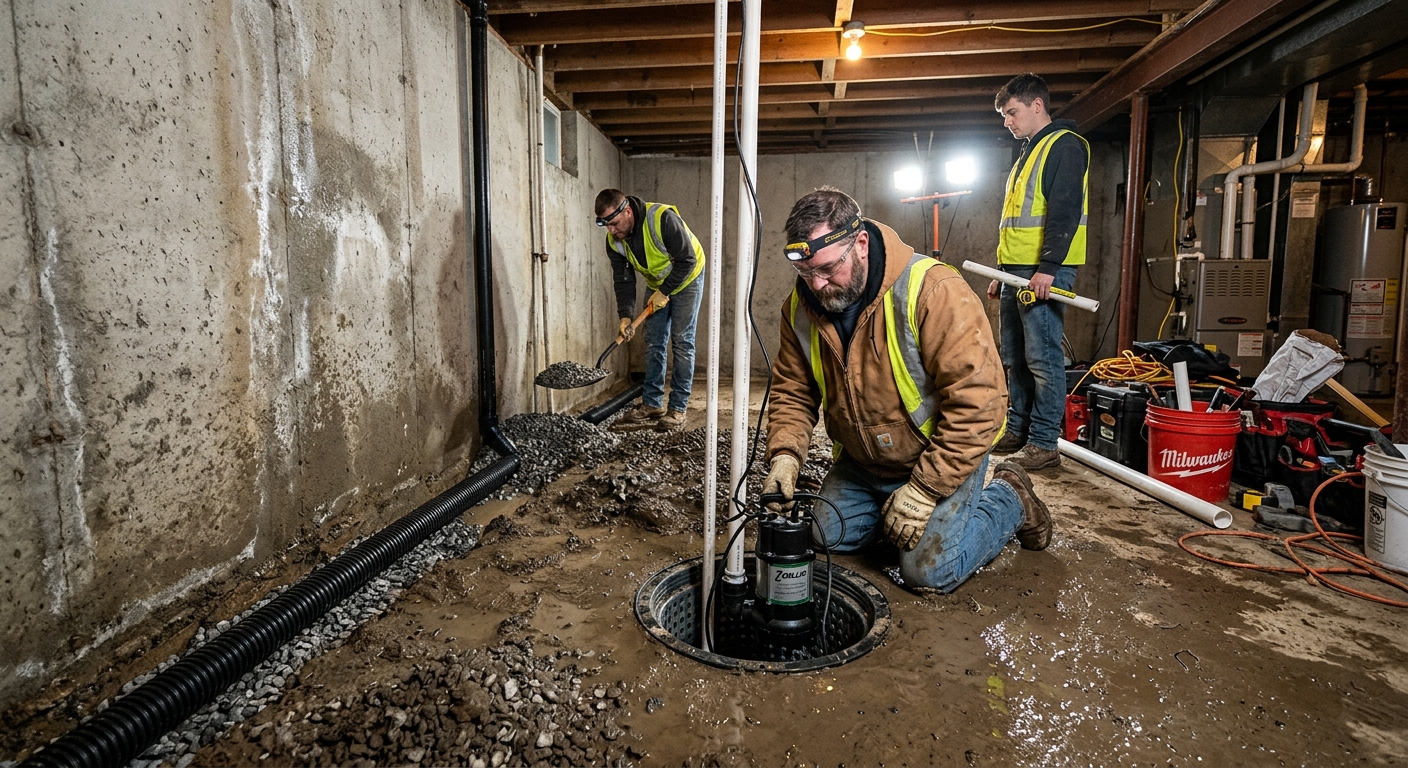
Basement waterproofing options and costs in Fort Langley
In Fort Langley, choosing basement waterproofing usually comes down to where the water is entering—at the exterior wall and base, through cracks and joints, or after it finds its way inside. According to the Statistics Canada 2021 Census, Fort Langley has a population of 3,836 (Statistics Canada, 2021 Census), and that smaller market size can mean fewer crews available at peak season. If your home is older, it’s also more likely to have aging drainage details (original tar-and-paper type systems or corroded, undersized weeping tile) that fail quietly long before stains show up.
In the Lower Mainland–Southwest, soil conditions and higher groundwater levels are the primary cost drivers. Contractors often need more excavation and mechanical breaking to manage saturated backfill and rocky sections, and the wet-mild winters with freeze-thaw cycles keep existing cracks and joint sealants working loose. That’s why full-perimeter exterior waterproofing in this region often lands near the top of national pricing, especially when a sump and interior perimeter system are recommended as a complete “source + management” plan.
In Fort Langley—particularly around the heritage-adjacent areas and older streets closer to the Fraser corridor—interior moisture complaints are common in homes with perimeter drainage that’s reached the end of its life. The good news: you still have several proven pathways, and the right choice is typically the one that matches your foundation type, drainage condition, and how often your sump runs during wet spells. Use the comparison table below to align your next quote with the correct scope.
| Method |
What It Addresses |
Disruption Level |
Durability |
Price Range |
| Exterior excavation + new membrane + drainage tile |
Primary water entry at foundation wall/footing; rebuilds drainage around the perimeter |
High (landscape/deck/sidewalk removal possible) |
15–25+ years with proper backfill and drainage |
$15,000–$30,000 |
| Interior perimeter drain channel + sump pit |
Manages water after it enters; reduces hydrostatic pressure near the slab/footing line |
Medium (interior floor cutting; less yard disruption) |
10–20 years depending on crack/joint condition and pump performance |
$8,000–$18,000 |
| Foundation crack injection (epoxy or polyurethane) |
Seals cracks/joints; epoxy for structural stabilization, polyurethane for active leaks |
Low to Medium (drilling ports; surface patching) |
5–15 years based on crack movement and whether the source was fully corrected |
$500–$2,000 |
| Sump pump installation (primary + battery backup) |
Prevents interior flooding and keeps the interior perimeter system dry |
Low to Medium (pit/cove cutting; discharge routing) |
10–15 years; backup reliability improves real-world performance |
$1,000–$5,000 |
| Window well drain installation |
Stops water pooling and seeping around below-grade window areas |
Low to Medium (limited excavation near window) |
8–15 years with good gravel gradation and tie-in to drainage |
$2,000–$6,000 |
| Lot re-grading / downspout extension |
Reduces surface water flow toward the foundation; addresses roof runoff |
Low (typically minimal demolition) |
3–10 years depending on ongoing grade maintenance |
$1,500–$6,000 |
Prices are estimates only and vary by project scope, site access and material selection.
What affects the price of waterproofing in Fort Langley
For the same basement leak, two quotes in Lower Mainland–Southwest can differ by 30–50% because contractors may be pricing different causes—not just different “fixes.” One company might base the plan on visible staining (interior management), while another prices a full exterior solution that rebuilds the drainage path around the foundation. Availability also matters: when wet weather hits and crews are booked, access and excavation scheduling can add labour and equipment time.
The three biggest drivers separating regional pricing from the national average are soil type, water table, and freeze-thaw. In many clay-heavy areas, freeze-thaw movement can worsen lateral pressure on foundations—something homeowners in Ontario and the Prairies often see more aggressively—but in Fort Langley the cost difference usually comes from persistent saturation rather than extreme swelling. When groundwater stays high, sump pumps run more often, and discharge and backflow protection get more complex. In Coastal BC conditions, intense, prolonged rainfall saturates backfill quickly if original drainage fails, so the “same crack” can keep leaking until the water route is corrected.
Freeze-thaw still plays a role locally: it widens existing cracks and joints and accelerates deterioration of sealants. In Fort Langley, examples include: (1) a poured-concrete basement with tight hairline cracking often responds better to crack injection combined with re-grading; (2) a block foundation with an old perimeter drain can require interior perimeter drainage and a sump because the wall is porous at mortar joints; and (3) homes with narrow side yards or buried services may push exterior excavation closer to the $15,000–$30,000 band even for “small” jobs. If your plan shifts from interior-only work in the $8,000–$18,000 range to a source-control exterior system, the added scope is often justified by reducing the ongoing need for pumping and the chance of repeated seepage events during winter storms.
| Price Factor |
Why It Matters |
Cost Impact |
| Interior vs. exterior approach — interior is less disruptive but addresses symptoms |
Exterior targets the source; interior manages water after it enters |
Interior can be ~30–60% less than full exterior; exterior often at higher end due to excavation |
| Foundation type — poured concrete vs. block vs. stone vs. ICF |
Porosity and cracking patterns differ by system |
Block and older stone often increase interior drainage scope and crack/joint detailing |
| Soil type — clay expands more than sand, adding pressure |
Expansive or saturated soils raise pressure and prolong leakage |
More drainage measures and sealing steps may be required |
| Crack type and length — hairline vs. structural horizontal cracks |
Structural movement can defeat basic sealing |
Structural cracks may trigger engineering review and higher labour/materials |
| Sump pump backup system — battery or water-powered backup needed |
Reduces risk during power interruptions in wet seasons |
Typically adds meaningful cost, especially if discharge routing needs rework |
| Access — landscaping, decks, or driveways must be removed for exterior |
Excavation in tight lots increases time and disposal |
Can move a project toward the top of the exterior band |
| Weeping tile age — original tile (60+ years) may be completely failed |
Failed tile changes how water reaches the foundation |
Replacement may require full exterior excavation or a more extensive interior drainage plan |
| Mould or efflorescence remediation required before sealing |
Moisture and salts must be treated or coatings won’t bond reliably |
Adds specialized labour and shortens drying/curing timelines |
Permits & regulations in British Columbia
In British Columbia, foundation excavation, structural crack repair, and changes to lot drainage typically require a building permit. If a contractor proposes tying a sump pump discharge into the storm or sanitary system, municipal approval is commonly required as part of the permitting process. For structural crack repair—especially horizontal cracks in block walls or significant step cracking—a structural engineer’s assessment is often needed to determine whether underpinning, carbon-fibre reinforcement, or other structural work is required before waterproofing can proceed.
What doesn’t always require a permit tends to include limited, non-structural interior waterproofing like installing an interior perimeter drain channel or adding a sump pit in the basement—however, the moment you alter the discharge routing, cut and modify structural elements, or address engineering-level cracking, the permit pathway becomes more likely. The safest approach is to have the contractor spell out what permits are being pulled (or not) in writing.
To verify a contractor for Fort Langley, start with the licence and registration checks online via the applicable provincial registry for contractors (where available). Next, request a certificate of insurance showing general liability and confirm it’s active for your project dates. Ask for WSIB/WCB clearance (as applicable) and keep a copy. For structural repairs, verify they have engineering support—either an engineer’s letter/assessment or documented engagement—so you’re not paying for waterproofing that’s masking a structural issue.
Interior vs exterior waterproofing — what does Fort Langley need?
The fundamental difference is simple: exterior waterproofing tries to stop water before it enters by excavating around the foundation, installing membrane and a drainage tile system, then backfilling and re-grading. Interior waterproofing manages water after it enters using an interior perimeter drain channel, sump pit, and sump pump. Because Lower Mainland–Southwest basements are often challenged by high groundwater and prolonged rainfall, exterior systems are the most complete solution when the perimeter drain has failed or the hydrostatic pressure is consistently high.
Interior solutions can still be the right call in Fort Langley when access is tight or when you’re dealing with localized seepage. Poured concrete walls typically seal better with crack injection paired with surface drainage improvements, while block foundations often need interior drainage as a practical complement because mortar joints and seep paths can keep feeding water even after spot repairs. During British Columbia’s spring flooding periods, battery backup for the sump pump becomes a practical upgrade—power outages and tripped breakers can happen just when groundwater pressure is highest.
For example, if you’re choosing between interior waterproofing in the $8,000–$18,000 band and an exterior excavation plan in the $15,000–$30,000 band, the extra cost is justified when you have a failed perimeter drain, widespread wall dampness, or recurring sump cycling during storms. If the issue is limited to one or two crack lines plus roof runoff, a smaller scope may be the smarter financial and disruption choice.
| Method |
Best For |
Addresses Source? |
Disruption |
Lifespan |
Price Band |
| Full exterior excavation + membrane |
High groundwater pressure, failing weeping tile, ongoing seepage at multiple points |
Yes (source control at perimeter) |
High |
15–25+ years |
$15,000–$30,000 |
| Interior French drain + sump system |
Limited yard access, interior moisture, wet slabs, or homes where excavation is restricted |
No (manages water after entry) |
Medium |
10–20 years |
$8,000–$18,000 |
| Crack injection — epoxy (structural) |
Non-moving cracks where restoring a tight, rigid seal is appropriate |
Partial (seals cracks, but doesn’t rebuild external drainage) |
Low |
5–15 years |
$500–$2,000 |
| Crack injection — polyurethane (active leak) |
Active seepage or cracks with ongoing water movement |
Partial (controls leak paths, but source pressure may still require drainage) |
Low |
5–12 years |
$700–$2,500 |
| Interior drain channel only (no sump) |
Light seepage where you can rely on relief drainage and evaporation, lower risk areas |
No (manages water after entry) |
Medium to Low |
5–12 years |
$6,000–$12,000 |
| Re-grading + downspout extensions |
Surface water runoff issues; cases where leaks correlate with roof drainage |
Indirect (reduces water load near foundation) |
Low |
3–10 years |
$1,500–$6,000 |
How to choose a waterproofing contractor in Fort Langley
Choosing the right waterproofing contractor in Fort Langley starts with verification. In British Columbia, ask for their current contractor information (licence/registration as applicable), then request a certificate of insurance showing general liability and confirm the coverage dates align with your project. For worker coverage, ask for WSIB/WCB clearance or evidence of compliance (what’s required depends on the contractor and project set-up). Don’t accept “we’re covered” as a statement—get the documents and keep copies.
Next, get 2–3 itemised written quotes with a labour + materials breakdown, not a single lump sum. Compare scopes line-by-line: disposal included? permit pull included? How is discharge handled? Is the work limited to the interior drain channel, or does it also include sump, check valves, and backup? Ask what happens if soils are unstable or if excavation reveals unexpected utility conflicts.
Warranty is another differentiator. Confirm the workmanship warranty length and whether it matches the specific method (exterior membrane vs interior drainage). Also ask about product/manufacturer warranties and whether they’re transferable to future owners.
For payment, never pay more than 10–15% upfront. Use a holdback you release only after the system is complete, cleaned up, and verified. Finally, request a written timeline with a stated start date, estimated duration, and how the contractor plans around rainy-window delays in the Lower Mainland–Southwest.
- Provide a written scope that names the exact products (membrane type, drain tile size, sump model where applicable).
- Clarify what’s included in excavation, backfill, and disposal for exterior work.
- State whether the quote includes permit pull and inspections where required.
- List all access removals (fencing, deck steps, driveway sections) and who restores them.
- Confirm how drainage discharge is routed and whether check valves are installed.
- Ask if the plan includes a battery or water-powered sump backup for Fort Langley’s wet-season risk.
- Require a crack mapping approach: where injection ports are placed and how crack type is determined.
- Ask about surface prep and drying requirements before any membrane/coating is applied.
- Confirm mould or efflorescence remediation steps if salts/stains are present.
- Get warranty details in writing, including transferability if you sell the home.
- Use a payment schedule with a holdback until the final inspection/commissioning is complete.
- Request a site plan or photos documenting pre-install conditions and post-install testing.
Red flags in Fort Langley include: vague scopes that don’t describe discharge routing; promises of “guaranteed waterproofing” without addressing hydrostatic pressure and drainage paths; quoting only crack injection when the perimeter drain is visibly failed or never replaced; skipping permit/insurance/WSIB/WCB checks; and requiring large upfront payments (above ~15%) without a clear schedule for milestones.
Frequently asked questions — waterproofing in Fort Langley
How do I compare waterproofing quotes?
Start by comparing the scope, not the total. Ask each contractor to list exactly what they’ll install (exterior membrane system and drainage tile replacement vs an interior perimeter drain channel and sump), the discharge method, and whether permits are included in British Columbia if they’re altering lot drainage or structural-level repairs. A quote for interior-only work in the $8,000–$18,000 band can look similar to an exterior plan only if key items are missing—like sump backup, proper tie-in to downspouts, or full perimeter drainage. Also compare access and restoration: disposal, landscaping reinstatement, and disposal of wet saturated material can change price significantly in the Lower Mainland–Southwest. Finally, request product/manufacturer names and warranty terms so you’re not comparing apples to coatings.
How long does basement waterproofing take in Fort Langley?
Typical timelines depend on whether you’re doing exterior excavation or interior drainage. Interior waterproofing projects (interior perimeter drain channel and sump) often take several days to a couple of weeks when materials and drying/curing are accounted for, assuming access is clear and the weather isn’t delaying deliveries. Exterior waterproofing takes longer due to excavation, mechanical breaking where needed, membrane/draintile installation, backfill, and restoration—often closer to 2–4+ weeks depending on site constraints and municipal steps if discharge is involved. Fort Langley’s wet mild winters and freeze-thaw cycles can slow drying between phases, so reputable contractors schedule in weather buffers and document curing/drying conditions. Get a written start date and completion estimate before work begins.
What is a weeping tile and does my Fort Langley home have one?
A weeping tile (perimeter drain tile) is the underground drainage line around the foundation designed to collect water from around the footing and route it away—commonly to a sump or an outlet. Many older homes in Fort Langley and the broader Lower Mainland–Southwest have original perimeter drains that are undersized, clogged, or fully failed after decades, especially when the backfill stays saturated during prolonged rainfall. You can’t confirm it visually without excavation, but look for clues: sump pit presence, prior drainage work permits, older drain access points, or historical restoration. If your basement issues worsen during heavy rain events, it’s a strong sign the perimeter drainage isn’t functioning. A contractor can confirm during a camera inspection or by exposing a small section during a targeted scope assessment.
Can I waterproof my basement in winter in Fort Langley?
Often you can begin winter waterproofing, but scope matters. Interior work—like installing an interior perimeter drain channel, creating a sump pit, and crack injection—can usually proceed if surfaces can be prepared and maintained within acceptable conditions for curing. Exterior excavation is more challenging in winter because wet/mild freezing can still affect soil stability, drainage, and curing schedules for membranes and backfill compaction. If frost conditions prevent proper grading or compaction, exterior projects may need to pause or use controlled approaches. In Fort Langley’s freeze-thaw environment, a good contractor will provide a weather plan, confirm material temperature requirements, and adjust sequencing to protect the finished system. Ask whether they include drying/curing contingencies and how they handle rainy delays.
What is the difference between waterproofing and damp-proofing?
In Canadian residential practice, “waterproofing” generally means building a system intended to resist hydrostatic pressure and active water intrusion—often combining drainage (tile or interior drain), sealing, and a pump strategy when needed. “Damp-proofing” typically refers to moisture management for minor seepage and condensation, and it usually doesn’t include the full drainage and hydrostatic-pressure control components. In Fort Langley and the Lower Mainland–Southwest, basements often see sustained moisture during prolonged rainfall and elevated groundwater conditions, so damp-proofing alone may not stop repeated seepage if the perimeter drainage is failed. For example, a full exterior system can cost in the $15,000–$30,000 range because it rebuilds the water path, while interior management in the $8,000–$18,000 range may control water after it enters. The key is matching the solution to the actual pressure and entry route.
Will basement waterproofing affect my property value in Fort Langley?
Yes, it can, especially when the issue is chronic and documented. Waterproofing improvements reduce visible staining, odours, and recurring wet cycles—problems that often scare off buyers. In a small community like Fort Langley with a population of 3,836 (Statistics Canada, 2021 Census), neighbourhood reputation matters: homeowners notice contractors who produce documented results and warranties. Value impact is usually strongest when the system is comprehensive (source control where possible, or a reliable interior drain + sump with backup) and when you can show a clear scope, receipts, and warranty paperwork. If you choose a partial fix without addressing drainage paths, buyers may worry the problem will return in the next wet season. The best outcome is a solution that reduces sump cycling, controls seepage, and includes clear post-install testing and documentation.