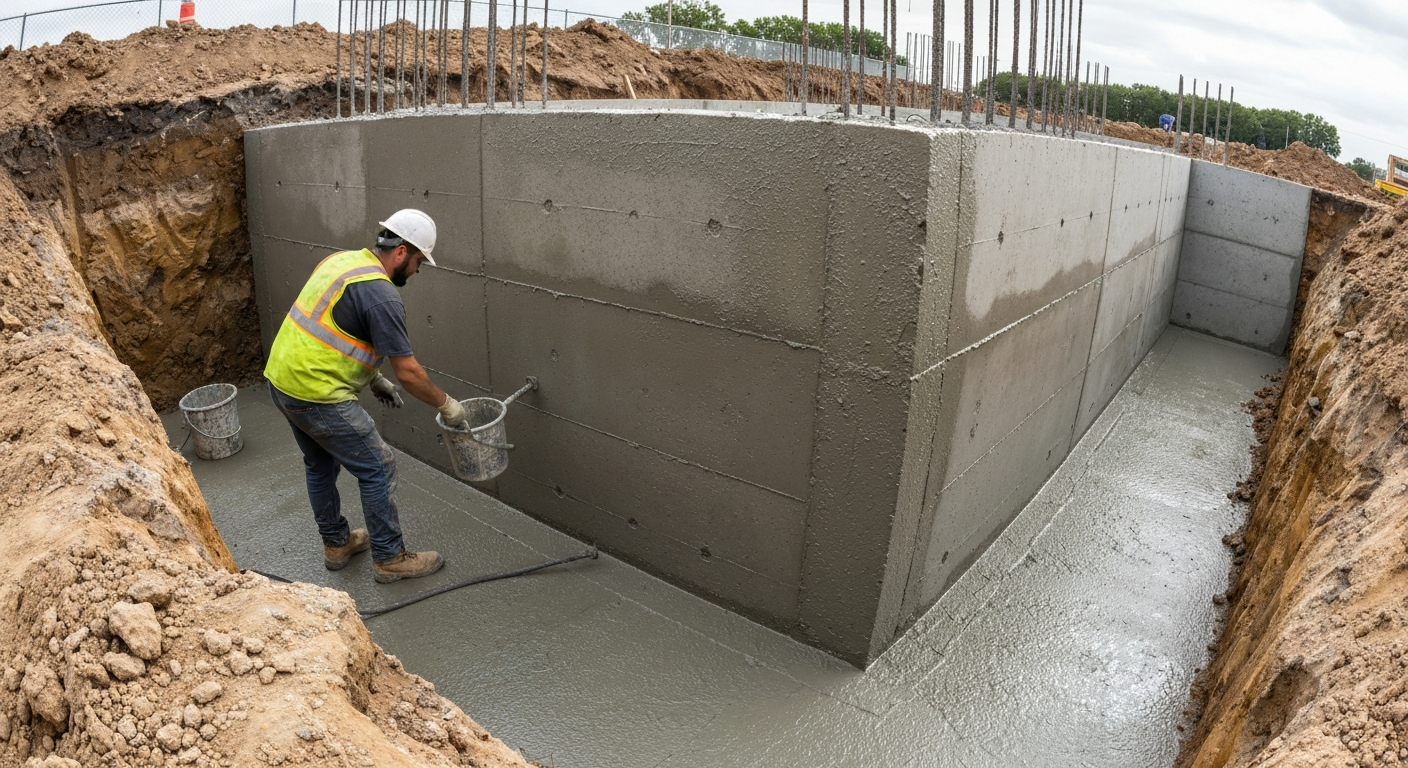
Basement waterproofing options and costs in Highway 11
In Highway 11, British Columbia, homeowners usually discover waterproofing needs when spring rains push persistent groundwater against basement walls and slabs, or when aging drainage systems stop doing their job. With the local housing mix, many basements are in older structures—and while not every home is the same, older homes are more likely to have original perimeter drainage that’s decades past its reliable lifespan. The Highway 11 area also has a relatively small local population base of 5,500 people (Statistics Canada, 2021 Census), which can concentrate demand for experienced crews in the Lower Mainland–Southwest corridor during wet seasons. In practice, that affects scheduling and sometimes labour availability for full-excavation work.
Lower Mainland–Southwest pricing is shaped mainly by soil saturation and hydrostatic pressure. Coastal BC’s prolonged rainfall keeps backfill and native soils wet, so seepage problems can continue even after small surface repairs. Add frequent freeze-thaw cycles, and existing cracks and joints widen—especially around foundation penetrations—so waterproofing scopes often expand beyond a “quick fix.” In tight, landscaped lots, contractors may need mechanical breaking for excavation and careful re-grading, which adds cost. In Highway 11, waterproofing trade demand is particularly common around older residential pockets near arterial corridors where homes sit close to sidewalks and access is limited during excavation—often prompting a higher proportion of interior retrofits and sump upgrades alongside exterior drainage.
Below is a practical comparison of options and typical price bands before we get into what drives the cost variation.
| Method |
What It Addresses |
Disruption Level |
Durability |
Price Range |
| Exterior excavation + new membrane + drainage tile |
Primary source control by replacing perimeter drainage and waterproofing system; reduces hydrostatic pressure |
High (excavation, landscaping restoration, possible deck/driveway impacts) |
Long (often 20+ years with proper installation and maintenance) |
$15,000 – $30,000 |
| Interior perimeter drain channel + sump pit |
Collects seepage inside foundation perimeter and pumps it away; mitigates ongoing moisture |
Medium (floor/finish cutting along walls, minimal exterior disturbance) |
Medium-to-long (10–20+ years depending on sump/drain protection and condition) |
$8,500 – $18,000 |
| Foundation crack injection (epoxy or polyurethane) |
Sealing and/or stopping specific cracks; polyurethane used when active leaking is present |
Low-to-medium (minor surface prep; limited interior disruption) |
Case-dependent (active leaks may require drainage reinforcement) |
$700 – $2,500 |
| Sump pump installation (primary + battery backup) |
Manages collected water and maintains basement dryness during rain events and power interruptions |
Low-to-medium (pit excavation and minor interior restoration) |
Long with correct discharge line and backup maintenance |
$1,500 – $5,500 |
| Window well drain installation |
Prevents rainwater and groundwater from pooling near basement windows; reduces seepage and mould risk |
Low-to-medium (window well excavation/modification) |
Medium-to-long (often 10–15+ years with clear weep paths) |
$2,000 – $6,000 |
| Lot re-grading / downspout extension |
Directs roof runoff away from foundation; improves drainage away from walls |
Low (limited excavation; landscaping touch-up) |
Medium (depends on maintenance and soil settlement) |
$2,000 – $8,000 |
Prices are estimates only and vary by project scope, site access and material selection.
What affects the price of waterproofing in Highway 11
In the Lower Mainland–Southwest region (including Highway 11), it’s common to see waterproofing quotes for “the same” basement leak come in 30–50% apart from one contractor to another. The difference usually isn’t just labour—it’s the site-specific variables that determine how much excavation, demolition, and engineering review is needed. Locally, soil conditions and the water table are the two biggest separation points from the national average, because hydrostatic pressure doesn’t care whether a home is new or older; it responds to persistent saturation. Freeze-thaw then accelerates deterioration by widening cracks and joint gaps, letting water find new paths.
To put it plainly: clay-heavy or moisture-retentive soils can shift costs upward versus sandier soils, because saturated ground keeps contact pressure high on the wall. In Lower Mainland–Southwest, high groundwater and intense rainfall mean sump pumps often run more frequently, and discharge and backup options become more important. In older housing stock, especially where original perimeter drainage may be undersized or failing, you may end up paying for both replacement drain tile and interior retrofits. By contrast, if a home’s drainage is already functioning and the issue is isolated—say, a single window well or downspout—costs can stay near the lower end of the $8,000 – $18,000 interior band rather than moving into the full exterior excavation band like $15,000 – $30,000.
Concrete examples I see in Highway 11: (1) a poured-concrete wall with only hairline cracking may respond well to crack injection, while a block wall with stepped leakage often needs interior drainage as a practical complement; (2) a backyard with a narrow access path can force mechanical breaking and slower excavation, pushing exterior projects toward the higher end; and (3) homes with visible efflorescence (white mineral deposits) usually require remediation and drying time before sealing, adding days and product costs. If your basement has active seepage plus a failed weeping tile system, the job can quickly move from a small interior fix into a comprehensive drainage scope.
| Price Factor |
Why It Matters |
Cost Impact |
| Interior vs. exterior approach — interior is less disruptive but addresses symptoms |
Exterior controls water entry at the source; interior manages water after it enters |
Can swing by roughly $7,000–$12,000+ (depending on site access and excavation) |
| Foundation type — poured concrete vs. block vs. stone vs. ICF |
Crack behaviour and sealing success differ by material; block often needs drainage redundancy |
Poured concrete may reduce scope; block/stone may increase labour and complementary work |
| Soil type — clay expands more than sand, adding pressure |
More retained moisture and lateral movement can worsen leaks over time |
Higher likelihood of hydrostatic pressure work; often increases interior drainage complexity |
| Crack type and length — hairline vs. structural horizontal cracks |
Structural cracks may require engineer review and/or underpinning planning |
From small injection jobs to major scope expansion (often $500–$2,000+ just to start correctly) |
| Sump pump backup system — battery or water-powered backup needed |
BC spring flooding and outages make backup reliability important |
Adds meaningful cost but can prevent freeze-up and re-flooding losses |
| Access — landscaping, decks, or driveways must be removed for exterior |
Excavation time increases when access is tight or utilities limit dig zones |
Often the difference between mid and high pricing within the same exterior band |
| Weeping tile age — original tile (60+ years) may be completely failed |
Failed tile changes the job from “manage a small seep” to “restore drainage and add redundancy” |
Can push interior-only plans into replacement drain tile + sump for stability |
| Mould or efflorescence remediation required before sealing |
Sealing over active contaminants can cause failures and indoor air problems |
Extra drying, cleaning, and protective coatings can add days and materials |
Permits & regulations in British Columbia
In British Columbia, many basement waterproofing activities are regulated because they can change drainage patterns, affect structural elements, or connect to municipal services. In general, foundation excavation, structural crack repair work that may affect stability, and changes to how lot drainage is handled typically require a building permit. If you’re replacing/adding drain tile and tying discharge into a permitted connection, municipal approval can also be required depending on where the water will be sent. Sump pump installations that connect to the storm or sanitary sewer require municipal approval—don’t assume you can discharge “anywhere” without checking requirements.
For structural crack repair—especially horizontal cracks in block walls or major step cracks that could indicate movement—a structural engineer’s assessment is commonly required. The purpose is to confirm whether the crack is purely water-driven (and injectable) or whether underpinning or other structural remediation is needed before sealing.
To verify a contractor in Highway 11, start by checking their licensing and registration status through the appropriate provincial online resources, then request: (1) a certificate of insurance showing general liability; (2) WSIB/WCB clearance or equivalent coverage documentation; and (3) proof they have engineering support available for structural scopes. For certificate-of-insurance accuracy, ensure the coverage dates align with your project start and that the policy limits are appropriate for construction work. Finally, ask whether the contractor will pull the permit (if required) and provide the permit number or proof it was obtained before starting regulated work.
Interior vs exterior waterproofing — what does Highway 11 need?
The fundamental difference in Highway 11 is what you’re trying to stop. Exterior waterproofing—full excavation, new membrane, replacement drainage tile, and proper backfill—addresses water entry at the source and is the most permanent approach when the perimeter system has failed. It costs more and requires significant landscape disruption, but it directly reduces the hydrostatic pressure that forces water through cracks and joints. Interior waterproofing, such as a perimeter drain channel, sump pit, and sump pump, manages water after it enters. It’s less invasive and often faster to install, but it doesn’t change the fact that the basement wall still experiences pressure.
In the Lower Mainland–Southwest climate, the ongoing rainfall and mild winter conditions keep soils saturated, so water entry can be persistent even if one leak path is sealed. That’s why in many local basements, interior systems are chosen to control symptoms and protect finishes, especially where exterior access is limited. Poured concrete walls usually tolerate crack injection better when the leakage is limited to non-structural cracks, because sealing can be more reliable when movement isn’t the primary issue. Block foundations, on the other hand, often benefit from interior drainage as a practical complement because water can migrate through mortar joints and multiple micro-paths—meaning you’re less likely to achieve “dry” results from injection alone.
For sump pumps in British Columbia, backup matters. Power interruptions during heavy rain and spring storm activity can lead to overflow, and freeze-thaw can complicate discharge lines when water has no place to go. A battery backup (and correctly designed discharge) can prevent a wet basement spiral.
Example: if you’re seeing seepage only at one corner and the crack is accessible, a crack repair and targeted interior drainage may keep you near the $8,000 – $18,000 interior band. But if your perimeter drainage is failing and the wall is showing recurring efflorescence after each storm, spending toward the $15,000 – $30,000 exterior range can be justified because it reduces the root cause—not just the outcome.
| Method |
Best For |
Addresses Source? |
Disruption |
Lifespan |
Price Band |
| Full exterior excavation + membrane |
Widespread moisture, failed perimeter systems, recurring hydrostatic seepage |
Yes |
High |
20+ years with proper drainage maintenance |
$15,000 – $30,000 |
| Interior French drain + sump system |
Basements where exterior access is limited or to control persistent seepage |
No (controls water after entry) |
Medium |
10–20+ years depending on sump design and power reliability |
$8,500 – $18,000 |
| Crack injection — epoxy (structural) |
Non-structural, stable cracks in poured concrete where water entry is limited |
Partially (seals crack path) |
Low |
Long when crack movement is not active |
$700 – $2,000 |
| Crack injection — polyurethane (active leak) |
Active weeping/flowing cracks where flexibility is needed |
Partially (seals leaking path but may not stop pressure) |
Low-to-medium |
Case-dependent; best when paired with drainage strategy |
$1,000 – $2,500 |
| Interior drain channel only (no sump) |
Minor seepage management where gravity discharge is feasible |
No |
Medium |
Limited if water level rises too often |
$6,500 – $12,000 |
| Re-grading + downspout extensions |
Roof runoff directed toward foundation; surface water pooling near walls |
Indirect (reduces intake at surface) |
Low |
5–10 years (depends on settlement and maintenance) |
$2,000 – $8,000 |
How to choose a waterproofing contractor in Highway 11
When you’re hiring a waterproofing contractor in Highway 11, British Columbia, you want proof—not promises—on three fronts: licensing/registration (where applicable to the work), liability insurance, and WSIB/WCB coverage. Start by asking for their current certificate of insurance and confirming the effective dates cover your job start and completion. Then request WSIB/WCB clearance documentation (or equivalent required coverage) so you’re not exposed if an on-site injury occurs. For structural crack scopes, ask directly who provides engineering support and whether they’ve worked on similar basement foundation conditions in the Lower Mainland–Southwest.
Next, get 2–3 itemised written quotes. Avoid lump-sum only proposals; you want a breakdown of labour and materials by line item—for example, excavation and disposal, membrane system, drain tile, sump pit and pump, backup power, pipe routing, and interior restoration. Check the exclusions list: is permit pulling included? Is disposal included? Are you paying extra for replacement of compromised subfloor or insulation? A proper scope should also specify site protection (safety barriers and dust control), drying time requirements, and how they’ll handle remediation (mould/efflorescence) before sealing.
Warranty is another differentiator. Look for a workmanship warranty length in writing and confirm the product/manufacturer warranty terms. Ask whether warranties are transferable to future owners and what conditions void coverage—like blocked discharge or system neglect. Payment should be controlled: never pay more than 10–15% upfront, and hold back a portion until completion and demonstration of pump operation. Finally, insist on a written start date and a completion estimate.
- Ask for a written scope with photos/diagnosis and the exact leak pathways they’re targeting.
- Confirm whether a permit is required and whether the contractor will pull it or you must.
- Request itemised pricing (labour vs materials) rather than one lump sum.
- Verify certificate of insurance dates and appropriate liability limits.
- Provide WSIB/WCB clearance documentation for covered workers.
- Confirm sump discharge route and where the discharge will connect (storm vs permitted outlet).
- Ask about sump pump backup options and which model is included.
- Ensure remediation for mould/efflorescence is included before sealing.
- Check if mechanical breaking/excavation disposal is priced for your site access conditions.
- Require warranty terms in writing for both workmanship and products.
- Set payment terms: 10–15% upfront maximum; holdback until verification is complete.
- Get a written timeline with start date, inspection points, and completion target.
In Highway 11, common red flags include: quoting “dry basement guaranteed” without a hydrostatic/soil drainage assessment; offering injection or membrane without addressing failed drainage tile or without recommending a sump strategy when groundwater is persistent; vague scopes that don’t specify discharge routing, disposal, or restoration responsibilities; and refusing to provide WSIB/WCB clearance or certificate of insurance on request. If you’re seeing none-to-minimal mention of backup power for a sump system in a wet season, treat it as a warning given British Columbia’s storm activity and outage risk.
Frequently asked questions — waterproofing in Highway 11
How long does basement waterproofing take in Highway 11?
In Highway 11, typical timelines depend on whether you’re doing exterior excavation or an interior drainage retrofit. Interior perimeter drains and sump systems often take about 3–7 days of active construction, with additional time for drying, prep, and final restoration of flooring and baseboards. Exterior excavation can be longer—often 2–4 weeks—because excavation, membrane installation, drainage tile placement, backfill, and landscape restoration must happen in sequence. Winter conditions in British Columbia can affect access and drying, and freeze-thaw can slow concrete work. If mould or heavy efflorescence is present, add remediation time before any sealing or coatings. If your quote includes crack injection, the prep and curing window can also influence the schedule.
What is a weeping tile and does my Highway 11 home have one?
A weeping tile (often called perimeter drain tile) is a pipe system installed around the foundation that collects groundwater and directs it to a sump or discharge point. In many older homes in the Lower Mainland–Southwest, the original weeping tile may still exist, but it can be partially blocked, undersized, or disconnected—especially after decades of movement and saturation. Whether your Highway 11 home has one depends on when it was built and what drainage system was used. You can’t reliably confirm it by looking only at the basement wall; a contractor typically verifies it through inspection, dye/water testing, and sometimes exploratory excavation at the perimeter. If you’re hearing frequent sump activity or seeing recurring wall seepage after rains, it often suggests the weeping tile is failing or no longer functioning.
Can I waterproof my basement in winter in Highway 11?
Yes, you can often waterproof in winter in Highway 11, but the approach may change. Exterior excavation during cold snaps is sometimes delayed because soil can freeze and access is harder, especially when drainage lines must be connected at depth. Interior work is usually more feasible because it avoids extensive outdoor excavation, but installers still need appropriate surface prep conditions for curing products and for drying. In British Columbia’s freeze-thaw conditions, cracks can widen temporarily, so timing matters: if active leaks are present, polyurethane crack injection can be considered, but it still must be paired with a drainage strategy when hydrostatic pressure is ongoing. If your scope includes a sump pump and discharge line, the key is preventing freezing and ensuring reliable operation during storm events.
What is the difference between waterproofing and damp-proofing?
In homeowner terms, “damp-proofing” usually means reducing moisture and staining—often through surface treatments that don’t fully resist hydrostatic pressure for long periods. “Waterproofing” is broader: it’s designed to manage or prevent water entry under wet-season pressure, typically by addressing drainage pathways (weeping tile or interior French drain), sealing cracks/joints, and controlling hydrostatic pressure with membrane systems or compatible interior drainage. In the Lower Mainland–Southwest, where prolonged rainfall can keep soils saturated, damp-proofing alone can fail if water pressure keeps pushing through. That’s why basements with recurring seepage after heavy storms may require interior drainage and sump control—commonly within the $8,000 – $18,000 band—or exterior work closer to $15,000 – $30,000 when the source drainage system has failed.
Will basement waterproofing affect my property value in Highway 11?
In Highway 11 and across British Columbia, basement waterproofing can support property value because it reduces the risk of mould, odours, finish damage, and recurring leak complaints. Buyers increasingly ask about drainage history, sump operation, and whether the source of water entry was addressed (not just cosmetic fixes). That said, value impact depends on scope quality and transparency. A properly installed exterior system (new drainage tile, membrane, and verified discharge) generally reassures buyers more than patchy interior-only work—especially where hydrostatic pressure is persistent. Interior systems still add value if the documentation is strong (photos, pump model specs, maintenance guidance, and a clear explanation of discharge). The best outcomes come from matching the solution to the cause, particularly where failing perimeter drainage is driving the problem in the wet seasons.
What drainage issues are most common in Highway 11 homes?
The most common drainage issues in Highway 11 homes are failing or undersized perimeter drain systems (weeping tile), blocked or disconnected lines, and roof runoff that’s being directed toward foundations due to grading or short downspouts. Because the Lower Mainland–Southwest receives intense, prolonged rainfall, backfill can stay saturated and maintain pressure against basement walls and slab edges, leading to seepage. Freeze-thaw cycles then worsen cracks and joint openings over time. Many homeowners notice symptoms near interior corners, along mortar joints in block foundations, at window wells, or where plumbing penetrations enter. If you see efflorescence or recurring dampness after storms, it often indicates ongoing water entry. Those conditions typically require interior drainage, sump upgrades, or exterior source control depending on how widespread the pathways are.