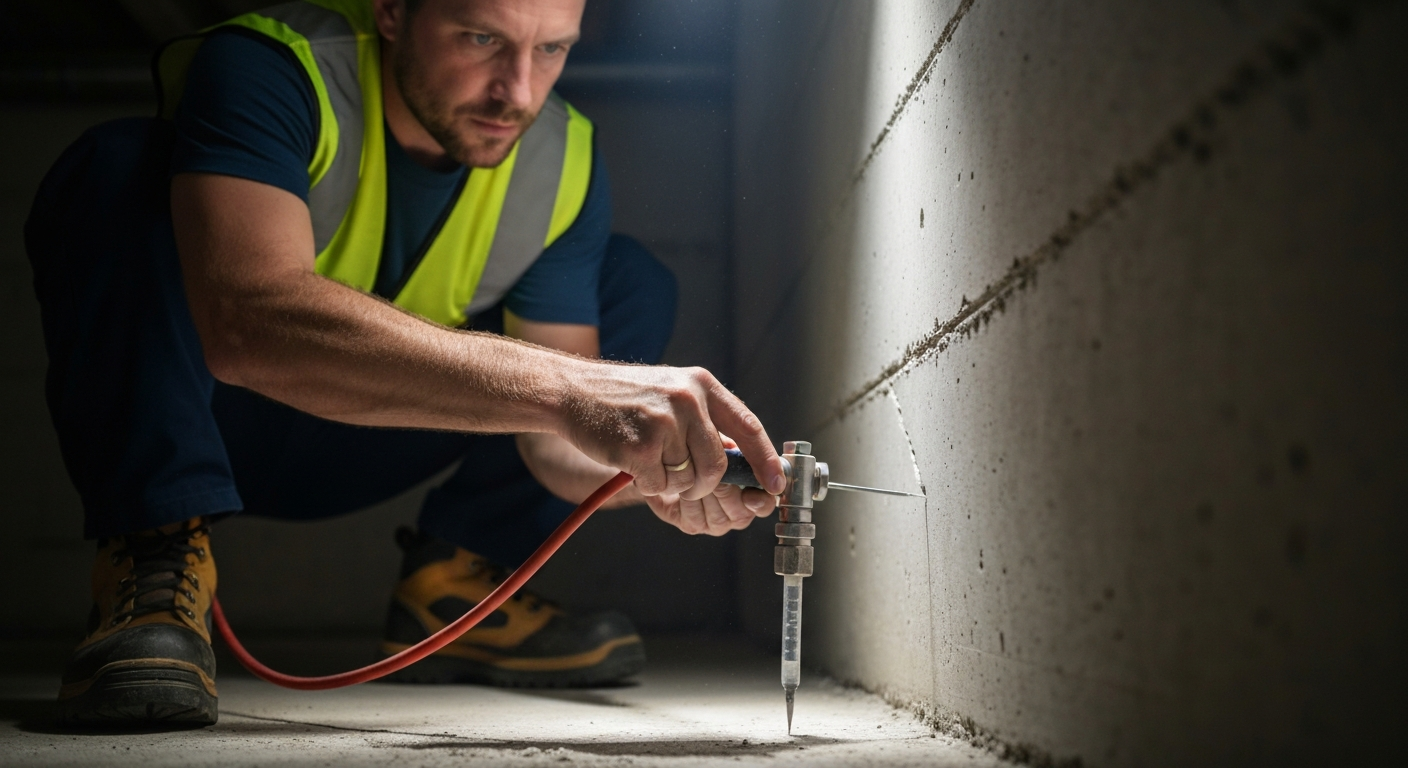
Basement waterproofing options and costs in Government Road
Government Road, British Columbia is a tough place for basements when water pressure builds up behind foundation walls. With a population of 2,325 (Statistics Canada, 2021 Census), the local housing mix is smaller than major cities, so contractor availability can tighten during wet-season demand—yet the need for repairs stays steady because seepage often returns after late-fall and spring saturation. In the Lower Mainland–Southwest, many of the most cost-driven issues are tied to older systems: older homes are more likely to have long-failed weeping tile and aging exterior drainage details, and those failures can turn a “dry season problem” into year-round hydrostatic pressure.
In this region, soil conditions and water table levels are usually the primary cost drivers. Coastal BC’s persistent, prolonged rainfall keeps backfill saturated, maintaining pressure against basement walls and slabs. Even when freeze-thaw isn’t the sole cause, it widens existing cracks and joints, and makes interior moisture management more likely to need a sump system or upgrade. Access also matters: tight lots, decks, driveways, and landscaping can force more mechanical breaking during excavation, which pushes projects toward the higher end of the price bands.
In Government Road, work is especially in demand in older, infill-oriented pockets and along streets where lots are narrower and perimeter drainage is harder to rework—where we commonly see interior moisture complaints tied to perimeter weeping tile that never performed well or has collapsed. Use the comparison below to match solutions to the kind of water entry and foundation condition you have.
| Method |
What It Addresses |
Disruption Level |
Durability |
Price Range |
| Exterior excavation + new membrane + drainage tile |
Source control by rebuilding the waterproofing plane and relieving hydrostatic pressure |
High (excavation, landscaping rework, disposal) |
Long-term with proper grading and drainage |
$15,000–$30,000 |
| Interior perimeter drain channel + sump pit |
Captures seepage after it enters; reduces interior water and efflorescence |
Medium (interior cutting, limited excavation) |
Very good for ongoing seepage control |
$8,000–$18,000 |
| Foundation crack injection (epoxy or polyurethane) |
Seals cracks; polyurethane targets active leaks while epoxy restores bonding for certain crack types |
Low to medium (surface prep and drilling) |
Good when crack movement and water pressure are managed |
$500–$2,000 |
| Sump pump installation (primary + battery backup) |
Keeps hydrostatic water from collecting and cycling through wall and slab |
Low to medium (pit, plumbing, discharge routing) |
Strong protection with backup for outages |
$1,000–$5,000 |
| Window well drain installation |
Stops localized water entry at basement windows and egress wells |
Low to medium (excavate around wells or modify interior/exterior grade) |
Good for targeted wet spots |
$2,000–$6,000 |
| Lot re-grading / downspout extension |
Improves surface runoff direction and reduces saturation near the foundation |
Low (light excavation/landscaping repair) |
Good when drainage was the main cause |
$3,000–$10,000 |
Prices are estimates only and vary by project scope, site access and material selection.
What affects the price of waterproofing in Government Road
In the Lower Mainland–Southwest, two quotes for the “same” basement waterproofing job can differ by 30–50% because the real work isn’t just sealing—it’s how you stop water at its source and how much disruption your site demands. The Lower Mainland cost base is shaped by higher labour rates, tighter urban-lot access, and excavation difficulty, especially when rocky sections force more mechanical breaking. Even before materials, crews need time for safe access, dewatering considerations, and proper backfill and grading.
Three drivers separate Lower Mainland–Southwest pricing from the broader Canadian average: soil/water table behaviour, freeze-thaw effects, and how often perimeter drainage has failed. In clay-heavy soils (more common in parts of Ontario and the Prairies), freeze-thaw can expand and exert lateral pressure that worsens cracks over time. In our coastal BC conditions, the bigger difference is that persistent saturation keeps hydrostatic pressure high; high water tables increase sump run times and the overall drainage scope. Coastal, prolonged rainfall can saturate backfill quickly when original drainage fails, so projects often require more complete perimeter systems or higher-capacity interior drainage. Regions with older housing stock typically see higher frequency of failing weeping tile and seepage through aging poured concrete or block foundations, which also adds labour for remediation.
Concrete examples from Government Road: (1) A home with collapsed exterior weeping tile usually lands closer to the exterior range of $15,000–$30,000, because you’re rebuilding drainage and membrane under higher hydrostatic pressure. (2) If the foundation is already in good shape but there’s ongoing seepage, interior perimeter drainage and a sump plan often fits $8,000–$18,000, avoiding full excavation while managing the incoming water. (3) A short, non-moving hairline crack may be addressed near $500–$2,000, but if that crack is actively leaking during spring storms, injection alone may not be the complete answer.
| Price Factor |
Why It Matters |
Cost Impact |
| Interior vs. exterior approach — interior is less disruptive but addresses symptoms |
Exterior lowers pressure at the source; interior manages water that already entered |
Interior can be ~40–60% lower than exterior on similar homes |
| Foundation type — poured concrete vs. block vs. stone vs. ICF |
Crack patterns and water paths differ by wall system and age |
Block and older poured walls often need more interior capture work |
| Soil type — clay expands more than sand, adding pressure |
Seasonal movement can widen joints and stress seals |
Clay sites can push work toward higher labour and longer-term controls |
| Crack type and length — hairline vs. structural horizontal cracks |
Structural cracks may require engineer assessment and/or additional measures |
Horizontal/step cracking can significantly increase scope and cost |
| Sump pump backup system — battery or water-powered backup needed |
Backup prevents cycling and flooding during outages |
Adds cost but reduces the risk of major interior damage |
| Access — landscaping, decks, or driveways must be removed for exterior |
Work area size controls excavation and restoration time |
Tighter lots can add thousands even with similar wall lengths |
| Weeping tile age — original tile (60+ years) may be completely failed |
Failed drainage means higher pressure and more frequent seepage points |
Complete replacement or comprehensive interior capture is more likely |
| Mould or efflorescence remediation required before sealing |
Water staining and salts need removal to ensure coatings and seals bond |
Can add labour and specialized materials prior to waterproofing |
Permits & regulations in British Columbia
In British Columbia, basement waterproofing can be “simple repairs” or “structural changes,” and that boundary affects whether you need a permit. In general, foundation excavation, structural crack repair, and changes to lot drainage typically require a building permit. If sump pump plumbing is connected to a storm or sanitary sewer, municipal approval is commonly required. For structural crack repair—particularly horizontal cracks in block walls or major step cracks—an assessment by a structural engineer is often needed to determine whether underpinning or other structural work is required. Before anyone starts cutting concrete, ask how they handle these approval steps.
For Government Road homeowners, a practical way to verify a contractor in BC is to check three things in order: (1) licensing/credentials and whether they’re authorized for the specific construction scope, (2) liability insurance, and (3) WSIB/WCB coverage. Start by searching the contractor’s business details on the appropriate provincial online licensing registry and confirm the legal business name matches the quote and invoice. Next, request a current certificate of insurance (COI) and confirm it is not expired and includes general liability with sufficient coverage for excavation and concrete cutting. Finally, ask for proof of WSIB/WCB clearance or coverage and verify it covers the trades involved in the waterproofing and any engineering/co-ordinated subcontracting.
If structural engineer support is part of the scope, the contractor should be able to show how they engage the engineer and document recommendations. Don’t accept “we’ll handle it later”—get the plan in writing.
Interior vs exterior waterproofing — what does Government Road need?
The fundamental difference between interior and exterior waterproofing is where you manage the water. Exterior waterproofing (full excavation, new membrane, new drainage tile, and backfill) addresses the source of water entry by rebuilding the outer barrier and relieving hydrostatic pressure. It is the most effective long-term option, but it’s also the most disruptive and costly because excavation is labour-intensive and site restoration can be significant.
Interior waterproofing manages water after it enters. Typical solutions include a perimeter drain channel, a sump pit, and a sump pump that collects seepage and discharges it away from the foundation. In Government Road’s Lower Mainland–Southwest climate—where prolonged rain and persistent saturation are common—interior systems often perform extremely well when used as part of a complete moisture plan. However, interior work does not stop hydrostatic pressure from acting on the wall itself. That’s why foundation type matters: poured concrete walls often seal more effectively with crack injection when the cracks are not actively moving, while block foundations commonly need interior drainage as a practical complement due to how water can travel through joints and uneven paths.
Power reliability is another local factor. During spring flooding and heavy rain events, short outages can occur, and sump pumps can be critical. Backup systems (battery or alternative backup approaches) reduce the risk of a basement filling if electricity is interrupted.
Here’s how the price difference can be justified: if your perimeter drain is failing and water is pressing against multiple walls, the exterior route—often around $15,000–$30,000—can prevent recurring seepage. If the wall seems stable and you mainly have persistent interior moisture from seepage, interior perimeter drainage plus sump planning—commonly within $8,000–$18,000—may be the best value because it controls the water you can’t practically eliminate from inside without excavation.
| Method |
Best For |
Addresses Source? |
Disruption |
Lifespan |
Price Band |
| Full exterior excavation + membrane |
High hydrostatic pressure, failing perimeter drainage, multiple seepage points |
Yes (source control) |
High |
Long-term with proper drainage and grading |
$15,000–$30,000 |
| Interior French drain + sump system |
Seepage through basement walls/slab where exterior access is limited |
No (captures water after entry) |
Medium |
Very good when pump capacity and discharge are correct |
$8,000–$18,000 |
| Crack injection — epoxy (structural) |
Cracks where there’s no active leak and structural bonding is needed |
Partial (stops flow through the crack) |
Low to medium |
Good for stable cracks |
$500–$2,000 |
| Crack injection — polyurethane (active leak) |
Active seepage where water pressure is pushing through |
Partial (targets active flow) |
Low to medium |
Good for ongoing leak paths when paired with drainage |
$500–$2,000 |
| Interior drain channel only (no sump) |
Light seepage where gravity discharge is viable |
No (captures water after entry) |
Medium |
Moderate—depends on discharge reliability |
$4,000–$10,000 |
| Re-grading + downspout extensions |
Surface water problems: gutters spilling, slope toward foundation |
Helps reduce source moisture exposure |
Low |
Variable—works best when seepage isn’t the main issue |
$3,000–$10,000 |
How to choose a waterproofing contractor in Government Road
Choosing the right waterproofing contractor in Government Road starts with confirming credentials and coverage, then matching scope to your actual water problem. In British Columbia, verify the contractor’s ability to legally perform the relevant construction scope, and request three documents: (1) general liability insurance certificate (COI), (2) WSIB/WCB coverage proof or clearance letter for their workers, and (3) any engineering support documentation if structural crack work is anticipated. When you receive the COI, confirm the business name on it matches the quote/invoice, check expiry dates, and ensure coverage includes excavation and concrete cutting risks. Ask who the insured parties are (contractor and key subcontractors), not just the umbrella company.
Next, get 2–3 itemised written quotes. You want a labour + materials breakdown rather than a single lump sum, and clear line items such as membrane type, drainage pipe specs, disposal, concrete cutting, discharge routing, pump model, and backup system (if recommended). Read exclusions carefully: is permit pulling included, and is egress/well work included if you have window moisture? Ask whether hydrostatic pressure mitigation is included (drainage tile or interior drain sizing), and whether mould/efflorescence remediation is required before any sealing.
Warranty matters. Confirm the workmanship warranty length, whether there’s a manufacturer product warranty tied to installation, and whether warranties are transferable if you sell the home. For payment schedule, don’t pay more than 10–15% upfront; use holdback until completion and final walkthrough. Finally, ask for a written timeline with a start date, estimated duration, and contingency plan for heavy rain or site access constraints.
- Ask how they diagnose water entry (hose test, tracking, drain mapping, crack monitoring) and document it in the proposal.
- Confirm whether they’ll camera-inspect or evaluate existing weeping tile conditions when accessible.
- Verify sump pump make/model and discharge method, including backflow prevention.
- Require a written plan for excavation staging and debris/disposal.
- Ensure they specify membrane and drainage components—not “equivalent” without details.
- Check that permits (if needed) are included or clearly listed as the homeowner’s responsibility.
- Confirm whether they include restoration scope (topsoil, sod, or pathway reinstatement).
- Ask what conditions trigger a change order (hidden drainage failures, additional cracks, import/export soil).
- Get the warranty terms in writing, including duration and what voids coverage.
- Confirm backup system details if outages could be an issue (battery specs or alternative backup approach).
- Look for professional engineer involvement when structural cracks suggest movement (not only “we’ll inject it”).
- Meet the crew lead or project supervisor—someone should be accountable on-site.
Red flags to watch for in Government Road: vague scopes that don’t specify drainage sizing or pump capacity; quotes that recommend sealing cracks without addressing drainage or hydrostatic pressure; refusal to provide COI/WSIB/WCB proof; warranty language that only covers materials (not labour) or is written too broadly; and contractors who want large upfront payments (well over 10–15%) or won’t provide a start date and duration in writing.
Frequently asked questions — waterproofing in Government Road
How do I compare waterproofing quotes?
Start by comparing like-for-like scope, not just the final total. In Government Road, ask each contractor to describe how they’ll relieve hydrostatic pressure (exterior drainage tile and membrane versus interior perimeter drain and sump), and whether the plan includes discharge routing, backflow protection, and pump sizing. Quotes often vary by 30–50% here because access and excavation time differ, especially when decks, driveways, or landscaped edges must be removed. Ensure you get an itemised labour/materials breakdown and a clear exclusions list (permit pull included or not, disposal included, concrete restoration scope). If someone offers a low interior price but leaves out a sump or backup when seepage is active, you’re not comparing the same solution. Use the local bands as a reality check: interior work commonly falls around $8,000–$18,000, while true exterior waterproofing is usually closer to $15,000–$30,000.
How long does basement waterproofing take in Government Road?
Timelines depend on how much demolition and excavation is required, weather windows, and how complex the drainage routing is. In the Lower Mainland–Southwest, crews often plan around prolonged wet periods, because heavy rain can slow excavation and backfill steps and extend drying/curing time for some materials. For interior perimeter drainage and sump installations, many projects take about several days to a couple of weeks, including cutting, channel/drain installation, waterproofing preparation, and restoration. Exterior excavation projects can take longer—commonly multiple weeks—because of excavation, mechanical breaking where needed, membrane installation, drain tile replacement, backfill compaction, and landscaping reinstatement. Your contractor should provide a written start date and a completion estimate. If they only provide “a few days” without a schedule, that’s a weakness in their planning.
What is a weeping tile and does my Government Road home have one?
A weeping tile (often called perimeter drain tile) is the drainage system installed around the foundation footing to collect groundwater and redirect it to a sump pit or discharge point. In many older Government Road homes, original weeping tile may still exist but can be partially or fully failed due to age, root intrusion, crushed sections, or sediment buildup—especially after decades of saturation. You may not see it directly unless the foundation was exposed during renovations or excavation. Clues include long-term dampness at the perimeter, recurring efflorescence, or sump pit activity (if present). The best way to confirm is through an inspection and, where accessible, evaluation of the existing drain lines. If you do not have a sump, but you have active seepage, that can indicate failed perimeter drainage or an insufficient drainage design for current site water conditions.
Can I waterproof my basement in winter in Government Road?
Winter waterproofing in British Columbia is possible, but it’s more sensitive to conditions. In Government Road, freeze-thaw cycles can widen existing cracks and joints, and frozen ground can complicate excavation and backfilling for exterior work. Interior solutions like sump upgrades, interior perimeter drainage, and crack injection are often more feasible in cold months because they don’t require full exterior excavation. However, installers still need suitable curing conditions for membranes and sealants, plus safe access for cutting and managing water. If your priority is to stop active seepage during a rainy season, interior work may be the fastest path. For exterior membrane and drainage tile replacement, most contractors prefer a window when excavation and backfill can be performed reliably. Ask what the contractor will do to control moisture and how they’ll protect exposed surfaces during colder weather.
What is the difference between waterproofing and damp-proofing?
Waterproofing is designed to resist water entry and manage hydrostatic pressure—important in Government Road where prolonged rainfall can keep backfill saturated and maintain pressure against basement walls and slabs. Damp-proofing is generally intended to reduce moisture penetration, and in many older approaches it may not be rated or detailed to handle sustained pressure. That difference matters because interior moisture solutions can look similar on the surface, but the actual performance depends on whether the drainage system relieves pressure and whether the barrier system is appropriate for wet climates. In the Lower Mainland–Southwest, homeowners often discover that “damp-proofing” fixes the symptom temporarily, while full drainage control is what prevents recurring leaks. If you’re being offered an exterior plan, insist on details that clearly indicate drainage tile and membrane design, not just a coating.
Will basement waterproofing affect my property value in Government Road?
Generally, yes—when it’s done correctly and documented. Buyers in Government Road and the wider Lower Mainland–Southwest often view a waterproofing system as risk reduction, especially when there’s a history of seepage, efflorescence, or a sump system that runs during spring storms. A credible, documented waterproofing scope (including drainage details, pump/backups if installed, and warranty terms) can improve confidence during resale and inspection. The bigger issue is credibility: incomplete solutions—such as crack sealing without addressing active seepage or hydrostatic pressure—can lead to repeat problems, which hurts perceived value. If your home is dealing with ongoing seepage, interior drainage projects commonly fit within $8,000–$18,000, while comprehensive exterior work is often closer to $15,000–$30,000. Either can help value, but exterior source control usually provides the strongest long-term documentation story when perimeter drainage has failed.