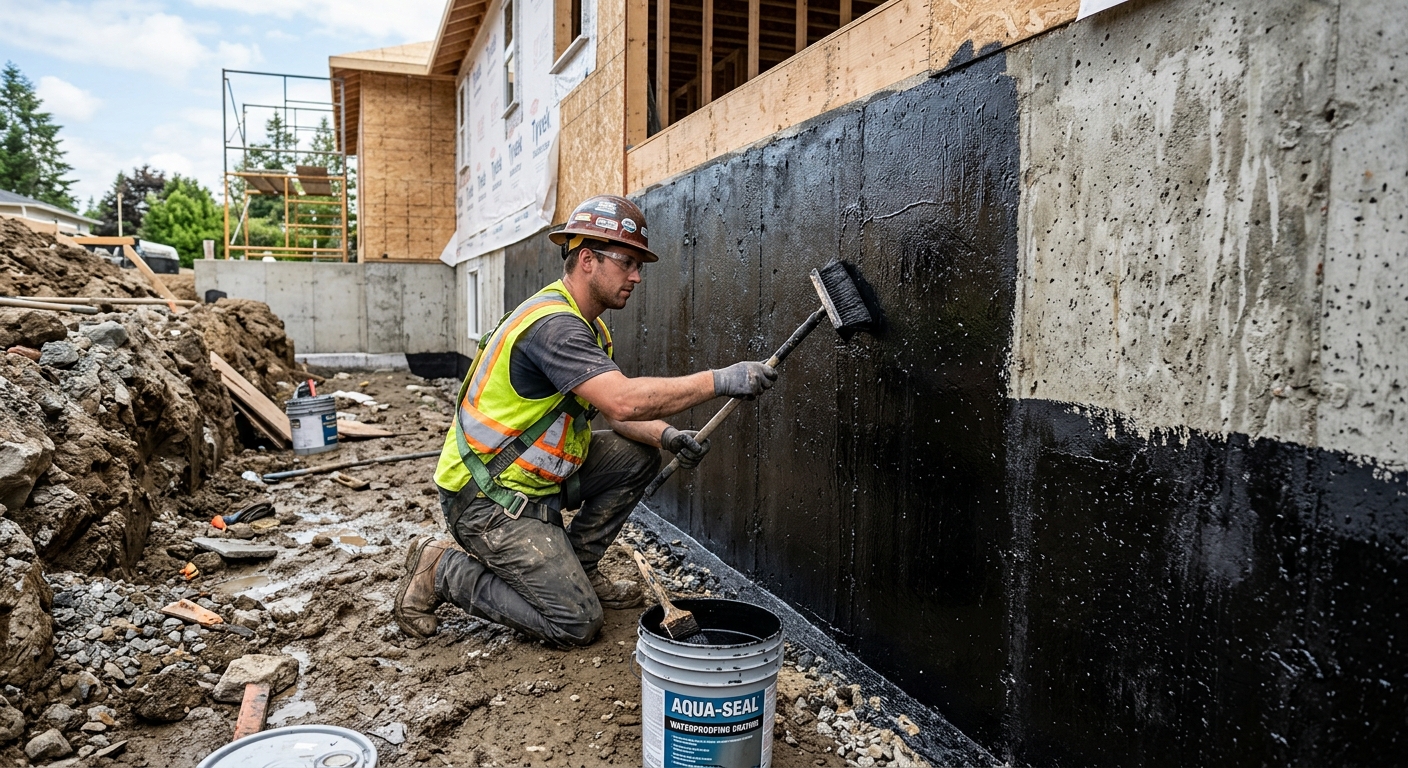
Basement waterproofing options and costs in Radium Hot Springs
In Radium Hot Springs, homeowners typically choose between exterior waterproofing and targeted interior systems based on where the water is coming from, how your site drains, and how much disruption you can tolerate. With 74.8% of households owning (Statistics Canada, 2021 Census) and older housing still present—about 12.6% of homes built before 1981 (Statistics Canada, 2021 Census)—many basements in town are dealing with original or undersized drainage details that have aged out. In older poured-concrete and block foundations, failed tar-and-paper style barriers and corroded or clogged weeping tile can turn shoulder-season rain and snowmelt into persistent seepage.
In the Kootenays, waterproofing costs are shaped by glacial/alluvial soil variability, higher groundwater in low spots, and freeze–thaw cycles that widen existing cracks and joint gaps. That’s why contractor pricing can swing widely depending on whether water is being pushed by hydrostatic pressure (often requiring exterior drainage) or being managed after it enters (where interior drains and sump systems can work well). Local demand is especially common around the older residential pockets near the core of town and along stream-influenced low areas, where yards tend to hold moisture longer.
Below is a practical cost comparison to help you frame your options before you get itemised quotes and confirm what your foundation actually needs.
| Method |
What It Addresses |
Disruption Level |
Durability |
Price Range |
| Exterior excavation + new membrane + drainage tile |
Source water entry by addressing hydrostatic pressure, re-establishing perimeter drainage, and replacing failed barriers |
High (excavation, backfill, landscaping restoration) |
High (best “source control” when installed correctly) |
$18,000 – $35,000 |
| Interior perimeter drain channel + sump pit |
Water that enters through cracks/joints by collecting it and pumping it away |
Medium (floor coverings, partial interior demo) |
Medium to high (depends on wall condition and sump reliability) |
$9,000 – $20,000 |
| Foundation crack injection (epoxy or polyurethane) |
Crack sealing—epoxy for structural/static cracks; polyurethane for active leaks |
Low to medium (drilling/patching) |
Medium (static cracks) to high (when polyurethane stops active flow) |
$800 – $2,500 |
| Sump pump installation (primary + battery backup) |
Relieves water accumulation and reduces interior moisture during heavy melt/rain events |
Low to medium |
Medium to high (backup adds resilience) |
$2,500 – $5,500 |
| Window well drain installation |
Directing water away from egress window wells that collect spring rain and snowmelt |
Low (localized excavation) |
Medium to high (site drainage dependent) |
$1,200 – $3,500 |
| Lot re-grading / downspout extension |
Reducing runoff against foundation and improving flow away from the building |
Low to medium |
Medium (must still manage foundation seepage paths) |
$2,000 – $6,500 |
Prices are estimates only and vary by project scope, site access and material selection.
What affects the price of waterproofing in Radium Hot Springs
In Radium Hot Springs and across the Kootenays, the same “type” of waterproofing job can come in 30–50% apart once the site conditions are factored in. That’s because Kootenay work is driven more by soil behaviour, groundwater and freeze–thaw than by the labour alone. Compared to a national average, clay-heavy soils typically cost more to deal with because they expand and exert lateral pressure during freeze–thaw, which can turn small hairline leaks into recurring seepage. In our region, higher groundwater near low-lying areas and along alluvial deposits means sump systems may need longer run times, more robust piping, and sometimes additional exterior grading and discharge planning. Meanwhile, heavy shoulder-season rainfall saturates backfill quickly when original drainage fails, especially where perimeter drains are old or incorrectly sloped.
Concrete examples from local projects: (1) Two homes with the same basement footprint can differ by several thousand dollars if one has a blocked/failed weeping tile and requires excavation to restore exterior drainage, while the other can be managed with an interior perimeter drain. (2) A foundation with multiple active cracks across a corner can require polyurethane injection plus targeted interior drainage, pushing the crack repair conversation beyond the basic $800 – $2,500 range. (3) Access matters—if decks, steps, or a tight garden bed need removal to reach the foundation, exterior excavation costs can approach the top end of the $18,000 – $35,000 band. With about 12.6% of homes built before 1981 in Radium Hot Springs (Statistics Canada, 2021 Census), it’s common to see older construction details that need both “fix the water path” and “stabilise the entry point.”
| Price Factor |
Why It Matters |
Cost Impact |
| Interior vs. exterior approach — interior is less disruptive but addresses symptoms |
Exterior targets hydrostatic pressure; interior collects seepage after it enters |
Interior can save on disruption, but exterior is often the durable “source control” choice |
| Foundation type — poured concrete vs. block vs. stone vs. ICF |
Crack behaviour and repair method differ by material |
Block and older poured concrete often require more detailed drainage and crack assessment |
| Soil type — clay expands more than sand, adding pressure |
Freeze–thaw movement increases pressure and reopens weak joints |
Clay/heavy soils generally push costs upward due to more comprehensive drainage work |
| Crack type and length — hairline vs. structural horizontal cracks |
Structural cracks may require engineer input and more invasive repair |
Horizontal/structural cracks can increase labour, testing and materials beyond basic sealing |
| Sump pump backup system — battery or water-powered backup needed |
Power reliability matters during spring melt and storm peaks |
Adding backup increases upfront cost but reduces the risk of basement flooding |
| Access — landscaping, decks, or driveways must be removed for exterior |
Excavation depth and work room drive demo and restoration scope |
Restricted access can move a project toward the higher end of exterior bands |
| Weeping tile age — original tile (60+ years) may be completely failed |
Failed weeping tile changes the water route and may require full exterior restoration |
Complete failure typically increases excavation and drainage replacement scope |
| Mould or efflorescence remediation required before sealing |
Moisture-contaminated surfaces can prevent proper adhesion and coatings |
Remediation adds controlled demo, cleaning, and drying time before waterproofing |
Permits & regulations in British Columbia
In British Columbia, foundation excavation, structural crack repair, and changes that affect lot drainage typically require a building permit. If the work changes how water is managed (for example, adding or modifying drainage discharge pathways, or connecting drainage components to municipal systems), you should expect municipal approval requirements. Sump pump installations that connect to the storm or sanitary sewer generally need municipal sign-off before plumbing ties into those systems.
For structural crack repair—especially horizontal cracks in block walls, major step cracks, or any sign of movement—a structural engineer’s assessment is often required to confirm whether underpinning, steel reinforcement, or other structural work is needed. Before you sign a contract, ask whether the contractor has engineering support available for structural scopes, and confirm they carry liability insurance and valid workplace coverage (WSIB/WCB) for their workers.
How to verify in Radium Hot Springs, step by step:
- Ask for the contractor’s provincial licence number (if applicable for the work they’re doing) and check it through the relevant provincial business registry/search tools.
- Request a certificate of liability insurance showing coverage and policy dates; verify the coverage is current.
- Ask for WSIB/WCB clearance (or documentation of account status/coverage) and confirm it matches the business name you hired.
- For structural concerns, request proof of engineer involvement and what that engineer will review (crack pattern, foundation condition, and repair method).
- Request the permit responsibilities in writing: who pulls it, what inspections are scheduled, and what the homeowner is expected to do.
Interior vs exterior waterproofing — what does Radium Hot Springs need?
The fundamental difference is where you stop the water. Exterior waterproofing—full excavation, new membrane, new drainage tile, and backfill—addresses the source by reducing hydrostatic pressure against your foundation. It costs more and involves landscaping disruption, but when installed correctly in the Kootenays, it’s the most complete long-term solution. Interior waterproofing—perimeter drain channel, sump pit, sump pump—collects and pumps water after it has entered. It’s less invasive and often quicker to complete, but it does not stop the wall from being subjected to pressure and freeze–thaw movement.
In Radium Hot Springs, that “pressure reality” matters because freeze–thaw cycles can widen joints, and locally variable groundwater can push water against basement walls during snowmelt and intense rain. Where poured-concrete walls crack, crack injection can be a strong companion measure—epoxy for static cracks and polyurethane for active flow—often paired with interior collection for reliability. Block foundations frequently need interior drainage as a practical complement because water can track through mortar lines and uneven voids even when surface sealing looks good.
A clear example: if your weeping tile is completely failed and you’re seeing water across multiple walls during heavy melt, an exterior approach can be justified even though it sits in the $18,000 – $35,000 band. By contrast, a home with localized seepage at one corner and a stable foundation may be better served with interior perimeter drainage plus targeted sump work in the $9,000 – $20,000 range, avoiding full excavation.
Given BC’s storm-driven power interruptions during spring events, sump pump backup should be considered where basement flooding would be severe—backup can prevent a “pump failure” scenario when the melt peaks.
| Method |
Best For |
Addresses Source? |
Disruption |
Lifespan |
Price Band |
| Full exterior excavation + membrane |
Frequent hydrostatic pressure, failed perimeter drainage, or recurring leaks despite prior interior work |
Yes |
High |
Long (source control when drainage is restored properly) |
$18,000 – $35,000 |
| Interior French drain + sump system |
Basements where exterior access is difficult or leaks are manageable after entry |
No (controls water after entry) |
Medium |
Medium to long with reliable discharge/backup |
$9,000 – $20,000 |
| Crack injection — epoxy (structural) |
Static, hairline-to-expansion cracks where there’s no active flow |
Partial (seals crack pathway, doesn’t replace drainage) |
Low to medium |
Medium (depends on whether water pressure is ongoing) |
$800 – $2,500 |
| Crack injection — polyurethane (active leak) |
Active seepage where water is moving through the crack |
Partial (stops leak pathway; still manage surrounding pressure) |
Low to medium |
Medium to high (when paired with collection) |
$1,000 – $3,200 |
| Interior drain channel only (no sump) |
Light seepage and low water accumulation where gravity drainage is feasible |
No |
Low to medium |
Shorter (risk increases during higher water events) |
$6,000 – $12,000 |
| Re-grading + downspout extensions |
Runoff-driven wetting, standing water near foundation, or seasonal moisture spikes |
Indirect (reduces water supply against foundation) |
Low to medium |
Medium (best when combined with drainage repairs) |
$2,000 – $6,500 |
How to choose a waterproofing contractor in Radium Hot Springs
Start by verifying credentials. In British Columbia, ask for proof of the contractor’s current insurance and workplace coverage, plus any licence/registration that applies to the work they’re proposing. For liability insurance, request a certificate of insurance showing the insurer, policy limits, and expiry date; a contractor should be willing to email this within the same day. For WSIB/WCB, ask for a clearance letter or account proof that matches the legal business name on the contract.
Get 2–3 itemised written quotes. Don’t accept a single lump sum. You want labour and materials broken out (excavation, membrane/drainage components, sump pit/piping, crack injection materials, discharge piping, disposal and restoration). Read exclusions carefully: is permit pulling included? Is soil disposal included if excavation is required? Are concrete patching and waterproofing protection materials included after injection or drainage work? Ask what happens if they find additional failed sections of weeping tile or additional cracks not visible at inspection.
Warranty matters. Confirm workmanship warranty length and product/manufacturer warranty terms, and whether the warranty is transferable to future owners. For payment schedule, never pay more than 10–15% upfront; hold back a portion until the job is complete and cleaned up. Finally, get a firm start date and completion estimate in writing, including interim milestones for inspections and backfilling.
- Ask for a site-specific inspection checklist: crack mapping, moisture source confirmation, and drainage assessment.
- Request a written scope that names products/brands (membrane, drain board, sump pump model, backup type).
- Confirm discharge method and distance from foundation, including how and where water is routed.
- Verify sump backup: battery runtime or water-powered backup details (not just “backup included”).
- Make sure disposal and restoration (topsoil, sod/seed, gravel/patching) are listed line-by-line.
- Confirm whether permits are included or charged separately and who pulls them.
- Ask who handles engineering for structural crack scopes (if required).
- Require proof of current liability insurance and WSIB/WCB coverage before work begins.
- Check that the warranty includes workmanship and specifies what is covered (and what isn’t).
- Agree on payment milestones tied to measurable work (rough-in, inspections, backfill, final clean).
- Get an estimated weather plan for freezing conditions in shoulder seasons (drying time requirements).
- Request photos at key stages: pre-excavation, membrane/drain installation, and post-backfill.
Red flags to watch for in Radium Hot Springs: contractors who quote without assessing drainage discharge routes; promises of “guaranteed dry basement” without addressing hydrostatic pressure or failed weeping tile; vague warranties that don’t specify coverage duration or product names; refusal to provide itemised breakdowns, proof of insurance/WSIB/WCB, or clear permit responsibility; and requests for large upfront payments (beyond 10–15%) with no holdback tied to completion.
Frequently asked questions — waterproofing in Radium Hot Springs
Can I waterproof my basement in winter in Radium Hot Springs?
You can often do parts of waterproofing in winter in Radium Hot Springs, but it depends on the method and foundation conditions. Interior work like crack injection and installing a sump discharge line is commonly possible if surfaces can be kept frost-free and dry enough for curing and sealing. Exterior excavation is harder in cold weather because soil may be frozen, backfill compaction is more difficult, and drainage layers need proper placement to perform. In British Columbia, contractors typically focus on “controlled” scope during freezing periods and schedule exterior membrane/drain tile for warmer windows. If you’re seeing active seepage during thaw cycles, ask for a phased plan: stop the leak pathway first (injection) and improve interior collection, then complete exterior source control when excavation is feasible.
What is the difference between waterproofing and damp-proofing?
Damp-proofing is meant to resist moisture but isn’t designed to handle hydrostatic pressure. Waterproofing is specifically designed to prevent or manage water entry even when groundwater rises against a basement wall—an important distinction in the Kootenays where snowmelt and heavy rainfall can raise local groundwater levels. In Radium Hot Springs, homeowners frequently discover that damp-proofing alone didn’t address failed perimeter drainage or blocked weeping tile, so water finds its way through cracks, joints and mortar lines. That’s why interior systems (perimeter drains and sump pumps) are considered waterproofing approaches—because they collect and discharge water—while simple coating-only solutions can be closer to damp-proofing unless they’re part of a true pressure management design.
Will basement waterproofing affect my property value in Radium Hot Springs?
It often can, especially when you can document the work done and provide a clear maintenance history. In a small community like Radium Hot Springs (population 1,339 in 2021) (Statistics Canada, 2021 Census), buyers tend to be sensitive to basement moisture because it impacts usability, odours, and renovation risk. Waterproofing can make a home more “insurable” in practice and easier to maintain—particularly for older homes where the original drainage details have aged out. That said, value changes depend on whether the project addresses the source of water entry or only treats symptoms. A documented exterior drainage upgrade is typically a stronger selling point than patching one leak, while interior drainage with a properly sized sump (sometimes with battery backup) can still be a meaningful improvement if the leak pattern is consistent.
What drainage issues are most common in Radium Hot Springs homes?
The most common issues locally are perimeter drainage failures and runoff paths that direct water toward foundation walls. Older houses (about 12.6% built before 1981) (Statistics Canada, 2021 Census) often have weeping tile that’s undersized, disconnected, or completely blocked, so water builds up during snowmelt and shoulder-season rain. Freeze–thaw can widen cracks and joints, allowing seepage to track inward. Homeowners also see wet window wells, downspouts that discharge too close to the foundation, and grading that slopes toward the house. If your basement flooding matches intense rainfall or melt peaks, it’s usually a sign that the drainage design needs attention beyond surface sealing. In many cases, the solution sits in the interior waterproofing band of $9,000 – $20,000 or, where exterior drainage is failing, the exterior excavation band of $18,000 – $35,000.
How do I choose a waterproofing contractor in Radium Hot Springs?
In British Columbia, choose a contractor who will (1) inspect and document the likely water path, (2) provide itemised quotes, and (3) show proof of liability insurance and WSIB/WCB coverage. Ask for a written scope that spells out what’s included—permit pull responsibility, disposal, restoration, and discharge method. Get 2–3 quotes and compare line items, not just the final total. Confirm the contractor’s warranty details: workmanship length, product/manufacturer coverage, and whether the warranty transfers to a future buyer. Also ask how they handle structural crack situations, since major or horizontal cracks often require engineering assessment. Finally, keep payment fair: no large upfront deposits beyond about 10–15%, and hold back until the job is complete. If they can’t answer these clearly, that’s a red flag.
What is a battery backup sump pump and do I need one in Radium Hot Springs?
A battery backup sump pump is an additional pump or backup power system that keeps water moving when the main pump loses electricity. In Radium Hot Springs and across BC, spring melt and heavy storms can coincide with power interruptions, and basement flooding can happen quickly if water rises while the main pump is off. A battery backup doesn’t replace the need for correct drainage design, but it can prevent “worst-case” basement flooding when the system is already under stress. You’ll usually see sump installation with backup in the $2,500 – $5,500 band, depending on the level of redundancy and discharge routing. Consider it especially if you’ve had previous pump failures, if the basement is finished, or if the basement holds valuable stored items.