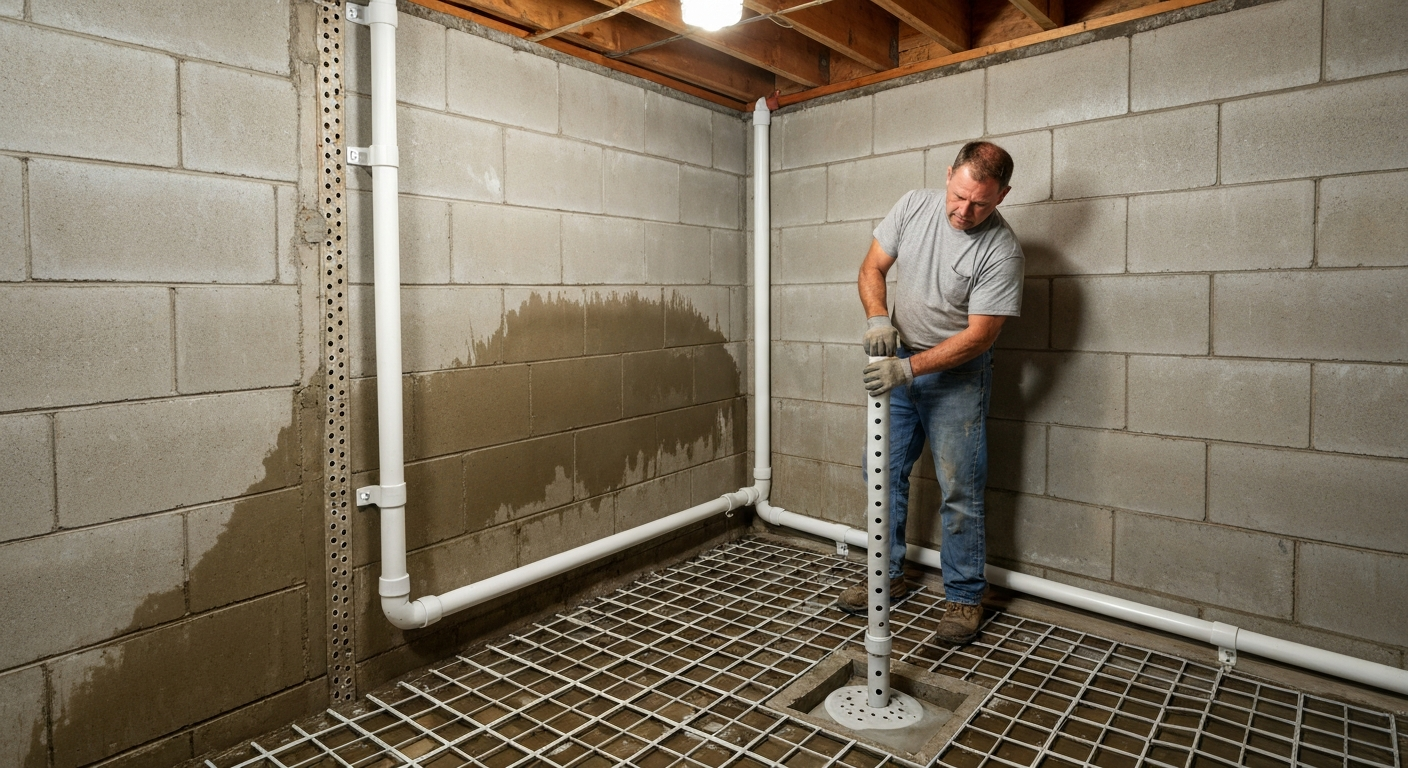
Basement waterproofing options and costs in Fairfield
In Fairfield, waterproofing decisions usually start with what kind of water problem you’re seeing—dampness, seepage, efflorescence, or active seepage—and then match the fix to the soil and foundation conditions. Fairfield sits on the broader Toronto region’s mixed glacial till and clay pockets, so many basements face persistent lateral pressure when soils saturate and expand. With a Fairfield-area population of 3,651 residents (Statistics Canada, 2021 Census), most crews get focused work from repeat clients and nearby neighbourhood calls, which can be a plus for scheduling—but it also means accurate site diagnosis is essential to avoid “band-aid” repairs.
Two parts of the market heavily influence costs: the age of homes and how existing drainage has aged. Many post-war and 1960–1980s basements were built with early weeping tile systems or older exterior drains that are now partially clogged or collapsed, and winter freeze–thaw can widen hairline cracks into active leaks over a few seasons. That’s why, in Fairfield, you’ll see contractors offering both exterior excavation (source control) and interior solutions (symptom control) to fit different budgets and access limits on tight lots, especially around additions and deck footings.
Demand is especially steady in areas where lots are compact and decks or landscaping block access to the foundation perimeter—common around established residential pockets near schools and busy local streets—so you’ll often get faster interior drainage availability while exterior jobs get queued based on excavation logistics. Below are the most common options and typical price ranges, so you can compare scope apples-to-apples before you request quotes.
| Method |
What It Addresses |
Disruption Level |
Durability |
Price Range |
| Exterior excavation + new membrane + drainage tile |
Source of water entry (hydrostatic pressure), failing perimeter drains, and wall leakage through cold joints/cracks |
High (excavation, landscaping removal and reinstatement) |
High (best long-term control when soil and drainage are corrected) |
$7,000 – $25,000 |
| Interior perimeter drain channel + sump pit |
Water after it enters: captures seepage, reduces hydrostatic pressure at the floor perimeter |
Medium (cutting at perimeter, partial interior disruption) |
Medium-High (excellent for chronic seepage and failing exterior weepers) |
$3,500 – $15,000 |
| Foundation crack injection (epoxy or polyurethane) |
Isolated leaks: epoxy for non-moving cracks; polyurethane for active leaks and water paths |
Low (drilling, patching, limited chipping) |
Medium (depends on crack movement and whether exterior drainage is corrected) |
$600 – $3,000 |
| Sump pump installation (primary + battery backup) |
Managing water volume during storms/spring melt; preventing overflow when power is interrupted |
Medium (sump pit excavation, interior installation) |
High (when backed up and properly sized) |
$800 – $3,500 |
| Window well drain installation |
Water intrusion at egress windows from surface runoff and poor grading around window wells |
Low-Medium (targeted excavation and reassembly) |
Medium-High (good when combined with downspout and grading correction) |
$1,000 – $4,500 |
| Lot re-grading / downspout extension |
Reducing direct runoff onto foundation and improving flow paths away from the structure |
Low (minimal demolition) |
Low-Medium (best as part of a larger plan if drainage is already failing) |
$500 – $6,000 |
Prices are estimates only and vary by project scope, site access and material selection.
What affects the price of waterproofing in Fairfield
In Fairfield, two homeowners can receive very different quotes for the “same” basement leak because the underlying causes aren’t always the same. It’s common to see pricing swing 30–50% across the Toronto area and Ontario when contractors price for excavation realities, drainage condition, and how much repair is needed to stop the root water pathway. A waterproofing quote isn’t just “membrane vs. sump”—it’s labour hours, access constraints, and whether the job corrects the water pressure source or only manages water after it arrives.
The three biggest cost drivers that separate Toronto-region pricing from a national average are soil type, water table conditions, and freeze–thaw. Clay-heavy soils expand when saturated and can exert lateral pressure on foundation walls, worsening cracks over time. In many Toronto-area pockets, higher water tables translate to longer sump run times and more demanding drainage work; a sump without a proper backup can also increase follow-up costs. Freeze–thaw cycles then widen small defects in concrete and block foundations, turning minor seepage into recurring leaks.
Concrete examples from Fairfield jobs: (1) If your foundation is poured concrete with a few hairline vertical cracks and the perimeter drain is still partly functional, crack injection may keep you within the $600 – $3,000 band and prevent full excavation. (2) If you’ve got clogged original weeping tile (often decades old) and dampness that worsens during spring melt, interior perimeter drains and a sump typically move toward the $3,500 – $15,000 range—especially when efflorescence remediation is needed first. (3) If the only way to access the wall is through a deck, tight side yard, or landscaped beds, excavation time and reinstatement can push exterior waterproofing closer to the higher end of the $7,000 – $25,000 range.
| Price Factor |
Why It Matters |
Cost Impact |
| Interior vs. exterior approach — interior is less disruptive but addresses symptoms |
Interior systems manage water after entry; exterior aims to stop it before it reaches the wall |
Interior often costs less upfront; exterior can cost more but reduces recurrence risk |
| Foundation type — poured concrete vs. block vs. stone vs. ICF |
Different materials crack and leak differently; some require complementary systems |
Block foundations frequently need interior drainage even if cracks are treated |
| Soil type — clay expands more than sand, adding pressure |
Clay saturation increases lateral pressure and can overload small fixes |
Clay-heavy lots tend to increase drainage and membrane scope |
| Crack type and length — hairline vs. structural horizontal cracks |
Movement cracks can’t be reliably sealed without addressing water pressure and potential movement |
Structural/long cracks push the job into higher labour and possibly engineering review |
| Sump pump backup system — battery or water-powered backup needed |
Ensures pumping during outages during spring melt storms |
Backup adds cost but can prevent basement flooding and emergency calls |
| Access — landscaping, decks, or driveways must be removed for exterior |
Excavation around obstacles increases labour and restoration |
Restricted access can add thousands and extend the schedule |
| Weeping tile age — original tile (60+ years) may be completely failed |
Older drainage may be collapsed or clogged, requiring replacement |
Failing tile commonly shifts the job from “targeted” to “full” drainage replacement |
| Mould or efflorescence remediation required before sealing |
Moisture-damaged surfaces need preparation to ensure adhesion and prevent recurrence |
Includes additional labour, materials, and sometimes containment procedures |
Permits & regulations in Ontario
In Ontario, many waterproofing-related scopes require a permit—especially anything that changes structural elements or affects drainage systems. As a rule of thumb for Fairfield homeowners: excavation around a foundation and structural crack repair typically trigger permit requirements because contractors may be altering conditions near the footing and making repairs that can be considered structural work. Exterior drainage and re-routing lot drainage can also require a permit when it changes how water leaves the property.
Sump pump installations can also require municipal approval if the discharge connects to a storm or sanitary system. Where contractors intend to discharge to an engineered location (such as a tie-in point), they should confirm whether the municipality requires approvals before work proceeds. For structural crack repair—particularly horizontal cracks in block walls or cracks that suggest movement—a structural engineer’s assessment is often needed to determine whether underpinning, additional support, or other structural work is required.
To verify a contractor in Fairfield, start with three checks: (1) Ontario licence/credentials: confirm their business registration and any applicable trade licensing through the appropriate online registry tools they provide to you. (2) Liability insurance: request a current certificate of insurance and ensure it names you as the certificate holder where applicable. (3) WSIB/WCB clearance: ask for a WSIB clearance letter for the contractor and verify it is valid for the date of the project. If they are proposing structural work, confirm they include engineering support in writing and carry proof of liability and coverage for workers.
Interior vs exterior waterproofing — what does Fairfield need?
The fundamental difference is that exterior waterproofing is source control, while interior waterproofing is management. Exterior excavation involves opening the perimeter, installing a new membrane, replacing or upgrading drainage tile, and then backfilling properly—so water is directed away from the foundation before it builds up hydrostatic pressure. Interior waterproofing (perimeter drain channel, sump pit, sump pump) captures and drains water after it enters the basement, reducing the likelihood of standing water, damp walls, and floor-level seepage. In Toronto-region soil conditions—mixed glacial till with clay pockets and freeze–thaw cycles—exterior solutions are usually the most permanent when the original drains are failing, but they also cost more because access and landscaping restoration are major drivers.
Given Fairfield’s typical foundation mix, poured concrete walls often respond well to crack injection when the leak is isolated and exterior drainage isn’t actively pushing water through multiple pathways. Block foundations, by contrast, frequently require interior drainage as a practical complement because block joints and cold joints can keep weeping when the perimeter drainage is aged or overwhelmed.
Power interruptions matter in spring melt seasons. If you’re relying on a sump, consider a battery or water-powered backup so short outages don’t lead to overflow during heavy rain events. A well-sized sump with backup can be the difference between a controlled system and a cleanup job.
For example, if your primary issue is two small active leaks at cracks, crack repair can fall around the $600 – $3,000 band and may be justified—provided an assessment confirms drainage isn’t the bigger driver. But if you’re dealing with chronic seepage and failed perimeter weeping tile, interior systems may land in the $3,500 – $15,000 range, and exterior excavation can rise toward $7,000 – $25,000 when excavation access and full drainage replacement are required.
| Method |
Best For |
Addresses Source? |
Disruption |
Lifespan |
Price Band |
| Full exterior excavation + membrane |
Active hydrostatic pressure with failing exterior drainage; clay-saturated backfill around older foundations |
Yes (directly) |
High |
High (often the longest-term option when executed with proper drainage) |
$7,000 – $25,000 |
| Interior French drain + sump system |
Chronic seepage, damp floors, efflorescence, and cases where exterior excavation is restricted |
No (after-entry control) |
Medium |
Medium-High |
$3,500 – $15,000 |
| Crack injection — epoxy (structural) |
Non-moving cracks in poured concrete where water is limited to a stable pathway |
Partial (seals entry points) |
Low |
Medium (best when water pressure is stabilized) |
$600 – $3,000 |
| Crack injection — polyurethane (active leak) |
Active leaks through cracks where there’s ongoing moisture and movement in the leak pathway |
Partial (targets active seepage route) |
Low |
Medium |
$600 – $3,000 |
| Interior drain channel only (no sump) |
Light seepage/dampness where water volumes are low and gravity drainage is workable |
No |
Medium (still includes interior chipping/cutting) |
Lower-Medium (can be overwhelmed in heavy melt/rain) |
$2,000 – $8,000 |
| Re-grading + downspout extensions |
Surface runoff problems, window well wetting, or seasonal dampness linked to poor flow paths |
Sometimes (reduces water reaching the wall) |
Low |
Low-Medium unless paired with drainage correction |
$500 – $6,000 |
How to choose a waterproofing contractor in Fairfield
Choosing the right waterproofing contractor matters in Fairfield because the wrong system can “solve” the symptom while leaving the water pressure path unchanged—leading to repeat leaks after the next freeze–thaw cycle. Start by verifying Ontario coverage and credentials. Ask for their certificate of insurance (liability) and review the policy dates before work begins. Then request WSIB/WCB clearance and make sure it’s current—contractors should be able to provide it easily. For licensing/registration, confirm they are legally operating for the work they propose and that their business details match what’s on the quote and invoice.
Next, get 2–3 itemised written quotes. You want a breakdown that shows labour and materials separately, and it should specify products (membrane type, drainage board, sump model if included) and where they’re installed. Avoid lump sums that don’t show scope details like excavation limits, disposal, patching, crack treatment method (epoxy vs. polyurethane), and whether a permit is included if required. Ask what’s excluded—mould remediation, interior drywall replacement, tree removal, landscaping reinstatement, and any engineering involvement for structural cracks.
Warranty should be explicit: the workmanship warranty length, what it covers (and what it doesn’t), and whether the product warranty is manufacturer-backed and transferable if you sell. Payment scheduling matters too—never agree to more than about 10–15% upfront for typical residential work, and ask for a holdback until key milestones are complete. Finally, require a start date and completion estimate in writing, including weather-related scheduling language for excavation and membrane work.
- Ask for an on-site assessment that includes where water appears (crack locations, floor perimeter, window wells).
- Request photos of similar basements and references from the Toronto area within the last 12–24 months.
- Confirm whether the plan is exterior, interior, or a hybrid and why (soil/clay, water pressure, drainage age).
- Get itemised quotes with materials listed and no “allowances” that are too vague.
- Verify permit responsibility in writing (what they pull, what you pull, and which costs are included).
- Confirm disposal is included for excavation debris and old drainage components.
- Ask whether efflorescence/mould remediation is included before sealing.
- Require specific sump details if included: pump capacity, discharge route, and backup type.
- Ask if they include crack detection/inspection steps before injection (not just patching).
- Review warranty terms for transferability and workmanship coverage vs. product coverage.
- Set a payment schedule with a holdback until final walkthrough and documentation are complete.
- Get everything in writing: scope, timeline, warranty, and change-order process.
In Fairfield, red flags include: contractors who refuse to explain whether your leak is source-driven vs. after-entry seepage, quotes that omit drainage details (no tile plan, no slope/discharge plan), vague warranties that don’t specify coverage periods, missing proof of liability insurance/WSIB clearance, and “guaranteed dry basement” promises without inspecting the foundation and drainage conditions.
Frequently asked questions — waterproofing in Fairfield
What is a weeping tile and does my Fairfield home have one?
A weeping tile is the original perimeter drainage system installed around or at the foundation to collect groundwater and direct it away (often by gravity, sometimes to a discharge outlet). In Fairfield and the broader Toronto area, many older post-war to 1960–1980s homes used clay weeping tile or early plastic drains. It’s common for these systems to be partially clogged, collapsed, or disconnected over decades—so homeowners see damp floors, efflorescence, or spring flooding even if the foundation wall looks “mostly fine.” You can’t confirm it visually without excavation or an inspection, but start with clues: historic basement dampness at perimeter locations, previous drain repairs, and discharge outlet history. Ask a contractor to assess during an inspection before choosing interior-only work.
Can I waterproof my basement in winter in Fairfield?
Yes, but scope matters. In Ontario winters, frozen soil and saturated freeze–thaw conditions can limit exterior excavation and affect membrane adhesion and backfill compaction. Interior waterproofing is often more practical in winter because it focuses on perimeter drains, sump pits, and targeted crack injection. For crack repairs, contractors can still inject during cold months if the concrete is workable and dry enough to prepare, though timing and surface condition are crucial. If your issue is tied to failed exterior drains pushing water in during spring melt, winter interior fixes can reduce problems now, but exterior excavation may still be necessary later for source control. If you need an interior sump, costs commonly fall within the $800 – $3,500 band for pump install, while full interior drain systems typically sit in the $3,500 – $15,000 range depending on extent and preparation.
What is the difference between waterproofing and damp-proofing?
Damp-proofing is designed to resist minor moisture and humidity, often focusing on coating or basic moisture barriers. Waterproofing is a more comprehensive approach intended to manage or prevent water entry under pressure—such as hydrostatic pressure from saturated clay backfill and freeze–thaw expansion in the Toronto region. In Fairfield basements, true waterproofing usually includes correcting drainage paths (exterior membranes and drainage tile where feasible) or capturing water after entry (interior perimeter drains and a sump). If you only damp-proof without addressing where water travels—like failing weeping tile or lateral pressure—efflorescence can reappear and small cracks can worsen after winter. A proper quote should spell out whether the plan is source control or after-entry management, and it should reference specific methods like membrane + drainage tile or interior French drains + sump system.
Will basement waterproofing affect my property value in Fairfield?
In most Fairfield home sales, a documented, professional waterproofing system can support property value because it reduces the risk of recurring basement flooding, mouldy odours, and expensive emergency cleanups. It’s especially important for buyers who worry about spring melt and freeze–thaw performance—Toronto-area conditions can turn minor seepage into active leaks over a few winters. That said, value impact depends on the scope: exterior source-control work is typically a stronger selling point when conditions justify excavation; interior systems can still be valuable, particularly when they’re designed to manage chronic seepage effectively. What matters is documentation—scope details, warranty terms, and proof that work addressed drainage pathways. If you spend in the $7,000 – $25,000 exterior range, for example, you should be able to show what was replaced and how water discharge is handled.
What drainage issues are most common in Fairfield homes?
The most common issues in Fairfield are linked to perimeter water pathways: failing or partially blocked weeping tile systems (often decades old), clogged internal or external drainage routes, and grading that directs runoff toward the foundation. In mixed glacial till and clay pockets, saturated soil can expand and push laterally, increasing seepage through cold joints, tie holes, and cracks. Freeze–thaw then widens small defects, so homeowners often notice worsening symptoms after winter. Another common scenario is window well wetting where surface runoff collects and overwhelms the well without proper drainage. Finally, interior moisture can show up as efflorescence and damp floors even when the wall doesn’t look dramatically damaged—so inspection matters. A good contractor will evaluate both exterior drainage conditions and interior water patterns before choosing between exterior excavation and interior perimeter drainage.
How do I choose a waterproofing contractor in Fairfield?
Start with coverage and credentials: ask for liability insurance and a current WSIB/WCB clearance letter, and verify their business details match the quote. In Fairfield and across Ontario, insist on an itemised written scope (labour + materials), not a vague lump sum, and confirm whether permits are included for foundation excavation, drainage changes, or structural crack repair. Ask what’s excluded—efflorescence/mould remediation, disposal, landscape reinstatement, and any engineering support for structural concerns. Review warranty details: workmanship warranty length, product warranty terms, and whether it’s transferable if you sell. Payment should follow a staged approach (avoid paying more than about 10–15% upfront). Finally, compare solutions: if one contractor only offers crack injection while your water pattern suggests ongoing hydrostatic pressure, that mismatch is a red flag. For budgeting, compare options within typical bands like $3,500 – $15,000 for interior perimeter drains or $7,000 – $25,000 for exterior excavation.