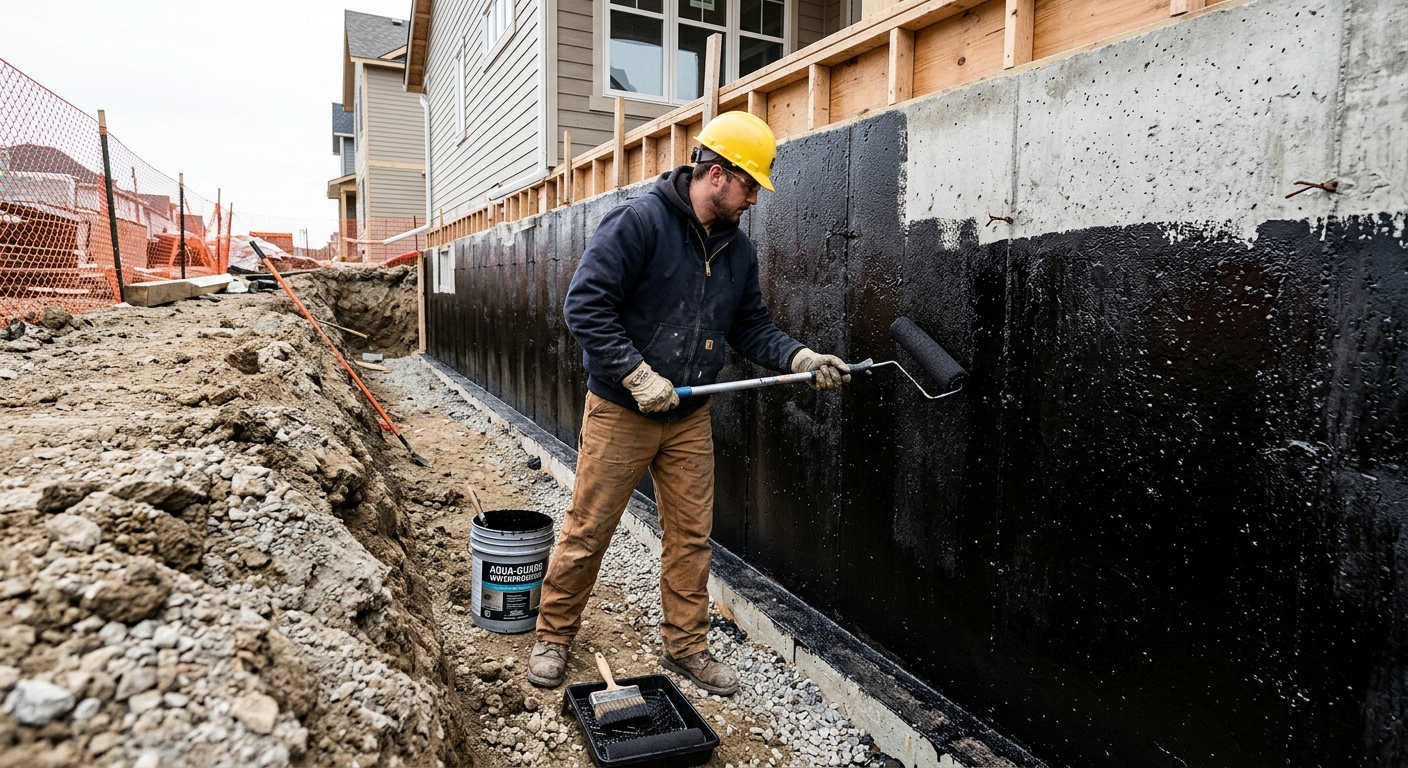
Basement waterproofing options and costs in Fort Erie
Fort Erie homeowners typically start waterproofing conversations the moment they notice damp patches, a musty smell, or hairline cracks that seem to widen after spring thaw. In a community where 62.1% of homes were built before 1981, many basements are dealing with older waterproofing methods and aging weeping tile that have been cycling through decades of Ontario moisture and freeze–thaw. With 11,230 homeowner households (79.8% of households) in the area, there’s also plenty of demand for solutions that work with common single-detached layouts.
In the Hamilton–Niagara Peninsula economic region, the bigger cost driver is the combination of clay and silty clay subsoils plus higher groundwater. Clay-heavy pockets can hold water and expand during freeze–thaw, increasing lateral pressure on foundation walls. When water sits closer to the surface (or in perched fill layers), excavation and drainage work often take longer, and sump systems may need larger, more reliable pumps. That’s why pricing can swing across Fort Erie areas like Fort Erie South and the Stevensville/Beamsville-adjacent feel—sites with poorer drainage, deeper basements, and harder landscaping access generally run higher.
Below are the most common waterproofing approaches contractors use in Fort Erie, what each one addresses, and the typical cost ranges you’ll see in quotes as you compare options. Use this as a starting point for your itemized scope discussion.
| Method |
What It Addresses |
Disruption Level |
Durability |
Price Range |
| Exterior excavation + new membrane + drainage tile |
Source water entry (hydrostatic pressure) by rebuilding the exterior water path |
High (yard excavation, regrading, landscaping/driveway access) |
High (typically multi-decade when installed correctly) |
$12,500 – $24,500 |
| Interior perimeter drain channel + sump pit |
Water that enters the basement by collecting and pumping it away |
Medium (floor/partial wall cutting inside) |
Medium to high (depends on wall condition and drainage capacity) |
$9,000 – $17,500 |
| Foundation crack injection (epoxy or polyurethane) |
Active seepage and/or non-moving cracks to reduce leakage pathways |
Low to medium (minor chipping/drilling) |
Medium to high (best for stable cracks; active leaks need the right resin) |
$650 – $1,900 |
| Sump pump installation (primary + battery backup) |
Basement flooding risk during peak groundwater and power outages |
Medium (pit, plumbing, discharge route) |
High (battery backup adds resilience) |
$2,200 – $4,800 |
| Window well drain installation |
Water entry through window wells and side yard runoff pooling |
Low to medium (excavation near windows) |
Medium to high (good when combined with proper grading) |
$1,200 – $3,200 |
| Lot re-grading / downspout extension |
Surface water control to reduce how much water reaches foundation perimeter |
Low (often minimal demolition) |
Low to medium (performance depends on drainage design and soil) |
$900 – $4,000 |
Prices are estimates only and vary by project scope, site access and material selection.
What affects the price of waterproofing in Fort Erie
In Fort Erie and the Hamilton–Niagara Peninsula region, it’s common to see the “same” waterproofing problem priced anywhere from 30% to 50% apart across different contractors and approaches. One quote may focus on stopping visible seepage with interior measures, while another addresses the exterior water source with full excavation and a new drainage assembly. The gap widens because local geology and groundwater behaviour are not uniform—especially in clay-and-silt zones—so excavation depth, drainage stone sizing, and sump pumping needs change from house to house.
The three biggest drivers that separate regional costs from the national average are soil type, water table, and freeze–thaw. Clay-heavy soils can expand during freeze–thaw and push laterally on walls, aggravating cracks over time. In higher groundwater areas (often roughly 2–4 m below grade, with perched water in shallow fill), sump systems can run more frequently and may require higher-capacity pumps and backup power. By contrast, coastal or very wet regions can saturate backfill quickly when drainage fails—Fort Erie experiences the same “soak and release” cycle, but the trigger is typically winter thaw and spring recharge.
Concrete examples from Fort Erie jobs: (1) A deeper basement in clay with poor grading often shifts the conversation to interior drain channels plus a sump pit, where interior waterproofing commonly lands around $8,000 – $18,000, because exterior excavation can be disruptive to decks and established gardens. (2) A home built before 1981 with original or partially failed weeping tile usually needs an exterior rebuild for best long-term results, often within $12,000 – $25,000 once excavation, membrane, drainage stone, and backfill compaction are accounted for. When homeowners add crack injection only, it may help, but the water load can still find new pathways if exterior drainage isn’t corrected.
These differences are why your itemized scope matters: a waterproofing plan that only “treats symptoms” will look cheaper upfront, but the total cost to protect walls and floors over time can be higher if water pressure continues.
| Price Factor |
Why It Matters |
Cost Impact |
| Interior vs. exterior approach — interior is less disruptive but addresses symptoms |
Exterior targets hydrostatic pressure at the source; interior manages collected water after it enters |
Exterior can add excavation and membrane costs; interior often starts 20%–40% lower |
| Foundation type — poured concrete vs. block vs. stone vs. ICF |
Crack patterns and sealing method differ by wall material; block often leaks through joints more readily |
Some wall types require more prep; crack injection and interior drainage scope can increase |
| Soil type — clay expands more than sand, adding pressure |
Clay can swell during freeze–thaw, stressing walls and worsening seepage routes |
Higher drainage stone, better backfill, and more robust systems raise labour/material time |
| Crack type and length — hairline vs. structural horizontal cracks |
Active leakage and movement influence whether you need injection, engineering review, or structural work |
Structural/horizontal cracks can push you into engineering/repairs beyond typical waterproofing |
| Sump pump backup system — battery or water-powered backup needed |
Power outages during spring wet periods are a real risk to basement protection |
Backup systems add equipment and installation time; often increases total by a few thousand dollars |
| Access — landscaping, decks, or driveways must be removed for exterior |
Exterior work needs space to excavate and place membrane and drainage properly |
Removal/rebuilds can add cost even when the waterproofing package stays similar |
| Weeping tile age — original tile (60+ years) may be completely failed |
Old tile may be broken, disconnected, or simply not moving water effectively |
Often increases scope from minor repairs to full replacement or exterior drainage rebuild |
| Mould or efflorescence remediation required before sealing |
Sealers and membranes won’t perform well over active moisture, salts, or contamination |
Requires additional surface prep, cleaning, and sometimes localized removal |
Permits & regulations in Ontario
In Ontario, foundation excavation and any work that changes drainage around a foundation may require a building permit, depending on the scope. Commonly, structural crack repair that addresses major movement (for example, significant horizontal cracks in block walls or step cracking indicating possible wall stress) often triggers an engineering assessment requirement so the repair method matches the wall’s condition—not just the appearance. Sump pump installations that discharge to municipal systems (storm or sanitary) typically require municipal approval or direction; if you’re tying into existing infrastructure, you should plan for the paperwork early.
What often does require a permit or formal approval: exterior excavation near a foundation, foundation wall repairs that are considered structural, and changes to lot drainage/discharge routes where they connect to municipal services. What typically does not require a permit: limited interior crack injection for stable, non-moving cracks (when no structural concerns are identified), routine downspout extensions that direct water to a safe discharge point on your own property, and standard installation of interior perimeter drains when it does not alter discharge to municipal systems—though your contractor should confirm for your exact situation.
Step-by-step, Fort Erie homeowners can verify a contractor by: (1) checking the Ontario contractor licence/registration status through the appropriate provincial registry (your contractor should provide their licence details), (2) requesting a certificate of liability insurance and confirming it’s current for the work (not expired), and (3) asking for WSIB/WCB clearance letters and employer account information. For structural repair scopes, confirm engineering support is included (engineer letter or design intent) and that the plan is consistent with the assessed wall condition.
Interior vs exterior waterproofing — what does Fort Erie need?
The fundamental difference is simple: exterior waterproofing (full excavation, new membrane, new drainage tile, backfill) addresses water at the source and reduces the hydrostatic pressure on the foundation wall. It’s more expensive and disruptive because it involves excavation and restoring the yard. Interior waterproofing (perimeter drain channel, sump pit, sump pump) manages water after it enters—collecting seepage and keeping the basement drier—but it doesn’t stop the wall from experiencing pressure cycles.
Given Fort Erie’s Hamilton–Niagara Peninsula conditions—clay-and-silt subsoils, periodic higher groundwater, and frequent freeze–thaw—the “right” choice depends on foundation type and water pathway. Poured concrete walls usually respond well to combined strategies: crack injection plus interior drainage when full excavation isn’t practical. Block foundations often need more attention to interior drainage because leakage can move through mortar joints and block voids; in those cases, interior systems plus crack management commonly perform better than crack injection alone. If your home has older weeping tile with persistent dampness after spring thaw, exterior waterproofing tends to be the most dependable long-term solution because it replaces the perimeter water-control system that may already be failing.
Sump pump backup matters in Ontario because spring wet periods can coincide with power interruptions. A battery backup keeps the pump operating long enough to prevent “run-dry” failure and minimize wall/floor saturation during outages—especially important when groundwater is high and time is critical.
Price-wise, the exterior option can be justified. For example, if interior waterproofing is quoted around $9,000 – $17,500 but your inspection shows active exterior water entry and failed tile, paying into the exterior range around $12,500 – $24,500 can be cheaper over the long run than repeated interior-only interventions every few seasons.
| Method |
Best For |
Addresses Source? |
Disruption |
Lifespan |
Price Band |
| Full exterior excavation + membrane |
Consistent seepage, failed weeping tile, or persistent hydrostatic pressure in Fort Erie |
Yes |
High |
Long (multi-decade when installed to spec) |
$12,000 – $25,000 |
| Interior French drain + sump system |
Damp basements where excavation isn’t feasible; deeper basements with active seepage |
No (manages after entry) |
Medium |
Medium to long with proper pump sizing and discharge |
$8,000 – $18,000 |
| Crack injection — epoxy (structural) |
Stable, non-moving cracks (typically not actively leaking) |
Partial (seals pathway, but doesn’t replace drainage) |
Low to medium |
Long if crack movement is controlled |
$600 – $1,500 |
| Crack injection — polyurethane (active leak) |
Cracks with active seepage during wet seasons and freeze–thaw cycles |
Partial (reduces active leak path) |
Low to medium |
Medium to long with correct product selection |
$800 – $1,800 |
| Interior drain channel only (no sump) |
Minor seepage where water volume is low and collection can discharge safely |
No |
Medium |
Short to medium (depends on discharge reliability) |
$6,000 – $12,000 |
| Re-grading + downspout extensions |
Surface-water-driven dampness and localized puddling near foundation |
No (prevents some entry) |
Low |
Medium (can deteriorate if soils settle) |
$900 – $4,000 |
How to choose a waterproofing contractor in Fort Erie
Start by verifying Ontario compliance and financial responsibility. Ask for the contractor’s licence/registration details (when applicable to their business model), a certificate of liability insurance, and WSIB/WCB clearance. How to check: (1) confirm the certificate of insurance is current and names the correct insured party for the project scope, (2) verify WSIB/WCB status through the clearance letter—don’t accept a verbal “we’re covered,” (3) match the name and business address on the paperwork to the contractor you’re signing with.
Next, request 2–3 written quotes that are itemized by labour and materials, not just lump sums. Look for line items for excavation (if exterior), membrane system components, drainage stone/geotextile, drain tile or pipe, sump pit/pump, discharge routing, and disposal/restoration. A good quote also lists what’s excluded: landscaping reinstatement, permits, engineering if structural concerns appear, and how they handle unforeseen soil conditions like saturated clay. Confirm whether the permit pull is included (if required) and whether waste disposal is part of the price.
Warranty matters: insist on a clear workmanship warranty length (commonly multi-year) and separate product/manufacturer warranty where available. Ask whether warranties are transferable if you sell your home—this can affect buyer confidence. For payment schedule, never pay more than 10%–15% upfront; hold back a portion until the job is complete and cleanup is done. Finally, get an achievable start date and completion estimate in writing, including inspection or commissioning steps for pumps.
- Provide an inspection report (photos, moisture/crack mapping, and recommended method) rather than only guessing.
- Quote is itemized by materials and labour (membrane, tile, stone, sump hardware, disposal).
- States whether permits are required and who pulls them (and the cost impact).
- Includes disposal and backfill compaction details for exterior work.
- Explains sump pump discharge route and whether it’s designed for high groundwater flow.
- Clarifies whether the drainage stone is wrapped with geotextile and the intended pipe slope.
- Confirms product choice by moisture condition (epoxy for stable cracks vs polyurethane for active leaks).
- Lists restoration scope (topsoil, sod/seed, driveway/steps reinstatement) and what’s not included.
- Provides a written warranty for workmanship and confirms the product warranty terms.
- Includes pump commissioning/testing (backup test if battery is part of the scope).
- Uses a realistic schedule with milestones and weather considerations for Fort Erie freeze–thaw seasons.
- Doesn’t pressure you with “today only” discounts; uses transparent contract language.
In Fort Erie, red flags I see most often: quoting interior work as a “fix” without checking exterior water entry or weeping tile condition; skipping itemized membrane/drainage components and giving only a one-number lump sum; refusing to show insurance/WSIB/WCB clearance paperwork; offering a crack injection strategy without confirming crack stability (or without recognizing possible structural movement); and starting excavation without a clear plan for permits, disposal, and restoration boundaries.
Frequently asked questions — waterproofing in Fort Erie
Can I waterproof my basement in winter in Fort Erie?
In most cases, you can start waterproofing in winter in Fort Erie, but the effectiveness depends on what’s being done. Interior crack injection and sump pump installations are often feasible when temperatures are workable, because they’re less reliant on large-scale excavation and exterior membrane placement. Exterior excavation and membrane installs can be delayed if ground conditions are frozen, especially in clay-heavy pockets where digging and backfill compaction become difficult. Ontario freeze–thaw cycles also mean you should plan for surface water and thaw periods during spring recharge. If your priority is keeping water from entering, an interior drain + sump approach may be the fastest path, while exterior work can be scheduled for the warmer window. Prices still vary by site access and scope, but interior solutions typically fall within the $8,000 – $18,000 band in many Fort Erie basements.
What is the difference between waterproofing and damp-proofing?
In plain terms, damp-proofing aims to reduce moisture issues; waterproofing is designed to prevent water from entering or to reliably manage it under higher groundwater conditions. Many older Ontario systems (especially in pre-1981 homes) were closer to damp-proofing: tar-and-paper styles and inadequate drainage that didn’t handle hydrostatic pressure consistently. In the Fort Erie area, where clay subsoils can hold water and expand during freeze–thaw, damp-proof approaches often can’t cope with sustained pressure during spring thaw. True waterproofing typically includes a drainage system (interior or exterior), correct sealing for crack types, and a plan for pumping/discharge. That’s why a basement that is only “dry most of the time” may still need a sump pump or exterior drainage rebuild to protect your walls and floors through wet seasons.
Will basement waterproofing affect my property value in Fort Erie?
It often helps, especially when the work is documented and transferable. Fort Erie buyers typically look for evidence that moisture problems have been addressed—particularly in older housing stock where 62.1% of homes were built before 1981 and may have aging drainage. A properly installed system (with receipts, photos, and a workmanship warranty) can reduce perceived risk and make the basement more usable year-round. However, value impact depends on matching the solution to the cause. Interior-only measures can be valuable, but if water pressure is coming from the exterior perimeter and failed weeping tile, a full exterior plan (within the $12,000 – $25,000 band) may be a stronger long-term story. Keeping moisture controlled also lowers the chance of recurring efflorescence and mould concerns, which can be a negotiation point during resale.
What drainage issues are most common in Fort Erie homes?
Most common issues in Fort Erie tend to follow the same local pattern: surface water not flowing away from the foundation, failing or disconnected weeping tile, and crack pathways worsened by freeze–thaw. Clay-and-silty clay subsoils can hold moisture and exert pressure on walls, especially where downspouts discharge close to foundations or where re-grading has settled over time. In deeper basements or poorly drained pockets, water can sit closer to grade for long stretches, increasing seepage and sump run times. We also see dampness that concentrates near window wells, where runoff pools during rain or thaw. A practical approach often starts with confirming where water is entering, then pairing surface drainage improvements with either interior drains/sump or exterior membrane + drainage tile depending on water load and foundation type.
How do I choose a waterproofing contractor in Fort Erie?
Choose by verifying compliance and demanding clarity in the scope. In Ontario, confirm the contractor can provide current liability insurance and WSIB/WCB clearance (ask for the clearance letter), and confirm licensing/registration where applicable. Then request 2–3 itemized quotes—look for labour and materials breakdown (membrane, drainage tile, stone, pump hardware, disposal) instead of one lump number. Make sure exclusions are spelled out: whether permits are included, whether engineering is provided if structural crack concerns appear, and what restoration covers after excavation. Ask about warranty length for workmanship and whether product/manufacturer warranty applies. For payment, keep upfront payment to about 10%–15% and hold a portion back until completion and testing. If your quote addresses only symptoms without explaining the likely water path, it’s a warning sign.
What is a battery backup sump pump and do I need one in Fort Erie?
A battery backup sump pump is an additional power system that keeps your primary sump operating during power outages. In Fort Erie and across Ontario, outages can happen during storms or spring wet periods, which is when groundwater levels rise and the sump is most critical. With a battery system, the pump can prevent water from building up in the basin, reducing the chance of floor saturation and dampness behind wall areas you’ve already sealed. Whether you “need” one depends on your basement risk profile: depth of basement, history of seepage during wet seasons, sump discharge reliability, and how quickly the basin fills. Many homeowners choose backup when interior waterproofing relies on pump removal of water. If you’re comparing options, sump pump installations with backup often land in the $1,800 – $4,200 band (and can be higher when the full system and discharge route are expanded), but it’s typically the difference between a controlled event and a basement cleanup.