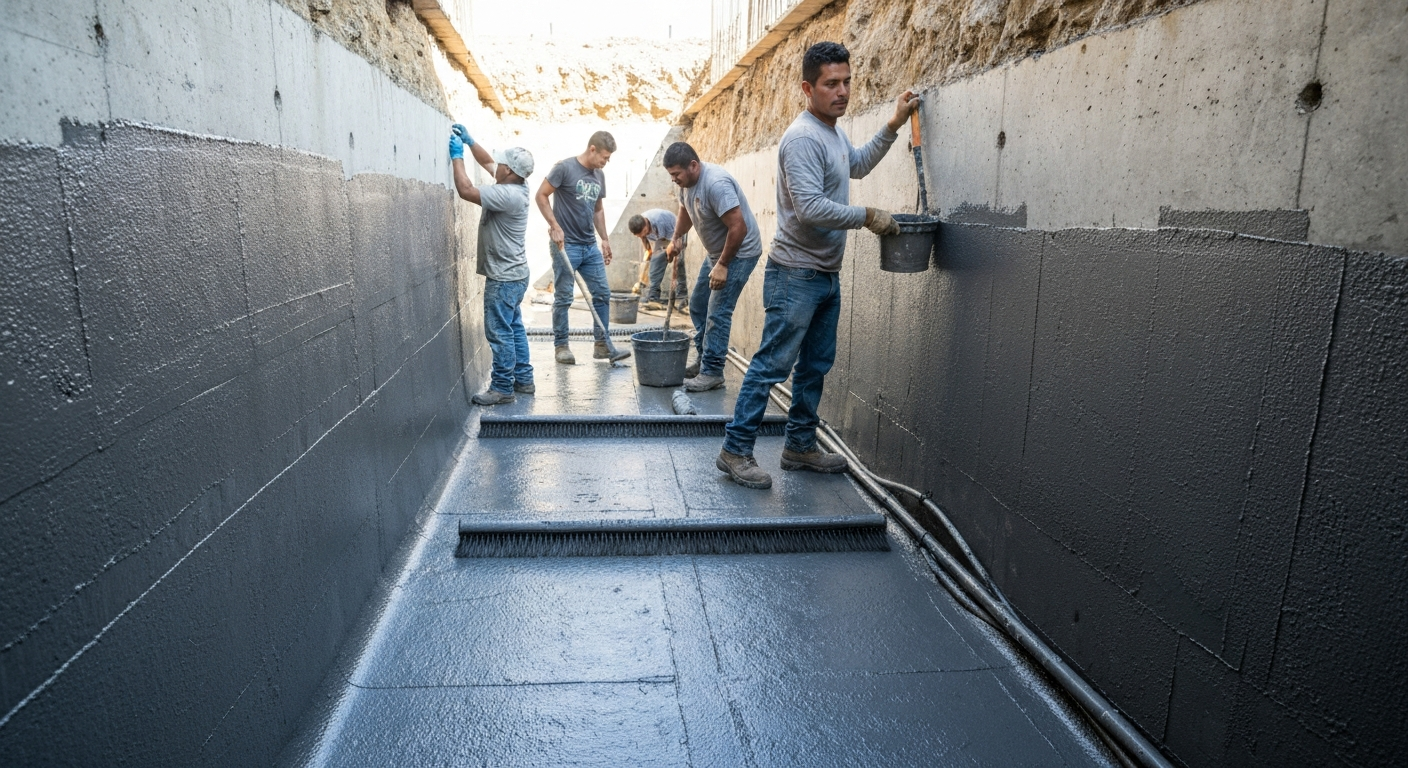
Basement waterproofing options and costs in Kenora
Kenora homeowners typically waterproof basements for two reasons: active seepage inside the foundation, or preventive drainage upgrades before small problems become big ones. With 14,967 residents in town and 4,785 homeowner households (73.5% of households own), you’ll see a lot of repeat work on older houses. That matters here because 67.9% of homes were built before 1981—many of those foundations originally relied on older tar-and-paper systems, undersized weeping tile, and drains that are now partially blocked or fully failed.
In Northwest Ontario, pricing is shaped by variable glacial soils and high local water tables that push hydrostatic pressure against walls. Freeze–thaw cycling around Kenora can widen hairline cracks and turn intermittent dampness into recurring leaks, so the right system isn’t just about “stopping water,” it’s about managing pressure and runoff. Labour availability can also affect timelines and cost: exterior work requires excavation access, disposal, and careful backfilling, which is harder on tight lots and near mature landscaping.
If you’re in the Fort Frances / Rainy River corridor-style properties or older pockets near downtown Kenora and lakefront areas (where grading and drainage have often shifted over decades), demand is especially strong for exterior excavation and sump solutions.
Use the comparison below to map your likely approach to expected disruption and typical Kenora price ranges, then align that with your foundation condition and water-source pathway.
| Method |
What It Addresses |
Disruption Level |
Durability |
Price Range |
| Exterior excavation + new membrane + drainage tile |
Primary water entry at the foundation exterior; installs a new drainage route to relieve hydrostatic pressure |
High (excavation, landscaping restoration) |
Long-term when installed to correct elevations and backfill spec |
$9,500–$17,500 |
| Interior perimeter drain channel + sump pit |
Water after it enters; collects seepage and discharges it away from the foundation |
Medium (interior floor/wall work) |
Very reliable with correctly sized sump and discharge routing |
$7,000–$13,500 |
| Foundation crack injection (epoxy or polyurethane) |
Stops individual leak paths through cracks; epoxy for stable cracks, polyurethane for active movement |
Low to Medium (select interior access) |
Good to long-lasting when crack movement is correctly matched to the product |
$600–$2,200 |
| Sump pump installation (primary + battery backup) |
Manages collected water during high water events; backup reduces risk during power outages |
Medium (sump pit and piping) |
High reliability when maintained and tested |
$2,200–$3,400 |
| Window well drain installation |
Controls bulk water intrusion at basement windows and the window-well perimeter |
Low to Medium (window well area work) |
Good when tied into perimeter drainage and kept clear |
$1,200–$2,800 |
| Lot re-grading / downspout extension |
Redirects surface runoff away from the foundation and reduces water load on the wall |
Low to Medium (minor excavation/landscaping) |
Moderate; depends on ongoing maintenance and erosion control |
$900–$2,200 |
Prices are estimates only and vary by project scope, site access and material selection.
What affects the price of waterproofing in Kenora
In Kenora and across Northwest Ontario, you can see waterproofing quotes for the “same” basement problem that swing by 30–50%. The difference usually comes down to how contractors interpret the water source (bulk surface water vs. groundwater pressure), how much excavation is required, and whether the work is a targeted fix or a system-level solution. Even within Ontario, costs can sit above or below the national average because soil, water table behaviour, and freeze–thaw intensity change what’s required for long-term performance.
Three drivers most separate Northwest Ontario pricing from the national average: soil type, water table, and freeze–thaw. Clay-heavy pockets behave differently when saturated—clay expands and can exert lateral pressure on foundation walls, pushing water through cracks at the wall-footing interface. When it dries, it shrinks, which can widen leak paths over time. High local water tables in our region increase sump pump run times and often require more robust drainage routing. Freeze–thaw cycles repeatedly widen hairline cracks and joints; that turns minor seepage into active leaks and increases labour for crack prep and correct injection product selection.
Concrete examples: if your home is built before 1981 (common in Kenora, where 67.9% pre-date 1981), you may be dealing with original weeping tile that’s been failing for years—exterior excavation projects often fall in the $9,500–$17,500 band because drainage replacement and membrane coverage are the bulk of the work. If you instead stop leaks with interior perimeter drainage and a sump (often $7,000–$13,500), you can reduce excavation disruption, but you’re managing water after entry, not relieving pressure outside the wall. In tight downtown properties or near lakefront slopes where access is limited, the same foundation may push costs toward the upper end due to disposal, limited machine access, and more manual excavation.
| Price Factor |
Why It Matters |
Cost Impact |
| Interior vs. exterior approach — interior is less disruptive but addresses symptoms |
Exterior typically fixes the source; interior collects water after entry |
Exterior usually costs more; interior can be 20%–45% lower depending on access |
| Foundation type — poured concrete vs. block vs. stone vs. ICF |
Crack patterns and sealing strategies differ by wall construction |
Block and stone often need more complementary interior drainage; poured concrete may respond better to targeted crack injection |
| Soil type — clay expands more than sand, adding pressure |
Saturated clay increases lateral pressure and leak frequency |
More robust drainage and higher labour/excavation detail requirements |
| Crack type and length — hairline vs. structural horizontal cracks |
Movement dictates product choice and whether structural assessment is needed |
Structural/major cracks can add engineering and may increase repair scope |
| Sump pump backup system — battery or water-powered backup needed |
Backup reduces flood risk during outages and power interruptions in spring |
Adds equipment and install time; often a meaningful cost increase |
| Access — landscaping, decks, or driveways must be removed for exterior |
Exterior work requires safe excavation access and disposal |
Access constraints can move quotes upward due to extra demolition/reinstatement |
| Weeping tile age — original tile (60+ years) may be completely failed |
Failed tile increases groundwater pressure and reduces drainage capacity |
Often requires full replacement, which shifts you toward exterior work pricing |
| Mould or efflorescence remediation required before sealing |
Sealers don’t perform well over contaminated or unstable surfaces |
Additional prep labour and materials can raise total project cost |
Permits & regulations in Ontario
In Ontario, foundation excavation and any work that changes how surface and subsurface water is managed typically require a building permit, and structural repairs commonly do too. In practice, exterior waterproofing that involves excavation to the foundation and regrading around the perimeter is often treated as permit-involving because it modifies the exterior drainage profile and foundation exposure. Structural crack repair—particularly horizontal cracks in masonry or major step cracks—may require a structural engineer’s assessment before any repair plan is approved.
Sump pump installations also can require municipal approval depending on how the discharge ties into storm or sanitary systems. If the discharge is being connected to a municipal sewer line, don’t assume it’s “just plumbing”; confirm with the municipality and follow the contractor’s documented approach.
Step-by-step for Kenora homeowners to verify the contractor’s Ontario compliance:
- Ask for their Ontario licence/registration reference (where applicable for the contractor’s scope) and confirm it via the online registry they provide.
- Request a current certificate of insurance: general liability and whether their liability coverage includes construction site waterproofing activities.
- Ask for WSIB/WCB clearance documentation. Contractors should be able to provide a clearance letter or equivalent proof upon request.
- For structural crack work, confirm engineering support is included (engineer name/company, scope, and reporting responsibilities).
- Get the permit-handling plan in the written quote: who pulls the permit, what is included, and what the homeowner must sign.
Work that typically does not require a permit can include smaller interior patching or targeted crack injection when it’s limited to waterproofing a crack without altering the foundation footprint or drainage. However, if you’re changing drainage routing, excavating around the foundation, or addressing structural movement, assume a permit is likely—verify before work starts.
Interior vs exterior waterproofing — what does Kenora need?
Exterior waterproofing is the “source control” approach: full excavation, new membrane, new drainage tile, and then properly engineered backfill and restoration. Done correctly, it reduces hydrostatic pressure before water reaches your basement walls. The trade-off is cost and disruption. Interior waterproofing is “relief after entry”: a perimeter drain channel, sump pit, and sump pump remove seepage once water passes through the wall or footing. It’s less disruptive, but it doesn’t stop pressure acting on the wall itself.
For Kenora’s freeze–thaw cycles and high water-table conditions, exterior work is often the best long-term option when you have evidence of ongoing groundwater intrusion—especially if you’re seeing efflorescence, consistent seepage along long wall runs, or a history of failed weeping tile. Interior systems can still be the right move when access is limited or the basement finishes need protecting. Homes with poured concrete walls generally respond well to crack injection where the crack is stable, because the wall can be sealed effectively. For block foundations, interior drainage is frequently a practical complement because block joints and perimeter interfaces can act like pathways even when the surface looks intact.
About sump pump backup: Ontario outages aren’t constant, but spring flooding seasons are when you least want your pump to pause. A battery backup (or water-powered backup where appropriate) can keep pumping long enough for power to return, which matters in clay-saturated backfill conditions where water can infiltrate quickly during high water.
Dollar example: if exterior excavation plus membrane and drainage tile lands in the $9,500–$17,500 band, it’s often justified when your weeping tile is failing and the entire perimeter needs drainage replacement. If your issue is mostly localized seepage and you can manage water entry with interior perimeter drainage and a sump, you may land in the $7,000–$13,500 range—and that difference can be worth it when only certain walls are affected or when landscaping access would be expensive.
| Method |
Best For |
Addresses Source? |
Disruption |
Lifespan |
Price Band |
| Full exterior excavation + membrane |
High water table basements, long wall seepage, failed exterior drainage |
Yes (primary source control) |
High |
Long (when installed to correct detail and backfill spec) |
$9,500–$17,500 |
| Interior French drain + sump system |
Limited exterior access, active seepage after entry, recurring dampness |
No (relief after entry) |
Medium |
Long (with proper discharge and maintenance) |
$7,000–$13,500 |
| Crack injection — epoxy (structural) |
Stable cracks in poured concrete where there’s no ongoing movement |
Partly (stops a defined leak path) |
Low to Medium |
Long (only if crack is stable and properly prepped) |
$600–$1,600 |
| Crack injection — polyurethane (active leak) |
Cracks with active seepage or minor movement |
Partly (stops the active leak path) |
Low to Medium |
Good to long (depends on movement assessment) |
$800–$2,200 |
| Interior drain channel only (no sump) |
Light seepage where gravity drainage and discharge routing is feasible |
No (relief after entry) |
Medium |
Variable (often less reliable in high water events) |
$6,000–$9,500 |
| Re-grading + downspout extensions |
Surface runoff problems and early dampness without major groundwater intrusion |
No (reduces water load on the wall) |
Low to Medium |
Moderate (requires ongoing maintenance) |
$900–$2,200 |
How to choose a waterproofing contractor in Kenora
Start by verifying coverage and credentials the way you would for any structural trade in Ontario. Ask your Kenora contractor for proof of liability insurance and WSIB/WCB clearance, and keep copies for your records. For liability, request the certificate of insurance and confirm the coverage dates are current. For WSIB/WCB, request a clearance letter or equivalent documentation; a contractor should be able to produce this promptly.
Next, get 2–3 itemised written quotes—not a single lump-sum. A good quote breaks down labour and materials separately (membrane, drainage tile, sump pump, discharge piping, excavation/restoration, and disposal). Carefully read exclusions: Is permit pulling included? Is disposal of excess soil included? Are repairs to landscaping or driveways part of the scope, or billed separately?
Warranty matters. Look for a clear workmanship warranty length, the product/manufacturer warranty details, and whether warranties are transferable if you sell your home. Confirm what’s covered (for example, crack injection failure, pump failure, drain clogs) and what maintenance is required.
Payment scheduling should be conservative. Avoid paying more than 10%–15% upfront. Hold back a portion until the job is complete and the work is tested (for example, sump discharge testing and final water-management confirmation). Ask for a written timeline with a start date and estimated completion date.
- Ask how they identify the water source (pressure vs. surface runoff) and how that guides the design.
- Request photos of exposed foundation areas (pre-work and during critical installations).
- Verify sump discharge routing and where the water is directed away from the foundation.
- Confirm whether they include battery backup (and what model) if you’re installing a sump.
- Check that crack injection product choice matches the crack behaviour (epoxy vs. polyurethane).
- Make sure excavation/restoration details are in the written scope.
- Confirm disposal and backfill compaction methods are included.
- Ask for engineering support for structural crack scenarios before committing to repairs.
- Clarify permit responsibility: who pulls it and who pays associated costs.
- Review warranty terms in plain language, including transferability on resale.
- Ensure the work is scheduled to allow proper curing and installation during suitable conditions.
- Get a cleanup and final site walkthrough included before final payment.
Red flags in Kenora: vague scopes that don’t specify products or discharge routes; contractors who promise “guaranteed dry forever” without addressing water pressure; refusal to provide proof of liability insurance or WSIB/WCB clearance; quotes that exclude permit handling when excavation or drainage changes are planned; and payment requests that exceed 10%–15% upfront without a clear schedule and holdback for completion.
Frequently asked questions — waterproofing in Kenora
Can I waterproof my basement in winter in Kenora?
Yes, but the approach may change. In Kenora, freeze–thaw conditions can be active even when temperatures dip, and frozen soil can limit exterior excavation depth and complicate drainage tile installation. Winter work is often better suited to interior solutions like perimeter drains, sump pit excavation (where feasible), and crack injection—because the work happens inside and avoids extensive exterior disturbance. If the foundation is accessible and the wall surfaces can be prepared properly, crack injection can still be effective during colder months, provided the surfaces can be kept dry enough for installation. For planning, ask your contractor whether they’re targeting source control (exterior membrane and drainage tile, commonly in the $9,500–$17,500 range) or relief after entry (interior systems, often $7,000–$13,500).
What is the difference between waterproofing and damp-proofing?
Waterproofing is designed to resist water entry and manage hydrostatic pressure over time; damp-proofing is meant to reduce minor moisture transfer for low-pressure conditions. In Northwest Ontario, high local water tables and pressure during seasonal elevation are common, so “damp-proofing only” often underperforms when water is pushing through wall-footing joints or existing cracks. If your basement shows recurring seepage, efflorescence, or a history of failed weeping tile, you typically need a system that collects and discharges water (interior perimeter drain and sump) or that relieves pressure from the exterior (membrane and drainage tile). Your home’s age is a clue: with 67.9% of Kenora homes built before 1981, many foundations were originally protected with products that are no longer reliable under today’s moisture cycles.
Will basement waterproofing affect my property value in Kenora?
Generally, yes—especially when the work is documented and the basement becomes usable without moisture concerns. Kenora’s housing stock includes many older homes (with 67.9% built before 1981), and buyers often treat ongoing seepage or recurring dampness as a risk. A properly scoped system (for example, interior perimeter drainage with a sump pump or exterior membrane with new drainage tile) reduces uncertainty and helps prevent further deterioration of finishes, framing, and concrete. Value impact depends on the credibility of the solution: warranties, product selection, and whether water pressure was addressed. If you choose a targeted fix like crack injection (often in the $600–$2,200 band), it can improve value when the source is truly localized. If you choose exterior waterproofing (commonly $9,500–$17,500), it’s more likely to be viewed as source control—though you should ensure the discharge and drainage route are clearly documented.
What drainage issues are most common in Kenora homes?
The most common issues are recurring seepage through the wall-footing interface, long wall dampness linked to older or clogged weeping tile, and bulk water intrusion during spring melt or after heavy rainfall. Clay-heavy soil behaviour can worsen leaks: when saturated it expands and increases lateral pressure; when it dries it shrinks and can open crack pathways. Many homes in Kenora are older (67.9% built before 1981), so it’s common to find aging exterior drainage systems, undersized or failed interior drains, and concrete mixes that don’t hold up as well with repeated freeze–thaw. You’ll also see window-well problems where surface water collects around basement openings. Contractors often start by mapping whether water is pressure-driven (needs sump/exterior relief) or surface-runoff driven (needs re-grading and downspout extension, often $900–$2,200).
How do I choose a waterproofing contractor in Kenora?
Choose based on documentation and scope clarity, not just the lowest number. Ask for proof of liability insurance and WSIB/WCB coverage (a clearance letter or equivalent), and keep copies. Get 2–3 itemised quotes that separate labour and materials, and confirm whether permits and disposal are included—especially if excavation or drainage changes are planned. Review the warranty: workmanship term, product/manufacturer warranty, and whether warranties are transferable when you sell. Make sure the scope matches your water behaviour—interior drainage with a sump when water is entering and pressure is high, or crack injection when leakage is localized and the crack behaviour is understood. In Kenora, where freeze–thaw cycles can widen joints over time, contractors who don’t ask about crack movement or who oversimplify your water source are a common problem.
What is a battery backup sump pump and do I need one in Kenora?
A battery backup sump pump is an additional power source that keeps the sump running when the main power goes out. In Kenora and across Ontario, spring flooding and storm conditions are exactly when you don’t want the pump to stop—especially if clay-saturated soils feed water into the foundation quickly. If your basement already has a history of water events during outages, or if the sump discharges at a location where stopping for even a short period increases risk, a battery backup is a smart add-on. Pricing varies by system complexity, but sump solutions with backup are commonly included in the $2,200–$3,400 range for typical installs. Your contractor should also describe testing and maintenance expectations so the backup is reliable when you need it most.