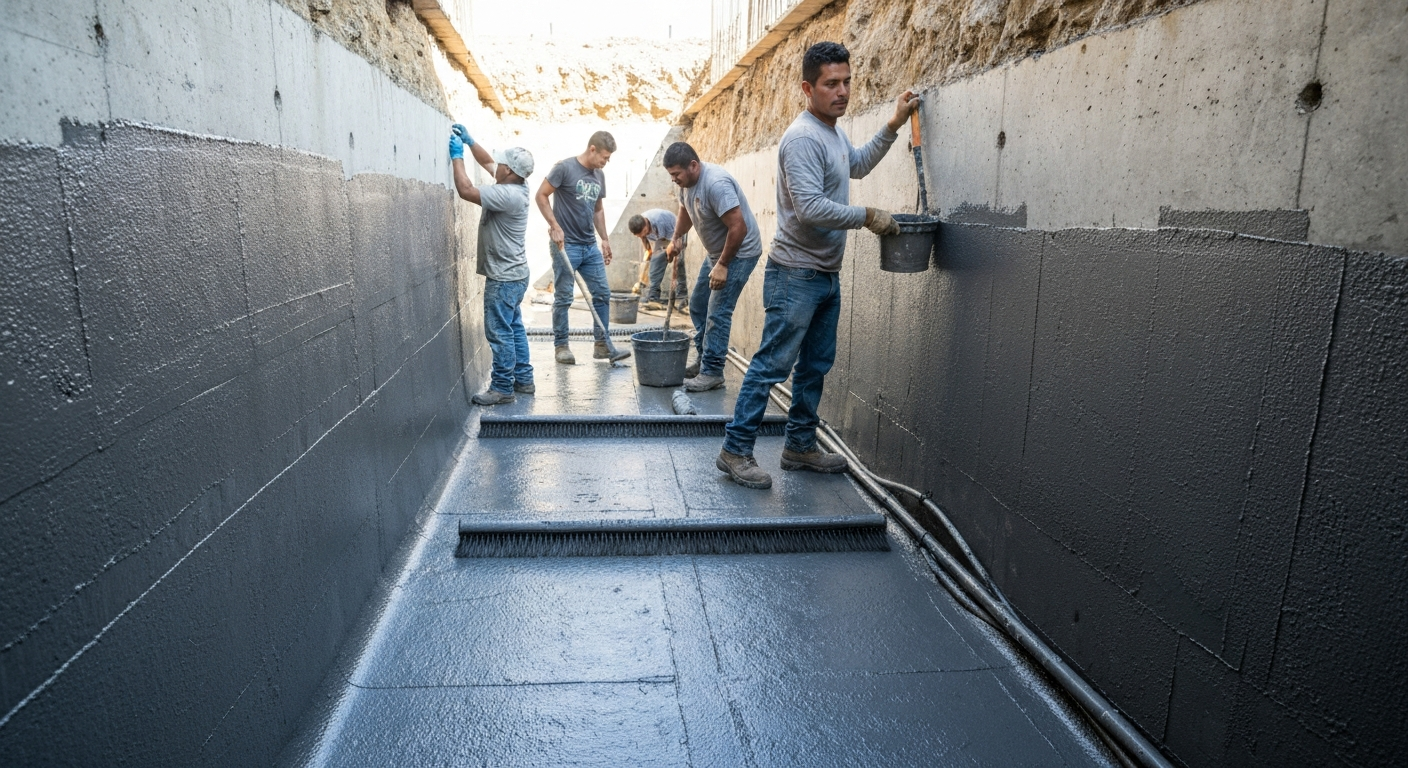
Basement waterproofing options and costs in Ottawa
In Ottawa, basement waterproofing decisions start with understanding how water moves into older foundations and how local clay and repeated freeze-thaw cycles turn minor dampness into active leaks. With 260,220 homeowner households in the Ottawa area (Statistics Canada, 2021 Census), and 44.2% of homes built before 1981, many projects begin with failed original waterproofing systems and silted, collapsed, or missing weeping tile. In older neighbourhoods across Ottawa, that’s often when homeowners first see efflorescence on concrete, musty odours in spring, or water pooling near the perimeter during melt.
Cost is shaped by excavation requirements and how much lateral pressure Ottawa soils can apply. Clay-rich ground holds water and swells as temperatures shift, so weak points in poured concrete or block walls can crack or leak more over time. Where grading is poor, downspouts discharge near the foundation, or existing drainage is clogged, hydrostatic pressure rises and contractor labour increases—especially in areas where landscape removal, access through driveways, and disposal of clay backfill are required. This trade is especially in demand in older parts of Ottawa such as Orléans, where many homes sit on clay-heavy sites and spring melt stresses drainage systems. From there, the best next step is usually choosing between source-control exterior waterproofing and symptom-control interior systems, and comparing typical 2026 price ranges.
| Method |
What It Addresses |
Disruption Level |
Durability |
Price Range |
| Exterior excavation + new membrane + drainage tile |
Source of water entry; hydrostatic pressure control via new weeping tile, membrane, and proper drainage |
High (landscaping removal, excavation, backfill, regrading) |
Long-term (typically 25+ years with correct drainage) |
$9,000–$45,000 |
| Interior perimeter drain channel + sump pit |
Intercepts water after it enters; reduces seepage and basement pooling |
Medium (floor and wall cutting along perimeter; minimal exterior landscaping) |
High (15–25 years depending on maintenance and pump selection) |
$6,000–$20,000 |
| Foundation crack injection (epoxy or polyurethane) |
Cracks allowing water paths; epoxy for stable/structural cracks, polyurethane for active leakage |
Low to medium (minor drilling; localized patching) |
Medium to high (often 10–20+ years when crack type is matched correctly) |
$600–$3,000 |
| Sump pump installation (primary + battery backup) |
Manages collected groundwater during spring melt and heavy rain |
Medium (pit excavation within basement + electrical work) |
High when backup is included (reliable operation during outages) |
$2,200–$3,500 |
| Window well drain installation |
Controls seepage and runoff around basement egress points |
Low to medium (localized excavation and minor masonry adjustments) |
Medium (depends on grading and maintenance) |
$900–$3,000 |
| Lot re-grading / downspout extension |
Redirects roof runoff away from foundation; improves surface drainage |
Low to medium (minor landscaping and excavation) |
Medium (best with clean gutters and periodic checks) |
$800–$4,000 |
Prices are estimates only and vary by project scope, site access and material selection.
What affects the price of waterproofing in Ottawa
In Ottawa, it’s common to see the “same” basement waterproofing idea come in 30–50% apart between quotes, even when the problem looks similar on day one. That spread usually isn’t about price-shopping—it’s about site conditions that change how much labour and material are required, plus which system your contractor chooses to address water at the source versus after it enters. In practice, the soil-water-freeze package is what separates Ottawa-area pricing from a national average.
Ottawa’s three biggest cost drivers are soil type, water table, and freeze-thaw. Clay-heavy ground (common around parts of Ottawa’s broader region) expands during freeze-thaw and can increase lateral pressure on foundation walls, worsening cracking over time. When you add a higher groundwater or poor drainage situation, your sump system may need more capacity and longer run times, and exterior excavation becomes more complex because saturated backfill is harder to handle. While you may hear comparisons to other provinces, heavy rainfall regions can saturate backfill quickly when drainage fails; in Ottawa, freeze-thaw cycles do the “second punch” by widening cracks and turning seepage into active leakage.
Two concrete examples from Ottawa: (1) If an exterior project requires removing deep landscaping beds or a driveway edge to access the foundation, exterior waterproofing can jump toward the higher end of the $9,000–$45,000 band. (2) If you’re dealing with older weeping tile that’s completely failed and the foundation is on expansive clay, interior-only work may still help, but it may not last as long as source control—so contractors often recommend pairing interior drainage with exterior corrections. Given 44.2% of Ottawa homes were built before 1981 (Statistics Canada, 2021 Census), failing original drainage is a frequent trigger for mid- to high-range scopes, especially when there are multiple leak points.
| Price Factor |
Why It Matters |
Cost Impact |
| Interior vs. exterior approach — interior is less disruptive but addresses symptoms |
Interior drains manage water after entry; exterior systems reduce the source pressure |
Interior often lands closer to $6,000–$20,000; exterior can move toward $9,000–$45,000 |
| Foundation type — poured concrete vs. block vs. stone vs. ICF |
Different wall materials crack/leak differently and respond to repairs differently |
Poured walls may suit crack injection; block often needs interior drainage as a practical complement |
| Soil type — clay expands more than sand, adding pressure |
Expansive clays hold water and increase lateral pressure during freeze-thaw |
Clay sites can raise excavation and waterproofing expenses by roughly 25–50% versus better-draining soil |
| Crack type and length — hairline vs. structural horizontal cracks |
Structural cracks require assessment; wrong material selection can fail |
Structural repairs or longer crack runs increase labour/material; simple sealing is less costly |
| Sump pump backup system — battery or water-powered backup needed |
Protects against prolonged pump outage during spring melt or heavy rain |
Backup can add cost within the $2,200–$3,500 sump band, but improves reliability |
| Access — landscaping, decks, or driveways must be removed for exterior |
More removal/disposal increases labour time and complexity |
Can shift an exterior job toward the upper end of the price band |
| Weeping tile age — original tile (60+ years) may be completely failed |
Collapsed or silted tile won’t relieve hydrostatic pressure |
Often pushes scope from localized work to full perimeter excavation and drainage replacement |
| Mould or efflorescence remediation required before sealing |
Sealing over active contaminants can reduce adhesion and worsen indoor air quality |
Additional remediation steps add labour and materials before waterproofing products are applied |
Permits & regulations in Ontario
In Ontario, foundation-related work often triggers permit requirements, especially when you’re changing how water is managed around the building or correcting structural issues. Typical work that may require a building permit includes foundation excavation, structural crack repair (particularly when a structural engineer is involved or underpinning is possible), and changes to lot drainage that affect how water leaves the site. For sump pump installations, if the discharge is connected to storm or sanitary systems—or if the discharge direction changes—municipal approval is commonly required.
Step-by-step, Ottawa homeowners can verify a contractor is properly set up before work begins:
- Confirm the scope: ask whether permits are included and which municipality is being applied to.
- Request the contractor’s Ontario licence/registration details applicable to their trade(s) and project type (and whether subcontractors are used).
- Ask for a certificate of liability insurance and verify the expiry date and coverage amounts.
- Verify WSIB/WCB clearance (whichever applies to the contractor’s situation) and ensure it’s current.
- For structural crack scenarios, request confirmation that they have engineering support (or a process to retain an engineer).
- Get confirmation in writing that the contractor will not start permit-dependent work until permits are approved.
What typically does not require a permit: small, localized crack injection on a stable wall where no structural change is proposed, and targeted window well drainage when it doesn’t alter municipal discharge routes (still confirm with the contractor and your municipality). When in doubt—especially with horizontal cracks or major seepage—ask first. It protects both the schedule and the long-term performance of the fix.
Interior vs exterior waterproofing — what does Ottawa need?
The core difference is source control versus water management. Exterior waterproofing involves full excavation around the foundation, then applying a membrane and installing new drainage tile so hydrostatic pressure is reduced before it reaches the wall and slab. It’s the most permanent approach, but it disrupts the property because gardens, walkways, and sometimes driveway edges must be removed, and expansive clay backfill often needs careful handling and disposal.
Interior waterproofing (perimeter drain channel, sump pit, sump pump) intercepts water after it enters and carries it to a sump where it can be discharged safely. It’s less invasive and often faster to complete, which is why many Ottawa homeowners choose it when landscaping access is limited. However, it doesn’t relieve the pressure against the wall itself, so if the underlying problem is a failed exterior weeping tile system and saturated clay soil, interior methods may manage symptoms without fully stopping the conditions that worsen cracking over time.
Given Ottawa’s freeze-thaw cycles and many pre-1981 homes (44.2% built before 1981; Statistics Canada, 2021 Census), poured concrete foundations frequently respond well to crack injection when the cracks are stable—especially when paired with improved drainage. Block foundations more commonly benefit from interior drainage systems as a practical complement to address seepage through joints and through-wall pathways. In spring, power interruptions can happen during busy municipal seasons, so sump pump projects in Ottawa increasingly include a backup system; that’s also where cost justification is strongest.
For example, if you’re choosing between a localized crack injection alone and a full exterior upgrade: crack injection can start around the $600–$3,000 band, but if the exterior drainage is collapsed, interior-only “patch” work may not stop the repeated melt-season seepage. In that case, spending closer to the $9,000–$45,000 exterior band can be justified because it reduces the repeated pressure that costs you time, mess, and rework later.
| Method |
Best For |
Addresses Source? |
Disruption |
Lifespan |
Price Band |
| Full exterior excavation + membrane |
Chronic seepage, failed weeping tile, saturated clay sites, multiple leak points |
Yes |
High |
25+ years (site-dependent) |
$9,000–$45,000 |
| Interior French drain + sump system |
Intermittent leaks, limited exterior access, basement flooding after heavy rain/melt |
No (manages water after entry) |
Medium |
15–25 years |
$6,000–$20,000 |
| Crack injection — epoxy (structural) |
Stable, non-moving cracks in poured concrete where moisture paths are present |
No (seals the path, not the soil pressure) |
Low |
10–20+ years when correctly matched to crack type |
$600–$3,000 |
| Crack injection — polyurethane (active leak) |
Active seepage through cracks or joints (water weeping at time of repair) |
No (seals the active path) |
Low to medium |
10–20 years (often strong results on active leaks) |
$700–$3,500 |
| Interior drain channel only (no sump) |
Light seepage/condensation control where water can be safely collected without a sump |
No |
Medium |
10–15 years |
$5,000–$12,000 |
| Re-grading + downspout extensions |
Surface-water runoff problems, blocked or undersized downspouts, early dampness |
Partially (reduces surface source) |
Low to medium |
5–15 years (depends on maintenance) |
$800–$4,000 |
How to choose a waterproofing contractor in Ottawa
Choosing the right waterproofing contractor in Ottawa comes down to verification and transparency. Start by confirming Ontario licensing/registration relevant to the work and ensuring the contractor can provide current liability insurance (certificate of insurance) and WSIB/WCB coverage. Ottawa homeowners can check by: (1) reviewing the COI for the correct named insured, coverage limits, and expiry date; (2) requesting a current clearance letter/verification for WSIB/WCB; and (3) asking for the trade licences or registration details for any specialty work (and verifying any subcontractors are covered as well).
Then, get 2–3 itemised written quotes instead of one lump sum. Look for a labour + materials breakdown: excavation, membrane/drainage tile components, sump basin, pump model, backup system type, electrical labour, disposal, and patching/finishing. Read the scope line-by-line for inclusions and exclusions: is a permit pull included if required? Is disposal of excavated soil included? Are adjustments to downspout discharge included? Are you paying extra for landscaping restoration? A reputable company clearly lists what they will and won’t do.
Warranty matters, too. Ask for (a) a workmanship warranty length, (b) the manufacturer/product warranty (and whether it’s transferable to future owners), and (c) what maintenance is required to keep coverage valid. For payment schedule, avoid large deposits—never more than 10–15% upfront—and request a holdback until the job is completed and you’ve received documentation. Finally, ask for a start date and completion estimate in writing, including protection measures for landscaping and clean-up at each phase.
- Verify licence/registration details and the exact trade(s) doing the work.
- Confirm liability insurance is current (COI) before signing.
- Request WSIB/WCB clearance and verify the dates.
- Get at least two itemised quotes with line-by-line scope.
- Ensure the quote identifies drainage tile route, outlet/discharge plan, and testing approach.
- Ask whether permits and municipal approvals are included (if discharge is altered).
- Confirm disposal of clay backfill and debris is included for exterior digs.
- Check whether sump pumps include backup (battery or other approved backup) if required.
- Ask for pump model/specs and power/backup plan for outages.
- Request warranty details for both workmanship and materials (transferability included).
- Require a written timeline and protection/clean-up plan.
- Use a payment schedule with a holdback until completion and documentation delivery.
Red flags I see in Ottawa waterproofing projects include: contractors who guarantee results without assessing the drainage system or crack type; quotes that skip discussion of weeping tile condition and rely on interior repairs only; missing insurance/WSIB paperwork or refusing to provide it; vague warranties (no workmanship length or product details); and payment terms that demand more than 10–15% upfront without a contract deliverables schedule.
Frequently asked questions — waterproofing in Ottawa
Interior vs exterior waterproofing — which is better?
In Ottawa, the “better” option depends on whether you need source control or symptom management. Exterior waterproofing is best when your issue is failed weeping tile, persistent hydrostatic pressure, or saturated clay around the foundation—because it reduces water entry by rebuilding drainage and applying membrane on the outside. That typically falls into the $9,000–$45,000 exterior band for a detached home, especially when excavation and landscaping removal are required. Interior waterproofing is often the right fit when exterior access is limited or when you want faster, less disruptive work; it intercepts water after it enters and commonly lands in the $6,000–$20,000 range. With Ottawa’s freeze-thaw cycles and many homes built before 1981 (Statistics Canada, 2021 Census), interior systems can be an excellent complement—but if the outside drainage is truly failed, exterior usually performs best long term.
Why is my basement leaking in Ottawa?
Basement leaks in Ottawa are usually triggered by a combination of older drainage systems and how water behaves through seasons. Many Ottawa homes were built before 1981 (44.2%; Statistics Canada, 2021 Census), and that era commonly relied on weeping tile systems and waterproofing details that are now silted, collapsed, or missing—so melt-season water can’t drain properly. Ottawa’s freeze-thaw cycles also widen existing cracks, turning small seepage into active dripping during spring thaw or heavy rain. Clay-rich soils worsen the problem because they can hold water and increase pressure against foundation walls. If downspouts discharge near the foundation or grading slopes toward the house, surface water adds to the load, increasing interior dampness, efflorescence, and even pooling.
How do I know if a foundation crack is serious?
Not all cracks are equal, and in Ottawa you should pay extra attention to cracks that align with water pathways or show signs of movement. Hairline cracks that are dry and stable over time may be less concerning, but cracks associated with active seepage, damp mortar lines, or recurring water staining usually deserve immediate attention. Structural concerns typically show up as horizontal cracks in block walls, step cracking that progresses, or cracks that widen after freeze-thaw or heavy melt. Because repair type depends on crack behaviour, a contractor should evaluate whether the crack is stable (often a fit for epoxy injection) or actively leaking (often a fit for polyurethane injection). For many homeowners, crack repairs still start in the $600–$3,000 band, but serious cracking may require engineering assessment before any injection or drainage changes.
How much does foundation crack repair cost in Ottawa?
In Ottawa, foundation crack repair cost depends mainly on crack length, number of injection ports, whether the crack is actively leaking, and how accessible it is. For many typical residential crack repair projects, pricing commonly sits in the $600–$3,000 range for injection work. Epoxy injection is often used when the crack is stable, while polyurethane injection is commonly selected when there is active seepage. If you’re seeing recurring wetness after crack injection, that can indicate the pressure source hasn’t been corrected—especially on clay sites where hydrostatic pressure persists. In those cases, homeowners may need interior drainage improvements or, more decisively, exterior waterproofing.
Do I need a sump pump in Ottawa?
A sump pump is often recommended when you’re seeing groundwater seepage, basement pooling, or seasonal flooding—particularly during spring melt in Ottawa. It’s also useful when interior drainage is installed to intercept water and you need a reliable way to remove it from the basement. On many Ottawa projects, sump pump installation pricing commonly falls into the $2,200–$3,500 range, and including a backup system can be important because pump outages during storm season can quickly turn a managed leak into damage. You may not need a sump if your leak is purely surface-water runoff and can be corrected with re-grading and downspout extensions, or if exterior drainage has already restored proper drainage away from the foundation. The right answer is site-specific: a contractor should inspect soil saturation, drainage outlets, and existing tile condition.
How does Ottawa's soil affect my foundation?
Ottawa’s soil matters because clay-rich ground can hold water and swell as temperatures shift, which increases pressure on foundation walls. During repeated freeze-thaw cycles, that pressure can widen cracks and worsen leaks that might have seemed minor in previous winters. Clay also tends to stay saturated longer than sand, so basement dampness may peak in spring melt or after prolonged rainfall. For many older Ottawa homes (Statistics Canada, 2021 Census) built before 1981, the original drainage system may already be compromised—so even if you don’t notice issues in summer, the foundation can experience pressure increases when freeze-thaw and melt arrive. When contractors excavate exterior perimeters or design interior drainage, they account for these soil behaviour patterns by selecting the right drainage tile and ensuring proper discharge and flow paths.