Basement waterproofing options and costs in Burlington
Burlington homeowners typically see basement moisture as a mix of older waterproofing assemblies, clay-heavy subsoils, and groundwater that can sit relatively close to grade for much of the year. With 47.4% of homes built before 1981 (Statistics Canada, 2021 Census), many basements are dealing with aging tar-and-paper systems, corroded weeping tile, or cracks that have slowly widened through freeze–thaw. In Burlington, the Hamilton–Niagara Peninsula market also creates cost pressure: projects in wetter, more cohesive soils often require deeper excavation and more robust drainage stone, while labour demand rises around busy spring and summer seasons in the Greater Hamilton–Niagara area. Contractors often see higher change orders where decks, mature landscaping, or driveway edges limit access—common in neighbourhood pockets like Bayview–Burloak and along older sections near downtown Burlington.
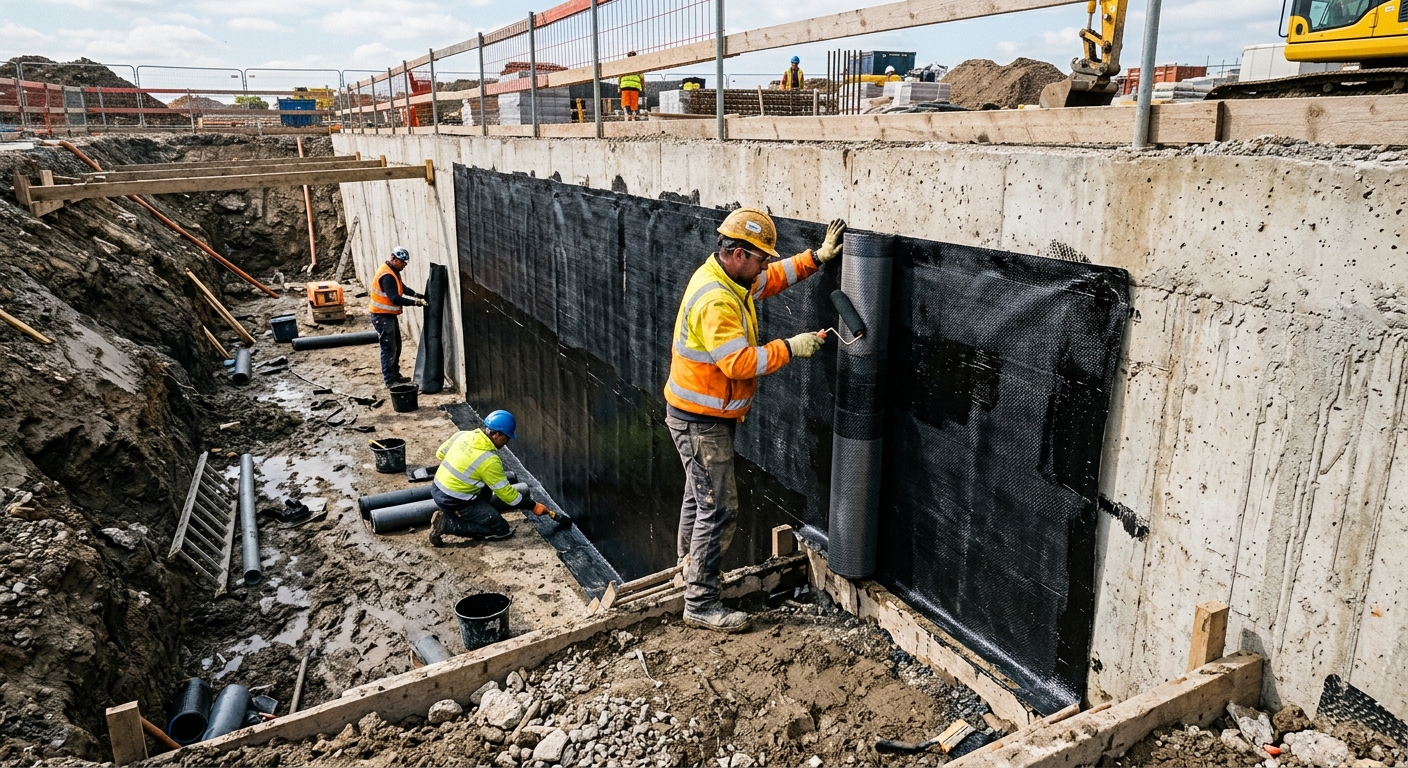
Because soil and water conditions drive the amount of excavation, drainage stone, and membrane protection needed, two “same-looking” damp basements can land in very different price bands. Interior solutions usually start lower because they work from inside (a perimeter drain channel and sump pit), but they manage water after it enters. Exterior waterproofing costs more because it addresses the source with full excavation, new membrane, and drainage tile, then requires careful backfill and site restoration. If you’re planning around a re-grade, downspout extensions, or a window well drainage fix, you may also be able to target a smaller scope.
Use the comparison below to map your symptoms to a realistic approach—then we can narrow the right scope for your specific foundation and groundwater conditions in Burlington.
| Method |
What It Addresses |
Disruption Level |
Durability |
Price Range |
| Exterior excavation + new membrane + drainage tile |
Primary water entry and hydrostatic pressure from outside |
High (yard excavation, temporary site restoration) |
High (source control when installed correctly) |
$12,000–$25,000 |
| Interior perimeter drain channel + sump pit |
Water that enters through cracks or seepage points |
Medium (floor demolition along foundation line) |
Medium-High (depends on wall conditions and discharge) |
$8,000–$18,000 |
| Foundation crack injection (epoxy or polyurethane) |
Cracks—epoxy for structural sealing; polyurethane for active leaks |
Low-Medium (localized openings and surface prep) |
Medium-High (best when crack type is correctly matched) |
$600–$1,800 |
| Sump pump installation (primary + battery backup) |
Continuous removal of collected groundwater to reduce interior dampness |
Low-Medium (pit excavation; electrical work) |
Medium-High (backup reduces outage-related failures) |
$1,800–$4,200 |
| Window well drain installation |
Leakage and pooling near basement window wells |
Low-Medium (exterior window-well work) |
Medium (improves performance if water paths are corrected) |
$2,500–$6,000 |
| Lot re-grading / downspout extension |
Reduced surface water runoff toward the foundation |
Low (restoration typically minor) |
Low-Medium (helps prevent, not stop, major groundwater seepage) |
$1,200–$3,800 |
Prices are estimates only and vary by project scope, site access and material selection.
What affects the price of waterproofing in Burlington
In Burlington and across the Hamilton–Niagara Peninsula region, it’s common to see quotes for the “same” basement problem vary by 30–50%. Two contractors might both propose “a sump and membrane,” but one may need to excavate deeper in wet, clay-rich subsoils and the other may be able to keep excavation shallow because of better site drainage. Ontario-wide variability also comes from how each company documents groundwater, crack type, and foundation configuration before pricing—those details change the labour hours and the amount of drainage stone, membrane laps, and backfill required.
The three biggest cost drivers that separate local pricing from the national average are soil type, water table conditions, and freeze–thaw. Clay-heavy pockets (including many areas influenced by glaciolacustrine deposits) can expand during freeze–thaw and exert lateral pressure on foundation walls, worsening cracks over time. Where groundwater is higher—often roughly 2–4 m below grade in many areas, with perched water tables in shallow fill—the sump may run longer and exterior drainage stone and membrane must be more continuous. Ontario’s freeze–thaw then increases the chance that minor defects become active leaks, so contractors may add crack repair, membrane protection, or upgraded discharge routing.
Concrete examples in Burlington: (1) a basement with multiple step cracks in a block wall often needs interior drainage plus targeted crack work, which can push interior waterproofing toward the upper end of $8,000–$18,000. (2) homes with exterior access limited by a deck or mature hedges can raise excavation time and disposal costs, making exterior waterproofing closer to $12,000–$25,000. (3) newer regrading that improved downspout direction may reduce the scope if the main issue is surface water rather than groundwater pressure.
| Price Factor |
Why It Matters |
Cost Impact |
| Interior vs. exterior approach — interior is less disruptive but addresses symptoms |
Exterior controls water at the source; interior manages what enters |
Exterior commonly costs significantly more (up to the $12,000–$25,000 band) |
| Foundation type — poured concrete vs. block vs. stone vs. ICF |
Wall material changes how cracks form and how water migrates |
Poured concrete often responds well to crack injection; block may require more interior drainage complexity |
| Soil type — clay expands more than sand, adding pressure |
Clay movement during freeze–thaw can widen defects and increase hydrostatic pressure effects |
More robust membrane/detailing and more drainage stone can be required |
| Crack type and length — hairline vs. structural horizontal cracks |
Structural/horizontal cracks may need engineering and possibly underpinning |
Can add engineering time; injection scope may expand beyond small localized repairs |
| Sump pump backup system — battery or water-powered backup needed |
Reduces outage risk during spring storms and wet periods |
Typically adds cost within the $1,800–$4,200 sump range |
| Access — landscaping, decks, or driveways must be removed for exterior |
Excavation time and restoration effort increase with site constraints |
May push a project toward the higher end of the $12,000–$25,000 band |
| Weeping tile age — original tile (60+ years) may be completely failed |
Failing tile increases the amount of water migrating inside |
Interior systems must be sized larger; exterior work may include full tile replacement |
| Mould or efflorescence remediation required before sealing |
Moisture must be addressed and contaminated surfaces cleaned before membranes/coatings |
Extra prep trades and materials can add time and cost before sealing |
Permits & regulations in Ontario
In Ontario, many basement waterproofing projects require permits when they involve changes to foundation drainage, structural elements, or the way water is handled at the property line. As a rule of thumb for Burlington: foundation excavation and work that changes foundation systems typically requires a building permit, and structural crack repair that affects the integrity of the foundation usually needs an engineering review. If you’re modifying lot drainage—adding or re-routing drains—permits are commonly required to ensure the work is safe and meets code expectations for drainage discharge.
Sump pump installations that discharge to the municipal sewer system generally need municipal approval. If your plan is to connect to storm or sanitary infrastructure, your contractor should coordinate approvals before work begins. For structural crack repair (for example, major step cracks in block walls, or horizontal cracks that suggest structural movement), an engineer’s assessment is often required to determine whether the solution is purely sealing/injection or whether underpinning and other structural work are needed.
To verify a contractor in Burlington, follow a simple step-by-step routine: (1) ask for their Ontario licence/business number and confirm it using the provincial/online registry sources they provide; (2) request a current certificate of insurance naming you as an additional insured where applicable; check it covers general liability and the jobsite work; (3) confirm WSIB/WCB clearance letter status (not just a policy number); and (4) for structural repairs, confirm they have documented engineering support (either in-house or by a named structural engineer for assessments).
Interior vs exterior waterproofing — what does Burlington need?
The key difference is that exterior waterproofing targets the source, while interior waterproofing manages water after it enters. Exterior work involves full excavation, new waterproofing membrane, new drainage tile, and proper backfill—so it can permanently reduce hydrostatic pressure. It costs more and creates more yard disruption, but in Burlington’s freeze–thaw climate and clay-heavy soils, addressing the source is often the most durable path when groundwater is the main driver. Interior waterproofing (perimeter drain channel, sump pit, and sump pump) is less invasive and typically cheaper, but it doesn’t stop water migration through cracks; instead, it collects it and pumps it out.
In Burlington, poured concrete walls often respond well to well-matched crack injection combined with a properly sized interior system when exterior access is limited. For block foundations, interior drainage is frequently the practical complement because block walls and mortar joints can allow water to travel behind surfaces; the sump reduces interior hydrostatic effects even when the wall shows seepage through joints. Given Ontario’s wet spring periods and power outage risk, a sump pump backup system (battery backup) is a smart upgrade if you’ve had any interior flooding during outages or if your home is in an area prone to prolonged wet weather.
A simple cost example: if you have active seepage and a failed weeping tile, exterior waterproofing may land in the $12,000–$25,000 range, whereas interior perimeter drainage plus a sump system can be closer to $8,000–$18,000. The difference is justified when you can’t reliably control external water paths with re-grading alone or when groundwater pressure is consistently causing recurring leaks.
| Method |
Best For |
Addresses Source? |
Disruption |
Lifespan |
Price Band |
thead>
| Full exterior excavation + membrane |
Consistent groundwater seepage; recurring dampness where exterior access is workable |
Yes |
High (yard excavation and restoration) |
Long (when membrane detailing and drainage are correct) |
$12,000–$25,000 |
| Interior French drain + sump system |
Water that enters through cracks or seepage points; when excavation outside is limited |
No (manages entry after it occurs) |
Medium (floor demolition along perimeter) |
Long as long as pump/backup and discharge are maintained |
$8,000–$18,000 |
| Crack injection — epoxy (structural) |
Non-moving cracks in poured concrete or stable structural cracks after assessment |
Partial (seals the crack path) |
Low-Medium (surface prep and ports) |
Good when the crack is truly stable |
$600–$1,800 |
| Crack injection — polyurethane (active leak) |
Active seepage where the crack may still move slightly with freeze–thaw |
Partial to Yes for the crack pathway (not bulk groundwater pressure) |
Low-Medium (surface prep and ports) |
Good for active leaks when properly matched |
$800–$2,100 |
| Interior drain channel only (no sump) |
Minor seepage or where a gravity discharge is feasible and reliable |
No |
Medium (floor demolition along perimeter) |
Variable; depends on consistent discharge |
$6,000–$12,000 |
| Re-grading + downspout extensions |
Surface water issues (gutters overflowing, water pooling near foundation) |
No (prevention) |
Low (limited landscape work) |
Medium (works best when groundwater is not the main source) |
$1,200–$3,800 |
How to choose a waterproofing contractor in Burlington
Start by verifying licensing/coverage and then require itemised, written scopes. In Ontario, you want proof that the contractor can legally do the work and that you’re protected if something goes wrong. For Burlington jobs involving excavation, drainage modifications, or electrical work for pumps, ask for: (1) Ontario business registration/licence details (they should be able to provide the reference number and show where it applies); (2) liability insurance certificate (confirm it’s current and covers the type of work being done); and (3) WSIB/WCB clearance. Checking is simple: request certificates up front, confirm expiry dates, and ensure the jobsite/work category is included. If they can’t provide documents promptly, that’s a major warning sign.
Next, collect 2–3 itemised quotes—not just a lump sum. You should see labour and materials breakdowns (membrane, drainage tile, stone, piping, pump model, discharge routing, disposal, and restoration). Carefully read exclusions: is debris disposal included? Is permit pulling included or is it your responsibility? Are all labour and reinstatement costs specified if landscaping or a driveway edge must be cut? Warranty matters too: ask for the workmanship warranty length and confirm the product/manufacturer warranty details, including whether it is transferable to future owners if you sell your home.
For payment schedule, never pay more than 10–15% upfront; use a holdback until the job is complete and you’ve verified performance. Require a written start date and completion estimate, and keep communication documented—especially with exterior excavation in wet seasons.
- Ask for their Ontario licence/business reference and verify it using the registry info they provide.
- Request a current certificate of liability insurance and confirm coverage matches the scope (excavation, drainage, electrical/pump wiring).
- Get WSIB/WCB clearance documentation before work starts (not after).
- Require 2–3 itemised written quotes: separate labour vs materials, and line-item disposal/restoration.
- Confirm whether permits are included and who pulls them.
- Confirm disposal and tipping fees for excess soil are included (or listed as a separate line).
- Ask how they will verify crack type (hairline vs structural/horizontal) before choosing epoxy vs polyurethane.
- Require details on drainage stone gradation and membrane overlap/detailed sealing at corners and penetrations.
- For sump jobs, specify pump model, discharge routing, and whether a battery backup is included.
- Ask about discharge termination location and whether backup discharge is addressed for outages.
- Make sure warranty covers workmanship and is in writing with start/end dates.
- Request a project timeline in writing (start, milestones, and expected completion date).
In Burlington, common red flags include: quoting a one-size-fits-all “interior paint coating” without addressing hydrostatic pressure; refusing to provide insurance/WSIB/WCB documents; presenting a lump-sum quote with no breakdown of membrane, tile, stone, or pump components; and mismatching crack repair to crack type (for example, using epoxy where an active leak needs polyurethane). Another red flag is promising “guaranteed dry basement” without documenting groundwater conditions and crack/structural assessment.
Frequently asked questions — waterproofing in Burlington
What is a weeping tile and does my Burlington home have one?
A weeping tile (often called foundation drain tile) is the underground drainage line installed around the perimeter of a basement foundation, designed to collect groundwater and seepage from the outside and direct it to a sump pit or to an approved discharge. In Burlington and across Ontario, many homes built in the 1960s–1970s commonly have original weeping tile, but 47.4% of homes were built before 1981 (Statistics Canada, 2021 Census), so older installations may be severely deteriorated—cracked, clogged, or disconnected—especially after decades of sediment and clay movement. You can often tell by the age of your basement drainage system, whether there’s a sump pit, or by checking whether your contractor can scope the line. If you don’t have a sump pit, that doesn’t automatically mean you never had weeping tile; it may have drained elsewhere.
Can I waterproof my basement in winter in Burlington?
In Burlington, winter waterproofing is possible, but it depends on what’s happening at the site. Exterior excavation in winter is usually limited by frozen ground and safety concerns, so many contractors focus on interior perimeter drainage, crack injection, or localized window-well drainage where access is manageable. Interior work can still be effective because it deals with water after it enters, and injection can target active seepage—however, you may need appropriate surface prep and cure times to achieve good adhesion. If your issue is groundwater pressure and failing exterior drainage, waiting for frost-out often improves excavation quality and helps contractors install continuous membrane and drainage stone properly. Pricing is usually influenced more by labour scheduling and access constraints than by “seasonal discounting.” For reference, interior waterproofing commonly falls within $8,000–$18,000, but a winter schedule may adjust timeline and labour rates.
What is the difference between waterproofing and damp-proofing?
Damp-proofing is intended to reduce minor moisture penetration in conditions that aren’t actively wet. Waterproofing is designed to withstand water pressure and manage hydrostatic conditions—especially when groundwater and seepage are present. In Burlington’s Hamilton–Niagara Peninsula area, clay-heavy pockets and freeze–thaw can increase cracking and movement, which turns “damp” into recurring seepage where hydrostatic pressure builds. That’s why contractors should not just “coat” a foundation and call it complete. True waterproofing often includes drainage improvements (like perimeter drains and drainage stone), a correctly sized sump system when needed, and wall crack repairs matched to crack type. If you’re seeing pooling, recurring odours, or efflorescence, that usually indicates moisture movement that needs a more complete drainage plan. As a budget anchor, interior waterproofing projects commonly start around $8,000–$18,000 when a sump and perimeter drain are involved.
Will basement waterproofing affect my property value in Burlington?
Yes—often positively—because waterproofing can reduce the risk of recurring leaks, odours, and damage that can turn off buyers. Burlington buyers are especially sensitive to basements that show signs of active moisture, since older housing stock is common and freeze–thaw can worsen small cracks over time. A written scope, proper documentation, and transferable warranties help substantiate the work. Exterior waterproofing (when feasible) typically has strong perceived value because it targets the source—new membrane and drainage tile—rather than only managing water after it enters. However, interior waterproofing can also be valuable if it includes a robust sump system, correct discharge routing, and appropriate crack repair. For many homeowners, investing within the $12,000–$25,000 exterior band or the $8,000–$18,000 interior band can protect the usable basement space and reduce ongoing maintenance costs.
What drainage issues are most common in Burlington homes?
The most common issues in Burlington typically fall into two buckets: surface water runoff and groundwater seepage. Surface water problems often come from downspouts discharging toward the foundation, poor lot grading, or eavestrough overflow—sometimes fixable with re-grading and downspout extensions. Groundwater seepage is also common because clay and silty clay subsoils can hold moisture, and freeze–thaw can widen existing cracks. In older homes, original weeping tile may be clogged or disconnected, which increases the amount of water migrating inward. You may also see issues tied to sump pit sizing or discharge routing that causes limited performance during heavy spring wet periods. If you’re noticing damp corners, efflorescence, or water after heavy rain, a contractor should assess crack type and whether exterior drainage is failing before selecting either interior drainage or full exterior waterproofing. Window well pooling and poor drainage around basement openings are also frequent problem spots.
How do I choose a waterproofing contractor in Burlington?
Choose a contractor by verifying coverage and then insisting on an itemised, written scope that matches your specific symptoms. In Burlington, start by asking for proof of current liability insurance, WSIB/WCB clearance, and their Ontario business/licence details, then verify dates and coverage match the scope. Get 2–3 quotes with labour and material line items—not a lump sum—and confirm whether permits are included (especially for foundation drainage changes and any sewer/storm discharge approvals). Read the scope carefully: is disposal and reinstatement included, and are exclusion areas clearly stated? Ask how they’ll identify whether cracks are stable (epoxy) or actively leaking (polyurethane). Also confirm warranty details for workmanship and products. Avoid contractors who won’t discuss sump pump discharge, backup options, or who guarantee dryness without documenting groundwater and crack conditions. For reference, sump installation with primary + backup commonly sits in the $1,800–$4,200 band, and the right scope should reflect that.