Basement waterproofing options and costs in Deep River
Deep River homeowners typically start basement waterproofing the same way: noticing damp corners, a musty smell, or water staining after spring melt. In Deep River, older housing stock is a key reason these issues are so common—84.5% of homes were built before 1981, when early waterproofing methods (and original weeping tile systems) were far less durable. That matters because many older basements have clogged, broken, or missing drainage lines, so water finds the easiest path through tie holes, joints, and widened cracks.
In the Kingston–Pembroke economic region, pricing is driven less by “style” and more by site conditions. Eastern Ontario’s clay-rich soils tend to hold water and expand during freeze-thaw, increasing lateral pressure on foundation walls and amplifying seepage once a crack or joint weakens. Contractors also price the work around real access constraints (tight side yards, landscaping, sheds, driveways) and the amount of excavation required to install or replace exterior drainage. Availability can also shift with the busy season: exterior work often lines up with late spring and early fall when excavation and backfill conditions are more predictable.
In Deep River, demand is especially high in older residential pockets near the downtown core and along established lots where re-grading and drainage tie-ins are more constrained. From there, the most effective solution is usually one of two approaches: permanent exterior water control or an interior system that manages water after it enters.
Use the comparison table below as a starting point for budgeting and discussing scope with local contractors.
| Method |
What It Addresses |
Disruption Level |
Durability |
Price Range |
| Exterior excavation + new membrane + drainage tile |
Stops water at the source by rebuilding the foundation’s water barrier and exterior drainage |
High (excavation, landscaping restoration) |
High (often the most complete retrofit) |
$12,000–$25,000 |
| Interior perimeter drain channel + sump pit |
Collects seepage and relieves hydrostatic pressure inside the basement |
Medium (interior floor and perimeter work) |
Medium-to-High (depends on wall condition and discharge reliability) |
$4,000–$10,000 |
| Foundation crack injection (epoxy or polyurethane) |
Seals cracks to reduce seepage through joints and wall defects |
Low-to-Medium (small drilling, minimal demolition) |
Medium-to-High (best when cracks are stable and properly selected) |
$800–$1,800 |
| Sump pump installation (primary + battery backup) |
Moves collected water away during high water and power interruptions |
Medium (pit excavation, discharge routing) |
High (when paired with backup and good check-valve design) |
$900–$2,200 |
| Window well drain installation |
Prevents water intrusion through basement window wells during heavy runoff and melt |
Low-to-Medium (excavation at wells) |
Medium (site drainage dependent) |
$1,200–$3,000 |
| Lot re-grading / downspout extension |
Reduces surface water load around the foundation and slows down entry at weak points |
Low-to-Medium (site work and landscaping) |
Low-to-Medium (best as a supplement, not a sole cure for hydrostatic pressure) |
$1,500–$4,500 |
Prices are estimates only and vary by project scope, site access and material selection.
What affects the price of waterproofing in Deep River
Even when homeowners ask for “the same basement fix,” quotes in the Kingston–Pembroke region can differ by roughly 30–50% because waterproofing is site-specific. In Ontario, the biggest separations are usually soil/water conditions and how much excavation a contractor must do to properly manage groundwater. National averages can understate cost in areas where clay-heavy soils expand during freeze-thaw; that swelling pushes laterally on foundation walls, widening cracks and joints, which then increases labour for crack prep, injection staging, and (in some cases) combining crack sealing with drainage upgrades.
In Kingston–Pembroke, high or fluctuating water tables also raise sump pump run times and demand more reliable discharge planning, including check valves and backup power in spring flooding conditions. In Deep River’s older neighbourhoods—where many homes were built long before modern membrane and drainage standards—the original weeping tile system may be 60+ years old and already failed, which can force a move from “repair” to “system replacement.”
Two practical examples you’ll see locally: if a seepage issue is caused by surface runoff only, downspout extensions and re-grading can sometimes reduce water without full exterior excavation (often a smaller ticket compared with membrane work). But if the same basement has staining across multiple wall segments after melt, contractors typically price for deeper interior perimeter drainage and sometimes a backup sump; for many homeowners, interior waterproofing commonly falls in the $4,000–$10,000 band, while exterior excavation with membrane and drainage tile frequently lands in the $12,000–$25,000 band.
| Price Factor |
Why It Matters |
Cost Impact |
| Interior vs. exterior approach — interior is less disruptive but addresses symptoms |
Interior drains manage water inside; exterior controls it before it reaches the wall |
Interior can be ~lower cost, but may require additional components (sump, channel, discharge upgrades) |
| Foundation type — poured concrete vs. block vs. stone vs. ICF |
Different materials crack differently and respond to different sealing methods |
Block and older stone often cost more to stabilize and drain because leakage pathways are more varied |
| Soil type — clay expands more than sand, adding pressure |
Clay holds water and expands during freeze-thaw, increasing hydrostatic pressure |
Can push projects toward exterior controls or stronger interior drainage design |
| Crack type and length — hairline vs. structural horizontal cracks |
Structural or horizontal cracks may indicate movement and require more than simple sealing |
Structural cracks can raise scope due to engineering review and potential underpinning planning |
| Sump pump backup system — battery or water-powered backup needed |
Backup reduces risk when power is interrupted during spring wet periods |
Raises cost, but can prevent a basement flooding claim and cleanup |
| Access — landscaping, decks, or driveways must be removed for exterior |
Excavation footprint determines how much restoration is required |
Extra demolition and restoration can add significant labour and materials |
| Weeping tile age — original tile (60+ years) may be completely failed |
Old systems are often clogged or collapsed |
May require replacement and more extensive excavation |
| Mould or efflorescence remediation required before sealing |
Sealers and membranes don’t perform well over active salts or organic contamination |
Can add remediation time, PPE, and specialized cleaning steps |
Permits & regulations in Ontario
In Ontario, foundation-related work commonly triggers permit or approval requirements depending on how extensive the changes are. As a general homeowner guide for Deep River: excavation and grading that alters lot drainage, structural crack repairs that could affect load-bearing elements, and any work that involves breaking and repairing significant portions of foundation walls typically require a building permit. Where a sump system discharge ties into storm or sanitary infrastructure, municipal approval is often required (and sometimes restrictions apply to where the discharge can go).
For structural crack repair—especially major step cracks in block walls or horizontal cracks—an engineer’s assessment is often needed to determine whether simple sealing is enough or whether underpinning and/or other structural measures are required. Even if the waterproofing contractor can do crack work, you want them to show they can coordinate engineering when the crack pattern suggests movement.
To verify Ontario compliance step-by-step, ask the contractor for: (1) their Ontario business licensing details (or the appropriate trade registration, where applicable) and the permit number if they’ll pull permits, (2) a current Certificate of Insurance showing liability coverage that includes the jobsite address, and (3) WSIB/WCB clearance (or evidence of coverage). Then confirm with the contractor’s administrative contact that the clearance letter is current and the certificate is not expired. If anything is missing, treat it as a scope risk—especially on exterior excavation jobs where liabilities increase.
Interior vs exterior waterproofing — what does Deep River need?
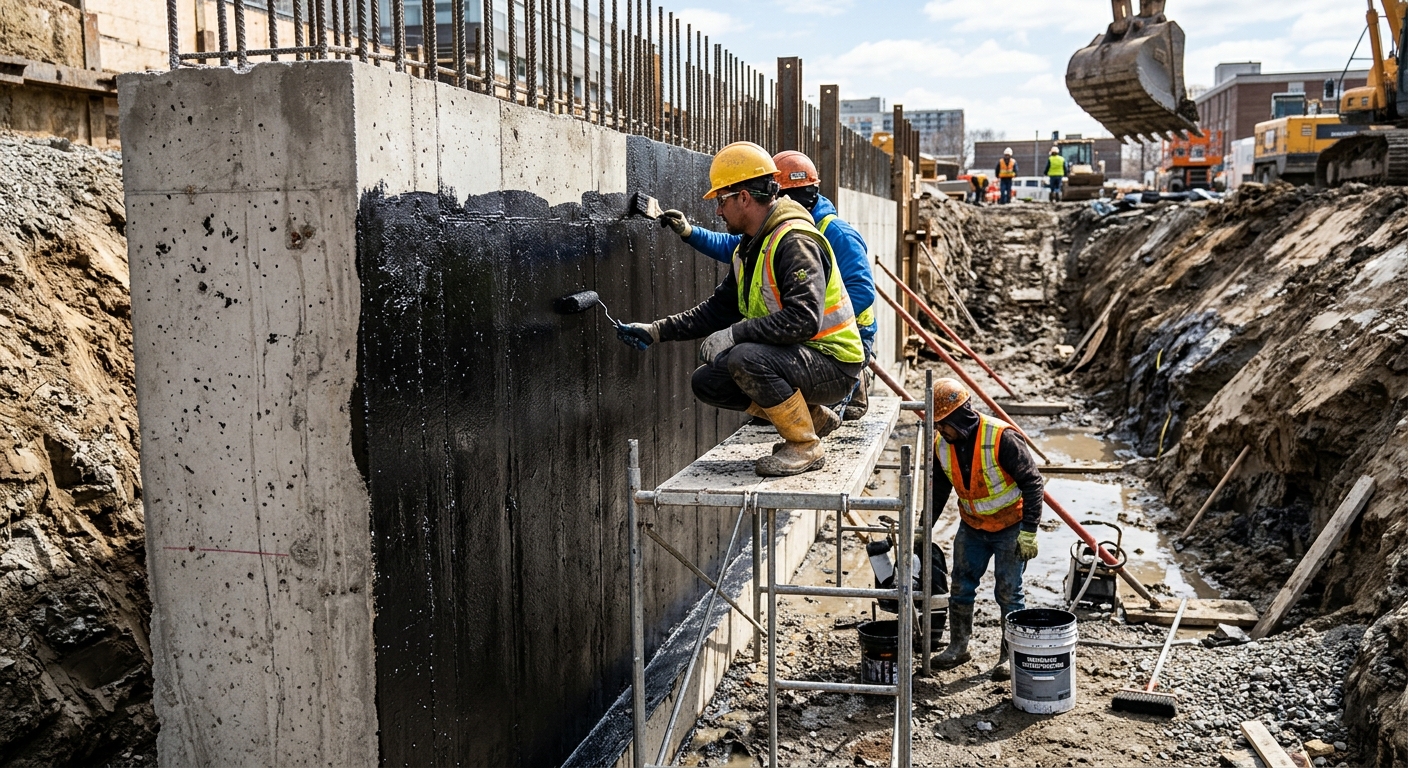
The fundamental difference is simple: exterior waterproofing rebuilds the basement’s water barrier at the foundation face, typically with full excavation, membrane, and new drainage tile; it targets water before it enters. Interior waterproofing—perimeter drain channels, sump pits, and sump pumps—manages water after it reaches the basement slab or wall. In Deep River’s freeze-thaw climate, exterior systems generally perform best when clay-heavy soils hold water against the foundation, because the pressure is reduced at the source. However, exterior work is more expensive and more disruptive, especially where landscaping is mature or where access is tight.
Interior solutions are often the right fit when you can’t reasonably excavate around the perimeter. With poured concrete walls, crack injection can be a strong complement because these walls often respond well when cracks are stable; sealing the pathway plus intercepting seepage with an interior perimeter system can stop chronic dampness. With block foundations, interior drainage is frequently necessary even when crack sealing is attempted, since water can travel along block joints and through multiple small pathways.
Sump pump backup is important in Ontario spring weather. When the ground thaws quickly and water tables rise, pumps can run for long cycles; if power drops, backup can prevent a “minutes-to-massive-cleanup” scenario. That’s why some contractors bundle battery or water-powered backup with sump installations rather than selling it later.
In terms of cost justification: if you have widespread seepage across multiple walls after melt, interior work alone can still help, but a true exterior excavation often becomes the better long-term value. A typical interior perimeter drain plus sump approach may sit in the $4,000–$10,000 band, while exterior excavation with membrane and drainage tile often falls in the $12,000–$25,000 range—money spent to reduce future pressure instead of repeatedly managing water inside.
| Method |
Best For |
Addresses Source? |
Disruption |
Lifespan |
Price Band |
| Full exterior excavation + membrane |
Widespread seepage, older failed drainage, high water pressure seasons |
Yes |
High |
High (properly detailed systems can last many years) |
$12,000–$25,000 |
| Interior French drain + sump system |
Limited exterior access, chronic seepage, or as a practical retrofit |
No (manages after entry) |
Medium |
Medium-to-High (pump selection and discharge reliability matter) |
$6,000–$12,000 |
| Crack injection — epoxy (structural) |
Stable cracks in poured concrete where sealing restores integrity |
Sometimes (depends on crack source and stability) |
Low |
Medium-to-High when cracks are stable and prepped correctly |
$800–$1,800 |
| Crack injection — polyurethane (active leak) |
Cracks with active seepage and movement where flexible sealing is needed |
Sometimes |
Low |
Medium (often improved when paired with drainage) |
$1,000–$2,200 |
| Interior drain channel only (no sump) |
Light seepage where gravity discharge or very limited water volume is expected |
No |
Low-to-Medium |
Lower-to-Medium (risk increases during high water events) |
$3,500–$7,000 |
| Re-grading + downspout extensions |
Surface runoff problems and dampness near corners/windows |
Helps reduce load (partial source reduction) |
Low-to-Medium |
Low-to-Medium (supplemental) |
$1,500–$4,500 |
How to choose a waterproofing contractor in Deep River
Choosing the right contractor matters as much as the product. For waterproofing in Ontario and specifically Deep River’s freeze-thaw conditions, you want proof of coverage and a scope that matches the cause—not just the symptom. Start by verifying licensing/trade registration where applicable, and always check liability insurance and WSIB/WCB coverage: request a Certificate of Insurance for the jobsite address and confirm the policy is active. Then ask for a WSIB/WCB clearance letter (or equivalent proof of registration and good standing). If the contractor can’t provide current documents promptly, pause and request them before scheduling work.
Next, get 2–3 itemised written quotes. Look for a breakdown that separates labour and materials (membrane, drainage tile, drain rock, pipe, pump, check valves, disposal/haul-away), and clarifies exclusions such as soils disposal, restoration of landscaping, engineering fees, or mould remediation. Confirm whether the contractor will pull any required permit and whether that cost is included. For warranties, ask for both the workmanship warranty length and any manufacturer product warranty; also ask whether warranties are transferable to future owners.
For payment schedules, never let the upfront deposit exceed about 10–15%. Use holdback: pay the remainder after verification of key milestones (inspection of drains, membrane continuity, sump testing, and final cleanup). Finally, insist on a written timeline with a start date and completion estimate—weather delays happen, but your contractor should still outline sequencing and what happens if conditions prevent backfill or membrane protection.
- Ask for a site-specific moisture diagnosis (evidence-based inspection, not “one system for everyone”).
- Confirm whether they recommend an interior system, exterior excavation, or a combination based on wall type and crack pattern.
- Require an itemised quote with labour/material/disposal and clearly listed exclusions.
- Check that sump discharge plan complies with approvals (and doesn’t create new runoff problems).
- Verify the contractor’s liability insurance certificate matches your address and includes construction activities.
- Request WSIB/WCB clearance proof and confirm it’s current for the date they sign.
- Confirm warranty terms in writing: workmanship warranty, product warranty, and what triggers voiding.
- Ask for pump specs and backup details (battery vs water-powered) and how they test the system.
- Insist on clear details for crack injection (epoxy vs polyurethane) and crack preparation steps.
- Confirm disposal/haul-away is included if they’re excavating or removing contaminated materials.
- Get a written schedule that includes curing times (membrane/injection) and inspection points.
- Make sure restoration scope is defined: grading, topsoil, sod/stone replacement, and downspout connections.
Red flags in Deep River include: quotes that skip a drainage discharge plan, vague warranty language (“up to”) without defined coverage, refusing to show insurance/WSIB/WCB paperwork, “lump sum only” estimates without itemisation for pumps/membrane/tile, and promises of “guaranteed dry forever” without discussing soil and water table conditions.
Frequently asked questions — waterproofing in Deep River
Do I need a sump pump in Deep River?
Not every damp basement needs a sump pump, but many Deep River homes benefit from one when seepage is pressure-related (water migrating through cracks, joints, or corners after melt). In Kingston–Pembroke, freeze-thaw can worsen existing pathways and clay-rich soils can hold water longer against the foundation, which increases the chance of water collecting at the floor perimeter. If your basement shows recurring water after heavy spring rains or you can see active dampness along multiple wall segments, a perimeter drain plus sump is often the safest way to manage inflow. Budget-wise, sump work and pit installation commonly sits in the $900–$2,200 band for the pump portion, but the full interior system is often higher when the perimeter channel and discharge plan are included.
How does Deep River's soil affect my foundation?
Deep River sits in a region where clay-rich soils are common, and that can strongly influence waterproofing outcomes. Clay tends to hold water and can expand when saturated, which increases lateral pressure on foundation walls during freeze-thaw cycles. As a result, small cracks that might be “inactive” in summer can become active in winter and spring, letting water exploit tie holes, joints, or weak mortar areas. Homes built before 1981 are especially at risk because original waterproofing and drainage details may be outdated or failed. The practical effect for homeowners is that drainage and pressure management often need to be designed around water movement—not just surface runoff—so interior drains or exterior membrane systems may be recommended depending on your wall type and access.
Do I need a permit for foundation work in Ontario?
In Ontario, many foundation-related projects require a building permit, especially when you’re changing drainage around the foundation, excavating near the structure, or repairing work that could affect structural integrity. For Deep River homeowners, that typically includes exterior excavation/rebuilds and significant crack repairs when structural movement is suspected. Connecting sump discharge to storm or sanitary services can also require municipal approval. To avoid surprises, ask your contractor if they will pull the permit and include that cost in the quote. A good rule of thumb: sealing a single hairline crack may not always trigger the same level of permitting as broader structural repair or excavation, but you should confirm based on the specific scope and wall conditions.
How long does waterproofing last?
Longevity depends on the system design, correct product selection, and whether the underlying water source is actually addressed. Exterior waterproofing with membrane and new drainage tile typically offers the longest path to long-term performance because it reduces water pressure at the foundation face. Interior systems can last many years too, but their performance hinges on pump reliability, discharge routing, and how well the perimeter drain intercepts seepage. Crack injection alone can be shorter-lived if the crack is moving or if the basement keeps experiencing high hydrostatic pressure from wet soils. In practical Deep River terms, homeowners often see better durability when exterior controls are matched to the site’s clay and freeze-thaw behaviour. If you’re budgeting, remember that exterior solutions often fall into the $12,000–$25,000 range, reflecting that longer-term focus.
Can I waterproof my basement from the inside only?
Yes, interior-only waterproofing is possible in many Deep River basements, especially when exterior excavation is difficult due to decks, driveways, landscaping, or tight access. Interior solutions like a perimeter drain channel and sump pit manage water after it enters the basement, which can stop dampness and reduce staining and odours. However, interior work doesn’t eliminate hydrostatic pressure on the wall; it collects and redirects water away. If you have widespread seepage during spring melt or signs of significant pressure against walls, interior-only approaches can still help, but they’re often best paired with targeted crack injection and proper sump backup. Interior waterproofing commonly falls around the $4,000–$10,000 band depending on wall type, perimeter conditions, and pump/discharge details.
What causes foundation cracks in Deep River?
Foundation cracks in Deep River are commonly caused by a mix of seasonal movement, soil moisture changes, and older construction details. Clay-rich soils expand and contract during wet and dry periods; during freeze-thaw, water in soil and foundation joints can widen micro-cracks, and repeating cycles can turn small defects into active seepage pathways. In older homes (84.5% built before 1981), original waterproofing and drainage systems were often less effective, so water may have repeatedly infiltrated joints and tie holes over time. Other contributors include poor downspout management, clogged weeping tile, and inadequate lot grading that lets surface water concentrate near the foundation. The “shape” of cracks matters: hairline vertical cracks may be less concerning than structural horizontal cracks, which often require engineering review.