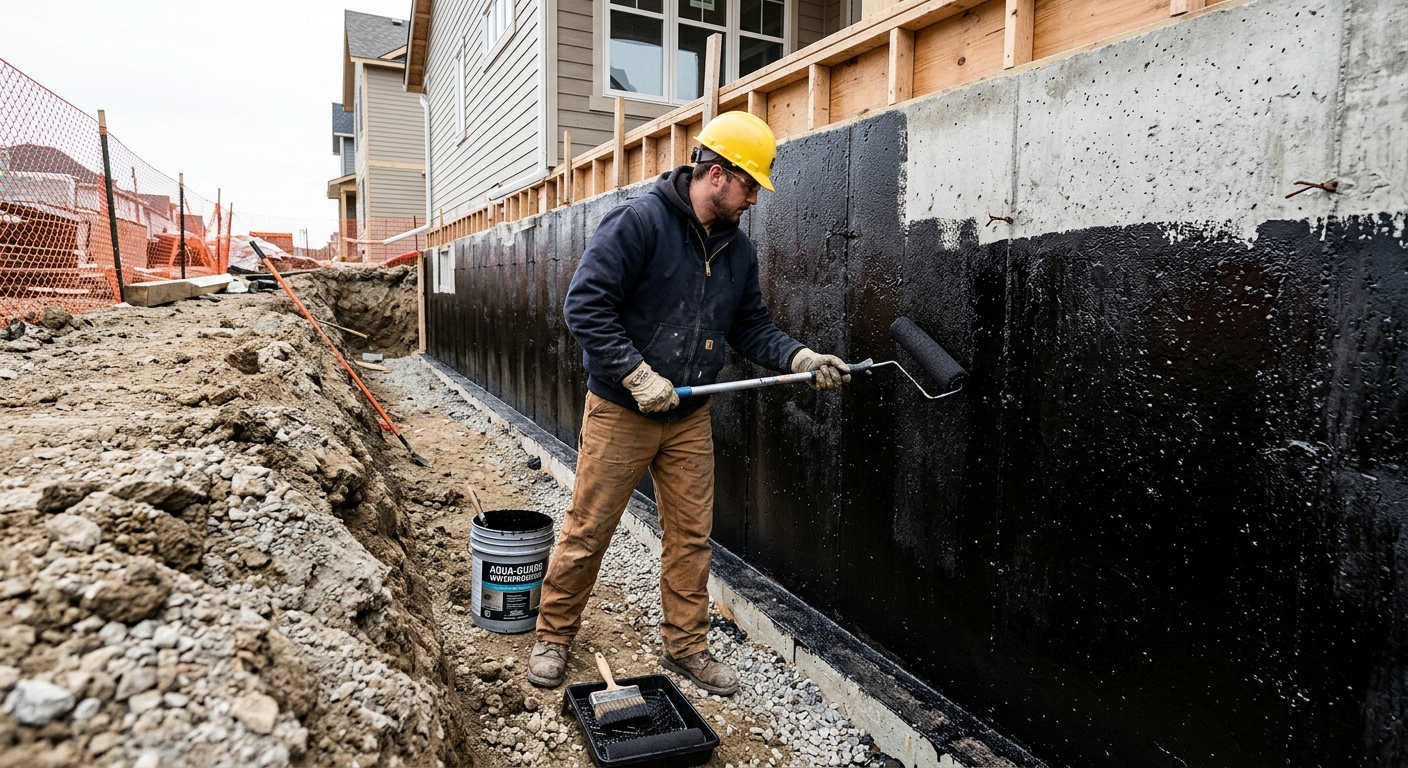
Basement waterproofing options and costs in Don Valley Village
In Don Valley Village, Ontario, homeowners usually start by noticing dampness, efflorescence, or the occasional weeping crack in a basement, and then quickly learn that “waterproofing” can mean several different systems. Don Valley Village’s population was 27,051 in 2021, and that steady housing demand supports a deep bench of local trades—yet the right solution depends heavily on your foundation era and drainage history. In the Toronto area, many post-war and 1960–1980s basements still sit with original clay weeping tile or early drains that are now partially collapsed or clogged, which shifts many projects toward interior drainage upgrades or hybrid approaches.
Toronto’s mixed glacial till and clay pockets matter because saturated clay holds water against foundation walls and can expand when freeze-thaw cycles repeat through winter. That means small defects at cold joints, tie holes, and cracks can become active leaks over a few winters. Cost is therefore driven by whether you need to relieve lateral soil water pressure (often exterior excavation and membrane with new drainage tile) or manage water after it enters (interior perimeter drains and sump). In Don Valley Village, contractors see especially high demand along the corridors where older lots have additions or tighter access near shared driveways, making excavation and deck removals common—practical constraints that affect labour and disposal.
Below is a side-by-side comparison of the typical waterproofing methods and their costs, so you can match your symptoms to a realistic plan before you compare contractor quotes.
| Method |
What It Addresses |
Disruption Level |
Durability |
Price Range |
| Exterior excavation + new membrane + drainage tile |
Source water entry by removing hydrostatic pressure; replaces failing drainage and membrane |
High (excavation, backfill, landscape restoration) |
Long service life with correct backfill and drainage |
$7,000–$25,000 |
| Interior perimeter drain channel + sump pit |
Captures seepage and prevents water pooling at the floor/wall joint |
Medium (floor cuts, minor wall work) |
Strong if discharge/pipe routing and sump sizing are correct |
$3,500–$15,000 |
| Foundation crack injection (epoxy or polyurethane) |
Stops isolated leaks through cold joints and cracks; helps restore watertightness |
Low to medium (surface prep, localized drilling) |
Depends on crack type and whether movement is still active |
$600–$3,000 |
| Sump pump installation (primary + battery backup) |
Removes collected water during high water events; backup reduces outage risk |
Low to medium (pit excavation and electrical tie-in) |
High when paired with appropriate discharge routing and backup |
$800–$3,500 |
| Window well drain installation |
Prevents surface runoff from saturating around basement windows |
Low to medium (window well work) |
Good when properly graded and tied into drainage |
$900–$2,800 |
| Lot re-grading / downspout extension |
Reduces surface water infiltration that feeds foundation saturation |
Low (earthwork and exterior plumbing) |
Moderate (can degrade if landscaping changes) |
$600–$3,000 |
Prices are estimates only and vary by project scope, site access and material selection.
What affects the price of waterproofing in Don Valley Village
Homeowners in Don Valley Village often hear very different numbers for what sounds like the same “basement leak fix,” and it’s not unusual to see variation of 30–50% across the Toronto region. The biggest reasons are that quotes are influenced by soil conditions, local water pressure patterns, and how each contractor plans around freeze–thaw. Those drivers are what separate Toronto’s typical costs from a national average: clay-heavy soils common around Ontario can expand when saturated during freeze–thaw, increasing lateral pressure and turning hairline cracks into recurring leak paths. High local water-table conditions also mean sump systems may run longer and need more capacity, piping, and backup considerations.
In practice, two basements that both “have a crack leak” can price far apart. For example, if your basement wall is on a dense clay pocket that holds water, the contractor may recommend exterior excavation + new membrane and drainage tile—often within the $7,000–$25,000 band—to stop hydrostatic pressure at the source. If the same crack is isolated and your interior drainage is intact, targeted foundation crack repair (often in the $600–$3,000 band) plus careful sealing can be justified. Another cost swing happens with drainage age: older clay weeping tile (often 60+ years in many post-war homes) may be completely failed, so an interior perimeter drain alone may just slow the problem unless the water pathway is corrected.
Local access also matters in Don Valley Village. Tight urban lots can require hand-digging around additions, decks, or shared driveways, adding labour and disposal; conversely, a straightforward exterior run with clear access can lower mobilization time. Before you sign, ask whether the scope assumes failing weeping tile, how far discharge lines must travel, and whether mould or efflorescence remediation is included prior to any sealing.
| Price Factor |
Why It Matters |
Cost Impact |
| Interior vs. exterior approach — interior is less disruptive but addresses symptoms |
Interior systems manage water after entry; exterior reduces or eliminates the source of pressure |
Exterior can be materially higher; interior typically reduces disruption and labour intensity |
| Foundation type — poured concrete vs. block vs. stone vs. ICF |
Different walls behave differently with movement and sealing strategies |
Poured concrete often responds well to crack injection; block may need complementary drainage planning |
| Soil type — clay expands more than sand, adding pressure |
Saturated clay increases hydrostatic and lateral pressure at the wall |
Clay-heavy sites often push scope toward exterior membranes or robust interior capture |
| Crack type and length — hairline vs. structural horizontal cracks |
Active movement requires different materials and may involve engineer-led work |
Structural or long cracks increase labour, materials, and scheduling (often longer verification) |
| Sump pump backup system — battery or water-powered backup needed |
Spring flooding and storm events can coincide with short outages |
Backup increases component cost and electrical/plumbing time |
| Access — landscaping, decks, or driveways must be removed for exterior |
Excavation time and restoration drive labour and disposal costs |
More removals and reinstatement can shift a mid-range job toward the top of the band |
| Weeping tile age — original tile (60+ years) may be completely failed |
Failing drainage increases water load and overwhelms partial fixes |
May require full drainage replacement or combined interior systems |
| Mould or efflorescence remediation required before sealing |
Sealers and membranes perform poorly over untreated contamination and salts |
Adds remediation labour and may extend timeline before final waterproofing steps |
Permits & regulations in Ontario
In Ontario, foundation excavation, structural crack repair, and changes to lot drainage typically require a building permit. If your work includes underpinning, major structural repairs, or any intervention that changes how the foundation supports the house, expect permit and documentation requirements. Sump pump installations that connect to the storm or sanitary sewer (or require modifications near those connections) need municipal approval, and contractors should tell you exactly what they are doing for discharge routing before any pit is dug.
For structural crack repair—especially horizontal cracks in block walls or step cracks that suggest movement—an engineer’s assessment is often required. The goal is to confirm whether the issue is a watertightness problem or a structural stability issue that must be addressed with underpinning or other structural measures. A reputable contractor will be able to describe the engineering support they use for structural repairs, and they should carry liability insurance and WSIB/WCB coverage for the crew performing the work.
How to verify compliance step-by-step as a homeowner in Don Valley Village:
- Ask for the permit number (if required) and confirm who is pulling it—the contractor should be clear.
- Request a clearance letter or proof of WSIB/WCB account coverage for the people on site.
- Get a certificate of liability insurance showing the contractor’s policy is active for the project period.
- For structural work, ask whether an engineer assessment will be provided and whether the report will be used to guide the repair method.
- Confirm whether discharge is going to daylight, a proper storm connection, or another approved routing—and that approvals are documented.
If a contractor can’t provide clear documentation or tries to keep you out of the permit/discharge discussion, that’s a sign to slow down.
Interior vs exterior waterproofing — what does Don Valley Village need?
The key difference is whether you stop water at the source or manage it after it enters. Exterior waterproofing—full excavation, new membrane, and new drainage tile—addresses the source by relieving hydrostatic pressure against foundation walls. It is the more permanent path when clay soils saturate and push water sideways, but it also means more disruption: excavation around the perimeter, backfill, and landscaping or deck restoration. Interior waterproofing—perimeter drain channel, sump pit, and sump pump—captures seepage once it has crossed into the basement. It typically costs less and is less invasive, but it doesn’t eliminate pressure against the wall itself, so it’s best when the leak is chronic but localized or when access makes excavation impractical.
In Don Valley Village’s Toronto climate, freeze–thaw cycles intensify the consequences of small failures at cold joints and cracks. Poured concrete walls often respond well to crack injection when the crack is isolated and not still moving, while block foundations commonly benefit from interior drainage as a practical complement to any localized sealing. If you’re already seeing recurring dampness after spring thaws or heavy rains, the cost decision often comes down to whether the failed drainage system is feeding the wall. For example, if your basement needs an interior perimeter drain and sump in the $3,500–$15,000 range but also has original weeping tile that’s clogged or collapsed, spending toward exterior work (often $7,000–$25,000) can be justified to reduce water load and extend the repair’s life.
Finally, consider sump pump backup systems. In Ontario, brief power outages can occur during spring storms; a battery backup helps protect a finished basement during high water events, and that matters when water is actively entering while you’re sleeping.
| Method |
Best For |
Addresses Source? |
Disruption |
Lifespan |
Price Band |
| Full exterior excavation + membrane |
Homes with clay-saturation pressure, failing exterior drainage, or multiple leakage points |
Yes (reduces hydrostatic pressure) |
High (excavation and landscape restoration) |
Long, when backfill, slopes, and discharge are correct |
$7,000–$25,000 |
| Interior French drain + sump system |
Chronic seepage with limited exterior access or localized wall failure |
No (captures water after entry) |
Medium (floor cuts and sump pit work) |
Very good with correct sump sizing and discharge routing |
$3,500–$15,000 |
| Crack injection — epoxy (structural) |
Stable cracks in poured concrete or non-moving pathways |
Partial (seals the entry path, but not pressure source) |
Low to medium |
High when the crack is dry/stable and properly prepped |
$600–$3,000 |
| Crack injection — polyurethane (active leak) |
Active seepage through cracks that show continued water movement |
Partial (seals the pathway under wet conditions) |
Low to medium |
Good for active leaks when movement and moisture conditions are addressed |
$600–$3,000 |
| Interior drain channel only (no sump) |
Minor dampness, low-volume seepage, or where discharge can be gravity-fed |
No (collects water after entry) |
Medium to low |
Moderate (depends on whether water load ever exceeds capacity) |
$2,500–$8,500 |
| Re-grading + downspout extensions |
Surface runoff-driven wet spots near window wells or perimeter areas |
Partly (reduces feeding water) |
Low |
Moderate (performance depends on maintenance and grading) |
$600–$3,000 |
How to choose a waterproofing contractor in Don Valley Village
Choosing a waterproofing contractor in Don Valley Village is mostly about verification and clarity. Start by confirming the contractor carries appropriate Ontario coverage: ask for a WSIB/WCB clearance or proof of coverage for the workers who will be on your property, and request a current certificate of liability insurance. You should also verify whether the contractor is properly registered for their trade work and whether they can document permits when structural or drainage work requires one.
Next, get 2–3 itemised written quotes instead of one lump sum. Itemisation matters because waterproofing scopes often look similar on paper but differ in the details: excavation depth, membrane type, the drain tile configuration, discharge routing, disposal and restoration, and whether mould or efflorescence remediation is included before any sealing step. Make sure each quote spells out what’s excluded (for example, replacing large areas of finished flooring, restoring patios, or repeat visits if a remedy needs adjustment).
Warranty and payment practices are another strong signal. Request both a workmanship warranty length and the product/manufacturer warranty terms, and ask whether warranties transfer if you sell your home. In terms of payment schedule, never pay more than 10–15% upfront; use a holdback and release it only after the job is complete and verified. Finally, insist on a written start date and completion estimate, and confirm whether freeze–thaw scheduling affects the work timeline.
- Ask how they diagnose the cause (water pathway), not just the symptom (damp wall/floor).
- Confirm whether they use exterior excavation, interior drains, or a hybrid—and why.
- Request details on membrane and drainage tile specifications (not just “membrane installed”).
- Ensure crack injection includes crack assessment (hairline vs active leak) and expected material choice.
- Verify sump pump discharge routing plan and backup option availability.
- Confirm permit responsibility: who pulls permits, and is it included in the price?
- Ask if disposal and restoration are included (topsoil, sodding, removal/reinstall of steps/decks).
- Check that they remediate mould/efflorescence before sealing systems are applied.
- Review warranty length for workmanship and whether it’s tied to inspections or maintenance.
- Use an itemised quote with line items for labour, materials, excavation, membranes, tile, pumps, and piping.
- Request proof of liability insurance and WSIB/WCB clearance before signing.
- Hold back a portion until you’ve received deliverables (photos, as-builts for drainage, pump test/commissioning).
Red flags to watch for: (1) they promise “one-size-fits-all” waterproofing without inspecting drainage pathways; (2) no mention of permit/discharge approvals when a sump and routing changes are involved; (3) skipping efflorescence/mould remediation before sealing; (4) pushing a large upfront payment or refusing a holdback; and (5) vague warranties that don’t specify workmanship coverage or transferability for future owners.
Frequently asked questions — waterproofing in Don Valley Village
How does Don Valley Village's soil affect my foundation?
Don Valley Village sits in the broader Toronto region where mixed glacial till and clay pockets are common. Clay soils can hold water against foundation walls and, when saturated, expand and increase lateral pressure during the repeated freeze–thaw cycles. That combination often worsens seepage through cold joints, tie holes, and cracks, especially in older basements where original drainage may be partially collapsed or clogged. The practical effect is that you may see dampness after spring thaws even if exterior walls don’t look obviously failed. In many cases, the “fix” must either reduce the water load with exterior membrane and new drainage tile or reliably capture water with interior perimeter drainage and a sump system.
Do I need a permit for foundation work in Ontario?
In Ontario, foundation excavation, structural crack repair, and meaningful changes to lot drainage commonly require a building permit, and sump pump installations can require municipal approval—especially where discharge routing involves storm or sanitary connections. The exact requirement depends on what your contractor is changing: sealing small, non-structural cracks may differ from work that involves structural repair or engineering-led steps. For Don Valley Village homeowners, the safest approach is to ask the contractor to clearly state: which permit (if any) they will pull, who pulls it, and what discharge plan they’re using. If structural movement is suspected (for example, horizontal cracks in block walls), an engineer’s assessment is often required before structural work proceeds.
How long does waterproofing last?
How long waterproofing lasts depends on whether the method addresses the source of water entry and whether the system is matched to the wall and soil conditions. Exterior waterproofing—when excavation is done properly, membranes are installed correctly, and drainage tile and backfill are engineered—tends to provide the most durable results for clay-saturation scenarios, often within the $7,000–$25,000 range. Interior perimeter drains and sump systems also last many years, particularly when designed for local water loads and include proper discharge routing; common pricing is often in the $3,500–$15,000 band. Crack injection (typically $600–$3,000) can be long-lasting for stable, isolated cracks, but if the crack remains active or the drainage pathway keeps feeding water, you may see recurring leaks.
Can I waterproof my basement from the inside only?
Yes, you can often waterproof from the inside only, especially when exterior access is limited or when the leak pattern is manageable with interior drainage. In Don Valley Village, many contractors recommend interior perimeter drainage and a sump pit when clay pockets saturate but excavation would be highly disruptive due to decks, landscaping, or tight lot lines. Interior systems capture water after it enters and can significantly reduce basement dampness and flooding. However, interior-only approaches don’t remove hydrostatic pressure on the wall itself, so they work best when the issue is seepage through existing pathways rather than widespread, pressure-driven failure. If original weeping tile is severely clogged or collapsed, a hybrid plan—or exterior work—may provide more complete long-term relief. Many interior jobs fall in the $3,500–$15,000 range.
What causes foundation cracks in Don Valley Village?
In the Don Valley Village area, foundation cracks are often tied to movement driven by soil moisture changes and freeze–thaw cycles, not just age. Clay-heavy soils can swell when saturated and exert extra lateral pressure on foundation walls. Over time, that pressure can widen small cracks, including hairline cracks near cold joints, tie holes, or at the intersection of walls and slabs. The Toronto-area housing mix also matters: post-war and 1960–1980s basements may have had older drainage installed, so failing weeping tile can increase water load against the foundation. If cracks are horizontal or step-like in ways that suggest ongoing movement, you may need an engineer’s assessment before sealing or injection—because the goal becomes stability plus waterproofing, not just filling.
How do I compare waterproofing quotes?
To compare quotes in Don Valley Village fairly, insist on itemised, line-by-line proposals (labour and materials) rather than a single lump sum. Make sure each quote specifies the method (exterior vs interior vs crack injection), the exact scope items (membrane, drainage tile configuration, sump pump capacity, crack prep and injection material), and what’s included/excluded like permits, disposal, and restoration. Ask whether the contractor plans to address mould or efflorescence before applying sealers. Also compare warranty terms for workmanship and product coverage, and whether warranties are transferable. Finally, watch payment schedules: never accept more than 10–15% upfront. If one quote is far below the $7,000–$25,000 exterior range or the $3,500–$15,000 interior range, ask what trade-offs they’re making—often it’s missing drainage or incomplete pressure relief.