Basement waterproofing options and costs in Sarnia
Sarnia homeowners often start planning basement waterproofing the moment they notice damp concrete, a musty odour, or water stains after spring rain. With 72,047 residents and 21,935 homeowner households (68.1% of households own), basements are common “livable space,” so people want solutions that protect floors, stored belongings, and future resale value (Statistics Canada, 2021 Census). The big reason costs and choices vary is that much of Sarnia’s housing stock is older: 71.0% of homes were built before 1981, which typically means aging damp-proofing, older weeping tile that may be clogged or collapsed, and foundation cracks that have already opened up from years of freeze–thaw movement.
In the Windsor–Sarnia corridor, soil type and the seasonal water table are the main cost drivers. Fine-textured, poorly drained soils can keep moisture pressed against foundation walls, increasing seepage risk and hydrostatic pressure. At the same time, Ontario’s repeated freeze–thaw cycles widen hairline cracks and joints, so a small leak can become a recurring problem unless the system manages water reliably. Contractors in Sarnia (including areas like Point Edward, where many homes sit on older lots) are especially busy because tight access and older drainage layouts make “do nothing” approaches fail quickly.
Use the table below as a practical starting point for comparing the most common waterproofing methods. Your best option depends on whether water is getting in through exterior soil pressure, interior perimeter pathways, or a specific crack or window well.
| Method |
What It Addresses |
Disruption Level |
Durability |
Price Range |
| Exterior excavation + new membrane + drainage tile |
Stops water at the source by rebuilding the exterior waterproofing system and footing drain path |
High (yard excavation, backfill, landscaping restoration) |
Long-term (commonly 15–25+ years with proper detailing) |
$12,500–$25,000 |
| Interior perimeter drain channel + sump pit |
Collects water after it enters and relieves hydrostatic pressure at the interior floor |
Medium (floor cutting, localized wall finishing) |
High when paired with proper sump and weeping-tile integration |
$8,500–$17,500 |
| Foundation crack injection (epoxy or polyurethane) |
Seals a specific leakage pathway; epoxy is typically for dry/structural cracks, polyurethane for active seepage |
Low to Medium (drill/clean ports, patch and finish) |
Moderate to High (depends on whether the underlying water pressure source is addressed) |
$700–$2,400 |
| Sump pump installation (primary + battery backup) |
Reduces water accumulation and discharge failures during outages or high-run seasonal periods |
Low to Medium (excavation for sump pit, discharge routing) |
High for continuity when backup is included |
$2,200–$4,800 |
| Window well drain installation |
Prevents rainwater and seepage from collecting around basement windows |
Low to Medium (window well excavation/adjustment) |
Moderate to High (depends on grading and drain daylighting) |
$1,200–$3,400 |
| Lot re-grading / downspout extension |
Reduces surface water pooling and directs it away from foundation |
Low (light excavation and surface restoration) |
Moderate (works best when exterior drainage and weeping tile are functioning) |
$1,000–$2,900 |
Prices are estimates only and vary by project scope, site access and material selection.
What affects the price of waterproofing in Sarnia
In Sarnia, two homeowners can receive quotes for the “same” basement leak and still see a 30–50% difference once the site conditions are measured. That spread is common across Ontario because waterproofing isn’t one product—it’s a system that must match how water is entering (surface water, seepage through walls, or leakage at cracks) and where it can exit (to drain tile, sumps, or exterior daylight). Even within the Windsor–Sarnia corridor, local soil behaviour and water-table conditions can push costs above or below the national average.
The three most practical cost drivers that separate regional pricing from a national baseline are soil type, water table, and freeze–thaw cycles. Clay-heavy or poorly drained soils expand during freeze–thaw and exert lateral pressure on foundation walls, which can worsen cracks over time. In areas of the corridor where groundwater stands higher seasonally, sump pump systems may need more frequent operation and more robust discharge routing. On top of that, Ontario’s freeze–thaw movement means older block and poured concrete foundations can keep “opening” small pathways, so an inexpensive patch may not last.
Here are examples we see around Sarnia. If a home built before 1981 has original weeping tile that’s clogged, interior-only drainage might still cost near the middle of the interior band (for example, $8,000–$18,000) but may require follow-up work. If the same home has accessible exterior footing and the soils are acting like a sponge, an exterior excavation project can move into the exterior band (roughly $12,000–$25,000) because excavation, backfill, and membrane detailing are labour-intensive. Conversely, a quick re-grading and downspout correction can bring surface water away with far lower disruption when the leak is primarily from yard runoff.
| Price Factor |
Why It Matters |
Cost Impact |
| Interior vs. exterior approach — interior is less disruptive but addresses symptoms |
Exterior systems stop water at the foundation face; interior systems manage water after entry |
Interior often costs less upfront, but failed source control can increase repeat costs |
| Foundation type — poured concrete vs. block vs. stone vs. ICF |
Different materials crack and leak differently; sealing and drainage detailing vary |
Block and older stone may require more comprehensive interior drainage work |
| Soil type — clay expands more than sand, adding pressure |
Clay can retain moisture and increase hydrostatic pressure during thaw periods |
Higher likelihood of active seepage and longer-lasting drainage upgrades |
| Crack type and length — hairline vs. structural horizontal cracks |
Active seepage and horizontal movement often require staged repairs and testing |
Structural conditions can raise costs due to assessment and more labour |
| Sump pump backup system — battery or water-powered backup needed |
Power outages during spring events can leave sumps dry-run or overflow |
Backup can add a moderate premium but reduces failure risk substantially |
| Access — landscaping, decks, or driveways must be removed for exterior |
Exterior excavation is labour-heavy and access constraints increase restoration costs |
Limited access can push exterior jobs toward the upper band |
| Weeping tile age — original tile (60+ years) may be completely failed |
Old tile often clogs or collapses, reducing drainage capacity |
May require tie-in replacement, re-routing, or interior-only relief systems |
| Mould or efflorescence remediation required before sealing |
Sealers don’t bond well to contaminated or poorly prepared surfaces |
Remediation adds labour and materials before waterproofing can proceed |
Permits & regulations in Ontario
In Ontario, the need for permits depends on what you change and how invasive it is, but foundation waterproofing often crosses permit-triggering boundaries. Foundation excavation, foundation crack repairs that involve structural considerations, and changes that affect lot drainage typically require a building permit. If your sump pump discharge connects into the municipal storm or sanitary system, municipal approval is generally required before any connection is made.
For structural crack repair—especially horizontal cracks in block walls or major step cracks—homeowners are often asked to obtain a structural engineer’s assessment. This helps determine whether underpinning, wall stabilization, or other structural work is needed before sealing. A reputable Sarnia contractor should be able to coordinate engineering support where required and provide clear documentation.
How to verify a contractor in Sarnia (step-by-step): first, confirm their Ontario licence (and any trade qualifications where applicable) using the relevant online registry for the contractor’s business. Next, request a current certificate of insurance (liability) and confirm it covers construction-site work and basement excavation/demolition scope. Then ask for WSIB/WCB clearance or proof of coverage and check the dates so it’s not expired. Finally, make sure your written contract clearly states who pulls permits (if required), what inspections are expected, and how any engineering requirements are handled.
Interior vs exterior waterproofing — what does Sarnia need?
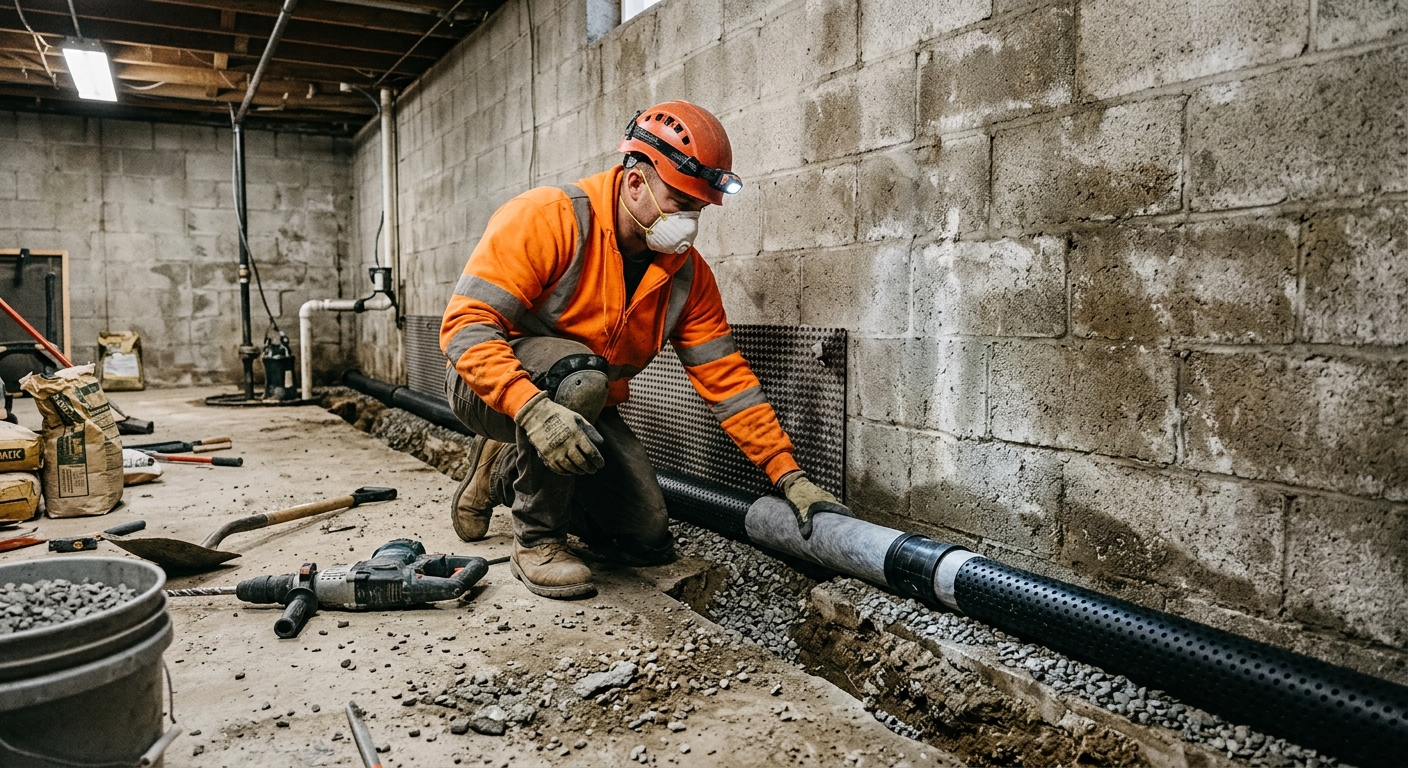
Exterior waterproofing and interior waterproofing solve the water problem in very different ways. Exterior waterproofing involves full excavation around the foundation, installation of membrane systems, new drainage tile, and then careful backfill and grading. It addresses the source of water entry, which is important in Sarnia where poorly drained soils can keep moisture pressed against the foundation and freeze–thaw can widen existing joints. The trade-off is disruption: landscaping restoration, excavation logistics, and cold-weather-ready detailing push exterior costs higher.
Interior waterproofing focuses on what happens after water gets in. Common systems include a perimeter drain channel, sump pit, and sump pump to collect and discharge seepage away from the basement floor. This is typically less invasive and can be the better choice when exterior access is limited by driveways, sheds, or tight side yards. However, interior systems do not stop hydrostatic pressure on the wall itself; they manage it. In Sarnia’s older housing stock (71.0% built before 1981), interior solutions are often paired with crack repairs—especially when poured concrete shows sealing opportunities and block foundations need dependable interior drainage as a practical complement.
One cost example: if your leak is primarily driven by surface runoff and downspouts, re-grading and downspout extension might sit around $1,000–$2,900, while a full exterior excavation can be $12,000–$25,000. That larger spend is justified when the problem is seepage under lateral pressure and the exterior drainage system is compromised. Also consider sump pump backup: during spring flooding periods and occasional power interruptions, a battery backup can protect your system when the primary pump is interrupted.
| Method |
Best For |
Addresses Source? |
Disruption |
Lifespan |
Price Band |
| Full exterior excavation + membrane |
Active seepage from footing area; higher water-table conditions; soils that hold moisture against walls |
Yes (water is redirected before it enters) |
High |
15–25+ years |
$12,000–$25,000 |
| Interior French drain + sump system |
Limited exterior access; managing hydrostatic pressure at the basement slab |
No (it controls water after entry) |
Medium |
10–20 years (depends on pump/sump integrity and discharge) |
$8,000–$18,000 |
| Crack injection — epoxy (structural) |
Dry or non-moving structural cracks in poured concrete where there is minimal ongoing seepage |
Partial (seals pathways, but won’t replace a failing exterior drainage setup) |
Low to Medium |
Moderate to High |
$600–$2,000 |
| Crack injection — polyurethane (active leak) |
Active seepage where material must expand/contract with movement and wet conditions |
Partial (targets the crack, best when combined with drainage control) |
Low to Medium |
Moderate to High |
$800–$2,500 |
| Interior drain channel only (no sump) |
Light seepage and areas where water can be directed to an existing system |
No (managed at interior perimeter only) |
Low to Medium |
5–12 years (often needs monitoring in higher water-table seasons) |
$5,500–$12,000 |
| Re-grading + downspout extensions |
Surface-water-driven leaks; improving first-line drainage before heavy work |
Yes for surface runoff (not for groundwater pressure) |
Low |
3–10 years (depends on long-term grading maintenance) |
$1,000–$2,900 |
How to choose a waterproofing contractor in Sarnia
Choosing the right contractor matters as much as price, because basement waterproofing failures usually come from incomplete site assessment, shortcuts in drainage design, or poor surface preparation. Start by verifying Ontario licensing and compliance: ask for their contractor licence details and confirm coverage status using Ontario’s online licensing resources. Next, request a certificate of liability insurance and ensure the policy is active and matches the type of work being performed (excavation, concrete cutting, and any discharge plumbing). Finally, ask for WSIB/WCB clearance or proof of coverage and check that dates are current—this is especially important in a physically demanding trade where crews may work in excavation trenches.
Then get 2–3 itemised written quotes. A good quote breaks down labour and materials (excavation and disposal, membrane system, drainage tile and filter fabric, sump pit work, pump and backup, discharge routing, and restoration). Avoid “lump sum” proposals that don’t show what’s included. Read the scope line-by-line: is permit pull included, is disposal included, what is excluded (for example, interior flooring replacement beyond patching), and who restores landscaping? Ask about warranty: workmanship warranty length, product/manufacturer warranty terms, and whether the warranty transfers if you sell the home. Payment schedule matters too—never pay more than 10–15% upfront; hold back the remainder until completion and walkthrough. Get the start date and estimated completion time in writing so you can plan around seasonal weather.
- Ask what diagnostic steps they’ll do (water-source tracing, crack identification, discharge verification).
- Confirm what pump they’ll install (CFM/horsepower) and whether a battery backup option is included.
- Request an itemised quote with labour and materials, not a single lump-sum line.
- Verify permit responsibility: who pulls permits and who coordinates inspections if required.
- Confirm disposal is included for excavated material and removed concrete.
- Check whether the quote includes sump discharge routing and backflow protection where needed.
- Ask about membrane type and how seams/edges are detailed at corners and joints.
- Review how they handle clay soils/backfill: filter fabric, proper granular backfill, and compaction.
- Ask what warranty covers: workmanship vs materials, and warranty transfer to a new owner.
- Confirm the start date, weather contingency plan, and expected completion window in writing.
- Make sure they provide lien/contract documentation and a clear acceptance/holdback process.
- Inspect how they patch: matching finish levels and how they manage efflorescence/mould before sealing.
Red flags we see in Sarnia include: (1) quoting without confirming whether the leak is from groundwater pressure vs surface runoff, (2) offering crack injection as a stand-alone fix when the exterior drainage system is failing, (3) vague scope language like “waterproofing guaranteed” without listing the product and detailing method, (4) requesting large upfront deposits beyond 10–15%, and (5) refusing to provide proof of insurance or WSIB/WCB clearance before work begins.
Frequently asked questions — waterproofing in Sarnia
How much does basement waterproofing cost in Sarnia?
In Sarnia, pricing depends on whether you can address the water at the foundation exterior or only manage it inside. For most homeowners, interior perimeter drainage plus a sump typically falls around $8,000–$18,000, while exterior excavation and a full membrane/drainage-tile rebuild is commonly $12,000–$25,000. The reason quotes vary is usually soil and water pressure: fine, poorly drained soils can keep moisture against the foundation, and Ontario freeze–thaw cycles can expand existing cracks. If your home is older (and many in Sarnia are, with 71.0% built before 1981), original weeping tile may be clogged, increasing the amount of drainage work required. Always request an itemised scope so you can compare like-for-like.
Interior vs exterior waterproofing — which is better?
“Better” depends on the cause of the leak. Exterior waterproofing is best when you have the access to excavate and where water is entering from groundwater or footing seepage; it stops water at the source with membrane and drainage tile. That’s why exterior projects commonly land in the $12,000–$25,000 range. Interior waterproofing is often the better choice when excavation is constrained or the goal is to relieve hydrostatic pressure at the slab level. Interior systems are typically $8,000–$18,000 and involve a perimeter drain channel and sump pump. In Sarnia’s older homes, poured concrete walls can sometimes respond well to crack repairs plus interior drainage, while block foundations often benefit from dependable interior drainage even when cracks are sealed.
Why is my basement leaking in Sarnia?
Basement leaks in Sarnia are usually driven by a combination of seasonal water behaviour and foundation movement. If your leak appears after heavy rain or spring thaw, surface water runoff and downspouts that discharge near the foundation can contribute. If the dampness tracks along specific wall sections or floor edges, seepage through cracks, joints, or aging weeping tile is likely. In the Windsor–Sarnia corridor, poorly drained soils and a seasonally higher water table can keep moisture pressed against foundation walls, increasing seepage and hydrostatic pressure. Freeze–thaw cycles can widen existing pathways, especially in older concrete and block. If mould or efflorescence is present, it can mean water is entering more persistently, not just from a one-time event.
How do I know if a foundation crack is serious?
Crack seriousness is less about the fact that a crack exists and more about its type and behaviour. In Sarnia, horizontal cracks in block walls, significant step cracking, or cracks that appear to widen over time after freeze–thaw are the ones that warrant extra evaluation. Hairline cracks that remain stable and are dry may be manageable with sealing, but active seepage usually needs a waterproofing approach that accounts for water pressure. A practical sign is whether you see moisture, staining, or seepage at the crack during rainy/thaw periods. Another clue is whether multiple areas are affected along the same wall line, suggesting drainage or water-table pressure issues. If there’s any question about structural movement, ask the contractor whether an engineering assessment is needed before sealing or injection.
How much does foundation crack repair cost in Sarnia?
Foundation crack repair commonly depends on the crack type (dry vs actively leaking), how many linear feet are involved, and whether the repair is strictly sealing or also includes addressing underlying water entry. For typical crack injection work, homeowners in Sarnia often see pricing in the range of $600–$2,500. Epoxy injection is often used where cracks are dry or non-moving and the goal is sealing; polyurethane injection is typically used for active leaks where the material needs to respond to moisture and minor movement. If the crack is part of a larger drainage failure (for example, clogged weeping tile or exterior seepage), crack repair alone may not stop recurrence—so the contractor should recommend complementary drainage measures.
Do I need a sump pump in Sarnia?
You may need a sump pump when interior drainage is required to manage water that enters through seepage paths, especially during spring thaw when the water table rises seasonally. In Sarnia, many homes with older drainage setups rely on interior relief to keep the basement slab and perimeter dry. If you already have a sump, the key question becomes whether it needs a backup system for power reliability. Many homeowners choose primary plus battery backup to reduce failure risk during outages that can coincide with high water periods. If your leak is mainly surface water, re-grading and downspout extensions might be sufficient, and a full sump system may not be necessary. A proper assessment should determine the source: surface runoff versus groundwater seepage.