Basement waterproofing options and costs in Brant
In Brant, homeowners usually feel waterproofing issues first as damp corners, musty odours, or slow seepage after heavy spring rain and the freeze–thaw swings that Ontario is known for. With about half of homes built before 1981, many basements in the Hamilton–Niagara Peninsula area are dealing with older, compromised systems that were never designed for today’s expectations on long-term moisture control (Statistics Canada, 2021 Census). In practice, that means failing original weeping tile, aging tar-and-paper or early membrane systems, and cracks that widen over time as saturated soils expand and contract.
Cost in Brant is also shaped by local ground conditions. Hamilton–Niagara Peninsula clay-heavy pockets and areas with higher groundwater can hold water and exert more pressure on foundation walls. Typical groundwater levels around 2–4 m below grade, combined with possible perched water in shallow fill layers, often push contractors toward stronger exterior drainage stone, properly pitched drainage tile, and correctly sized sump pits—especially for deeper basements. Contractor availability can be tighter in neighbourhoods where single-detached stock is older and more waterproofing work is common, such as parts of Brantford’s west/central growth corridors like West Brantwood.
Below is a practical side-by-side comparison to help you understand what each method fixes, how disruptive it is, and what budget range to expect before you request itemized quotes.
| Method |
What It Addresses |
Disruption Level |
Durability |
Price Range |
| Exterior excavation + new membrane + drainage tile |
Primary water entry at the foundation exterior (hydrostatic pressure control) |
High (excavation, landscaping restoration) |
Long-term (often 20+ years with correct drainage) |
$12,000–$25,000 |
| Interior perimeter drain channel + sump pit |
Water that enters through cracks or wall seepage (intercepts and pumps out) |
Medium (interior floor/crawl space work) |
Good (commonly 15+ years depending on sump and seals) |
$8,000–$18,000 |
| Foundation crack injection (epoxy or polyurethane) |
Crack sealing: epoxy for non-active/stable cracks; polyurethane for active leaks |
Low to Medium (small cuts/holes) |
Variable (site conditions and crack movement matter) |
$600–$1,800 |
| Sump pump installation (primary + battery backup) |
Reduces basement flooding risk during power outages; manages seepage volume |
Low to Medium (pit, discharge line, wiring) |
High if properly maintained (pump life + backup coverage) |
$1,800–$4,200 |
| Window well drain installation |
Water entry near egress windows; surface runoff and seepage collection |
Low to Medium (excavate around window well) |
Good (typically 10–20 years with correct grading and outlets) |
$800–$2,500 |
| Lot re-grading / downspout extension |
Redirects surface water away from foundation to reduce wet soil around walls |
Low to Medium (minor yard work) |
Moderate (depends on ongoing maintenance) |
$600–$3,000 |
Prices are estimates only and vary by project scope, site access and material selection.
What affects the price of waterproofing in Brant
You can see the same waterproofing “category” come in 30–50% apart across the Hamilton–Niagara Peninsula region and Ontario because contractors are often solving different root causes, not just the visible dampness. Two homes can both have efflorescence, but one may be from surface water (fixable with downspout work and re-grading), while another is from hydrostatic pressure driven by clay soils and a higher seasonal water table that forces full exterior drainage or a properly engineered interior system.
In Brant, the three biggest cost drivers that separate regional pricing from a national baseline are soil type, groundwater level, and freeze–thaw. Clay-heavy subsoils common around Hamilton and parts of Niagara can expand during freeze–thaw and increase lateral pressure on walls, which can worsen cracking over time. When groundwater sits closer to grade or is perched in shallow fill, interior sump systems run more often and require a larger-capacity pit and discharge setup. Brant also has a lot of older housing stock—when weeping tile is original and 60+ years old, it can be completely failed, meaning “symptom-only” interior fixes may leave ongoing water pressure unmanaged.
Concrete examples: if your foundation is poured concrete with stable, mostly vertical hairline cracks, epoxy injection plus interior drainage may stay near the lower end of the crack repair band (about $600–$1,800) rather than needing an exterior excavation. If your basement is deeper with clay-rich backfill and you’re seeing water during spring melt, the project can jump toward the interior perimeter drain/weep-tile replacement range of about $8,000–$18,000—or all the way to exterior excavation pricing of $12,000–$25,000 when we need to correct the source.
Home age and typical moisture history matter: with 50.0% of homes built before 1981, higher rates of legacy waterproofing failures are common, which increases labour time for selective demo, removal of old drainage components, and longer prep to get surfaces ready for new membranes or sealants (Statistics Canada, 2021 Census).
| Price Factor |
Why It Matters |
Cost Impact |
| Interior vs. exterior approach — interior is less disruptive but addresses symptoms |
Exterior systems manage water at the source; interior systems manage water after entry |
Exterior commonly adds excavation and restoration costs (often $12,000–$25,000 vs $8,000–$18,000) |
| Foundation type — poured concrete vs. block vs. stone vs. ICF |
Crack sealing strategy and drainage effectiveness vary by foundation material |
Poured concrete often seals better with targeted injection; block may require interior drainage integration |
| Soil type — clay expands more than sand, adding pressure |
Clay moisture expansion increases hydrostatic and lateral pressure during freeze–thaw |
More robust drainage stone, membrane detailing, and labour time can be required |
| Crack type and length — hairline vs. structural horizontal cracks |
Active/structural movement changes whether injection alone will hold |
Structural repairs can raise the project beyond basic injection pricing ($600–$1,800 for limited crack scope) |
| Sump pump backup system — battery or water-powered backup needed |
Ontario power outages during storms and spring events can overwhelm a single pump |
Adds to equipment and install, commonly within $1,800–$4,200 for primary + backup systems |
| Access — landscaping, decks, or driveways must be removed for exterior |
Extra demo/restoration increases labour and scheduling time |
May add thousands depending on how much must be removed and rebuilt |
| Weeping tile age — original tile (60+ years) may be completely failed |
Failed tile shifts more water to the foundation wall and interior |
Repairs can expand into drainage replacement and more aggressive system sizing |
| Mould or efflorescence remediation required before sealing |
Sealing over contamination can reduce adhesion and trap moisture |
Includes cleaning, drying time, and sometimes antimicrobial treatment before membranes/sealants |
Permits & regulations in Ontario
In Ontario, foundation excavation and many waterproofing-related structural works typically trigger permit requirements—especially when the work involves altering load-bearing elements, making changes to foundation conditions, or impacting drainage patterns. In Brant, the most common permit-linked scope items are: excavation/installation activities that modify the foundation exterior, structural crack repair that could affect wall integrity (for example, significant horizontal or step cracking), and any changes to lot drainage that alter how water is directed or discharged from the property. If your sump discharge is being connected to a storm or sanitary sewer, municipal approval is usually required.
For structural crack repair, particularly when cracks suggest movement, contractors often need a structural engineer’s assessment to determine whether underpinning or additional stabilization is required before sealing. As a homeowner, you should ask whether the contractor provides engineering support for structural repairs (or subcontracts through an engineer) rather than treating all cracks the same.
Step-by-step, verify your contractor the Ontario way: (1) confirm the contractor’s licence/registration is active using the provincial contractor verification tools (search the contractor name and the category you’re hiring for); (2) request a current certificate of insurance (liability) that matches the job site and scope; (3) verify WSIB/WCB clearance and clearance period—ask for the clearance letter or proof of account status; (4) ensure the quote identifies what permits are included (if any) and who applies; (5) confirm warranty terms are in writing and tied to the installed scope.
Interior vs exterior waterproofing — what does Brant need?
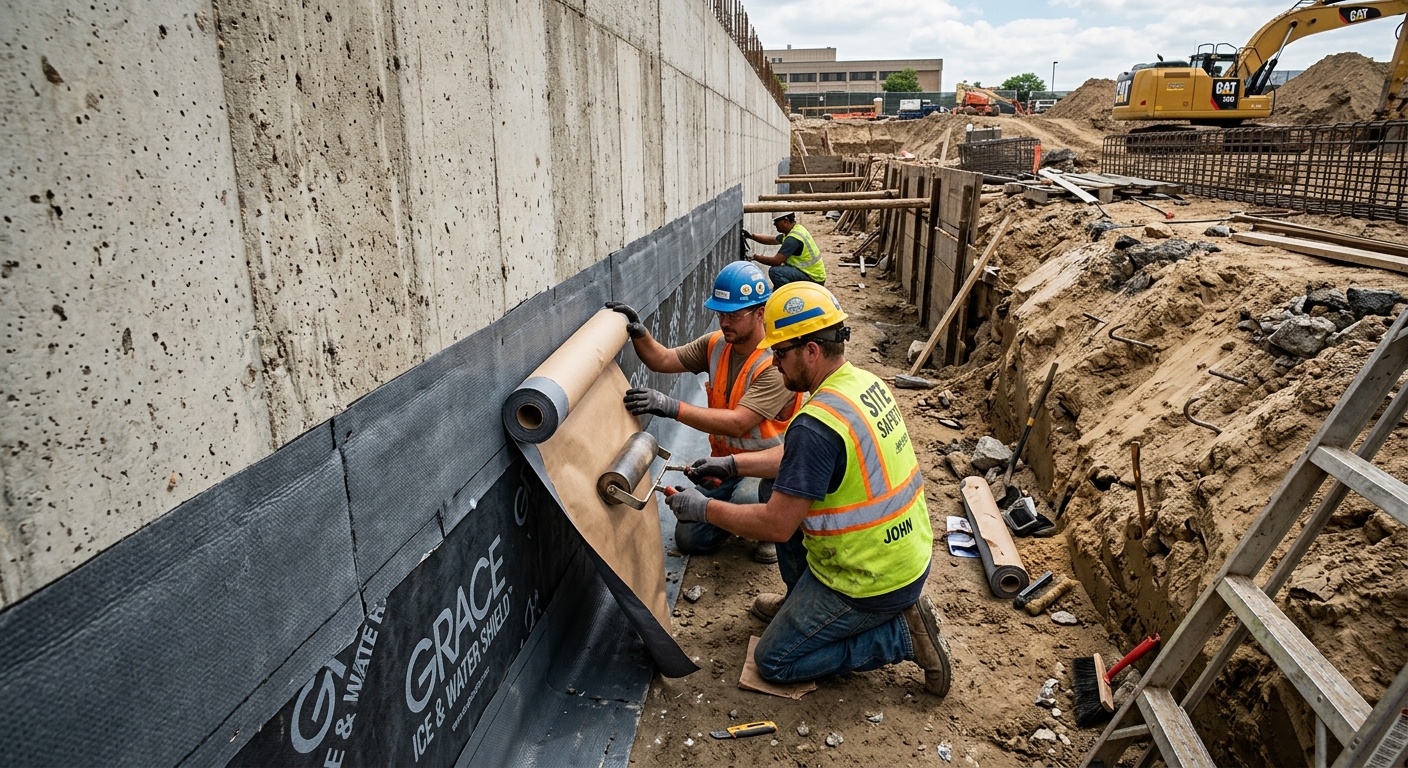
The fundamental difference is whether you stop water at the source or manage it after it gets in. Exterior waterproofing means full excavation along the foundation, then installation of a membrane system and new drainage tile before backfilling. Done correctly, it’s the most complete approach for Brant’s clay-and-water-table reality because it controls hydrostatic pressure and reduces how often the wall “gets wet” during spring melt and heavy rains. The trade-off is cost and disruption: you’re removing landscaping, dealing with excavation in cohesive soils, and paying for restoration.
Interior waterproofing—perimeter drain channels, a sump pit, and a sump pump—intercepts water that finds its way through cracks or seepage paths. It costs less and is less disruptive, but it does not eliminate the pressure on the wall itself. In Brant, that’s why interior solutions often pair well with poured concrete walls that can be crack-injected with stable, targeted sealing, or when access to the exterior is limited by finished landscaping or a deck. For block foundations, interior drainage is often a practical complement because mortar joints and seepage paths can be harder to fully control from one side without full exterior work.
Ontario power reliability also matters: during storms and spring flooding periods, a backup sump system helps prevent “single-point failure” if the main pump can’t run. A battery backup or water-powered backup can be the difference between a dry floor and a cleanup job.
Where the price difference is justified: if your issue is consistent exterior wetting after rain, spending toward the exterior band of about $12,000–$25,000 can be the right long-term move rather than repeatedly paying for symptom management. If tests show limited active seepage and you need to intercept water quickly, interior drainage in the $8,000–$18,000 range is often the best balance—especially for homes where exterior excavation is impractical.
| Method |
Best For |
Addresses Source? |
Disruption |
Lifespan |
Price Band |
| Full exterior excavation + membrane |
Frequent seepage from exterior, high groundwater seasonally, failed weeping tile, persistent dampness |
Yes |
High |
20+ years when drainage is corrected |
$12,000–$25,000 |
| Interior French drain + sump system |
Exterior access is limited; water is entering through cracks/seams; you need faster, less disruptive remediation |
No (manages after entry) |
Medium |
15+ years with correct pump and seals |
$8,000–$18,000 |
| Crack injection — epoxy (structural) |
Stable, mostly non-moving cracks in poured concrete where water entry is limited or crack movement is minimal |
Partial (seals the crack path) |
Low |
Often long-lasting if crack movement isn’t ongoing |
$600–$1,800 |
| Crack injection — polyurethane (active leak) |
Active seepage through cracks where water pressure is present |
Partial (seals while accommodating movement) |
Low |
Good, but may require drainage/sump support for high flows |
$800–$2,400 |
| Interior drain channel only (no sump) |
Very low-volume seepage; basements with dry-to-slight dampness where gravity drainage is feasible |
No |
Low to Medium |
Variable; can struggle when water table rises |
$5,000–$12,000 |
| Re-grading + downspout extensions |
Surface runoff problems; water pooling near foundation; gutter discharge directed toward the house |
Sometimes (reduces external wet soil) |
Low to Medium |
Moderate; depends on maintenance |
$600–$3,000 |
How to choose a waterproofing contractor in Brant
Choosing the right contractor in Brant starts with proof, not promises. First, confirm Ontario licensing/registration for the scope you’re hiring (exterior excavation and drainage, interior drainage systems, and structural crack work). Next, request liability insurance—ask for a certificate that lists the work location and covers the activities being performed. Then verify WSIB/WCB coverage: a reputable contractor will provide a clearance letter (or proof of coverage status) rather than asking you to assume they’re compliant.
Get 2–3 itemized written quotes with a labour-and-materials breakdown, not a single lump sum. Make sure the scope is clear on what’s included: excavation limits, disposal, membrane/drainage stone quantities, how the weeping tile ties in (or whether it’s replaced), what is being cut and repaired indoors, and whether drying time is allowed before sealing. Confirm whether permit pulling is included or billed separately—especially if the work changes drainage discharge or involves structural crack repair that may require engineering support.
Warranty should be specific: workmanship warranty length, product/manufacturer warranty details, and whether the warranty is transferable to a new owner (important if you sell). For payment, never pay more than 10–15% upfront; hold back the remainder until the job is complete and surfaces are restored. Finally, ask for a start date and a completion estimate in writing, including how weather impacts excavation and membrane installation in Ontario’s freeze–thaw cycle.
- Provide licence/registration details and scope match (interior drain vs exterior excavation vs crack repair).
- Show current liability insurance certificate before work begins.
- Confirm WSIB/WCB clearance letter and coverage dates.
- Quote includes an itemized breakdown (labour, materials, equipment rental, disposal).
- Scope lists exact systems: membrane type, drainage stone, drainage tile size, sump pit size, pump model.
- Explain how they test for active vs stable cracks before choosing epoxy vs polyurethane injection.
- Confirm whether perimeter drains discharge to an approved outlet (and who handles approvals).
- Warranty: workmanship duration and what voids it (poor grading, missing maintenance, power loss exclusions).
- Payment schedule: small deposit (10–15%) only; holdback until completion and cleanup.
- Documented site conditions: photos of crack prep, waterproofing installs, and pit connections.
- Written timeline with weather contingencies for spring melt and freeze–thaw.
- Restoration plan: floor coverings, grading, and downspout/landscape tie-ins.
Red flags in Brant include contractors who (1) offer “one-size-fits-all” waterproofing without assessing crack movement and drainage cause, (2) won’t provide insurance/WSIB clearance before scheduling, (3) refuse itemized quotes or hide disposal/restore costs, (4) recommend exterior excavation without confirming drainage outlet and discharge approvals, and (5) give vague warranty terms like “standard warranty” with no written duration or product coverage details.
Frequently asked questions — waterproofing in Brant
How long does waterproofing last?
In Brant and across Ontario, expected longevity depends on whether the system corrected the water source or simply intercepted it after entry. Exterior waterproofing that includes a proper membrane and new drainage tile can last 20+ years when backfill, grading, and discharge are done correctly. Interior drainage systems with a sump typically last 15+ years, but performance depends heavily on pump reliability and discharge routing, especially during spring melt. Crack injection can be very effective for stable cracks, but if the crack keeps moving due to clay expansion and freeze–thaw, you may see recurrence. Budgeting for a system that matches the cause is why projects can range from $8,000–$18,000 (interior) to $12,000–$25,000 (exterior excavation), depending on site conditions.
Can I waterproof my basement from the inside only?
Yes, inside-only waterproofing is possible and is commonly used in Brant when exterior access is limited or when the homeowner needs a less disruptive approach. Interior perimeter drains and a sump pit intercept water that seeps through cracks or wall seams and move it away from the foundation. However, interior methods don’t remove hydrostatic pressure at the wall; they manage it after entry. That’s why we typically evaluate whether cracks are active (still leaking) versus stable, and whether clay-heavy soils and higher seasonal groundwater levels are likely to keep driving water inward. For many homes, interior work is a good first step combined with targeted crack injection, but for persistent wetting from exterior seepage, exterior excavation often provides a more permanent solution.
What causes foundation cracks in Brant?
Foundation cracks in Brant are usually tied to soil movement, moisture variation, and temperature cycling. Clay and silty clay subsoils in the Hamilton–Niagara Peninsula area can absorb water, expand during freeze–thaw, and exert lateral pressure on foundation walls. When water sits in shallow fill layers or when drainage fails, freeze-thaw can widen existing hairline cracks and create new seepage paths. Older homes built before 1981 are more likely to have legacy waterproofing and weeping tile issues, which increases the chance of sustained moisture around foundations (Statistics Canada, 2021 Census). Poor lot grading and downspout discharge near the house can also increase wet soil exposure, accelerating crack development over time.
How do I compare waterproofing quotes?
Start by comparing the scope, not the bottom-line number. Ask each contractor to provide an itemized quote showing labour, materials, excavation limits, drainage tile and stone details, and whether disposal and restoration are included. Confirm whether they’re addressing exterior water entry (membrane + drainage tile) or primarily intercepting water after it enters (interior drain channel + sump). Compare how they diagnose crack type (stable vs active) and whether they specify epoxy vs polyurethane injection accordingly. Also check the equipment details—sump pit size, pump model, discharge routing, and whether a battery backup is included if power outages are a concern. Finally, confirm the warranty is written and includes workmanship duration and product terms. In Brant, quote differences often come from these details, not just labour rates.
How long does basement waterproofing take in Brant?
Timelines vary by approach and site access. Interior systems (perimeter drain + sump pit) can often be completed in several days to about a week once the work is staged, depending on how much flooring needs to be removed and whether discharge routing requires additional steps. Exterior waterproofing takes longer because excavation, membrane installation, drainage tile placement, and backfilling are weather-sensitive—especially during Ontario’s freeze–thaw periods and spring melt when soils are wetter and harder to work. Crack injection is usually faster, but prep, surface cleaning, and curing time still matter. If weeping tile replacement is involved, scheduling can expand. Your contractor should provide a written start date and completion estimate, and they should explain how they manage delays due to rain and ground conditions in Brant.
What is a weeping tile and does my Brant home have one?
A weeping tile is the foundation drainage system (typically a perforated drain) installed around the exterior foundation to collect groundwater and redirect it to an outlet, historically to a sump or daylight discharge point. Many Brant homes—especially older single-detached houses—have some form of legacy weeping tile, but it may be partially collapsed, clogged, disconnected, or undersized due to age and soil movement. With 50.0% of homes built before 1981, it’s common to find that original systems are no longer functioning as intended (Statistics Canada, 2021 Census). To confirm, look for evidence in basements (sump pit presence, old drain lines, discharge connections) or ask the contractor to inspect when they access the exterior drain line. If it’s failed, interior-only fixes may need additional sump performance to keep up with higher groundwater seasons.