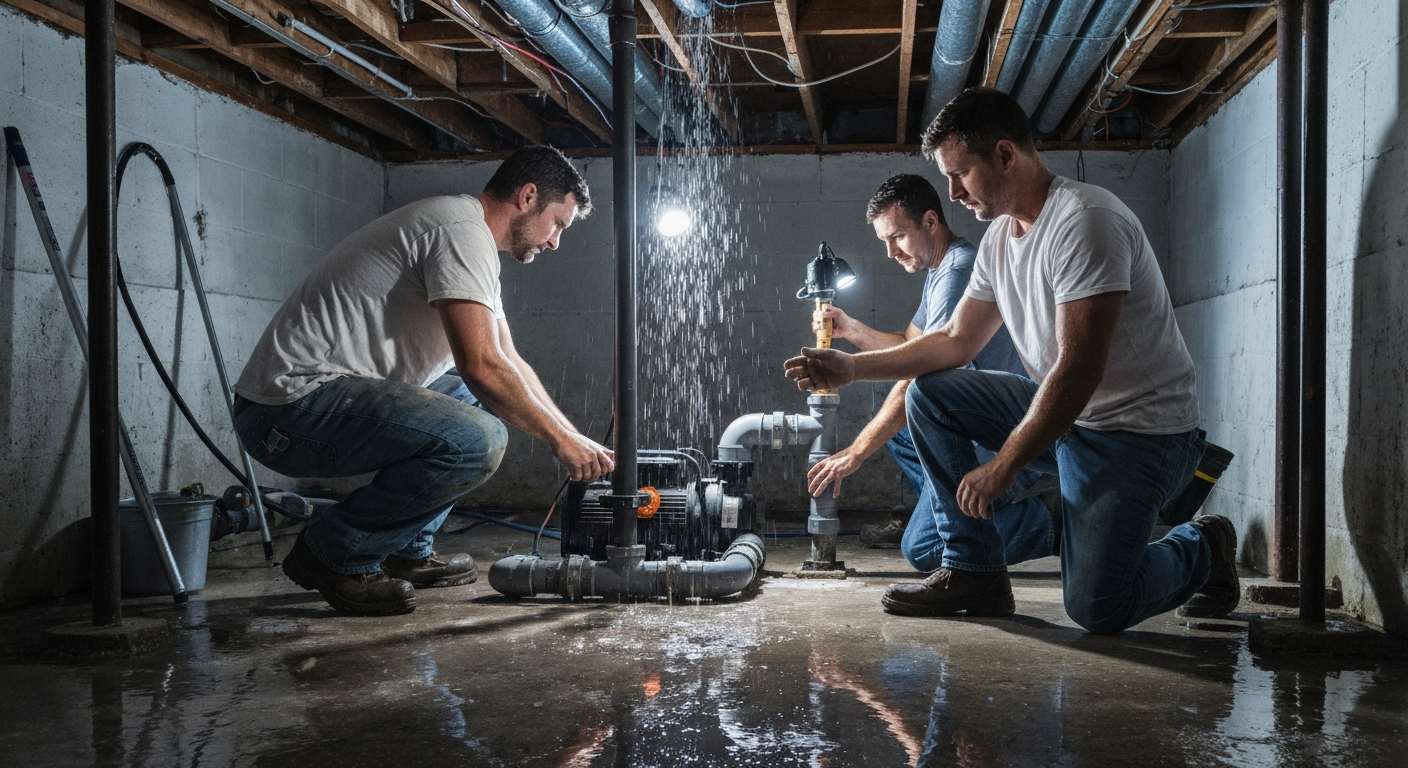
Basement waterproofing options and costs in Waterloo
Waterloo homeowners typically start investigating basement waterproofing after spring rain, melting snow, or a few wet foundation patches—often when the problem has already been working for years. In Waterloo, with 32.9% of homes built before 1981 (Statistics Canada, 2021 Census), older systems are more likely to be worn out; that age bracket often means original tar-and-paper style membranes and corroded or collapsed weeping tile. It also means more frequent foundation cracks that have opened wider through repeated freeze-thaw and settlement.
In the Kitchener–Waterloo–Barrie corridor, costs are shaped by local soil and water movement. Clay-heavy ground can hold water and increase hydrostatic pressure against foundation walls, so contractors may need deeper excavation, additional drainage, and more soil removal to achieve reliable drainage. The timing of work matters too: busy spring demand can affect scheduling and crew availability, especially in established neighbourhoods with mature landscaping and limited access.
We see the trade in demand across areas like Eastbridge and Uptown Waterloo, where many older homes sit close to sidewalks and where landscaping constraints can make exterior excavation more labour-intensive. As a result, some homeowners move toward interior systems first, while others choose exterior waterproofing for a longer-term fix when access and site conditions allow.
Below is a practical comparison of the main options and the typical cost ranges Waterloo crews price in before they design a final scope for your home.
| Method |
What It Addresses |
Disruption Level |
Durability |
Price Range |
| Exterior excavation + new membrane + drainage tile |
Water entry at the foundation wall; long-term source control |
High (excavation, landscaping/grade restoration) |
Highest when installed correctly and backfill is well managed |
$7,000–$15,000 |
| Interior perimeter drain channel + sump pit |
Water after it enters; reduces hydrostatic build-up at slab/wall line |
Medium (interior floor/wall cutting, sump installation) |
High with proper pump sizing and discharge management |
$6,000–$20,000 |
| Foundation crack injection (epoxy or polyurethane) |
Cracks as entry paths (epoxy for stable structural cracks; polyurethane for active leaks) |
Low to Medium (drilling holes, clean-up, localized patching) |
Good to High depending on crack type and wall conditions |
$1,200–$3,000 |
| Sump pump installation (primary + battery backup) |
Relief of interior water; protects against power interruptions |
Low to Medium (pit excavation, electrical work) |
Very good when backup is installed and discharge is correct |
$900–$3,600 |
| Window well drain installation |
Localized seepage at basement egress/well areas |
Low to Medium (well excavation/lining modifications) |
Moderate to High for the specific leak area |
$1,000–$4,500 |
| Lot re-grading / downspout extension |
Redirects surface water away from foundation |
Low (minor excavation and drainage hardware) |
Moderate; often best as part of a larger waterproofing plan |
$1,000–$3,500 |
Prices are estimates only and vary by project scope, site access and material selection.
What affects the price of waterproofing in Waterloo
In Waterloo and the broader Kitchener–Waterloo–Barrie market, you can see quote spreads of 30–50% for the “same” basement waterproofing job. The reason usually isn’t the crew—it’s the true site conditions they uncover during the initial inspection and test cuts: how much excavation is required, where the water is coming from, whether the discharge route works, and whether older drainage components are failing. Across Ontario, these variables drive labour and material differences that quickly push projects above or below typical expectations.
Three local drivers separate regional costs from a national average: soil type, water table, and freeze-thaw. Clay-heavy soil (common in parts of southern Ontario) expands during freeze-thaw and can exert extra lateral pressure on foundation walls, worsening cracks over time. High water conditions mean sump pumps may run more frequently and discharge piping upgrades become necessary—especially when original eavestrough/downspout routing is missing or undersized. When water seeps repeatedly, interior systems often include more remedial steps such as drainage channel reconstruction and mould/efflorescence clean-up before any sealing.
Two quick examples from Waterloo: (1) An older home built before 1981 with original weeping tile often needs complete tile replacement and a properly designed perimeter connection—one reason exterior work in the corridor can sit toward the top of the $7,000–$15,000 band. (2) A finished basement with limited access may steer the project to interior solutions; that can land in the $6,000–$20,000 range when a sump system, discharge line, and interior drain channel are all required. In both cases, labour time and waste disposal rise with excavation depth and soil removal.
Availability also plays a role in this corridor. During spring demand, crews may batch jobs, but they still have to follow safe excavation and curing timelines—meaning more days onsite can translate to higher line items, even with the same contract price target.
| Price Factor |
Why It Matters |
Cost Impact |
| Interior vs. exterior approach — interior is less disruptive but addresses symptoms |
Interior can manage water after entry; exterior targets the source |
Exterior typically costs more; interior can be less disruptive but may cost more if larger remediation is needed |
| Foundation type — poured concrete vs. block vs. stone vs. ICF |
Porosity and crack behaviour differ by foundation material |
Block and older stone often require more interior drainage and crack work |
| Soil type — clay expands more than sand, adding pressure |
Clay movement increases hydrostatic pressure and can widen cracks |
Heavier soils can push projects toward higher bands due to deeper excavation and stronger drainage |
| Crack type and length — hairline vs. structural horizontal cracks |
Structural cracks may require engineering-level assessment |
Structural repairs can add contractor coordination and higher labour/inspection time |
| Sump pump backup system — battery or water-powered backup needed |
Power interruptions can stall pumping when water is rising |
Backup increases cost but reduces risk during heavy spring periods |
| Access — landscaping, decks, or driveways must be removed for exterior |
Exterior work depends on excavation space and safe staging |
Removal and reinstatement can materially increase labour and materials |
| Weeping tile age — original tile (60+ years) may be completely failed |
Old tile can be blocked, crushed, or disconnected |
Replacement rather than “tie-in” can move a quote upward significantly |
| Mould or efflorescence remediation required before sealing |
Sealers won’t bond reliably over active salts/mould |
Additional prep steps add time and materials |
Permits & regulations in Ontario
In Ontario, several basement waterproofing-related activities commonly require permits, especially when they involve changes to structural elements or drainage/grade. In Waterloo, foundation excavation and structural crack repair typically trigger permit requirements because you may be altering load paths, foundation behaviour, or working near structural components. Changes to lot drainage (for example, re-routing downspouts, modifying discharge points, or altering where water leaves the property) often require municipal review depending on how discharge is handled.
Sump pump installations can also require approvals. If the system’s discharge connects to storm or sanitary infrastructure, you’ll generally need municipal approval. If the discharge is to grade within an allowed method, requirements can still apply—your contractor should outline the intended discharge route and confirm permitting needs before work begins.
For major structural crack patterns—such as significant horizontal cracks in block walls or cracks associated with movement—a structural engineer’s assessment is often necessary to determine whether underpinning or other structural work is required.
How a homeowner verifies contractor coverage in Ontario (step-by-step): start with the contractor’s online licensing information, then ask for a certificate of insurance (liability coverage) showing coverage amounts and valid dates, and confirm WSIB/WCB clearance or coverage. For jobs involving structural assessment support, confirm whether the contractor provides or coordinates engineering support—and get it in writing. A clear, documented proof package before scheduling is a good sign.
Interior vs exterior waterproofing — what does Waterloo need?
Exterior waterproofing is the “source-control” approach: full excavation down to the foundation, new membrane, new drainage tile, and carefully managed backfill. When it’s done with proper drainage design, it permanently reduces the water driving force against the foundation wall. The trade-off is cost and disruption—excavation can be challenging on older properties with mature landscaping and narrow side yards.
Interior waterproofing focuses on “water management after entry.” A typical system uses a perimeter drain channel and a sump pit/pump, capturing seepage before it reaches finished areas. Interior methods are less invasive and often a better fit when excavation is constrained, or when repeated spring water intrusion is mainly occurring through specific interior pathways (like along the slab edge) rather than through the entire wall perimeter. However, interior systems do not stop hydrostatic pressure at the wall itself; that’s why crack repair and a well-designed drainage system still matter.
In Waterloo’s freeze-thaw climate, poured concrete walls often respond well to crack injection because repaired cracks can re-establish continuity, whereas older block foundations frequently benefit from interior drainage as a practical complement when full exterior correction isn’t feasible. Sump pump backup is especially relevant here: spring and early summer storms can coincide with outages, so a battery backup can protect against short power interruptions that would otherwise allow water to rise quickly.
A concrete cost example: for a typical exterior-scope project, Waterloo pricing often lands in the $7,000–$15,000 band when excavation and new drainage tile are installed around multiple foundation segments. If you can’t excavate due to hardscaping or tight access, an interior perimeter drain plus sump may still handle the problem, but larger interior remediation can push into the upper $6,000–$20,000 range—especially if discharge routing and backup are added.
| Method |
Best For |
Addresses Source? |
Disruption |
Lifespan |
Price Band |
| Full exterior excavation + membrane |
Widespread seepage, deteriorated exterior waterproofing, older weeping tile failure |
Yes (source control) |
High |
Long (often many decades with correct drainage and backfill) |
$7,000–$15,000 |
| Interior French drain + sump system |
Limited excavation access, finished basements, active seepage needing capture |
Partially (manages water after entry) |
Medium |
Long with correct pump sizing and discharge |
$6,000–$20,000 |
| Crack injection — epoxy (structural) |
Stable structural cracks where there’s no active leak stream |
No (stops leakage path within crack) |
Low to Medium |
Good to High depending on crack stability |
$1,200–$3,000 |
| Crack injection — polyurethane (active leak) |
Active leaks and water weeping through cracks |
No (relieves entry path within crack) |
Low to Medium |
Good when applied to the correct crack type and prep |
$1,200–$3,000 |
| Interior drain channel only (no sump) |
Small seepage loads where gravity drainage can work reliably |
No |
Medium to Low |
Moderate (depends heavily on discharge method and season) |
$3,000–$8,500 |
| Re-grading + downspout extensions |
Surface water issues, minor dampness near exterior walls |
Yes (for surface water contribution) |
Low |
Moderate (best with good gutters/maintenance) |
$1,000–$3,500 |
How to choose a waterproofing contractor in Waterloo
Choosing the right contractor matters because waterproofing is only as good as the site diagnosis, system design, and installation details. Start by verifying Ontario requirements: confirm the contractor has the appropriate licence for their trade scope, and ask for current proof of liability insurance. For work coverage, request WSIB/WCB clearance or documentation showing the contractor is in good standing. In Waterloo, a reputable firm will also provide a clear certificate and will not rush you through paperwork.
Next, get 2–3 itemised written quotes. Look for breakdowns that separate labour and materials, including excavation (if exterior), membrane system components, drainage tile, sump pit/pump, discharge piping, and disposal/restoration. Avoid quotes that only provide a single lump sum without explaining what’s included. Also confirm whether the contractor will pull any required permits, what’s excluded (for example, removing and replacing landscaping, restoring patios, or remediation of mould and efflorescence), and whether disposal of excavated soil is included.
Warranty is not one-size-fits-all. Ask for the workmanship warranty length, the product/manufacturer warranty, and whether any warranties are transferable to future homeowners. Payment should be staged: never pay more than about 10–15% upfront, and hold back until key milestones are complete. Finally, insist on a written schedule with a start date and an estimated completion window—weather and curing times matter in Ontario.
- Ask for a written scope that names products (membrane/drain tile/pump model) and quantities.
- Confirm discharge location (where the sump discharges) and that it complies with local approvals.
- Request a permit plan: who pulls permits, what permits are expected, and timelines.
- Get itemised labour + materials pricing, not only a single total.
- Verify liability insurance and request the current certificate (valid dates and limits).
- Verify WSIB/WCB clearance before work starts; keep the document for your records.
- Confirm engineering support access if structural cracks are suspected.
- Ask how they test for active seepage and how that changes materials (epoxy vs polyurethane).
- Require an excavation/backfill and drainage design explanation, including pipe slope and bedding.
- Confirm pump sizing, discharge pipe route, and whether backup (battery) is included when needed.
- Clarify prep requirements for mould/efflorescence before any sealing.
- Lock warranty terms and exclusions in writing, including transferability.
Red flags in Waterloo include: vague scoping (“we’ll waterproof it” with no system details), no proof of WSIB/WCB or liability insurance, pushing you to pay the majority up front, skipping crack diagnostics (epoxy vs polyurethane) and just “sealing everything,” and promising guaranteed dryness without discussing drainage design, discharge routes, and freeze-thaw considerations.
Frequently asked questions — waterproofing in Waterloo
How long does basement waterproofing take in Waterloo?
In Waterloo, most waterproofing timelines depend on excavation scope and foundation type. Interior perimeter drain and sump installs often take about 3–7 working days, assuming discharge routing and electrical steps are straightforward. Exterior projects typically take longer—commonly 5–12 working days onsite—because excavation, membrane application, drainage tile installation, inspection/benching, and careful backfilling all take time and must be done with proper curing and weather windows. If your home has significant foundation crack injection and localized drainage upgrades, add a few days for prep and testing of active leaks. Your contractor should provide a written schedule and a realistic weather contingency plan, especially around spring freeze-thaw.
What is a weeping tile and does my Waterloo home have one?
A weeping tile is the foundation drainage system installed at or near the bottom of the footing or perimeter—designed to collect groundwater and direct it away (often to a sump or daylight discharge). Many Waterloo homes built earlier than the 1981 cut-off you see in the local housing stock (Statistics Canada, 2021 Census) may have had original weeping tile installed, but it often fails over time due to collapse, blockage, corrosion, or disconnected sections. Whether you have one usually depends on your foundation era and whether you’ve ever had basement drainage work done. The fastest way to confirm is an inspection and, if needed, opening a section at the perimeter or reviewing any prior documentation from previous owners. A contractor should also assess drainage discharge routing before recommending replacement.
Can I waterproof my basement in winter in Waterloo?
You can sometimes do parts of waterproofing in winter, especially interior crack injection and localized repairs, but full exterior excavation is often not practical. Waterloo’s freeze-thaw cycles can make excavation unsafe and complicate membrane performance and backfill compaction when ground is frozen. Interior systems may proceed when basements are accessible and surfaces can be prepared (dry enough for bonding and sealing). For projects that require sump pump installation, electrical work, or interior drain channels, winter can work if the contractor can manage temperature, curing times, and any required drying/cleanup. Ask your contractor what sections they can complete now versus what must wait for spring conditions. A good firm will not promise exterior membrane work if soil conditions can’t be controlled.
What is the difference between waterproofing and damp-proofing?
Damp-proofing is typically about reducing moisture movement through foundation surfaces, often with less robust systems. Waterproofing is designed to manage actual water entry, including hydrostatic pressure and seepage, using drainage channels, sump pumps, and/or exterior membrane and drainage tile. In Waterloo, where winter freeze-thaw can widen cracks and where clay-heavy ground can hold water against foundations, damp-proofing alone often doesn’t address the driving forces behind recurring spring leaks. For example, crack injection plus a proper drain/sump setup is closer to true waterproofing than simply sealing visible staining. If you’re budgeting, understand that a full exterior system often sits in the $7,000–$15,000 band, while interior perimeter + sump solutions may fall in the $6,000–$20,000 range depending on what the site reveals.
Will basement waterproofing affect my property value in Waterloo?
Usually, yes—especially if the waterproofing is properly scoped, documented, and backed by transferable warranties. Buyers in Waterloo want to know that spring seepage or foundation dampness has been addressed at the source or reliably managed with a durable drainage system. A clear history of work (permits, detailed scope, pump specs, and warranty documentation) can strengthen resale confidence, particularly in neighbourhoods with older housing stock. That said, value impact depends on what was fixed: cosmetic patching without drainage improvements often doesn’t impress buyers if leaks recur. The strongest value signal comes when you’ve addressed the water pathway—such as failed weeping tile and drainage connections—or installed a designed interior system that reduces water entry pressure. Ask your contractor for documentation you can share with future buyers.
What drainage issues are most common in Waterloo homes?
Common drainage issues in Waterloo include failed or disconnected weeping tile, downspouts that discharge too close to the foundation, and areas of poor lot grading that allow surface water to flow toward basement walls. In many older homes, freeze-thaw can worsen existing foundation cracks, turning small leaks into repeated spring seepage problems. If discharge routes are undersized or blocked, sump pumps may run excessively or overflow during heavy melt cycles. Clay-heavy soils can hold water and increase the hydrostatic pressure against foundation walls, which is why interior systems sometimes need a sump with reliable discharge piping and (in many cases) backup. If you’re seeing moisture near window wells or the lowest slab line, localized fixes like window well drains can also help, but they’re best matched to the overall water pathway diagnosis.