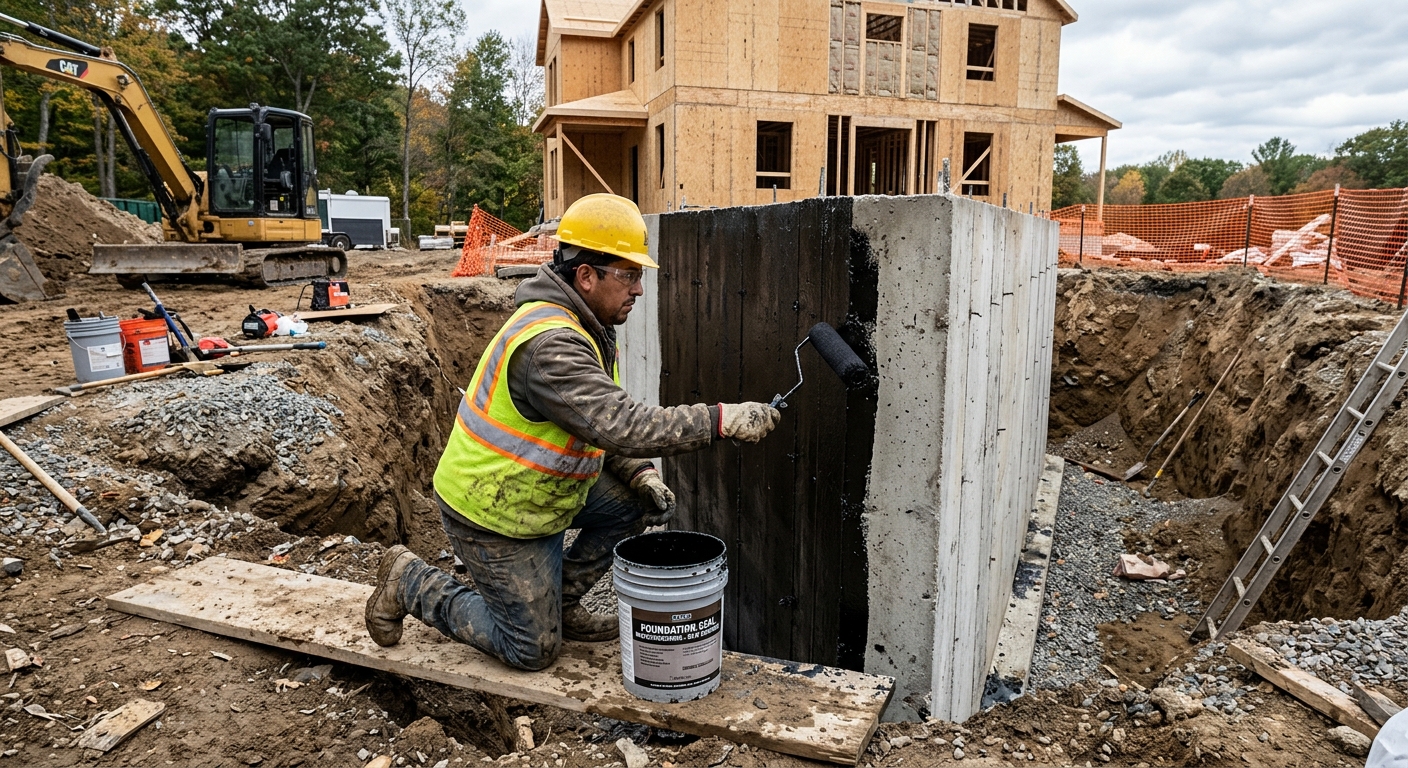
Basement waterproofing options and costs in Rouge
In Rouge, basement waterproofing choices usually come down to one question: is the water getting in because the wall needs protection at the exterior, or because the drainage system and seepage pathways inside can’t keep up anymore. With 46,496 residents in the Rouge area (Statistics Canada, 2021 Census), you’ll find a steady base of trades who service the Toronto housing market, but pricing is still strongly affected by access constraints and the condition of older drainage systems.
Two local realities push homeowners toward different solutions. First, many Rouge basements are in post-war and 1960–1980s homes, where early weeping tile and membrane systems are now often partially clogged or collapsed. Second, Toronto’s freeze–thaw cycles expand small defects over a few winters, turning hairline cracks and cold joints into active leaks. That’s why the “same” basement symptom can produce very different scopes—like a perimeter leak that truly needs exterior excavation versus a localized crack where injection is the efficient fix.
Contractors see especially high demand in older pockets of Rouge where lots are tight and additions or raised landscaping limit exterior excavation. That’s also where you commonly see efflorescence, musty odours, and repeated sump cycling even when the exterior looks “mostly fine.”
Below is a practical comparison of the most common options and typical cost ranges for Rouge. Use it to sanity-check quotes before you compare contractor proposals in detail.
| Method |
What It Addresses |
Disruption Level |
Durability |
Price Range |
| Exterior excavation + new membrane + drainage tile |
Lateral water pressure and bulk water entry through walls; renews drainage pathway |
High (yard excavation, possible deck/footing work, dust and landscaping restoration) |
High (source control when properly installed and backfilled) |
$7,000–$25,000 |
| Interior perimeter drain channel + sump pit |
Captures seepage after it enters; reduces hydrostatic pressure inside basement |
Medium (minor concrete cutting along perimeter; sump discharge routing) |
Medium–High (depends on wall sealing and sump reliability) |
$3,500–$15,000 |
| Foundation crack injection (epoxy or polyurethane) |
Isolated cracks/pipe penetrations; stops localized water paths |
Low–Medium (drilling ports, surface patching; minimal demolition) |
Medium–High (best when crack movement is controlled or accounted for) |
$600–$3,000 |
| Sump pump installation (primary + battery backup) |
Manages recurring seepage and high water events; maintains lower water level |
Low–Medium (pit excavation, discharge line, electrical work) |
Medium–High (strong reliability with backup power) |
$800–$3,500 |
| Window well drain installation |
Stops water pooling at egress wells; reduces seepage at wall penetrations |
Low–Medium (remove/adjust well components and drainage gravel) |
Medium (improves drainage; still benefits from exterior controls) |
$1,200–$4,000 |
| Lot re-grading / downspout extension |
Redirects roof runoff away from foundation; reduces surcharge at the wall |
Low (yard work, minor site modifications) |
Low–Medium (works best with sound membranes/drainage) |
$900–$3,500 |
Prices are estimates only and vary by project scope, site access and material selection.
What affects the price of waterproofing in Rouge
In Rouge and across the broader Toronto area, you can see quotes for what looks like the same waterproofing job vary by 30–50%. The reason is that contractors price for the hidden variables: how much excavation is realistic in tight lots, whether the underlying drainage system is failing, and whether the foundation is actively taking on water during peak freeze–thaw periods. Even labour availability can shift costs—weeks of winter scheduling and backlog in spring often mean different crew sizes or protection/handling costs for materials.
The three biggest drivers separating Toronto-region pricing from the national average are soil type, water table, and freeze–thaw. In mixed glacial till and clay pockets, saturated clay expands during freeze–thaw and can exert more lateral pressure on foundation walls, worsening cracks over time. When the water table is high, sump pumps run longer and discharge provisions must be engineered to suit local constraints—raising both equipment and installation labour. In older housing stock, especially homes with original or early weeping tile, clogged or collapsed drainage means interior systems may be forced to compensate more than expected, increasing the scope.
Concrete examples in Rouge: (1) if the work requires exterior excavation due to lateral water pressure, an interior-only approach may underperform and drive the project toward the exterior band—often closer to $7,000–$25,000. (2) If the issue is mainly active seepage through a localized crack or joint, crack injection can stay near $600–$3,000, but only when the crack isn’t moving and there’s no broader drainage failure behind it.
Access can also swing costs quickly. Removing a small deck or landscaping strip in Rouge might be manageable, while excavation along a shared driveway or around a deeper foundation footing can mean more hand-digging, shoring, and restoration—pushing labour hours up even if the membrane and tile amounts look similar on paper.
| Price Factor |
Why It Matters |
Cost Impact |
| Interior vs. exterior approach — interior is less disruptive but addresses symptoms |
Interior systems manage water after entry; exterior source-control typically prevents recurring pressure |
Interior often runs in $3,500–$15,000; exterior commonly costs more overall |
| Foundation type — poured concrete vs. block vs. stone vs. ICF |
Crack behavior and sealing strategies vary; block can require more perimeter drainage support |
Block and older stone can add sealing and drainage components; ICF may change prep/adhesion steps |
| Soil type — clay expands more than sand, adding pressure |
Clay can expand during freeze–thaw, increasing lateral pressure and crack seepage frequency |
Higher risk of “active” leaks pushes scope toward drainage + crack control |
| Crack type and length — hairline vs. structural horizontal cracks |
Structural or horizontal movement may require engineering and more than standard injection |
Hairline cracks can fit injection budgets; horizontal/long cracks can expand scope beyond $600–$3,000 |
| Sump pump backup system — battery or water-powered backup needed |
Spring flooding and outage risk makes redundancy valuable for chronic seepage basements |
Backup can add cost, commonly moving projects toward $800–$3,500 depending on complexity |
| Access — landscaping, decks, or driveways must be removed for exterior |
Excavation depth, shoring, and restoration determine labour and material use |
Access issues can be a major reason exterior work lands closer to the top of $7,000–$25,000 |
| Weeping tile age — original tile (60+ years) may be completely failed |
Old drainage frequently clogs; interior systems may see higher inflow than expected |
If replacement is required, scope can shift from interior capture to exterior drainage renewal |
| Mould or efflorescence remediation required before sealing |
Sealers and membranes don’t bond well to active moisture or heavy salts without prep |
Remediation adds time and specialized steps before waterproofing products are applied |
Permits & regulations in Ontario
In Ontario, waterproofing projects can range from straightforward crack repair to work that changes how water and drainage are handled on your property. Typically, foundation excavation and any work that affects drainage around the foundation may require a building permit, especially when it involves structural elements or significant modifications to lot grading and drainage. In addition, sump pump installations that connect discharge to a municipal sewer system usually require municipal approval, because the discharge route must comply with local rules and capacity.
Structural crack repair is a special case. If you have horizontal cracks in block walls, major step cracking, or signs suggesting movement, an assessment by a structural engineer is often required to determine whether underpinning or other structural work is needed before waterproofing proceeds. A good contractor in Rouge will be clear about whether they are recommending engineering support—and they should be able to coordinate it as part of the plan.
What typically needs permits or approvals: foundation excavation; structural crack repairs when movement is suspected; and drainage changes that alter how water is directed to or from the property. What often does not require a permit: small interior drain line installation when it doesn’t alter structural components or drainage to municipal systems (still confirm for your specific plan); and limited foundation crack injection when it’s not tied to structural changes.
How to verify a contractor before hiring: (1) Check their Ontario licence/registration status via the applicable online registry (search the contractor’s legal name). (2) Request a certificate of liability insurance and confirm it’s current and includes the work you’re hiring them for. (3) Ask for WSIB/WCB clearance and verify the document is valid for the period of work. (4) For structural repairs, confirm they have engineering support and have liability coverage for sub-trades.
Interior vs exterior waterproofing — what does Rouge need?
In Rouge, the difference between interior and exterior waterproofing is less about “which is better” and more about “where the water pressure is being managed.” Exterior waterproofing involves full excavation, new membrane, and new drainage tile. When it’s done correctly, it tackles the source by reducing how much water reaches and pushes against your foundation wall. The trade-off is cost and disruption: excavation in mixed glacial till/clay soils means more labour, more restoration, and scheduling constraints—especially in tight lots common in Rouge.
Interior waterproofing—like a perimeter drain channel plus a sump pit—captures water after it enters and lowers the basement water level. This is usually less disruptive and can be a strong fit when exterior access is limited or when the damage is localized to seepage points rather than broad lateral pressure. However, it doesn’t eliminate hydrostatic pressure against the wall itself, which is why interior approaches often pair well with crack repairs. In Toronto-area basements, poured concrete walls commonly respond well to crack injection (especially when cracks are stable). Block foundations often benefit from interior drainage as a practical complement because joints and cavities can create persistent seepage pathways.
For Ontario’s spring and freeze–thaw cycle demands, sump pump backup is a real consideration. If the power goes out during heavy melt, a battery backup helps keep the system running long enough to prevent water from rising.
Here’s an example of when the price difference is justified: if inspections show active lateral water pressure and failing drainage around the perimeter, moving toward exterior excavation can be the only solution that prevents repeated seepage. That’s when you’re looking at $7,000–$25,000 rather than an interior-only scope closer to $3,500–$15,000. If the leak is truly limited—say, a crack or joint—then injection near $600–$3,000 may be the right efficiency choice.
| Method |
Best For |
Addresses Source? |
Disruption |
Lifespan |
Price Band |
| Full exterior excavation + membrane |
High lateral pressure, failing exterior drainage, chronic seepage that worsens with freeze–thaw |
Yes (source control at the wall and drainage pathway) |
High |
Long (years to decades if backfill, drainage tile, and membrane are properly detailed) |
$7,000–$25,000 |
| Interior French drain + sump system |
Chronic interior seepage, limited exterior access, basements that flood during high water periods |
No (manages water after entry) |
Medium |
Medium–Long (depends on sump reliability and whether wall sealing is added) |
$3,500–$15,000 |
| Crack injection — epoxy (structural) |
Stable cracks in poured concrete where water path can be sealed and crack movement is minimal |
Partially (seals entry points) |
Low–Medium |
Medium–Long (best when cracks are not actively moving) |
$600–$3,000 |
| Crack injection — polyurethane (active leak) |
Active seepage through cracks or joints where water is currently migrating |
Partially (stops active paths) |
Low–Medium |
Medium (often pairs well with drainage to reduce recurrence) |
$600–$3,000 |
| Interior drain channel only (no sump) |
Light seepage manageable without active pumping, when gravity discharge is feasible |
No (captures water after entry) |
Medium |
Medium |
$3,000–$10,000 |
| Re-grading + downspout extensions |
Runoff control issues where water is driven to the foundation by poor grading or short downspouts |
Yes (reduces water reaching foundation) |
Low |
Short–Medium (only effective if the drainage system and wall are sound) |
$900–$3,500 |
How to choose a waterproofing contractor in Rouge
Start by verifying that your contractor is properly set up to do waterproofing work in Ontario. Ask for their Ontario licence/registration details and confirm they can legally perform the type of work you’re hiring for. Request a current certificate of liability insurance and make sure the coverage aligns with the scope (especially excavation, drilling, and pump electrical tie-ins). Also obtain WSIB/WCB clearance or equivalent documentation for the period of work—don’t rely on verbal reassurance.
Next, get 2–3 itemised written quotes. You want line items that separate labour and materials, and that clearly list what will be installed (membrane type, drainage tile, pipe sizes, sump basin, discharge routing, backup system if included). Avoid “lump sum only” bids where it’s hard to tell whether disposal, protection of landscaping, or concrete reinstatement is included. Clarify exclusions: What happens if additional failed tile sections are discovered? Is the permit pull included if required? Is debris disposal and dump fee included?
Warranty matters. Ask for the workmanship warranty length, whether it covers both installation and product performance, and confirm if product/manufacturer warranties apply and how they’re documented. If a warranty is transferable when you sell your home, note it in writing.
Payment schedule should protect you: never pay more than 10–15% upfront. Use progress payments tied to milestones, and hold back a final portion until the work is complete, cleaned up, and inspected.
Finally, insist on a written timeline with a start date and completion estimate. Waterproofing in Rouge often runs into seasonal constraints, so the best contractors plan mobilization, curing times, and restoration work early.
- Ask for a site inspection that includes downspout/grade review, crack mapping, and drainage assessment.
- Request the quote in writing with labour and materials separated by line item.
- Confirm whether permits and municipal approvals are required and who is responsible for pulling them.
- Verify discharge routing details for sump pumps (and whether storm/sanitary connections need approval).
- Check disposal/restoration inclusions: concrete reinstatement, topsoil/seed/sod, and landscaping rebuild.
- Require a clear scope for prep work (mould/efflorescence remediation, crack cleaning, surface profiling).
- Ask whether they recommend battery backup and quote it explicitly if desired.
- Confirm the crack injection approach (epoxy vs polyurethane) is matched to crack activity.
- Get their waterproofing system details: membrane continuity, drainage tile layout, filter fabric, and backfill approach.
- Review warranty terms: length, what is covered, exclusions, and whether it is transferable.
- Set payment milestones with a holdback; avoid large upfront payments.
- Request a post-completion checklist and a final walk-through for documentation.
Red flags to watch for in Rouge: (1) contractors who promise “guaranteed dryness” without identifying the likely water entry path, (2) bids that don’t specify whether they’re using epoxy vs polyurethane for cracks, (3) unclear sump discharge routing or no mention of backup power options, (4) no proof of liability insurance and WSIB/WCB clearance, and (5) quotes that skip excavation/disposal/restoration details but still expect a full payment early.
Frequently asked questions — waterproofing in Rouge
How do I compare waterproofing quotes?
In Rouge, start by comparing quotes on scope—not just total price. Ask every contractor to itemize labour and materials, including whether the plan is interior drainage, exterior excavation, crack injection, or a combination. Look for what they address: “symptoms” (like a sump alone) versus “source control” (like membrane + drainage tile). Confirm the disruption level and what restoration is included, since excavation projects can vary widely when decks, walkways, or shared driveways are involved. Also compare warranties and whether product/manufacturer coverage applies. As a baseline, exterior excavation typically falls around $7,000–$25,000, while interior perimeter drainage is commonly in the $3,500–$15,000 band—if one quote is dramatically below these without explanation, ask why.
How long does basement waterproofing take in Rouge?
The timeline in Rouge depends on whether you’re doing interior work (faster access, less excavation) or exterior excavation (more prep, more backfill and cure time). Interior perimeter drains and sump installations often take several days to about a couple of weeks depending on concrete cutting length, pump routing, and whether wall sealing or crack injection is added. Exterior excavation can take longer because excavation, membrane application, drainage tile placement, and proper backfill must be completed carefully to avoid settlement and future seepage—then restoration follows. Weather and freeze–thaw also matter: if you’re near periods of freeze, scheduling can stretch due to curing limits and site protection needs. Ask for a written start date and completion estimate, and request a schedule that includes curing and restoration, not just installation.
What is a weeping tile and does my Rouge home have one?
Weeping tile is the older perimeter drainage system installed near foundations to collect seepage and carry it away—often to a sump or discharge point. Many homes built mid-century through later decades in the Toronto area may have original or early drainage installed, but in older properties it can be partially collapsed, clogged, or disconnected. In Rouge, it’s common to see chronic dampness or basement seepage where weeping tile performance is failing even if exterior walls don’t show obvious major damage. You can confirm by checking renovation records, basement documentation from prior owners, and—most reliably—by having a contractor inspect the system during diagnostic work (or during interior drain/sump excavation). Don’t assume: some homes never had full weeping tile, while others have been modified over time.
Can I waterproof my basement in winter in Rouge?
Yes, many basement waterproofing tasks can be completed in winter in Rouge, but the scope may change. Interior crack injection and sump pump upgrades are often more feasible because they don’t rely on excavating frozen ground for extended periods. However, exterior excavation and membrane work are harder during deep cold and when soil is frozen, because proper backfill conditions and drainage tile installation require careful handling. Freeze–thaw can also impact timing and curing. If you have active leaks during spring melt, contractors may prioritize source sealing where accessible (like targeted crack injection) and install a sump system for immediate risk reduction. Always ask for the crew’s winter approach, protective measures, and how they handle curing and installation tolerances when conditions are cold.
What is the difference between waterproofing and damp-proofing?
Waterproofing and damp-proofing are often used loosely by homeowners, but the difference is practical. Waterproofing is designed to manage water entry under conditions like hydrostatic pressure or periodic high water events—meaning the system is intended to stop or control water movement. Damp-proofing typically focuses on resisting minor moisture and seepage without being engineered for sustained pressure or major infiltration. In Rouge, with freeze–thaw cycles that can widen defects and local clay pockets that hold water against foundation walls, “damp-proofing only” can fail when the basement sees higher inflow. That’s why you’ll see contractors propose interior perimeter drainage and sump systems, crack injection matched to active leaks, and sometimes exterior membrane and drainage tile. If you’re budgeting, remember that source-control work generally sits in the higher ranges (commonly $7,000–$25,000 for exterior excavation).
Will basement waterproofing affect my property value in Rouge?
In most cases, effective waterproofing can improve property value because it reduces risk and protects the basement from recurring damage such as efflorescence, mould risk, concrete deterioration, and repeated flooding. In Rouge and the broader Toronto market, buyers and home inspectors often look for evidence of active moisture, musty odours, water stains, and sump condition. A documented, properly installed system—especially one that addresses the likely water entry path—can make your home easier to insure and easier to sell with fewer contingencies. The value boost isn’t identical for every basement, but consistent maintenance and credible documentation help. If you’re comparing options, weigh long-term control: exterior excavation with membrane and drainage tile (often $7,000–$25,000) can offer stronger source control than interior-only approaches in problem sites driven by lateral pressure.