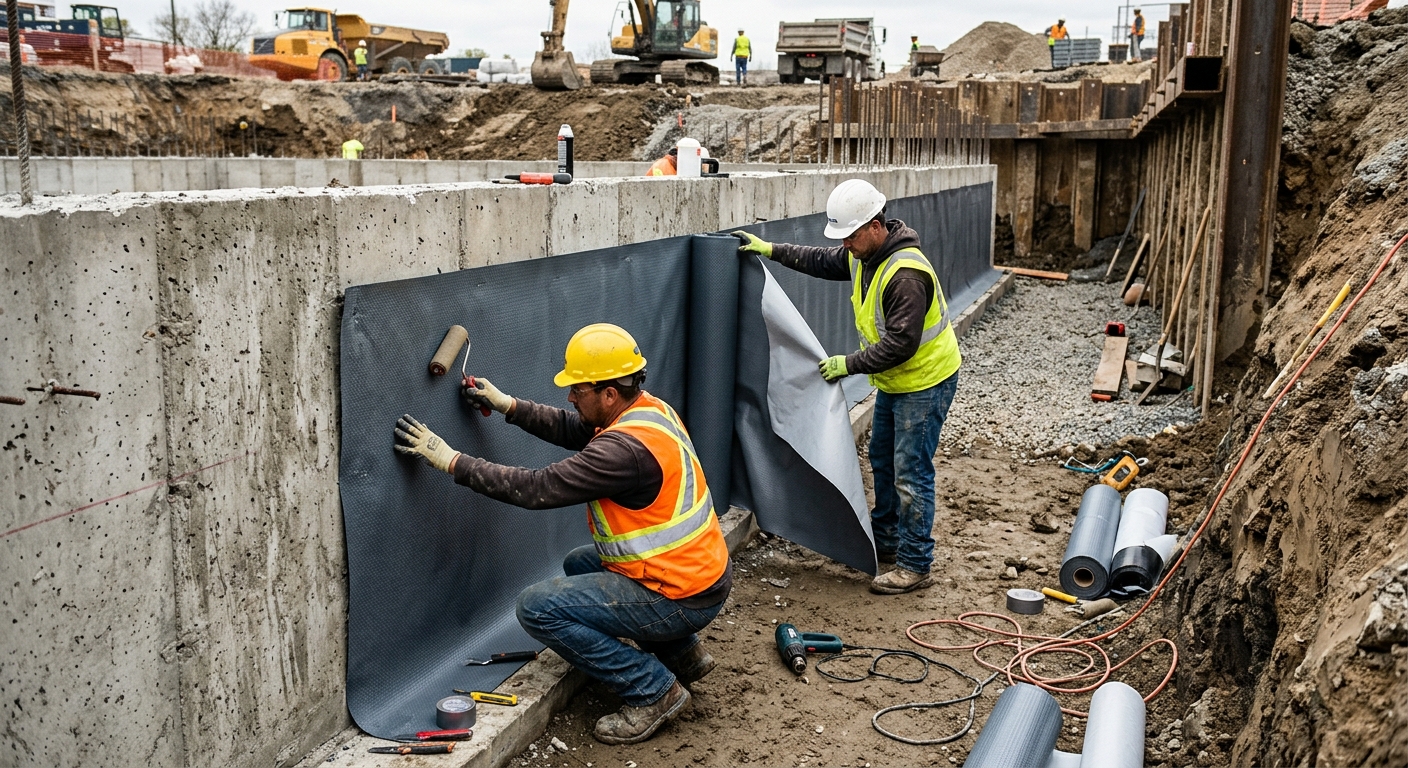
Basement waterproofing options and costs in Lindsay
Lindsay homeowners typically start by looking for a “quick fix,” but in Lindsay the right waterproofing method depends on where water is entering: through the foundation wall, at cracks and joints, or from saturated soil and a failing drainage system outside the basement. With a population of 20,354 in 2021 (Statistics Canada, 2021 Census), the area has a steady mix of older homes where original weeping tile and tar-and-paper-style waterproofing often deteriorate over decades—meaning water finds new paths as soils expand and freeze-thaw cycles widen existing joints.
In the Kingston–Pembroke economic region, clay-rich soils and fluctuating groundwater are the main cost drivers. When backfill stays saturated, lateral pressure increases on foundation walls, and once seepage starts at tie holes or mortar joints, water can migrate even when one crack repair “looks dry.” Contractors also price for access constraints around mature landscaping and established neighbourhood lots, which is common around downtown Lindsay and nearby older subdivisions where exterior excavation can be disruptive.
As a result, it’s common to see exterior excavation + drainage tile projects priced at the higher end of the band, while targeted interior systems are often used when homeowners want minimal disruption or when exterior access is limited. Use the comparison below to map your symptoms to a practical scope—and then we’ll break down what drives the biggest quote differences across Ontario.
| Method |
What It Addresses |
Disruption Level |
Durability |
Price Range |
| Exterior excavation + new membrane + drainage tile |
Primary water source: hydrostatic pressure at the foundation exterior; replaces drainage pathway |
High (excavation, yard disturbance, disposal/backfill, possible landscaping restoration) |
High (typical design life 20+ years with proper drainage and installation) |
$12,000–$25,000 |
| Interior perimeter drain channel + sump pit |
Water after it enters: intercepts seepage along interior perimeter and pumps it out |
Medium (floor/footing access along the perimeter; minimal yard impact) |
High (works well when paired with crack repairs; depends on sump quality and discharge) |
$7,000–$10,500 |
| Foundation crack injection (epoxy or polyurethane) |
Cracks and pathways through poured concrete or block mortar joints; stops leakage routes |
Low (targeted ports; minor wall surface prep) |
Medium-to-high (epoxy for structural/secondary sealing; polyurethane for active leaks) |
$800–$1,800 |
| Sump pump installation (primary + battery backup) |
Controls interior water; reduces flood risk during power interruptions and heavy spring wet weather |
Low-to-medium (cutting for pit/discharge; electrical tie-in) |
High (backup extends reliability during outages) |
$1,500–$2,700 |
| Window well drain installation |
Water intrusion at egress wells and around window openings during storms and snowmelt |
Low-to-medium (yard/sidework near wells; localized excavation) |
Medium-to-high (depends on grading and outlet drainage) |
$900–$2,000 |
| Lot re-grading / downspout extension |
Surface water control: keeps roof runoff and grading from feeding foundation perimeter soils |
Low-to-medium (localized yard work) |
Medium (often best as part of a system) |
$1,000–$3,500 |
Prices are estimates only and vary by project scope, site access and material selection.
What affects the price of waterproofing in Lindsay
In Lindsay, two contractors can quote the “same” basement waterproofing problem and still be 30–50% apart—most often because the scope is actually different once soil conditions, water behaviour, and foundation age are factored in. In the Kingston–Pembroke region, the three biggest separations from the national average are soil type, water table behaviour, and freeze-thaw. Clay-rich soils common across Ontario can hold water and expand when saturated, which increases lateral pressure and accelerates seepage through cracks and construction joints. When water tables run high or fluctuate, homeowners need more robust drainage design and longer sump run times. And the freeze-thaw cycle in Eastern Ontario widens existing cracks and joints in poured concrete and block foundations, which can increase labour time for proper surface prep and repeated sealing details.
Local examples show why costs move quickly in Lindsay:
- If your basement has chronic seepage after spring melt, an exterior excavation + drainage tile scope tends to approach the $12,000–$25,000 band because contractors have to manage hydrostatic pressure and reconnect drainage properly.
- If the problem is localized (e.g., a perimeter wall damp line plus a musty corner) and access is limited by decks or mature trees, interior perimeter drainage plus sump work can often land closer to the lower end of interior band pricing (commonly $4,000–$10,000 depending on scope).
- Homes with older weeping tile systems (often 60+ years old) may be partially crushed or completely failed, which means “simple crack injection” alone may not control the water source.
Because much of the housing stock is older in Eastern Ontario, the frequency of failing original drainage is higher than in newer subdivisions—so contractors price around both the foundation and the water pathway outside the wall, not just the visible crack inside.
| Price Factor |
Why It Matters |
Cost Impact |
| Interior vs. exterior approach — interior is less disruptive but addresses symptoms |
Exterior systems remove the water source; interior systems intercept water after entry |
Exterior typically costs more; interior can be 40–60% lower when access is limited |
| Foundation type — poured concrete vs. block vs. stone vs. ICF |
Crack behaviour and sealing methods differ by material |
Poured concrete often seals well with targeted injection; block may require added interior drainage |
| Soil type — clay expands more than sand, adding pressure |
Clay holds moisture and increases hydrostatic/lateral pressure during saturation |
Clay soils can push jobs toward the higher exterior excavation end of the range |
| Crack type and length — hairline vs. structural horizontal cracks |
Structural/active cracks may need different materials and engineering assessment |
Structural work increases labour and time; larger scopes can exceed typical crack-injection pricing |
| Sump pump backup system — battery or water-powered backup needed |
Protects against overflow during power loss in wet spring periods |
Backup adds cost but reduces high-risk failure; often a noticeable add-on to pump installs |
| Access — landscaping, decks, or driveways must be removed for exterior |
Excavation depth, equipment access, and restoration drive labour and disposal costs |
Poor access can raise the project cost or shift the plan to interior drainage |
| Weeping tile age — original tile (60+ years) may be completely failed |
Failed tile can mean water is bypassing the basement perimeter pathway |
Often increases scope toward exterior replacement or more complete interior interception |
| Mould or efflorescence remediation required before sealing |
Sealers and membranes require clean substrates; active microbial growth needs remediation |
Remediation time and materials can add several days and increase overall cost |
Permits & regulations in Ontario
In Ontario, some basement waterproofing work typically needs permits, while other tasks usually do not. In general, foundation excavation and any work that changes lot drainage and/or involves re-routing water management around the foundation may require a building permit, depending on the extent of the excavation and whether it’s considered a structural or drainage change. Structural crack repair—especially for horizontal cracks in block walls or signs of movement—often triggers additional requirements. In many cases, an engineer’s assessment is required to determine whether underpinning or structural reinforcement is necessary before sealing.
Where sump pumps are installed and connected into storm or sanitary services, municipal approval is typically required. Homeowners should also confirm discharge location requirements to avoid creating new water problems for neighbours or lower elevations.
Step-by-step, here’s how a Lindsay homeowner can verify a contractor’s credentials:
- Ask for their certificate(s) of insurance and review the coverage limits and the business name—don’t rely on a one-page sales email.
- Confirm workers’ compensation coverage (WSIB) through the contractor’s clearance letter. If WSIB doesn’t apply to your contractor, ask for the proper exemption documentation.
- For any structural scope, ask whether they coordinate engineering support and whether they’ll include it in the plan.
- Check Ontario licensing/registrations where applicable for the type of work and trades they’re subcontracting (and request the subcontractors’ insurance too).
If the contractor can’t provide clear documentation—especially WSIB/WCB clearance and insurance certificates—pause and request it before signing anything.
Interior vs exterior waterproofing — what does Lindsay need?
In Lindsay, the fundamental difference is that exterior waterproofing targets the source of water entry, while interior waterproofing manages water after it arrives. Exterior excavation involves digging to the foundation, installing a continuous waterproofing membrane, and rebuilding drainage tile and backfill so water is guided away instead of pressing against the wall. It’s more expensive and disruptive because it changes your yard and often requires disposal and restoration. Interior systems typically involve a perimeter drain channel along the floor edge, a sump pit, and a sump pump to collect and discharge seepage. This approach can be less invasive, but it does not eliminate hydrostatic pressure on the wall—so proper crack/joint sealing and a reliable sump are crucial.
Given Kingston–Pembroke’s clay-heavy soils and freeze-thaw behaviour, exterior work is usually the best long-term choice when you have widespread perimeter seepage, exterior drainage failures, or chronic sump cycling. For poured concrete walls, crack injection can pair effectively with interior drains—often offering good sealing when the cracks are non-moving. For block foundations, interior drainage is often a practical complement because block mortar joints and voids can allow seepage paths that are difficult to fully address from the inside alone.
A concrete cost example: if you’re quoted $12,000–$25,000 for full exterior excavation but your issue is mostly a couple of damp lines plus a single active crack, paying around $800–$1,800 for targeted crack injection and budgeting interior drainage within the $4,000–$10,000 range can be justified—provided the underlying drainage problem is addressed enough to stop ongoing hydrostatic pressure from overpowering the system.
Backup matters too. In Ontario’s wet spring periods, power interruptions can turn a sump into a flood risk. A backup system (battery or water-powered) is often a small cost compared to the damage it prevents.
| Method |
Best For |
Addresses Source? |
Disruption |
Lifespan |
Price Band |
| Full exterior excavation + membrane |
Widespread seepage, high water behaviour, failed exterior drainage, long-term solution |
Yes |
High |
20+ years (with proper drainage and installation) |
$12,000–$25,000 |
| Interior French drain + sump system |
Limited exterior access, chronic seepage after cracks form, homes where yard excavation is constrained |
No (intercepts after entry) |
Medium |
15+ years (depends on pump reliability and discharge management) |
$4,500–$10,500 |
| Crack injection — epoxy (structural) |
Structural/non-active cracks where the wall is stable and leakage is controlled at the crack |
Partial (seals pathways) |
Low |
Medium-to-high when cracks are properly classified |
$800–$1,600 |
| Crack injection — polyurethane (active leak) |
Active seepage through hairline or moving cracks where material must flex with water pressure |
Partial (seals pathways) |
Low |
Medium (often pairs with drainage to reduce recurrence) |
$900–$1,800 |
| Interior drain channel only (no sump) |
Very light seepage or manageable dampness where discharge can be gravity-based and reliable |
No |
Medium-to-low |
Limited by outlet reliability |
$4,000–$7,500 |
| Re-grading + downspout extensions |
Surface water issues, overflowing gutters, roof runoff feeding the foundation perimeter |
Helps prevent source contribution (surface) |
Low-to-medium |
Medium (best when combined with drainage/sealing) |
$1,000–$3,500 |
How to choose a waterproofing contractor in Lindsay
Choosing the right waterproofing contractor in Lindsay is less about the lowest price and more about verifying credentials, matching the scope to your foundation and water behaviour, and getting clear documentation. Start by confirming Ontario compliance basics. Ask for a certificate of insurance (liability) and review the dates, policy limits, and business name. For workers’ compensation, request the contractor’s WSIB clearance letter (or the applicable proof if they use a structure that changes coverage requirements). If they’re proposing any structural crack repair, ask whether they use engineering support and whether they carry liability insurance that covers the described scope.
Next, get 2–3 itemised written quotes. The best quotes break down labour and materials: excavation labour, membrane and drainage tile materials, sump pit/piping, electrical work, and disposal/backfill/restoration allowances. Avoid “lump sum” estimates that don’t say what’s included. Confirm exclusions in writing—especially permit pull, engineering, spoil/disposal, and landscaping restoration. Warranty terms matter too: verify the workmanship warranty length, how long it covers defects, and whether it’s transferable to future homeowners. For payment, never pay more than 10–15% upfront; hold back until key milestones are complete. Finally, insist on a written start date and completion estimate, including what will happen if spring wet conditions delay access.
- Request insurance certificate and WSIB clearance letter before signing.
- Ask for references in Lindsay (not just “Eastern Ontario”) with similar foundation types.
- Confirm their scope includes inspection for weeping tile condition and discharge pathway.
- Make sure crack classification (structural vs active) is included before injection material is selected.
- Verify sump discharge direction and whether it meets local drainage expectations.
- Confirm disposal and backfill materials are included (or clearly excluded).
- Ask whether landscaping restoration is in the quote or handled as a separate line item.
- Confirm whether permits are required and who pulls them (and the cost, if any).
- Require a project timeline with mobilization and curing windows.
- Look for warranty details in writing: workmanship and product/manufacturer terms.
- Set payment milestones tied to completed stages, not just “progress.”
- Ensure they include final cleanup and a system test (sump pump functional test, discharge check).
Red flags in Lindsay: (1) they recommend interior-only work without checking exterior drainage or weeping tile condition; (2) they promise “guaranteed dryness” without explaining hydrostatic pressure and sump reliability; (3) no insurance/WSIB clearance or refusal to provide certificates; (4) vague exclusions like “site restoration not included” without details; (5) payment schedules asking for large upfront deposits beyond 10–15%.
Frequently asked questions — waterproofing in Lindsay
Can I waterproof my basement from the inside only?
Yes, many Lindsay basements can be improved with inside-only waterproofing, especially when exterior access is limited by landscaping, decks, or tight lot lines. Interior systems typically include a perimeter drain channel and a sump pit/pump to intercept seepage after it enters. For some homes, adding targeted crack injection (often in the $800–$1,800 range) can stop active pathways and reduce wet corners.
That said, inside-only solutions usually manage symptoms rather than removing the cause of hydrostatic pressure. In Kingston–Pembroke’s clay-heavy soils and freeze-thaw conditions, exterior water can keep pressing the wall, so a reliable sump (and ideally backup) becomes critical. If you’re seeing widespread perimeter dampness during spring melt, a properly planned exterior approach often gives the most durable outcome.
What causes foundation cracks in Lindsay?
Foundation cracks in Lindsay commonly come from movement in the foundation and from soil behaviour around the walls. Kingston–Pembroke’s freeze-thaw cycle can widen existing joints in poured concrete and block foundations over time. When clay-rich soil saturates, it can expand and apply lateral pressure on foundation walls, which may aggravate hairline cracks and develop seepage points at tie holes or mortar joints.
Another frequent factor is drainage failure: if water is allowed to pool near the foundation perimeter, it increases hydrostatic pressure and accelerates crack leakage. Older housing stock also matters—many homes have older or failed weeping tile systems, so water migrates where it shouldn’t. If you have horizontal or widening cracks, it’s important to classify them properly and consider an engineer assessment before sealing.
How do I compare waterproofing quotes?
Start by comparing scope line-by-line rather than the total price. Ask each contractor to list labour and materials separately: excavation (if exterior), membrane/drainage tile, piping, disposal/backfill, sump pit and pump components, electrical tie-ins, and any landscaping restoration. Confirm exclusions such as permit pull, engineering support, and site restoration, and ensure both quotes address the same problem (cracks/joints vs general seepage vs surface runoff).
Also ask them to explain the “why” behind the method. In this region, exterior work often lands in the $12,000–$25,000 band when replacing drainage and relieving hydrostatic pressure is needed. Interior-focused approaches can fall in the $4,000–$10,000 range when they’re properly designed to intercept water after entry. If one quote is much cheaper but omits sump backup or proper drainage design, it may be managing the wrong issue.
How long does basement waterproofing take in Lindsay?
Timelines depend on whether the work is interior or exterior, foundation condition, and site access. Interior perimeter drainage and sump installation can often be completed in a matter of days once the crew mobilizes, but curing/finish steps (and any necessary remediation like efflorescence or mould cleanup) can add time. Crack injection is usually quicker—often a short, focused scope—though prep and drying conditions still affect scheduling.
Exterior excavation is typically longer because it includes excavation, membrane and drainage tile installation, backfill, and landscape restoration considerations. Winter conditions in Ontario also impact scheduling: spring wet weather can limit access and increase downtime while keeping the foundation workable and dry enough for membrane installation. A reliable contractor will provide a written start date, completion estimate, and a plan for weather delays.
What is a weeping tile and does my Lindsay home have one?
A weeping tile is the drainage system historically installed around many basements to collect groundwater seepage and redirect it to a sump or outlet. In many older Lindsay homes, you may find original weeping tile still present—sometimes functional, often compromised. Because Kingston–Pembroke conditions can worsen over decades (especially with clay-heavy soils and freeze-thaw), older tile systems can be clogged, broken, or missing, which then forces water to find new routes through cracks or joints.
To check, look for evidence like an older sump pit, accessible cleanouts, or drainage discharge lines in the basement. A contractor can also inspect with probes and cameras during an assessment. If your home has persistent perimeter dampness, a failed weeping tile system is often part of the story—so the waterproofing plan may need interior drainage upgrades, exterior replacement, or both.
Can I waterproof my basement in winter in Lindsay?
Sometimes, yes—but it depends on the method and the condition of your foundation at the time. In Ontario winter, frozen ground and reduced drainage can make exterior excavation difficult or impossible, and membrane installation quality requires appropriate conditions so materials can bond properly. Interior work is more commonly feasible because it’s concentrated inside the basement and doesn’t require digging in frozen backfill.
Crack injection may still be possible in winter if temperatures and substrate conditions are manageable, but contractors may need controlled conditions for proper cure. Sump pump installations are often done year-round, and installing a pump with backup can be especially valuable before spring thaw and heavy wet weather. The practical approach is a professional assessment—because if your weeping tile system is failed and the outside soils are saturated, winter may be best for interior steps while planning exterior work when access is safe and surfaces are workable.