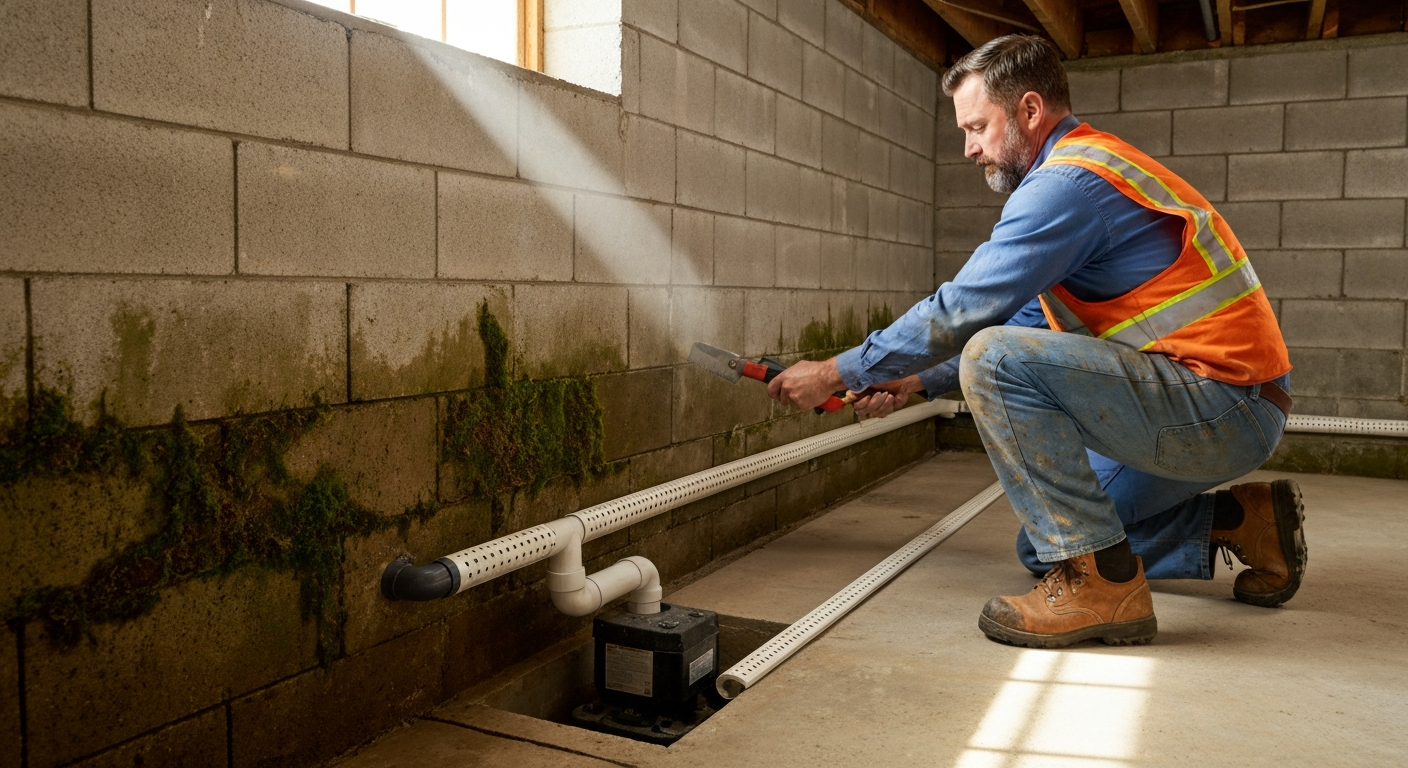
Basement waterproofing options and costs in Cambridge
Basement waterproofing in Cambridge, Ontario usually starts with the same question: where is the water coming from, and is it an occasional seep during spring melt or a recurring hydrostatic pressure issue? Cambridge’s housing mix matters here—Statistics Canada’s 2021 Census shows 48.4% of homes were built before 1981, and those older basements are more likely to have legacy waterproofing (like aged tar systems) and weeping tile that has long outlived its original service life. Add to that the fact that homeowner households represent 68.9% of all households (Statistics Canada, 2021 Census), so many projects focus on long-term protection rather than “temporary fixes.”
In the Kitchener–Waterloo–Barrie corridor, waterproofing costs are driven by soil and water movement. Clay-heavy ground can hold and slowly release water, and freeze-thaw cycles can widen existing foundation cracks—turning a small leak into a larger water-entry problem over a few seasons. That’s why labour and materials pricing often shifts based on excavation depth, soil removal, access constraints, and whether drainage tile replacement, interior drainage, or both are required. Trades availability is generally strongest in high-demand areas where older housing stock is common, including west Cambridge near Preston and Hespeler.
Below are the most common waterproofing approaches and what they typically address, to help you compare like-for-like before you request quotes for your home in Cambridge.
| Method |
What It Addresses |
Disruption Level |
Durability |
Price Range |
| Exterior excavation + new membrane + drainage tile |
Stops bulk water entry at the foundation perimeter; replaces failing drainage path |
High (excavation, landscaping restoration) |
High (source control when properly detailed) |
$7,000–$15,000 |
| Interior perimeter drain channel + sump pit |
Collects seepage after it enters; reduces hydrostatic pressure by draining |
Medium (interior demolition, sump installation) |
Medium to high (depends on sump maintenance and drainage details) |
$6,000–$20,000 |
| Foundation crack injection (epoxy or polyurethane) |
Seals cracks to prevent water migration; type selected based on crack behaviour |
Low to medium (minor interior or exterior access) |
Medium to high (best when crack movement is understood and managed) |
$1,200–$3,000 |
| Sump pump installation (primary + battery backup) |
Moves collected water away quickly, protecting finishes and lowering risk during outages |
Low to medium (pit excavation inside, electrical work) |
Medium to high (backup improves reliability) |
$900–$3,600 |
| Window well drain installation |
Prevents surface water pooling and directing flow toward basement openings |
Low to medium (small excavation around window wells) |
Medium (serviceable; depends on grading and weeping connections) |
$1,000–$3,000 |
| Lot re-grading / downspout extension |
Moves runoff away from the foundation; reduces volume entering drains and wall base |
Low (groundwork and plumbing adjustments) |
Low to medium (only as durable as the site drainage setup) |
$1,200–$4,000 |
Prices are estimates only and vary by project scope, site access and material selection.
What affects the price of waterproofing in Cambridge
In Cambridge and the broader Kitchener–Waterloo–Barrie market, it’s common to see quotes for what sounds like the “same basement problem” swing by 30–50% once contractors price excavation depth, disposal, drainage scope, and the type of foundation wall involved. That variation usually comes from three local realities that also explain why regional costs can land above (or below) a national average: soil type, water table/groundwater behaviour, and freeze-thaw.
First, clay-heavy soils—common in many parts of Ontario—hold water, expand during winter freeze-thaw, and can push laterally against foundation walls. That movement worsens crack openings over time, which is why a simple seal can become inadequate and why exterior work that includes full perimeter drainage can cost more. Second, higher local seepage rates raise sump pump run times and require a correctly sized drainage path. Third, freeze-thaw cycles repeatedly expand and contract moisture in wall interfaces, turning hairline issues into active leaks; that’s a key reason why interior systems can still be chosen, but they must include drainage and pumping reliability.
Concrete examples in Cambridge that shift pricing: (1) If your home has exterior access blocked by a deck, patio, or narrow driveway, exterior excavation can jump toward the higher band of exterior waterproofing at $7,000–$15,000 because restoration is more complex. (2) If your basement shows recurring seepage along the perimeter after spring melt, interior perimeter drainage and sump installation often lands in the mid-to-upper interior range of $6,000–$20,000 because contractors must demo flooring, install a drain channel, and verify discharge routing. (3) If foundation cracks are structural or show step patterns, crack injection may be cheaper at $1,200–$3,000, but only if the movement is stable; otherwise, you’ll likely need an interior drainage solution alongside it.
| Price Factor |
Why It Matters |
Cost Impact |
| Interior vs. exterior approach — interior is less disruptive but addresses symptoms |
Interior manages water after entry; exterior targets source control |
Interior typically lower upfront; exterior higher but more permanent when feasible |
| Foundation type — poured concrete vs. block vs. stone vs. ICF |
Wall permeability and crack patterns differ by foundation system |
Poured concrete often seals better with crack injection; block often needs interior drainage complement |
| Soil type — clay expands more than sand, adding pressure |
Clay retains moisture and increases lateral stress on walls |
Can raise costs by increasing excavation scope and drainage requirements |
| Crack type and length — hairline vs. structural horizontal cracks |
Active or structural cracks require different detail and products |
Structural cracks can increase labour and may shift the job beyond injection only |
| Sump pump backup system — battery or water-powered backup needed |
Backup protects against outage-related flooding during spring wet periods |
Increases equipment and install cost; reduces risk materially |
| Access — landscaping, decks, or driveways must be removed for exterior |
More removal and restoration increases time and disposal |
Often pushes pricing toward the higher end of the exterior band |
| Weeping tile age — original tile (60+ years) may be completely failed |
Old systems can be disconnected, clogged, or collapsed |
Replacement scope grows; interior-only may not fully solve recurring seepage |
| Mould or efflorescence remediation required before sealing |
Active moisture damage must be addressed before waterproofing materials will bond |
Adds remediation time and materials before coatings or injections |
Permits & regulations in Ontario
In Ontario, some waterproofing-adjacent work requires permits, especially when you’re changing the building envelope, addressing foundation stability, or altering drainage systems. Typical jobs that do require a permit can include exterior foundation excavation, repair of structural cracks that could affect load paths, and changes to lot drainage that materially impact how water leaves the property. If the work includes installing or modifying a sump pump discharge route—particularly if it connects into municipal storm or sanitary systems—municipal approval is commonly needed.
For structural crack repair (for example, major horizontal cracks in block walls, step cracks, or signs of foundation movement), you’ll often need an assessment by a structural engineer before contractors proceed with underpinning or other stability work. When that’s the case, verify the contractor has engineering support (or a documented plan) rather than guessing with product selection alone.
How to verify a contractor’s Ontario compliance in Cambridge:
1) Ask for their Ontario licence information and confirm it matches the category of work they’re performing. 2) Request a certificate of insurance for liability and ensure it’s current for the project dates and correct jobsite address. 3) Ask for proof of WSIB/WCB coverage (or an equivalent clearance letter where applicable) and confirm subcontractors are covered too. 4) For any structural component, request who is providing engineering support and how that will be documented in your paperwork. This protects you if something fails after the work is completed.
Interior vs exterior waterproofing — what does Cambridge need?
The fundamental difference is straightforward: exterior waterproofing provides source control, while interior waterproofing manages water after it enters. Exterior excavation—opening the foundation perimeter, installing a modern membrane, and replacing drainage tile—targets hydrostatic pressure at the wall exterior. It’s usually the most durable method when the site allows excavation, but it comes with the highest disruption and restoration scope. Interior waterproofing—such as a perimeter drain channel, sump pit, and sump pump—does not stop water pressure from reaching the wall. Instead, it captures seepage close to the wall base and relieves the basement floor area from standing water risk.
In Cambridge, where a significant share of homes were built before 1981, many basements are already dealing with aging drainage systems and freeze-thaw-driven crack movement. Poured concrete walls often respond well to proper crack injection combined with drainage control, but block foundations frequently need interior drainage as a practical complement because leak paths can be more irregular at mortar joints and voids. If you’re seeing active seepage along the perimeter after spring melt, interior drainage and pumping is often a sensible plan; if you’re consistently experiencing saturated backfill conditions or clear signs of long-term weeping tile failure, exterior work becomes harder to avoid.
On outages: during heavy spring conditions, pumps can be stressed and power interruptions are a real risk. That’s why battery backup is commonly recommended as part of sump pump installation—especially when finished basements would suffer quickly.
Where the price difference is justified: if exterior access is manageable, a properly detailed exterior system in the $7,000–$15,000 band can outperform repeated interior “patches.” Meanwhile, a targeted interior approach often starts lower (commonly $6,000–$20,000 depending on scope), but it should be designed for recurring groundwater behaviour rather than just drying a wet season.
| Method |
Best For |
Addresses Source? |
Disruption |
Lifespan |
Price Band |
| Full exterior excavation + membrane |
Recurring seepage from exterior groundwater pressure; failed perimeter drainage |
Yes (source control at perimeter) |
High |
Long (when detailed and backfilled correctly) |
$7,000–$15,000 |
| Interior French drain + sump system |
Interior space workable; you need to manage seepage after entry |
No (manages water inside) |
Medium |
Medium to long (depends on sump reliability and maintenance) |
$6,000–$20,000 |
| Crack injection — epoxy (structural) |
Stable cracks in poured concrete or cracks that aren’t actively moving |
Partially (stops water migration through cracks) |
Low to medium |
Medium to long if movement is stable |
$1,200–$3,000 |
| Crack injection — polyurethane (active leak) |
Cracks with active seepage or movement where flexible sealing is needed |
Partially (targets crack leak paths) |
Low to medium |
Medium to long (proper selection matters) |
$1,200–$3,000 |
| Interior drain channel only (no sump) |
Minor seepage that doesn’t require pump removal |
No |
Medium |
Shorter if water can’t be actively removed |
$4,000–$10,000 |
| Re-grading + downspout extensions |
Surface water issues, wet corners tied to runoff patterns |
No (redirects water before it reaches foundation) |
Low |
Medium (depends on ongoing site maintenance) |
$1,200–$4,000 |
How to choose a waterproofing contractor in Cambridge
Choosing a waterproofing contractor in Cambridge starts with proof, not promises. First, verify Ontario licensing for the type of work you’re authorizing, and ask for a current certificate of liability insurance naming the insured parties correctly for your project address. Next, confirm WSIB/WCB coverage—request the clearance letter or proof of coverage and ensure it applies to the workers scheduled on your job. If a contractor relies heavily on subcontractors, ask how they ensure subcontractors are insured as well.
Then request 2–3 itemised written quotes rather than a lump-sum number. You want a breakdown of labour and materials (membrane, drainage tile, sump components, crack injection product type, disposal and restoration). Read what’s excluded: is permit pulling included if required, is soil disposal included, and what’s the plan for discharge routing and backfill compaction? A good quote will also describe the moisture findings—such as where seepage is observed—so the solution matches the cause.
Warranty matters too. Ask for the length of workmanship warranty and whether it’s transferable to future owners. Also ask for product/manufacturer warranties for membranes, sealants, and pumps. For payment, avoid paying more than 10–15% upfront; keep a holdback until completion and documented closeout. Finally, get a written start date and completion estimate, including what conditions could delay the schedule (weather, drying times, cure schedules).
- Ask for itemised labour + materials breakdown (not just totals).
- Confirm permit responsibility in writing (included or excluded).
- Request disposal and restoration scope for exterior work.
- Get product names and system details (membrane, tile, sump components).
- Match crack injection product to crack behaviour (epoxy vs polyurethane).
- Verify sump discharge routing details (and approvals if needed).
- Ask whether they test pump discharge and flow direction during commissioning.
- Require a written warranty for both workmanship and materials.
- Confirm warranty transferability to subsequent homeowners.
- Use a payment schedule with a small upfront deposit and end-of-job holdback.
- Request a final walk-through checklist (what was sealed, installed, and measured).
- Ensure crew is insured and WSIB/WCB coverage is current on proof documents.
Common red flags I see around Cambridge: (1) they won’t provide insurance/WSIB proof or give it only after you sign, (2) they quote “one product fits all” without discussing crack movement or water sources, (3) they start exterior excavation without clarifying disposal and restoration, (4) they avoid discussing permit requirements or discharge routing for sump pumps, and (5) their warranty is vague (“covered as needed”) or not transferable.
Frequently asked questions — waterproofing in Cambridge
Do I need a sump pump in Cambridge?
Many Cambridge homeowners do—not because a sump pump is always mandatory, but because it’s the reliable way to move collected water away when seepage is recurring. In spring melt periods common across southern Ontario, water volumes can overwhelm natural drainage, especially where clay-heavy soils hold moisture and where older drainage tile has failed. If you’re seeing water at the floor line, dampness that returns after heavy rains, or moisture that doesn’t clear quickly, a sump pump plus a proper perimeter drain is often the safer design than relying on “drying out.” Pricing typically starts around $900–$3,600 for installation, and higher if you include battery backup.
How does Cambridge's soil affect my foundation?
Soil matters because clay-rich ground tends to retain water, then expand and contract with freeze-thaw cycles. That cycle can increase lateral pressure on foundation walls and can widen existing cracks over time—particularly in homes with basements built before 1981, when older systems were less reliable. In Cambridge, this often shows up as perimeter seepage after spring wet weather, damp corners, or a pattern that follows the base of the foundation. The fix isn’t just a sealant; it usually includes drainage improvements (new drainage tile or an interior drain channel) and, where needed, crack repair. That’s why projects can shift into $6,000–$20,000 territory for interior systems when the water entry is recurring.
Do I need a permit for foundation work in Ontario?
In Ontario, many foundation-related and drainage-altering activities can require permits, but it depends on what’s being changed. Exterior foundation excavation, structural crack repair that could affect stability, and modifications to lot drainage commonly require a permit. Sump pump installations that connect to municipal storm or sanitary systems generally require municipal approval. For structural crack repair (such as major horizontal cracks in block walls), an engineer’s assessment is often required so the plan matches the foundation’s condition. Before signing anything, ask your contractor to list the permits they will pull and who is responsible if approvals are needed. If your contractor can’t explain permit steps for Cambridge, that’s a major compliance red flag.
How long does waterproofing last?
“Lasts” depends on the method and whether the system matches the source of water. Exterior waterproofing—when properly detailed with membrane, drainage tile replacement, correct slope, and backfill compaction—can be long-lasting because it addresses hydrostatic pressure before water enters the basement. Interior waterproofing can also last a long time, but it depends on pump performance, discharge routing, and whether seepage continues to overwhelm the system during peak wet periods. Crack injection can last for years when cracks are stable, but if movement continues due to soil expansion and freeze-thaw, you may see new seepage. Many Cambridge homes built before 1981 had original drainage strategies that are now beyond their intended life, which is why updated drainage and crack solutions are often required rather than repeat patching. Typical budgets reflect these longevity goals.
Can I waterproof my basement from the inside only?
Yes, you can often waterproof from the inside only—especially when excavation isn’t practical due to landscaping, decks, or limited access. Interior perimeter drains, sump pits, and pump systems manage water after it enters and can be the right choice when the primary issue is active seepage and you need an immediate, controlled drainage route. However, interior-only solutions don’t stop hydrostatic pressure against the foundation wall itself, so they need dependable pumping and correct discharge routing. If your foundation has long-term weeping tile failure and you’re dealing with persistent exterior groundwater pressure, exterior excavation tends to be more effective for source control. Interior work commonly falls within $6,000–$20,000 depending on how much drainage and pumping is required.
What causes foundation cracks in Cambridge?
Foundation cracks in Cambridge are commonly linked to moisture movement and freeze-thaw cycles. Clay-heavy soils expand when they freeze and then contract as temperatures rise, putting stress on foundation walls. Older homes—Statistics Canada’s 2021 Census shows 48.4% of homes in Cambridge were built before 1981—often have foundations with older waterproofing and drainage systems that have since degraded, increasing the chances that water pressure and wall movement occur. Cracks may also be caused or worsened by poor site drainage (downspouts discharging toward the foundation) or inadequate drainage maintenance, which allows water to pool near the wall. If the crack is active (still leaking or widening), sealants alone won’t be enough; you may need crack injection plus a drainage system, with crack work often priced around $1,200–$3,000.