Basement waterproofing options and costs in Stoney Creek
In Stoney Creek, waterproofing decisions usually start with one simple question: are you stopping water entry at the foundation, or managing water after it gets in? With a population of 76,382 (Statistics Canada, 2021 Census), Stoney Creek has steady demand for contractors, especially where older neighbourhoods meet clay-heavy soils and perched water from shallow fill. Many basements built decades ago were originally sealed with tar-and-paper systems and older weeping tile that no longer performs the way it once did, so homeowners often see recurring dampness, musty odours, or seasonal seepage.
Across the Hamilton–Niagara Peninsula, quotes can swing because the ground and groundwater don’t behave uniformly. In this region, clay and silty clay subsoils can hold moisture and expand during freeze–thaw, which increases cracking risk and can raise the amount of exterior excavation and drainage stone needed. Typical water tables in the area commonly sit around 2–4 m below grade (with perched water in shallow fill), so sump sizing, discharge routing, and drainage design become major cost drivers. Labour availability and excavation conditions also matter—jobs are more labour-intensive near established areas like West Stoney Creek, where driveways, landscaping, and mature trees can complicate access.
Below is a practical comparison of common options you’ll see in Stoney Creek basements, with typical price ranges to help you line up quotes before you compare details.
| Method |
What It Addresses |
Disruption Level |
Durability |
Price Range |
| Exterior excavation + new membrane + drainage tile |
Water entry through exterior foundation walls; replaces failed drainage path |
High (excavation, landscaping restoration) |
Long-term (often 20+ years when done with correct detailing) |
$12,000–$25,000 |
| Interior perimeter drain channel + sump pit |
Controls seepage by collecting water that migrates inward |
Medium (floor/edge work inside) |
Long-term (typically 15+ years with proper pump and discharge) |
$8,000–$18,000 |
| Foundation crack injection (epoxy or polyurethane) |
Sealing cracks to reduce leakage; stabilizes through-wall movement depending on crack type |
Low to Medium (minor prep, drilling) |
Variable (often 10–20 years; depends on crack activity) |
$600–$1,800 |
| Sump pump installation (primary + battery backup) |
Reduces basement water accumulation during high water events |
Low to Medium (pit + discharge + controls) |
High (backup protects during outages) |
$1,800–$4,200 |
| Window well drain installation |
Stops water pooling and overflow around egress/window openings |
Low (localized exterior work) |
Good (works well when downspouts/discharge are corrected) |
$1,500–$3,500 |
| Lot re-grading / downspout extension |
Improves surface water control to reduce foundation loading |
Low (selective landscaping adjustments) |
Moderate to Good (holds up if grading settles or is maintained) |
$1,200–$3,200 |
Prices are estimates only and vary by project scope, site access and material selection.
What affects the price of waterproofing in Stoney Creek
In Stoney Creek, two contractors can quote the “same” waterproofing problem and still land 30–50% apart—usually because the real site conditions and scope details aren’t identical. In the Hamilton–Niagara Peninsula region, pricing is shaped by clay-heavy pockets, variable groundwater, and Ontario’s freeze–thaw behaviour. National averages often assume more uniform soil and fewer excavation obstacles, but here the cost drivers show up fast: deeper excavation in wet, cohesive soils, more robust drainage stone and membrane systems, and longer labour time to get proper detailing around corners and penetrations.
The three biggest separation points from the national average are soil type, water table, and freeze–thaw. Clay and silty clay expand during freeze–thaw and can exert lateral pressure on foundation walls, worsening cracks over time—so sealing-only fixes may fail unless drainage is corrected too. With water tables commonly around 2–4 m below grade (and perched water in shallow fill layers), sump run times increase and exterior drainage design needs to be more conservative. Freeze–thaw also widens existing cracks; that’s why a foundation crack repair quote can differ from a full exterior solution by thousands of dollars depending on whether the leak path is active.
Here are a few concrete examples that change cost in Stoney Creek: (1) homes with deeper basements often require more trench depth and pump discharge control, pushing exterior work toward the upper end of $12,000–$25,000; (2) basements that show repeating dampness after spring melt often need sump backup, adding to the $1,800–$4,200 range; (3) older weeping tile—frequently 60+ years old in established areas—may be completely failed, which means “partial” interior work can end up redoing expenses later.
How you address the drainage path usually decides whether you pay once for a durable fix or pay twice for symptom management.
| Price Factor |
Why It Matters |
Cost Impact |
| Interior vs. exterior approach — interior is less disruptive but addresses symptoms |
Interior drains manage incoming water; exterior systems prevent entry where it’s happening |
Interior often saves on disruption, while exterior costs more but targets the source |
| Foundation type — poured concrete vs. block vs. stone vs. ICF |
Different walls require different prep, crack repair methods, and drainage detailing |
Block and older stone often need more interior drainage planning |
| Soil type — clay expands more than sand, adding pressure |
Clay-driven expansion can increase wall stress and accelerate failure of seals |
Clay sites generally need heavier drainage stone and careful backfill |
| Crack type and length — hairline vs. structural horizontal cracks |
Active/structural movement needs assessment and may require additional engineering work |
More invasive work can move pricing upward quickly |
| Sump pump backup system — battery or water-powered backup needed |
Power outages during spring flooding can be when basements flood first |
Adds equipment and install cost but reduces catastrophic risk |
| Access — landscaping, decks, or driveways must be removed for exterior |
Extra labour and restoration materials increase the effective project scope |
Access issues commonly add thousands in established neighbourhoods |
| Weeping tile age — original tile (60+ years) may be completely failed |
If tile is blocked or detached, water can’t exit as designed |
Often triggers a more complete drainage rebuild |
| Mould or efflorescence remediation required before sealing |
Surface contamination can prevent membrane/coatings from bonding properly |
Includes extra prep time and materials |
Permits & regulations in Ontario
In Ontario, foundation excavation, structural crack repair, and changes to lot drainage typically require a building permit. For sump pump installations that connect to the storm or sanitary sewer, municipal approval is usually required to confirm discharge location and compatibility. Where the work touches the structure—especially in cases involving major step cracks, horizontal cracking in block walls, or signs of structural movement—an assessment from a structural engineer is often required to determine whether underpinning or additional stabilization is necessary.
For homeowners in Stoney Creek, the best approach is to verify the contractor’s responsibility for permits and code compliance before work starts. Step one: ask what permits are needed for your specific scope (e.g., “Is excavation under a permit?” “Is structural crack repair permitted?”). Step two: confirm the contractor carries liability insurance and WSIB/WCB coverage. Step three: require proof of clearance status (or the current WSIB/WCB clearance letter) for the company and the site trades. Step four: if engineering is part of the plan, make sure the quote indicates engineering support is included (or clearly states it’s an add-on).
Where to look: you can validate company licensing and standing through Ontario’s online licensing resources, request a certificate of insurance naming you as “additional insured” where appropriate, and review the certificate dates. For the permit path, a competent contractor will either pull permits directly or provide the details you need to pull them through the municipal process.
Interior vs exterior waterproofing — what does Stoney Creek need?
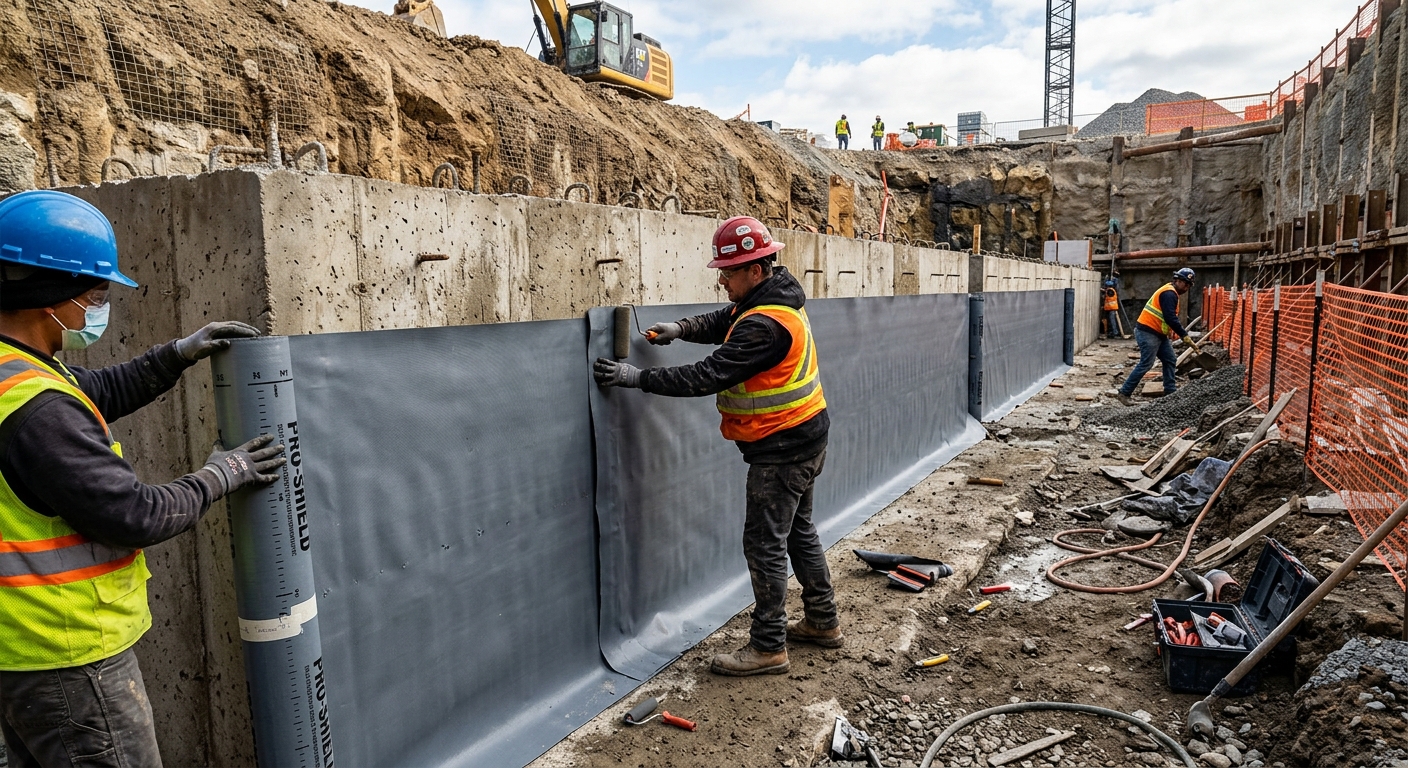
In Stoney Creek, exterior waterproofing is the “source control” approach: you fully excavate around the foundation, install new membrane and drainage tile, then backfill properly. This is the most durable option when the foundation is actively letting water in from the exterior. It’s also the most expensive and disruptive because excavation in clay-heavy, wet soils requires more labour time, more drainage stone, and careful disposal and restoration.
Interior waterproofing focuses on “water management.” A perimeter drain channel and sump pit collect water that migrates inward, then pump it away. This can be the right fit for homeowners who need less disruption or when excavation is limited by landscaping, patios, or property constraints. However, interior work doesn’t stop hydrostatic pressure from building against the wall—it reduces the impact by routing water and controlling accumulation.
Given Hamilton–Niagara Peninsula conditions, poured-concrete walls often respond well to crack injection (when leaks are from defined cracks rather than ongoing wall movement). Block foundations frequently benefit from interior drainage as a practical complement because joints and capillary pathways can keep transmitting moisture even after localized repairs. Spring melt and seasonal saturation are when sump systems earn their keep, and in Ontario it’s smart to plan for power interruptions—battery backup helps prevent early flooding when the ground is saturated and the sump is working hardest.
Here’s a realistic cost justification: if your basement has recurring seepage after heavy rain and the foundation shows active leakage, an exterior solution in the $12,000–$25,000 band may be justified because it replaces the drainage path. If the issue is localized dampness and you’re seeing manageable seepage, interior waterproofing in the $8,000–$18,000 range can be a sensible first step—especially when you pair it with crack injection and a properly sized sump system.
| Method |
Best For |
Addresses Source? |
Disruption |
Lifespan |
Price Band |
| Full exterior excavation + membrane |
Active water entry along foundation walls; failed exterior drainage |
Yes (stops water before it reaches the basement) |
High |
20+ years (when detailed and backfilled correctly) |
$12,000–$25,000 |
| Interior French drain + sump system |
Dampness, recurring seepage, or limited exterior access |
No (manages water after it enters) |
Medium |
15+ years with correct pump selection and discharge |
$8,000–$18,000 |
| Crack injection — epoxy (structural) |
Hairline, non-moving cracks in poured concrete or similar stable cracks |
Partially (seals a defined leak path) |
Low |
10–20 years depending on crack stability |
$600–$1,800 |
| Crack injection — polyurethane (active leak) |
Cracks showing active moisture/pressure; moving cracks where a flexible seal is needed |
Partially (stops localized leakage while accommodating movement) |
Low |
10–20 years when pressure is managed with drainage |
$650–$2,000 |
| Interior drain channel only (no sump) |
Minor seepage control with excellent gravity drainage and no high water events |
No (still manages water after it enters) |
Medium to Low |
Variable (can underperform during high water) |
$6,000–$12,000 |
| Re-grading + downspout extensions |
Surface water issues: downspouts discharging too close to the foundation |
No (reduces loading and helps drainage path) |
Low |
Moderate (can slip if soil settles) |
$1,200–$3,200 |
How to choose a waterproofing contractor in Stoney Creek
Choosing the right waterproofing contractor in Stoney Creek starts with verification, not promises. In Ontario, confirm the company can legally perform the type of work proposed, and ask for proof of liability insurance and WSIB/WCB coverage. Practically, you should check: (1) the contractor’s Ontario business licensing/standing through the appropriate online registry tools; (2) a current certificate of insurance (with coverage dates and project address shown); and (3) WSIB/WCB clearance/standing documentation for the company and relevant trades.
Next, get 2–3 itemised written quotes, not just one number. Ask for a breakdown of labour and materials: excavation (if exterior), membrane system components, drainage stone and geotextile, sump pit and pump model, discharge line routing, and any concrete cutting and restoration. Make sure the scope clearly states exclusions such as permit fees, disposal of spoil, landscaping reinstatement quality, and whether pump discharge ties into an approved route. Also ask: “Is a permit pull included?”—then confirm who is responsible for it.
Warranty matters in Ontario’s freeze–thaw climate. Require (a) a workmanship warranty length, (b) the manufacturer warranty terms for membranes/coatings/pumps, and (c) whether warranties are transferable to future owners. For payment, keep it controlled: never pay more than 10–15% upfront; use a holdback until the work is complete and verified. Finally, demand a clear timeline: start date, staging expectations, and estimated completion in writing—especially important for exterior excavation where weather can affect scheduling.
- Ask for a site photo assessment plan (where water is entering and how it will be routed)
- Require a written scope with materials named (membrane type, drainage tile, pump model)
- Confirm whether engineering assessment is needed for structural cracks
- Get permit responsibilities in writing (who pulls, who pays, what’s included)
- Verify liability insurance limits and that the certificate covers the project address
- Request WSIB/WCB clearance/standing documentation before work begins
- Insist on an itemised labour/materials quote, not a single lump sum
- Check discharge plan for the sump (approved routing and backflow protection)
- Confirm disposal and restoration inclusions for exterior excavation
- Ask about pump backup (battery or water-powered) and include it if outages are a concern
- Review warranty length for workmanship and product, plus transferability
- Use a payment schedule that includes a holdback until inspection/walkthrough is done
Red flags in Stoney Creek include vague scopes (“waterproofing guaranteed” with no system details), no written warranty terms, refusal to provide insurance/WSIB documentation, quotes that don’t address drainage path or discharge routing, and contractors who dismiss active cracking without assessing whether the crack is moving or structural.
Frequently asked questions — waterproofing in Stoney Creek
Will basement waterproofing affect my property value in Stoney Creek?
In Stoney Creek and across Ontario’s Hamilton–Niagara Peninsula, waterproofing can positively influence buyer confidence, especially when dampness, musty odours, or recurring seepage has been documented and then corrected. Buyers typically view a properly designed drainage and sump solution (and verifiable warranties) as risk reduction, not just cosmetic improvement. That said, value impact depends on the system: exterior waterproofing that restores the drainage path is often viewed as the most comprehensive, while interior systems still help but are generally seen as “management” rather than “source control.” If you’re comparing options, remember that interior waterproofing commonly sits in the $8,000–$18,000 range, while exterior excavation/membrane work is typically higher in the $12,000–$25,000 range. A durable, well-documented fix usually carries more resale weight.
What drainage issues are most common in Stoney Creek homes?
The most common drainage issues in Stoney Creek are seasonal seepage after spring melt, damp corners along perimeter walls, and water pooling near window wells or foundation penetrations. The regional reasons are consistent: clay-heavy pockets can hold moisture and push water laterally, while freeze–thaw widens existing cracks and can activate older leaks. Many homes in established areas also have aging weeping tile (often decades old) that may be blocked, detached, or undersized, so water can’t drain away as intended. You may also see dampness when downspouts discharge too close to the foundation or when grading has settled. On the exterior side, clogged eavestroughs and missing/short downspout extensions are frequent culprits. A good inspection checks both soil drainage and the foundation’s leak pathway before choosing interior vs exterior work.
How do I choose a waterproofing contractor in Stoney Creek?
Start by verifying contractor credentials and then matching scope details to your specific basement symptoms. In Ontario, ask for proof of liability insurance and WSIB/WCB clearance/standing, and confirm who pulls permits if excavation or structural crack repair requires them. Next, request 2–3 itemised quotes with labour and materials listed—especially membrane components, drainage stone/geotextile, sump pump model, and discharge routing. Ensure the quote explains what’s included in terms of disposal and restoration (e.g., landscaping replacement after exterior excavation). Compare warranties too: look for workmanship warranty length and product/manufacturer warranty coverage, plus whether they’re transferable. Finally, be cautious with payment terms—never pay more than about 10–15% upfront. If a contractor’s pricing looks unusually low compared to typical ranges like $8,000–$18,000 for interior work or $12,000–$25,000 for exterior excavation, ask what they’re leaving out.
What is a battery backup sump pump and do I need one in Stoney Creek?
A battery backup sump pump is an emergency pumping system designed to run during power outages. In Stoney Creek, it’s most valuable during high-demand periods—spring melt and heavy rain—when water levels rise quickly and basements are most vulnerable. Ontario’s weather swings and localized flooding events can mean the sump works hardest right when electricity is least reliable. A primary sump pump alone may keep up in normal conditions, but when power fails, water can accumulate fast. Backup systems (battery or water-powered alternatives) add cost, but they reduce the odds of a “no power = basement flooding” scenario. If your basement already has recurring seepage or you’ve experienced nuisance flooding, a backup is often a worthwhile upgrade. When you’re budgeting, sump pump installs with backup typically fall in the $1,800–$4,200 range depending on system design and installation complexity.
How much does basement waterproofing cost in Stoney Creek?
Basement waterproofing costs in Stoney Creek vary mainly with whether you need exterior excavation, what type of foundation you have, and how active the leak is. Interior perimeter drainage and sump systems often land in the $8,000–$18,000 range, especially when excavation inside is required and a proper sump discharge line is installed. If you’re dealing with active exterior water entry and failed drainage, exterior waterproofing (excavation + membrane + drainage tile) typically runs $12,000–$25,000, since clay-heavy, wet soils often require deeper trenching and more drainage stone. For specific, defined issues, foundation crack injection is usually priced in the $600–$1,800 band, but it should be matched to whether the crack is stable or actively leaking. For sump pump installations with backup, expect $1,800–$4,200. A site visit is essential—Stoney Creek’s clay and freeze–thaw cycle can change scope quickly.
Interior vs exterior waterproofing — which is better?
“Better” depends on whether you can (and should) stop water at the source or whether you mainly need to manage incoming seepage. Exterior waterproofing is best when water is actively entering through exterior walls and the drainage system has failed—because it rebuilds the water path around the foundation using membrane and drainage tile. It’s more disruptive and expensive, commonly within the $12,000–$25,000 range. Interior waterproofing is often better when access is limited or disruption needs to be minimized; it’s typically within $8,000–$18,000 for perimeter drainage and sump systems. In Ontario’s freeze–thaw conditions, exterior solutions generally offer the most complete long-term control, while interior systems must be well-designed to handle seasonal groundwater and sump capacity. In many Stoney Creek basements, a practical plan combines targeted crack repair (when appropriate) with interior drainage to manage risk where exterior work isn’t feasible.