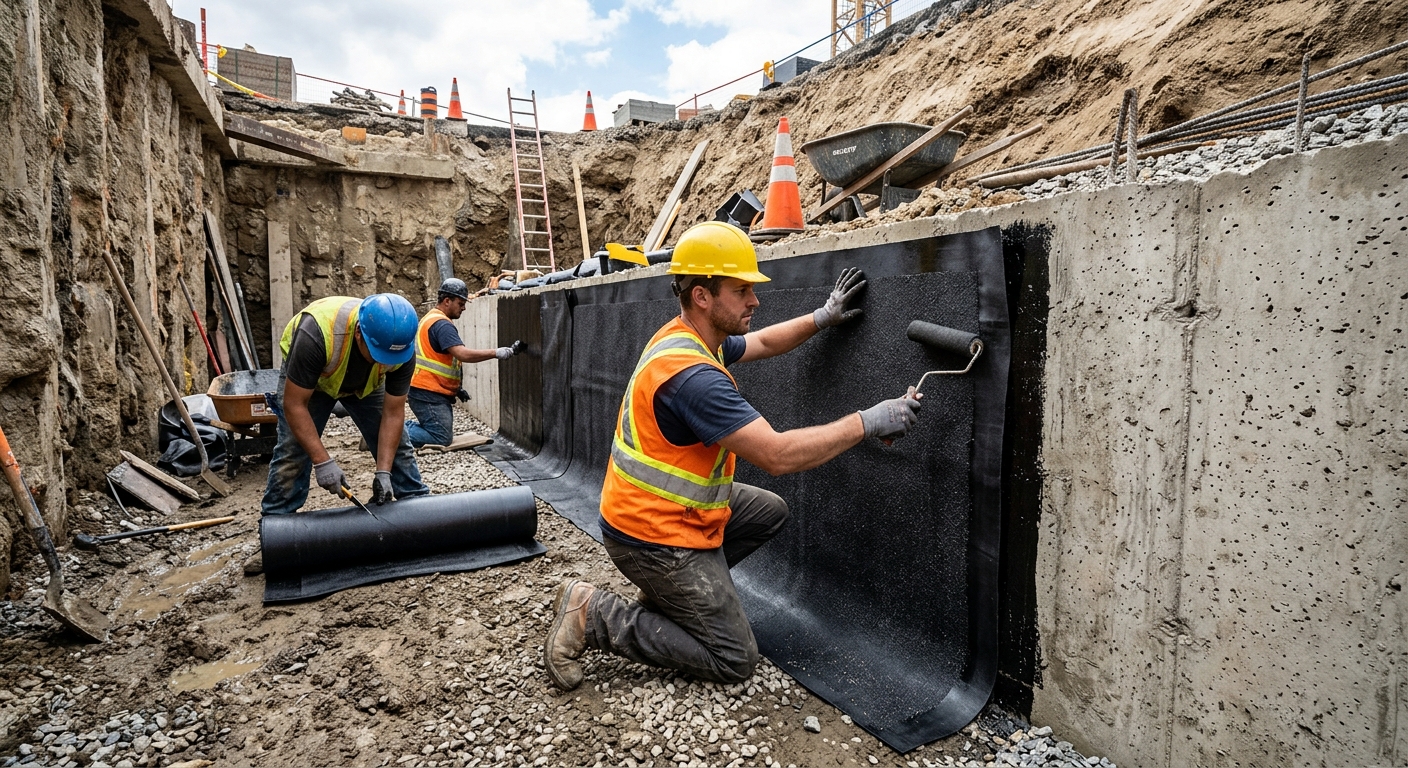
Basement waterproofing options and costs in North St.James Town
In North St.James Town, waterproofing decisions usually start with how and where water is getting into your basement—then quickly move to the practical reality of Toronto’s older housing and tight urban access. With a city population of 18,615 (Statistics Canada, 2021 Census), we see a lot of mid-century homes where original drainage systems and early basement waterproofing are now near the end of their service lives. Many of the neighbourhood’s 1960–1980s basements were built on mixed glacial till and clay pockets that can hold water and exert lateral pressure when saturated, especially after snowmelt and sustained spring rain. That’s why we often find clogged or partially collapsed weeping tile, plus seepage along cold joints, tie holes, and cracks.
Cost swings in Toronto are real: excavation is labour-intensive in dense lots, disposal adds up, and working near decks, sheds, or shared driveways increases access time. At the same time, interior-only systems can be far less disruptive, but they manage water after it enters rather than stopping hydrostatic pressure at the foundation face. In North St.James Town, demand is especially high around the older blocks closer to transit corridors and lower-lying streets—where downspout discharge, yard grading, and historic drainage patterns can contribute to chronic basement dampness.
Use the comparison below to match the method to your symptoms, then we can narrow down the right scope for your foundation type, crack pattern, and drainage condition.
| Method |
What It Addresses |
Disruption Level |
Durability |
Price Range |
| Exterior excavation + new membrane + drainage tile |
Source control by removing hydrostatic pressure at the foundation wall |
High (excavation, landscaping reinstatement) |
Long-term (typically the most complete approach) |
$7,000–$25,000 |
| Interior perimeter drain channel + sump pit |
Chronic seepage, efflorescence, and water pooling after pressure builds |
Medium (interior floor works, limited mess) |
Good when properly detailed and maintained |
$3,500–$15,000 |
| Foundation crack injection (epoxy or polyurethane) |
Isolated crack leaks and stopping active seepage paths |
Low to medium (surface prep and crack routing) |
Varies by crack movement and material used |
$600–$3,000 |
| Sump pump installation (primary + battery backup) |
Water removal during heavy rain, spring melt, and power interruptions |
Low to medium (sump pit + discharge routing) |
High for operational reliability (backup reduces risk) |
$800–$3,500 |
| Window well drain installation |
Water ingress at egress points and weeping from window wells |
Low to medium (localized excavation and grading) |
Good for targeted repairs |
$1,000–$4,000 |
| Lot re-grading / downspout extension |
Reducing roof/groundwater load at the foundation |
Low (often minimal demolition) |
Moderate; depends on drainage system condition |
$800–$3,000 |
Prices are estimates only and vary by project scope, site access and material selection.
What affects the price of waterproofing in North St.James Town
In North St.James Town and across the Toronto region, two quotes for the “same” basement waterproofing can differ by 30–50% because the scope is rarely identical—especially when water paths involve failed drainage, deteriorated weepers, and multiple entry points. Contractors price based on what they have to uncover, how much has to be removed, and whether the repair is a true source-control fix (usually exterior) or a best-practical solution (often interior). Even within Ontario, Toronto-area labour and disposal costs tend to run higher than many rural markets, and dense-lot access can add hours of careful handwork.
Three local conditions separate Toronto-region costs from the national average: soil type, water table behaviour, and freeze–thaw cycles. Clay-heavy soils common around the GTA can expand when saturated, pushing laterally on foundation walls and worsening cracks over multiple winters. When this happens, it’s not just “one crack”—it can become an active leak route that needs the right injection system and sometimes a complementary drainage approach. In Toronto, higher water-table conditions also mean sump pumps run more frequently; adding a battery backup often becomes a recommended upgrade rather than a luxury. By contrast, in heavy, coastal-rain regions (outside this project area), backfill can saturate faster, but the freeze–thaw-driven defect expansion can be less about repeated winter widening and more about persistent moisture load.
In North St.James Town, common cost drivers include whether the original clay weeping tile is completely failed (interior-only solutions may still work, but excavation and tie-in details change the price), and whether there’s evidence of efflorescence that must be addressed before sealing. For example, a simple crack injection may fall into the $600–$3,000 band, but when combined with interior perimeter drainage and sump upgrades, many projects move into the $3,500–$15,000 interior range. If we find exterior source pressure is still present—particularly where access allows—we may recommend exterior excavation, which typically sits in the $7,000–$25,000 band, and can be justified when interior work would only be treating symptoms.
| Price Factor |
Why It Matters |
Cost Impact |
| Interior vs. exterior approach — interior is less disruptive but addresses symptoms |
Source control typically requires excavation and membrane; interior systems manage water after entry |
Exterior often costs more; interior can reduce labour and restoration |
| Foundation type — poured concrete vs. block vs. stone vs. ICF |
Different walls crack differently and accept repairs differently (block may seep through joints) |
Block may require more detailed perimeter drainage; ICF can demand specific detailing |
| Soil type — clay expands more than sand, adding pressure |
Expanding clay increases hydrostatic and lateral pressure during freeze–thaw and wet seasons |
May increase need for exterior drainage/membrane or stronger interior drainage design |
| Crack type and length — hairline vs. structural horizontal cracks |
Active or horizontal movement cracks may need different materials and sometimes engineering guidance |
Active leaks or longer crack runs raise labour and material quantities |
| Sump pump backup system — battery or water-powered backup needed |
Backup reduces risk during power interruptions and heavy spring loading |
Can add a noticeable line-item cost; often recommended in basements with chronic seepage |
| Access — landscaping, decks, or driveways must be removed for exterior |
Removal and reinstatement add time and disposal; tight lots limit equipment use |
Often the biggest swing factor for exterior quotes in Toronto neighbourhoods |
| Weeping tile age — original tile (60+ years) may be completely failed |
Older drains commonly clog or collapse, leaving water to reroute into cracks and joints |
Failed tile can shift the scope from “repair” to “replace drainage system” |
| Mould or efflorescence remediation required before sealing |
Moisture must be stopped and contaminated surfaces prepared before coatings/injections |
Additional prep work increases labour and may require specialized cleaning steps |
Permits & regulations in Ontario
In Ontario, foundation excavation, structural crack repair, and changes to lot drainage typically require a building permit. If you’re having exterior work done—especially where we must excavate around the foundation, modify drainage, or tie into a municipal drainage arrangement—permit requirements are commonly triggered. Sump pump installations that connect to the storm or sanitary sewer need municipal approval, and the rules can change based on your connection method and discharge location.
For structural crack repair, the permit pathway often depends on what the cracks indicate. Horizontal cracks in block walls, major step cracks, or cracks paired with signs of movement usually warrant an assessment by a structural engineer to confirm whether underpinning or other structural work is needed. A reputable waterproofing contractor should be able to explain whether your situation is “water management” or “structural condition,” and should coordinate engineering support when required.
How homeowners in North St.James Town can verify contractors: (1) confirm the contractor’s Ontario licensing information where applicable via the appropriate online registry; (2) request a current certificate of insurance (liability) showing coverage dates and project address/jobsite; and (3) ask for proof of WSIB/WCB coverage (or the contractor’s valid exemption documentation if applicable). Don’t just receive these as photos—ask for the document number or directly confirm coverage details. If structural repairs are in the scope, ensure they can provide liability coverage and explain how engineering findings will be incorporated.
Interior vs exterior waterproofing — what does North St.James Town need?
The fundamental difference is source control versus water management. Exterior waterproofing involves full excavation, new foundation membrane, new drainage tile, and backfilling to re-establish a stable drainage path away from the wall. Done correctly, it permanently addresses the cause by reducing hydrostatic pressure at the foundation. The trade-off is disruption: excavation in tight North St.James Town lots often means relocating landscaping, deck sections, or temporary access routes, plus more restoration.
Interior waterproofing—like a perimeter drain channel, sump pit, and sump pump—manages water after it enters the basement. It can be far less invasive, and it’s often the practical choice when excavation access is restricted or when we’re dealing with partially failed weeping tile. However, interior work does not stop water pressure from acting on the wall itself; it just intercepts and removes it. For Toronto’s freeze–thaw cycles and clay-dominant pockets, that distinction matters. Poured concrete walls can sometimes seal better with properly selected crack injection, while block foundations often benefit from interior drainage as a complement, because water can migrate through mortar joints and at corners.
Backup systems are also important in Ontario. When spring loading coincides with occasional power disruptions, a sump pump without backup can mean a sudden water spike. Adding a battery backup typically increases reliability during critical hours.
Example of when price difference is justified: if your main issue is an isolated crack and minor seepage, crack injection may fit the $600–$3,000 range and avoid the disruption of a $7,000–$25,000 exterior excavation. If you have widespread interior dampness tied to failed drainage and persistent lateral pressure, interior-only work may still reduce water, but exterior excavation can be the more complete fix, especially where access is workable and the original drainage system is likely compromised.
| Method |
Best For |
Addresses Source? |
Disruption |
Lifespan |
Price Band |
| Full exterior excavation + membrane |
Chronic seepage driven by hydrostatic pressure or consistently failing drainage |
Yes |
High |
Long-term |
$7,000–$25,000 |
| Interior French drain + sump system |
Basements with recurring water, efflorescence, and partial drainage failure |
No (manages after entry) |
Medium |
Good when maintained and correctly sized |
$3,500–$15,000 |
| Crack injection — epoxy (structural) |
Stabilized cracks where movement is minimal (often better for certain poured-concrete scenarios) |
Partial (seals the entry path) |
Low to medium |
Good if the crack is stable |
$600–$2,500 |
| Crack injection — polyurethane (active leak) |
Active seepage where water is moving through the crack |
Partial (seals and accommodates moisture) |
Low to medium |
Good for active leaks when properly detailed |
$900–$3,000 |
| Interior drain channel only (no sump) |
Light seepage where gravity drainage to a low point is feasible |
No |
Medium |
Moderate (depends on water conditions and slope) |
$1,500–$6,000 |
| Re-grading + downspout extensions |
Roof runoff and surface water problems that aggravate foundation wetting |
Indirect (reduces load on the wall) |
Low |
Moderate (often best as a supporting measure) |
$800–$3,000 |
How to choose a waterproofing contractor in North St.James Town
Choosing the right waterproofing contractor in North St.James Town comes down to proof, clarity, and accountability—not just a competitive number. Start with Ontario coverage checks: request the contractor’s liability insurance certificate (confirm the policy is active and includes your address/jobsite), and ask for proof of WSIB/WCB coverage. You can verify certificates by checking the policy numbers and coverage period and ensuring the company name matches the quote and invoice. If the contractor mentions subcontractors, ask for their coverage details too—especially if excavation or engineering coordination is involved.
Next, get 2–3 itemised written quotes, not lump sums. Each quote should break out labour versus materials and explain what’s included: excavation limits, disposal, membrane and drain components, crack prep and injection materials, and whether floors and landscaping are reinstated. Ask whether permits are included (or if you’re expected to pull them), and whether disposal is handled.
Warranty matters in waterproofing. Look for a workmanship warranty (often multi-year) and know whether product/manufacturer warranties apply to specific materials used. Confirm if warranties are transferable to future owners, and keep copies of all documentation. Payment schedule should protect you: never pay more than 10–15% upfront; use a holdback until completion and sign-off.
Finally, get the timeline in writing: a start date and a realistic completion estimate. In dense Toronto lots, mobilization and access planning can affect scheduling, so a detailed plan is a good sign.
- Ask for Ontario licensing/registration details and confirm the company name matches the insurance certificate.
- Verify liability insurance is active and includes your project address.
- Confirm WSIB/WCB coverage (or exemption documentation where applicable) before work begins.
- Require 2–3 itemised quotes with labour and materials separated.
- Confirm what’s included: permits, disposal, saw-cutting, patching, and reinstatement of landscaping/deck areas.
- Request a scope that names entry points (cracks, joints, tie holes, window wells) and the method matched to each.
- Ask how they test for active leaks and how they decide epoxy vs polyurethane.
- Review warranty terms: workmanship duration, exclusions, and transferability to new owners.
- Ask for product details (membrane/drainage materials) and whether they meet Toronto-climate durability needs.
- Use a holdback and avoid large upfront deposits (keep it to 10–15% or less).
- Get start and completion dates in writing, including weather-related contingencies.
- Ask for cleanup expectations and how they manage dust, debris, and interior protection during work.
Red flags we see in North St.James Town: vague scopes that don’t mention drainage tile or crack prep, quotes that rely on “sealer paint” without addressing water pathways, contractors who won’t show insurance/WSIB paperwork, no mention of backup sump options when chronic seepage exists, and warranties that are only verbal or exclude workmanship.
Frequently asked questions — waterproofing in North St.James Town
How much does foundation crack repair cost in North St.James Town?
In North St.James Town, foundation crack repair commonly lands in the $600–$3,000 band depending on crack length, whether it’s an active leak, and how much prep is needed. Hairline, stabilized cracks are often less labour-intensive than longer cracks that show active moisture movement after spring melt. If water is actively weeping, polyurethane injection is typically more appropriate; if the crack is stable, epoxy may be used to structurally seal. Toronto’s freeze–thaw cycles can widen small defects over time, so earlier repairs usually require less material and fewer steps than repairs done after multiple winters of water ingress. If there’s significant efflorescence or multiple seepage points, crack repair may be bundled with interior drainage for better results.
Do I need a sump pump in North St.James Town?
You might, especially if you have recurring water, pooling after heavy rain or snowmelt, or chronic seepage along perimeter walls. In Toronto’s mixed clay pockets, water can build pressure and find entry paths through cold joints, tie holes, and cracks even when exterior grading looks fine. If an inspection shows the only practical solution is to intercept water inside the basement, a sump system is commonly recommended. For many homeowners, the key isn’t just “a pump,” it’s reliability—adding backup is often wise given the spring period when demand can spike. A sump pump installation is typically in the $800–$3,500 range, with backup options increasing reliability during outages. If seepage is light and gravity drainage is feasible, some projects may use an interior drain channel without a sump, but that depends on the basement layout and observed water flow.
How does North St.James Town's soil affect my foundation?
North St.James Town sits in a Toronto region of glacial till with many clay-heavy pockets, which matters for basement performance. Clay holds water when saturated and can expand during freeze–thaw cycles, increasing lateral pressure against foundation walls. Over a few winters, that added pressure can turn hairline cracks into active leaks and can also aggravate joint seepage in older block or poured-concrete foundations. Clay-dominant soils also contribute to longer periods where the soil remains wet around your basement, which can increase sump run times if you have one. The practical takeaway: even if you don’t see obvious exterior failures, we often find older or partially failed weeping tile that redirects water inward. That’s why our scopes frequently combine drainage upgrades with targeted sealing methods rather than relying on one-off crack work.
Do I need a permit for foundation work in Ontario?
In Ontario, many foundation-related changes typically require a building permit, particularly when the work involves foundation excavation, structural crack repairs, or modifications to lot drainage. Sump pump installations that connect to storm or sanitary sewer systems also require municipal approval, because discharge and connection rules are specific. For structural repairs—like addressing horizontal cracks in block walls or step cracks that suggest movement—an assessment by a structural engineer is often needed to determine if underpinning or structural intervention is required. As a homeowner in North St.James Town, the easiest verification step is to ask your contractor whether they will pull the permit, what permit category it falls under, and to provide documentation showing permit responsibility. Also confirm contractor compliance by checking liability insurance and WSIB/WCB coverage before any work begins.
How long does waterproofing last?
Basement waterproofing longevity depends on whether you addressed the source of water or only managed it after entry. Exterior waterproofing—when excavation allows proper membrane and new drainage tile—generally offers the longest-lasting “source control” solution because it reduces hydrostatic pressure at the foundation face. Interior systems can still perform well for many years when detailed correctly (proper drain channel slope, sump sizing, and discharge routing), but they depend on ongoing pump function and uninterrupted drainage capacity. Crack injection durability varies with crack movement: stabilized cracks repaired with the right material can last for years, while active cracks that keep moving may require a different approach (for example, polyurethane for active leaks). In Toronto’s freeze–thaw conditions, small defects expand over time, so maintenance matters: keep downspouts working, keep grading directing water away from the foundation, and ensure sump discharge lines are clear.
Can I waterproof my basement from the inside only?
Yes—many basements in Ontario can be improved substantially from the inside only, and it’s often a practical choice in North St.James Town when exterior access is constrained or the cost of excavation is not justifiable. Interior options typically include a perimeter drain channel and sump pit/pump to intercept water, plus targeted crack injection where leaks are localized. However, inside-only waterproofing doesn’t stop hydrostatic pressure from acting on the wall; it manages water after entry. That’s why it works best when combined with a reliable drainage strategy and, when needed, power-outage resilience (battery backup). For homeowners with chronic seepage tied to failing weeping tile and ongoing pressure, interior-only work can be effective, but some cases still require exterior excavation for full source control. If you’re considering interior-only, ask for a scope that explains why exterior is unnecessary in your specific soil and water conditions.