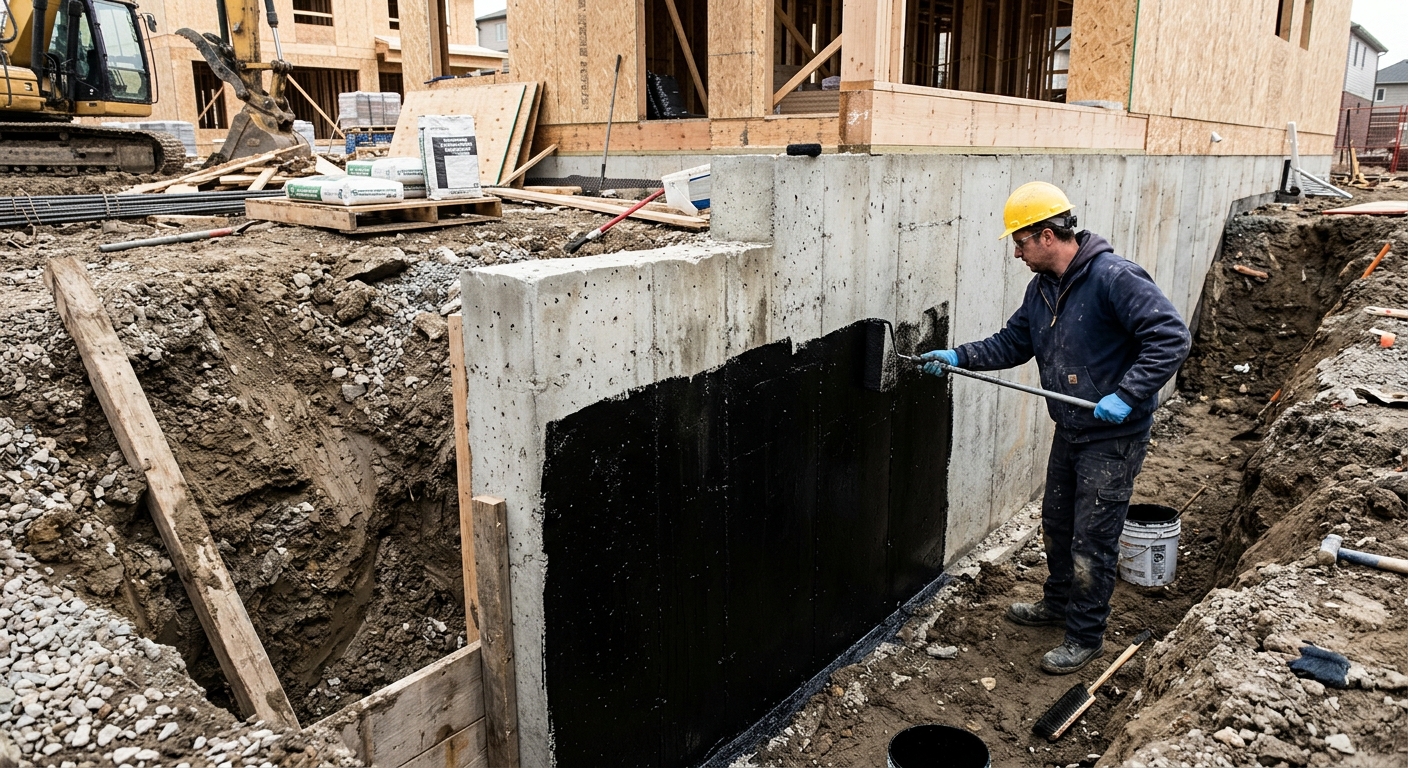
Basement waterproofing options and costs in Doon South
Doon South, Ontario has a lot of basements that show up with damp corners, musty odours, and sometimes seasonal seepage after snowmelt or heavy rain. With a population of 11,524 (Statistics Canada, 2021 Census), the local housing market includes many older homes alongside later builds, and that matters for waterproofing because failing perimeter drainage often predates today’s standards. In Toronto and the surrounding region, many homes from the post-war era (and later 1960–1980s additions) still carry aging weeping tile or early plastic drainage that can be partially collapsed or clogged. When that drainage fails, water backs up and finds paths through cold joints, tie holes, and small cracks—especially during Ontario freeze–thaw cycles.
In the Doon South area, contractor availability and pricing are also shaped by access constraints. Dense lots, landscaping, and decks can require careful excavation around foundations and below additions, which increases labour time and equipment time. The region sits on mixed glacial till and clay pockets that hold water against foundations, adding lateral pressure to walls. Over several winters, freeze–thaw can widen defects that look minor in summer but become active leaks in spring.
Because of those site realities, most homeowners need a targeted system rather than a one-size solution. The comparison below outlines the common approaches and typical price bands for Doon South, so you can align your quote with what’s actually happening in your basement and around your foundation.
| Method |
What It Addresses |
Disruption Level |
Durability |
Price Range |
| Exterior excavation + new membrane + drainage tile |
Water entry from the outside: hydrostatic pressure, failed weeping tile, and wall leakage routes |
High (excavation, disposal, landscape restoration) |
Long-term source control when drainage is installed correctly |
$7,000–$25,000 |
| Interior perimeter drain channel + sump pit |
Water after it enters: intercepts seepage along the perimeter and directs it to a sump |
Medium (floor/footing access, limited exterior work) |
Very durable when discharge plumbing and pump cycling are sized properly |
$3,500–$15,000 |
| Foundation crack injection (epoxy or polyurethane) |
Isolated crack leaks: sealing active flow paths or restoring integrity where cracks are stable |
Low to Medium (spot work; may require patching) |
Good for correctly matched crack type and depth |
$600–$3,000 |
| Sump pump installation (primary + battery backup) |
Chronic seepage response: increases pumping capacity and reduces risk during outages |
Low to Medium (pit, discharge routing, electrical tie-in) |
Long-term with proper float controls and backup maintenance |
$800–$3,500 |
| Window well drain installation |
Water intrusion around basement windows: directs surface water away from the opening |
Low to Medium (window well adjustments, drainage tie-in) |
Moderate to long-term depending on grading and overflow routing |
$1,000–$4,500 |
| Lot re-grading / downspout extension |
Surface water control: reduces volume reaching foundation perimeter and footing |
Low (often no basement disruption) |
Moderate; best when paired with drainage improvements |
$900–$3,500 |
Prices are estimates only and vary by project scope, site access and material selection.
What affects the price of waterproofing in Doon South
In Doon South and the wider Toronto market, it’s common to see quotes for “the same” basement leak that differ by 30–50%. That gap usually comes down to site conditions and how much of the water pathway the contractor proposes to fix. Two different contractors can both recommend “waterproofing,” but one may address the source with exterior drainage and membrane, while another only manages symptoms with an interior drain and sump. Labour rates, equipment time, and disposal/landscaping restoration costs can also shift based on how tight the excavation is on your particular street and lot layout.
The three biggest cost drivers that separate local pricing from a national average are soil type, water table, and freeze–thaw. In Toronto-area neighbourhoods, clay-heavy pockets in glacial till expand when saturated, increasing lateral pressure on foundation walls and making small cracks behave worse over time. High local water tables in many areas raise sump pump run times and increase the need for properly sized interior drainage. Meanwhile, Ontario’s winter freeze–thaw cycles widen small defects in poured concrete and block foundations—turning hairline issues into active seepage.
Concrete examples in Doon South: (1) If your home has failing original clay weeping tile (often 60+ years old), the system may be too clogged to repair—so excavation + new drainage becomes a bigger scope and moves your exterior range toward the upper band (for example, $7,000–$25,000). (2) If seepage is limited to a few cracks and corners, interior crack injection or targeted interior drainage can keep costs nearer the lower end (for example, $600–$3,000 for crack repair), especially if mould remediation and drying are handled up front. (3) If you have a tight front yard with a deck or a driveway apron over the work zone, excavation time and re-installation of steps/landscaping can add significant labour even when the waterproofing method is unchanged.
| Price Factor |
Why It Matters |
Cost Impact |
| Interior vs. exterior approach — interior is less disruptive but addresses symptoms |
Exterior targets water before it reaches the foundation; interior intercepts it after entry |
Exterior often costs roughly 2–4x interior-only solutions depending on access and restoration |
| Foundation type — poured concrete vs. block vs. stone vs. ICF |
Different walls require different crack, joint and drain details |
Block and stone often need more interior drainage complement work |
| Soil type — clay expands more than sand, adding pressure |
Clay saturation increases hydrostatic pressure and worsens lateral wall stress |
Clay-heavy sites often push toward exterior source control or stronger interior pumping |
| Crack type and length — hairline vs. structural horizontal cracks |
Not all cracks are equal; horizontal/step changes can signal movement |
Structural cracks can require engineering assessment and stabilization planning |
| Sump pump backup system — battery or water-powered backup needed |
Power outages during spring wet weather can turn a “working” sump into a failure point |
Backup adds cost, often bringing projects closer to the upper sump band |
| Access — landscaping, decks, or driveways must be removed for exterior |
Time, restoration, and equipment logistics increase labour |
Access constraints can add thousands even with the same membrane and tile plan |
| Weeping tile age — original tile (60+ years) may be completely failed |
Old drains frequently collapse or plug and can force full replacement |
Full replacement swings the job toward the higher exterior excavation range |
| Mould or efflorescence remediation required before sealing |
Trapped moisture can keep materials failing if salts/mould aren’t addressed first |
Pre-treatment increases time and materials, raising interior solution costs |
Permits & regulations in Ontario
In Ontario, many basement waterproofing scopes are straightforward, but several types of foundation-related work typically require permits depending on what’s being changed. Foundation excavation and alterations around the foundation perimeter commonly require a building permit because you’re effectively changing how the property manages loads and water. Structural crack repair that involves assessing movement, stabilizing, or doing work beyond cosmetic crack filling often requires appropriate approvals and may trigger engineering requirements. Sump pump installations that connect into municipal sewer systems (or discharge arrangements that require tie-ins) generally need municipal approval. Always confirm the exact discharge and connection method before the job starts.
For structural cracks—think major horizontal cracks in block walls, significant step cracking, or signs of movement—a structural engineer’s assessment is often needed. That assessment helps determine whether the solution is sealing/injection only, or whether underpinning, stabilization, or other structural interventions are required. A reputable contractor should be able to coordinate engineering support for structural repairs and can show you their liability coverage and WSIB/WCB compliance.
To verify contractor credentials in Doon South, homeowner checks should be simple and documented: first, confirm the Ontario licence/registration appropriate to the work type using the relevant provincial and trade-facing listings (where applicable). Next, request a certificate of insurance and confirm the contractor’s liability coverage is current and includes construction activities. Finally, ask for WSIB/WCB clearance or equivalent proof of coverage and ensure dates match the start of work. If engineering is expected, ask who the engineer is and whether they’ll provide a stamped recommendation for the repair approach.
Interior vs exterior waterproofing — what does Doon South need?
The fundamental difference is source control versus water interception. Exterior waterproofing—full excavation, new membrane, new drainage tile, and backfill—addresses the source of water entry by reducing hydrostatic pressure against foundation walls. It costs more and requires landscape disruption, but for Doon South’s clay-heavy pockets and freeze–thaw environment, it’s often the most complete long-term solution when exterior drainage is failing. Interior waterproofing—perimeter drain channel, sump pit, and sump pump—manages water after it enters. It’s less invasive, usually faster to install, and it’s a practical fit when excavation access is limited or when you’re dealing with chronic seepage through joints and perimeter areas.
In Doon South, poured concrete walls often respond well to crack injection when the cracks are stable and the main water pathway is addressed with a perimeter drain plan. Block foundations, by contrast, frequently benefit from interior drainage even when injections are done, because block geometry and joints can transmit moisture more unpredictably during wet cycles. For homes seeing recurring basement moisture in spring, a sump pump with a backup system is strongly recommended due to Ontario power outage risk during peak runoff—so the system can continue pumping if the grid is stressed.
A simple way to justify the cost difference: if you’re choosing between a targeted interior drain plan and an exterior membrane replacement, consider whether exterior weeping tile has failed. If original drainage is collapsed or clogged and water is pressing against the wall, exterior work can prevent repeat cycles that would otherwise keep interior systems running. In many Toronto-area projects, exterior waterproofing sits in the $7,000–$25,000 band, while interior solutions often land in the $3,500–$15,000 band depending on sump sizing, perimeter excavation inside, and restoration needs.
| Method |
Best For |
Addresses Source? |
Disruption |
Lifespan |
Price Band |
| Full exterior excavation + membrane |
Chronic seepage where exterior drainage has failed or soil pressure is consistently high |
Yes |
High (excavation and landscape restoration) |
Many years with correct drainage design |
$7,000–$25,000 |
| Interior French drain + sump system |
Basements with interior seepage, failing exterior weepers, or limited exterior access |
Partially (intercepts water; doesn’t stop wall pressure) |
Medium (floor/footing work) |
Long-term if pump cycling and discharge are correct |
$4,500–$15,000 |
| Crack injection — epoxy (structural) |
Stable cracks where there’s no active flow under pressure |
No (it seals the crack rather than addressing bulk exterior water pathways) |
Low to Medium |
Good for properly assessed stable cracks |
$600–$2,500 |
| Crack injection — polyurethane (active leak) |
Active weeping/leaks where water pressure forces flow through the crack |
No (it seals active paths, but source water pressure may still be present) |
Low to Medium |
Strong results for correct product/crack match |
$900–$3,000 |
| Interior drain channel only (no sump) |
Light seepage that can drain by gravity and won’t require active pumping |
No (it manages entry water, not wall pressure) |
Medium (floor access) |
Moderate; relies on stable conditions |
$3,500–$9,000 |
| Re-grading + downspout extensions |
Surface water problems, poor grading, and window-well overflow contributions |
Yes for surface water (not for buried seepage routes) |
Low |
Moderate (depends on ongoing maintenance and soil movement) |
$900–$3,500 |
How to choose a waterproofing contractor in Doon South
Choosing a waterproofing contractor in Ontario is mostly about verification and clarity. Start by confirming Ontario licensing/registration relevant to the scope (especially where excavation, building permit pulls, or specialized construction activities are involved). Next, ask for proof of liability insurance and verify it’s current by requesting an insurance certificate. For worker coverage, request WSIB/WCB proof (or clearance letter) so you know you’re not taking on risk if someone is injured on your property. Don’t accept “we can get it later”—ask for documents before work is scheduled.
Then get 2–3 itemised written quotes—not just a lump sum. Each quote should break down labour and materials separately, list the drainage route (including discharge method), specify membrane/crack injection products, and state whether permits will be pulled. Pay attention to inclusions and exclusions: is disposal included? Are landscape restoration and regrading included? Are you getting new downspout extensions or just “recommendations”? For warranty, confirm two things: the workmanship warranty length (often tied to the installation system) and the manufacturer warranty on the specific products used. Ask whether warranties are transferable to future owners if you sell.
On payment schedule, avoid large deposits. A practical rule is never pay more than 10–15% upfront, and hold back a portion until the work is complete and you’ve confirmed start-to-finish site cleanup and performance details. Finally, get a written timeline with a start date and completion estimate, and ask how weather delays are handled in a region that can hit freeze–thaw mid-season.
- Request proof of insurance and confirm the coverage dates align with your start date.
- Provide WSIB/WCB clearance or equivalent proof before signing any contract.
- Ask for an itemised scope: excavation limits, membrane type, drainage tile specifications, and discharge plan.
- Confirm whether a permit is required and whether the contractor will pull it (and include the fee if applicable).
- Verify whether disposal/haul-away is included in the quote.
- Check that crack injection includes product type matched to active versus non-active leaks.
- Demand photos of prep stages (crack routing, cleaning, drilling/ports) rather than only “after” shots.
- Ask who supplies and installs the sump and whether backup is optional or included.
- Confirm the pump sizing and discharge routing (distance, grade, and termination method).
- Get warranty details in writing: workmanship duration and manufacturer warranty terms.
- Review the payment schedule: limit upfront payment and specify what triggers final payment.
- Ensure timelines and weather limitations are stated in the contract.
In Doon South, red flags I see often include contractors who (1) promise a “guaranteed dry basement” without diagnosing source pathways, (2) avoid discussing excavation/disposal and only quote vague “sealant” language, (3) provide no insurance/WSIB proof during the quote stage, (4) treat all cracks with the same injection product, and (5) skip backup sump options when homeowners report spring wetting or outage-sensitive conditions.
Frequently asked questions — waterproofing in Doon South
How much does foundation crack repair cost in Doon South?
In Doon South, typical foundation crack repair is often priced by the number of crack runs and the method required. For isolated, non-moving cracks, epoxy or structural-style injection is commonly in the $600–$2,500 range, while active weeping cracks that require polyurethane injection can run closer to $900–$3,000 depending on length, depth and preparation. The big variable is whether the crack is simply leaking through a defect or whether it’s widening with movement—Toronto-area freeze–thaw cycles can turn small defects into recurring leaks over a few winters. If there’s mould or heavy efflorescence, contractors usually need drying and remediation first, which can add to the scope before sealing.
Do I need a sump pump in Doon South?
You don’t automatically need a sump pump in every basement in Doon South, but it’s often recommended when seepage is chronic, when you see water collecting at the perimeter, or when interior drainage can’t rely on gravity. Toronto’s mixed glacial till and clay pockets can hold water against foundation walls, and spring runoff plus freeze–thaw makes water movement more frequent. If you have evidence of repeated flooding or wetting after storms, an interior perimeter drain tied to a sump is usually the practical solution. If you’re already seeing water at the basement floor, a sump pump installation commonly falls in the $800–$3,500 band, with backup options especially important if you want protection during spring outages.
How does Doon South's soil affect my foundation?
Doon South’s local soil conditions matter because many lots sit on mixed glacial till with pockets of dense clay. Clay tends to expand when saturated, increasing lateral pressure on foundation walls and worsening crack seepage over time—particularly during Ontario’s freeze–thaw cycles. That can explain why homeowners sometimes see “new” leaks after winters even when nothing looked dramatic in summer. Clay-heavy soils also make drainage design more important: downspout routing, re-grading, and properly sized exterior/interior drainage systems reduce how much water stays against the foundation. If your home’s weeping tile is older and partially collapsed, the soil can saturate, and water can find cold joints and tie holes.
Do I need a permit for foundation work in Ontario?
In Ontario, permits are commonly required for foundation excavation and certain structural-related repairs or changes to lot drainage, especially where you’re working around the foundation and affecting how the property handles loads and water. Sump pump installations that connect to municipal sewer systems generally require municipal approval, and structural crack repairs can require engineering involvement. For homeowners in Doon South, the best approach is to ask your contractor whether the specific scope triggers permits before work begins, then request the permit plan in writing (who applies and what’s included). A reliable contractor will also show liability insurance and WSIB/WCB proof, and will coordinate engineering assessments if cracks appear structural.
How long does waterproofing last?
Durability depends on what was fixed: source control systems usually last longer than symptom-management alone. Exterior waterproofing—when excavation is done properly, membranes are installed correctly, and new drainage tile is routed and discharged as intended—can provide long service life, assuming the discharge and grading remain maintained. Interior systems (perimeter drains and sumps) are also durable, but they rely on correct pump cycling and ongoing pump function during wet seasons. Crack injection longevity depends heavily on whether the crack is stable versus actively moving; freezing and thawing can keep reopening defects if the underlying movement isn’t addressed. If your project includes sump pump hardware, regular checks (float switches, discharge lines, and backup) help the system perform over years rather than seasons.
Can I waterproof my basement from the inside only?
Yes, many basements in Doon South can be waterproofed from the inside only, especially when access to the exterior is limited or when the issue is primarily interior seepage through cracks and joints. Interior approaches like perimeter drain channels, sump pits and sump pumps can manage water after it enters, reducing basement wetness and preventing floor-level flooding. However, interior-only work doesn’t eliminate hydrostatic pressure on the wall itself, so if you have a high water-pressure scenario from failed exterior drainage, you may still see recurring wetting unless the system is well designed. A good contractor will match the method to the leak pattern: for example, if you have active crack seepage, injection may be used alongside interior drainage. For isolated leaks, crack repair may land in the $600–$3,000 range, but chronic exterior-driven water often requires a more comprehensive plan for best results.