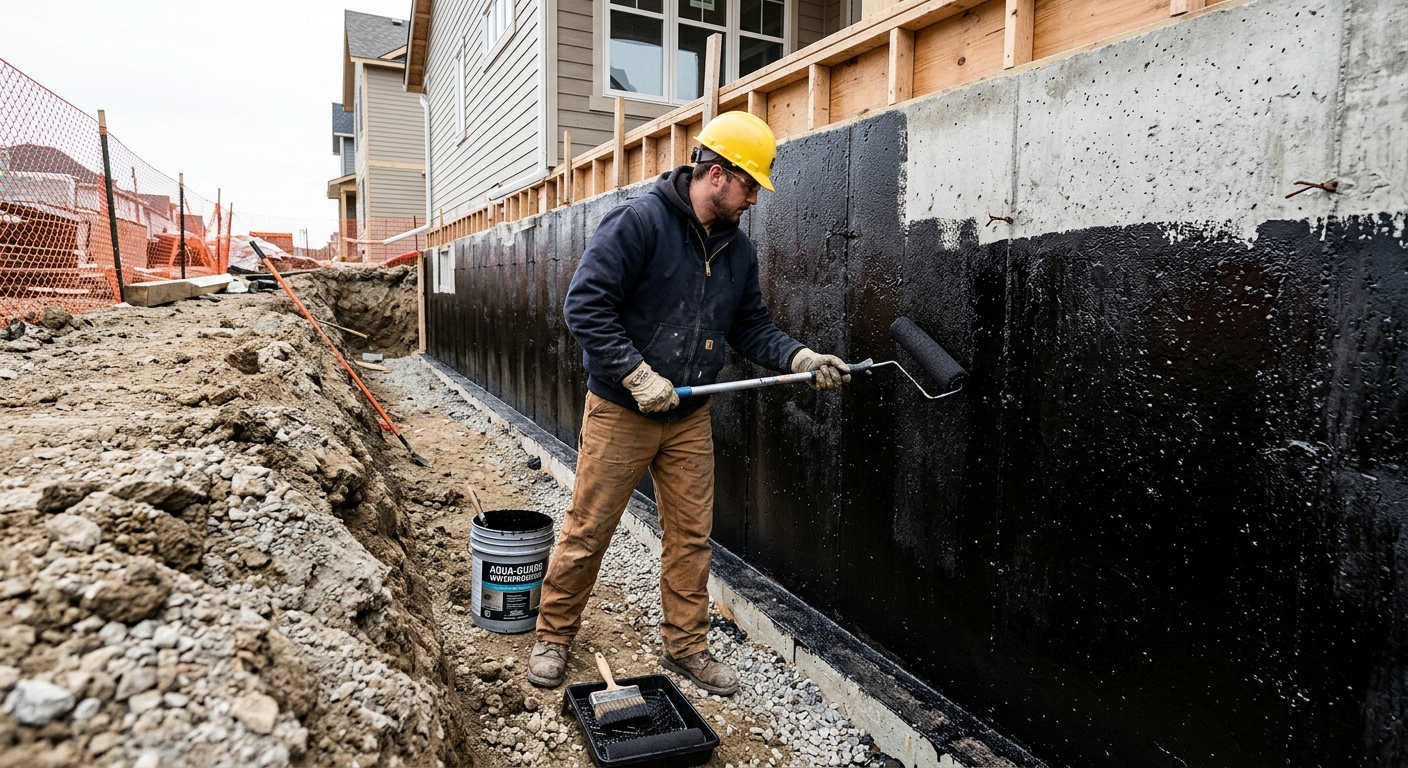
Basement waterproofing options and costs in Wexford/Maryvale
In Wexford/Maryvale, Ontario, choosing the right basement waterproofing method usually starts with understanding how water is getting in and how your soil holds it. With a population of 27,917 in the area (Statistics Canada, 2021 Census), this neighbourhood’s mix of older post-war homes and mature lots means many basements are dealing with long-term drainage decline—especially where original weeping tile or early drainage systems are 40–60 years old or more. In practical terms, older waterproofing assemblies tend to be more brittle, and freeze–thaw in the Toronto area can widen existing cracks in poured concrete and masonry foundations over successive winters.
Toronto and the surrounding market also shape pricing: labour demand can be high in spring and early summer, access constraints in tight urban properties add excavation complexity, and contractor scheduling can affect whether a job is done sooner (often with higher mobilization costs) or bundled with other work. Around Wexford/Maryvale, neighbourhood demand is especially common near busy corridors and areas with older landscaping and walkouts, where contractors frequently need to work around decks, tight side yards, or additions that limit excavation depth. That’s why estimates often vary even when “the leak looks similar.”
The sections below compare typical solutions—from full exterior excavation to targeted interior drainage—so you can match scope to your leak pattern and budget. Use the table to align what you’re being quoted with what the method actually addresses.
| Method |
What It Addresses |
Disruption Level |
Durability |
Price Range |
| Exterior excavation + new membrane + drainage tile |
Lateral water pressure, wall seepage, failed weeping tile, hydrostatic build-up |
High (excavation, landscaping restoration) |
High (source control) |
$7,000–$25,000 |
| Interior perimeter drain channel + sump pit |
Water after it enters; reduces seepage through cracks/joints |
Medium (floor/finish partial removal) |
Medium to high (depends on wall condition) |
$3,500–$15,000 |
| Foundation crack injection (epoxy or polyurethane) |
Isolated cracks: epoxy seals stable cracks; polyurethane stops active leaks |
Low to medium (patching) |
Medium to high (crack type matters) |
$600–$3,000 |
| Sump pump installation (primary + battery backup) |
Chronic seepage episodes; reduces risk during power loss and spring rain cycles |
Low to medium (pit, discharge routing) |
High when maintained |
$800–$3,500 |
| Window well drain installation |
Surface water near egress windows; prevents pooling and seepage around frames |
Low to medium (small excavation) |
Medium (correct grading required) |
$1,200–$4,500 |
| Lot re-grading / downspout extension |
Redirects runoff away from foundation; lowers the amount of water reaching walls |
Low (often minimal disturbance) |
Medium (only works if bulk drainage is the issue) |
$900–$5,000 |
Prices are estimates only and vary by project scope, site access and material selection.
What affects the price of waterproofing in Wexford/Maryvale
In Wexford/Maryvale and across the Toronto economic region, waterproofing quotes for the “same basement leak” can differ by 30–50% because contractors are pricing the real constraints—water volume, foundation construction, and how much excavation and restoration is needed—not just the visible crack or damp wall. National averages can look cheaper on paper, but Toronto’s combination of mixed glacial till/clay pockets and frequent freeze–thaw cycles means repairs that are adequate elsewhere may need stronger drainage design here.
Three drivers separate Toronto-area costs from the national average: soil type, water table conditions, and freeze–thaw. Clay-heavy soils common around Ontario expand when saturated, increasing lateral pressure on foundation walls and worsening seepage through cold joints, tie holes and cracks over time. When a high local water table is present, sump systems run more often and require better discharge planning, which pushes costs toward the higher end of typical interior drainage budgets (for example, the interior perimeter drain and sump range of $3,500–$15,000). In Ontario, repeated freeze–thaw also widens small defects in concrete and masonry, so crack injections may need to be sized and sequenced correctly or paired with drainage upgrades.
Concrete Wexford/Maryvale examples: (1) A home with clogged original weeping tile often needs additional excavation and new drainage design—moving an estimate closer to exterior ranges like $7,000–$25,000. (2) A basement with efflorescence and active dampness often requires pre-treatment (mould/efflorescence remediation) before sealing, which adds labour and product. (3) Properties with tight side-yard access or a deck close to the foundation may require careful hand-digging and extra restoration, even if the leak is localized. Matching the method to your soil and leak pattern is what makes the difference between a “quick fix” and a durable system.
| Price Factor |
Why It Matters |
Cost Impact |
| Interior vs. exterior approach — interior is less disruptive but addresses symptoms |
Interior systems manage water after it enters; exterior source-control stops hydrostatic pressure sooner |
Interior is usually lower at first; exterior costs more but can reduce recurring work |
| Foundation type — poured concrete vs. block vs. stone vs. ICF |
Wall permeability and crack behaviour differ by material; ties holes and joints may leak differently |
Poured concrete often suits crack injection well; block/stone often needs interior drainage complements |
| Soil type — clay expands more than sand, adding pressure |
Saturated clay expands with freeze–thaw, increasing lateral forces and seepage pathways |
Clay-driven cases tend toward exterior/source-control or stronger drainage design |
| Crack type and length — hairline vs. structural horizontal cracks |
Active leak cracks require polyurethane/flow control; structural cracks may require engineering review |
Structural or longer crack work increases labour and may add engineering/other work |
| Sump pump backup system — battery or water-powered backup needed |
Water management depends on power; spring storms and outages can overwhelm primary pumps |
Backup adds cost but reduces risk; commonly near the top of sump install ranges |
| Access — landscaping, decks, or driveways must be removed for exterior |
Excavation and restoration are larger scope items in dense lots |
Can add significant labour/material costs even when leak size is small |
| Weeping tile age — original tile (60+ years) may be completely failed |
Failed drainage can be below-grade and hidden; partial fixes may not hold |
Replacement scopes increase excavation, disposal, and materials |
| Mould or efflorescence remediation required before sealing |
Sealers don’t bond properly to active salts/mould; problems can recur if not addressed first |
Adds prep time, removal, and specialized coatings |
Permits & regulations in Ontario
In Ontario, certain basement waterproofing-related tasks are more likely to require permits than homeowners expect. As a rule of thumb, foundation excavation near footings, structural crack repair that could affect the integrity of the foundation, and changes to lot drainage (for example, re-routing drainage discharge directions) typically require a building permit and inspection. If your contractor is modifying how roof water or perimeter drainage ties into municipal services, you may also need municipal approval—especially where a sump pump discharge connects to storm or sanitary infrastructure. A reliable contractor will ask where your existing drains discharge and how the downspouts currently behave during heavy rainfall.
Structural repairs deserve extra caution. For example, horizontal cracks in block walls, significant step cracks, or signs of movement may require an assessment by a structural engineer to determine whether underpinning or other structural work is needed. Even when the work looks “just waterproofing,” the installer should be clear whether the repair is non-structural sealing versus structural remediation. Verify that the company can coordinate engineering support if needed, and that it carries liability insurance and WSIB/WCB coverage.
To verify from home in Wexford/Maryvale, start by confirming the contractor’s credentials on the Ontario business/licensing registry (where applicable for the trades they perform), then request a current certificate of insurance and WSIB/WCB clearance letter. Finally, ask for the permit process in writing: what they will pull, what inspections are required, and which items are homeowner responsibilities. That documentation protects you if there’s a dispute or if work does not pass inspection.
Interior vs exterior waterproofing — what does Wexford/Maryvale need?
For homeowners in Wexford/Maryvale, the key difference is source control versus water management. Exterior waterproofing—full excavation, membrane system, and new drainage tile with proper backfill—targets the source by reducing hydrostatic pressure against the foundation wall. It is typically the most complete solution for basements that show widespread seepage, active efflorescence, or evidence that the original weeping tile has failed. However, it’s also significantly more expensive and more disruptive because landscaping, walkways, and sometimes deck structures must be removed and restored.
Interior waterproofing—typically a perimeter drain channel with a sump pit and sump pump—manages water after it enters the basement. This is often the better fit when access is limited (tight side yards, finished basements, or deck obstructions) or when inspection shows leakage is localized to cracks and joints rather than a broader exterior drainage failure. That said, interior work does not stop lateral pressure building against the wall; it reduces the water load by capturing seepage and pumping it away.
In Toronto’s freeze–thaw conditions, poured concrete walls often respond well to targeted crack injection when cracks are stable, while block foundations commonly benefit from interior drainage as a practical complement because seepage pathways can be harder to seal fully from the interior alone. For sump pump considerations, Ontario outages during spring flooding are a real risk: a primary pump without backup may run until power fails and then you can get rapid water rise.
To justify cost differences with a concrete example: if your basement has multiple damp zones around the perimeter and chronic sump cycling, exterior waterproofing can move you from an interior budget of $3,500–$15,000 up into the exterior excavation band of $7,000–$25,000, but it can also reduce the chance of repeat interior interventions. If your issue is one active crack or a single window well pooling problem, interior crack injection or a window well drain can be the more cost-effective route.
| Method |
Best For |
Addresses Source? |
Disruption |
Lifespan |
Price Band |
| Full exterior excavation + membrane |
Chronic seepage, failing weeping tile, widespread perimeter dampness |
Yes (high) |
High (excavation and restoration) |
Long (often the most durable system) |
$7,000–$25,000 |
| Interior French drain + sump system |
Interior seepage control when exterior access is limited |
Partial (manages water after entry) |
Medium (floor/finish removal) |
Medium to long with maintenance |
$3,500–$15,000 |
| Crack injection — epoxy (structural) |
Stable, non-moving cracks (often in poured concrete) |
No (seals crack pathway) |
Low to medium |
Medium to long if crack movement is absent |
$600–$3,000 |
| Crack injection — polyurethane (active leak) |
Active seepage through cracks and joints |
No (stops the leak pathway at the crack) |
Low to medium |
Medium (best when paired with drainage if pressure is ongoing) |
$600–$3,000 |
| Interior drain channel only (no sump) |
Light seepage where gravity discharge is feasible and reliable |
No (manages limited water) |
Medium (drain channel work) |
Medium (risk during heavy rains) |
$1,800–$8,000 |
| Re-grading + downspout extensions |
Surface runoff near foundation, pooling, overflow from downspouts |
Yes for surface water component |
Low |
Medium (depends on proper grading and drainage) |
$900–$5,000 |
How to choose a waterproofing contractor in Wexford/Maryvale
Start by verifying the basics and then demand specifics. In Ontario, confirm your contractor carries liability insurance and has current WSIB/WCB coverage if they employ workers. Ask how to verify: request a certificate of insurance (with the correct legal entity name), and a WSIB/WCB clearance letter or equivalent proof. For licensing, look for the right trade/contractor registration for the work they’re performing—especially if they’re doing structural crack repair coordination, drainage excavation, or membrane installation that may require specialized certification in their workflow.
Next, get 2–3 itemised written quotes. You want a labour + materials breakdown, not a single lump sum that doesn’t explain what is being removed, where drainage discharges, and how the membrane is detailed. Carefully read exclusions: is disposal included? Is permit pulling included when required? Are landscaping restoration and re-seeding in scope, or is it “to be confirmed”? A waterproofing job in Wexford/Maryvale often involves excavation around decks, walkways, or tight side yards—so restoration details matter.
Warranty should be in writing with workmanship and product terms separated. Ask whether the workmanship warranty is transferable to a future homeowner, and whether routine pump maintenance (if a sump is installed) is required to keep coverage valid. Payment should follow a conservative schedule: never pay more than 10–15% upfront, and hold back until the job is complete and tested.
Finally, get a start date and completion estimate in writing, along with a clear plan for inspections if permits are required.
- Confirm liability insurance and WSIB/WCB coverage with documents, not verbal assurances.
- Request an Ontario permit plan: what’s pulled, by whom, and which inspections are expected.
- Get a scope-of-work sheet with measurements (linear feet of drainage, crack length, areas to be excavated).
- Ensure the quote lists excavation depth and backfill approach (drainage stone, geotextile, compaction method).
- Ask where the water will discharge (and verify it won’t simply move the problem).
- For cracks, ask for crack type assessment (stable vs active) before choosing epoxy vs polyurethane.
- In basements with seepage, request pump specs including discharge line size and check valves.
- If a sump is recommended, ask about backup options and power-outage plan.
- Verify the membrane system details: products used, thickness, overlap, and joint/transition detailing.
- Confirm disposal and restoration are included (topsoil, sod/seed, walkway/deck reinstatement).
- Ask how mould/efflorescence is handled before any sealing or finishing work.
- Confirm warranty length for workmanship and whether it covers rework due to water intrusion.
Red flags to watch for in Wexford/Maryvale: (1) a contractor who offers one “standard” exterior solution without assessing soil/water conditions; (2) a quote that avoids mentioning discharge routing, permits, or exclusions; (3) no documentation for insurance/WSIB/WCB; (4) dismissing freeze–thaw or foundation joint risk despite recurring winter seepage; and (5) recommending crack injection only for widespread dampness along the entire perimeter.
Frequently asked questions — waterproofing in Wexford/Maryvale
What drainage issues are most common in Wexford/Maryvale homes?
In Wexford/Maryvale, the most common drainage issues tend to be perimeter-related: clogged or failing weeping tile, poor downspout discharge away from the foundation, and localized pooling near window wells and egress areas. In many older Toronto-area basements, interior dampness and efflorescence show up long before any major “wall failure,” because drainage systems get partially blocked over time. Freeze–thaw then enlarges pathways through cold joints and cracks. If you see water staining along the sill line after heavy spring rain, or recurring dampness at corners, you’re usually dealing with either inadequate exterior runoff direction or a drainage system that can’t move water fast enough.
How do I choose a waterproofing contractor in Wexford/Maryvale?
Choose a contractor who gives you an itemised, written scope—not just a price. In Ontario, verify liability insurance and WSIB/WCB coverage and ask for documentation before signing. Then request 2–3 quotes that break down labour and materials and clearly describe exclusions: permit pull included or not, disposal included or not, and what restoration looks like. A good contractor will also diagnose your leak pattern: whether it’s crack-only (supporting injection), perimeter seepage (supporting interior drainage and sump), or source-control failure (supporting exterior excavation and membrane). If someone won’t explain the method selection and the discharge plan, keep looking.
What is a battery backup sump pump and do I need one in Wexford/Maryvale?
A battery backup sump pump is a secondary power system that automatically runs the sump when the main power goes out. In Wexford/Maryvale and throughout Ontario, spring storms and icing/freeze events can cause short outages, and seepage can outpace pumping during downtime—especially when clay soils are saturated. Whether you need backup depends on your baseline water risk: if the basement has chronic dampness, a history of flooding during heavy rain, or a sump that cycles frequently, backup becomes a practical safety layer. A typical sump installation including backup often falls within the $800–$3,500 band, depending on system type and discharge configuration.
How much does basement waterproofing cost in Wexford/Maryvale?
Basement waterproofing cost in Wexford/Maryvale is driven by how much water management is required and how difficult access is. If the issue is localized—like a small active crack—foundation crack repair by injection often lands around $600–$3,000. For interior drainage and a sump, many projects fall into $3,500–$15,000, particularly when you need a perimeter drain channel, sump pit, and discharge routing. When the solution needs source control through full exterior excavation and a new drainage tile/membrane system, budgets commonly move into $7,000–$25,000. Expect higher costs if decks, driveways, or tight side yards restrict excavation or increase restoration scope.
Interior vs exterior waterproofing — which is better?
“Better” depends on what’s causing the leak. Exterior waterproofing is best when source control is needed—failed weeping tile, widespread perimeter seepage, or signs that water pressure is actively building against the foundation wall. It’s more disruptive but can be more durable because it reduces hydrostatic pressure. Interior waterproofing is usually the better choice when access is limited, finishes are already in place, or leakage is manageable through interception (perimeter drain, sump pit, and pumping). Many Toronto-area basements end up needing a hybrid approach: for example, crack injection plus interior drainage where hydrostatic pressure is still present. If you want the biggest impact per disruption, match the method to the water source first—not just the symptom.
Why is my basement leaking in Wexford/Maryvale?
Basement leaks in Wexford/Maryvale are typically caused by one of three scenarios: (1) water isn’t being directed away from the foundation (downspout discharge or grading issues), (2) the drainage system that should relieve soil moisture is failing (collapsed/clogged weeping tile or missing drainage), or (3) cracks and joints are letting water in during saturated freeze–thaw cycles. Toronto-area glacial till and dense clay pockets can hold water against foundations and expand when saturated, increasing lateral pressure and worsening cracks over time. If you also see efflorescence, mouldy odours, or dampness that spikes after spring rain, it often indicates recurring moisture entry rather than one-time seepage.