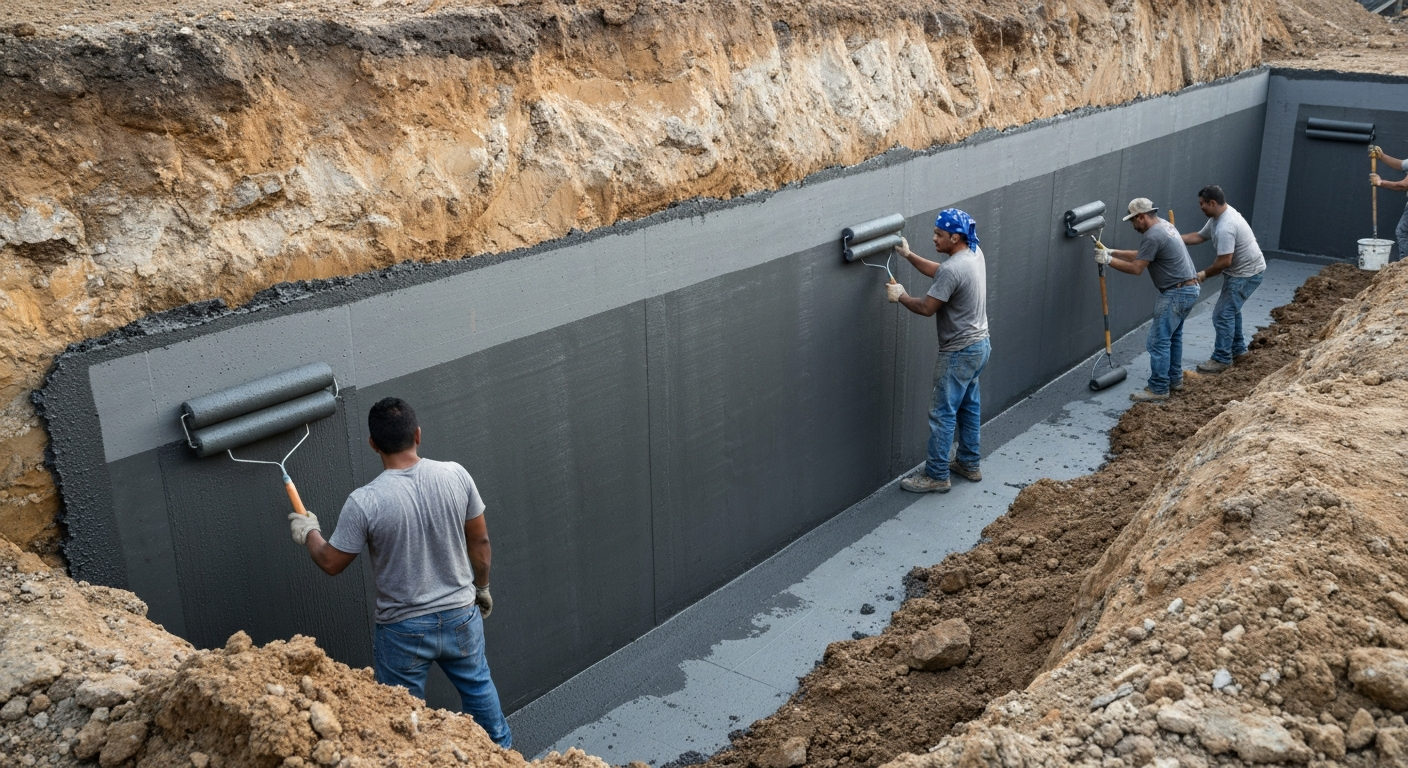
Basement waterproofing options and costs in Mattawa
Mattawa homeowners usually start with one question: will I be able to stop the water, and what will it cost to do it properly? The town’s housing profile matters. With 78.9% of homes built before 1981, many basements were originally protected with older damp-proofing approaches and, in numerous cases, aging weeping tile that has been quietly failing for years. Add that to Mattawa’s realities—cold, repeat freeze–thaw and seasonal water surges—and small seepage can turn into active leakage after a few winters. In the Northeast, contractors also price for excavation depth, access around older lots, and cold-weather concrete work, which pushes many budgets toward the higher end of Ontario expectations.
In Mattawa, the trade is especially in demand in older residential pockets where lots are tight and grading has shifted over time—common around downtown/Municipal Road corridors where downspouts often discharge close to foundation walls. Where downspouts are short or the yard slopes toward the house, surface water runs to the footing, increasing the load on interior drains and accelerating weeping tile collapse. That’s why quotes can differ: an interior-only solution can help if the system is already coping, but if hydrostatic pressure is building behind the wall, you usually need an exterior approach.
Below is a practical comparison of common systems and what they typically address, followed by realistic price bands for Mattawa projects.
| Method |
What It Addresses |
Disruption Level |
Durability |
Price Range |
| Exterior excavation + new membrane + drainage tile |
Stops water at the source with a full waterproofing envelope and new footer drainage |
High (excavate perimeter, re-grade/backfill, landscaping repairs) |
Long-term (often 25+ years when installed and backfilled correctly) |
$12,000 – $20,000 |
| Interior perimeter drain channel + sump pit |
Collects water after entry and directs it to a sump to protect floors/walls |
Medium (floor cutting and cleanup) |
Good (commonly 15–25 years depending on pump/system maintenance) |
$6,000 – $10,500 |
| Foundation crack injection (epoxy or polyurethane) |
Seals localized cracks; epoxy for dry/structural cracks, polyurethane for active seepage |
Low (drilling, ports, patching; limited demolition) |
Moderate to long-term (often 10–20 years; depends on crack movement) |
$700 – $1,900 |
| Sump pump installation (primary + battery backup) |
Reduces flooding risk during heavy spring water and power disruptions |
Low to medium (pit/lines + electrical work) |
Good (high performance when backup and check valves are included) |
$1,500 – $3,000 |
| Window well drain installation |
Prevents water pooling and leakage near egress windows |
Low to medium (minor exterior/interior work) |
Good (typically 10–20 years with clear drainage paths) |
$1,200 – $2,700 |
| Lot re-grading / downspout extension |
Redirects surface water away from foundation and reduces run-off into the footing area |
Low (yard work; may include minor repairs) |
Variable (can last years when soil settles and eaves drainage is maintained) |
$3,000 – $7,000 |
Prices are estimates only and vary by project scope, site access and material selection.
What affects the price of waterproofing in Mattawa
In Mattawa, two homeowners can receive quotes that look wildly different for what seems like the same basement leak—typically a 30–50% swing when the scope is truly compared. That’s because waterproofing isn’t a single product; it’s a system built around soil conditions, drainage paths, and how water behaves during spring melt and freeze–thaw. In Ontario and the Northeast, the biggest separators from “national average” pricing are soil type, water table/seasonal saturation, and freeze–thaw performance of existing cracks and joints.
First, soil and fines matter. Clay-heavy pockets (common in many parts of Ontario) can hold water against the foundation and expand when saturated, pressing laterally and widening cracks over cycles. Second, high or persistent water near the footing increases the need for drainage capacity—more reliable sump pumping and sometimes additional interior collection lines. Third, freeze–thaw turns minor defects into active leaks: older weeping tile and minimal damp-proofing systems can clog or collapse, and even a small void can become a channel once water repeatedly expands and contracts.
Concrete examples from Mattawa pricing: if your home is 1960s–1970s and relies on original weeping tile, exterior re-excavation plus new drainage tile usually costs closer to the upper band (often near the $9,000–$20,000 excavation range) because contractors must excavate deeper, handle wetter soils, and deal with settled backfill. On the other hand, a localized hairline crack with no active seepage may be handled with crack injection rather than full excavation—often closer to the $400–$1,200 foundation crack repair band, or higher if multiple cracks are involved. Finally, if interior floors are already damaged by seepage, interior systems can rise toward the mid-range because of added demolition and restoration, even when the approach is still “interior.”
| Price Factor |
Why It Matters |
Cost Impact |
| Interior vs. exterior approach — interior is less disruptive but addresses symptoms |
Exterior aims at the source (hydrostatic pressure control); interior manages water after it enters |
Exterior often adds excavation and landscaping restoration, raising total cost by thousands |
| Foundation type — poured concrete vs. block vs. stone vs. ICF |
Different wall materials crack and seal differently; block may require more practical water management |
Block/stone can push toward interior drains + pump; poured concrete may respond well to targeted injection |
| Soil type — clay expands more than sand, adding pressure |
Saturated clay exerts lateral pressure and worsens joint/crack movement |
Clay conditions typically increase excavation depth and drainage capacity requirements |
| Crack type and length — hairline vs. structural horizontal cracks |
Structural movement changes what will and won’t stay sealed |
Structural cracks usually trigger engineering review and can require more extensive repair work |
| Sump pump backup system — battery or water-powered backup needed |
Power outages during spring melt can turn a “manageable” leak into flooding |
Backup can add meaningful cost but reduces catastrophic loss risk |
| Access — landscaping, decks, or driveways must be removed for exterior |
Exterior waterproofing needs perimeter access to excavate and install drainage/membrane |
Removal and rebuilding of features adds labour and disposal fees |
| Weeping tile age — original tile (60+ years) may be completely failed |
Collapsed/clogged tile forces water to back up behind walls |
Likely increases scope to replace drainage and sometimes redesign discharge routes |
| Mould or efflorescence remediation required before sealing |
Sealers and membranes don’t bond well over contaminated or actively contaminated surfaces |
Remediation and cleaning adds time before waterproofing proceeds |
Permits & regulations in Ontario
In Ontario, some waterproofing-related work is straight-forward from a permitting standpoint, while other parts often require municipal review. As a rule of thumb in Mattawa, foundation excavation that involves modifying drainage patterns around the foundation, and any structural crack repair that could affect load paths (for example, major horizontal movement cracks in block walls) typically needs a building permit. If the work includes changes to lot drainage—such as redirecting surface water with re-grading, new eavestrough/downspout tie-ins, or altering how water discharges near the foundation—permits are commonly required.
Sump pump installations can also trigger approvals. If the installation connects to storm or sanitary sewer services, you should expect municipal approval requirements. If the system discharges to a legal drainage outlet or uses an approved discharge location, the contractor should confirm what’s allowed before installation.
For structural crack repair (especially horizontal cracks or signs of movement), an engineer’s assessment is often necessary to determine whether underpinning, additional structural remediation, or specific crack-control methods are required. Homeowners should verify that the contractor has engineering support available for structural repairs, and carries appropriate liability insurance and WSIB/WCB coverage.
Step-by-step verification: (1) confirm the contractor’s Ontario licence/registration through the relevant provincial registry; (2) ask for a current certificate of insurance naming you as certificate holder where appropriate; (3) request WSIB/WCB clearance or equivalent proof of coverage; and (4) match the permit/scope to the contractor’s written plan before work starts.
Interior vs exterior waterproofing — what does Mattawa need?
The key difference is whether you address water at the source or manage it after it enters. Exterior waterproofing—full excavation, new membrane, new drainage tile, and proper backfill—targets hydrostatic pressure where it starts. It costs more and disrupts landscaping, but when it’s done with correct drainage design, it’s the most “permanent” solution. Interior waterproofing—perimeter drain channels, sump pits, and sump pumps—collects water that has already made its way in. It’s typically less invasive, but it doesn’t stop water pressure from acting on the wall surface, so long-term outcomes depend on how strong the interior drainage is and how well the basement foundation tolerates freeze–thaw movement.
Mattawa’s older housing stock (many homes built before 1981) often includes poured concrete or older masonry foundations with cracks that can expand during freeze–thaw. For poured concrete walls, targeted crack injection can be very effective when the crack is dry/structural and not actively moving—especially when paired with an interior system to catch incidental seepage. For block foundations, interior drainage is frequently the practical complement because joints and porous areas may keep allowing water entry even after localized crack sealing. In either case, sump pump backup is worth serious consideration: in Ontario spring conditions, power interruptions and heavy infiltration periods can overwhelm a primary pump, and a battery backup can prevent expensive cleanups.
Dollar reality: if you have one section of active seepage, crack injection plus a sump system can be far less disruptive than excavating the entire perimeter—often placing you in the interior range rather than the exterior excavation range. But if the water is widespread or the yard drains toward the foundation, the “cheap now” option can become costly later because interior systems keep running against high pressure. In those situations, spending toward exterior excavation budgets can be justified when you consider the excavation + drainage tile scope needed to actually stop the source of water loading.
| Method |
Best For |
Addresses Source? |
Disruption |
Lifespan |
Price Band |
| Full exterior excavation + membrane |
Widespread leaks, high seasonal water load, failed exterior drainage |
Yes |
High |
25+ years |
$12,000 – $20,000 |
| Interior French drain + sump system |
Smaller-to-moderate leakage; when exterior access is limited |
No (manages water after entry) |
Medium |
15–25 years |
$6,000 – $12,000 |
| Crack injection — epoxy (structural) |
Dry or structural cracks where water isn’t actively flowing |
Partial (seals the crack path) |
Low |
10–20 years |
$400 – $1,200 |
| Crack injection — polyurethane (active leak) |
Active seepage through cracks or joints |
Partial (seals flow path while pressure exists) |
Low |
10–20 years |
$650 – $1,800 |
| Interior drain channel only (no sump) |
Minor dampness; low water quantities where sump pumping isn’t needed |
No |
Low to medium |
10–15 years |
$4,000 – $8,000 |
| Re-grading + downspout extensions |
Surface run-off issues and foundation wetting from eaves drainage |
No (reduces water load) |
Low |
5–10 years (depends on settling and maintenance) |
$3,000 – $7,000 |
How to choose a waterproofing contractor in Mattawa
Start by verifying the contractor’s Ontario compliance and financial responsibility. Ask for their Ontario licence/registration (where applicable), then request a current certificate of insurance (general liability and any relevant endorsements). For coverage in Ontario, also ask for WSIB/WCB proof and request clearance/verification documentation—don’t accept verbal assurances. A reputable team can provide these quickly and will match the documents to the quote.
Next, get 2–3 itemised written quotes rather than one lump-sum number. You want a breakdown that separates excavation/replacement, drainage tile and membrane/materials, pump and backup components, disposal/hauling, and restoration allowances (like floor patching, insulation tie-ins, or landscaping repairs). Confirm whether permits are included, whether disposal is included, and what happens if conditions change (for example, wetter soils, unexpected footing conditions, or failed weeping tile farther than anticipated).
Warranty matters. Look for a clear workmanship warranty (length and what’s covered), plus product/manufacturer warranties. Ask whether the warranty is transferable to a future owner—helpful if you sell—and whether exclusions apply for power loss, maintenance, or blocked discharge outlets.
Payment schedule should protect you: never pay more than 10–15% upfront, and use a holdback until the job is completed and verified (especially for pump start-up and drainage testing). Finally, insist on a written timeline with a start date and completion estimate, since cold-weather pours, cure times, and excavation conditions can affect scheduling.
- Request licence/registration proof and confirm it matches the legal business name on the quote.
- Ask for certificate of insurance (current date) before signing anything.
- Verify WSIB/WCB clearance/proof in writing.
- Get itemised scope: labour, materials, excavation depth allowances, disposal, and restoration.
- Confirm whether permits are included or if you’re responsible for pulling them.
- Ask where the new drainage discharges and whether it’s to an approved outlet.
- Check that the sump plan includes check valves and (where needed) backup power.
- Ask for pump make/model and backup type (battery vs water-powered) in the quote.
- Require a start date and completion estimate in writing.
- Review warranty terms for workmanship and materials, including exclusions.
- Keep payment staged: small deposit, progress payments, holdback until sign-off/testing.
- Ensure they document existing conditions (photos, crack mapping, moisture signs) before pricing changes.
Red flags in Mattawa include: contractors who won’t put permit/discharge responsibilities in writing, vague scopes like “install waterproofing” without drainage design details, quotes that ignore weeping tile condition or assume it works without inspection, workmanship warranties that are shorter than expected or omit exclusions without explanation, and proposals that skip backup options despite spring seepage history—leaving you vulnerable to power-related flooding.
Frequently asked questions — waterproofing in Mattawa
Can I waterproof my basement from the inside only?
Yes, many Mattawa basements can be improved from the inside only, especially when leaks are localized and the exterior isn’t accessible or the grading can’t be changed. Interior systems (perimeter drain channel and a sump pit) can capture water after it enters and help control damp floors and efflorescence. However, interior waterproofing doesn’t stop hydrostatic pressure from acting on the wall, which matters in older homes (Mattawa has a large share of pre-1981 housing) and during Ontario freeze–thaw cycles. If you have widespread seepage, failing weeping tile, or frequent “waterline” marks after snowmelt, you may need exterior excavation. A realistic starting point for interior drainage is often in the $4,000–$12,000 range, while full exterior waterproofing budgets commonly land closer to the $9,000–$20,000 excavation tier.
What causes foundation cracks in Mattawa?
In Mattawa and across Northeastern Ontario, the most common crack drivers are movement from freeze–thaw, moisture-related soil pressure, and aging building materials. When water saturates soils, fine-grained clays can expand when wet and press laterally; then, as temperatures drop, cycles of freezing and thawing can widen existing joints and micro-cracks. Older foundations—especially those built before modern membrane and drainage standards—may also have corroded or failed weeping tile, which increases water load against the wall. Cracks that change seasonally, show dampness, or run horizontally near grade are more concerning and may require more than surface-level sealing. For pricing, small repair work like crack repair is often in the $400–$1,200 band, but active leaks through longer cracks typically require injection and a drainage plan.
How do I compare waterproofing quotes?
Compare Mattawa waterproofing quotes like you’re comparing medical plans: look at scope, not just totals. Ask for itemised labour and materials breakdown—especially for excavation depth (if exterior), drainage tile type/coverage, membrane details, sump pump model, and whether backup power is included. Confirm what’s excluded: permit fees, disposal/hauling, landscaping restoration, floor patching, and any mould/efflorescence remediation needed before sealing. Also check the warranty language (workmanship length and product warranty terms) and the payment schedule (a deposit of about 10–15% is a reasonable ceiling). If one quote mentions crack injection at $400–$1,200 but another includes exterior drainage redesign, that difference often explains the gap. The goal is to ensure both quotes address the same water paths and foundation conditions—not just “stop the leak.”
How long does basement waterproofing take in Mattawa?
Timelines vary with access, excavation conditions, and weather. In Mattawa, crews typically plan around cold snaps and curing times, and wet soil can extend excavation and drainage work. For interior-only projects (like perimeter drains and a sump), many jobs take roughly several days to a couple of weeks depending on the basement size, concrete cutting, and pump/testing needs. Crack injection is usually the fastest route when you’re dealing with a limited number of cracks, often taking a day or two plus curing/patching time. Exterior excavation can take longer because contractors must excavate, install membrane and drainage tile, manage backfill, and complete restoring work. If you’re comparing quotes, ask for a start date, weather contingency, and completion estimate in writing. Planning ahead matters—especially during spring melt—so you can prevent repeat water intrusion while work is underway.
What is a weeping tile and does my Mattawa home have one?
Weeping tile is the traditional perimeter drainage system installed around or near the footing to collect groundwater and redirect it—commonly to a discharge point or sump. In many older Mattawa homes (and many across Ontario), weeping tile exists but may be clogged, disconnected, collapsed, or buried too shallowly to manage modern water loads. Whether you have one depends on foundation era and renovation history. You can sometimes find clues from the basement: older discharges, inspection points, a sump that’s tied into older lines, or evidence of prior interior drains. A contractor should confirm by inspection and inspection openings—don’t assume. If weeping tile is failed, interior drainage may need to work harder, and exterior solutions become more compelling. Repairs range widely, but interior waterproofing and weeping-tile replacement commonly fall within the $4,000–$12,000 interior band depending on how much has to be replaced or upgraded.
Can I waterproof my basement in winter in Mattawa?
Sometimes, but it depends on what method you choose and how severe the freeze conditions are. In Mattawa, winter work is often limited by frozen ground, which can restrict exterior excavation and make it harder to install drainage and backfill properly. Interior work is more feasible: crack injection can often proceed if the interior surfaces are accessible and conditions allow proper drilling/cleaning and material curing. Installing a sump pit inside is also frequently possible, because it doesn’t require digging outside. That said, any exterior components that rely on excavation, membrane installation, and proper backfill compaction can be delayed if the site can’t be safely worked. For homeowners, the best approach is to document the leak and discuss cold-weather scheduling with your contractor, ensuring workmanship and curing requirements are met to protect the system’s durability.