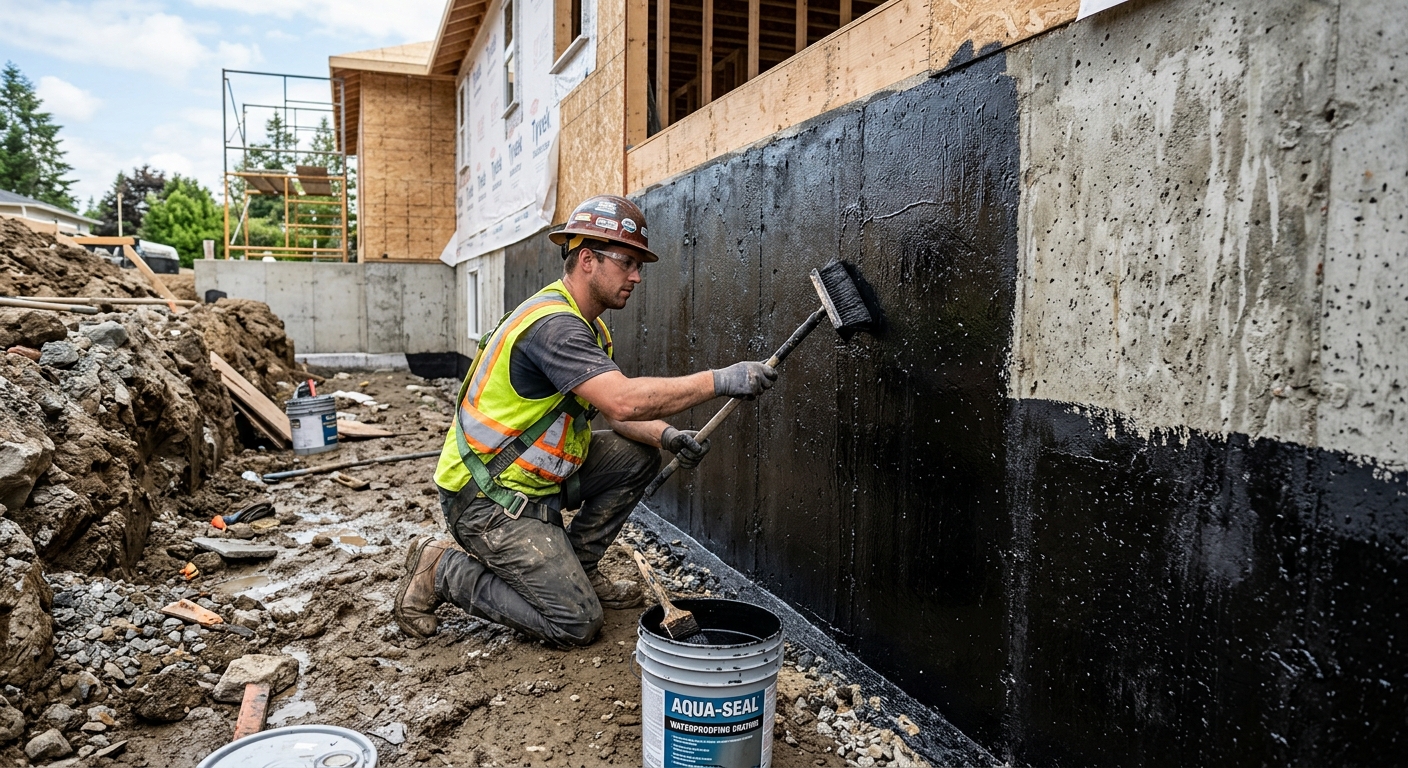
Basement waterproofing options and costs in Sydenham
Sydenham homeowners typically face basement dampness long before they see dramatic wall failure. With a population of 3,249 (Statistics Canada, 2021 Census), you’ll often find a smaller pool of local crews than Toronto proper, and that can affect scheduling—especially for exterior excavation work that requires multiple trades and disposal runs. In practice, most basements in this area are in older housing pockets (including many post‑war and 1960–1980s homes), where original tar-and-paper systems and early weeping tile are nearing the end of their service lives. Once those drainage paths clog or collapse, water shifts to cracks, cold joints, tie holes, and penetrations, and the leaks become “active” after a few freeze–thaw cycles.
In the Toronto area, mixed glacial till and pockets of dense clay hold water against foundation walls and expand when saturated. That lateral pressure can push seepage through hairline defects, so the cheapest fix isn’t always the right fix. Costs also vary because access constraints are common in tight lots, and exterior work often means deck/landscaping removal, careful hand-digging near footings, and matching backfill and grading on return. Areas with higher demand for waterproofing tend to overlap with older in-fill neighbourhood pockets where drainage systems are already stressed—so you’ll see fast turnarounds for sump retrofits, and longer timelines for full exterior excavations.
Use the comparison below to match your symptoms (damp walls, efflorescence, seepage through cracks, or standing water) to the most cost-effective method, and then we’ll narrow it to what fits your foundation and drainage history.
| Method |
What It Addresses |
Disruption Level |
Durability |
Price Range |
| Exterior excavation + new membrane + drainage tile |
Primary water source at the foundation: rebuilds the drainage plane and waterproof barrier |
High (excavation, landscaping removal, disposal, re-grading) |
High (10–25+ years depending on drainage design) |
$7,000–$25,000 |
| Interior perimeter drain channel + sump pit |
Intercepts water after it enters; reduces hydrostatic pressure at the slab/wall line |
Medium (floor drain cutting/patching; sump pit excavation) |
High (15–25+ years with proper sump maintenance) |
$3,500–$15,000 |
| Foundation crack injection (epoxy or polyurethane) |
Stops isolated cracks; epoxy is best for non-moving leaks, polyurethane for active leaks |
Low to Medium (minor drilling and surface restoration) |
Medium to High (can last many years; depends on crack movement) |
$600–$3,000 |
| Sump pump installation (primary + battery backup) |
Manages intermittent or chronic seepage; battery backup protects during spring power loss |
Low to Medium (sump pit + discharge line; minor electrical work) |
High (with backup and routine checks) |
$800–$3,500 |
| Window well drain installation |
Prevents water pooling around egress/window wells that feeds basement seepage |
Low to Medium (excavation around well; grading and drainage tie-in) |
Medium to High (8–20 years depending on downspout/soil conditions) |
$1,000–$4,000 |
| Lot re-grading / downspout extension |
Moves roof runoff away from the foundation and reduces saturation near walls |
Low (light excavation, grading, eavestrough adjustments) |
Low to Medium (often 5–15 years; depends on settlement and maintenance) |
$1,200–$6,500 |
Prices are estimates only and vary by project scope, site access and material selection.
What affects the price of waterproofing in Sydenham
In Sydenham and the broader Toronto area, homeowners can see waterproofing quotes for the same symptom that differ by roughly 30–50% once you account for soil conditions, water control strategy, and how much of the job must be opened up. That’s because the “cheapest” approach (often interior work only) might address water after it enters, while a correct “source” solution (exterior excavation and a rebuilt drainage plane) requires labour-intensive excavation, membrane detailing, and careful backfill. In Ontario, those differences are amplified by the interaction of freeze–thaw with clay soils: saturated clay expands during winter freeze, pushing laterally on foundation walls and worsening cracks over repeated seasons.
Three drivers usually separate local costs from the national average: (1) Soil type, (2) water table conditions, and (3) freeze–thaw cycles. In Toronto’s mixed glacial till and dense clay pockets, water can sit against the foundation instead of draining away, so sumps may run longer and exterior drainage is more often justified. When interior drainage is chosen, a properly sized perimeter drain plus sump pit can still range widely; for example, many homeowners land in the $3,500–$15,000 band depending on whether we’re adding a sump, upgrading discharge routing, and tying into failing weeper paths.
Concrete examples from Sydenham jobs: a home with clogged original weeping tile (often decades old) can require more demolition inside to relieve chronic seepage, nudging costs toward the upper end of interior systems. Conversely, a basement with isolated, stable cracks may be resolved with crack injection in the $600–$3,000 range, without full-scale drainage. If access is tight around a deck or shared driveway, exterior excavation can also move into the upper $7,000–$25,000 range because labour hours and disposal time rise even when the membrane scope is straightforward.
| Price Factor |
Why It Matters |
Cost Impact |
| Interior vs. exterior approach — interior is less disruptive but addresses symptoms |
Interior systems manage water entry impacts; exterior systems remove the source by rebuilding the outer drainage plane |
Can swing 30–50% depending on excavation scope and drainage design |
| Foundation type — poured concrete vs. block vs. stone vs. ICF |
Crack behaviour and water paths differ; block often benefits from interior drainage as a complement |
Poured: often crack-seal-focused; Block/stone: may require perimeter drainage |
| Soil type — clay expands more than sand, adding pressure |
Saturated clay increases lateral pressure on walls and expands micro-defects during freeze–thaw |
Higher costs for exterior drainage and membrane detailing |
| Crack type and length — hairline vs. structural horizontal cracks |
Moving/structural cracks can’t be solved by “simple seal” alone |
Structural work or enhanced drainage can increase labour and materials |
| Sump pump backup system — battery or water-powered backup needed |
Spring flooding and outages can turn a “minor leak” into a major basement loss |
Adds cost but reduces catastrophic risk; often a line-item add-on |
| Access — landscaping, decks, or driveways must be removed for exterior |
Excavation hours and restoration materials drive price |
Greater disruption and disposal can push projects into upper exterior bands |
| Weeping tile age — original tile (60+ years) may be completely failed |
Old drainage fails unpredictably, causing water to find new paths into cracks and joints |
May require replacement and more extensive excavation or interior intercept drains |
| Mould or efflorescence remediation required before sealing |
Sealers and membranes perform poorly over active salts or biological growth |
Additional time for cleaning, drying, and sometimes specialized encapsulation |
Permits & regulations in Ontario
In Ontario, some waterproofing-related work typically requires a building permit, particularly when you’re changing structural elements or the way water drains away from the building. In most Sydenham-area basements, foundation excavation, structural crack repair where structural integrity is in question, and changes to lot drainage or grade often trigger permit requirements. If you’re installing or modifying drainage that ties into municipal systems, such as when a sump discharge is connected to the storm or sanitary sewer, municipal approval is typically required (and the contractor should confirm discharge rules before the first shovel).
For structural crack repair—especially horizontal cracks in block walls, major step cracking patterns, or any signs of movement—an assessment by a structural engineer is commonly needed to decide whether underpinning or other structural interventions are required. A reputable contractor will have engineering support or a documented process for bringing one in when your findings warrant it.
To verify a contractor in Sydenham, start step-by-step:
- Check the contractor’s online Ontario licensing/registration details on the appropriate provincial registry for your trade (based on the company type and work category).
- Request a current Certificate of Insurance showing general liability and, where applicable, workers’ compensation coverage.
- Verify WSIB/WCB status directly via the insurer/agency clearance method provided on request.
- Ask who pulls permits, whether it’s included in the proposal, and get the permit number once issued.
- For structural repairs, ask whether they include engineering assessment and liability coverage for that scope.
This due diligence matters because freeze–thaw-driven crack activity and clay-driven hydrostatic pressure can turn “cosmetic sealing” into a recurring leak if structural factors aren’t properly evaluated.
Interior vs exterior waterproofing — what does Sydenham need?
The fundamental difference is source control versus water management after entry. Exterior waterproofing means full excavation to the foundation, installing a continuous membrane, and restoring a proper drainage layer with new drainage tile and controlled backfill. It’s the most permanent way to stop bulk water from reaching the wall, but it costs significantly more and requires landscape disruption and careful re-grading.
Interior waterproofing—perimeter drain channel, sump pit, and sump pump—does not stop hydrostatic pressure on the wall itself; it intercepts and carries water away once it finds its way in. In Sydenham’s Toronto-region conditions, that can still be a smart choice when exterior access is limited (tight lots, decks, or shared driveways) or when cracks are isolated and the primary issue is chronic seepage into the basement line. Poured concrete walls often seal better with crack injection where movement is minimal, while block foundations frequently benefit from interior drainage as a practical complement because block’s water pathways and mortar joints are more likely to transmit seepage over time.
Ontario power outages during spring storms are also a real concern. A sump pump that runs without backup can still leave you vulnerable if the pump stops while power is out—exactly when saturated clay and freeze–thaw melt cycles can spike inflow.
Here’s a practical cost example: if your symptoms are localized to a single active crack run and a few tie holes, crack injection plus a basic interior sump can be far more economical than opening the yard. Conversely, if you’ve got widespread seepage, efflorescence across multiple walls, and a history of failed weeping tile, the exterior route—often within the $7,000–$25,000 band—can be the only way to prevent recurrence rather than re-treating the same wet seasons.
| Method |
Best For |
Addresses Source? |
Disruption |
Lifespan |
Price Band |
| Full exterior excavation + membrane |
Chronic seepage, failing exterior drainage, multiple wet walls |
Yes (primary source control) |
High |
10–25+ years |
$7,000–$25,000 |
| Interior French drain + sump system |
When exterior access is limited or water table pushes water inward |
No (manages after entry) |
Medium |
15–25+ years |
$3,500–$15,000 |
| Crack injection — epoxy (structural) |
Non-moving cracks, stable leaks, poured concrete crack lines |
Partly (stops a defined crack pathway) |
Low to Medium |
Often 7–15+ years |
$600–$3,000 |
| Crack injection — polyurethane (active leak) |
Active moisture at cracks, moving seepage, pressure-driven leaks |
Partly (targets active pathway) |
Low to Medium |
Often 7–15 years |
$800–$3,500 |
| Interior drain channel only (no sump) |
Intermittent dampness, minor seepage with gravity relief |
No (doesn’t relieve hydrostatic pressure without a sump) |
Medium |
5–10+ years |
$1,500–$6,500 |
| Re-grading + downspout extensions |
Surface runoff issues, early signs of dampness near corners |
Yes (for roof/lot runoff contribution) |
Low |
5–15 years |
$1,200–$6,500 |
How to choose a waterproofing contractor in Sydenham
Choosing the right contractor matters in Sydenham because the “right” method depends on water entry patterns, not just visible stains. Start by verifying Ontario requirements. Ask for their insurance certificate (general liability) and confirm WSIB/WCB clearance status—request documentation, then verify it matches the coverage period and the company name. For licensing, check the contractor’s Ontario registration for their specific trade category before signing anything, and ensure the person quoting is the same entity insured on the policy.
Next, get 2–3 itemised written quotes rather than a lump sum. A solid quote breaks labour and materials into sections (excavation/disposal, membrane and drainage tile, interior drain channel components, sump pit and pump, discharge line, restorations, and any concrete patching). Read the exclusions carefully: does it include permit pull, dewatering during excavation, disposal of removed soil, and restoration of landscaping? Clarify who handles municipal approval if discharge routing is regulated.
Warranty should be explicit. Look for a workmanship warranty length (often tied to the labour scope), product/manufacturer warranty for membranes and pumps, and whether the warranty is transferable to a future owner.
For payment, never exceed 10–15% upfront. Hold back part of the total until key steps are complete and the system is tested or commissioned. Finally, insist on a written timeline with an estimated start date and completion date range—so weather delays and curing times are understood from day one.
- Verify Ontario licensing/registration for the contractor’s trade category.
- Request a current Certificate of Insurance naming the correct legal business entity.
- Confirm WSIB/WCB clearance (ask for the clearance letter and check the dates).
- Get 2–3 itemised quotes with labour/material line items (not one lump figure).
- Confirm whether permits are required for excavation, drainage alterations, or structural crack repair.
- Ask what’s included for excavation dewatering and how it’s controlled.
- Confirm disposal and restoration are covered (soil hauling, landscaping/grade restoration).
- Clarify discharge routing for sump discharge and whether approvals are handled.
- Request a clear warranty: workmanship term, product warranty term, and transferability.
- Set a payment schedule that keeps 10–15% max upfront and a holdback until final sign-off.
- Ask how they document pre- and post-work conditions (photos, measurements, crack locations).
- Get a written start/completion window and allowance for curing and freeze protection.
Red flags to watch in Sydenham: a quote that doesn’t inspect crack movement or won’t discuss polyurethane vs epoxy; no clear discharge plan for sump systems; vague warranties (“up to X years” without defining workmanship vs product); refusal to provide insurance/WSIB documentation; and a scope that promises “permanent waterproofing” with no mention of drainage design or clay/water table risk.
Frequently asked questions — waterproofing in Sydenham
Can I waterproof my basement in winter in Sydenham?
Yes, waterproofing can be done in winter in Sydenham, but the approach often changes. Exterior excavation is generally constrained when soils are frozen, and membrane installation details must account for cold conditions and backfill handling. Interior work—like perimeter drains, sump pits, and crack injection—can often proceed because access is inside and drying/curing processes can be controlled with proper site conditions. If you’re dealing with active leaks after freeze–thaw, polyurethane injection may be considered for a defined crack pathway, typically falling within the $600–$3,000 repair range depending on length and access. The bigger question is whether your exterior drainage is failing; if so, winter is usually better for planning and interior mitigation while you schedule exterior work for more favourable soil excavation conditions.
What is the difference between waterproofing and damp-proofing?
Damp-proofing is usually a surface treatment meant to slow minor moisture, often used where there’s no active pressure against the foundation. Waterproofing is designed to handle water movement and pressure—typically by managing hydrostatic pressure at the wall or rebuilding the exterior drainage plane. In Toronto-region clay pockets common around Sydenham, moisture can become pressure-driven when the water table sits higher and saturated clay expands through freeze–thaw. That’s why “paint-on” damp-proofing sometimes fails in a few seasons: it doesn’t address the source (failed weeping tile, clogged drains, or runoff flow). For chronic seepage, homeowners are typically better served by a perimeter drain and sump system (often in the $3,500–$15,000 range) or exterior excavation plus membrane and drainage tile (often $7,000–$25,000), depending on where the water is entering.
Will basement waterproofing affect my property value in Sydenham?
Often it does, especially because buyers in the Toronto area are cautious about wet basements, efflorescence, and repeat leaks after spring freeze–thaw. A documented waterproofing system with a clear warranty and a logical water-control strategy can reduce perceived risk. That said, value impact depends on method: interior-only solutions can still be valuable if they include a sump plan for chronic seepage, while exterior source control typically scores higher with buyers when there’s a history of failing drainage. If you can show that original weeping tile is obsolete or that the drainage plane was rebuilt, it helps justify the investment. In practical Sydenham terms, homeowners who spend within the $7,000–$25,000 exterior band often see easier future sale conversations when the system is properly permitted and maintained.
What drainage issues are most common in Sydenham homes?
Common issues in Sydenham homes include failed or partially collapsed original weeping tile, blocked early plastic drains, and poor lot grading that directs roof runoff toward foundation corners. In the Toronto area, mixed glacial till with dense clay pockets can trap water against walls, creating lateral pressure that drives seepage through tie holes and cracks. Freeze–thaw can then widen defects and turn minor dampness into active leakage. Another frequent culprit is downspouts that discharge too close to the foundation, especially if extensions have shifted over time. Window wells also cause recurring seepage because they collect snowmelt and rainfall when not drained properly. Depending on severity, homeowners may start with re-grading/downspout extensions (often $1,200–$6,500) and then move to a perimeter drain and sump system (often $3,500–$15,000) if the problem persists.
How do I choose a waterproofing contractor in Sydenham?
Choose based on proof of capacity, not promises. In Ontario, verify the contractor’s appropriate Ontario registration/licensing for their trade category and request a current Certificate of Insurance. Confirm WSIB/WCB clearance by asking for the clearance letter and checking the coverage matches the legal business entity. Then get 2–3 itemised written quotes that split labour and materials and clearly state what’s included (permit pull if required, disposal, dewatering, and restoration). Make sure the scope explains whether they’re addressing the source (exterior drainage and membrane) or managing after entry (interior drain/sump). In Sydenham, you should also see clear reasoning for polyurethane vs epoxy injection when cracks are involved. Finally, insist on a written workmanship warranty and a payment schedule that keeps upfront payments within about 10–15%, with holdback until commissioning/testing.
What is a battery backup sump pump and do I need one in Sydenham?
A battery backup sump pump is a secondary pumping system that kicks in during a power outage, allowing the basement to continue draining when the primary pump can’t run. In Sydenham and Ontario’s freeze–thaw and spring storm pattern, power outages can coincide with rapid inflow when soils are saturated and leaks accelerate. If you’ve had recurring wet seasons or you notice water starts to rise during heavy rains, battery backup is often worth considering because it reduces the risk of catastrophic flooding. Typical sump work often falls in the $800–$3,500 band for pump installations, and battery backup may be added as a line item. Whether you “need” it depends on your inflow rate, existing pump capacity, and whether you’re already seeing chronic seepage; a contractor should assess your conditions during the visit and recommend the right level of redundancy.