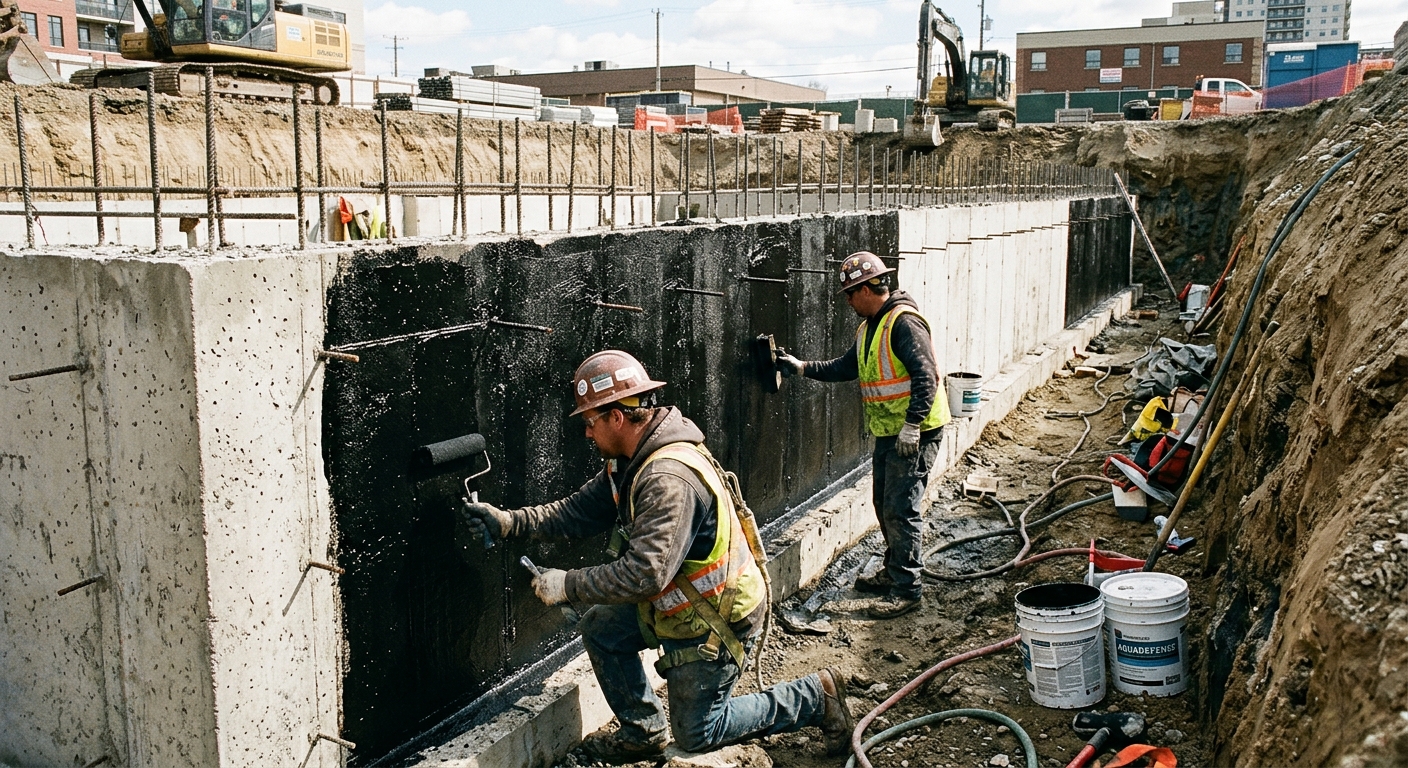
Basement waterproofing options and costs in Norfolk County
In Norfolk County, homeowners typically choose between exterior and interior waterproofing because the area’s soil and seasonal water conditions are unforgiving. With 62.0% of homes built before 1981 (Statistics Canada, 2021 Census), many basements still rely on older membrane and weeping-tile practices that can be brittle, poorly connected, or simply overwhelmed after decades of freeze–thaw. That’s important because Norfolk’s housing stock is overwhelmingly single-detached (82.7% of dwellings), meaning most projects are full-footprint basements where any water entry tends to show up in larger living spaces and utility areas.
In the Hamilton–Niagara Peninsula market, costs can rise quickly due to clay and silty clay subsoils that hold moisture and can expand, increasing the likelihood of cracking and inward bowing on foundations over time. Contractors also plan around commonly shallow groundwater (often around 2–4 m below grade, with perched water possible in shallow fill layers), which affects how deep we must excavate, how robust the drainage stone and membrane need to be, and whether a sump system is required to keep the work site dry. Availability of experienced excavation crews can also affect turnaround times, especially in busier stretches near Simcoe and the surrounding service corridor.
For communities like Simcoe and the larger hamlets along the 401/Highway 24 corridor, exterior work is often in highest demand when gardens, driveways, or retaining edges need rework as part of drainage. If you’re trying to compare solutions quickly, the table below outlines the most common approaches and realistic budget ranges for Norfolk County basements.
| Method |
What It Addresses |
Disruption Level |
Durability |
Price Range |
| Exterior excavation + new membrane + drainage tile |
Primary water entry by rebuilding the drainage plane and waterproofing barrier |
High (excavation, temporary shoring in some cases, regrading/backfill) |
Long-term (typically 20+ years with proper detailing) |
$12,000 – $25,000 |
| Interior perimeter drain channel + sump pit |
Manages water after it enters; reduces hydrostatic pressure at the interior floor/wall joint |
Medium (cutting interior floor/footings line; limited yard disruption) |
Good (often 15–25 years depending on maintenance and discharge details) |
$8,000 – $18,000 |
| Foundation crack injection (epoxy or polyurethane) |
Seals leakage paths; epoxy is best for non-moving cracks, polyurethane for active water |
Low to Medium (patching, surface prep, limited interior access) |
Varies by crack movement (commonly 10–20 years; longer when movement is stabilized) |
$600 – $1,800 |
| Sump pump installation (primary + battery backup) |
Controls seepage and reduces flood risk during heavy spring wet periods and outages |
Low to Medium (pit excavation/coring, electrical work, discharge line) |
Long-term with correct pump sizing and backup testing |
$1,800 – $4,200 |
| Window well drain installation |
Stops rain and meltwater from pooling around egress windows |
Low to Medium (small exterior/sidewalk/grade adjustments) |
Good (often 10–20 years with cleanout access) |
$1,200 – $3,000 |
| Lot re-grading / downspout extension |
Reduces surface water load that feeds foundation seepage |
Low (light excavation/landscaping, typically minimal demolition) |
Moderate (can last 5–15 years; depends on maintenance) |
$900 – $2,400 |
Prices are estimates only and vary by project scope, site access and material selection.
What affects the price of waterproofing in Norfolk County
In Norfolk County—and across the broader Hamilton–Niagara Peninsula—the same waterproofing symptom can produce quotes that swing by 30–50% when the underlying water source differs or when site conditions force deeper excavation and additional drainage detailing. At a national level, contractors price for “typical” conditions, but Ontario’s freeze–thaw cycles and cohesive clay subsoils change both the failure pattern and the best fix. Two homeowners may both report damp walls, yet one has a failing weeping-tile line while the other has interior condensation or a downspout connection that’s feeding water at the footing.
Three drivers separate local costs from a national average: soil type, water table, and freeze–thaw. Clay-heavy pockets in our region can expand as moisture and temperatures change, which can worsen hairline cracking into longer-term issues that require injection and, sometimes, drainage upgrades. When groundwater sits roughly 2–4 m below grade (and can become perched in shallow fill), interior systems often run more frequently, meaning sump sizing and discharge routing become more demanding. Compared with regions that don’t experience the same winter volume of freeze expansion, spring repairs here often require sturdier, more continuously sealed assemblies.
Concrete examples in Norfolk County: (1) a bungalow with a deeper basement and known high groundwater may require exterior excavation and upgraded membrane protection—pushing budgets toward the $12,000 – $25,000 exterior band; (2) a home with a limited leaking section and stable non-moving cracks can be addressed more economically with crack injection in the $600 – $1,800 range, paired with drainage improvements like downspout extensions. Conversely, tight access near mature trees or a front-drive driveway can increase labour for hauling and disposal, while shorter runs of drainage tile and accessible foundation walls can lower labour time.
| Price Factor |
Why It Matters |
Cost Impact |
| Interior vs. exterior approach — interior is less disruptive but addresses symptoms |
Exterior rebuilds the drainage plane; interior focuses on managing water after entry |
Often shifts cost by several thousand dollars; exterior typically higher |
| Foundation type — poured concrete vs. block vs. stone vs. ICF |
Different wall systems respond differently to cracking and sealing methods |
Block may require more interior drainage planning; poured concrete often works well with injection plus drainage |
| Soil type — clay expands more than sand, adding pressure |
Moisture retention increases hydrostatic pressure and crack movement over time |
Higher risk of future movement can increase material and labour scope |
| Crack type and length — hairline vs. structural horizontal cracks |
Active movement cracks need flexible sealing or engineering review |
Structural cracks generally increase remediation scope and costs |
| Sump pump backup system — battery or water-powered backup needed |
Outages and heavy melt cycles can overwhelm single-pump systems |
Can add meaningful cost but reduces flood risk substantially |
| Access — landscaping, decks, or driveways must be removed for exterior |
Excavation in tight yards increases time and disposal/repair costs |
Access issues can push pricing toward the top of the exterior band |
| Weeping tile age — original tile (60+ years) may be completely failed |
Failed tile means water still reaches the footing/wall joint |
Replacement requires deeper work and more drainage stone and membrane detailing |
| Mould or efflorescence remediation required before sealing |
Sealing over contaminated surfaces can lead to poor adhesion and recurrence |
Adds prep time, cleaning materials, and sometimes controlled drying |
Permits & regulations in Ontario
In Ontario, foundation excavation, structural crack repair, and changes to lot drainage typically require a building permit. If you’re dealing with exterior waterproofing—digging to the footing, replacing drainage tile, installing a new membrane, and regrading—permits are commonly required because it changes the building envelope and how surface water is managed. Sump pump installations can also require municipal approval when discharge connects to storm or sanitary systems, especially where there are rules around where water can be directed.
For structural crack repair—such as horizontal cracks in block walls, major step cracking, or any sign of movement—an assessment by a structural engineer is often needed to determine whether underpinning or other structural work is required. In practice, reputable waterproofing contractors in Norfolk County coordinate this step so you don’t end up sealing a crack that is still actively moving.
To verify contractor credentials, start with these steps: (1) confirm the contractor’s Ontario licence/registration status using the appropriate online registry page for the type of work they claim to perform; (2) request a certificate of liability insurance and ensure the coverage includes waterproofing/foundation work, with dates current; and (3) ask for proof of WSIB/WCB clearance for the contracting company and subcontractors. If they can’t provide documents promptly, that’s a major red flag. Always get the permit responsibilities (pulling the permit vs. homeowner obtaining it) in writing before work begins.
Interior vs exterior waterproofing — what does Norfolk County need?
The core difference is source control versus water management. Exterior waterproofing—full excavation, new membrane, new drainage tile, and backfill—targets the water entry path by rebuilding the barrier and drainage route. It typically costs more and disrupts landscaping, but it’s the most direct way to reduce hydrostatic pressure on foundation walls. Interior waterproofing, such as a perimeter drain channel, sump pit, and sump pump, is less invasive and usually faster, but it manages water after it enters rather than stopping the driving moisture outside the wall.
In Norfolk County’s clay-heavy pockets and freeze–thaw climate, exterior work is usually the best long-term answer when you have active seepage, failing exterior drainage, or deep basements where groundwater has a straight path to the foundation. Poured-concrete walls often respond well to crack injection paired with a drainage plan, while block foundations frequently benefit from interior drainage as a practical complement—especially when exterior access is limited by driveways, patios, or mature trees.
Sump pump backup is especially relevant here. Spring flooding can push water volumes high quickly, and outages can happen during storms. Battery backups help keep the system running long enough to reduce flood risk, while water-powered backup can be used where compatible with the setup.
Dollar example: if you’re seeing dampness along one basement wall and hairline cracking only, interior drainage plus a sump often lands in the $8,000 – $18,000 band and may be justified. If you’re seeing broad seepage, evidence of failed weeping tile, and recurrent dampness every spring, the $12,000 – $25,000 exterior option can be worth it because it removes the root cause rather than repeating interior management year after year.
| Method |
Best For |
Addresses Source? |
Disruption |
Lifespan |
Price Band |
| Full exterior excavation + membrane |
Widespread seepage, failing weeping tile, deep basements, or homes with limited interior dry-up success |
Yes (primary source control) |
High (excavation + yard restoration) |
20+ years |
$12,000 – $25,000 |
| Interior French drain + sump system |
Interior dampness, localized seepage, or when exterior access is constrained |
Partially (manages water after entry) |
Medium (floor cutting and sump pit) |
15–25 years |
$8,000 – $18,000 |
| Crack injection — epoxy (structural) |
Non-moving cracks in poured concrete or stable block where no active flow exists |
No (seals, but doesn’t rebuild drainage plane) |
Low to Medium |
10–20 years (longer if movement is stabilized) |
$600 – $1,800 |
| Crack injection — polyurethane (active leak) |
Cracks with active seepage where flexible sealing is needed |
No (seals, but doesn’t replace external water management) |
Low to Medium |
10–20 years (depends on ongoing water pressure control) |
$700 – $1,900 |
| Interior drain channel only (no sump) |
Minor seepage where water volumes are low and gravity drainage is feasible |
No (only manages minor entries) |
Medium to High (floor work, but less than sump setups) |
5–15 years (riskier in high groundwater scenarios) |
$6,500 – $14,000 |
| Re-grading + downspout extensions |
Surface water issues, roof runoff, and early-stage dampness |
Yes (reduces water load at the source on grade) |
Low |
5–15 years |
$900 – $2,400 |
How to choose a waterproofing contractor in Norfolk County
Start by confirming the contractor is properly set up to work in Ontario. Ask for (1) their Ontario licence/registration status for the type of foundation/waterproofing work they’re quoting; (2) a current certificate of liability insurance showing adequate limits and the correct company name; and (3) proof of WSIB/WCB clearance (including subcontractors). You can verify documents by requesting copies directly, then checking licence details and insurer standing where applicable. A reputable Norfolk County contractor will provide these quickly without pressure.
Next, get 2–3 itemised written quotes. You want line-by-line labour and materials—membrane type, drainage stone quantity, weeping tile details, sump pump model, discharge routing, and disposal costs—rather than a single lump sum. Read the scope carefully: what’s excluded (spot painting, drywall removal, engineering, permit fees, yard restoration)? Is the permit pulled by the contractor or homeowner? Disposal and spoil hauling should be addressed explicitly for exterior excavation.
Warranty matters in a freeze–thaw climate. Ask for the workmanship warranty length, what it covers, and whether it’s transferable to future owners. Confirm product/manufacturer warranties for membrane and drainage components, and whether they require specific installation steps to remain valid. Payment schedule should be conservative—never more than 10–15% upfront; hold back a portion until the work is complete and cleaned up. Finally, require a written start date and a completion estimate.
- Ask for itemised quotes: labour, membrane, drainage tile, stone, pumps, electrical, backfill, and disposal.
- Confirm whether a permit is required for your specific scope and who will pull it.
- Verify Ontario licence/registration for the contractor and request proof of WSIB/WCB clearance.
- Check liability insurance certificate dates and coverage for the actual contracting company.
- Request details on crack injection type (epoxy vs polyurethane) and how they determine moving vs non-moving cracks.
- Confirm sump pump specs (horsepower, discharge size, alarm/backup options) and discharge routing.
- Ask how they handle weeping tile tie-ins and where inspection points/cleanouts are provided.
- Ensure the quote states how grade will be restored (regrading, compaction, topsoil, and vegetation plan).
- Get clarification on exclusions: mould removal, structural engineering, underpinning, and drywall/finished basement patching.
- Ask for a workmanship warranty in writing, including who is responsible for rework if issues appear within warranty.
- Verify product/manufacturer warranty terms and whether warranty is transferable.
- Use a payment schedule with a holdback until punch list items are completed and verified.
Red flags to watch in Norfolk County: (1) quotes that avoid discussing the water source (weeping tile vs exterior drainage vs surface runoff) and only talk about sealing; (2) no proof of WSIB/WCB or insurance, or vague documentation; (3) refusing to explain epoxy vs polyurethane selection for cracks; (4) warranty terms that are only verbal or narrowly defined; and (5) demanding large upfront payments beyond 10–15% without a written schedule and holdback.
Frequently asked questions — waterproofing in Norfolk County
How do I know if a foundation crack is serious?
In Norfolk County, crack seriousness is less about the crack width alone and more about whether the crack is moving and what’s driving moisture. Hairline vertical cracks can be typical shrinkage, but horizontal cracks, widening step cracks, or cracks that show dampness/active seepage after heavy rain or spring melt should be assessed. Pay attention if the crack appears worse after freeze–thaw cycles or if you see efflorescence, bubbling paint, or water tracking—those are indicators of ongoing moisture. Homes built before 1981 (Statistics Canada, 2021 Census) often have older drainage components that can contribute to persistent pressure, so a recurring damp crack is a sign you may need more than surface patching.
How much does foundation crack repair cost in Norfolk County?
For crack injection, many Norfolk County projects land in the $600 – $1,800 range, depending on crack length, depth, wall type, and whether it’s epoxy or polyurethane. If the crack is longer, requires additional ports, or has active seepage that needs a more flexible material, costs tend to move toward the upper end. If the crack is structural or shows signs of movement, injection alone may not be enough and you may need engineering assessment and a larger remediation plan. A reliable contractor will measure the crack, confirm movement behavior, and include patching and surface prep so you can compare quotes fairly.
Do I need a sump pump in Norfolk County?
You may need a sump pump in Norfolk County when you have measurable seepage into the basement, recurring water during spring wet periods, or higher groundwater pressure where an interior perimeter drain collects water. In the Hamilton–Niagara Peninsula region, clay soils and seasonal freeze–thaw can increase pressure and infiltration, and shallow groundwater conditions (often around 2–4 m below grade, with perched water possible) can overwhelm drainage-only solutions. Many homeowners choose a sump system when interior dampness returns even after cleaning and minor crack sealing. If the project includes backup, battery or other backup methods can be important where outages occur during storms. Typical sump installation budgets are often $1,800 – $4,200, depending on pump, discharge routing, and backup.
How does Norfolk County's soil affect my foundation?
Norfolk County foundations commonly face clay and silty clay conditions (especially across the Hamilton–Niagara Peninsula), which hold water longer than sandy soils. During freeze–thaw, moisture in clay can expand and exert lateral pressure on foundation walls, increasing the likelihood of crack growth and inward bowing over time. Because groundwater can become perched in shallow fill layers, some basements experience intermittent wetness—fine in dry weeks, then suddenly damp again during spring melt. These soil behaviours make exterior drainage and properly detailed drainage stone/membrane systems particularly important. They also explain why interior solutions sometimes “work” but need long-term pump reliability and periodic checks.
Do I need a permit for foundation work in Ontario?
Often, yes—especially for foundation excavation and structural crack repair, and when you’re changing lot drainage around the house in Norfolk County. In Ontario, exterior waterproofing typically involves work that can require a building permit because it impacts the building envelope and how water is managed around the foundation. If you install a sump pump discharge connection to storm or sanitary services, municipal approval may be required. Structural crack repair (for example, significant horizontal cracks or signs of movement) frequently triggers an engineering assessment, and engineering-driven work commonly requires additional documentation. The practical approach: confirm with the contractor whether they pull permits for the scope, and ensure the quote clearly states what permits are included vs what you must arrange.
How long does waterproofing last?
Longevity depends on whether the solution addresses the source of water entry and how well it’s detailed for local freeze–thaw. Exterior waterproofing systems—when membrane, drainage tile, and backfill/grade are properly installed—are typically designed to perform for many years (commonly 20+ years). Interior systems often perform reliably for a similar span when the sump pump is correctly sized, discharge routing is sound, and homeowners maintain filters/cleanouts; in practice, interiors can still last 15–25 years depending on groundwater and pump performance. Crack injection can last 10–20 years, but only if the crack movement has been properly identified (epoxy for non-moving cracks, polyurethane for active leaks). For older Norfolk County homes (62.0% built before 1981, Statistics Canada, 2021 Census), expect that failed original weeping tile or grade issues can shorten performance if not fully addressed.