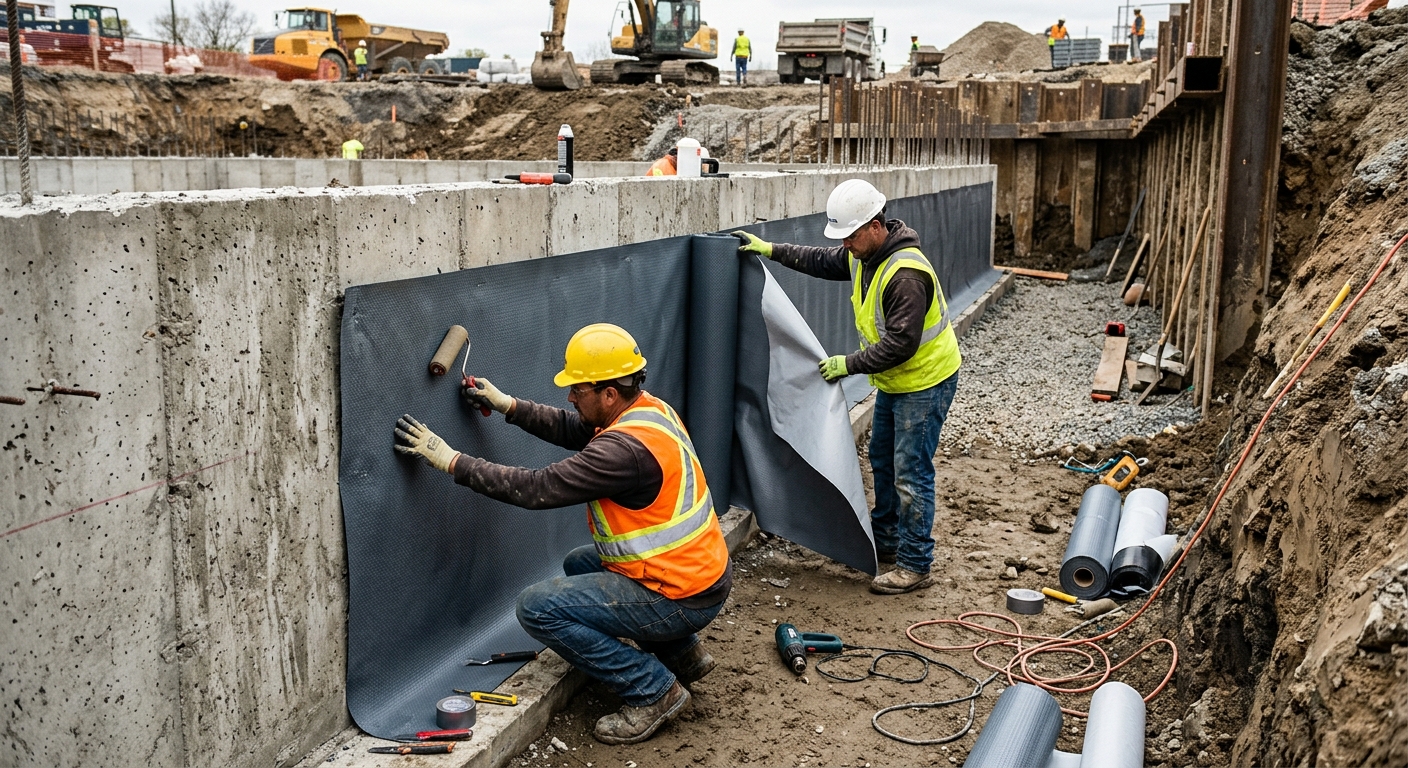
Basement waterproofing options and costs in Oshawa
In Oshawa, basement waterproofing is a mix of prevention and problem-solving because many homes were built before today’s modern drainage standards. With 58.6% of dwellings built before 1981, a large portion of local basements still rely on older weeping tile systems or early exterior membranes that can fail after decades of freeze–thaw and clogged soil contact. At the same time, Oshawa’s share of homeowner households (64.2% of households own) means many residents are investing in fixes that last, not quick cosmetic patch-ups.
Toronto-area soil conditions also shape both the scope and the final price. The region sits on mixed glacial till and clay pockets that hold water against foundation walls and exert lateral pressure when saturated. Then winter’s freeze–thaw cycles widen small defects in concrete and block foundations, turning hairline cracks, tie holes, and aging mortar joints into active seepage pathways. That’s why exterior excavation and drainage replacement often cost more than interior-only approaches—but can be the right move when water is being forced through the wall from outside.
In Oshawa, trade demand is especially noticeable in older, established areas such as East Oshawa, where many homes have mature landscaping, limited grading control, and aging drainage systems. Contractors in these neighbourhoods often plan for tight access, deck removal, or careful excavation around additions, which affects labour and schedule. Below is a practical comparison of common options and typical Oshawa price bands to help you translate an estimate into a realistic solution.
| Method |
What It Addresses |
Disruption Level |
Durability |
Price Range |
| Exterior excavation + new membrane + drainage tile |
Hydrostatic pressure from outside; wall sealing plus new perimeter drainage |
High (excavation, landscaping restoration) |
Long-term (often 15–25+ years with proper drainage) |
$7,000 – $25,000 |
| Interior perimeter drain channel + sump pit |
Water entry after it passes the wall; collects seepage and relieves pressure |
Medium (basement floor/finish impacts) |
Long-term (commonly 10–20+ years, depending on discharge/drainage) |
$3,500 – $15,000 |
| Foundation crack injection (epoxy or polyurethane) |
Isolated crack leaks; restores integrity (epoxy) or stops active flow (polyurethane) |
Low (minimal interior disturbance) |
Moderate to long-term (best when the source is controlled) |
$600 – $3,000 |
| Sump pump installation (primary + battery backup) |
Chronic seepage and high water events; improves reliability during outages |
Low to medium (basement work) |
Long-term (pump life varies; backup reduces failure risk) |
$800 – $3,500 |
| Window well drain installation |
Surface water intrusion at window wells; reduces pooling and seepage |
Low to medium (excavation at windows) |
Good (often 10–20+ years if grading remains correct) |
$1,200 – $4,500 |
| Lot re-grading / downspout extension |
Moves roof and surface water away; reduces load on foundation perimeter |
Low (site works and light landscaping) |
Variable (depends on soil settle and maintenance) |
$800 – $3,200 |
Prices are estimates only and vary by project scope, site access and material selection.
What affects the price of waterproofing in Oshawa
In Oshawa and the broader Toronto region, it’s common to see quotes for the “same” waterproofing problem swing by 30–50%. The biggest reason is that waterproofing isn’t a single trade action—it’s a combination of diagnosis, drainage design, and foundation-specific repair. Two contractors may both call it “waterproofing,” but one may be correcting the water source (exterior drainage and membrane), while the other is only managing water after it enters (interior drain and sump). That difference alone moves budgets from interior bands into exterior bands.
Beyond approach, Oshawa costs tend to run higher than the national average when three local drivers are present: soil type, water table, and freeze–thaw. Clay-heavy soils common across Southern Ontario expand when saturated and exert lateral pressure on foundation walls, which can worsen cracks over time and increase the need for crack injection, interior drainage, or full exterior excavation. High seasonal water conditions raise sump run times and can require more robust discharge piping and backup capacity. Freeze–thaw then widens small defects in concrete and block, increasing the chance that a “minor” leak becomes an active, repeating one that needs broader sealing and drainage.
Concrete Oshawa examples that commonly change price are: (1) older 1960–1980s and pre-1981 houses with partially collapsed weeping tile, which often forces a larger scope than planned; and (2) basements with efflorescence and musty odours, where remediation and drying must happen before any sealing. On the other hand, a clean, single-crack leak with manageable access can stay closer to the foundation crack repair band, while a full exterior fix may land nearer the $7,000–$25,000 exterior waterproofing (excavation) band. If the job also needs new sump plus backup within a broader interior system, the total often moves toward the upper end of the interior waterproofing/weeping tile band.
| Price Factor |
Why It Matters |
Cost Impact |
| Interior vs. exterior approach |
Interior manages water after entry; exterior addresses the source and hydrostatic pressure |
Interior often costs less upfront; exterior can cost substantially more (excavation + membrane + drainage) |
| Foundation type |
Poured concrete typically seals differently than block/stone; repair methods and prep vary |
Crack injection and sealing scope changes; exterior excavation may be more complex depending on wall condition |
| Soil type |
Clay holds water and expands during freeze–thaw, increasing lateral pressure |
More drainage capacity and more robust waterproofing detailing; higher likelihood of larger scope |
| Crack type and length |
Hairline cracks may be localized; structural horizontal/step cracks suggest deeper movement |
May trigger engineer review and additional structural work; injection alone may not be sufficient |
| Sump pump backup system |
Backup reduces failure risk during power outages during wet spring events |
Costs add to the sump band; can be a small premium compared to cleanup after a failure |
| Access |
Decks, driveways, shrubs, and tight side yards add labour and disposal costs |
Exterior work can increase due to hand-digging, protection, and restoration of finishes |
| Weeping tile age |
Original tile may be clogged, broken, or collapsed after decades |
Often requires replacement or tie-in to a new system; increases excavation and drainage material |
| Mould or efflorescence remediation required before sealing |
Sealers and membranes won’t perform well on contaminated surfaces |
Adds drying, cleaning, and sometimes controlled remediation steps before waterproofing proceeds |
Permits & regulations in Ontario
In Ontario, some basement waterproofing-related work is subject to permits, especially when you’re altering building systems, structural elements, or how water is managed off the lot. Typically, foundation excavation for exterior membrane installation and changes that affect lot drainage often require a building permit, and structural crack repair—particularly with horizontal cracks in block walls or major step cracks—commonly triggers additional requirements. If your repair plan involves assessment that could include underpinning or other structural work, an engineering review is frequently needed to confirm what’s safe and what’s required.
Sump pump installations that connect to municipal sewer systems need municipal approval. If discharge is directed to the storm or sanitary infrastructure, your contractor should be able to explain the approval path and who pulls the required paperwork. Also verify the contractor carries proper liability insurance and WSIB/WCB coverage (if applicable) for their crews.
How to verify before signing in Oshawa:
- Ask for the contractor’s Ontario licence/proof of authorization for the type of work they’re claiming to do.
- Request a current certificate of insurance and confirm it covers the specific job site and scope (not just general business coverage).
- Confirm WSIB/WCB account status or exemption documentation in writing.
- For structural crack work, ask whether they include engineering support and whether an engineer will be engaged if needed.
- Get a clear statement in the contract on who pulls permits and who handles municipal discharge approvals.
If they can’t provide documentation or can only discuss “typical practice” without showing how permits/approvals are handled, that’s a warning sign.
Interior vs exterior waterproofing — what does Oshawa need?
The fundamental difference is simple: exterior waterproofing tackles the source by excavating around the foundation, installing a continuous membrane, and adding or upgrading perimeter drainage and backfill details. Interior waterproofing primarily manages water after it enters by collecting seepage with perimeter drains, a sump pit, and a sump pump. In Oshawa’s climate zone, exterior work can be more expensive, but it often performs better where clay soils hold water against foundation walls and where water table conditions increase hydrostatic pressure. Exterior solutions also reduce repeat maintenance because you’re not asking the basement to “hold back” water through freeze–thaw-driven movement.
Interior systems can be the smarter choice when access is limited or when leaks appear isolated—especially when excavation would be impractical around decks, additions, or shared driveways. For many poured-concrete walls, properly executed crack injection can be effective when the leak is localized and the exterior water load is addressed through drainage corrections. For block foundations, it’s common to use interior drainage as a practical complement because block joints and masonry interfaces can allow seepage pathways that become active under seasonal saturation.
Oshawa power and seasonal flooding risk is also a factor. Spring events can bring higher runoff and wet backfill conditions; adding a battery backup sump pump helps prevent basements from flooding during short outages when the sump is doing its job. A cost “starter” interior package may start in the lower part of the interior band, but adding backup and improving drainage discharge can bring it toward the mid-to-upper range. By contrast, an exterior excavation project can climb toward the $7,000–$25,000 exterior waterproofing (excavation) band; the price is justified when it replaces failed drainage systems, stops active seepage under lateral clay pressure, and reduces the likelihood of recurring leaks.
If your basement shows recurring dampness and efflorescence across multiple wall areas, interior-only may feel cheaper initially, but it can miss the source—especially in older homes where drainage tile and weepers are often well past their service life.
| Method |
Best For |
Addresses Source? |
Disruption |
Lifespan |
Price Band |
| Full exterior excavation + membrane |
Chronic seepage, high lateral pressure, failing perimeter drainage, older homes with clay backfill |
Yes |
High (excavation + landscaping restoration) |
15–25+ years (typical with correct drainage detailing) |
$7,000 – $25,000 |
| Interior French drain + sump system |
Intermittent dampness, moisture wicking, or when exterior access is limited |
No (manages water after entry) |
Medium (basement floor impacts) |
10–20+ years (system reliability depends on discharge and maintenance) |
$3,500 – $15,000 |
| Crack injection — epoxy (structural) |
Non-moving cracks or where water entry is controlled |
Partly (seals crack pathway) |
Low (interior access only) |
Moderate to long-term (best with stable crack condition) |
$600 – $2,400 |
| Crack injection — polyurethane (active leak) |
Active seepage through cracks where water is still flowing |
Partly (stops active pathway, but source may still persist) |
Low to medium |
Moderate to long-term (depends on whether hydrostatic pressure continues) |
$900 – $3,000 |
| Interior drain channel only (no sump) |
Mild to moderate dampness where water volume is low |
No |
Medium (floor channel and grading inside) |
5–15 years (can be less reliable during high water events) |
$2,500 – $8,500 |
| Re-grading + downspout extensions |
Surface water and roof runoff directing toward foundation |
Yes (for surface water causes) |
Low (site works) |
Variable (maintenance and soil settling matter) |
$800 – $3,200 |
How to choose a waterproofing contractor in Oshawa
Start by verifying Ontario credentials and coverage before you ever discuss pricing. For licensing or authorization, ask the contractor to provide their Ontario licence details (where applicable to their scope) and confirm they’re qualified for the specific waterproofing work they’ll perform. Next, request a certificate of insurance and read it carefully—make sure it lists coverage appropriate to the job site and contractor activities. Then confirm WSIB/WCB coverage (or exemption paperwork) so you’re not left holding risk if a worker is injured.
Get 2–3 itemised written quotes that break labour and materials out separately, rather than a vague lump sum. A proper scope should list what’s included in the waterproofing system (membrane type, drain pipe specification, pump model if specified), where materials are supplied from, and what the contractor is responsible for regarding disposal. Confirm whether permits are included, whether municipal discharge approvals are handled where relevant, and what restoration is included (topsoil, sod/seed, deck/fencing reinstatement).
Warranty and payment are where many homeowners get burned. Look for a workmanship warranty length you can verify in writing, plus clarity on the manufacturer/product warranty and whether it transfers if you sell the home. For payment schedule, avoid large up-front deposits—generally keep it to about 10–15% maximum—and negotiate a holdback until the job is complete and any punch-list items are done. Finally, request a firm start date and a completion estimate in writing so delays don’t become “scope creep.”
- Ask how they diagnose the leak source (inspection process, moisture mapping, crack evaluation).
- Require the scope to state whether the plan is interior-only or includes exterior drainage/membrane.
- Confirm whether they replace failed weeping tile or just connect to existing (and what happens if it’s collapsed).
- Get written details on pump discharge, check valves, and discharge line routing.
- Ask if battery backup is included or optional and what model it is.
- Clarify what is excluded: mould remediation, concrete patching, floor/finish replacement, landscaping restoration.
- Verify permit pull responsibility and timeline—don’t assume it’s included.
- Confirm disposal and trucking are included for excavated soil and debris.
- Check warranty: workmanship warranty length and product warranty documentation.
- Use clear payment milestones tied to inspection and completion, not vague “progress” language.
- Request start/completion dates and weather contingency terms (freeze–thaw affects schedules).
- Ask who will be on site daily and who coordinates engineer review if structural cracks are found.
Red flags in Oshawa waterproofing sales: (1) quotes that don’t include the disposal/restoration plan for exterior excavation, (2) “one-size-fits-all” proposals that skip crack and drainage diagnosis, (3) no written warranty terms or vague “lifetime” claims without scope limits, (4) refusing to provide a certificate of insurance and proof of WSIB/WCB coverage, and (5) asking for most of the money before any meaningful work begins.
Frequently asked questions — waterproofing in Oshawa
What is the difference between waterproofing and damp-proofing?
In Oshawa (and across Ontario), “damp-proofing” usually means controlling minor moisture to improve comfort—typically a surface coating or limited membrane meant to reduce seepage rather than withstand pressure. “Waterproofing,” in contrast, is designed to resist water entry and manage hydrostatic pressure from wet soils, which is important in areas with clay-heavy backfill and freeze–thaw cycles that widen cracks over time. Homeowners often notice dampness first, then efflorescence, then active leakage when conditions change. If you’re seeing recurring water or cracks with signs of movement, waterproofing methods like exterior drainage and membranes or an interior perimeter drain with sump management are generally the correct direction. Pricing commonly starts around the foundation crack repair band of $600 – $3,000 for targeted fixes, but ongoing pressure may require a full interior system or excavation.
Will basement waterproofing affect my property value in Oshawa?
It can, especially when you can document the work. In Oshawa’s homeowner-heavy market (64.2% of households own), buyers value basements that are dry, smell-free, and serviceable during spring runoff. Waterproofing done with a clear scope—such as interior drainage with sump pump backup or exterior membrane and drainage tile—reduces the risk of ongoing dampness, mould concerns, and emergency cleanup after outages. That said, value impact depends on the cause and the solution. A quick crack injection without addressing drainage may not prevent future seepage if clay soils continue to push water laterally. If you’re selecting between options, contractors often justify exterior work when it corrects the source, while interior systems are typically chosen for accessibility or localized issues. As a reference point, interior perimeter drainage projects can fall within $3,500 – $15,000, and homeowners who keep warranties and receipts tend to have more confidence when listing or refinancing.
What drainage issues are most common in Oshawa homes?
Common drainage issues in Oshawa often relate to older drainage systems and site water management. Many homes built before 1981 (58.6% of dwellings) were constructed before modern perimeter drainage standards, and the original weeping tile or early drains may now be clogged, collapsed, or disconnected. When that happens, water can pool in clay soils against the foundation and increase lateral pressure. Freeze–thaw cycles then widen small defects in concrete and block, and the seepage path becomes more active over a few winters. You’ll also see roof runoff problems—downspouts that discharge too close to the foundation—plus window wells that trap surface water. In practice, contractors in Oshawa frequently recommend a combination of re-grading/downspout extensions and targeted drainage corrections, with sump systems for chronic damp basements. For example, re-grading and downspout extensions can be a lower-cost starting point in $800 – $3,200 when the issue is mainly surface water.
How do I choose a waterproofing contractor in Oshawa?
Choose a contractor by matching their solution to your leak source and verifying credentials before signing. First, request proof of Ontario licensing/authorization for their scope, then ask for a certificate of insurance and confirm WSIB/WCB coverage in writing. Next, insist on 2–3 itemised written quotes that separate labour and materials, and clearly state what’s included (permits, disposal, and restoration). A good contractor will explain whether they’re proposing exterior waterproofing or an interior approach and why, based on your foundation type and observed moisture pattern. For Oshawa homes, that often means considering clay soil pressure and freeze–thaw crack movement, especially where basement walls show efflorescence. Pay carefully: keep the deposit small (around 10–15%) and hold back until completion. Finally, confirm the warranty terms and whether product warranties are provided with documentation. Even a project starting around $800 – $3,200 for re-grading should have written scope and clear expectations.
What is a battery backup sump pump and do I need one in Oshawa?
A battery backup sump pump is an additional power source that keeps pumping when the main electricity is out. In Oshawa and Southern Ontario, spring storm periods can cause short outages or power disruptions, and sump pumps are critical during high water conditions. If your basement relies on a sump to prevent flooding, backup reduces the risk of a failure cycle when water levels rise. You may not need battery backup if your system is only handling light intermittent seepage, or if you’ve confirmed your discharge and drainage are robust enough that the sump runs rarely. But if you have chronic seepage, frequent pump cycles, or you’ve experienced water rising during outages, backup is often a prudent add-on. Pricing varies by system size and model, but sump work commonly falls within $800 – $3,500. A reliable contractor will recommend backup based on your observed water volume and discharge conditions—not just a sales upsell.
How much does basement waterproofing cost in Oshawa?
Basement waterproofing costs in Oshawa depend on the method, access constraints, and whether the solution addresses the source of water entry or only manages water after it enters. For exterior excavation (excavation + drainage tile + new membrane), typical bands are $7,000 – $25,000 because excavation, membrane installation, and landscaping restoration can be extensive—especially on tight lots common in older neighbourhoods. Interior waterproofing/weping tile projects often land in $3,500 – $15,000, depending on how much wall length needs drainage, whether a sump is installed, and if backup power is added. Targeted foundation crack repair is usually smaller—about $600 – $3,000—when the leak is isolated and crack movement isn’t ongoing. If you’re unsure which bucket you fall into, ask for a written assessment of the water path, not just the visible crack. That’s where pricing becomes predictable.