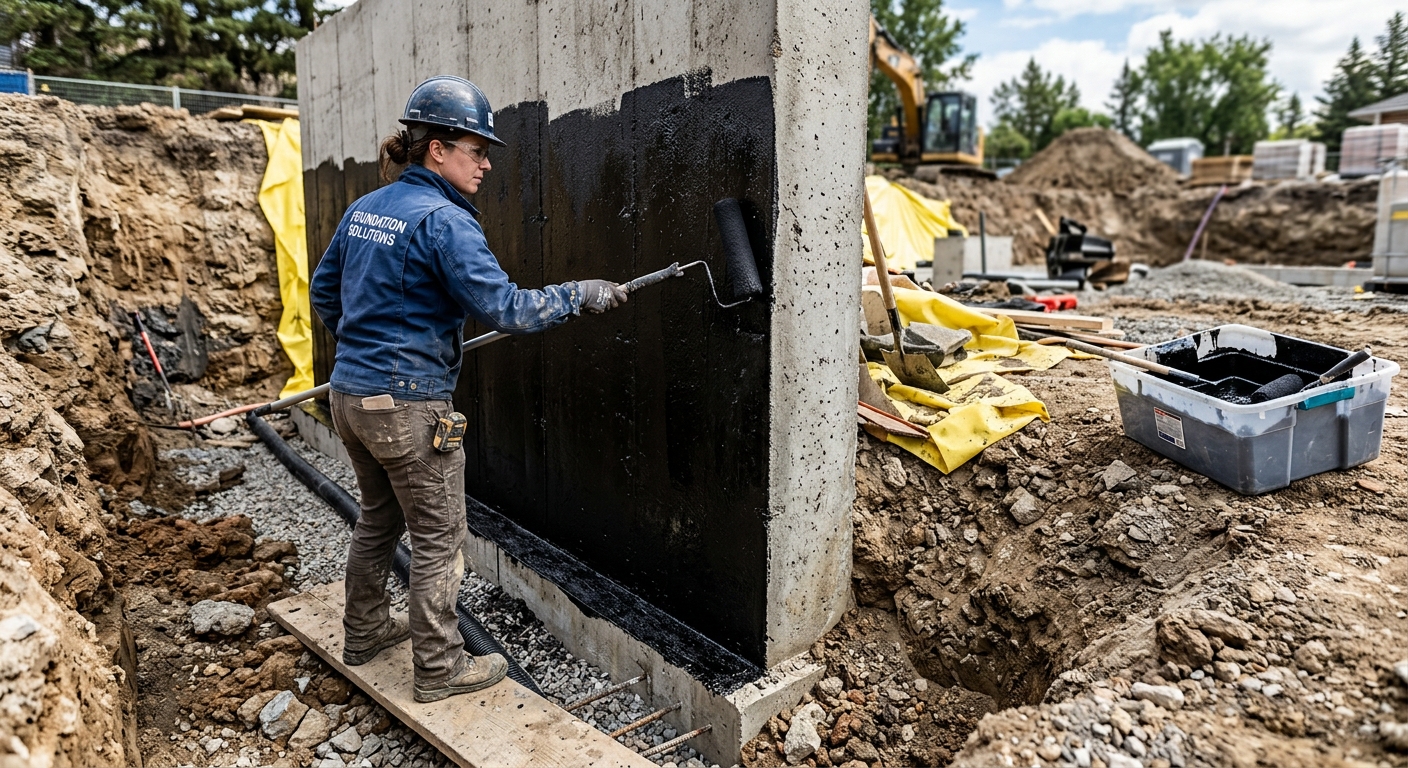
Basement waterproofing options and costs in Espanola
Espanola homeowners typically notice basement leaks after heavy rain, spring melt, and freeze–thaw cycles that stress joints and cracks in older foundations. With 79.0% of homes in the area built before 1981, many basements were originally protected with simpler damp-proofing and older weeping-tile layouts that are now nearing the end of their service life. In a town with 1,750 homeowner households (Statistics Canada, 2021 Census), demand is steady because repairs often become “urgent” once seepage turns into persistent moisture, efflorescence, and mold risk.
In the Northeast Ontario market, costs can climb when contractors must excavate deeper, manage fine-grained soils that hold water, and schedule cold-weather concrete work. Compared to a warmer season, freeze–thaw in late fall and winter can widen hairline cracks and cause minor seepage to become active leakage over a few cycles—so some projects include crack repair and drainage upgrades together instead of treating symptoms only. Trades are especially busy in and around Espanola’s older residential pockets near the downtown area, where lots are tighter and where older drainage infrastructure is most common.
Below are the most common waterproofing approaches and what they generally address, so you can compare proposals side-by-side before signing a scope.
| Method |
What It Addresses |
Disruption Level |
Durability |
Price Range |
| Exterior excavation + new membrane + drainage tile |
Water entry through foundation walls/footings; hydrostatic pressure control with a new perimeter drainage system |
High (excavation, landscaping restoration) |
Long-term when properly detailed with membrane and graded backfill |
$9,000 – $20,000 |
| Interior perimeter drain channel + sump pit |
Water that has entered the basement; collects seepage at the perimeter and pumps it out |
Medium (interior cutting, sump/piping install) |
Very good if solids control is included and sump is maintained |
$4,000 – $12,000 |
| Foundation crack injection (epoxy or polyurethane) |
Cracks and joints that are actively leaking or allowing water paths |
Low to Medium (localized drilling/patching) |
High for correctly selected products and clean crack preparation |
$400 – $1,200 |
| Sump pump installation (primary + battery backup) |
Reduces basement flooding risk and improves reliability during power loss or heavy spring inflow |
Low to Medium (pit, discharge line, electrical) |
High when paired with correct discharge routing and backup |
$900 – $3,000 |
| Window well drain installation |
Water from around egress windows and localized surface drainage failures |
Low to Medium (partial yard/interior access) |
Good for targeted areas when grading is corrected |
$900 – $3,000 |
| Lot re-grading / downspout extension |
Surface water management to reduce water load against the foundation |
Low (minimal excavation) |
Good when combined with drainage improvements and maintained |
$700 – $2,500 |
Prices are estimates only and vary by project scope, site access and material selection.
What affects the price of waterproofing in Espanola
In Espanola and across Ontario, two contractors can quote the “same” basement leak and still land 30–50% apart because the true causes of the water load differ—and because excavation and drainage details are where labour time concentrates. For homeowners comparing bids, the biggest differences usually come from soil type, water-table/groundwater behaviour, and freeze–thaw impacts on cracks and joints.
First, soil: fine-grained soils can hold water and press laterally against foundation walls, increasing the amount of drainage work needed. Clay-rich conditions expand and stress older mortar and sealing details during freeze–thaw. Second, water table and hydrostatic pressure: in the Northeast, many older drainage systems fail after years of clogging, causing continuous pressure that overwhelms “light-duty” fixes. Finally, freeze–thaw: cycles can worsen hairline cracks and degrade membranes or sealants that weren’t detailed for cold-season movement.
Here are a few practical examples that commonly raise costs in Espanola: (1) if downspouts discharge too close to the footing, we often include re-grading and extensions, but that added exterior work can push the job toward the higher end of exterior ranges such as $9,000 – $20,000; (2) if the basement already shows active seepage at multiple wall sections, interior drainwork alone at $4,000 – $12,000 may be paired with crack injection to prevent repeated inflow points; (3) if the foundation is older and weeping tile is collapsed or completely failed, we budget more time for sump discharge planning and debris removal because restoration alone won’t stop the source.
Housing age also matters: with most homes predating 1981 (Statistics Canada, 2021 Census), original drainage and damp-proofing components are more likely to be worn out, which increases the frequency of interior drainage retrofits—and sometimes full exterior work—across the local market.
| Price Factor |
Why It Matters |
Cost Impact |
| Interior vs. exterior approach — interior is less disruptive but addresses symptoms |
Exterior controls the source; interior manages water after entry |
Exterior can be 2×–4× interior due to excavation, membrane detailing, and restoration |
| Foundation type — poured concrete vs. block vs. stone vs. ICF |
Different wall materials crack and weep differently; attachment and sealing differ |
Poured concrete often supports reliable crack strategies; block may require more interior drainage |
| Soil type — clay expands more than sand, adding pressure |
Saturated clays exert lateral pressure on walls and joints |
Higher excavation depth, more robust membrane/drain detailing, and more labour for backfill/grading |
| Crack type and length — hairline vs. structural horizontal cracks |
Structural patterns may indicate movement and can exceed waterproofing-only scope |
Structural assessment and additional work can significantly raise labour and contingency |
| Sump pump backup system — battery or water-powered backup needed |
Reduces flood risk during power outages common during storms and spring conditions |
Adds equipment and controls; often increases the sump portion by a few thousand dollars |
| Access — landscaping, decks, or driveways must be removed for exterior |
More removal/restoration increases time and disposal/materials |
Exterior jobs can increase markedly when excavation must go past a hardscape boundary |
| Weeping tile age — original tile (60+ years) may be completely failed |
Failed systems allow water to migrate and saturate walls/footings |
More demolition and higher drainage scope; interior-only fixes often require upsizing |
| Mould or efflorescence remediation required before sealing |
Sealers and membranes don’t bond reliably over active contaminants |
Additional cleaning, drying time, and sometimes remediation steps |
Permits & regulations in Ontario
In Ontario, foundation excavation, structural crack repair, and changes to lot drainage typically require a building permit. If you’re adding or altering any drainage lines tied to municipal services, sump pump discharge may require municipal approval—especially if the connection is proposed to a storm or sanitary sewer system. For foundation crack work that appears structural (for example, horizontal cracks in block walls, major step cracks, or signs of ongoing movement), an assessment by a structural engineer is often necessary to confirm whether waterproofing-only repairs are sufficient or whether underpinning or other structural measures are required.
Before work starts, homeowners in Espanola should verify that the contractor has the right insurance and coverage for jobsite risk and labour claims. As a baseline, confirm the company can support structural repairs with engineering documentation when needed, and confirm it carries liability insurance and WSIB/WCB coverage (as applicable). For waterproofing scope that includes excavation, cutting, drainage piping, sump installation, and concrete patching, permits and inspections help ensure the work is completed to the accepted construction standards.
Practical homeowner checklist to verify compliance step-by-step: (1) ask for the contractor’s business details and permit responsibility statement; (2) confirm their Ontario licence/registration status via the appropriate online registry search; (3) request a current certificate of insurance and confirm the named insured and coverage dates; (4) ask for WSIB/WCB clearance documentation; (5) if they’re proposing structural crack repairs, request proof they coordinate engineering assessments when the crack pattern indicates structural concern.
What DOES typically require a permit: exterior excavation that alters drainage, foundation crack repairs that include structural elements, sump installations with new discharge routing, and changes to downspout/discharge patterns that affect lot drainage planning. What typically does NOT: interior cleaning/drying, inspection visits, and minor surface patching that does not involve foundation alterations or drainage routing changes (but still gets confirmed in the permit scope).
Interior vs exterior waterproofing — what does Espanola need?
The fundamental difference is source control versus water management. Exterior waterproofing (full excavation, new membrane, new drainage tile, then backfill) addresses the water entry path and reduces hydrostatic pressure against the foundation wall. It usually costs more and requires significant landscape disruption, but it’s the most direct long-term solution when the exterior drainage system has failed or is absent.
Interior waterproofing (perimeter drain channel, sump pit, and sump pump) captures water after it enters the basement and pumps it away. It’s typically less disruptive, which can be important in Espanola lots with mature landscaping or limited side access, but it does not stop hydrostatic pressure from pushing against the wall. In homes where the problem is primarily localized seepage through cracks, an interior approach plus targeted crack repair can be effective; where the wall is being continuously pressured by saturated soils, interior solutions can still work, but you’ll usually need a robust sump plan and often backup pumping.
Given Espanola’s Northeast climate conditions and older housing stock (many built pre-1981), poured concrete foundations often respond well to correctly executed crack injection plus perimeter drainage. Block foundations, on the other hand, can be more forgiving for interior drain strategies because water frequently tracks along mortar joints and through localized voids—so a sump system with proper solids control is a practical complement.
On sump backups: Ontario spring and storm events can coincide with power disruptions, and during heavy melt you want the system to keep running. In practice, that’s why many homeowners choose battery backup options as part of the sump package when they’re already near the “interior-only” decision point.
Example: if your quote for exterior excavation lands around $9,000 – $20,000 because excavation access is available and the weeping tile is confirmed failed, that cost can be justified to stop the source. If access is tight or you’re treating an active seepage zone only, interior waterproofing at $4,000 – $12,000 may be the best value—provided the scope includes perimeter collection, discharge planning, and (when appropriate) sump backup.
| Method |
Best For |
Addresses Source? |
Disruption |
Lifespan |
Price Band |
| Full exterior excavation + membrane |
Severe seepage, failed exterior drainage, consistent hydrostatic pressure |
Yes |
High (excavation and restoration) |
Long-term when membrane and drainage are fully detailed |
$9,000 – $20,000 |
| Interior French drain + sump system |
Basements with water entry after exterior drainage failure; limited yard access |
No (manages water after entry) |
Medium (floor cutting and sump installation) |
Very good with proper pump sizing and discharge routing |
$4,000 – $12,000 |
| Crack injection — epoxy (structural) |
Cracks where the structure is stable and water entry is through a defined crack path |
Partial (stops leakage through the crack) |
Low to Medium (localized drilling/patching) |
High when crack prep is correct and product is matched to conditions |
$400 – $1,200 |
| Crack injection — polyurethane (active leak) |
Active weeping or water taking the path through softer or moving cracks |
Partial (stops or reduces active leakage) |
Low to Medium (localized drilling/patching) |
High for active leaks when injection sequencing is done right |
$400 – $1,200 |
| Interior drain channel only (no sump) |
Dry or intermittently damp basements where water amounts are small and manageable |
No (still relies on relief/pumping alternatives) |
Medium (interior trenching and tie-ins) |
Good for limited moisture loads; less reliable for heavy inflow |
$2,500 – $7,500 |
| Re-grading + downspout extensions |
Surface water-driven leaks, overflow near the foundation, landscaping slope issues |
No (reduces water load before it reaches the wall) |
Low (grading work) |
Good if maintained seasonally and after heavy storms |
$700 – $2,500 |
How to choose a waterproofing contractor in Espanola
Choosing the right waterproofing contractor is less about the lowest number and more about proving they can build the right solution for your foundation and water path. In Ontario, verify licensing/registration status for the work they’ll perform, then confirm insurance coverage. Start by requesting (1) proof of current liability insurance (a certificate of insurance showing policy dates and limits) and (2) WSIB/WCB clearance documentation for the workers who will be on site. If structural crack work is part of the scope, ask how they coordinate engineer review and what documentation is included—don’t assume it’s “standard.”
Next, get 2–3 itemised written quotes that break labour and materials down (membrane system components, drainage tile, geotextile, sump basin and pump model, discharge piping, disposal, and restoration). Watch for exclusions: disposal fees, permit pull (if required), soil hauling, concrete patching, and restoration scope are common “surprise” omissions. Also ask whether the quote includes concrete coring/cutting and how they handle interior drying when mould or efflorescence is present.
Warranty matters in waterproofing: confirm the workmanship warranty length and whether it applies to the specific system installed (drainage, membrane, pump connections). Product/manufacturer warranties should be provided with model details, and ask if the warranty is transferable to the next homeowner. For payment schedule, a good rule is never paying more than 10–15% upfront; keep a holdback until the job is fully complete and cleaned up.
Finally, insist on a timeline in writing: preferred start date, weather/scheduling allowances for cold concrete work, and an estimated completion date.
- Ask for a site-specific diagnosis: where the water originates, not just where it appears.
- Request a written scope with measurements (wall sections, crack length, perimeter run).
- Confirm permit responsibility if excavation or drainage routing changes are planned.
- Verify liability insurance (current COI) and that it covers the scope of work.
- Confirm WSIB/WCB coverage or clearance documentation for workers.
- Require model numbers for sump pumps, check valves, backup systems, and alarms (if offered).
- Ask how discharge is handled (distance from foundation, routing, and freezing protection).
- Confirm membrane system details: thickness, overlaps, fasteners (if applicable), and compatible backfill.
- Clarify restoration: grading, topsoil, sod/seed, and concrete/step patching limits.
- Get disposal and hauling listed separately so “soil removal” isn’t a vague allowance.
- Review warranty: workmanship vs product warranty; what events are excluded.
- Agree on payment milestones tied to completed inspection points and final cleanup.
Red flags in Espanola waterproofing projects include: contractors who won’t show their COI/WSIB/WCB clearance, quotes that lump everything into one number without itemised drainage and membrane components, vague wording like “we’ll waterproof the basement” with no scope measurements, no written timeline (or refusal to discuss permit requirements), and warranty terms that don’t specify the installed system or duration.
Frequently asked questions — waterproofing in Espanola
What drainage issues are most common in Espanola homes?
In Espanola, the most common drainage problems show up as surface water running toward the foundation, downspouts discharging too close to the footing, and long-term failure of older weeping tile systems. With many homes built before 1981 (Statistics Canada, 2021 Census), basements often rely on dated drainage details that clog with fine soils and sediment. When freeze–thaw cycles arrive, water can expand in cracks and joints, turning occasional dampness into active seepage.
You’ll also often see localized issues around window wells and egress points, especially where grading creates pooling. If a sump exists, it may be undersized or lacking proper backup, which increases risk during spring melt and heavy rain events.
How do I choose a waterproofing contractor in Espanola?
Choose a contractor who can explain the water path and propose a system that matches the foundation condition—not just a one-size approach. In Espanola and across Ontario, start by checking their current Ontario registration/licensing status (as applicable), then verify they carry liability insurance and WSIB/WCB coverage with documentation you can review. Ask for an itemised written quote so you can see the difference between excavation, drainage tile, sump equipment, membrane components, and restoration/disposal. Permits matter here too: excavation and certain drainage changes typically require permits, and structural crack repair may need engineering assessment depending on crack pattern.
Finally, confirm warranty terms in writing and ensure payment is staged—never more than 10–15% upfront—and hold back a portion until the scope is complete.
What is a battery backup sump pump and do I need one in Espanola?
A battery backup sump pump system keeps the sump running during power outages, which can happen during severe weather and spring storm periods in Ontario. In a basement waterproofing scenario, it’s not about “comfort”—it’s about preventing a temporary electrical outage from turning into a flooding event when groundwater inflow is highest.
Whether you need it depends on your leak timing and inflow rate. If you already have active seepage and rely on a sump, or if your interior system would otherwise be overwhelmed during heavy melt, backup is a wise addition. Budget-wise, sump pump upgrades commonly sit in the $900 – $3,000 range depending on the backup type and electrical/control requirements.
For many homeowners deciding between interior drainage packages and exterior source control, backup can be the difference between “we manage water” and “we protect the home during storms.”
How much does basement waterproofing cost in Espanola?
Typical waterproofing pricing in Espanola falls into a few common bands. Interior perimeter drainage with a sump system is often the mid-range option at roughly $4,000 – $12,000, especially when the work is mostly within the basement footprint. Exterior excavation with membrane and new drainage tile is the higher investment at about $9,000 – $20,000 because excavation, membrane detailing, and restoration are labour-intensive. Crack injection is usually a smaller targeted repair, commonly around $400 – $1,200 depending on crack length and whether injection needs to address active weeping.
If you’re adding reliability measures like sump backup, many homeowners see an additional $900 – $3,000 depending on the equipment and installation complexity.
Your exact price depends on access, foundation type, how many leak points exist, and whether original drainage is already failed.
Interior vs exterior waterproofing — which is better?
Exterior waterproofing is generally “better” at stopping the source because it controls hydrostatic pressure with excavation, membrane, and new drainage tile. Interior waterproofing is usually better when you can’t excavate easily, want less disruption, or you’re dealing with water that has already entered the basement. In Espanola’s older housing stock, a lot of basements leak because original drainage has failed over time and freeze–thaw has worsened cracks.
If your main leak points trace to foundation cracks or perimeter seepage and exterior drainage can’t be improved, interior solutions often work well when paired with a properly designed sump system. For crack-related leakage in poured concrete walls, crack injection plus interior perimeter drainage can provide a targeted solution; for block foundations, interior drainage is often a practical complement. The “best” choice is the one that matches your water path and foundation condition—not the one with the lowest upfront cost.
When exterior excavation is feasible, it may justify the $9,000 – $20,000 range. When you’re treating symptoms with a smaller scope, interior drainage at $4,000 – $12,000 can be strong value.
Why is my basement leaking in Espanola?
Basement leaks are usually caused by a combination of water load and failing pathways—downspouts discharging near the foundation, grading that sends runoff toward the wall, and aging weeping tile that can no longer manage subsurface water. Many Espanola homes were built before 1981 (Statistics Canada, 2021 Census), so original damp-proofing and drainage components may be corroded, collapsed, or clogged with fine soils. Once drainage fails, hydrostatic pressure pushes water through the weakest points: hairline cracks, mortar joints in block walls, or imperfect transitions where footing and wall meet.
Freeze–thaw then accelerates the problem. Water expands in cracks during winter, and repeated cycles widen the pathways, turning occasional seepage into active leakage and sometimes efflorescence.
If your leak rate increases during spring melt or after storms, that’s a strong clue your solution needs drainage capacity and crack/joint treatment—not just a surface seal.