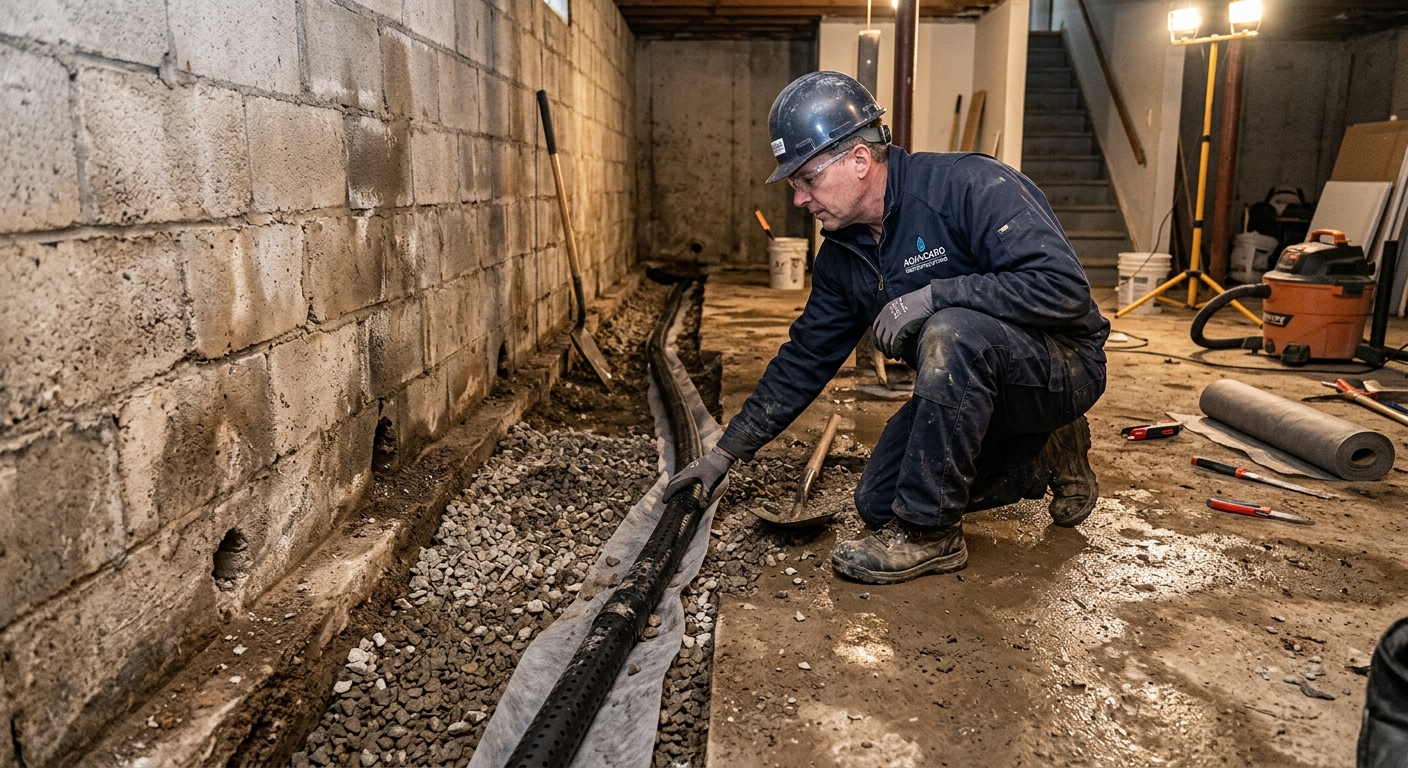
Basement waterproofing options and costs in Dufferin Grove
Dufferin Grove homeowners usually start with a frustrating question: “Why is my basement getting damp when everything looks fine on the outside?” In 2021, Dufferin Grove had 11,785 residents (Statistics Canada, 2021 Census), and that density means tight lots, shared driveways, and limited access—so the method you choose matters as much as the material. Another big cost driver is housing age: much of Toronto’s pre-1980 and early drainage systems are now decades old, and original weeping tiles and early drains often fail silently. Add Toronto’s freeze–thaw cycles and mixed glacial till/clay soils that hold water, and small cracks can become active leakage paths over a few winters.
In the neighbourhood around Dufferin Street and the areas with older bungalow basements, contractors are especially busy addressing chronic dampness, efflorescence, and recurring seepage at cold joints and tie holes. Exterior work can be effective when lateral water pressure is high, but it’s labour-intensive in urban lots. Interior systems are more targeted for ongoing seepage, especially where excavation would disrupt landscaping, decks, or additions. If you’re seeing stair-step cracks, concentrated wet spots after spring melt, or water around older window openings, your scope usually points to a combination approach.
Below is a practical comparison of the most common waterproofing options and the typical cost ranges you’ll see in Dufferin Grove, before you discuss your site-specific plan with an installer.
| Method |
What It Addresses |
Disruption Level |
Durability |
Price Range |
| Exterior excavation + new membrane + drainage tile |
Lateral hydrostatic pressure, failed exterior drainage, water entry at foundation/wall interface |
High (excavation, backfill, landscape/driveway impacts) |
Long-term (often the most permanent source-control option) |
$12,000–$25,000 |
| Interior perimeter drain channel + sump pit |
Water after it enters, chronic seepage, weeping through cracks and cold joints |
Medium (interior floor/trim impacts; less landscaping disruption) |
Very good with proper discharge and maintenance |
$6,500–$14,000 |
| Foundation crack injection (epoxy or polyurethane) |
Isolated cracks (active leaks with polyurethane; non-moving cracks with epoxy) |
Low to medium (selective drilling; usually limited floor disturbance) |
Good to excellent when the crack is correctly identified and stabilized |
$600–$3,500 |
| Sump pump installation (primary + battery backup) |
Frequent water accumulation and power-outage risk; maintains pumping during outages |
Medium (pit excavation; electrical tie-in) |
High, especially with backup and verified discharge |
$1,500–$5,000 |
| Window well drain installation |
Groundwater and surface runoff entering through or around basement window wells |
Low to medium (excavation around window area) |
Good (depends on grading and proper weep/drain outlet) |
$900–$2,800 |
| Lot re-grading / downspout extension |
Directing roof water away from foundation; reducing surface runoff against walls |
Low (often minimal demolition) |
Moderate (best as a complement to drainage/membrane when soils are saturated) |
$1,000–$4,500 |
Prices are estimates only and vary by project scope, site access and material selection.
What affects the price of waterproofing in Dufferin Grove
You can get two very different quotes for what sounds like the same basement waterproofing job—typically a 30–50% spread—because the scope isn’t truly identical. In Dufferin Grove and the wider Toronto area, contractors price around soil conditions, water-table behaviour, freeze–thaw damage, and the practical reality of working in tight urban lots. National averages can look cheaper, but Toronto’s mixed glacial till and dense clay pockets mean more water retention and more lateral pressure against foundation walls. Clay-heavy soils expand when saturated during freeze–thaw, which can worsen cracks over time and force more thorough prep before sealing.
Water levels also change the labour math. When the water table is high, interior sump pumps run more often, which increases the need for discharge planning and, in some cases, a battery backup. Meanwhile, in older Toronto homes—especially those with original clay weeping tiles from mid-century eras—drain lines may be clogged or collapsed, so interior “symptom control” may not be enough without either targeted excavation or a full drainage replacement strategy. In BC, heavy rainfall can saturate backfill quickly when original drainage fails, but in Toronto it’s the freeze–thaw cycle and clay expansion that most often turns a small defect into a recurring leak.
Concrete examples of how Dufferin Grove conditions affect cost: (1) a basement with efflorescence and active cold-joint seepage after spring melt often moves you toward interior perimeter drainage and a sump system (commonly in the $6,500–$14,000 band), because interior capture can be installed without destroying landscaping. (2) if the leak is tied to poor exterior drainage and failed exterior membranes, exterior excavation plus drainage tile can be justified, typically falling in the $12,000–$25,000 range depending on footing access and how deep they must go. (3) if the crack is short and isolated, crack injection may be the most cost-effective first step; if there’s evidence of structural movement, the approach changes quickly and the “cheap fix” isn’t.
| Price Factor |
Why It Matters |
Cost Impact |
| Interior vs. exterior approach — interior is less disruptive but addresses symptoms |
Source control vs water management after entry changes labour, excavation, and materials |
Interior can be materially cheaper; exterior adds excavation and membrane costs (often widening quote ranges) |
| Foundation type — poured concrete vs. block vs. stone vs. ICF |
Different crack patterns and sealing feasibility require different prep and systems |
Block and stone often need more interior drainage and careful sealing; ICF can behave differently at joints |
| Soil type — clay expands more than sand, adding pressure |
Clay saturation increases lateral pressure and makes leaks more “active” each freeze–thaw |
Higher risk of repeat leakage without proper drainage; can push scope toward exterior or enhanced interior capture |
| Crack type and length — hairline vs. structural horizontal cracks |
Misidentifying movement can cause failure of injection sealants |
Structural cracks may require engineering review and remediation, raising costs quickly |
| Sump pump backup system — battery or water-powered backup needed |
Power disruptions during spring melt increase the consequences of a single pump |
Adds equipment and installation labour; often a meaningful upsell for chronic seepage |
| Access — landscaping, decks, or driveways must be removed for exterior |
Urban lot constraints increase labour, disposal, and reinstatement |
Can shift a project by thousands due to hand-digging and restoration |
| Weeping tile age — original tile (60+ years) may be completely failed |
Old drains clog or collapse, reducing effectiveness of “partial” solutions |
May require replacement or more comprehensive interior drainage design |
| Mould or efflorescence remediation required before sealing |
Sealers and membranes perform poorly on contaminated or deteriorated surfaces |
Additional time for surface prep and moisture management before waterproofing |
Permits & regulations in Ontario
In Ontario, the rules depend on what you’re changing. In general, foundation excavation, structural crack repair (especially where engineering is needed), and changes to how water leaves your property typically require a building permit and/or municipal approval. For basement waterproofing, that usually means you should expect permits for work that alters structural elements or the way drainage/discharge connects to services.
Sump pump installations are the big question for approvals. If the discharge connects to the municipal storm or sanitary system, you’ll need municipal approval before tying in. If the discharge is entirely surface-discharge within your property (installed correctly away from foundation), requirements can be different—your contractor should clarify the exact discharge route in writing.
For structural crack repair (for example, horizontal cracks in block walls or major step cracks), an assessment from a structural engineer is often required to confirm whether underpinning or other structural work is necessary—especially if movement is suspected. A reputable contractor should provide engineering support for that scope.
How to verify a Dufferin Grove contractor before signing: (1) check the contractor’s licence status through the appropriate provincial registry page they reference; (2) request a certificate of insurance showing liability coverage and verify it matches the legal name on the quote; (3) ask for proof of WSIB/WCB clearance and confirm it’s current (not expired); and (4) for structural work, request their engineering coverage or the engineer’s involvement in your project file. Keep copies of everything.
Interior vs exterior waterproofing — what does Dufferin Grove need?
Think of waterproofing as two different strategies: exterior waterproofing (full excavation, new membrane, new drainage tile, and backfill) versus interior waterproofing (perimeter drain channel, sump pit, sump pump). Exterior systems address the water source and relieve hydrostatic pressure at the wall; interior systems manage water after it enters. That’s why exterior is usually the “permanent source-control” route, but it costs more and disrupts landscaping—an important consideration in Dufferin Grove’s tight, older urban lots.
In Toronto-area clay soils, water can pool and build lateral pressure against foundation walls, especially during freeze–thaw. Exterior membranes and properly installed drainage tile can be worth the extra expense when you have repeated seepage, failing weeping tile, or clear evidence that exterior drainage isn’t functioning. Interior waterproofing is often the practical best fit when the basement is damp but excavation access is difficult, or when you’re dealing with seepage through cracks/cold joints where the wall itself still largely retains integrity. Poured concrete walls in many older homes can respond well to properly identified crack injection as a supplement, while block foundations often benefit from interior drainage as a complement because water can move through and around block joints and mortar lines.
Sump pump backup matters in Ontario because spring flooding periods can coincide with power interruptions. If your basement is below grade and you’ve had any recent pump failures or recurring high-water events, backup protection can reduce the risk of interior damage even if electricity goes out.
Example: if your problem is mostly a localized active crack, crack injection may be the cheapest first step at around $600–$3,500. But if you have chronic seepage across multiple wall segments and the discharge route is proven inadequate, an interior French drain plus sump system in the $6,500–$14,000 range can be justified because it captures incoming water reliably rather than gambling on one crack repair. If the exterior drainage is truly failed and accessible, an exterior excavation and membrane approach (commonly $12,000–$25,000) can cost more but may eliminate the recurring symptom cycle.
| Method |
Best For |
Addresses Source? |
Disruption |
Lifespan |
Price Band |
| Full exterior excavation + membrane |
Chronic seepage where exterior drainage/membranes have failed and access allows full work |
Yes (most direct source control) |
High (excavation, backfill, reinstatement) |
Long-term when drainage tile and membrane details are executed correctly |
$12,000–$25,000 |
| Interior French drain + sump system |
Water after entry, blocked/collapsed weeping tile, damp basements without feasible full exterior work |
No (manages the water after entry) |
Medium (floor/finish work; less landscaping disruption) |
Very good with proper pump sizing and discharge |
$6,500–$14,000 |
| Crack injection — epoxy (structural) |
Non-moving cracks in concrete where there’s no active seepage at the time of injection |
Partially (seals pathways, but doesn’t replace drainage) |
Low to medium |
Good when the crack is stable and correctly prepped |
$900–$3,000 |
| Crack injection — polyurethane (active leak) |
Active leaks, weeping cracks, localized water penetration through cold joints or defects |
Partially (stops the active flow channel) |
Low to medium |
High for isolated active leaks when mixed properly and injection points are right |
$1,000–$3,500 |
| Interior drain channel only (no sump) |
Light seepage or situations where gravity drainage/discharge is feasible |
No (captures and routes water internally) |
Medium to low |
Moderate to good, depending on discharge capacity and freeze–thaw performance |
$3,500–$8,500 |
| Re-grading + downspout extensions |
Surface runoff problems, pooling near foundation, minor dampness after rainfall events |
Yes for surface water, limited for groundwater pressure |
Low |
Moderate; often needs complement if clay soils keep water against walls |
$1,000–$4,500 |
How to choose a waterproofing contractor in Dufferin Grove
Start by verifying the basics in Ontario: licensing where applicable, liability insurance, and WSIB/WCB coverage. In practice, you can check this by requesting updated certificates directly from the contractor. For insurance, ask for a certificate of insurance listing the insured party matching the quote and confirming coverage limits. For WSIB/WCB, ask for current clearance/coverage documentation; don’t accept “we’re covered” without seeing the paperwork. If the scope includes structural crack repair, insist on evidence of engineering support or a clear plan for assessment—because mis-scoping structural movement is one of the fastest ways to waste money.
Next, get 2–3 itemised written quotes that separate labour and materials. A solid quote breaks out excavation (if exterior), membrane/drain tile, interior drain channel, sump pit and pump, electrical tie-ins, discharge method, disposal, restoration, and any permit support. Read exclusions carefully: does the quote include permit pull, core-drilling disposal, hauling, reinstatement of floors/finishes, or patching concrete? Timeline clarity matters too—ask for a start date and estimated completion date in writing.
Warranty: request the workmanship warranty length and whether it’s tied to a product/manufacturer warranty. Also ask if the warranty is transferable to future owners, because resale value matters to many Dufferin Grove buyers. Payment scheduling should be conservative: never more than 10–15% upfront; hold back a portion until the work is complete and you’ve confirmed performance (especially after heavy rain or after seasonal thaw).
- Confirm liability insurance is current and the insured name matches the contract.
- Request WSIB/WCB clearance and verify expiry dates before work starts.
- Ask whether permits are included and who pulls them (and what they cover).
- Ensure the quote is itemised (labour vs materials) with quantities where possible.
- Verify the discharge plan for a sump pump (route, distance from foundation, method).
- Check that crack injection includes crack type identification (active vs non-moving).
- Ask for waterproofing product specifics (brand/system) and application details.
- Confirm disposal and site reinstatement (topsoil, sod, or pavement patching) are priced.
- Request the workmanship warranty terms and coverage duration in plain language.
- Ask whether warranty is transferable and whether it requires annual inspection.
- Insist on a written start/completion timeline and scheduled milestones.
- Limit upfront payment to 10–15% and hold a final payment until scope is signed off.
Red flags in Dufferin Grove: (1) quotes that push straight to exterior excavation without assessing drainage capacity or weeping-tile condition; (2) “one-size-fits-all” crack injection with no discussion of active leakage vs stable cracks; (3) no clear sump discharge route or no mention of backup power when the basement history shows recurring water; (4) warranties that only cover materials, not labour; and (5) lump-sum pricing with vague exclusions (no permit, no disposal, no reinstatement), especially for projects that may run into $12,000–$25,000 exterior excavation costs.
Frequently asked questions — waterproofing in Dufferin Grove
Will basement waterproofing affect my property value in Dufferin Grove?
Yes—done correctly, basement waterproofing can support property value because it reduces the risk of visible moisture, odours, and recurring damage. In Dufferin Grove, where many homes are older and lots are tight, buyers often look for proof that the basement moisture problem is controlled, not just temporarily patched. A well-documented scope (permits where required, written system design, warranty details, and evidence of discharge routing) gives future buyers confidence. That said, not every method is equal: exterior source control is often more attractive for chronic groundwater issues, while interior systems can still be valuable when they’re installed with the right drain layout and sump discharge.
What drainage issues are most common in Dufferin Grove homes?
The most common issues are (1) failed or clogged weeping tile and downspout drainage that no longer directs water away from foundation lines, and (2) dampness caused by clay-heavy soils holding water against foundations. In Toronto-area freeze–thaw conditions, hairline cracks can widen and become active seepage channels over a few winters, especially at cold joints, tie holes, and areas where older drainage systems have settled or partially collapsed. You’ll often see efflorescence, musty odours, and water after spring melt, even if the exterior doesn’t show obvious failure. If window wells were added or modified without proper drainage, they’re also frequent culprits.
How do I choose a waterproofing contractor in Dufferin Grove?
Choose based on verification and clarity. In Ontario, ask for proof of liability insurance and current WSIB/WCB coverage (not just verbal assurances). Then request 2–3 itemised written quotes that separate labour and materials and clearly state what’s excluded—permits, disposal, reinstatement, and discharge method should be spelled out. For example, if one quote lists only a vague “waterproofing” line, it’s harder to compare apples to apples against a properly scoped interior perimeter drain with sump system. A good contractor will also match the method to the likely cause: active seepage may require polyurethane injection, while stable cracks may suit epoxy. Always ask about workmanship warranty length and whether it’s transferable.
What is a battery backup sump pump and do I need one in Dufferin Grove?
A battery backup sump pump is an additional power option that keeps pumping during power outages. In Dufferin Grove and across Ontario, spring flooding and heavy rain periods can coincide with outages, and the consequences can be significant if your system relies on one primary power source. If you have a history of recurring seepage or the sump runs frequently during wet seasons, backup can protect your basement from damage while the grid is down. Backup is also commonly recommended if you’ve previously experienced pump failures or if you rely on a sump as your main line of defence. Pricing varies by system, but homeowners often see sump-related scopes including backup in the higher portion of the sump band (commonly around $1,500–$5,000 depending on the exact setup).
How much does basement waterproofing cost in Dufferin Grove?
Costs depend on whether you’re doing source control (exterior) or managing water after it enters (interior). In Dufferin Grove, many interior waterproofing scopes land around $6,500–$14,000 for interior perimeter drainage and sump installation, particularly when soils are saturated and the drainage design needs careful work. Foundation crack injection for isolated leaks can be much lower, often starting in the $600–$3,500 range depending on crack length, whether it’s active, and how many injection ports are needed. Exterior excavation plus membrane and drainage tile is usually higher due to access limits and urban reinstatement, commonly $12,000–$25,000. A proper site assessment is what keeps your budget realistic.
Interior vs exterior waterproofing — which is better?
There isn’t one universally “better” option; it depends on what’s causing the water in your Dufferin Grove home. Exterior waterproofing is best when you have persistent groundwater pressure against the foundation wall and the exterior drainage system has effectively failed—because it addresses the source by installing a new membrane and drainage tile during excavation. Interior waterproofing is typically the better choice when access is limited, excavation would be unusually disruptive, or you primarily need to manage water that already entered through cracks and cold joints. Many Toronto basements benefit from a combination: for example, crack injection to stop a specific active leak plus an interior drain/sump to manage water until the system stabilizes. If you’re paying for interior only but the exterior drainage is still pushing water laterally, leaks often reappear after the next wet cycle.