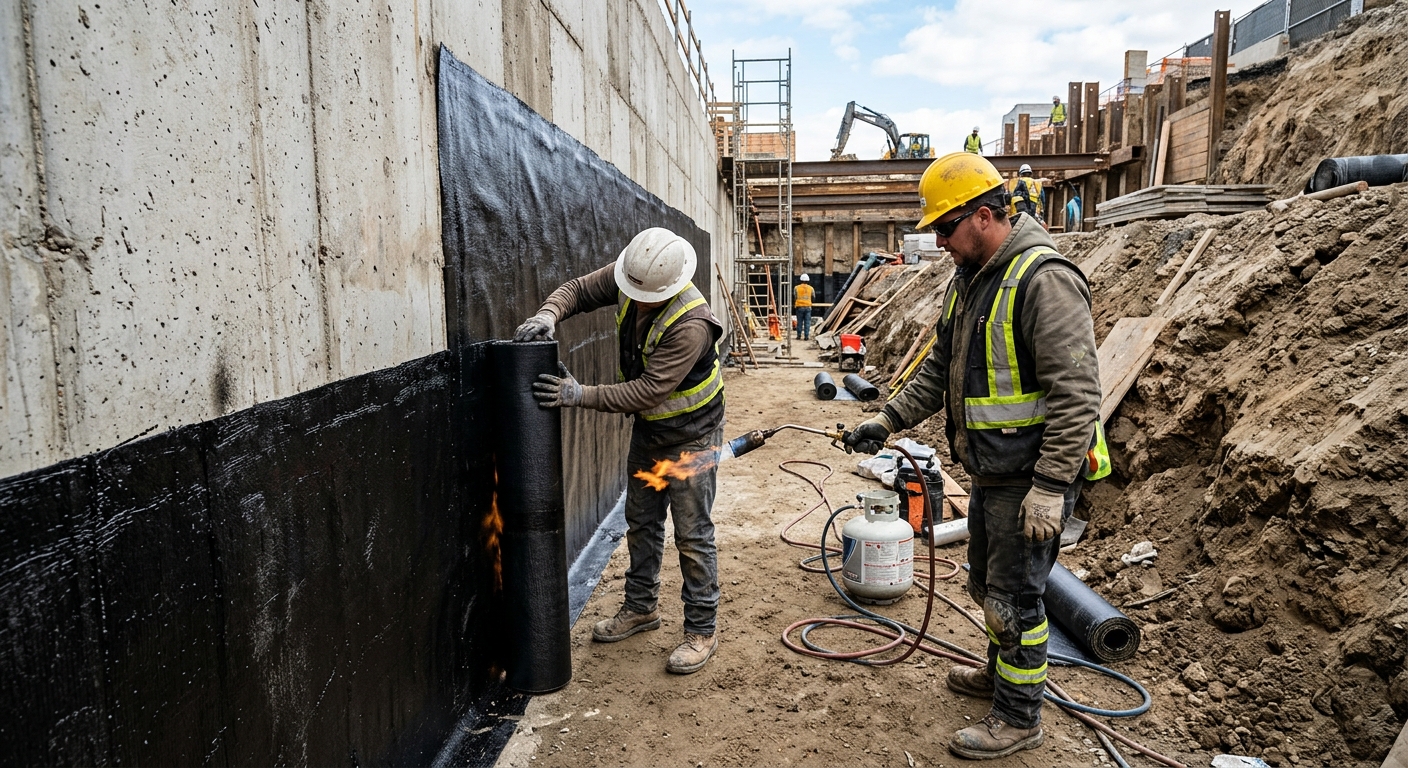
Basement waterproofing options and costs in Barrie
Barrie homeowners usually start by asking the same question: what will stop the water, not just manage it? In Barrie’s housing stock—where about 28.9% of homes were built before 1981—failed or aging membranes and corroded original weeping tile are more common, especially when freeze-thaw stresses existing foundation joints and cracks. That timing matters because older homes are also more likely to have workmanship gaps from earlier waterproofing standards and to need additional repairs before sealing.
In the Kitchener–Waterloo–Barrie corridor, pricing is shaped by soil and water movement. Clay-heavy ground can hold water and increase hydrostatic pressure, so exterior excavation and drainage tile replacements tend to cost more—but they’re also the longest-lasting option when there’s active seepage along the perimeter. Interior systems cost less upfront and can be a better fit when excavation is constrained by a finished yard, driveways, or landscaping. Contractor availability is also practical here: as demand rises in older neighbourhoods, schedules tighten and mobilization and disposal costs can affect your final quote.
In Barrie, this trade is especially in demand in established areas like the south-end near Innisfil Beach Road and Mapleview Drive, where many homes sit on mature lots and drainage issues show up during spring melt. Next, use the table below to compare the most common approaches and the typical disruption, durability, and price bands.
| Method |
What It Addresses |
Disruption Level |
Durability |
Price Range |
| Exterior excavation + new membrane + drainage tile |
Hydrostatic pressure at the foundation perimeter; replaces failed weeping tile and re-establishes site drainage |
High (excavation, removal, restoration of landscaping) |
High (typically longest-lasting when access and backfill are done correctly) |
$7,000–$15,000 |
| Interior perimeter drain channel + sump pit |
Water after it enters; reduces seepage and keeps walls drier |
Medium (interior cutting, possible flooring removal) |
Medium-to-High (depends on sump maintenance and wall condition) |
$6,000–$20,000 |
| Foundation crack injection (epoxy or polyurethane) |
Stops specific crack leakage; supports wall stability when appropriate |
Low-to-Medium (localized drilling and patching) |
Medium-to-High (epoxy if crack is stable; polyurethane if active) |
$1,200–$3,000 |
| Sump pump installation (primary + battery backup) |
Continuous removal during heavy seepage; reduces risk during power interruptions |
Low-to-Medium (pit excavation and electrical work) |
Medium-to-High (backup improves resilience) |
$900–$3,600 |
| Window well drain installation |
Water intrusion around egress window wells and trapped runoff |
Medium (excavation around window area) |
Medium (good results when combined with proper grading and weeping tile) |
$1,000–$3,500 |
| Lot re-grading / downspout extension |
Redirects surface water away from foundation; reduces the load on drainage systems |
Low-to-Medium (yard work and small concrete adjustments) |
Low-to-Medium (best when surface water is the main driver) |
$800–$3,000 |
Prices are estimates only and vary by project scope, site access and material selection.
What affects the price of waterproofing in Barrie
In Barrie (and across the broader Kitchener–Waterloo–Barrie corridor), you can see quotes for the “same basement” that differ by 30–50% because waterproofing isn’t one product—it’s a response to how water is moving through your soil and foundation. One contractor may propose a full exterior system to correct the source, while another may design an interior perimeter drain and sump approach based on what they see inside during hydrostatic conditions. Both can be legitimate, but the scope, engineering assumptions, and site logistics change the price.
The three drivers that most separate regional costs from the national average are soil type, water table, and freeze-thaw cycles. Clay-heavy soils expand during freeze-thaw and can exert higher lateral pressure on foundation walls, which can widen existing cracks and turn “small seepage” into a recurring problem. High seasonal water levels and saturated soils increase sump run times and mean more robust drainage and discharge planning. By contrast, regions with consistently different rainfall patterns or drainage conditions can saturate backfill differently when drainage fails; in southern Ontario, spring melt is the moment homeowners usually notice the problem.
Concrete examples in Barrie: if your lot drains poorly toward the foundation, re-grading and downspout extensions may prevent costly excavation work—but if your original weeping tile is still in place and failed, exterior replacement typically moves you into the $7,000–$15,000 band. If excavation is limited by a paved driveway or finished lower level, an interior system and sump can still stabilize the situation, commonly landing in the $6,000–$20,000 range once flooring removal, interior drain channels, and discharge piping are included. Home age also matters: with many homes built before 1981, corroded drainage and older wall details can push jobs toward higher labour and repair intensity—sometimes hundreds to thousands more just to prepare the surface before sealing.
| Price Factor |
Why It Matters |
Cost Impact |
| Interior vs. exterior approach — interior is less disruptive but addresses symptoms |
Exterior corrects the water entry point; interior manages water after it enters |
Interior often starts lower, while exterior can add excavation and restoration labour |
| Foundation type — poured concrete vs. block vs. stone vs. ICF |
Crack behaviour and sealing method differ by wall system |
Block and older walls often need more detailed crack repair and interior drainage |
| Soil type — clay expands more than sand, adding pressure |
More pressure increases likelihood of leaks and repeat service needs |
May require stronger drainage and more thorough membrane/backfill specs |
| Crack type and length — hairline vs. structural horizontal cracks |
Active/structural cracks require different products and sometimes engineering |
Structural or long cracks increase materials, labour, and verification steps |
| Sump pump backup system — battery or water-powered backup needed |
Reduces risk during power interruptions during spring high-water |
Backup adds cost but can prevent major flooding events |
| Access — landscaping, decks, or driveways must be removed for exterior |
Excavation depth and equipment access affect the job’s logistics |
Removal and restoration can swing the price significantly |
| Weeping tile age — original tile (60+ years) may be completely failed |
When tile is failing, water can route differently around the foundation |
Replacing tile and correcting discharge routes increases excavation scope |
| Mould or efflorescence remediation required before sealing |
Sealers and membranes adhere best to clean, dry surfaces |
Remediation adds labour steps before waterproofing materials can be applied |
Permits & regulations in Ontario
In Ontario, some basement and foundation waterproofing-related work typically requires permits, while other parts often do not—so it’s smart to confirm what applies to your specific Barrie address before work begins. In general, foundation excavation, structural crack repair that could affect load paths, and changes to lot drainage are the types of activities that commonly trigger a building permit requirement. Where the work involves connecting a sump pump discharge to municipal sewer systems, municipal approvals are often required (for example, for discharging to storm or sanitary systems). Your contractor should be able to identify whether your scope needs a permit pull and who will manage it.
For structural crack repair—particularly horizontal cracks in block walls or cracks suggesting movement—an engineer’s assessment is often requested to determine whether underpinning, wall reinforcement, or other structural measures are required. Reputable contractors will include engineering support for structural repairs and should carry liability insurance and WSIB/WCB coverage for their workers.
Step-by-step, here’s how a homeowner can verify everything in Ontario:
- Ask the contractor for their Ontario business details and license/registration information (provide the quote reference number so you can match documents).
- Request a current certificate of insurance showing general liability and any required endorsements.
- Confirm WSIB/WCB coverage status with the contractor (ask for proof, not just verbal confirmation).
- Get the permit plan in writing: what is being permitted, which drawings are submitted, and who pulls the permit.
- If structural repair is involved, ask for the engineer’s letter/assessment and whether repairs align with those recommendations.
- When possible, request a clearance letter or proof of permit closure after completion.
Interior vs exterior waterproofing — what does Barrie need?
Exterior waterproofing and interior waterproofing solve different problems. Exterior systems—full excavation, new membrane, new drainage tile, and controlled backfill—aim to stop water at the foundation perimeter. That usually creates the most durable outcome, but it’s the most disruptive and expensive because excavation is invasive and site restoration is part of the package. Interior systems—perimeter drain channel, sump pit, and sump pump—manage water after it enters the basement. They are often less invasive, but they don’t remove hydrostatic pressure acting on the wall itself, so they work best when interior drains are properly designed for the seepage pattern.
In Barrie, this distinction matters because freeze-thaw can worsen existing crack pathways and because many homes were built with older drainage concepts. Poured concrete walls often seal well with the right crack injection approach when the crack is stable; block foundations frequently need interior drainage as a practical complement because moisture pathways can be harder to fully “seal out” from the interior perspective. That’s also why homeowners who see recurring spring seepage often end up discussing both crack repair and drainage upgrades together.
Sump pump backup is a sensible consideration in Ontario because spring high-water events can coincide with storms and localized outages. Adding a battery backup can help the system keep removing water when power is interrupted, reducing the risk of a minor leak becoming a major basement problem.
As a dollar example, if you have active seepage at the perimeter and your access is straightforward, exterior waterproofing often sits in the $7,000–$15,000 range. When excavation is impractical and the issue is primarily intermittent seepage, an interior perimeter drain and sump approach may be less disruptive, commonly falling into the $6,000–$20,000 band—especially when flooring removal, drain channel fabrication, and pump discharge routing are required.
| Method |
Best For |
Addresses Source? |
Disruption |
Lifespan |
Price Band |
| Full exterior excavation + membrane |
Perimeter seepage driven by high water pressure and failed exterior drainage |
Yes (controls water entry at the foundation) |
High (excavate and restore landscaping/paths) |
Long (when drainage tile and backfill are installed correctly) |
$7,000–$15,000 |
| Interior French drain + sump system |
Basement leaks where excavation is restricted or when interior water management is the priority |
No (captures water after it enters) |
Medium (floor/wall openings at perimeter) |
Good-to-Long (depends on sump capacity and maintenance) |
$6,000–$20,000 |
| Crack injection — epoxy (structural) |
Stable cracks where the wall is not actively moving |
Partial (seals the crack pathway, not the surrounding water pressure) |
Low-to-Medium |
Medium-to-Long (proper surface prep and stable crack are key) |
$1,200–$3,000 |
| Crack injection — polyurethane (active leak) |
Active seepage cracks that show moisture or water discharge |
Partial (seals active pathways and reduces seepage) |
Low-to-Medium |
Medium (often paired with drainage to handle hydrostatic pressure) |
$1,200–$3,000 |
| Interior drain channel only (no sump) |
Light seepage where water volume can be managed without active pumping |
No (still manages water after it enters) |
Medium (cutting and drainage channel installation) |
Short-to-Medium (risk increases in heavy spring periods) |
$5,000–$12,000 |
| Re-grading + downspout extensions |
Surface-water driven issues (gutters dumping near foundation, ponding) |
Yes (reduces water load at the source) |
Low-to-Medium |
Medium (depends on ongoing maintenance and yard drainage) |
$800–$3,000 |
How to choose a waterproofing contractor in Barrie
Choosing a waterproofing contractor in Barrie is mostly about verification and clarity. First, confirm Ontario coverage: ask for their business registration details, proof of liability insurance, and confirmation of WSIB/WCB coverage. To check, request the certificate of insurance from the contractor and verify it’s current and matches the legal entity name on the quote; then ask for proof of WSIB/WCB clearance/coverage status. For licensing, homeowners can also cross-check the contractor’s publicly listed business information before signing anything—don’t rely on a brochure.
Next, get 2–3 itemised written quotes that show labour and materials separately (not just a lump sum). Your quote should list whether disposal is included, whether the contractor will pull permits (if required), and exactly what will be removed and restored—especially for exterior excavation where landscaping and hardscaping can change costs quickly. Also request a clear description of exclusions: for example, what’s not included if unexpected saturated soils or additional footing repairs are discovered.
Warranty matters. Look for both a workmanship warranty and a product/manufacturer warranty, and ask whether coverage is transferable if you sell the home. Confirm the payment schedule too: never pay more than 10–15% upfront, and use a holdback until completion and final walk-through. Finally, get a written start date and an estimated completion timeline so you can plan around weather and material lead times.
- Ask for liability insurance and WSIB/WCB proof before signing.
- Verify the contractor’s quote includes permit responsibilities (who pulls, who pays).
- Require an itemised labour + materials breakdown, not just totals.
- Confirm site access assumptions (deck, driveway, fences) are listed.
- Ensure excavation depth, drainage tile type, and membrane system are specified.
- For interior work, confirm sump pit size, discharge pipe routing, and pump specs.
- Ask whether disposal/soil hauling is included.
- Request mould/efflorescence remediation steps if needed before sealing.
- Clarify what patching and restoration includes (flooring, drywall, paint).
- Get warranty terms in writing (workmanship length + product terms).
- Use a payment schedule with minimal upfront deposit and a holdback.
- Ask for a final inspection checklist and post-job documentation.
Red flags to watch in Barrie: vague scopes (“we’ll waterproof the basement”), quotes that omit excavation/restoration details, no written permit plan where needed, warranties that cover materials but not workmanship, and contractors who refuse to provide insurance/WSIB/WCB documentation or a written schedule.
Frequently asked questions — waterproofing in Barrie
Interior vs exterior waterproofing — which is better?
In Barrie, “better” depends on what’s driving the water. Exterior waterproofing is usually the most durable because it addresses the source—new membrane and drainage tile installed at the perimeter—especially when older weeping tile has failed. That’s typically where you see the $7,000–$15,000 pricing band for straightforward access and standard scope. Interior waterproofing can be the better choice when excavation is constrained or when you’re dealing with recurring seepage that’s best captured after it enters. Interior systems often fall into the $6,000–$20,000 band once perimeter drainage, sump work, and discharge routing are included. The right decision follows your foundation type, crack behaviour, and the pattern of water during spring melt. (Statistics Canada, 2021 Census)
Why is my basement leaking in Barrie?
Most Barrie leaks come from water moving through saturated soils and getting directed toward foundation walls—then showing up when freeze-thaw and spring melt increase pressure. Homes built before 1981 are more likely to have older drainage systems and perimeter details that don’t perform as they once did, including original weeping tile that may be corroded or blocked (Statistics Canada, 2021 Census). Common triggers include downspouts discharging near the foundation, poor lot grading that creates ponding, and cracks that act like “channels” during high water. Interior-only fixes can reduce the water you see, but if hydrostatic pressure is the main driver, you may still need drainage improvements to stop recurrence. A good contractor will document seepage points and recommend the approach based on how water enters, not just what’s visible on the walls.
How do I know if a foundation crack is serious?
A crack is more concerning when it’s horizontal (especially on block walls), is widening over time, or shows signs of active leakage (wetness, dampness, or water discharge after heavy rain or snowmelt). In Barrie’s climate, freeze-thaw can expand and contract pathways, so cracks that were “hairline” can start admitting water during spring high-water periods. Also watch for cracks paired with new interior drainage issues—like recurring damp floors near the perimeter or efflorescence (white mineral deposits). If you have structural concerns, Ontario practice often calls for an engineer’s assessment before structural repair or any underpinning discussions. A contractor should also confirm crack stability before recommending epoxy injection vs polyurethane injection, because the wrong product on an active crack can fail.
How much does foundation crack repair cost in Barrie?
Foundation crack repair cost in Barrie commonly falls into the $1,200–$3,000 band, depending on crack type, length, and whether it’s actively leaking. Epoxy injection is typically used for stable cracks and is priced differently than polyurethane for active leaks, but your total is driven by how many ports and how much material prep is required. If remediation is needed due to mould or efflorescence before injection, costs can creep upward. If the crack is part of a larger water-entry problem (for example, perimeter seepage driven by high hydrostatic pressure), contractors may recommend combining crack injection with drainage work rather than relying on injection alone. That’s where you may see your project shift toward an interior system or exterior approach depending on site access.
Do I need a sump pump in Barrie?
You may need a sump pump when water is entering in a way that can’t be safely managed by passive drainage alone—especially during spring melt when soils are saturated. In Barrie, clay-heavy ground and freeze-thaw can increase seepage volumes, which means a perimeter drain that relies only on gravity may be overwhelmed. When the scope calls for active removal, sump pump installation commonly falls into the $900–$3,600 range, and adding battery backup is a practical safeguard for power disruptions. The key is design: pump sizing, discharge routing, and whether the pump includes backup depend on your seepage pattern and your foundation layout. A good contractor will assess where water lands, not just where it stains. If you already have a sump, the question becomes whether it’s sized correctly and whether backup is required for your risk tolerance.
How does Barrie's soil affect my foundation?
In Barrie, soil behaviour matters because clay-heavy ground tends to hold water and expand during freeze-thaw cycles, which can increase lateral pressure on foundation walls. That pressure can widen existing cracks and turn minor seepage into persistent dampness, especially in basements that experience recurring spring intrusions. When water movement is the driver, a crack repair alone may not be enough because hydrostatic pressure continues to push water into any pathway. Conversely, if your leak is mostly tied to surface water and poor downspout discharge, grading and downspout extensions can reduce the load at the source. Contractors often determine soil impact by reviewing the drainage situation, checking for signs of seepage timing (melting vs steady rain), and assessing the condition and likely age of weeping tile. (Statistics Canada, 2021 Census)