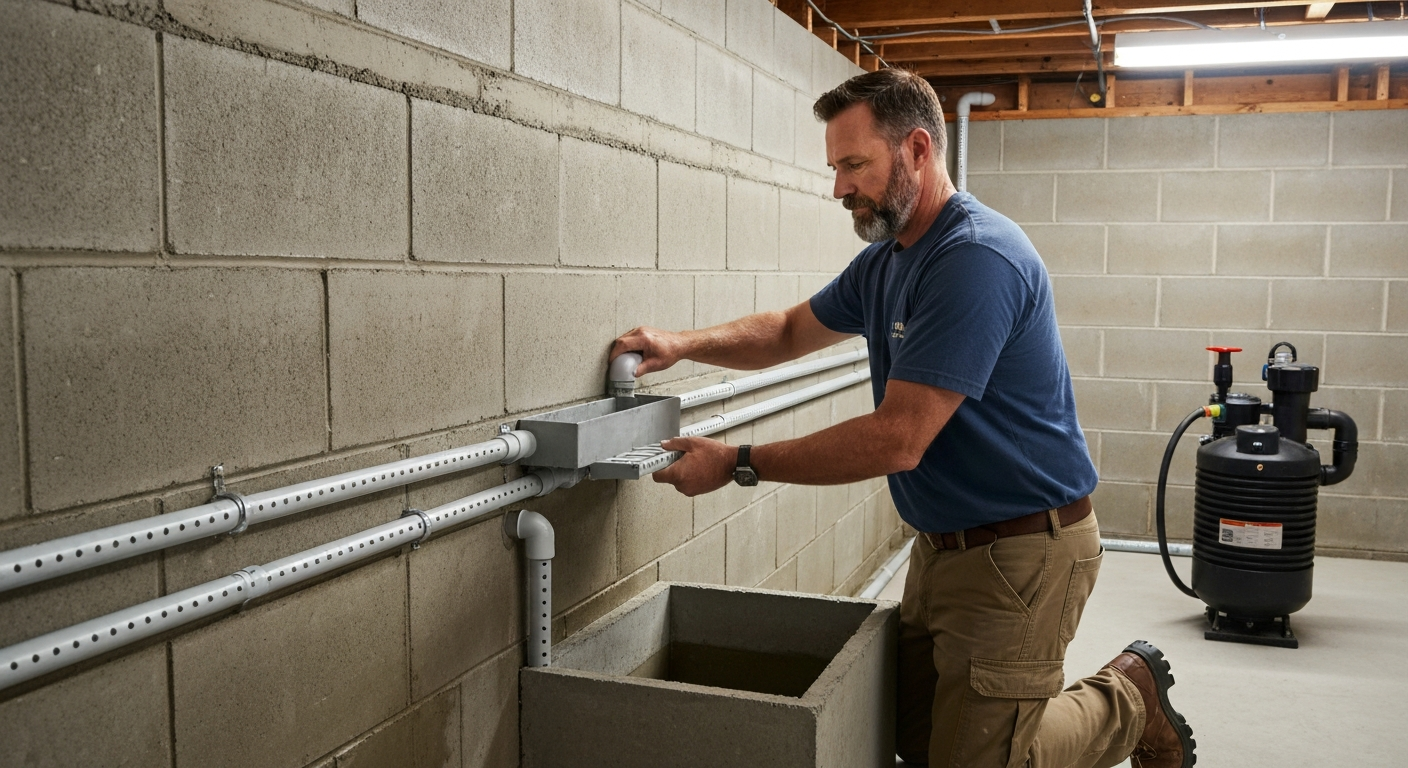
Basement waterproofing options and costs in East End-Danforth
In East End-Danforth, homeowners typically start shopping for basement waterproofing after they notice damp corners, musty odours, efflorescence, or water after spring rain and snowmelt. With a local population of 21,381 (Statistics Canada, 2021 Census), the neighbourhood’s steady housing turnover and long-lived home stock mean there’s consistent demand for both interior and exterior water management solutions. You’ll often see the work triggered in older properties—particularly in many 1960–1970s builds that used earlier drainage approaches—where original weeping tile or early plastic drains can now be clogged, collapsed, or disconnected.
Toronto-area conditions drive the prices and scopes you’ll see. East End-Danforth sits on mixed glacial till and clay soils, and many pockets of dense clay hold water against foundations. When saturated, that soil expands during freeze–thaw cycles and increases lateral pressure, widening small cracks over a few winters. At the same time, high local water table conditions can raise sump pump run times and increase the amount of drainage work needed to keep basements dry. In practice, that means contractors in areas near Danforth or busy side streets often quote higher labour and disposal costs because access can be tight—especially where decks, porches, or additions sit close to foundation walls.
To help you compare apples-to-apples, use the table below as a quick guide to common methods, what they address, and realistic East End-Danforth cost ranges—then we’ll break down what drives those numbers up or down.
| Method |
What It Addresses |
Disruption Level |
Durability |
Price Range |
| Exterior excavation + new membrane + drainage tile |
Active water at wall/foundation, lateral soil pressure, failing drainage around the perimeter |
High (excavation, backfill, landscape restoration) |
Long-term (often 20+ years with correct installation) |
$7,000–$25,000 |
| Interior perimeter drain channel + sump pit |
Water that has already entered, chronic dampness, minor seepage along the perimeter |
Medium (breakout at perimeter, limited removal) |
Long-term (typically 15+ years if sump and discharge are reliable) |
$3,500–$15,000 |
| Foundation crack injection (epoxy or polyurethane) |
Isolated cracks causing seepage or moisture tracks |
Low to Medium (drilling/patching inside) |
Good for targeted cracks (often 10–20+ years depending on crack type) |
$600–$3,000 |
| Sump pump installation (primary + battery backup) |
Relief of water levels when soil/water table pushes in, reduces flooding risk during storms |
Low to Medium (pit, wiring/plumbing, discharge adjustments) |
High reliability when backed up (service life 10–12+ years for pump; depends on environment) |
$800–$3,500 |
| Window well drain installation |
Water pooling at egress windows, damp floors near window wells |
Low to Medium (excavate/modify window well area) |
Good (often 8–15+ years if discharged correctly) |
$1,200–$5,000 |
| Lot re-grading / downspout extension |
Roof runoff and surface water management that feeds foundation perimeter wet zones |
Low to Medium (soil reshaping, small hardscape changes) |
Moderate (needs maintenance as landscaping settles) |
$1,000–$7,500 |
Prices are estimates only and vary by project scope, site access and material selection.
What affects the price of waterproofing in East End-Danforth
Two homeowners in East End-Danforth can receive quotes for “the same” basement leak and still see a 30–50% difference once the contractor has measured the conditions and confirmed the source of water. Toronto pricing varies because labour availability is strong but competition also means crews price based on risk: clay-heavy soils, access constraints, and the real condition of buried drainage behind older additions. That’s why a national-average “dry basement” number rarely matches what you’ll pay here.
In Ontario, the three biggest cost drivers that separate East End-Danforth from the national average are soil type, water table, and freeze–thaw. Clay expands when saturated during winter freeze–thaw cycles, increasing lateral pressure against foundation walls and accelerating crack activity. In many parts of the Toronto region, a higher water table can mean more drainage capacity is required and sump pumps run more often—so your discharge route, pump selection, and pit sizing can change the scope quickly. In older housing stock (including many post-war basements), the frequency of failing weeping tile is higher, which means interior-only solutions may become a stopgap unless we correct the source water management. Heavy remediation also tends to show up after interior dampness leads to efflorescence, which can require cleaning and drying before any sealing system is applied.
Concrete examples from local jobs: (1) a front-yard deck or shared driveway that requires partial removal can add days of labour to exterior excavation, pushing exterior excavation work toward the upper end of the $7,000–$25,000 band; (2) a poured-concrete wall with a small, isolated vertical crack often supports targeted crack injection, keeping costs near the $600–$3,000 range; (3) a blocked perimeter drain line behind a 1960–1980s foundation can turn an “interior sump” quote into a combined interior drain plus sump and pump-backup plan closer to $3,500–$15,000.
| Price Factor |
Why It Matters |
Cost Impact |
| Interior vs. exterior approach — interior is less disruptive but addresses symptoms |
Interior systems manage water after it enters; exterior targets source water and lateral pressure |
Interior may be 30–70% cheaper, but may not stop ongoing pressure on the wall |
| Foundation type — poured concrete vs. block vs. stone vs. ICF |
Crack behaviour and sealing methods differ by wall system |
Block/older masonry often needs drainage plus more detailed sealing steps |
| Soil type — clay expands more than sand, adding pressure |
Saturated clay increases hydrostatic and lateral pressure during winter cycles |
More robust membranes/drainage or higher pump capacity can be required |
| Crack type and length — hairline vs. structural horizontal cracks |
Structural cracks may indicate movement; injection is not a stand-alone fix |
Structural assessment or additional repairs can add cost quickly |
| Sump pump backup system — battery or water-powered backup needed |
Backup reduces flood risk during spring outages and power interruptions |
Adds cost but can prevent costly cleanup and drywall replacement |
| Access — landscaping, decks, or driveways must be removed for exterior |
Urban lots often restrict excavation and disposal routes |
Can move exterior projects toward the higher end of the $7,000–$25,000 band |
| Weeping tile age — original tile (60+ years) may be completely failed |
Collapsed or clogged drainage changes how much water is feeding the perimeter |
May require rework of drainage scope (interior and/or exterior) |
| Mould or efflorescence remediation required before sealing |
Moisture contamination can prevent proper adhesion and coating performance |
Adds pre-treatment steps and labour before waterproofing |
Permits & regulations in Ontario
In Ontario, homeowners should expect that foundation excavation, structural crack repair, and changes to lot drainage often require a building permit. Where work involves structural elements—such as addressing significant horizontal cracks in masonry/block foundation walls—permits and an engineer’s review are commonly required to confirm the right repair approach. Sump pump installations that connect into municipal systems (storm or sanitary) or require connection approvals typically involve municipal approval as well. Even when a contractor handles the paperwork, you should confirm what’s included in the quote.
Here’s the practical way to think about “what usually needs a permit” versus “what typically doesn’t” in Ontario: exterior excavation around a foundation and new drainage work often triggers permit requirements; structural crack repairs and any underpinning-related scope usually require additional approvals; major changes to downspouts and surface grading may require review if they affect drainage patterns near property lines. In contrast, purely cosmetic interior sealing of minor damp patches without structural or drainage changes is often handled without a permit—but the moment we’re drilling for injection in structural cracks, altering discharge routes, or reworking perimeter drainage, assume permits are involved.
To verify your contractor in East End-Danforth, ask for (1) proof of Ontario licensing where applicable for the trades they’re performing, (2) a current certificate of liability insurance, and (3) WSIB/WCB clearance. You can check clearance letters directly through the insurer/board and confirm COI dates and coverage amounts. For structural scopes, also confirm they have engineering support and will provide documentation for permit submissions when required.
Interior vs exterior waterproofing — what does East End-Danforth need?
The main difference between interior and exterior waterproofing is where the solution stops the water. Exterior waterproofing—full excavation, new membrane, and new drainage tile—targets the source of water entry by reducing hydrostatic pressure at the foundation wall. It’s the most permanent approach, but it costs more and requires significant landscape disruption. Interior waterproofing—perimeter drain channel, sump pit, and sump pump—manages water after it enters the basement, collecting it and pumping it out. That can be less invasive, faster, and less disruptive, but it does not stop the wall from being under pressure from saturated clay and freeze–thaw cycles.
In East End-Danforth, where glacial till and clay pockets can hold water against foundations, exterior work often makes the biggest difference when you’re dealing with chronic seepage, multiple wet spots, or evidence that the perimeter drainage has failed (collapsed weeping tile or disconnected lines). For poured concrete walls, targeted crack injection with an appropriate epoxy system can perform very well when cracks are isolated and not actively moving. For block foundations, interior drainage is often a practical complement because water can track through and around masonry/block joints even when the concrete face looks “fine.”
Power outages are also a reality for spring conditions—storms and melting snow can coincide with utility interruptions—so sump pump backup systems are worth considering when you’re relying on interior drainage. For example, if exterior excavation is quoted at around $7,000–$25,000 but your leak is confined to one crack line and intermittent seepage, crack injection may keep costs near $600–$3,000. The savings aren’t justified if you’re ignoring ongoing lateral pressure; that’s when interior-only work becomes a recurring maintenance cycle.
| Method |
Best For |
Addresses Source? |
Disruption |
Lifespan |
Price Band |
| Full exterior excavation + membrane |
Chronic seepage, multiple wet zones, confirmed perimeter drainage failure |
Yes (source of water entry and lateral pressure) |
High (excavation and restoration) |
20+ years (often long-term with correct detailing) |
$7,000–$25,000 |
| Interior French drain + sump system |
Water already entering, damp perimeter floors, periodic flooding |
No (manages water after entry) |
Medium (perimeter floor work and pit) |
15+ years with reliable pump and discharge |
$3,500–$15,000 |
| Crack injection — epoxy (structural) |
Non-active or stable cracks with minimal seepage |
Partially (stops a specific leak pathway) |
Low to Medium (drilling/patching) |
10–20+ years (depends on crack stability) |
$600–$3,000 |
| Crack injection — polyurethane (active leak) |
Cracks with active seepage, pressure-driven moisture |
Partially (stops active pathway) |
Low to Medium (drilling/patching) |
10–20 years (best when matched to crack behaviour) |
$600–$3,000 |
| Interior drain channel only (no sump) |
Light dampness, low hydrostatic conditions, manageable drainage |
No (relies on gravity/controlled conditions) |
Medium (floor perimeter work) |
Variable (depends on water level and discharge) |
$2,500–$9,500 |
| Re-grading + downspout extensions |
Surface water issues feeding the foundation, clogged downspouts, poor slope |
Yes for roof/surface water contribution |
Low to Medium (soil/hardscape changes) |
Moderate (maintenance required as landscaping settles) |
$1,000–$7,500 |
How to choose a waterproofing contractor in East End-Danforth
Start by verifying the basics with every contractor bidding your East End-Danforth basement. Ask for their Ontario business details and proof of liability insurance (certificate of insurance, with coverage that matches the project scope). Confirm WSIB/WCB clearance through a current clearance letter or verified proof—don’t accept outdated paperwork. If the scope includes structural crack repair, ask who provides the engineering support and whether they’ll support permit submissions if required. For waterproofing work that involves electrical components for sump pumps, make sure the contractor clarifies how they comply with electrical safety requirements in Ontario.
Next, request 2–3 itemised written quotes that break labour and materials apart. A good quote lists items such as excavation limits, membrane type, drainage tile specifications, pipe locations, sump pit dimensions, discharge route, concrete reinstatement, and any disposal fees. Read the exclusions section carefully: does the price include permit pull (if required), site protection, mold remediation/drying, and disposal of removed materials? Also ask what happens if they uncover failed drainage deeper than expected.
For warranty, insist on two layers: a workmanship warranty length and a product/manufacturer warranty. Confirm whether the warranty is transferable if you sell your home—this matters for resale. For payment, avoid large upfront payments; a common safe approach is no more than 10–15% deposit, with the remainder tied to milestones and final completion. Get a written start date window and a realistic completion estimate.
- Ask for proof of liability insurance and WSIB/WCB clearance before signing.
- Require an itemised quote (labour + materials), not a single lump sum.
- Confirm whether permit pull is included or who is responsible for it.
- Check what’s included for disposal, backfill, and landscape restoration.
- Ask for the exact drainage method (pipe size, slope, filter fabric, discharge plan).
- Request a written plan for how they diagnose the source (water table, crack mapping, drainage status).
- Confirm sump discharge route and whether backup power is included.
- Verify warranty length for workmanship and product, and whether it transfers.
- Insist on a payment schedule with a holdback until completion and walkthrough.
- Get a start date estimate and weather/access assumptions in writing.
- Ask about how they protect floors/walls from dust and how they clean up after.
- Make sure all measurements and boundaries are documented in the contract.
In East End-Danforth, red flags include contractors who won’t map cracks and moisture patterns before quoting, quotes that omit discharge details for sump pumps, no written warranty terms, refusing to provide insurance/WSIB/WCB documentation, or promising “one-size-fits-all” exterior sealing without assessing whether drainage tile has failed behind the foundation.
Frequently asked questions — waterproofing in East End-Danforth
What causes foundation cracks in East End-Danforth?
In East End-Danforth, foundation cracks are most often linked to soil movement and moisture cycling. Mixed glacial till and clay pockets can hold water against the foundation; when the soil saturates, freeze–thaw cycles can expand it and increase lateral pressure on foundation walls. That pressure can widen hairline cracks over a few winters and turn them into active seepage pathways through cold joints, tie holes, and areas where original drainage no longer performs. In older basements—common across the Toronto area—failing weeping tile or partially collapsed drains can keep water trapped against the perimeter, increasing the odds of crack activity. If you’re seeing horizontal cracks, step cracks in block walls, or recurring leakage after heavy rain, that’s a sign to get a diagnosis rather than relying on cosmetic patching.
How do I compare waterproofing quotes?
When comparing quotes in East End-Danforth, insist on itemised breakdowns and a clear scope—otherwise you’re comparing different jobs under the same label. Start by matching the proposed method to the symptoms: if water is coming in near multiple corners and you have dampness after spring melt, an interior-only perimeter drain may be a partial fix, while exterior excavation + membrane and drainage tile targets the source. Ask each contractor what they’re including for excavation limits, membrane system, drainage tile details, discharge route, and disposal. Confirm whether permits are required and included. Use the local price bands as a reality check: for example, foundation crack injection is often in the $600–$3,000 range, while full exterior excavation typically sits in the $7,000–$25,000 band. If a quote is far outside that without a documented reason, ask questions.
How long does basement waterproofing take in East End-Danforth?
Typical timelines in East End-Danforth depend on access and whether you’re treating the source from the outside or managing water inside. Smaller scopes—like targeted crack injection—often take about 1–3 days on site (depending on crack mapping, drilling, curing, and patching). Interior perimeter drain + sump systems usually require more time because floors and perimeter sections must be opened, a pit and pump components installed, and concrete reinstated; plan for roughly 3–7 working days, plus drying/curing times. Exterior excavation is longest because it involves excavation around the foundation, membrane and drainage installation, then backfill and restoration. Weather matters too: winter freeze can limit exterior work, and summer rains can affect trench conditions. A good contractor will provide a start date window and completion estimate in writing.
What is a weeping tile and does my East End-Danforth home have one?
Weeping tile is the perimeter drainage system installed around many older foundations to collect groundwater and direct it away (historically to a sump or discharge point). In Toronto-area homes built around mid-century and through parts of the post-war period, original tile drains or early plastic drains are common. Your East End-Danforth home may have one if the basement floor shows signs of an older perimeter channel, if there’s an existing drain line along the perimeter, or if the previous owner mentions a sump or drain. However, weeping tiles can fail: they may clog with fine silt, collapse, or get disconnected after repairs or renovations. If you see interior dampness, efflorescence, or recurring water near wall seams, the most reliable approach is to have a contractor inspect whether drainage is functioning before you decide between interior-only or exterior source correction.
Can I waterproof my basement in winter in East End-Danforth?
Yes, some basement waterproofing work can be done in winter in Ontario, and East End-Danforth homeowners do see projects scheduled during colder months. Interior solutions like crack injection (once surfaces can be cleaned and kept at workable temperatures) and interior drain channel work can often proceed. However, exterior excavation and membrane work are more challenging in winter because frozen ground limits digging and can make correct membrane detailing and backfilling difficult. Also, if the basement is actively flooding, you need to control moisture quickly so you can safely install materials and allow curing. If you’re relying on a sump pump, winter readiness is especially important—freeze protection for discharge lines and reliable pump operation can reduce flood risk. A contractor should assess site conditions, confirm material temperature requirements, and explain any limitations for curing and restoration.
What is the difference between waterproofing and damp-proofing?
In Ontario, “waterproofing” typically means a system designed to resist water entry under hydrostatic pressure—especially when soil and water table conditions push moisture toward foundation walls. “Damp-proofing” is usually less robust and is aimed at controlling minor moisture or seepage without expecting significant water pressure. In East End-Danforth, where clay soils can expand during freeze–thaw and where high water levels can increase lateral pressure, damp-proofing alone often fails to address the real cause. That’s why the correct scope matters: a full exterior excavation + membrane and drainage tile is meant to stop the source of water entry, while interior drainage and sump systems collect and manage water that gets in. If you’re choosing between options and you’re quoted, for example, crack injection at about $600–$3,000 versus exterior excavation in the $7,000–$25,000 band, the decision should follow the leak pathway—not just the lowest price.