Basement waterproofing options and costs in Quinte West
Basement waterproofing in Quinte West usually starts with a simple question: where is the water getting in, and what is pushing it there? In our area, many homes are older—61.5% of dwellings were built before 1981—which often means the original tar-and-paper style waterproofing has aged, and original weeping tile systems may be clogged, cracked, or simply missing portions. With 74.6% of households in Quinte West owning their homes (Statistics Canada, 2021 Census), homeowners tend to invest in long-term fixes rather than repeated clean-ups of damp basements.
The Kingston–Pembroke economic region drives costs mainly through site conditions. Clay-rich soils common across Eastern Ontario can hold water and expand during freeze-thaw, increasing lateral pressure against foundation walls. At the same time, contractors see wide price variation because some projects require full exterior excavation (more labour, more trucking, more shoring and re-grading), while others can manage water after it enters using interior drainage and sump systems. Availability can also affect timelines in high-demand pockets—especially around Belleville Road / Trenton Road corridors and the older neighbourhoods near downtown—where access constraints and mature landscaping are common.
To help you compare apples-to-apples, below is a menu of the most common waterproofing approaches we see in Quinte West, with typical disruption and realistic cost bands. Then you can line those options up with your foundation type and your water-control goal.
| Method |
What It Addresses |
Disruption Level |
Durability |
Price Range |
| Exterior excavation + new membrane + drainage tile |
Hydrostatic pressure and bulk water entry through walls; restores a perimeter drainage route |
High (excavation, landscaping reinstatement) |
Long-term (often the most complete source control) |
$12,000–$25,000 |
| Interior perimeter drain channel + sump pit |
Water that gets past the wall; reduces seepage and keeps floors drier |
Medium (cutting, patching, sump location) |
Good (depends on sealing strategy) |
$4,000–$10,000 |
| Foundation crack injection (epoxy or polyurethane) |
Cracks in poured concrete or block that leak or connect to active seepage paths |
Low to medium (surface prep and drilling/patching) |
Medium to long-term (type depends on crack behaviour) |
$800–$1,800 |
| Sump pump installation (primary + battery backup) |
Prevents basement flooding during high water events and power interruptions |
Low to medium (pit, discharge line, electrical tie-in) |
Long-term if paired with proper drainage and discharge routing |
$900–$2,200 |
| Window well drain installation |
Water infiltration at egress windows; damp walls and pooling near openings |
Low (localized excavation and rework around window) |
Medium to long-term (depends on slope and weep paths) |
$1,100–$2,900 |
| Lot re-grading / downspout extension |
Stops roof runoff and surface water from reaching foundation; reduces hydrostatic loading |
Low to medium (small excavation, grading, minor landscaping) |
Medium (best as a complement to drainage) |
$2,000–$6,500 |
Prices are estimates only and vary by project scope, site access and material selection.
What affects the price of waterproofing in Quinte West
In the Kingston–Pembroke economic region, two homeowners can get pricing that differs by 30–50% for what sounds like “the same waterproofing” because the quote is built around soil behaviour, how water actually travels to the foundation, and how much excavation is required. National averages also understate local extremes because Eastern Ontario’s freeze-thaw cycles and clay-heavy soils can intensify foundation movement and keep basements under pressure longer than in milder regions.
Three drivers separate regional costs from the national average: (1) soil type, (2) water table conditions, and (3) freeze-thaw. Clay-rich soils expand when saturated, which increases lateral pressure on foundation walls and can worsen cracks over time—especially if original waterproofing systems have aged. Where water levels stay high or fluctuate quickly, sump pump run times rise and drainage work needs to be more complete. In homes where weeping tile systems are failing (common in older housing stock), water finds the first weak point: tie holes, floor-wall joints, or hairline cracks that later become “active” leaks.
Concrete examples we see in Quinte West: if a basement shows floor joint seepage after spring thaw, interior perimeter drainage and a properly sized sump often starts in the $4,000–$10,000 range, while a full exterior dig can land in the $12,000–$25,000 band when the membrane and perimeter drainage must be rebuilt. Another cost mover is foundation complexity—homes with block walls and multiple window wells frequently benefit from targeted interior drainage plus window well drains, rather than jumping straight to exterior excavation. Conversely, if the issue is mainly surface runoff (downspouts discharging too close to the wall), re-grading and extensions can be a lower-cost first step.
Bottom line: your foundation age and local water behaviour determine whether you’re fixing symptoms indoors, controlling water at the source outdoors, or combining both.
| Price Factor |
Why It Matters |
Cost Impact |
| Interior vs. exterior approach — interior is less disruptive but addresses symptoms |
Interior systems manage water after it enters; exterior reduces hydrostatic pressure at the source |
Interior often lowers upfront cost by thousands; exterior can be 2–4x due to excavation |
| Foundation type — poured concrete vs. block vs. stone vs. ICF |
Different materials crack and leak differently; repair method must match the substrate |
Block and stone often require added drainage to compensate for joints and mortar paths |
| Soil type — clay expands more than sand, adding pressure |
Clay holds more water, then expands during freeze-thaw, stressing walls and joints |
More pressure can mean more complete drainage work and more crack sealing |
| Crack type and length — hairline vs. structural horizontal cracks |
Hairline cracks may be sealed effectively; horizontal or structural cracks may indicate movement |
Structural cracks can add engineering and heavier repairs; horizontal cracks can push cost upward |
| Sump pump backup system — battery or water-powered backup needed |
Backups protect against power interruptions during spring wet periods |
Adds cost but reduces flood risk; typically increases the sump scope by hundreds to low thousands |
| Access — landscaping, decks, or driveways must be removed for exterior |
Excavation footprint and reinstatement directly affect labour and restoration materials |
Tight access can add excavation time and replacement costs |
| Weeping tile age — original tile (60+ years) may be completely failed |
Older systems often collapse or clog, leaving the perimeter unable to drain |
May require replacement, rerouting, and deeper exterior work |
| Mould or efflorescence remediation required before sealing |
Sealers don’t bond well over active salts/mould; walls need cleaning and proper dryness |
Can add prep labour and drying time before injection or membrane work |
Permits & regulations in Ontario
In Ontario, foundation excavation, structural crack repair, and changes to lot drainage typically require a building permit. If the work affects structural elements (for example, major horizontal cracking in block walls that may indicate movement), permits are usually expected because the scope can cross into structural integrity rather than cosmetic sealing. Sump pump installations that connect to the storm or sanitary sewer generally need municipal approval for the discharge method and direction. For structural crack repairs—especially where a crack is horizontal, step-cracked, or shows signs of ongoing movement—an engineer’s assessment is often needed to determine whether underpinning or another structural remedy is required.
What typically does not require a permit: minor, non-structural crack patching; interior waterproofing where there’s no structural change to the foundation; and localized downspout extensions or re-grading that doesn’t alter drainage to a regulated outlet. That said, the details matter—so confirm with the City of Quinte West before committing to a scope.
Step-by-step, a Quinte West homeowner can verify a contractor by: (1) checking the contractor’s Ontario business registration/licensing where applicable and confirming they operate locally; (2) requesting a current certificate of insurance (general liability) and reviewing coverage limits; (3) asking for WSIB/WCB clearance (or a similar proof of coverage) and verifying it’s current; (4) for structural or engineering-involving work, confirming they have engineering support in writing (and that their recommended repair aligns with the assessment); and (5) confirming the permit responsibility in the contract—who pulls the permit, and what documents they provide back to you.
Interior vs exterior waterproofing — what does Quinte West need?
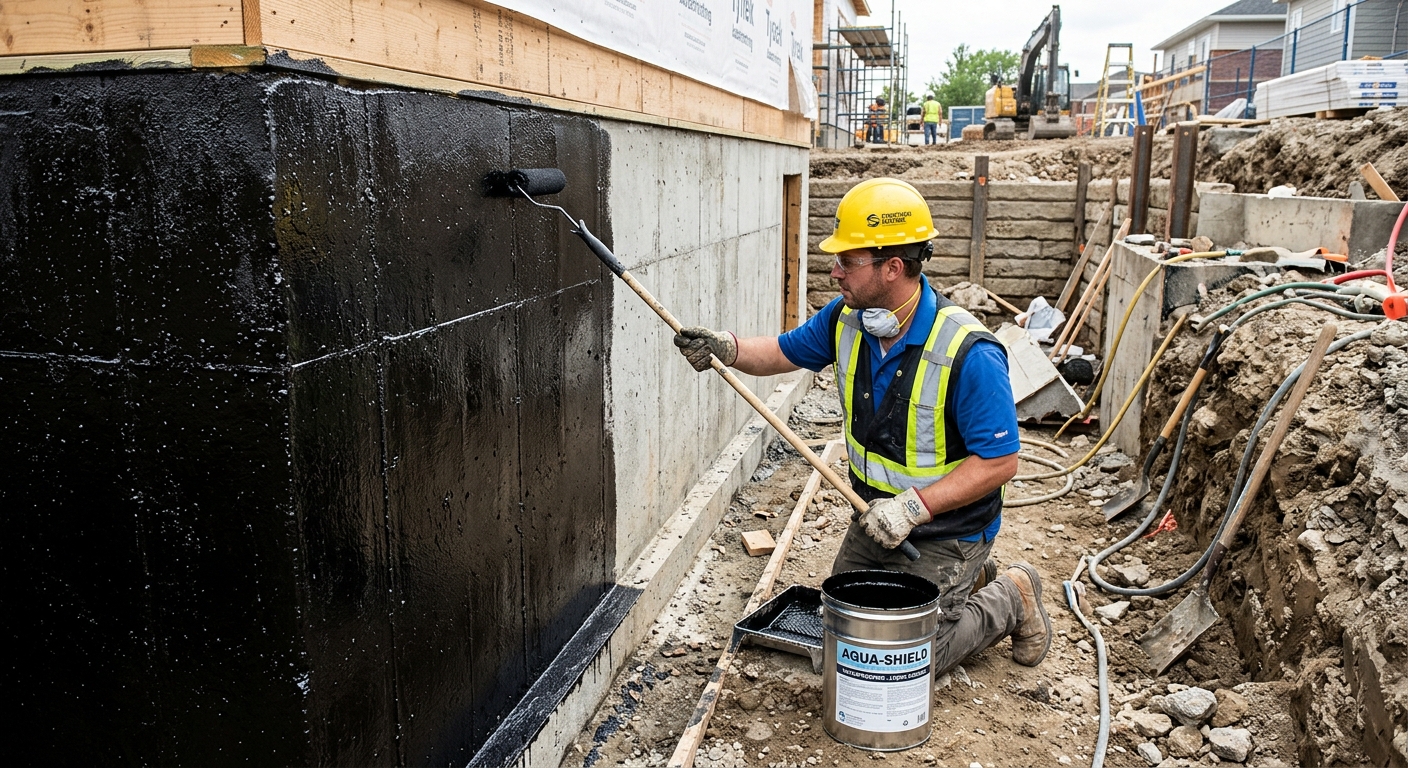
Interior waterproofing and exterior waterproofing solve the same problem—water management—but they do it at different stages. Exterior waterproofing uses full excavation, a new membrane system, and new drainage tile around the foundation. It targets the source of water entry by reducing hydrostatic pressure and giving groundwater a reliable path away from the wall. The trade-off in Quinte West is that excavation is disruptive and expensive: access constraints, mature landscaping, and restoration work can quickly move the project into the $12,000–$25,000 band.
Interior waterproofing works after water reaches the basement. A typical system includes a perimeter drain channel and sump pit (sometimes with crack sealing and floor-wall joint work). It manages seepage, reduces dampness, and can be far less invasive—often starting in the $4,000–$10,000 range. However, it does not eliminate the pressure pressing on your foundation wall, which matters in clay-heavy soils and during freeze-thaw cycles where cracks and joints can keep opening and closing.
In Quinte West’s Kingston–Pembroke market, poured concrete walls often respond well when combined with the right crack injection approach, while block foundations frequently benefit from interior drainage as a practical complement because water can travel through mortar joints and block channels. For many homeowners, the “best” plan is staged: fix cracks and joints where feasible, then control any remaining water with interior drainage and a sump. Also consider sump pump backup—Ontario winter and spring outages can happen when the ground is saturated and demand is high, so battery backup is a sensible add-on when your area is prone to longer power interruptions.
Example: if you have active leakage at a few cracks plus floor joint seepage, an interior perimeter drain with a sump plus targeted crack injection might control the issue without full excavation. If instead you have recurring water across multiple walls after wet springs and your exterior drainage is clearly failing, paying for exterior source control can be the justified path—especially where backfill and weeping tile are beyond practical repair.
| Method |
Best For |
Addresses Source? |
Disruption |
Lifespan |
Price Band |
| Full exterior excavation + membrane |
Recurring seepage, clay-heavy soils, high water pressure, failed original drainage |
Yes (source control) |
High |
Very long (when drainage and membrane are correctly detailed) |
$12,000–$25,000 |
| Interior French drain + sump system |
Basements that get wet during spring thaw; limited exterior access; older weeping tile may be failing |
No (manages water after entry) |
Medium |
Long (depends on pump sizing, discharge routing, and sealing) |
$4,000–$10,000 |
| Crack injection — epoxy (structural) |
Non-moving structural cracks where water entry is limited and crack is stable |
Partially (seals pathways) |
Low to medium |
Medium to long (only if the crack is stable) |
$800–$1,800 |
| Crack injection — polyurethane (active leak) |
Active seepage where the crack shows ongoing movement or water flow |
Partially (seals pathways while accommodating leak behaviour) |
Low to medium |
Medium (best paired with a drainage/sump plan if pressure persists) |
$800–$1,800 |
| Interior drain channel only (no sump) |
Low-grade seepage or short-term moisture where gravity drainage is sufficient |
No (still after-entry) |
Low to medium |
Medium (can be limited if water backs up) |
$3,500–$7,500 |
| Re-grading + downspout extensions |
Surface runoff problems; water coming after rain/snowmelt near the wall |
Indirectly (reduces water reaching foundation) |
Low to medium |
Medium (works best when combined with drainage) |
$2,000–$6,500 |
How to choose a waterproofing contractor in Quinte West
Choosing a waterproofing contractor in Quinte West is mostly about proof. Start by verifying Ontario compliance and coverage. Ask for a certificate of insurance (general liability) and confirm the coverage is current and matches the scale of work (excavation, concrete cutting, pump electrical tie-ins). Then request WSIB/WCB clearance or equivalent proof of coverage. If the contractor proposes structural repair, insist they have engineering support and show you how they’ll document the assessment and recommended approach.
Next, get 2–3 itemised written quotes. The best quotes break labour and materials into line items—membrane system type, drainage tile and filter fabric, sump pump model, discharge routing method, disposal/restoration, and any crack injection materials. Avoid “lump sum” only quotes because waterproofing cost differences often come from exactly those details. Read the scope for exclusions: is permit pulling included, who manages inspections, and is topsoil/asphalt/stone reinstatement included? Confirm whether disposal of excavated material is included or charged separately.
Warranty matters too. Look for a workmanship warranty length stated clearly, and ask whether product/manufacturer warranties apply directly to you. If assignments are needed, request the wording up front so it’s transferable to future owners. Payment scheduling should also be conservative—never pay more than 10–15% upfront; use a holdback tied to completion and final walkthrough.
Finally, get timing in writing: a start date and estimated completion window. Waterproofing is seasonal—Quinte West jobs often shift around freeze-thaw conditions—so a contractor should explain how they’ll protect openings, curing, and drainage performance during delays.
- Ask for proof of WSIB/WCB clearance and confirm it’s not expired.
- Request a current certificate of insurance with the correct insured party name.
- Get 2–3 itemised quotes with material names and quantities (not vague allowances).
- Confirm who pulls the permit (and that they include permit fees if required).
- Check that discharge routing for sump pumps is specified and code-compliant.
- Confirm disposal and backfill specifications (including compaction expectations).
- Verify whether landscape restoration (topsoil, sod, stone, or asphalt patches) is included.
- Ask for foundation type and failure-path assumptions documented in writing.
- Require a written warranty: workmanship term, product warranty, and transferability.
- Use a payment schedule with a holdback until completion and clean handover.
- Require start date and estimated completion date in the contract.
- Request photos or references from similar Quinte West foundation conditions (older weeping tile, clay soils, interior dampness patterns).
Red flags in Quinte West include: (1) a quote that promises “guaranteed dryness” without a site assessment; (2) no mention of clay soils, freeze-thaw effects, or drainage discharge routing; (3) lack of WSIB/WCB clearance or an expired insurance certificate; (4) a contract that doesn’t specify warranty terms in writing; and (5) refusing to itemise labour/materials or omitting exclusions like disposal and reinstatement.
Frequently asked questions — waterproofing in Quinte West
What causes foundation cracks in Quinte West?
In Quinte West and the Kingston–Pembroke region, foundation cracks commonly come from a mix of soil pressure and freeze-thaw movement. Clay-rich soils can hold water; when saturated, they expand and exert more lateral pressure on basement walls. During winter, freeze-thaw cycles widen and stress existing hairline cracks and weak joints, especially in older homes where waterproofing systems from the original build are no longer performing. Another frequent trigger is failed drainage: when weeping tile is clogged or missing, water stays in the soil against the foundation longer and finds pathways through tie holes or floor-wall joints.
Because many Quinte West homes are older (Statistics Canada, 2021 Census), failing original drainage and older foundation details can increase how often cracks reappear even after surface repairs. That’s why crack injection is best chosen after identifying whether the crack is stable or actively leaking.
How do I compare waterproofing quotes?
To compare waterproofing quotes in Quinte West, insist on itemised scopes. Look for a breakdown of labour and materials (membrane type, drainage tile, sump pump model, filter fabric, discharge route, and disposal/restoration). Also compare what’s actually being addressed: some quotes focus on interior drainage and a sump (often in the $4,000–$10,000 range), while others rebuild the perimeter system and membrane with exterior excavation (often $12,000–$25,000).
Make sure each quote includes the same inspection/diagnosis steps: crack mapping, discussion of foundation type, and how they’ll manage spring thaw conditions. Watch for exclusions—like whether permit pulling is included, whether landscaping reinstatement is part of the price, and whether discharge is routed to an approved point. Finally, compare warranty terms: workmanship length and product warranty transferability can matter as much as price.
How long does basement waterproofing take in Quinte West?
Typical timelines in Quinte West depend on whether you’re doing exterior excavation or an interior system. Interior perimeter drainage with sump installation can often be completed faster because the excavation footprint is smaller, but it still requires concrete cutting, preparation, waterproofing details, and proper patch/curing. Exterior work usually takes longer due to excavation, membrane installation, drainage tile replacement or rerouting, backfill compaction, and landscaping reinstatement.
Seasonality matters: winter conditions and freeze-thaw can affect curing and surface conditions, so reputable contractors schedule around weather to protect membrane adhesion and drainage performance. A good contractor will provide a start date and completion estimate in writing, and will explain how they’ll manage exposed foundation sections if weather delays occur.
What is a weeping tile and does my Quinte West home have one?
A weeping tile is the perimeter drainage system installed at or near foundation footing level to collect groundwater and direct it away from the basement. Many Quinte West homes have some version of this, especially older builds, but systems are often clogged, broken, or partially missing over decades. Because 61.5% of Quinte West dwellings are built before 1981 (Statistics Canada, 2021 Census), older weeping tile systems are commonly past their prime.
To check whether your home has it, look for signs like a basement sump or an older tile outlet location, or ask your contractor to inspect discharge points and foundation-wall/footing details during the assessment. Note that even if a weeping tile exists, it may not be functioning—so “having it” doesn’t guarantee your basement stays dry.
Can I waterproof my basement in winter in Quinte West?
You can sometimes do parts of waterproofing in winter, but it depends on what method you’re using and how cold the foundation is. In Quinte West, freeze-thaw cycles and snow/ice complicate excavation and can affect curing times for sealers, membranes, and crack injection products. Interior work (like crack injection and interior drainage) is often more feasible than full exterior excavation because it avoids deep outdoor digging in frozen ground. However, even interior work requires that surfaces be prepared properly and kept dry enough for adhesion and drying.
If you’re seeing active seepage during winter, polyurethane crack injection may sometimes be possible, but it still needs correct prep and product selection. The safest approach is to discuss your specific freeze conditions and moisture readings with your contractor, and plan exterior source control for when excavation and membrane detailing can be done reliably.
What is the difference between waterproofing and damp-proofing?
Waterproofing is a system designed to prevent water entry or to manage water under pressure—especially groundwater that can sit against the foundation during spring thaw. Damp-proofing is generally intended for minor moisture or low-level seepage and typically doesn’t perform the same under hydrostatic pressure. In Quinte West, where clay-rich soils can hold water and freeze-thaw can increase pressure against walls, many basements need true waterproofing details rather than “damp-only” approaches.
For example, managing bulk water with exterior drainage tile and membrane, or installing an interior perimeter drain and sump, is waterproofing in practical terms because it’s built to control persistent moisture. If you’re choosing between options, remember the cost difference: interior systems often start around $4,000–$10,000, while exterior excavation and drainage tile replacement can be in the $12,000–$25,000 range when source control is required.