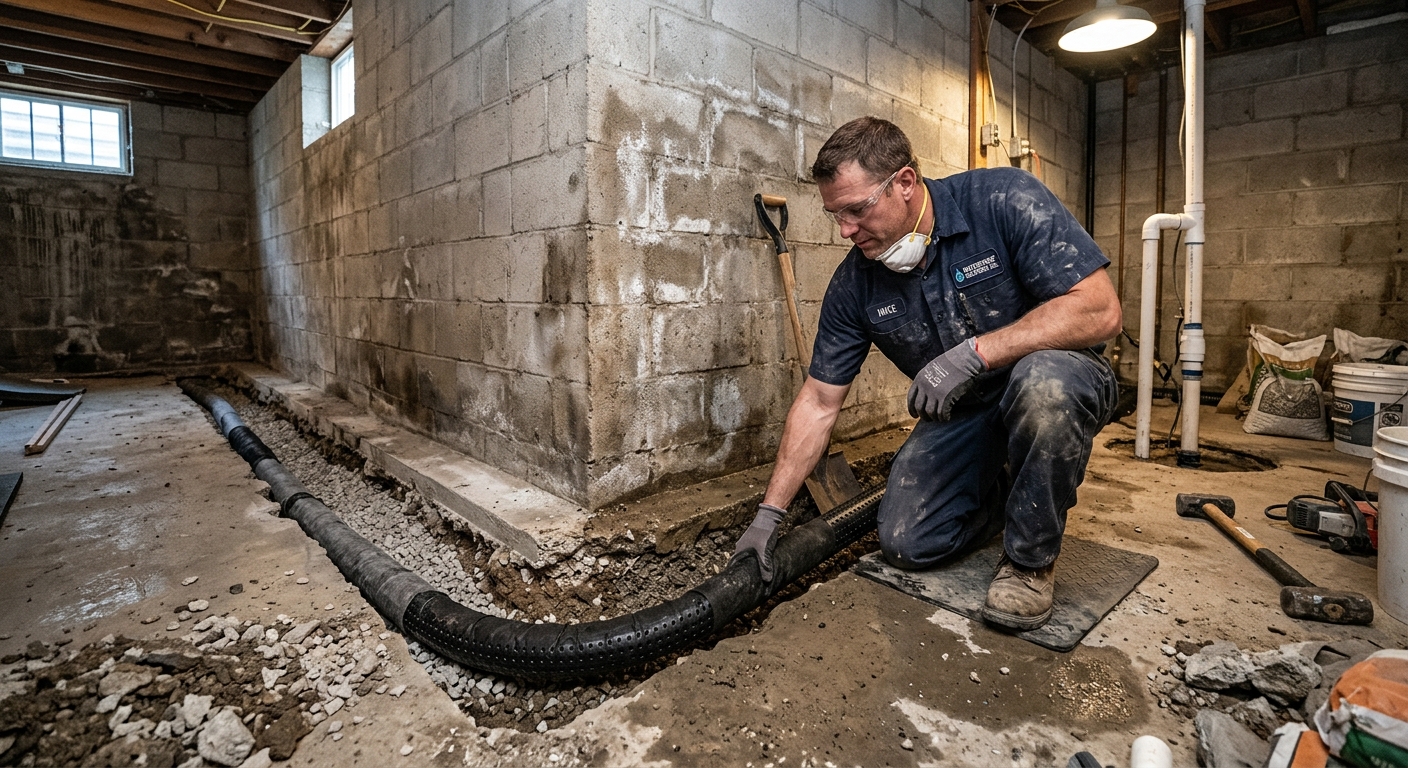
Basement waterproofing options and costs in Bathurst Manor
Bathurst Manor homeowners usually run into waterproofing decisions when they notice damp corners, efflorescence, or slow seepage after heavy spring rain. With Bathurst Manor’s population at 15,873 (Statistics Canada, 2021 Census), the local demand stays steady because there are many older, post-war basements that weren’t built for today’s wet-and-cold cycle demands. In Toronto’s core, a large share of housing is from earlier decades—meaning original drainage systems (often clay weeping tile or early plastic runs) can be partially clogged, mis-sloped, or fully failed, even if the foundation wall looks “fine” from the exterior. Many customers first see the problem after freeze–thaw seasons, when small defects widen and cold joints, tie holes, and cracks become active leak paths.
Toronto pricing also reflects mixed glacial till and clay-heavy pockets around Bathurst Manor lots. Clay soils hold water and expand when saturated, increasing lateral pressure on foundation walls and driving up labour time for excavation, membrane fitting, and drainage installation. Contractors are especially busy in areas with tight urban access—small frontages, decks, and shared driveways—where hand-digging and careful backfilling are required to work around structures. In Bathurst Manor, trade demand is frequently highest near the busier residential nodes like the Finch Avenue area, where many homes have mature landscaping and additions that limit equipment access.
Below is a practical comparison of the main approaches and their typical cost ranges, so you can align expectations before you request quotes.
| Method |
What It Addresses |
Disruption Level |
Durability |
Price Range |
| Exterior excavation + new membrane + drainage tile |
Primary water entry at the foundation exterior; reduces hydrostatic pressure with new drainage |
High (excavation, landscaping disruption, backfill) |
High (when installed to proper slope and tie-ins are correct) |
$7,000–$25,000 |
| Interior perimeter drain channel + sump pit |
Water that enters through cracks/cold joints; channels it to sump for active removal |
Medium (cutting, interior cleanup; less yard disruption) |
High (depends on sump sizing and proper discharge) |
$5,000–$15,000 |
| Foundation crack injection (epoxy or polyurethane) |
Isolated leak paths in cracks; restores integrity and/or stops active seepage |
Low to Medium (depends on number of cracks and access) |
Medium to High (best when crack type is correctly matched) |
$600–$3,000 |
| Sump pump installation (primary + battery backup) |
Chronic seepage risk; keeps basement dry during heavy runoff and spring surges |
Low to Medium (drilling, basin installation, power/backup setup) |
High (backup reduces risk during outages) |
$1,500–$4,500 |
| Window well drain installation |
Water pooling and seepage at egress points; reduces moisture around window openings |
Low to Medium (window well excavation/pipe work) |
Medium to High (good when tied into footing drainage) |
$800–$3,000 |
| Lot re-grading / downspout extension |
Redirects surface water away from foundation; reduces the load on drainage systems |
Low (minor excavation; often easiest to schedule) |
Low to Medium (relies on correct slope and ongoing maintenance) |
$650–$2,500 |
Prices are estimates only and vary by project scope, site access and material selection.
What affects the price of waterproofing in Bathurst Manor
In Bathurst Manor and across the Toronto region, it’s common to see quotes for the “same” basement problem vary by 30–50%. The difference usually comes down to how contractors approach the root cause: whether they treat it as an exterior drainage failure, an interior water management issue, or an isolated crack problem. Pricing also swings because Ontario projects are labour-intensive—excavation around mature landscaping, careful membrane detailing at footing lines, and correct disposal practices for excavated materials all take time.
Three local drivers separate Toronto-area costs from the national average: soil type, water table conditions, and freeze–thaw. First, mixed glacial till and clay-heavy pockets in the area can expand when saturated, pushing laterally against foundation walls and worsening cracks over a few winters. Second, local high-water conditions increase sump run times and require properly sloped drainage lines. Third, Ontario freeze–thaw cycles widen small defects, so hairline cracking can become active leakage in subsequent seasons. Compared with milder climates, the same sealant or patch may not last as long if the water source and pressure aren’t addressed.
Two practical examples from Bathurst Manor: (1) homes with older clay weeping tile often need interior drainage upgrades because exterior tile runs are frequently clogged or collapsed—pushing the project toward the $3,500–$15,000 interior band; (2) lots with limited access (deck stairs, tight side yards, or additions near the foundation) can drive excavation costs toward the upper end of $7,000–$25,000 exterior excavation pricing because hand-digging and smaller equipment become necessary.
| Price Factor |
Why It Matters |
Cost Impact |
| Interior vs. exterior approach — interior is less disruptive but addresses symptoms |
Exterior targets the water source; interior manages incoming water |
Interior often saves on disruption; exterior can cost more but may reduce long-term risk |
| Foundation type — poured concrete vs. block vs. stone vs. ICF |
Different wall materials leak differently and prep work varies |
Poured concrete can respond well to crack injection; block/stone often need drainage + complementary seals |
| Soil type — clay expands more than sand, adding pressure |
Clay saturation increases hydrostatic pressure and moves backfill during freeze–thaw |
More robust drainage/membrane detailing increases labour and materials |
| Crack type and length — hairline vs. structural horizontal cracks |
Structural cracks may indicate movement; requires different investigation and possibly engineering |
Horizontal/structural cracks typically raise costs due to assessment and more involved repair |
| Sump pump backup system — battery or water-powered backup needed |
Backup reduces basement flood risk during outages/spring surges |
Backup adds equipment cost but can prevent costly damage |
| Access — landscaping, decks, or driveways must be removed for exterior |
Urban lots require additional labour to expose the foundation and reinstate surfaces |
Restricted access can move a project toward the high end of excavation pricing |
| Weeping tile age — original tile (60+ years) may be completely failed |
Old drains are often clogged, mis-sloped, or collapsed |
May require new drainage tile or interior capture system |
| Mould or efflorescence remediation required before sealing |
Sealers won’t bond well over active salts/mould contamination |
Extra remediation steps increase time before waterproofing products can be installed |
Permits & regulations in Ontario
In Ontario, certain waterproofing-related work typically requires a building permit, while other work is often treated as maintenance or repair. In Bathurst Manor, foundation excavation and structural crack repair commonly trigger permitting because they can involve work that affects building elements and drainage connections. As a rule of thumb, if the scope includes significant excavation near the foundation, changes to lot drainage, or any work that could be considered structural repair, expect a permit process.
Sump pump installations that connect to municipal services (storm or sanitary) usually require municipal approval. Where the work includes discharge changes, contractors should clearly identify the intended discharge route and provide documentation for how they will comply with local requirements.
For structural crack repair—such as major step cracks or horizontal cracking in block walls—an engineer’s assessment is often required to determine whether underpinning or other structural measures are needed. Verify your contractor has engineering support for structural repairs, along with liability insurance and WSIB/WCB coverage.
How to verify before you sign: (1) confirm the contractor’s Ontario licensing/registration status through the appropriate online registry or trade licensing body information they provide; (2) ask for a current certificate of insurance showing general liability (and ensure dates align with your project timeline); (3) request proof of WSIB/WCB clearance letter or coverage details (not just “we’re insured” in an email); and (4) keep copies of all documents with your contract. Then confirm whether the permit will be pulled by the contractor or by you, and what work is included in that permit scope.
Interior vs exterior waterproofing — what does Bathurst Manor need?
For Bathurst Manor basements, the key difference is whether you address water entry (exterior) or manage water after it enters (interior). Exterior waterproofing involves full excavation, new exterior membrane, replacement/installation of drainage tile, and backfilling—this is the most direct way to reduce hydrostatic pressure at the foundation wall. It costs more and creates more disruption, but it’s often the right answer when exterior drainage has failed and soils stay water-saturated around the basement. Interior waterproofing typically adds a perimeter drain channel and sump pit (and sump pump), which captures seepage through cracks and cold joints and pumps it out. This approach is less invasive and usually costs less, but it doesn’t stop the wall from being under water pressure.
Toronto’s freeze–thaw cycles matter here: even when a basement “doesn’t flood,” trapped moisture can keep migrating through micro-cracks and tie holes. In many Bathurst Manor homes with poured concrete walls, crack injection can be an effective complement—particularly when the crack type is properly identified and the injection product matches the crack behaviour. For block foundations, interior drainage is often necessary as a practical complement because block seams and capillary pathways can keep wicking moisture unless water is actively managed.
Sump pump backups are also worth budgeting for in Ontario. Spring flooding and wet freezes can strain power reliability, and a battery backup (or other approved backup) reduces the chance of damage during outages when the sump is cycling more frequently.
Where the price difference is justified: if exterior drainage failure is clear (failed weeping tile, saturated clay around the foundation, recurring interior seepage), exterior projects in the $7,000–$25,000 range can prevent repeated interior system upgrades. But if you’re dealing with isolated cracks or localized seepage, interior drainage or targeted crack repair may stay in the $600–$3,000 to $3,500–$15,000 bands and deliver faster ROI without major yard disruption.
| Method |
Best For |
Addresses Source? |
Disruption |
Lifespan |
Price Band |
| Full exterior excavation + membrane |
Chronic seepage where exterior drainage and membrane protection have failed |
Yes (targets water entry and hydrostatic pressure) |
High |
Long (when correctly detailed and backfill is properly compacted) |
$7,000–$25,000 |
| Interior French drain + sump system |
Water that enters through cracks/cold joints in mixed clay soils |
No (manages water after entry) |
Medium |
High (depends on sump sizing and discharge) |
$3,500–$15,000 |
| Crack injection — epoxy (structural) |
Poured concrete or stable cracks that are not actively flowing |
Partially (restores integrity but may not stop active seepage) |
Low |
Medium to High |
$600–$2,500 |
| Crack injection — polyurethane (active leak) |
Active leaks where water is moving through cracks |
Partially (seals the leak path) |
Low |
Medium to High |
$800–$3,000 |
| Interior drain channel only (no sump) |
Mild dampness/seepage where gravity discharge is feasible |
No (captures and re-routes water) |
Medium |
Medium (sump-less systems can be limited during high water) |
$3,000–$9,500 |
| Re-grading + downspout extensions |
Surface water management issues with obvious runoff toward the foundation |
Yes (reduces water load, not wall leakage paths) |
Low |
Low to Medium (requires maintenance and correct slope) |
$650–$2,500 |
How to choose a waterproofing contractor in Bathurst Manor
Choosing the right contractor is mostly about verification and clarity. In Ontario, you should confirm licensing/registration (as applicable to their trade/activities), liability insurance, and WSIB/WCB coverage. To check: look up any listed Ontario registration/registry information the contractor provides, request a current certificate of insurance (you want the certificate details to match your contract dates and address), and ask for the WSIB/WCB clearance letter or proof of coverage status. If they can’t provide documents quickly, that’s a major warning sign.
Get 2–3 itemised written quotes—labour and materials breakdown—rather than a lump sum. A proper quote will list what’s included (excavation depth, membrane type, drainage tile specs, discharge plan, pump model if any, disposal and protection of landscaping). Read the scope carefully for exclusions: what happens if they find failed weeping tile deeper than expected, whether engineering/permit costs are included, and whether mould or efflorescence remediation is part of the work or treated as an add-on.
Warranty matters too. Ask for the workmanship warranty length and whether there’s a separate product/manufacturer warranty. Also ask if warranties are transferable to future owners (important for resale in Bathurst Manor).
On payment schedule, never allow large deposits. A common safeguard is keeping upfront payments to about 10–15% and holding a portion until completion and final walkthrough. Request a written start date and completion estimate, and confirm site protection measures (dust control, securing excavation, and restoration responsibilities) so the job doesn’t stall halfway through.
- Provide insurance certificate with correct policy dates and property address
- Provide WSIB/WCB clearance/coverage proof before work begins
- Itemised quote: labour, materials, pumps (model), membrane system, drainage tile components
- Clear discharge method (and whether municipal approval/permit applies)
- Scope includes disposal and restoration (topsoil/seed/sod, or concrete/stone reinstatement)
- Written plan for access limitations (hand-digging, deck removal, protection of driveways)
- Details on crack assessment method (how they determine epoxy vs polyurethane)
- Warranty: workmanship length + product warranty terms; ask about transferability
- Payment schedule capped at 10–15% upfront; holdback until punch-list completion
- Timeline in writing, including cure times and weather-dependent steps
- Aftercare: sump maintenance guidance (filter checks, alarm testing, backup testing)
- References in the Toronto area with photos of similar clay-soil conditions
Red flags specific to waterproofing contractors in Bathurst Manor: they quote interior sealing only while ignoring persistent exterior clay saturation signs; they refuse to show insurance/WSIB documents; they won’t explain whether your issue is active leakage versus stable cracking; they provide only a lump-sum “waterproofing” number without an itemised scope; or they promise “one-and-done” results without addressing drainage downspouts, weeping tile condition, or freeze–thaw risk.
Frequently asked questions — waterproofing in Bathurst Manor
What is a weeping tile and does my Bathurst Manor home have one?
A weeping tile is a perimeter drainage system installed along or near the foundation footing to collect groundwater and direct it away from the basement. In many Bathurst Manor homes—especially post-war and 1960–1980s builds—you may see evidence of older drainage (or past repairs) even if the original tiles are no longer functioning. You can’t always confirm just by looking at the basement wall, because tile condition may be hidden and partially collapsed. Your contractor should be able to trace where it’s tied in (discharge path), check for signs like basement dampness patterns, and inspect during excavation when access allows. Some homes were built with clay weeping tile, which can fail over decades due to clogging or movement (Statistics Canada, 2021 Census).
Can I waterproof my basement in winter in Bathurst Manor?
Yes, but it depends on what you’re trying to fix and how frozen your soil is. In Bathurst Manor and across Ontario, exterior excavation and backfilling are more challenging in winter because frozen ground limits dig depth and proper membrane detailing. Interior work can often proceed if the basement is safe and dry enough for cutting and installation, but freeze–thaw can still influence curing times and bond performance. Where the issue is active seepage, targeted crack injection may be possible because it can be localized; however, contractors should verify active water flow and confirm they’re using the right product for the crack behaviour. If you’re scheduling a full exterior project in the $7,000–$25,000 range, many homeowners plan it for spring/fall so excavation and drainage installation are done with fewer delays.
What is the difference between waterproofing and damp-proofing?
Damp-proofing is typically intended to resist minor moisture and condensation, often using coatings or systems meant for “good enough” control of dampness rather than stopping active water pressure. Waterproofing is designed to manage water entry under pressure conditions—particularly where hydrostatic pressure, seepage through cracks, or clogged/failed drains cause persistent wetness. In Toronto’s clay-heavy soils and freeze–thaw climate, basements can experience changing moisture pressure over the year, so the distinction matters. For example, a damp-proofing coating may reduce visible dampness, but if your basement water is coming through cold joints or tie holes, you usually need a drainage strategy (like an interior perimeter drain and sump) or crack injection matched to active leaks. That’s why some projects fall into the $3,500–$15,000 interior waterproofing band: the goal isn’t just to “dry the wall,” but to capture and remove incoming water.
Will basement waterproofing affect my property value in Bathurst Manor?
It can, especially when you document the problem and the solution clearly. In Bathurst Manor, buyers are wary of basements that show efflorescence, recurring seepage, or past flooding history because those symptoms suggest active water management issues. When you can show a proper waterproofing plan—like an interior drain channel with sump backup, or exterior drainage and membrane updates—along with warranties and receipts, you typically improve buyer confidence. Exterior solutions can be particularly persuasive because they address hydrostatic pressure at the source, but interior solutions can also add value when installed correctly and matched to the leak mechanism. Keep in mind that cosmetic repairs alone rarely perform well in negotiations if the underlying drainage problem remains. If your contractor can provide before/after documentation and a warranty (transferable where possible), that supports resale even if the system is interior.
What drainage issues are most common in Bathurst Manor homes?
The most common issues usually fall into two categories: failing sub-surface drainage and increased surface runoff load. In Bathurst Manor, clay-heavy pockets and high local water conditions can keep backfill saturated, increasing lateral pressure and pushing water through cracks, tie holes, and cold joints. Many older homes also have aging weeping tile or early drainage that may be partially clogged or collapsed, which shifts water into the basement. You’ll often see damp corners near footing lines, efflorescence along mortar lines, or recurring seepage after heavy rains and spring thaws. Surface factors matter too: missing or undersized downspout extensions, poor grading that directs water toward the foundation, and landscaping that traps runoff can overwhelm drainage capacity. Contractors often start with these checks before selecting whether you need exterior work in the $7,000–$25,000 band or an interior drainage approach in the $3,500–$15,000 band.
How do I choose a waterproofing contractor in Bathurst Manor?
Start by verifying paperwork and then demand scope clarity. For Ontario work in Bathurst Manor, ask for proof of liability insurance and WSIB/WCB coverage before any site visit. Get 2–3 itemised written quotes with labour and materials breakdown—don’t accept a vague lump sum. Confirm what’s included: permit pull responsibilities, disposal, and restoration; whether mould/efflorescence remediation is part of the package; and how they plan to address your specific water entry path (crack injection versus drainage versus exterior membrane). Make sure the contractor distinguishes active leaks from stable cracks so the product choice is correct—epoxy for structural/stable cracks versus polyurethane for active seepage. Finally, require a workmanship warranty (and product warranty terms) and protect yourself with a payment schedule—limit upfront to about 10–15% and hold back until completion and punch-list items are done.