Basement waterproofing options and costs in Brooklin
Basement waterproofing in Brooklin is typically about managing water that finds its way through cold joints, tie holes, cracks, and older drainage systems—then preventing that water from creating ongoing hydrostatic pressure. With roughly 25,000 residents (Statistics Canada, 2021 Census), Brooklin sits in the Toronto economic region where labour and access conditions can push costs higher than many other Ontario towns. It also matters that many nearby homes date to the post-war era; in older properties, original waterproofing and weeping tile often fail after decades, which is why we frequently see damp basements, efflorescence, and occasional flooding rather than dramatic, single “wall failure.”
Toronto-area projects cost more because many foundations sit in mixed glacial till and clay pockets that hold water against basement walls and expand during freeze–thaw. That expansion can widen small defects into active leaks over a few winters. At the same time, late-winter thaw events increase drainage demand, and contractors must plan for excavation timing, disposal, and membrane installs that won’t be trapped under saturated backfill. Availability can also vary: when multiple crews are booked for spring waterproofing around Durham/Greater Toronto, quote turnaround and scheduling can shift.
In Brooklin, we most often see high demand in older, established pockets with mature landscaping—particularly where additions have created tight working space and where original weepers have gone partially collapsed or clogged. From there, the right solution generally falls into exterior excavation, interior drainage, or targeted repairs—so it’s worth comparing methods side by side.
| Method |
What It Addresses |
Disruption Level |
Durability |
Price Range |
| Exterior excavation + new membrane + drainage tile |
Lateral water pressure and direct water entry through foundation wall/cold joints; replaces failing drainage |
High (excavation along foundation, landscape/driveway impacts) |
Long-term (typically 20+ years with correct membrane and backfill) |
$7,000 – $25,000 |
| Interior perimeter drain channel + sump pit |
Water after it enters; reduces hydrostatic pressure at the base using perimeter drain and sump |
Medium (floor/footing drilling, limited demolition) |
Long-term (often 15+ years, dependent on maintenance and water volume) |
$3,500 – $15,000 |
| Foundation crack injection (epoxy or polyurethane) |
Isolated crack leaks; epoxy for structural, polyurethane for active water flow |
Low (access from interior/exterior as needed) |
Moderate to long-term (best for correctly identified crack type) |
$600 – $3,000 |
| Sump pump installation (primary + battery backup) |
Chronic seepage risk; keeps water moving during thaw and power events |
Low to medium (core drilling, pit, discharge routing) |
Long-term (system reliability depends on pump quality and backup) |
$800 – $3,500 |
| Window well drain installation |
Water infiltration near window wells and downspout overflow into egress areas |
Low to medium (minor excavation and landscaping at wells) |
Moderate to long-term (sustained by keeping weepers clear) |
$1,200 – $4,500 |
| Lot re-grading / downspout extension |
Surface water management to prevent water from feeding the foundation perimeter |
Low (often does not require foundation access) |
Moderate (depends on ongoing grading performance) |
$900 – $5,500 |
Prices are estimates only and vary by project scope, site access and material selection.
What affects the price of waterproofing in Brooklin
In Brooklin, two homeowners can receive quotes for “the same” basement waterproofing and still see 30–50% differences once soil, foundation details, and access are understood. That gap is common across the Toronto area because excavation routes, disposal costs, and labour time vary sharply from one lot to the next. The three biggest drivers that separate local pricing from a national average are soil type, water table behaviour, and freeze–thaw conditions. Mixed glacial till with dense clay pockets can hold water against foundation walls; when it freezes and then thaws, expansion can push harder on cracks and joints, turning minor dampness into persistent seepage. In Toronto and the surrounding area, higher seasonal water saturation also increases sump run times and makes drainage design more demanding.
Here’s how local conditions raise or lower costs in Brooklin. First, clay-heavy backfill often means more excavation depth and more granular replacement behind the membrane or around an interior drain—so exterior projects can land closer to the top of the $7,000 – $25,000 range. Second, if your home has a failing early weeping tile (sometimes from decades-old systems), the job may need more probing and re-routing; that tends to add labour even when the visible damage is limited. Third, freeze–thaw can require additional preparation before sealing cracks, especially if you’re seeing active leaks after spring thaw—pushing some “simple crack injection” scopes toward fuller systems (interior perimeter drain and sump) that fall in the $3,500 – $15,000 band.
In contrast, costs can come down when access is straightforward (no deck removal, no tight shared driveway work) and when the leak pattern is isolated and confirmably treatable with crack injection and targeted drainage. Understanding your soil and drainage age usually explains the largest part of the quote difference.
| Price Factor |
Why It Matters |
Cost Impact |
| Interior vs. exterior approach — interior is less disruptive but addresses symptoms |
Exterior removes the water source; interior manages water after entry |
Interior often 30–60% less than full exterior, but may not solve the root cause in high lateral pressure |
| Foundation type — poured concrete vs. block vs. stone vs. ICF |
Crack behaviour and how water migrates differ by material |
Block and older materials often require added interior drainage; poured concrete may respond better to crack injection in targeted scenarios |
| Soil type — clay expands more than sand, adding pressure |
Clay retains moisture and expands during freeze–thaw, worsening leaks |
Clay-heavy lots can add excavation depth and more drainage design work |
| Crack type and length — hairline vs. structural horizontal cracks |
Not all cracks are equal; horizontal/step cracks can indicate structural movement |
Structural or widespread cracking can push scopes from injection into engineered repair and/or drainage system upgrades |
| Sump pump backup system — battery or water-powered backup needed |
Thaw and spring storms increase the chance of power interruption during heavy pumping |
Backup typically adds a few hundred to over a thousand dollars depending on system type |
| Access — landscaping, decks, or driveways must be removed for exterior |
Exterior work is time-consuming when you must remove patios, fences, or edging |
Can add major labour and restoration costs, especially on tight lots common in the Toronto area |
| Weeping tile age — original tile (60+ years) may be completely failed |
Old tile can collapse, clog, or drain poorly—limiting how far water control can go |
Failure can trigger full re-routing and deeper excavation, moving price toward the high end |
| Mould or efflorescence remediation required before sealing |
Active moisture must be treated first; sealing over moisture can trap contamination |
May add remediation time and materials before waterproofing proceeds |
Permits & regulations in Ontario
In Ontario, many waterproofing-related changes still fall under permitting because they can affect structural elements, drainage to the lot, or how water is managed. In general, foundation excavation, structural crack repair that impacts load-bearing components, and changes to lot drainage patterns typically require a building permit. If your sump pump discharge connects into a municipal sewer system (storm or sanitary), you’ll need municipal approval before installation. For structural crack repair—especially horizontal cracks in block walls or major step cracks—contractors often need a structural engineer’s assessment to confirm whether underpinning or other structural work is necessary.
For homeowners in Brooklin, your safest approach is to verify three things before work starts: (1) the contractor’s Ontario licence/credentials (as applicable to the work they perform), (2) liability insurance, and (3) WSIB/WCB clearance for worker coverage. Step-by-step, you can do this by: (a) asking the contractor for their certificate of insurance and confirming the stated coverage limits align with the job scope; (b) requesting proof of WSIB/WCB clearance and checking the clearance validity date; and (c) searching the relevant online registry for their business credentials to confirm they’re active and properly registered for their trade scope. For structural repairs, also ask whether they will coordinate the engineering assessment or include engineered drawings in the proposal.
Good contractors will also spell out who pulls permits and what they cover—so you’re not surprised by additional fees midway through an exterior excavation.
Interior vs exterior waterproofing — what does Brooklin need?
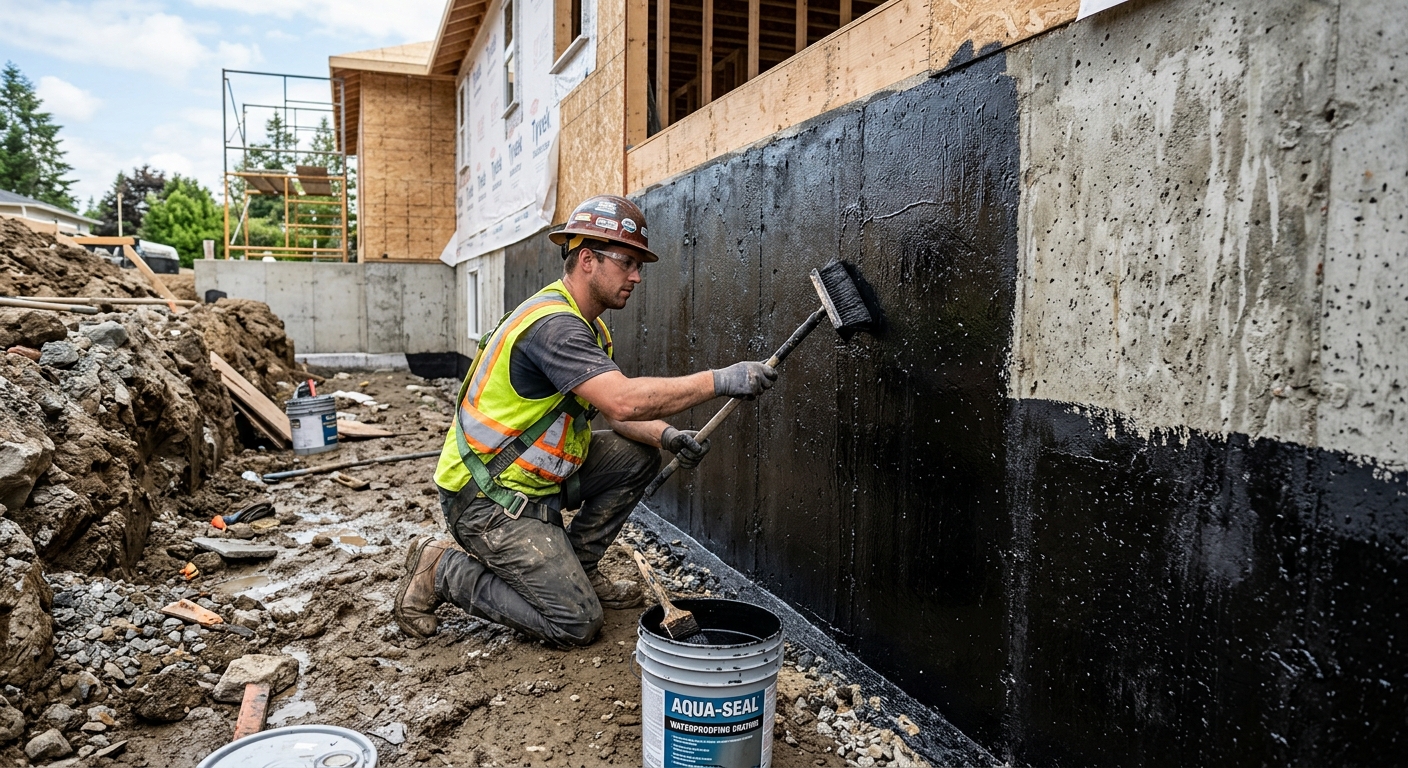
The key difference is source control versus water management. Exterior waterproofing—full excavation, new membrane, new drainage tile, and engineered backfill—targets the water entry point and reduces lateral pressure against foundation walls. It costs more and is more disruptive because you’re working outside your foundation along the full perimeter (or the affected wall sections). Interior waterproofing—perimeter drain channel, sump pit, and a sump pump—manages water after it enters; it can significantly reduce basement seepage and flooding, but it does not stop hydrostatic pressure on the wall itself.
In Brooklin’s Toronto-area freeze–thaw climate, exterior solutions are often the best match when you have clay-heavy soils, signs of high lateral pressure, or a long history of weeping tile failure. Interior systems are especially practical when access is limited by decks, patios, additions, or tight lot lines, or when the leak is driven by localized failure that can be collected reliably from inside. Poured concrete foundations typically respond well to correctly specified crack injection (especially when the crack type is compatible with epoxy), while older block foundations often need interior drainage as a complement because block mortar and water migration can be harder to “seal once and forget.”
Sump pump backup matters in Ontario because power can be interrupted during spring storms when thaw and heavy rains coincide. A backup system helps keep the basement dry and prevents water from rising back above the drain inlet.
To put it in dollars: if an exterior excavation/remembrane scope lands near $7,000 – $25,000, an interior perimeter drain plus sump may be nearer $3,500 – $15,000. The difference is justified when exterior excavation is feasible and the water source is clearly feeding the foundation from outside; otherwise, interior drainage can be the more cost-effective way to protect the basement while you address surface grading and downspouts.
| Method |
Best For |
Addresses Source? |
Disruption |
Lifespan |
Price Band |
| Full exterior excavation + membrane |
High lateral soil/water pressure, failed exterior drainage, recurring seepage on multiple wall sections |
Yes |
High |
20+ years (when membrane and backfill are done correctly) |
$7,000 – $25,000 |
| Interior French drain + sump system |
Chronic seepage, clogged/failed exterior drains you can’t easily access, damp basements in tight lots |
No (manages water after entry) |
Medium |
15+ years with proper pump selection and maintenance |
$3,500 – $15,000 |
| Crack injection — epoxy (structural) |
Non-moving or properly identified structural cracks where water flow can be controlled |
Partial (stops migration through the crack) |
Low |
Moderate to long-term (depends on correct crack diagnosis) |
$600 – $3,000 |
| Crack injection — polyurethane (active leak) |
Active leaks with ongoing water weeping through cracks (often where flexibility is needed) |
Partial (targets crack pathway) |
Low |
Moderate to long-term when the leak is isolated |
$600 – $3,000 |
| Interior drain channel only (no sump) |
Light seepage, intermittent dampness, cases where gravity drainage is sufficient |
No (still water after entry) |
Medium |
Varies; often less reliable during heavy spring events |
$2,500 – $7,500 |
| Re-grading + downspout extensions |
Surface water issues, overflowing downspouts, early dampness without major crack leaks |
Yes (reduces water feed to the perimeter) |
Low |
Moderate (needs maintenance as gardens settle) |
$900 – $5,500 |
How to choose a waterproofing contractor in Brooklin
Choosing the right waterproofing contractor starts with verification. In Ontario, confirm the contractor’s coverage and eligibility for the work they’ll do. Ask for their certificate of liability insurance and confirm the coverage limits; request WSIB/WCB clearance and check that it’s current (not expired). If the job includes structural crack repairs, ask how engineering support is handled—whether their scope includes an engineer assessment or if that will be added. Most reputable teams will share documentation promptly because they know homeowners will verify.
Next, get 2–3 itemised written quotes rather than a lump sum. You want line items that clearly separate labour and materials, including membrane type, drainage tile components, pump specifications (and whether there’s a battery backup), and disposal/excavation details. Read the exclusions: does the quote include permit pulls (where required), demolition and restoration, and disposal of excavated soil? A thorough scope should also explain what happens if additional issues are discovered during excavation.
Warranty matters just as much as price. Ask for the workmanship warranty length, product/manufacturer warranty coverage, and whether the warranty is transferable if you sell. Also confirm a reasonable payment schedule: never pay more than 10–15% upfront, with a holdback until the job is complete and deficiencies are corrected. Finally, insist on a written timeline with a start date and completion estimate.
- Request proof of liability insurance and verify coverage limits
- Ask for WSIB/WCB clearance and confirm the clearance date
- Get 2–3 itemised quotes (labour + materials, not one blanket number)
- Confirm who pulls permits and whether the cost is included
- Ask whether disposal/hauling is included for exterior excavation
- Require photos and measurements during site assessment (crack mapping, drain routes)
- Verify crack injection type matches the leak condition (epoxy vs polyurethane)
- For sump systems, ask for pump model specs and discharge routing details
- Confirm battery backup or alternate power plan for spring flooding risk
- Review warranty terms: workmanship, product coverage, and transferability
- Ensure a payment schedule with 10–15% max upfront and a holdback
- Get start date and completion estimate in writing, including weather contingency
In Brooklin, common red flags include: contractors who can’t explain how they identified the leak source (they only “seal and hope”); vague scopes with no membrane/pump specifications; skipping engineering when you have horizontal/step cracks; warranties that cover labour but not the waterproofing system components; and quotes that don’t include excavation disposal, permit responsibility, or restoration assumptions.
Frequently asked questions — waterproofing in Brooklin
How do I know if a foundation crack is serious?
In Brooklin, you should treat some cracks as more than cosmetic, especially after spring thaw and freeze–thaw seasons. A hairline crack that never changes and stays dry may be stable, but cracks that show moisture staining, dampness at the interior, or efflorescence around the crack often indicate active water migration. Serious signs include horizontal cracks in block walls, pronounced widening over time, step cracks, or cracks that reappear after you dry the basement. If you can compare photos from one winter to the next and the crack length or width increases, that’s a strong indicator the issue is active. For anything that looks structural, ask whether a structural engineer assessment is needed before injecting or sealing.
How much does foundation crack repair cost in Brooklin?
Crack repair pricing in Brooklin usually depends on crack type, length, whether it’s an active leak, and how many ports are required for injection. For isolated, properly diagnosed cracks, homeowners commonly fall within the crack repair band of $600 – $3,000. Epoxy (often used for structural crack control) and polyurethane (often used when water is actively weeping) are selected based on what’s happening at the crack. If the crack is only one symptom and the basement is experiencing ongoing seepage from multiple points—especially on clay soils with saturated spring conditions—contractors may recommend pairing injection with interior drainage, which shifts the project closer to the $3,500 – $15,000 range for a perimeter drain and sump. A detailed inspection is the fastest way to avoid paying for the wrong product.
Do I need a sump pump in Brooklin?
You might not need a sump pump if your issue is mostly surface water (for example, downspouts draining too close to the foundation) or if water entry is minimal and can be managed by targeted drainage. In many Brooklin basements, however, a sump is recommended when seepage is chronic, when clay-heavy backfill keeps water against the foundation, or when freeze–thaw drives water through minor defects at the base of walls. A sump pump installation typically falls in the $800 – $3,500 band depending on the system and whether you add a backup. In Ontario, power interruptions during spring storms are a real concern; a battery backup can protect you when pumping can’t run. The best way to decide is to match the pump to the measured water volume and the drainage design—your contractor should explain the “why” behind the sump location, discharge route, and backup choice.
How does Brooklin's soil affect my foundation?
Brooklin homes are commonly built over mixed glacial till with dense clay pockets that hold water. That matters because saturated clay can exert more lateral pressure on foundation walls and can expand during freeze–thaw, which tends to worsen the condition of existing cracks and joints. When weeping tiles fail or clog, water doesn’t discharge properly and instead migrates toward the foundation perimeter. That’s why homeowners often see dampness, efflorescence, or intermittent flooding without obvious exterior wall collapse. If your basement symptoms worsen after heavy rain or spring thaw, it often points to soil-driven water behaviour rather than a single localized failure. Contractors will typically recommend either exterior source control (membrane and drainage tile) or interior drainage (perimeter drain channel and sump) depending on how accessible the perimeter is and how severe the lateral pressure appears.
Do I need a permit for foundation work in Ontario?
In Ontario, permits are commonly required for work that changes how water is managed around the lot, involves foundation excavation, or includes structural crack repairs. Sump pump systems that connect discharge to municipal sewer services also require municipal approval. If the repair involves structural concerns—like horizontal cracks in block walls or step cracks—an engineer assessment is often required to determine whether underpinning or structural reinforcement is needed. For a Brooklin homeowner, the practical step is to ask the contractor what permits they will pull, who is responsible for that process, and how long it adds to the timeline. Before signing, verify the contractor’s documentation (insurance and WSIB/WCB clearance) and confirm their permit approach in the written scope so you don’t get stuck with delays or uncovered compliance issues.
How long does waterproofing last?
How long waterproofing lasts in Brooklin depends on the method and whether it addresses the actual water source. Exterior waterproofing—when done with a proper membrane system, new drainage tile, and correct backfill—often provides the longest service life, typically 20+ years when installed correctly and maintained. Interior drainage can be very effective, especially for chronic seepage, but it’s managing water after entry; it commonly lasts 15+ years depending on pump performance, discharge routing, and whether the perimeter is still being fed by saturated clay. Crack injection can last years when the leak pathway is truly isolated and the correct product is used; it can fail faster when water pressure continues to push through multiple joints or when the wrong injection type is selected. If you’re comparing options, ask the contractor to explain the specific climate-driven risks in the Toronto region—especially freeze–thaw—and how their design prevents repeat leaks.