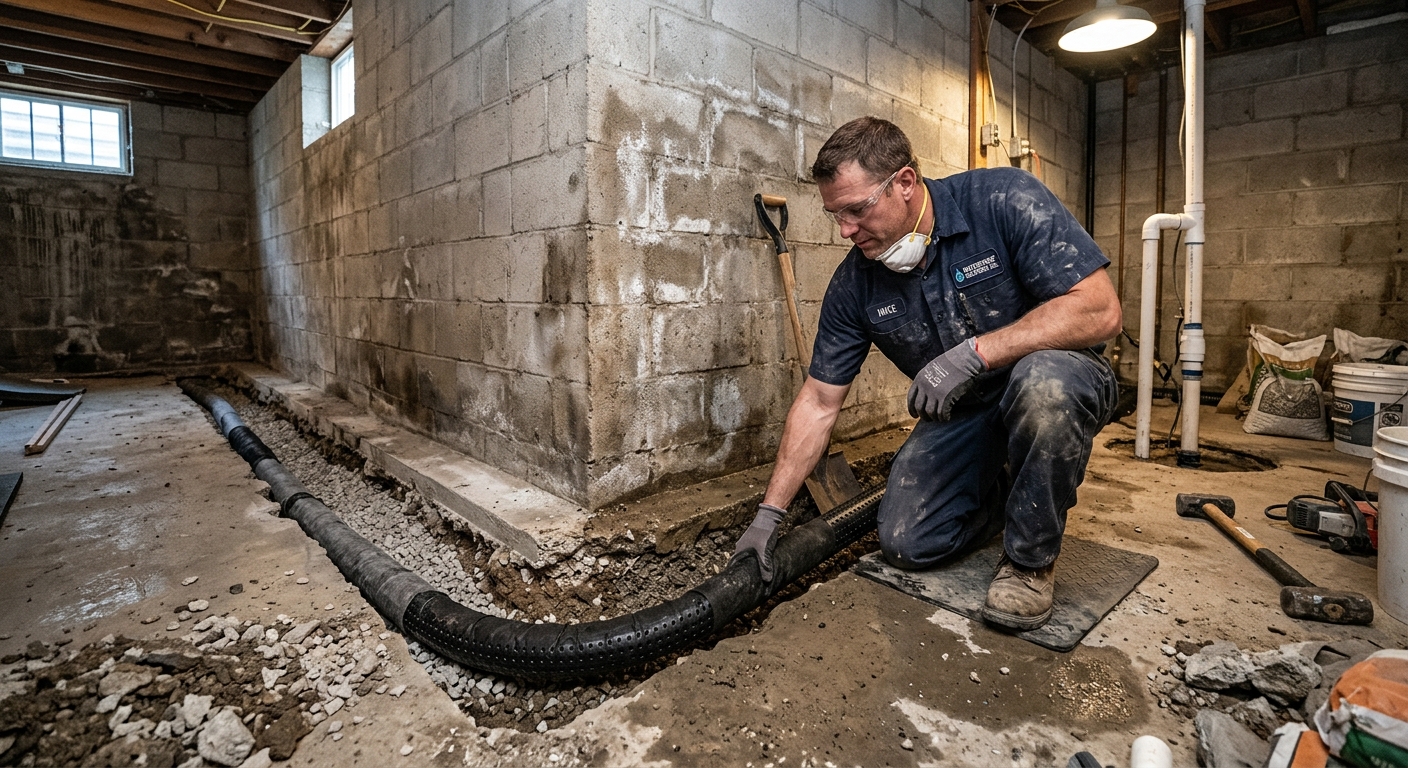
Basement waterproofing options and costs in Pickering
Pickering homeowners typically face basement dampness and seepage because the Greater Toronto area sits on mixed glacial till and clay, where water can be held against foundation walls. In Pickering specifically, many homes were built before 1981 (31.2% of the housing stock), which matters because older waterproofing details—like corroded weeping tile, failing tar-and-paper systems, and early drainage that’s now partially clogged—often don’t perform well through today’s freeze–thaw cycles. With 28,470 homeowner households (85.2% of households own), there’s a steady local demand for both exterior excavation and targeted interior fixes.
In the Pickering market, waterproofing costs are also influenced by site access. Tight lots and decks/additions may limit how deep and how safely crews can excavate around the foundation, especially in established neighbourhoods near Highway 7 and the Durham waterfront corridor. That’s why many contractors in the area price exterior excavation ($7,000–$25,000) versus interior drainage solutions ($3,500–$15,000) differently even when the leak seems “small.” Toronto-area labour demand and disposal/landscape restoration can move the final number by thousands, particularly when the job requires hand-digging, masonry saw cutting, or membrane tie-in to existing footings.
Below is a practical comparison of common approaches—so you can align the method to the leak source and understand what to expect in your budget before comparing quotes.
| Method |
What It Addresses |
Disruption Level |
Durability |
Price Range |
| Exterior excavation + new membrane + drainage tile |
Active or chronic water pressure from soil; replaces failing weeping tile; creates a continuous waterproofing system |
High (yard disruption, excavation) |
Long-term when drainage is installed correctly and properly backfilled |
$7,500–$25,000 |
| Interior perimeter drain channel + sump pit |
Water that enters through cracks/cold joints; redirects seepage to sump rather than relying on wall sealing alone |
Medium (floor/wall cutting in basement) |
Very good for chronic seepage; depends on pump sizing and discharge routing |
$4,500–$13,500 |
| Foundation crack injection (epoxy or polyurethane) |
Localized crack leakage; epoxy for stable/low-water cracks, polyurethane for active leaks |
Low to medium (minor concrete drilling) |
Good when crack movement is not ongoing; best with proper surface prep and correct product |
$600–$3,000 |
| Sump pump installation (primary + battery backup) |
Prevents basement flooding during peak spring melt, heavy rain, or drainage clogs |
Medium (pit excavation, power/discharge work) |
High when paired with backup power and reliable discharge |
$1,200–$3,500 |
| Window well drain installation |
Bulk water and runoff entering through window wells; reduces localized pooling |
Low to medium (yard grading near wells) |
Good when downspouts are managed and well covers/drain are maintained |
$900–$2,800 |
| Lot re-grading / downspout extension |
Improves surface runoff control; reduces the amount of water reaching foundation |
Low (landscaping only) |
Moderate (relies on ongoing maintenance and correct slope) |
$1,000–$4,500 |
Prices are estimates only and vary by project scope, site access and material selection.
What affects the price of waterproofing in Pickering
In Pickering, two quotes for what seems like the same basement leak can differ by 30–50% across the Toronto market because the “method” and the true water source are often different. A contractor may price a symptom fix (like interior draining) while another prices the root cause (like exterior membrane and new drainage), especially when clay-heavy backfill and high water pressure are involved. The national average can also understate Toronto-area realities: glacial till and dense clay expand during freeze–thaw, which increases lateral pressure on foundation walls and can reopen hairline cracks over a few winters.
In our region, high water-table conditions in many neighbourhoods raise sump pump run times and expand the scope—more drainage lines, better discharge routing, and sometimes backup power. The older housing stock (with 31.2% of homes built before 1981) also shifts risk: original weeping tile is frequently 60+ years old, partially collapsed, or clogged, so interior solutions alone may not fully stop the problem. By comparison, newer drainage systems tend to fail less dramatically, lowering excavation and material allowances.
Concrete examples from Pickering: (1) a poured-concrete wall with a single vertical crack often fits within crack injection pricing (roughly $600–$3,000) when the leak is localized; (2) the same crack pattern in a clay-saturated backyard with a shallow weeping tile connection may require a full exterior drainage/membrane scope, commonly in the $7,000–$25,000 range; (3) homes with repeated interior efflorescence and damp corners usually push budgets toward interior perimeter drains and sump installs ($3,500–$15,000) because replacing the drainage path from exterior may be constrained by decks or interlocking driveways.
| Price Factor |
Why It Matters |
Cost Impact |
| Interior vs. exterior approach — interior is less disruptive but addresses symptoms |
Exterior targets water before it reaches the foundation; interior handles seepage after entry |
Interior can be $2,000–$12,000 less, but only if the wall isn’t under heavy ongoing hydrostatic pressure |
| Foundation type — poured concrete vs. block vs. stone vs. ICF |
Crack behaviour and sealing strategy differ by material; block mortar joints often leak differently |
Block/stone may increase labour for sealing and interior drainage scope |
| Soil type — clay expands more than sand, adding pressure |
Clay holds water and expands in freeze–thaw, increasing lateral pressure |
Can shift jobs from “injection-only” to membrane/exterior drainage budgets |
| Crack type and length — hairline vs. structural horizontal cracks |
Structural cracks may indicate movement and require engineering/underpinning review |
May add engineering fees and more invasive stabilization work |
| Sump pump backup system — battery or water-powered backup needed |
Spring flooding and storms can coincide with short outages |
Typically adds several hundred to a couple thousand dollars depending on system type |
| Access — landscaping, decks, or driveways must be removed for exterior |
Restoration and hand-digging around hardscape increases time and disposal |
Often the largest driver for exterior projects |
| Weeping tile age — original tile (60+ years) may be completely failed |
Collapsed/clogged drains can cause persistent saturation and interior dampness |
May require full replacement or a combined interior/exterior strategy |
| Mould or efflorescence remediation required before sealing |
Sealers don’t perform on contaminated, wet, or salt-laden surfaces |
Adds remediation time, cleaning, and drying before waterproofing steps |
Permits & regulations in Ontario
In Ontario, basement waterproofing projects can range from “finish work” to work that triggers permit requirements. As a rule of thumb for Pickering homeowners: foundation excavation, structural crack repair, and changes to lot drainage typically require a building permit because they affect building envelope performance and, in some cases, structural elements. If a sump pump discharge is being connected to the storm or sanitary sewer system, municipal approval is usually required. For structural crack repairs (for example, horizontal cracks in block walls or other signs of movement), a structural engineer’s assessment is often needed to confirm whether underpinning or additional structural measures are required.
What does not commonly require a permit: cleaning/inspection, standard interior perimeter drain installation where it doesn’t change drainage connections, localized crack injection for stable cracks, and window well drainage improvements that don’t alter municipal discharge routes. However, permit rules depend on exact scope, and reputable contractors will confirm this before they start.
How to verify a contractor in Pickering: (1) check for the right trades/contractor licensing and registration through the Ontario government’s online listings for your trade category; (2) request a certificate of insurance (general liability) and confirm it’s valid and matches the scope; (3) ask for WSIB/WCB clearance—look for a current clearance letter or account status; (4) for structural repair work, confirm they have engineering support or work with an engineer; (5) ensure their quote identifies what they’ll handle (permits, protection of landscaping, disposal).
Interior vs exterior waterproofing — what does Pickering need?
For Pickering basements, the fundamental difference is source control versus symptom management. Exterior waterproofing involves full excavation around the foundation, installation of a continuous membrane, new drainage tile, and proper backfill—so water is intercepted and routed away before it reaches the wall. That generally offers the most permanent fix, but it’s significantly more expensive and disruptive because yards, walkways, and sometimes driveways must be opened and later restored. Interior waterproofing—typically a perimeter drain channel, sump pit, and sump pump—does not stop water pressure at the wall; instead, it collects seepage after water enters and prevents it from pooling.
Pickering’s clay and high water-table pockets often make exterior work a better match when there’s ongoing hydrostatic pressure, chronic dampness across multiple walls, or failing exterior weeping tile. Poured-concrete foundations can seal well with the right crack injection when leakage is localized and the crack is stable, but interior drainage is often still recommended if freeze–thaw and saturated soil keep pushing water into tie holes and cold joints. Block foundations frequently need interior perimeter drainage as a practical complement because mortar joints and voids can allow intermittent seepage that injection alone may not fully control.
Power reliability is another practical factor. Ontario spring storms can overwhelm drainage systems, and during outages a sump with battery backup reduces the risk of basement flooding. If you’re choosing between options, consider where the money truly buys performance: for example, moving from interior drainage ($4,500–$13,500) to a full exterior excavation and membrane ($7,500–$25,000) can be justified when exterior drainage is known to be failing and access allows proper membrane-to-footing tie-in. If your leak is isolated to one spot, spending on exterior excavation may be unnecessary and wasteful.
| Method |
Best For |
Addresses Source? |
Disruption |
Lifespan |
Price Band |
| Full exterior excavation + membrane |
Chronic seepage, high water pressure, failing weeping tile, multiple damp walls |
Yes (intercepts water before it reaches the foundation) |
High (excavation and landscape restoration) |
Long-term when drainage is continuous and backfill is correct |
$7,500–$25,000 |
| Interior French drain + sump system |
Interior dampness, repeated water entry through cracks/cold joints, limited exterior access |
No (manages water after entry) |
Medium (floor/wall work) |
Very good with proper discharge and backup power |
$4,500–$13,500 |
| Crack injection — epoxy (structural) |
Stable cracks with limited active flow and no significant wall movement |
Partially (seals pathways, assuming crack is stable) |
Low to medium |
Good when there’s no ongoing movement and prep is correct |
$600–$2,000 |
| Crack injection — polyurethane (active leak) |
Active seepage through hairline or weeping cracks |
Partially (blocks active water pathways; doesn’t relieve external hydrostatic pressure) |
Low to medium |
Good for active leaks when the source is controlled or limited |
$900–$3,000 |
| Interior drain channel only (no sump) |
Light seepage, occasional dampness, or situations where seepage can be routed away |
No (still relies on drainage during entry) |
Medium (still requires cutting and channels) |
Moderate; performance drops if water volume increases |
$3,500–$10,500 |
| Re-grading + downspout extensions |
Surface runoff problems (water collecting near foundation), minor dampness |
No (reduces water load reaching the wall) |
Low |
Moderate; needs maintenance and correct slope |
$1,000–$4,500 |
How to choose a waterproofing contractor in Pickering
Start by verifying credentials the right way—don’t rely on a website alone. In Ontario, ask the contractor to provide: (1) proof of the correct Ontario registration/licensing for their trade activities; (2) a current certificate of general liability insurance; and (3) WSIB/WCB clearance documentation. You should be able to confirm these items via the contractor’s documents on request and, where applicable, through the Ontario government’s online registries for your trade category.
Next, request 2–3 itemised written quotes, ideally broken into labour and materials and clearly listing what’s included (excavation scope, membrane type, drainage pipe and geotextile, concrete cutting/patching, disposal, and basement restoration). A careful scope matters in Pickering because costs jump when access requires removing decking or portions of interlocking, or when contractors must address efflorescence/mould before sealing. Also confirm whether permits are included, and whether the quote covers engineer reviews if structural cracking is suspected.
For warranty, ask for the workmanship warranty length, the manufacturer/product warranty terms, and whether the warranty is transferable to a future owner. Payment schedules should be conservative: never pay more than 10–15% upfront, and use a holdback until completion and final cleanup. Finally, insist on a written start date and an estimated timeline—waterproofing work often includes inspections, drying time, and staged curing, which affects overall duration.
- Ask for an itemised quote (labour vs materials) and a detailed scope page.
- Confirm whether permit pull is included and who files it.
- Check that disposal and restoration (topsoil/seed or hardscape patching) are stated.
- Request product names for membranes, sealants, and drain systems.
- Verify the contractor’s proof of WSIB/WCB coverage (clearance letter/account status).
- Confirm general liability insurance is current and covers the project location.
- Ask who does the assessment and whether they document crack type and water path.
- For active leaks, ensure the correct injection product is specified (polyurethane vs epoxy).
- Ensure sump discharge routing is explained (and not “to the basement”).
- Ask if a backup system is included (battery or water-powered) for outage resilience.
- Get warranty details in writing: workmanship period, product warranty, and transferability.
- Don’t sign until you have a clear start date, schedule, and curing/drying expectations.
Red flags we see with waterproofing contractors in Pickering include: quotes that won’t describe the water path and only talk about “sealing cracks,” missing permit/disposal/restoration line items, vague material selections (no membrane/drain product names), warranties that are only verbal, and crews that recommend sump pumps without addressing exterior drainage or weeping tile failure.
Frequently asked questions — waterproofing in Pickering
How much does basement waterproofing cost in Pickering?
In Pickering, most basements fall into a few common budget bands depending on whether the work targets exterior water entry or manages seepage from inside. For example, interior perimeter drainage and sump solutions typically run around $4,500–$13,500, while exterior excavation with new membrane and drainage tile commonly sits in the $7,500–$25,000 range. Local factors that move the number include excavation access near decks/driveways, the condition and age of existing weeping tile, and whether you need more than one wall section repaired. If your leak is localized to a stable crack, crack injection may be less costly—often in the $600–$3,000 range—but only if the crack is truly the main water path.
Interior vs exterior waterproofing — which is better?
Exterior waterproofing is usually “better” for long-term performance because it addresses the source of water entry by installing a continuous membrane and drainage tile system outside the foundation. However, it costs more and is more disruptive due to excavation and yard restoration. Interior waterproofing can be the better choice when access is limited or when you’re dealing with chronic seepage that enters through cracks/cold joints—interior drainage (plus a sump) collects and manages water after it enters, which is less invasive and often more budget-friendly. In Pickering’s freeze–thaw climate and clay-heavy soils, exterior work tends to win when weeping tile has failed or the yard drains poorly. For isolated leaks in poured concrete, crack injection plus interior drainage may be the practical compromise.
Why is my basement leaking in Pickering?
Basement leaks in Pickering commonly come from water pressure and failed drainage, not from a single “mystery” crack. With dense clay soils, water can build up against foundation walls and push through cold joints, tie holes, and cracks during saturated periods. Freeze–thaw then widens defects over multiple winters, turning hairline seepage into active flow. In older homes—particularly those built before 1981—original weeping tile may be partially collapsed or clogged, leading to interior dampness and efflorescence rather than obvious exterior failure. Another common cause is surface water management: downspouts that don’t discharge far enough away or yard grading that directs runoff toward the foundation can overload the soil near the walls.
How do I know if a foundation crack is serious?
Not every crack is a structural emergency, but you should treat some signs as serious in Pickering because freeze–thaw and clay pressure can worsen problems. A crack that is widening over time, shows horizontal displacement, runs through block mortar joints with water seepage, or appears as a repeating “stair-step” pattern on block is more concerning. Efflorescence (white salt staining) and wetness around the crack are also strong indicators that water is actively entering. If you can see shifting or the crack is connected to a bowing wall, you should get an evaluation—often with an engineer—before choosing an injection-only approach. In many cases, stable vertical hairline cracks respond well to injection, but movement or horizontal cracking can require more than sealing.
How much does foundation crack repair cost in Pickering?
Foundation crack repair in Pickering commonly depends on how many cracks there are, how long they are, and whether the crack is actively leaking. For localized crack injection, many projects fall around $600–$3,000. Epoxy injection is typically used for stable cracks and may land closer to the lower end when access is simple. Polyurethane injection is used when there’s active seepage and can cost more because of prep and injection strategy, often pushing toward the upper end of the crack band. If remediation is needed first (cleaning mould/efflorescence) or if multiple areas require injection, the total can increase. If structural movement is suspected, you may also need an engineer assessment before repairs are designed.
Do I need a sump pump in Pickering?
You may not always need a sump pump, but it becomes a practical requirement when seepage is recurrent or when interior drainage alone can’t keep up with peak spring melt and heavy rain. In Pickering’s conditions, even small leaks can turn into flooding during saturation periods, especially with high water-table pockets and failing weeping tile. If you have persistent interior dampness, standing water, or water entry through multiple low-wall points, a sump provides active relief by removing collected water. Many homeowners also choose backup power, which helps during outages common in spring storms. Typical sump installations (including backup) are often in the $1,200–$3,500 range, but the right choice depends on whether the source can be reduced (exterior drainage) or must be managed (interior sump).